Game Development reports and market data
Documents

THIS IS A WARNING! - Indie Game Devlog
This account of indie game development provides a realistic, unvarnished look at the daily operations of a professional developer.
- Professional game development is defined more by tedious maintenance, bug fixing, and administrative tasks than by creative design work.
- Post-launch success for a title like Islanders requires managing significant technical debt, including verifying save-file compatibility and resolving platform-specific issues on Linux and Mac.
- The daily reality of an indie developer involves substantial bureaucratic burdens, such as legal entity formation and tax documentation, which frequently consume time intended for game production.
All Systems No: Learning from the Doomed Launch of Brigador
The debut of the indie title Brigador serves as a cautionary case study on the disconnect between critical acclaim and commercial viability.
- Marketing must prioritize conveying the subjective player experience over technical feature lists, as traditional trailers often fail to communicate a game's core value proposition.
- Personality-driven outreach and candid discourse on public forums can be highly effective, with such efforts accounting for approximately one-third of total sales for niche titles.
- Indie developers should prioritize intuitive onboarding over complex tutorials, as the majority of players drop off within the first two hours of gameplay.

How To Make A 2D Game (Unity Basics)!
This analysis explores the technical architecture and development workflow of a 2D side-scrolling game, specifically focusing on the Unity engine implementation of a project titled Once Upon a Coma.
- Performance on hardware like the Nintendo Switch is optimized by using screen boxes to deactivate objects outside the player's current view, significantly reducing GPU and CPU load.
- High-resolution Photoshop assets can be reduced to under one megabyte without noticeable quality loss by using Unity’s crunch compression for PNG exports.
- Visual depth in 2D side-scrollers is achieved through an orthographic camera system that calculates parallax movement speeds based on an element's position on the z-axis.

Save Scumming - The Game Design of Save Systems - Extra Credits
Save scumming—the practice of repeatedly saving and reloading a game to manipulate outcomes or uncover hidden information—is a common player behavior that can significantly impact game pacing and engagement.
- Save scumming is a byproduct of specific design choices, occurring when games combine high-stakes incentives for perfection with generous, manual save systems.
- Developers can mitigate the friction of manual save-and-reload loops by implementing invisible, frequent restore points that automate player recovery.
- Restricting save points to prevent save scumming risks frustrating players if checkpoints are spaced too far apart, leading to excessive repetition.
Build Your Own Fan Club: How to Use Your Email List
Email marketing serves as a critical, high-conversion tool for game developers seeking to cultivate a dedicated player base.
- Email marketing provides a direct, permission-based connection that bypasses algorithmic volatility, resulting in superior click-through rates and more reliable conversion metrics compared to social media.
- Developers should prioritize proactive lead magnets—such as exclusive soundtracks, early access demos, or unique in-game items—to convert casual observers into committed subscribers.
- A nurturing communication sequence that prioritizes high-quality content over aggressive sales tactics is essential for building community trust and reducing unsubscribe rates.

AskGM #4: Psyon Games - How to create an anti-viral game! Psyon is making vaccine awareness games
Psyon Games is pioneering a novel approach to pharmaceutical marketing by utilizing interactive mobile gaming to drive vaccine awareness and public health education.
- Psyon Games utilizes the tower defense genre to gamify complex biological processes, aiming to replace traditional pharmaceutical marketing with interactive experiences that improve knowledge retention.
- The studio validates the commercial viability of health-focused gaming by using Facebook ad campaigns to track performance metrics like cost-per-install and click-through rates.
- To measure the effectiveness of educational content, the company uses proxy metrics such as email sign-ups and collaborates with government health institutes to assess shifts in player attitudes.
Designing Gambit Mode in Destiny 2: Forsaken
Gambit serves as a hybrid PvE-PvP mode for Destiny 2, designed to offer a fresh, replayable endgame ritual by blending AI-focused combat with competitive tension.
- Gambit was designed as a PvE-focused end-game ritual for Destiny 2: Forsaken, utilizing a core design philosophy of 'Firefight meets Super Puzzle Fighter' where players send 'blocker' AI units to hinder the opposing team.
- The development team implemented a 'ready room' to allow teams to see each other before matches, facilitating social interaction, loadout adjustments, and the introduction of an in-game announcer.
- To balance the risk-reward mechanic of carrying motes, the team reduced the penalty for dying during an invasion from five motes to three, encouraging more players to engage in PvP combat.

Gaming platforms: Going beyond distribution [Roblox]
Roblox operates as a large-scale, decentralized user-generated content (UGC) platform that functions as a game engine, distribution network, and social ecosystem.
- Roblox functions as a decentralized UGC platform supporting 90 million monthly active users and a developer community of approximately 2 million creators.
- The platform’s infrastructure removes backend engineering barriers by providing cloud-based tools that allow developers to scale multiplayer experiences to millions of concurrent users.
- Roblox utilizes a unique streaming architecture that delivers assets directly to the client, enabling seamless cross-platform play without the latency issues typical of cloud video streaming.
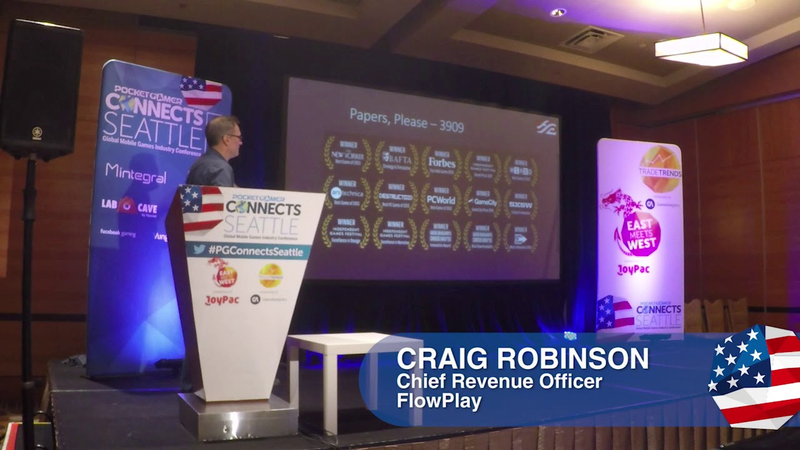
Haxe: The little known secret to scalable, cross-platform game creation
Haxe is presented as a powerful, open-source, cross-platform programming language and development toolkit that serves as a viable alternative to more mainstream game engines.
- Haxe is a cross-platform toolkit that translates a single codebase into multiple high-level languages or bytecodes, enabling deployment across web, mobile, and console platforms without proprietary vendor lock-in.
- The language supports high-performance development through specialized frameworks including OpenFL, HaxeFlixel, Heaps, and Kha.
- Haxe has been used to develop commercially successful titles such as Dead Cells, Papers, Please, and Northgard.
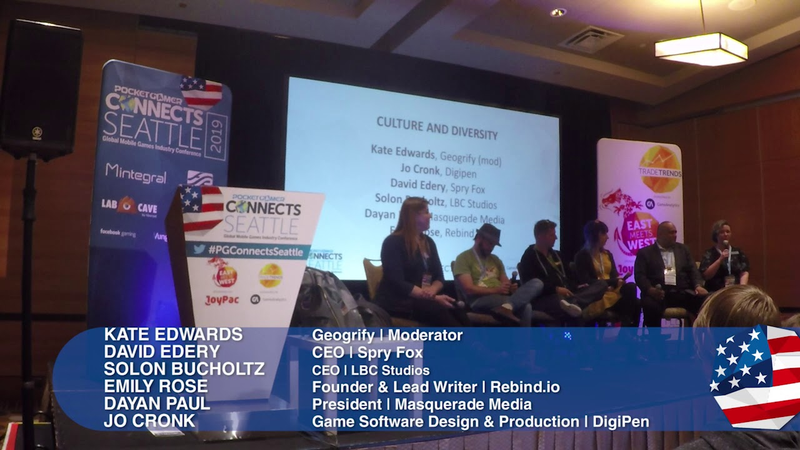
Culture and diversity in games
The global gaming industry is undergoing a fundamental transition toward greater inclusivity, driven by an increasingly diverse player base and the rise of female-led development studios.
- Diverse teams consistently outperform homogeneous groups, making the cultivation of inclusive office cultures a strategic necessity rather than just an ethical choice.
- Studios must transition from traditional, insular recruitment pipelines to active engagement with underrepresented communities and the implementation of unconscious bias training to improve hiring outcomes.
- Leadership must shift from rigid human resources policies toward a culture-first approach that prioritizes transparency and team health to improve long-term employee retention.
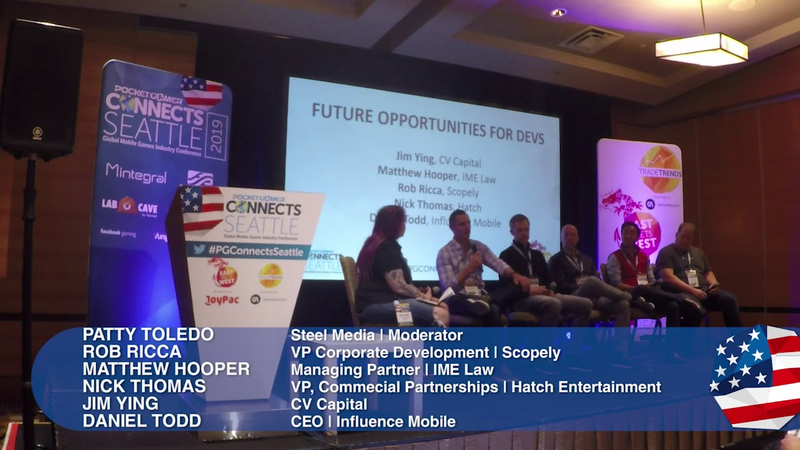
Future opportunities for games developers
The gaming industry is currently undergoing a strategic shift as developers navigate market saturation and the diminishing returns of traditional mobile free-to-play models.
- Studios must shift from traditional mobile free-to-play models toward deep, community-driven social experiences to counter market saturation and diminishing returns.
- Developers can reduce high mobile marketing costs by targeting niche audiences and utilizing subscription-based streaming services that provide built-in platform support.
- Foundational business operations require securing clear intellectual property ownership and establishing long-term alignment with publishing partners regarding LiveOps and revenue transparency.
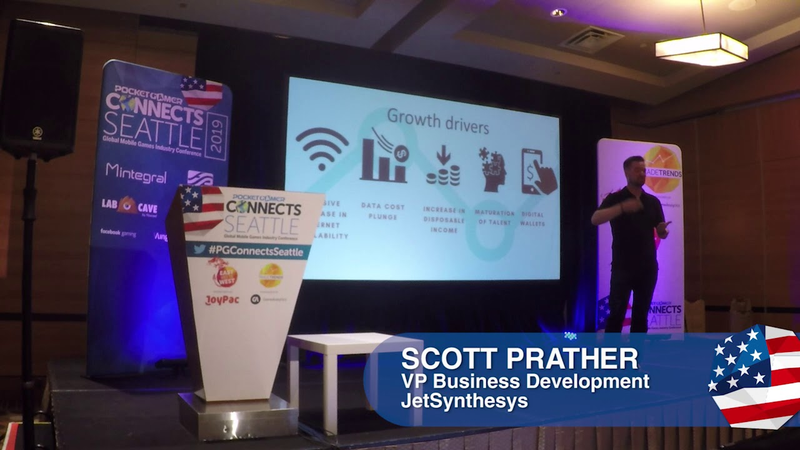
Growth of India as a destination for games
India represents a rapidly expanding frontier for the global mobile gaming industry, characterized by massive population scale, high mobile penetration, and a demographic shift toward a younger, digitally connected consumer base.
- India’s mobile gaming market is experiencing 75% year-over-year spending growth, driven by a mobile-first ecosystem where mobile platforms generate 89% of all regional gaming revenue.
- User acquisition costs in India are exceptionally low at approximately 16 cents per user, compared to over two dollars in the United States.
- The country’s digital infrastructure is supported by 387 million smart device users—a figure projected to exceed 550 million—and a widespread adoption of digital wallets following the 2014 demonetization event.
Writers
Games and companies
Games