Game Development reports and market data
Documents

Building Up a Indie Company with Karla Zimonja | GduX.me
Professional growth in the game industry requires a proactive approach to skill acquisition, particularly for those transitioning from large-scale AAA environments to independent development.
- Transitioning from AAA to indie development requires moving from rigid specialization to cross-disciplinary knowledge to handle the multifaceted demands of running a studio.
- Studios should prioritize hiring a dedicated producer once the team reaches approximately ten people to manage operational scaling and reduce bureaucratic friction.
- Remote-first indie teams must prioritize hiring individuals who demonstrate proactive communication skills and the ability to execute tasks independently.
Working in the Margins with Meg Jayanth | GduX.me
The games industry requires a fundamental shift toward sustainable career models that prioritize the well-being and financial security of marginalized developers.
- Marginalized developers must prioritize long-term financial security by securing profit-sharing and royalty agreements rather than relying solely on flat-fee freelance contracts.
- Industry professionals should actively practice pay transparency with peers to establish standardized compensation benchmarks and prevent systemic exploitation.
- Diversity must be treated as a core requirement for high-quality craft and world-building rather than an optional or performative add-on.
Making a Youtube Channel to Build an Audience with Noa Calice (BlackthornProd) | GduX.me
Building a YouTube channel serves as a vital strategic asset for independent game developers, functioning as a bridge between technical production and commercial viability.
- YouTube channels act as a strategic asset for indie developers by bridging the gap between technical production and commercial viability through early audience building and feedback loops.
- Documenting development via devlogs and tutorials serves as a marketing tool that also reinforces the creator's own technical mastery through the process of teaching.
- Sustainable channel growth requires a disciplined balance of high-quality production—specifically clear audio and thorough scripting—and a consistent, authentic brand identity.
Indie Sustainability with Jake Birkett | GduX.me
Achieving long-term sustainability in the independent game industry requires a disciplined transition from creative passion to rigorous business management.
- Treat game development as a long-term business by maintaining a cash runway, living frugally, and taking on supplemental contract work to mitigate market volatility.
- Limit development cycles to under two years and strictly manage project scope to avoid feature creep, as longer cycles rarely yield a viable return on investment.
- Use Steam wishlists as a predictive metric by multiplying the total count by 0.5 to estimate potential first-week sales and inform production budgets.

Creative Life in Game Dev: It’s Not Personal with Emily Grace Buck | GduX.me
The game development industry is currently undergoing a critical shift as professionals move away from a culture that conflates personal identity with professional output.
- The game industry’s historical 'family' culture is frequently used to normalize excessive crunch and exclusionary social dynamics, leading to high rates of burnout and attrition.
- Data shows that productivity significantly declines after 55 hours of work per week, proving that the industry's traditional reliance on long hours is counterproductive to project quality.
- Academic settings often condition students to accept unsustainable labor practices as a standard requirement for entry, perpetuating a cycle of overwork early in a developer's career.
DOTA Underlords, Anthem Still Alive, Blizzard Departures | Games ReCAP Episode 008
Valve’s recent launch of Dota Underlords demonstrates the enduring power of established franchises, as the title secured 174,000 concurrent users on Steam within its first 24 hours.
- Valve’s Dota Underlords achieved 174,000 concurrent Steam users in its first 24 hours, proving the market demand for streamlined, tactical gameplay adaptable to mobile.
- Major publishers are facing a critical juncture where the high financial risk of $200 million-plus AAA budgets is driving a necessary shift toward smaller, more agile, and highly replayable development strategies.
- The failure of projects like Anthem highlights the unsustainable nature of crunch culture and technical instability, prompting industry-wide calls to reduce project scope to mitigate financial and creative risk.
Understanding Game Dev in China with Sam Wey | GduX.me
The Chinese gaming industry operates as a high-velocity, mobile-first ecosystem defined by intense competition, rapid consolidation, and a unique reliance on personal networks rather than traditional legal frameworks.
- Success in the Chinese market necessitates a local partner to navigate complex bureaucratic hurdles, government censorship, and the technical constraints of the Great Firewall.
- The industry is dominated by Tencent and NetEase, which prioritize high-velocity, profit-driven cloning over original intellectual property.
- Regulatory volatility, including unpredictable licensing processes and platform restrictions, remains the primary obstacle for developers operating in China.
Leveraging the Turbulent Roller Coaster of Life with Richard Lico | GduX.me
Game development achieves its highest potential when mechanics serve as conduits for genuine human emotion rather than mere functional progression.
- Game mechanics should be designed as conduits for human emotion rather than functional progression, prioritizing character soul over mechanical motion to foster player empathy.
- Professional longevity in the game industry is best achieved by diversifying skill sets across complementary disciplines like rigging, modeling, and scripting to hedge against market volatility.
- Transitioning from major studios to independent development requires rigorous financial planning and full accountability for output to mitigate the inherent instability of the indie sector.
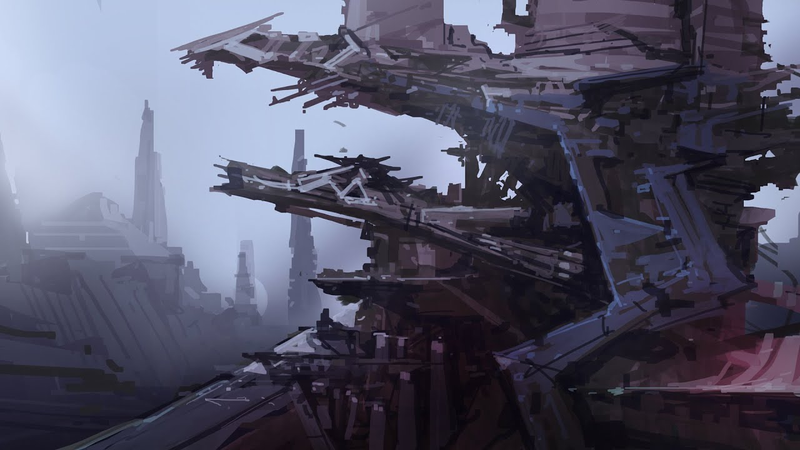
How to Lead and Art Direct Smaller Games with Cecil Kim | GduX.me
Transitioning from the high-resource environment of AAA game development to the independent sector requires a fundamental shift in leadership philosophy.
- Art directors in independent studios must function as multi-disciplinary bridges who collaborate directly with engineers to prototype ideas within strict technical and budgetary constraints.
- Success in smaller-scale development relies on 'designing within a box,' where creative limitations are embraced to maintain a cohesive vision and ensure production remains focused.
- To prevent budget-derailing project creep, directors must exercise the discipline to recognize when an asset is sufficiently polished to meet project goals rather than pursuing endless iteration.
5 Indie Game Marketing Hacks With NO MONEY
Independent game marketing requires a strategic, labor-intensive approach rather than relying on the assumption that a high-quality product will sell itself.
- Launch marketing efforts two to three months before release, focusing on personalized outreach rather than relying on product quality alone.
- Curate a targeted list of 200 press contacts and 200 YouTubers by specifically researching individuals who have previously covered similar game titles.
- Increase the likelihood of influencer coverage by inviting them to participate in the development process, such as providing feedback or contributing voice acting.

Full Indie: Taking the Leap of Faith with Jeff Spoonhower | GduX.me
Transitioning from a stable career in AAA game development to the independent sector requires a fundamental shift in mindset, moving from a specialized creative role to an entrepreneurial one.
- Independent game development requires a shift from a specialized AAA creative role to an entrepreneurial mindset focused on disciplined execution and commercial viability.
- To mitigate financial risk, developers must secure at least one year of financial runway before transitioning to independent production.
- Maintaining a strictly limited project scope is essential for completion, as it helps manage the unforeseen technical and creative challenges inherent in small-team development.
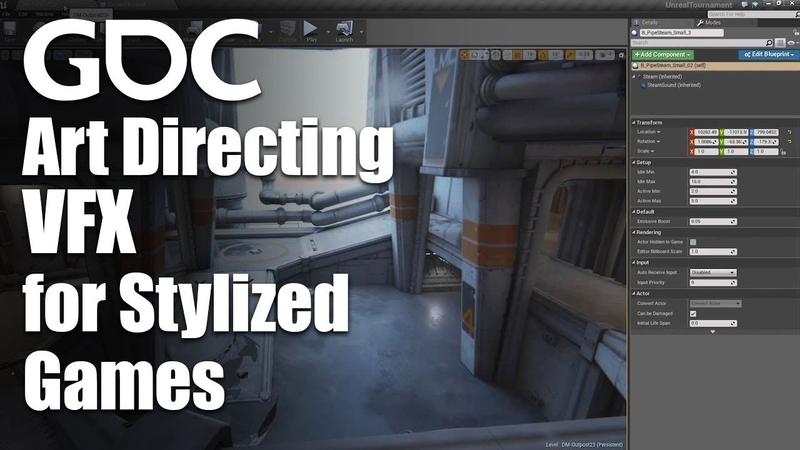
Art Directing VFX for Stylized Games
Stylized visual effects in modern gaming prioritize intentional artistic pillars and technical efficiency over the pursuit of photorealism.
- Stylized VFX prioritize intentional artistic pillars and technical efficiency over photorealism by utilizing hand-modeled meshes and hand-painted textures instead of resource-heavy fluid simulations.
- Modern stylized pipelines favor volumetric meshes and vertex animation tools over traditional 2D sprites to ensure 360-degree visibility and greater asset reusability.
- Visual impact is maintained through the application of classical animation principles and the use of simplified, geometric shapes that ensure gameplay clarity.
Writers
Games and companies
Games