
StarCraft II: Wings of Liberty
GameBy Blizzard Entertainment · Released Jul 27, 2010
StarCraft II: Wings of Liberty is a science fiction real-time strategy game and the sequel to the original StarCraft. Set four years after the events of Brood War, the game revolves around three species: the Terrans, the Zerg, and the Protoss.
- How much revenue has StarCraft II: Wings of Liberty made?
- How many players does StarCraft II: Wings of Liberty have, and how is that changing?
- What do industry reports say about StarCraft II: Wings of Liberty's performance?
- Which games compete with StarCraft II: Wings of Liberty, and how do they compare?
- Videos
- 12
Connections
Each row is a game or company named alongside StarCraft II: Wings of Liberty, each column a document, oldest first. A mark means that document names it. Select a row to see those documents.
About the game
- Released
- Jul 27, 2010
- Developer
- Blizzard Entertainment
- Genres
- Real Time Strategy (RTS), Strategy
- Platforms
- PC (Microsoft Windows), Mac
- Links
- Official site, Wikipedia
Game data from IGDB.com
Documents about StarCraft II: Wings of Liberty
'Cat and Mouse Forever': Ex-Blizzard Risk Ops Expert on Addressing Cheaters
Lucia Suarez, former associate manager of risk operations at Blizzard Entertainment with about 15 years at the company, discusses how cheating has shaped live service games and how studios can respond.
- Cheating is driven by incentives such as prestige, in-game resources, competitive play, and account value, so most competitive or resource-rich games are likely targets.
- Cheats that manipulate client messages to grant free resources, speed up abilities, or run farming bots inflate in-game economies, while payment fraud and stolen accounts add chargebacks and card-network penalties.
- Prevention is far more effective than after-the-fact detection; a warned-about StarCraft II map-hacking vulnerability went unaddressed and later required costly manual investigation.
ENCE to File for Bankruptcy After Revenue Fell 79% in Two Years
The Finnish esports organization ENCE has announced its decision to file for bankruptcy, concluding a 13-year operational history.
- Finnish esports organization ENCE has announced it will file for bankruptcy, concluding a 13-year history after revenue plummeted 79% from its 2023 peak of €6.31 million to €1.32 million in 2025.
- The organization’s financial collapse was driven by the loss of top-tier competitive results and the termination of the ESL Louvre Agreement, which previously provided guaranteed league slots and revenue sharing.
- ENCE transitioned from a €521,000 operating profit in 2023 to significant losses of €752,000 in 2024 and €993,000 in 2025.
Why Big Game Companies Don't Make Small Games
Large game publishers frequently face criticism for prioritizing massive, high-budget projects over smaller, experimental titles.
- Publicly traded publishers prioritize established franchises like Call of Duty and World of Warcraft because they offer the predictable, scalable revenue required to satisfy corporate mandates for high ROI.
- Large companies view smaller, experimental projects as inefficient uses of resources because they lack the potential to become billion-dollar franchises that justify massive marketing and technical infrastructure investments.
- The industry’s shift toward 'engagement-first' design metrics, such as daily active users, penalizes shorter or experimental games that cannot sustain the long-term retention levels of live-service models.

Direct-to-consumer banks $17 billion and Google rolls out fee changes | Week in Mobile Games podcast
Direct-to-consumer (DTC) platforms have emerged as a critical pillar of the mobile gaming economy, currently generating $17 billion in annual revenue and capturing 15% of the global market.
- Direct-to-consumer (DTC) platforms now generate $17 billion annually, accounting for 15% of the global mobile gaming market.
- While 92% of publishers expect DTC growth, only 25% of organizations currently possess the mature infrastructure required to scale these operations.
- The mobile gaming industry is experiencing a period of significant contraction, marked by recent layoffs at Electronic Arts, operational consolidation at Kabam, and anticipated restructuring at Xbox.
Team Vitality Exits StarCraft II as 6th Most-Watched Organization
Team Vitality has officially concluded its involvement in the StarCraft II esports landscape, marking the end of a two-year tenure within the discipline.
- Team Vitality has officially exited StarCraft II after a two-year tenure, citing the game's exclusion from the 2026 Esports World Cup as a primary factor.
- Despite their limited two-year participation, Team Vitality ranks as the sixth most-watched organization in the history of StarCraft II esports.
- The organization generated over 2.1 million hours of live viewership during their time in the StarCraft II competitive scene.
Sentinels Teams With Theta Network to Deploy AI Agent
The Los Angeles-based esports organization Sentinels has entered into a strategic partnership with Theta Network to integrate an AI-powered fan-service agent into its digital ecosystem.
- Esports organization Sentinels has partnered with Theta Network to launch an AI-powered fan-service agent on its official website and Discord server.
- The AI agent is scheduled to deploy in February 2026 to provide fans with automated responses regarding match schedules, results, player information, merchandise drops, and ticket availability.
- The technology utilizes Theta EdgeCloud, a hybrid platform that leverages over 30,000 distributed edge nodes alongside Google Cloud and Amazon Web Services to provide hundreds of PetaFLOPS of GPU compute power.
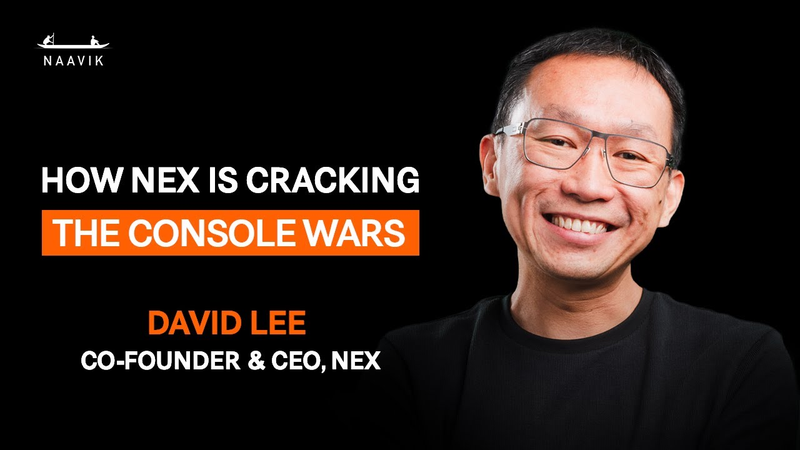
Family-First Gaming: Breaking Into Consumer Hardware with Nex
Nex has established a significant presence in the competitive console market by pivoting from mobile-based athletic training software to a dedicated hardware ecosystem centered on movement-based, family-oriented play.
- Nex successfully transitioned from mobile software to a dedicated hardware ecosystem, selling over 650,000 Nex Playground units in the previous year.
- The company’s retail strategy utilizes interactive demo fixtures in nearly 6,000 stores, which generate over one million monthly trials and account for more than 50% of total unit sales.
- Nex maintains a subscription-based model for continuous content updates, utilizing edge AI for privacy and child safety instead of cloud-based data storage.
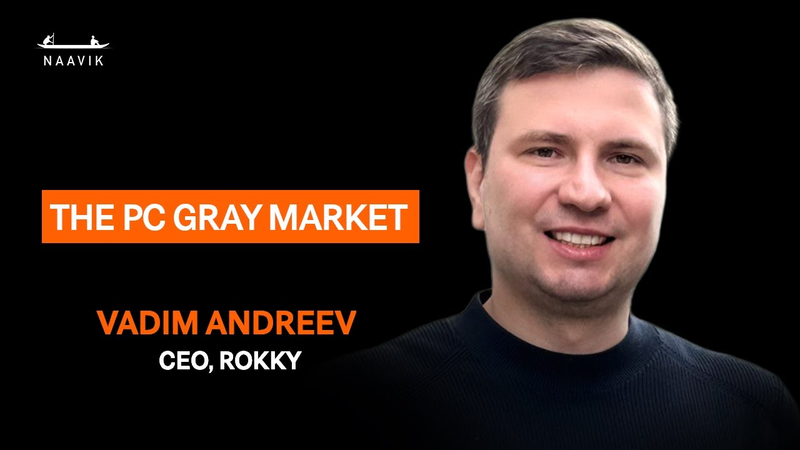
Inside the PC Game Gray Market Economy
The PC gaming industry faces a persistent challenge from a sophisticated gray market that siphons between 20% and 40% of potential revenue from publishers.
- The PC gray market enables revenue leakage of 20% to 40% for publishers, often occurring when keys intended for lower-priced regions are resold in premium markets.
- Regional price arbitrage and promo stockpiling are the two primary mechanisms used by gray market resellers to siphon revenue from publishers.
- Effective mitigation begins with mandatory region-locking of keys, as many developers inadvertently allow worldwide access to keys priced for cheaper territories.
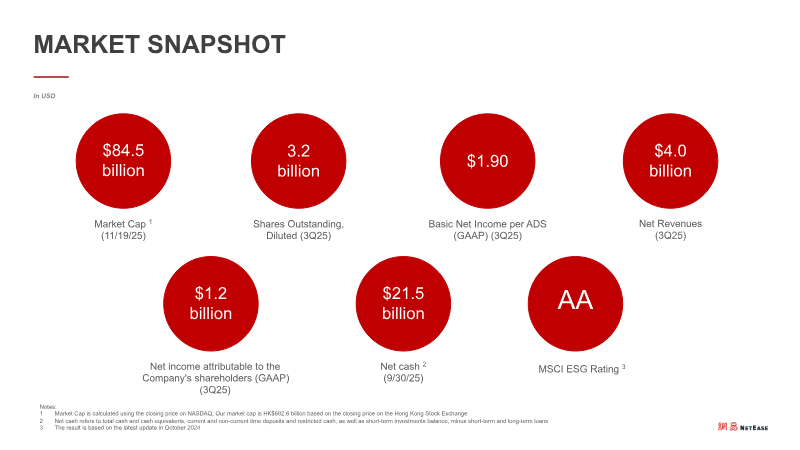
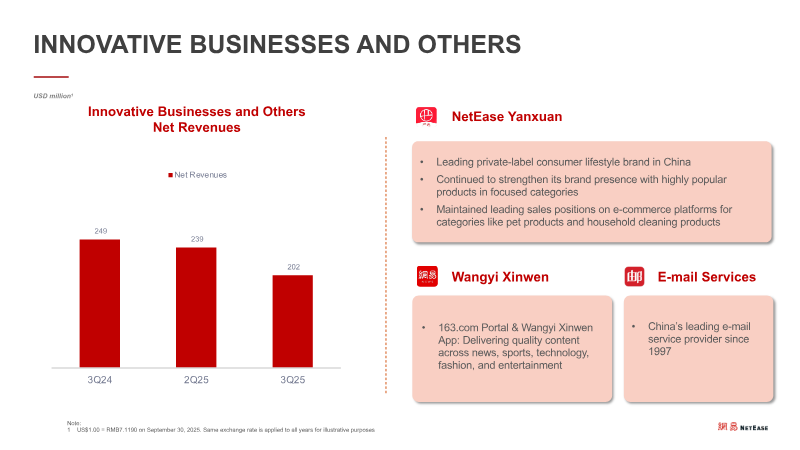

NetEase 3Q25 Investor Presentation
NetEase’s third-quarter 2025 investor presentation outlines the company’s financial performance and strategic positioning as a premier global internet and gaming services provider.
- NetEase reported total net revenues of $3.98 billion for 3Q25, an 8.2% year-over-year increase, with net income rising 31.8% to $1.21 billion.
- The gaming segment remains the primary revenue driver, contributing $3.28 billion in 3Q25, representing an 11.8% year-over-year growth fueled by titles like Fantasy Westward Journey and the launch of Destiny: Rising.
- The company maintains a strong financial position with $21.5 billion in net cash as of September 30, 2025, supporting ongoing dividend declarations and share buyback programs.
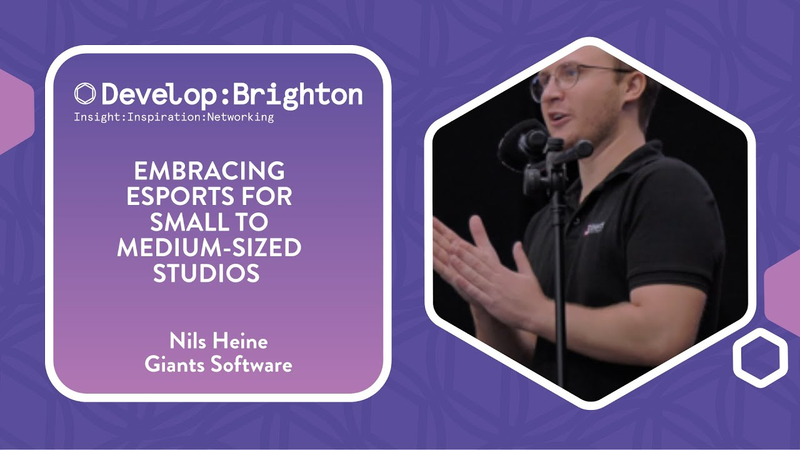
Embracing Esports for Small to Medium Sized Studios | Develop:Brighton 2024
Small to medium-sized studios can successfully cultivate competitive gaming ecosystems by identifying and formalizing existing community behaviors, even within non-traditional genres.
- GIANTS Software successfully expanded the Farming Simulator franchise into esports, leveraging a competitive 'bail stacking' mode to engage a player base that has surpassed 6 million units sold.
- The Farming Simulator League (FSL) launched in 2019 and now hosts tournaments across Germany, Switzerland, Poland, the UK, and France, involving 20 to 30 active competitive teams.
- Successful esports integration requires significant investment in infrastructure, including dedicated broadcasting hardware, software for multi-language live streams, and physical stage setups for offline events.
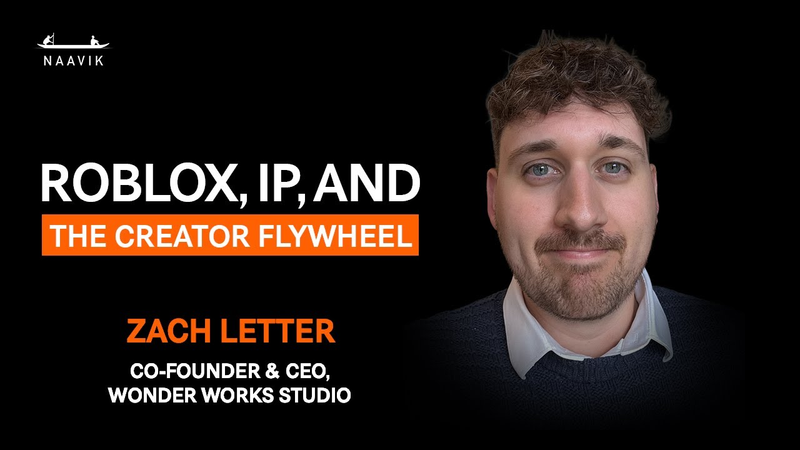
The Creator-Led Studio Playbook
The creator-led studio model represents a fundamental shift in game development, moving away from traditional paid user acquisition toward organic growth driven by influencer-led strategies and platform-native engagement.
- Wonder Works Studio leverages licensed IP like SpongeBob to eliminate paid user acquisition costs, using the brand's existing recognition to drive organic traffic while maintaining high retention through quality game design.
- Roblox experiences can function as massive marketing engines for major IP holders; for example, a SpongeBob trailer integrated into a Wonder Works game generated 100 million impressions in two weeks.
- Successful Roblox titles require a 'flywheel' approach where live-ops updates are specifically designed to compel influencers to create multiple videos, ensuring sustained organic discovery.
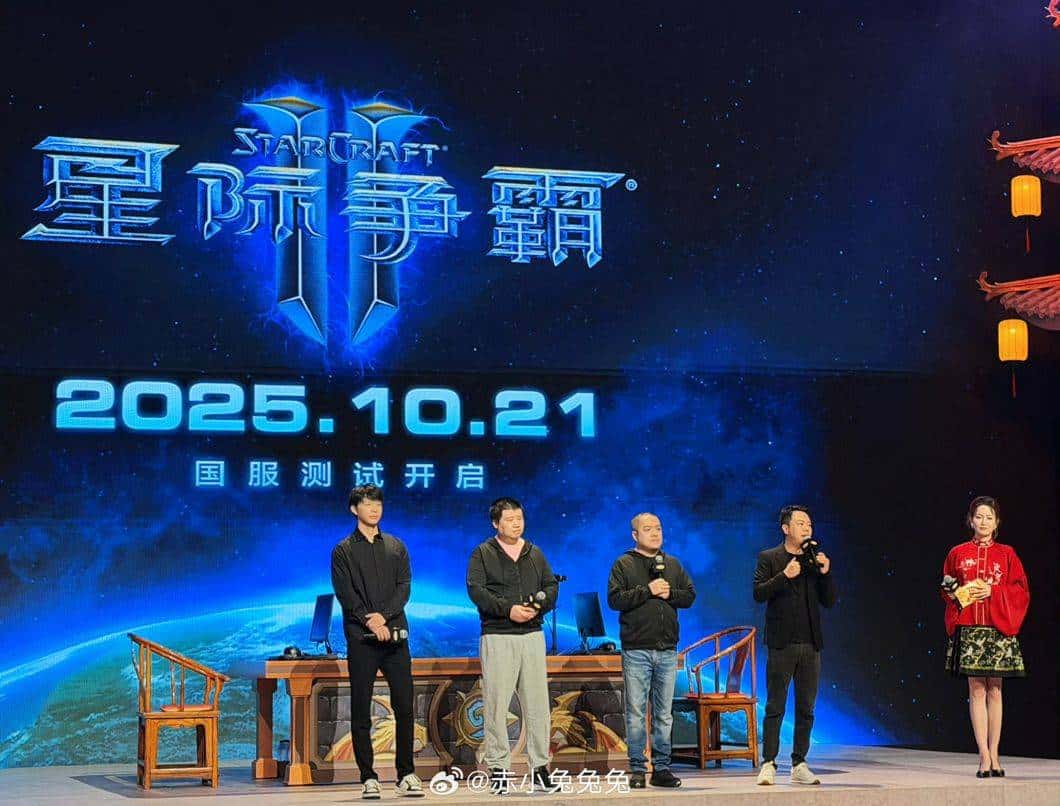
StarCraft II Returns to China
Blizzard Entertainment and the NetEase-owned Thunder Fire Group have confirmed that StarCraft II will officially return to the Mainland Chinese market on October 28, 2025.
- Blizzard Entertainment and NetEase’s Thunder Fire Group will officially relaunch StarCraft II in Mainland China on October 28, 2025.
- StarCraft II is the final Blizzard title to return to the Chinese market, following the previous re-releases of World of Warcraft, Hearthstone, Overwatch 2, and Diablo 3.
- NetEase will host an international StarCraft II esports competition at the Hangzhou Esports Centre from November 29–30, 2025.
Companies behind it


As the documents state it.