Transcript
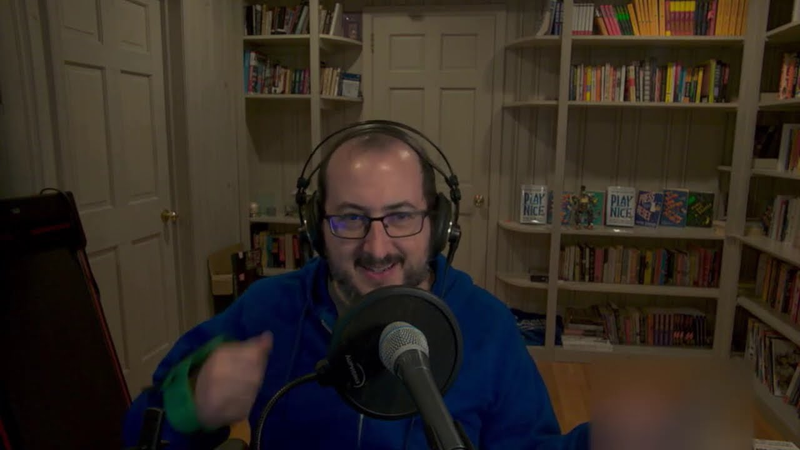
Hello, One Take Shrier here and this this video is sponsored by Raid Shadow. No, I'm just kidding. Nobody would pay the $10 million fee, so this video is sponsored by nobody. Today, we're going to talk about big video game companies and why it seems to be so difficult for them to make smaller scale games. I've seen a sentiment out there um of people asking, "Hey, why doesn't this big publisher, Activision or Xbox or EA or whoever, why don't they just greenlight instead of making these big $500 million projects, why don't they take that $500 million and greenlight 5001 million games and assume that a bunch of them will fail, but then maybe a couple of them will become the next big viral hit, the next uh uh uh mech like a Chameleon or Bellatro or Peak or whatever it is and make them a bunch of money. And so I wanted to talk through why that doesn't
happen. Um and there are a few reasons. Uh but I want to start off with a story and this is this is a good one. Um this is a lot of this is um in my book Play Nice The Rise Fall and Future of Blizzard Entertainment, but I'll tell you kind of the short versions. Um but read the book if you want more color and stuff. So, uh, back in the day, there's this company called Blizzard Entertainment, and throughout the 90s and early 2000s, they were releasing new games every couple of years. Um, new games in franchises like Warcraft and Starcraft and Diablo. And all those games hit, uh, all those games were critically acclaimed, massively successful. Blizzard became this huge powerhouse. And then in 2004, they released a an online game called World of Warcraft. And World of Warcraft um when they launched it, they had this ambitious goal of reaching a million players within their first year. Um because EverQuest, which was a game that they had based a lot of World of Warcraft on, um and that was the most popular MMO at the time, EverQuest had 500,000 players. So they were like,
"We're going to beat EverQuest. We're going to double their player base within a year." Um within a year they had 5 million players. So to say World of Warcraft was a success might be underplaying a little bit. World of Warcraft was a smash hit. It was a cultural phenomenon. Uh, celebrities play it. It led to an episodes of South Park. By its peak, it had something like 12 million subscribers, all paying a monthly fee to play it. And it really transformed Blizzard. It turned them from a company that was releasing new games every few years into a live service company, a company that was just kind of dedicated to um, maintaining and creating new things for this one big game. And what happened was they expanded the company a great deal to account for it. They hired community managers and customer service and all these content designers to work on World of Warcraft stuff. And also they for for a long time they essentially put pause on their other projects on Starcraft 2 and Diablo II at the time so that those people could come help out with World of Warcraft. became like this this vacuum,
this black hole that just kind of sucked up everybody in the company because it was making so much money and it was such a success that they needed to keep supporting it. And then as time went on, they were able to continue to working on on some of those other projects like Starcraft 2 and Diablo 3 in part because they were part of big franchises. And then at the same time, um some people uh within Blizzard wanted to do incubation and start new things. Um, and there was this one team, one small team of people led by, um, a few people led by a designer named Eric Dods, uh, and kind of a producer named Ray Gresco and another designer named Ben Broad. Um, that started working on this card game. Um, and the story behind that card game, it's all in Play Nice. It's really interesting, but short version is uh, they were working on this small little project, uh, that, um, that they thought would be this really cool kind of Warcraft digital car game. Um, it kind of spawned from a a digital version of the World of Warcraft training card game
and then just turned into its own thing that they wound up designing with its own unique mechanics. Um, and they ran into some problems. Uh, that game was put on pause as people were required elsewhere. But uh also from above them uh there was a lot of pressure to cancel it because you had people looking over including Bobby Kodc, the CEO of Activision Blizzard, the parent company of Blizzard, looking over and saying, "Hey, why are you guys working on this tiny little like Warcraft trading card thing that nobody's going to care about when you could have those people working on World of Warcraft? You have some of your top designers and engineers and stuff. um why are they working this little thing when they could be going and helping out with World of Warcraft? Because that is uh a very clearly our success. That is our bread and butter. That is our our money churning device, our golden goose. Um why aren't we putting all of our resources on that? And so there were people within Blizzard who were able were able to protect it, namely Rob Pardau, who was a top
designer at the time. Um and he he fought them off. And there was this crazy moment where like um they've been working on the game for like four years. Ben Bro told told me this story. He was like, "We've been working on this game for four years and we had this build ready and we showed it to these design these people at the company, these executives and and they all played it and they play tested it and they really liked it." And then Rob Partardo comes in and he tells us, "Congratulations, you guys just passed your green light. You're not going to get cancelled." And he's like, "Pass our green light? Like we've been working on this thing for 4 years. We're not going to get cancelled. What?" But anyway, there was all this pressure on them to cancel that game. And of course, if they had canceled it, they would have never released Hearthstone, which be became its own money printer and billiondollar franchise. And Bobby Kodak wound up very pleased that Hearthstone existed. But if it were up to him, it would have been cancelled. And there are some pretty I mean I there's some logically sound reasons from that from an executive point of view because from an executive's point of view at a publicly traded company their job is to deliver growth and their job job is to get that
share price up and one way to do that is to make sure that with the resources you have you are investing it in a smart way. And so for someone like Bobby Kodig who sees something like World of Warcraft and in his mind that game is not growing as much as it could. Um it's got a lot of potential could be he was always talking about having expansions every single year. Um instead the cadence was more like two years every two years for a new expansion. But in his mind if you had taken these 15 people who were working on Hearthstone and put them on World of Warcraft you could get that cadence back up just like they do with Call of Duty to get those games out every year. I've told the story before. This is also from Play Nice. But Bobby Kodic was um so kind of driven in this mindset of uh of more frequent releases and just kind of delivering the players content constantly that he he um during one meeting uh about Guitar Hero. Uh they delivered him this plan. They gave him this presentation. He was like great yearly Guitar Hero is great, but you know what? I want a Guitar Hero every
quarter and then I want a Guitar Hero every single month. That was that was his idea of of how frequent these games should be coming out. Um, and so what happens is if you have these resources, they're limited. You can only distribute them so much. You want whatever is going to get you the highest profit margin. You want what is essentially a term that's used in business is called ROI, return on investment, which is essentially if I have $100 to spend, I don't want that $100 to turn into $105 potentially. I want that $100 to turn into $200 or $150. Um, I want that investment to return significantly higher than just kind of those little scale margins. And so someone like Bobby Kodc would see this little card game and think, you know, even if that turns a profit, there's no way it's going to become a billion-dollar franchise. it it's just gonna kind of sell a few copies and maybe make a little bit of money, but I would rather have those people working on this thing that will make a lot of money because in this world of publicly traded companies and growth and just wanting those returns on
investment, it is not efficient. It is not seen as efficient from these this corporate level to put your money into that smaller project. Of course, I mean, when you do take the risk of doing that and put that kind of small, it was only 15 people. you put that small team on something, it could turn into the next Hearthstone. It could turn into something big. So, by kind of by by taking that conservative approach and just focusing on the thing with the highest profit margins, uh you are of course costing yourself the opportunity to potentially have this smash hit um and actually get that lightning in a bottle that they got with Hearthstone. By the way, fun another qu another interesting part of the Hearthstone story is that they created it and there were some people on the team including people I quote in the book who were like, "Hey, um, this is a problem that this is so big because now our team is just going to be dedicated to making dedicated to making new Hearthstone content and supporting Hearthstone for the rest of our lives instead of taking
this kind of this this chemistry of this small team that really just created something wonderful together and having them go try to make something else that could be the next billion dollar franch. Now we're stuck on the service game that is Hearthstone and we have to continue to operate that forever. And so that actually uh led to some some kind of um displeasure among people who worked on that game. Um so anyway, so so uh that is kind of one reason why a big company is not going to invest a lot in smaller games because the ROI is seen as much bigger elsewhere. And in fact, look at what's happening to Xbox. We've been talking a lot about the Xbox cuts and the layoffs and some of the problems that have led to that. Um, one of the reasons that Xbox uh became a target of Microsoft's scrutiny is because the profit margins at Xbox are so much lower than the profit margins at their software uh departments and and other things, other initiatives they have. Put AI aside cuz who knows what's going to happen there. There's a belief that that will lead to incredible margins, but uh that's more of a pie in the sky thing.
Um, but you look at something like Azure or like Microsoft Windows and the profit margins are so much higher than there are at Xbox that there's a lot of scrutiny from above being like why are we investing all of this money into Xbox just for this? Um, I believe Asha Sharma, the new CEO of Xbox said that their profit margins in the last fiscal year were 3%. So why are we investing all this stuff for 3% margins when we could be investing for 40% margins? So that is often the conversations the conversation at this board level. But there are other reasons too and it's not just about ROI and margins. I think there's a lot of just kind of um uh explanations from these big companies or kind of logical they're they're thinking they have some some rationale behind not wanting to invest in these smaller projects even if they could potentially turn into billion dollar sales sellers. Um, one is that obviously, as I mentioned in a previous video, taking a game out even and a small game out and hoping it will become the next Batro is kind of like signing up for a lottery
ticket. Um, even in some of the best games aren't necessarily selling millions and millions of copies, but there are other reasons too. So, if you're at a big company, if you're at a Take 2 or an EA, um, one of the things you see as your competitive advantage is your ability to spend a lot of money. um which has turned into this arms race across all these companies as these budgets have exploded and turned into 300400 million dollar productions. Um, these companies see that as their big advantage because the the reason that a Take 2 can keep operating and keep pleasing shareholders and keep employing thousands of people and keep selling games for 70 or now $80 is because they have the capability to throw so much money at a game that it winds up being this vast open world with incredible graphics and um uh ideally the best possible design. Although we all know that's not always the case, but like in theory at least, we're talking theoretically here, the big companies have so much money that they can outspend the competition, which is why
you're not going to see a like some indie garage studio make the next Grand Theft Auto. um because it is not capable of creating a world that looks like that, that has that much stuff in it that is that impeccably designed, meticulously designed because it just doesn't have the however many dollars, who knows how much money has been spent on this new GTA. Is it billions? Maybe. Maybe we'll find out in the in the uh in the coming future, but I'd love to know the exact budget for GTA 6, especially after uh uh two major delays and thousands of people working on that game. But anyway, so they see it as their competitive advantage. EA comes along and they have a new game and it draws people's attention because it is expensive, because it looks good because it has this kind of weighty um feel to it. Uh it has a marketing budget. And by the way, speaking of marketing budgets, if you're like within a company like EA and you're you have a big project, the next um uh I don't know what does EA
make? They're making an Iron Man game, the new big Iron Man game, or the next Battlefield, let's say. Um, and then you're a smaller project. Um, like some small EA actually has done a couple of small projects every now and then. Um, but you're some small indie project that is like within the EA organization. You guys are competing for some of the same resources within EA. You're competing for support teams. You're competing for, I don't know, engine support from the Frostbite team. You're competing for marketing budgets like I mentioned. And so, um, uh, I think chances are if you're the bigger team, you're going to win a lot of those battles. And so a smaller team, even within a big company, can also get kind of uh muscled out and not have the same chances of success as a small team that's like maybe on its own or like finds an indie publisher to support it that knows how to market um that kind of game. So that's a whole another factor as well. Um there's the other thing that I think is is worth noting here um is uh engagement. Um
engagement has become a really big buzzword in recent years. This idea that um you don't just want players to spend money on your game, you want them engaged, you want them spending time in it. Uh in fact, Asha Sharma, the new CEO of Xbox, she has said that her kind of northstar, her her um metric that she is going for is daily active users. It's not money, it's not uh sales units, it is daily active users. This idea of like people being engaged with the stuff that you make on a daily basis. And the reason for that is because engagement is basically like a metric that not guaranteed but the the metric that is is closest to guaranteed in terms of success of a product. Because if you have people engage in your game, they are talking about it. They are telling their friends about it. They're tweeting about it. They are I don't know showing up in friends list as like playing that game. They are streaming it or watching people play play it on Twitch. And it contributes to this feeling that that game is everywhere. Um, and I I think
something that I have personally seen just because I've been uh on the kind of my own marketing tour with uh when I when I'm putting out a new book and I want people to check it out is that I think that um the the most effective way that you could market something, the most effective way you can get it in someone's head is by making them feel like it's everywhere. Making them feel like they can't avoid it. Not necessarily in a cynical way, and I I don't mean to say that as like a a negative thing necessarily, but like essentially if you think about the things you check out, the things you buy, the things you read, the things you watch, often times it's because you have seen it in a couple different places. Maybe someone in a group chat mentioned this game that they're playing, and then maybe also you saw an IGN article that was like, "Wow, this game is awesome." Um, and then maybe you saw it on your Steam friends list. And by the time that that hits critical mass 3, four, five times in your kind of over the course of a certain amount of time for you, you might be like, "All right, I got to check this thing out. At least check out a trailer. If not, by download the demo or buy the game." And so if you have that engagement, um, then that is going
to lead to success a lot of the time. And if you are making smaller games, maybe a smaller scale game, maybe a game that's a little bit cheaper to make and therefore has less content in it, you are kind of lowering that amount of engagement by nature as opposed to something where people will just keep playing it um over and over again. And this is this is one of the many reasons uh as I mentioned in a previous uh video that live service games are ubiquitous is because they really have mastered that art of keeping people engaged. And so a lot of times that will just kind of mushroom into more success because the more people are engaged in a game, the more it will just kind of be distributed throughout. And that's actually it also help expl help helps explain why something like Concord happened. And with Concord, um I believe that uh uh it was pretty clear when that game actually came out that it was going to be a failure and then it was pulled from stores after like 2 weeks. And the reason for that is because they never
had that kind of that baseline of engagement among players that would help drive it to success. You kind of you need that baseline in order to have any chance at finding success with a live service game. So in other words, a lot of times game companies might look at smaller games, shorter games, kind of more experimental games and be like this the engagement levels of this are just not even the juice is not worth the squeeze. I'm not going to get a lot out of it. Um, I don't know if this is really a sound strategy because as I mentioned, if you are kind of only pursuing the biggest things, the most successful potential projects, the games with the highest ROI, you are potentially costing yourself the next Hearthstone. And like I I think that there are companies out there um Blizzard is one I mean Bungie is another one where um a few years ago they were incubating all these projects and one of their kind of their mandates or their directives was like we only want to make games that are these like that could be billion-dollar franchises. And I think when you do when you take that stance,
when you when you have that philosophy, you are potentially costing yourself making from making the or preventing yourself from making the next Hearthstone and costing yourself a billion dollar game because you don't think it looks like a billion dollar game. And as we've all seen by now, the Bellatros of the world come out of nowhere and uh can turn into these mega hits despite the fact that nobody in the world would have possibly green lit them. Um, could you imagine any of these companies like making a game that is this uh uh just like rudimentary looking card game with kind of amateurish art that like combines rogue likes with poker mechanics? Like no, not in a thousand years. And I imagine there's some publishers out there that that declined to uh work with Bellatro um over the years um and or or games like it. And and I am sure I am I am very confident that there are all sorts of prototypes that big game publishers have uh not green lit or games that they have just not decided to pursue or proceed
with because they didn't think that those games could justify the ROI and if they actually had they would have justified it and then some. So, it's a very short-sighted approach, I think, but uh there is logic and rationale behind it. And for these game companies which have to operate very conservatively, especially these days when um budgets have gotten so big and the sales threshold for breaking even, let alone making a profit, has gotten so high, um there's even less of a reason for these companies to take risks. Is there a world when a company where a company could take that hundred million dollars and instead of making one big game make a hundred smaller games and see if any of them hit? Maybe. I don't know. I'd love to see it. I'd love to see that experiment happen, but I don't know how many investors are willing to put up the $und00 million to to try it out to try that experiment out. All right, that is it for this episode of Shrier One Take Shrier. Um we'll be back soon. I'll see you all next time.
Auto-generated captions from YouTube — names and numbers may be misheard.
Key insights
Distilling the key insights…
Ask AI about this video
Cite this video
Citation
Generating citation…





















Comments