Transcript
[music] Welcome to the Navit Gaming Podcast, where it is our mission to explore the business and future of video games. We bring together the industry's brightest builders, investors, and thinkers to keep a pulse on current events, dissect emerging trends and games, share lessons learned, and have a great time. This podcast is also part of Navik's growing ecosystem which ranges from free and premium research to consulting and advisory services. For more information, visit www.navic.co. This episode is brought to you by Lightseed Venture Partners. Lightseed is a globally leading venture capital firm with over $29 billion in capital under management and more than 500 investments across the US, Europe, and Asia. With its dedicated gaming practice, Lightseed Gaming, the firm is investing from over $7 billion in early and growth stage
capital, making it by far the largest fund focused on gaming and interactive technology. Lightseed's team combines deep expertise in gaming with a global multi-stage investment platform and a culture that truly puts founders first. Selected investments include Epic Games, Snap, and Stability AI, as well as game designers and producers who led the creation of titles like Fortnite, Call of Duty, League of Legends, Valerant, Starcraft 2, and many more. For more information, simply go to gaming.lsvp.com or check out the details in the show notes. And with that, let's jump into the episode.
What's up everyone and welcome to the Nova Gaming Podcast. I'm your host, Alex, and this is the interview and insight segment. Hello 2026. I hope everybody had an amazing holiday and a happy new year. I'm back in the studio and kicking off with what I hope is another great year of content in the business of games, content, and interactive tech. Today we are talking PC. Um, as the global gaming market reached 197 billion in 2025, PC was
forecasted to contribute 43 billion of that 200 billion, up 10% year-over-year from 2024. But we're not going to talk about the traditional PC market, but rather its sort of underground twin, the PC gray market. And in the past, the gray market used to be a retail dominated land. Hopefully, as a listener, you're old enough that you remember heading to Blockbuster or GameStop and buying a used copy of a video game. But in the digital world, the gray market has become even more vast and is ostensibly not a physical place, but rather a concept of reselling in general. Whether or not it's authorized or not is something that we'll discuss today. Gray market sites like G2A and Greenman Gaming aggregate keys from a variety of sources, primarily benefiting from regional price arbitrage, i.e. buying keys from cheaper countries and reselling them in more premier markets. Even though this can be done during promotional periods or fraudulent or as fraudulent purchases for the publisher and the developer, this is clearly disadvantageous. Regional pricesing pricing is meant to benefit the in region consumer whose wallet size and spending power might be
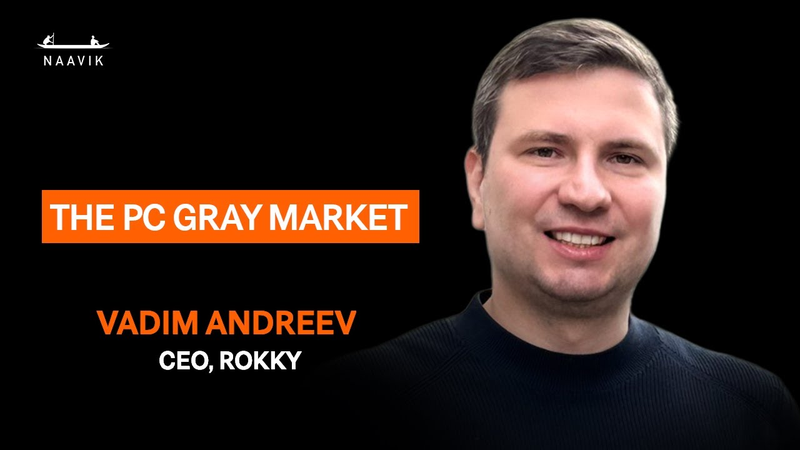
lower based on currency strength or other basket of consumer goods conditions. A gray market site buying up a key and then selling it in a more premium market benefits the gray market versus putting that money in the developer or publishers pocket. So today we're going to talk more in depth about the PC gray market. How big is this problem actually? Who is it affecting the most? The history of the gray market from evolution to retail to digital and solution providers that are tackling this problem. My guest today is Vadim Andre, the CEO of Rocky. Rocky is a global digital gaming distribution platform that connects publishers and digital for with digital storefronts with all over the world, streamlining the sale of game keys and combating the gray market. The goal is to protect publishers from gray market exploitation while also facilitating sales. Uh Vadim prior to founding Rocky founded a company in the cloud gaming solution space called Play Key which he sold to mail.Uh Vim and I connected several months ago and it's 2025 now and this episode has been a long time coming. So Vim, welcome to the pod. How are you
doing?
Yeah, thank you Alex. Thanks for having me today. Uh yeah, it's a great pleasure to be here and to talk about the market. Uh first of all um so a bit of myself. So I'm in this business since 2009 and uh I did see how this industry develops and uh when you said about the gray market like D2A and Greement Gamings I would say uh I do not consider Greement gaming as a gray market. Um but we will talk about this later today and uh I think we can we'll be able to draw the line between the gray market what is the gray market exactly and which is not. So yeah, so we are doing the digital distribution. Uh we help publishers to sell their games across all over the world especially in the hardto-reach regions uh like China and uh we are trying to protect them from the gray market and uh today I'm happy to discuss this because um in the industry usually
people do not speak about the gray market like loudly. So today we are trying we'll we'll try to speak about this absolutely transparent and uh everything what we can say.
Okay, I got it very we'll speak about it very loudly. Um that is as it is of course the the topic of entire discussion but um so thank you for sharing a little bit about background about like why you know how you started. Um but I just actually have more of a a personal question before we kind of get into the nuts and bolts of our episode. um like why are you specifically passionate about solving the gray market for for devs and publishers? We see uh so when we uh when we work um with partners and we work in the D distribution, we understand that we very often compete with the gray market and uh we we understand that uh we need to fix this issue to uh grow faster and we understand that there is a problem big
problems of of publishers who struggling with the revenue and because of the gray market. So we know how to fix it. We know how to fix it and we just want to show publishers that's that's not not an issue at all. So that's you can you can you can handle it. So we can face uh the problem and you can tackle it and work.
I got it.
Okay. Got it. I was curious if there was any kind of underlying when I was a kid or I launched a game studio and people robbed me of a thousand keys and so now I'm on this mission to rectify this problem. But um it sounds like for you it's just like
when when I was a kid I used the pirated version of a game. So as everyone used this because uh you just didn't have an option uh you didn't know how to buy the uh real game. So there was an option of pirate games.
Yeah. Absolutely. Yeah. And it's really interesting. I think a lot of markets like Poland and even like the origins of CD Project is mostly in pirating and
like porting games over to to let a market access them in the first place. And so I think what we're talking about today is a lot of publishers have and and and studios have tried to make their games more accessible to regions that typically weren't able to access them through a variety of storefronts. But that in itself is also creating another problem around the gray market. Um which of course we'll talk about today. But before we start talking about the nuts and bolts of Rocky and the current PC gray market, I kind of want to understand a little bit more where it comes from. Um, what can you kind of tell me about the retail PC gaming market from like the 80s and the 90s and sort of like how has that evolved into the digital gray market versus the retail game market and what makes it kind of a better or worse business to be in?
Uh, yeah. So, if you go back to ' 90s or early to 2000s, so PC games like were almost um entirely physical products. Uh they were sold on CDROMs before that on floppy discs but it was skipped. So
CDROMs and the piracy was basically everywhere. As I said when I was a kid I could not uh buy like legit copy of the game. So I could only buy the pirated version of the game and I didn't care honestly. Uh so in that time but anyway so disc burnings uh copied CDs uh secondhand resale. So that was really common that time and I guess to fight this uh publishers decided to uh create some kind of unique activation codes which were printed on the back of the manual of the game of the of the of the box and uh you have you had to type it in uh when you installed the game and start playing. So the fun fact is we still use activation codes after 30 years. After [laughter] 30 years so we still use activation codes and um we still sell activation codes. Um yeah. So
that time uh when internet developed um more and more people started to use uh online websites and um they realized that there is a chance to get some money, get some revenue. They could uh open buy lots of boxes, open those boxes, uh take a picture of the code and resell just the code. does the picture. Sometimes even they didn't type the code. So they just sometimes they just tried to resell the photo of the code, not the exact code. And um of course so that's that's I think where the gray market started like in digital and um the other issue was uh when so the biggest issue was when someone could buy this coach this box in Brazil and resell in uh in Germany or in the US. So in
this case publisher just lose money and all of those money comes to other pockets. So that was an issue.
Okay. Interesting. Yeah. I mean, I think that there's uh, you know, I think what you're calling back to is like, hey, even though this was a retail market, it wasn't like, you know, we've we graduated from the CDROMs and the floppy discs pretty quickly and we were still doing codes. And so, like, you know, I think that there's a level of the digital of the gray market that has to do with physical manufactured goods. And we'll talk a little bit about like um I know there's been some legal cases that have um a Supreme Court case is about once uh a manufacturer sells something they kind of lose control over its resale. But um that which we'll be we'll get to in a second. But I think it's a really interesting point to say that like hey there were still codes they just happened to be printed on physical boxes and people were just taking photos of them and selling that. Um, and so for the publisher or the developer, do you think that now that we're very much in this dig this digital gray market that's not a physical codes printed on a thing,
do you think that's an easier beast to deal with or a harder beast to deal with when it comes to the developer or the publisher side in terms of trying to regulate that? Like has it has the problem gotten harder for people to t take on now versus then?
Um, it's easier. So, okay. So right now everything is digital. So when if you if you talk about the uh classic retail physical retail so how to resell the box from one region to another region. So you had to deliver it to from one region to another region with the digital space of course it's easier. So you can just buy the game and resell it. Of course, it's easier and the the problem is bigger than it was before. But I guess uh it's easier to handle it because all of those codes um can be can resell through technical solutions and uh there
are lots of technical companies like Rocky like others who have technical APIs who have technical solutions durers how to control it. Okay. Yeah. I think what I guess the the the root of the question was it's obviously easier for the gray market actors to sell digital than it was retail because they were literally not moving around physical goods. But you're also saying that it's easier for developers and studios to federate and regulate digital products than it was to regulate physical goods. So although the problem has gotten bigger, the solutions have gotten easier in in some in some regard is sort of what you're saying. Um, and actually, you know, when we we kicked off, you know, I mentioned Greenman Gaming Group. Um, and you had said that they're not really gray market and I actually had a question about this here because I think even myself might not really understand like what's I mean, it's gray, right? Obviously, um, but there are some that are very like
legit. They they pursue partnerships with gaming companies. like a company like Humble Bundle kind of had its roots in some sort of bundling arbitrage, but now they are like a very much formalized partnership to the game industry, especially for indie and AA titles. Um, so what are some of the big alternative distribution sellers? And for you, what delineates like Gray from something like a Humble Bundle or maybe a Green Man gaming vers which is obviously key resellers versus gray market sellers?
Yeah. So you you mentioned that um lots of people in the industry they consider the alternative distribution like a gray market reselling market but actually it's not and uh so that's a big mistake for the industry and I would say um so usually industry consider like uh there is a authorized alternative distribution like agreement gaming is the authorized place to distribute games and uh unauthorized uh distribution
spaces. But honestly, I I believe there's another another line. So first of all, we need to understand that the gray market that's not a specific place and that's a concept that's a economic behavior. So and if you if you face this concept, if you face these issues and if you if you tackle them, so you can fix those gaps, you can fix those problems and you can work everywhere especially like on marketplaces like G2A and everyone in this industry in the industry almost everyone in the industry they consider G2A as a gray market uh uh place. if you if you fix those gaps if you face those issues if you fixed it. So G2A doesn't so it wouldn't be like a gray market reseller. So that would be a place with the customers who will buy your game who will get you revenue. So
I would say we need to understand that the gray market is my my point is the gray market is not the exact place that's a concept and we need to change the concept.
Okay. So, I'm going to push a little here cuz I think I'm having a hard time kind of understanding what the because, you know, I guess it's a concept and the concept is I buy I buy I buy low, I sell high and I'm not supposed to do that and I'm doing it in an unauthorized manner, right? But in order to build an actual business around that, you have to be a place to some extent. Um, or like if you wanted to do it at scale, right? I could totally do this, right? I could go go on a trip to uh Sao Paulo for break and buy some steam keys there and then sell them again. Uh and obviously I do that as a one single consumer can't do that at scale, right? And so you know you mentioned that some of these people are authorized, but aren't they also still doing the same thing? Aren't they
selling aren't they buying game keys from low price regions and selling them to premium customers that just happen to be authorized to do so? And so is that not still the same impact for the developer in the studio, which is we're losing you're you're you're basically like we sold the we had these keys and then you're taking a you're taking a cut in the middle that theoretically should have gone to me if the if the unit was sold in the premier market.
Um I mean if you just close the the G2A for example, if you just close the website like G2A,
so what would happen next? So people will resell those codes on Telegram or they will sell those codes uh anywhere else like in Instagram everywhere. So uh if you so let's go back to retail market and let's take a look at the iPhone price. So the iPhone price uh in the US is $1099 and uh in the UK is $1099
almost the same price but in the US it's 1099 US in the UK is 109 1099 GBP which means 20% difference so there will be actors who will go to the US buy lots of iPhones in the US and resell in the in the gray gray Britain. So that's uh how it works. So you need to work not you need to t work not with the green market reseller places you need to work with the concept how to prevent this.
Sure. Okay sense. Yeah. Okay. And I think like you know but another question that I might push back on and then we'll go into kind of like and of course I'm having this this this conversation more for the sake of understanding sort of the concept and what the issue is and and then we'll kind of go into how big the problem is today actually in terms of like revenue numbers. But um what would you say to someone who said something like, "Well, it doesn't really matter who the first key was bought by. It was still bought." Um the company put it on sale or in a region, so
technically they wanted to sell at that price anyway. Um in a case in 1988, um the Supreme Court Kmart versus Cartiier established that once a manufacturer sells something, they lose control over its resale. So, I guess my argument might be is that sure it's the gray market, but theoretically you had a bunch of units that you were supposed to sell at 1999 in Brazil and someone bought them for 1999 in Brazil and then they just and so sort of what's your I know where I know what my counter to that would be, but I'm curious to what your counter will be
if we talk about the size of the problem. So um when we when we work with this like leakages in the PC gaming market we find out that about 20% of uh margin from 20% 20 to 40% of margin or revenue of publishers comes outside of uh comes to resellers comes to gray resellers. So that's because of like if you uh let's make a
example. If you buy the game like in Brazil for $10 which costs like $25 uh in uh in Europe. So that's the the difference is about 60%. But in fact your margin is is is lower. So in fact um publisher lose about 25 to 35% of their margin. So but that's significant amount of revenue when it comes to the whole distribution picture to the whole distribution revenue of the publisher. So I would say the size is about 25% of their digital uh revenue.
Okay. Um so that was the size but I think what I wanted to say was more of like the argument right which was about like when you're manufacturer and you sell something you lose control over its resale. And so theoretically, right, a lot of these publishers, they gave they
they launched the game 100 game keys. 50 of those game keys were given to Brazil. What is the issue with those 50 game keys? Who doesn't why does it matter who they were bought by and why they're being resold? Um, and I think like I have an argument for why this is why this is negatively impactful to the publisher. But I guess in your words, why do you think that that's an why do you think that's an issue that's worth solving since they had already said, "Hey, we want to sell these game keys at a lower price."
Um, sometimes, um, people just don't realize the the real size of how many keys could be, uh, resold. Uh, of course, if you are going to sell 500 keys and only 15 keys will be resold to another region, so that's not a big issue. But sometimes if you cannot control it, sometimes that could be 80% of your sales or 90% of your sales. So because and you do not know about this. So how do you know this? So uh, Ste
doesn't provide you any statistics. So he'll provide you like statistics in general how many keys were activated there in that region in that region that's it. So and you don't know the exact numbers and sometimes sometimes almost 80% or 90% uh of game sold in Europe could be like could be from Brazil. So that's that's a problem. And uh honestly um so if if the sale is a sale for you um it's okay but you need to control it uh if you control it if you understand what's going on so then you can work with that. Yeah. And I think my answer to this would be it's not about the keys in the low price region. It's about the customer in the other region. You basically cannibalized from them, right? So the loss comes from assu assuming that the Brazil keys were basically sold
to people that would have bought your game at $60 in London. Um and I think like that's the kind of argument that would say back to that because it's a cannibalization problem. So net cross units are the same perhaps, but the price that they were sold at might be lower, which obviously affects your margin. Um, and so I think it was just an interesting question, a kind of debate about where you lose control over something at resale and or how and at least for you it sounds like you need to know that it's happening and you need to pursue strategies to to kind of ameliate it. Um, but let's talk about how big the problem is today. You talked about this 25% of margin for developers and publishers and it sounds like there are two main vulnerabilities and I would love to talk through what those main vulnerabilities are and the first is one that we've heavily discussed. This is regional regional pricing arbitrage. Um publishers generate worldwide keys in low regions and then sell them in higher regions and you call that the revenue leakage. And the second one is also promotional stockpiling. So resellers buy thousands of keys during the sales promotions and then they resell them at the higher prices when the promotions
end. Um I have some questions kind of about like who is the most afflicted by this problem you know of that revenue is there that you said 25% is there a pattern console PC genre size of developer that makes one more exposed um I would presume it's just the success of the title increases the magnitude of the problem but I'm curious on those two vulnerabilities who is the one who are the who are the players in the space that are the most impacted by this
everyone and the bigger the publisher the big the bigger the problem and um yeah so it doesn't matter which genre or game or so every PC game which will be released if it is not uh properly controlled so that could be there would be an issue so I would say the problem is really massive it's really massive and uh you you mentioned two two issues main issues like retail arbitrage and
pro promotion stockpiling. So that's a main issues of the market and uh so you need to work with that. So yeah so you totally yeah and I got your point and yeah you are totally right. So that's two main issues which need to be fixed.
Okay. Um and before we go to talk about Rocky and some of the strategic solutions that you guys do to help some of these again like you said the bigger the publisher. So yeah, exactly. The success of the title, the bigger the publisher magnifies the problem. Um what are some of the current solutions that publishers have implemented themselves like um regional locking or abandoning regional pricing altogether? And how have you seen that fairing so far? This is kind of absent any of the rocky solutions. What are publishers doing? Because I'm sure they've kind of also figured it out and are trying to do something on their own. Um what are they doing?
Um yeah. uh for now publishers many publishers they are doing regional locking and that's a great solution. We
always recommend we start working with publishers when you start working with publishers we recommend them to region lock keys. Sometimes they do mistakes in region locking and add some some currencies into um into another into another batch of keys. But anyway, so region lock, that's the first step. You have to start with the region lock. There are lots of publishers publishers and especially indie developers who just not familiar with uh the digital distribution. They don't understand that they need to do that and they just resell worldwide keys uh all over the world um in the cheapest regions and then they are asking themselves like what's what's going on with the price of the market? Why is it like one $1 instead of 15? So
yeah. Why is it so diluted? Yeah.
Yeah. So the first step that's the regional locking and when we work with
publishers uh we usually recommend them how to how to properly region lock the key and then we recommend them how to set the price.
Okay. And are there so again this but a publisher can do this on their own, right? They don't need Rocky to do the regional pricing necessarily. What is Are there any downsides of region locking? Um I I could see there potentially being a maybe a negative consumer impact, but um is there is it like a foolproof solution or are there some dark sides of region locking? Um so I would say of course publishers can can do that by themselves but they just don't understand why they don't why they have to do that. Let's say some publishers they add uh New Zealand into European batch of keys but New Zealand will be cheaper than European uh European keys.
Okay. And uh yeah, so in this case we
will recommend the publisher just to remove New Zealand from the European batch of keys and uh put it into the uh Southeast Asian keys or just make the specific region lock for China because Chinese keys are the cheapest one and even if you include uh China into the Southeast Asia pack, so all the keys in Southeast Asia pack will be sold in China. But actually not. Yes. So,
uh, of course, if publisher does this, this is great. This is really great. But sometimes we need to advise publishers on how to properly do that. And after after they redo the key, so which price recommendations do they use? In most cases, uh, publisher publisher uses the price recommendation of Steam.
Yeah. Yeah. And there's some big deltas there. Yeah. Yes. And Steam doesn't
update taxes and uh currency exchange rates regularly uh all over regions. And uh so that's why our tool like price recommendation tool exists because we all the time we check taxes, we check currency exchange rates etc. And we do recommendations for the publishing how to slightly increase the price for some specific reason to avoid the gray market. And you don't need so if you just like reg the key uh for Southeast Asia and remove China, you don't need to increase the price for South Pacific region like two times. So it's enough is like 3 5% that will be enough.
Interesting. And we were definitely going to get to that actually to talk about Valve's price recommendation system. Um that they haven't really they don't really get updated. Um Simon at Game Discover Co. recently wrote a piece
um quote does Steam have its regional pricing recommendation right? Which is highlighting a lot of the disparities between like the indie there was like 10 indies and 10 AAA titles selling games at regional price selections that Valve recommends and many of the indie games who are just obviously like they're not don't have big business teams. They're just keeping the price recommendations set by Steam, but for double A and AAA, they varied quite a bit, notably in like China and Brazil. Um, and so, you know, we talked a little bit about I was going to ask you a little bit about why your price recommendations are different and better than Steam, and you mentioned a couple of things like VAT tax and currency currency rates and exchange rates um for FX control. Um, but kind of going back to like the main pipeline of the solution of regional of regional locking, right? It sounds like you're saying that publishers can make mistakes by lumping regions that maybe don't belong together together. Um, or removing regions that are like too dissimilar, like you said, South Asia, Southeast Asia, and China. And that in general, it's not really the practice of
regional locking that's bad, but it might be you have to do it and execute in the right way. Um, and so maybe that kind of brings us to Rocky's strategy and solution. You know, I was looking at your website. You variety of services that you offer publishers. In summary, I see key management systems, which obviously probably tracks the redeemed keys, the out in the wild keys, the revoked keys, um a price recommendation system, which we we talked about already. Um a promotional optimization system, which is also exciting. Um and China distribution, which I don't think that we'll have time for in this episode, but that's definitely a really cool um a really cool thing on its own. But before we kind of get into any of those details and things like that, what of those different services did you actually start with and what do most of your clients come to Rocky for when you begin?
Um, so first of all, we are a company who provides revenue to the publisher. So we don't only work with like uh how to protect from the
market. So we provide the revenue and uh we provide like as as you've seen on our website the China distribution gateway. So which means we provide an access to the Chinese market which is the fastest growing market. Uh and of course we asked for the region lock Chinese keys. Yes. [sighs and gasps] But um yeah when it comes to to Rocky and um uh what we do so first of all we have the technical solution. So the technical solution which is API with our partners when we track the IP address of the customer we track the ID of the customer and we do not allow the customer from Germany to buy the game from Brazil let's say and we also do not allow the customer to buy uh the batch of keys like 10 10 keys or 100 keys or 1,000 keys uh from one IP address and easy by one ID or one email.
So that's uh what what we have in place with our partners. But then we also have the key management system and the dashboard for the publisher when the publisher can track the key on all stages of the distribution. Where did the key came from? Uh where who is the seller? Who is the customer? Where is the customer? All of the data, all of the reports online. So the the publisher publisher can track it
but that's the technical solution and I would say there are lots of companies who has this technical solution and but this technical solution doesn't work without recommendations and uh so that's why we introduced to the market our price recommendation system and promotion optimization system because uh all the technical solution there will be always will be a guy who will try to hack you. So anyway uh you need to you need to find those gaps and
close those gaps with your rules with your ideas and use your recommendations. So uh as as we spoke about the price recommendation system uh so there's also the promotion accumulation system which helps to avoid uh like promo stockpiling of keys. So yeah so this this system helps to do that. It's it's more tricky to work with that than the price recommendation system because that's not so easy to understand how it works and why it will work. So that's why we sometimes we make some kind of uh pilot projects with publishers to prove them that it works. But then it it really helps to prevent this.
Okay. Yeah. I uh I had some I think that you know we've kind of on regional key management we've talked a little bit about like what we can do there right um prevent crossber keys strategic pricing you know make sure you're actually taking in all the conditions market conditions VAT taxes etc um but on the
promo optimization engine I'm curious like what data does it draw from um and why is it optimized and I think some of the suggestions that I was you know as we had talked before and I was reading on your website would be something like hey we instead of doing traditional promotions like do consistent wholesale pricing, something like that. Um, don't drop the game 50%, just like drop the game 25% consistently over certain periods of time. Um, and I'm curious because like for somewhere like Steam where sales are such a big part of driving volume, right? Like 25% off a winter sale, being in those sales, it's like a really big buying moment for for most customers. They mostly buy games that are on sale. Um, and if the game and if they're, you know, if you're saying to a client like, "Hey, don't participate in Steam winter sale at this steep of a price, but maybe you're discounting it somewhere else on another store." How do you guys kind of think through that that problem, right, where you elim you're eliminating maybe the arbitrage opportunity, but you're also
potentially decreasing units and distribution because maybe you aren't participating in these really steep sales that Steam may run that are, you know, proven to kind of drive and your game to the top of the charts and, you know, talk me through that.
Yeah. So, um, when we introduce this optimization system, so you you are right. So when uh the publisher runs the deep promotion on steam like 50% off for one week. So we are asking for 25% but for 3 weeks and why uh so we understand that the publisher wants to get uh the most revenue from steam and steam wants this too because steam provides us with the activation keys and uh if steam is not happy with that so they will not provide us with the keys. So uh we are fine when uh Steam runs the promotion with the deepest discount for one week then it's
okay when the publisher provides us with keys with like 25 or 30% discount but for 3 weeks and in that case customers who wanted to buy the game on Steam he'll buy the game on Steam but then after when it's not a promotion type so he'll go to like G2A or Inba or anywhere else and they they can buy game cheaper than the official price at the moment. So from my perspective um when I so I play PlayStation games uh most of the times and um if the game is not on the promotion and it's not a release I will wait for the promotion.
So yeah so and lots of people will do the same. So in in PC is almost the same entirely the same. PC gamers they there's just more like um they want to be have bigger discounts than console
players.
Yeah, totally. Honestly, honestly, the root of this entire problem is just us. You know, if we just gave the game developer the appropriate price that they charged, all of this would be solved. Like [laughter] [gasps] I'm I'm that idiot that buys the game at $59.99 because I'm like, you know what? They deserve this. I'm I'm on the studio side. I know. I want them to buy full price. But so I'm I'm like the person that bought like Split Fiction at $59.99 and then like the next day it went on sale and I was like, "God damn it."
Oh yeah, [laughter] I'm going out.
But all right, continue. Sorry.
Yeah. So, and um we understand that uh publishers will anyway anyway um so there will be a reseller who will resell the game cheaper and they will uh get lots of keys during the promotion and then resell them uh outside of Steam. So, publisher already has already lost the revenue. We just want to get it
back. We understand that the game will be uh the price will be lower than the publisher expects after the promotion ends. So we just uh ask the publisher to decrease this promotion to get more revenue than they already than they received before that but for a longer period of time.
Okay. Interesting. All right. So that's at least like your ingoing price recommendation system which is extending sale length period but maybe not doing as steep of a sale. Um I think I just want to ask just sort of just a general question. Um I think because a lot of game developers and studios are very concerned about this. Um and then we'll talk through maybe hopefully like a launch case study. I'd love to talk through a game that you maybe helped launch in 2025 that you can tell me about. But um why is protecting your price integrity so important? So publishers are afraid of losing control and afraid of losing revenue when um someone will buy uh a bulk of keys
during the promotion then resell it because this revenue comes uh not to publishers pocket it comes and not to reseller pocket because uh usually reseller just adds $1 uh margin and that's it. So that's a discount for the customer. So and when we when we ask the publisher to uh decrease the discount so we ask the publisher to increase their revenue so I would say it's not easy to believe in that because many many of our publishers they just think that if we do that so we will just devalue the game and the game will be like not $49.99 it would be $4.99 for the whole time, but actually it's already $20.99 on the market. And uh with this solution, we ask the publisher not to
decrease the value of the game, but decrease the discount and increase the margin and the revenue.
Okay. All right. I think we could go in a long debate on impact from demand on units, but uh we we we'll move on to the case study. Um and then we'll talk a little bit about your business model yourself, but um I'd love to have you tell me about a game that you helped launch in 2025 and you know what you can tell me about it when it came to deploying and actually executing some of these techniques that you said, price optimization, you know, proactive market monitoring, etc. Um so in 2024 or 25 we did have um an example of um our case study and um I cannot mention the game because like that's under NDA but anyway uh so the official price of the game on Steam was $24.99 uh but the real actual price on the market outside of Steam was $869
like three times cheaper than it has to be on Steam. So that's a disaster. So that's a disaster and uh so this devalues the game and etc. So what we did so we uh advised the publisher to properly region log the game to remove New Zealand from the European B to uh little bit increase the price uh increase the price for some particular uh region and uh as the outcome at the outcome the price uh the market price came to 12 12 and something. So which means the publisher started to get more revenue for like 25% more revenue just because of like small small decisions and uh we could not fight the whole like uh the market was full of cheap keys already which could
be sold for869. But what we did with our solutions with our devices the price increased to 12 uh 12 and the health as I remember and so that's plus 25% of margin from the whole distribution market for from the whole distribution space.
Okay, I see. So, this was a a game and a game studio that had already launched the game. And so, you were kind of like a a little bit of like the cleanup crew where you came in, you were like, "Oh my goodness, like $8, that's crazy. On Steam is listed at $24.99, you know, like you're looking at your books, your bank accounts, gross revenue coming in, you're dividing it by units, somehow that's mapping out to $8. That's crazy."
Yeah. Um,
yeah. By the way, when we talk about this, when we talk about the prices and when we talk about $24.99 and 6 and869, so we need to understand that uh after so publisher doesn't receive the whole $24.99 from Steam. So there yes they
receive so the VA the VA is about 20% uh in the world and then steam charge you from 80 to 70% which means after VAT uh the publisher gets not 24.9 a night they gets like they get like maybe 13 and uh yeah so if if we increase the price on the market from uh 8 to almost 13 which means the publisher will get almost the same revenue as uh he gets from Steam.
Yeah, that makes and that totally makes sense. I mean there's there's just uh you know at the blend blended ASP gross level and the blended ASP net revenue there's a bunch of different things and it's v variable by market um for sure right. I think obviously in Europe you have VAT that tax but in the US you don't um and bunch of other bunch of
other problems there but um so in this situation you were working with a client before after they had already launched the game um are there any game launches maybe in 2026 then and clients that you might be working with that are about to launch and um how are you helping them with uh and how are you doing business with them? I think one of the questions that I have is also like how many launches have you done and sort of like what is your business model in all of this? So um yeah so every every title uh which is which will be released uh this year through us uh we for every title will provide our devices how to regen keys and uh how to set the price and uh in most cases publisher listen to our devices and increase prices. We don't share like a lot about this because that's very often that's under NDA and we cannot share this but uh in most cases we ask publishers to properly
region lock keys and sometimes increase the price or the release. So the the the main point here is we cannot do this after the game already knows the price points for all of the regions because if if it's already in place so we cannot increase the price for some region or we can just like reg make a region lock and that's it. So that's why we the beginning of the year we make a list of all the games and uh ask the publishers uh about the price points before that before they announce them and ask the publisher to re to make a region lock and to increase the price for some particular regions.
Okay, got it. Um, and how why, you know, like why would a publisher not just, you know, you we we talked a little bit about you have some you have technology that helps you do this and a key management system, etc. But, um, what is
your business model with the publisher? I guess it's like, you know, they come to you for advice. They're like, help us with address this gray market problem. Um, what does that look like? Like, are you is it an upfront fixed fee? Are they how are you partnering with the publishers in the sense that you are building an awesome business on top of all of this?
Uh it depends it depends on the publisher and it depends on their business model. So we usually do not try to break the business model. If the publisher wants to work on the upfront payments so we will work on the upfront payment with the publisher. If the publisher works with the minimum guarantee so we'll work under the minimum guarantee with the publisher. If the publisher uh works on the revenue share so we will work on the revenue share model. So we understand that so if we just like break the business model the current business model will not succeed. So they don't have enough resources to support different business models if the publisher already has chosen like business model with upfront payments. So okay we accept that. But in
general, in general, most of the publishers, they just provide us with a revenue share.
I see. Okay, got it. I was about to say, so they they don't have the the flexibility to flex their business model. So, you're on the other side flexing your business model. So, I bet that's rather that's rather complicated.
Um, [laughter] and I mean, I'm sure that your your bisops teams or your your finance team is,
you know, what were these guys on our deal with us in the first place? Um, [laughter] were they the ones that were paying us fixed or are they the ones that we're doing rev share off of? Um, okay. So, that's really that's actually really interesting actually that you kind of have this very conformist, you know, let's figure out whatever works best for you and we're happy to do some combination of variable or fixed pricing or revenue share regard dependent on the publisher. Um, and I think one of the things that I wanted to before we kind of go into some of our conclusionary steps is um, you also, you know, Rocky, as you said, is a key management system and so they're tracking sort of like what keys were sold, who was the seller,
etc. Um, but Rocky itself does not sell the keys, right? You kind of load the keys into Rocky and then other sellers tap into those. So, just walk me through kind of like are you in the middleware solution? um just to make sure that for the audience it's not confusing that you are the storefront itself.
So we have uh we have stores on our side. So we have two B2C websites uh and one in China and one is the worldwide and uh but our main business is uh B2B. So our main business is working with uh retailers and uh every time when we start working with uh the publisher we send the list of retailers to the publisher to approve or disapprove it because that's important for them to control. So if they uh don't want to work with someone okay so that that's fine. So just don't work with them and um so yeah so we do not sell like lots of keys from our own websites maybe
right maybe 5% but uh in most cases we work with B2B clients with B2B retailers and we send the list
of approved um retailers to the publisher
right so I'm the publisher right and I'm like hey I want to sell through um one store in Korea I want to sell through that the China store that you guys have. I want to sell through Steam. I want to sell through these fi these three other groups. And you say, "Okay, sounds good." Then I as the publisher give you the keys and then you give the keys to those sellers.
No, we upload all the keys on our site. So, um, and the seller, the retailer has an API triggers with us
and uh Yes. And when the customer uh wants to buy the game, so they send us the request to send me the key, we check the IP address, we check the ID of the client, etc. And we send the key to the
customer.
Got it. Okay. Interesting. All right. So, basically, the customer is still having the same shopping experience they would have if they were um you know, I I'm just on Steam myself, but you kind of know these specific keys. If I'm trying to redeem key with the specific hash that runs through the Rocky API system and then checks a bunch of stuff and then releases the key to Steam.
Yes.
Got it. All right. And so this way like if I were that bad actor that was trying to go buy a key in Brazil, you would know that
that I can't that I'm not allowed to do that.
Technically technically we have solutions to prevent this. But as I said, so every time there will be a person who will try to hack you and who will try to find the gap. So we need to fill the gap with the advices just to prevent this just to make this pointless.
Mhm. And how many um um retail or digital distributors is Rocky currently? Like how many APIs do you have for all the different digital distributors of
which I'm sure there's a plethora. Um so I mean uh we have uh like 150 retailers I guess.
Wow.
Who uses who who uses our API and um yeah
that's quite a number. Yeah. I mean I think another
they're not digital distributors. They are digital retailers. So they're digital stores.
Digital stores. Yeah. Okay. That makes sense. Um yeah and I think it's an interesting thing I think for you know one of the biggest challenges in games today is just the distribution landscape and you know there's a variety you know Steam is obviously the juggernaut of where most PC buying takes place but you know there's a lot of opportunity to disrupt that that ecosystem given different storefronts or digital retailers where you might just get the key and then redeem it on Steam or something like that. So there's kind of like all of that that flow of like I can redeem keys. I can buy a key from a website, take that key and put it into
Steam. I get the game, but I didn't buy it from Steam. Um, and I think that's a really interesting landscape and strategy and it's also very, you know, region specific as there's multiple different storefronts that are just, you know, country based to some extent. Um, and so 150 people is certainly a lot of a lot of, um, storefronts or and retail sellers to manage. Um, and uh, I'm sure that's also fair fairly complicated on your side.
Um, and we probably could talk about that forever, but um, we're coming up on the the end of our episode here. And I kind of wanted to ask kind of a conclusionary question that's more in the line of of distribution in general. Like I think Valve for a lot of people is the is the elephant in the room and so many of the issues stem from developers and their dependency on Valve for the majority of their income and distribution strategy. that as well as discoverability. Um, and so you did this like 300 plus studio study with PC game developers that helped identify, you know, this problem really astutely. You
know, 75% of studios said that 80% plus of their revenue or something like that is coming from Steam. And like I guess what what do you do and like do you think what do you think should be done about Valve? Um, and do you think that Valve makes like the PC gray market worse? Um I think that both make great contribution to the market. They changed the market significantly. So they introduced their um stimulation codes like in 2012 I guess uh or 2011 and they changed the market. they changed the market. They they made um so lots of publishers and lots of developers they started to get revenue from the games because of Steam and that's great. So that's thank thanks Steam for that. So uh absolutely. So just um what we want to do with steam. So we want to we want
steam to introduce the uh silent key activation as as we started this conversation today. So I told that the funny fact is we still use activation codes which were printed on the city boxes like 30 years ago. So we need the market needs the silent key activation system and uh steam can introduce it and we can support this and this will prevent lots of uh lots of great hacks, lots of great stuff and of course there will be a person who will try to cut this again but anyway so that will be another question and for now I I believe we so the market is ready is ready to implement the silent key activation system.
Okay. Interesting. All right. So, Steam um implement the silent key activation system.
Yeah.
Go come to us. We can help you with that. We can support you here as well.
Awesome. Um so, look look it such a pleasure. Um and there's clearly a lot of opportunity. This is I think a really interesting space and as you said like very misunderstood by a lot of publishers and developers. Um if uh if anybody in our show um wants to get in touch with you, how can they do that?
Uh so just email me like a rocky.com or come to our website raky.com and uh uh there is a form for for you. So just connect us
and don't be afraid of distribution. So the distribution that's a great space for revenue. So about you can get 20 20% more revenue uh just using just start using the distribution space.
Yeah, I I totally agree. I think that's Yep. It's really exciting. It's just I think it's about discoverability and finding and matching the right buyers to the right stuff. Um but anyway, uh this was such a pleasure. Um as always guys, uh if you have feedback or ideas, please
hit me up at alexanderavic.co. I am always open. And with that, we're out. That's that that's our episode for today. and I'll see you guys next time. Thank you so much, Vim, for coming on.
Thanks for having me.
If you enjoyed today's episode, whether on YouTube or your favorite podcast app, make sure to like, subscribe, comment, or give a fivestar review. And if you want to reach out or provide feedback, shoot us a note at [email protected] or find us on Twitter and LinkedIn. Plus, if you want to learn more about what Navic has to offer, make sure to check out our website, www.navic. navic.co. There you can sign up for the number one games industry newsletter, Navic Digest, or contact us to learn about our wide ranging consulting and advisory services. Again, that is www.navic.co. Thanks for listening and we'll catch you in the next episode.
Auto-generated captions from YouTube — names and numbers may be misheard.




















Comments