South Korea gaming industry reports and market data
Documents

Project R.I.S.E Alpha Test First Look: Gameplay & impressions! What's next for @supercell?
Project R.I.S.E. represents a strategic shift for Supercell as it explores the cooperative PVE roguelite genre.
- Supercell is diversifying its portfolio by developing Project R.I.S.E., a cooperative PVE roguelite built on Unreal Engine that marks a strategic departure from the company's traditional PVP-focused titles.
- The game features a complex meta-progression system centered on the 'Tower Forge,' which utilizes a currency-based economy and gacha-style mechanics for skill upgrades.
- Technical performance is a critical barrier, with alpha testers reporting severe hardware issues including rapid battery depletion and device overheating.
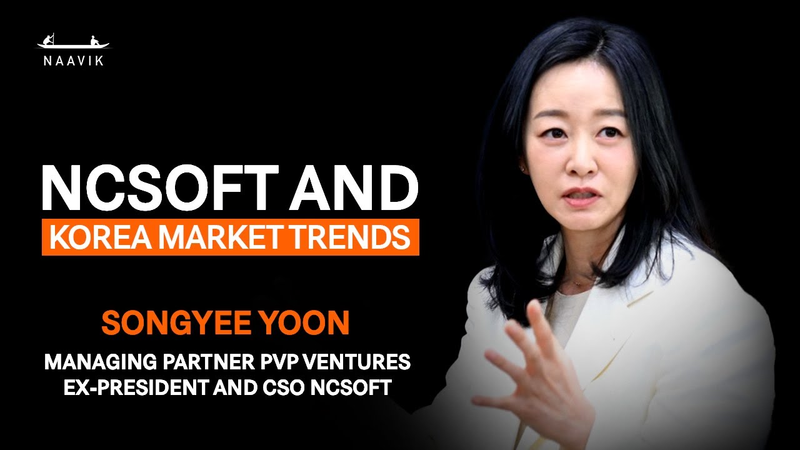
Inside NCSoft: Strategy, Partnerships, and Korean Gaming Trends
NCSoft’s strategic evolution reflects a broader transition within the Korean gaming industry, moving from rigid, subscription-based PC models toward diversified, globalized revenue streams.
- NCSoft shifted its business model starting around 2008, moving away from rigid subscription-based PC gaming toward diversified revenue streams driven by microtransactions and mobile platforms.
- The company’s internal transformation required integrating data science and artificial intelligence to refine player engagement and support large-scale international expansion.
- The Korean gaming market leverages high-density infrastructure and a history of PC-cafe culture to act as a primary testing ground for global-scale mobile and technological innovations.
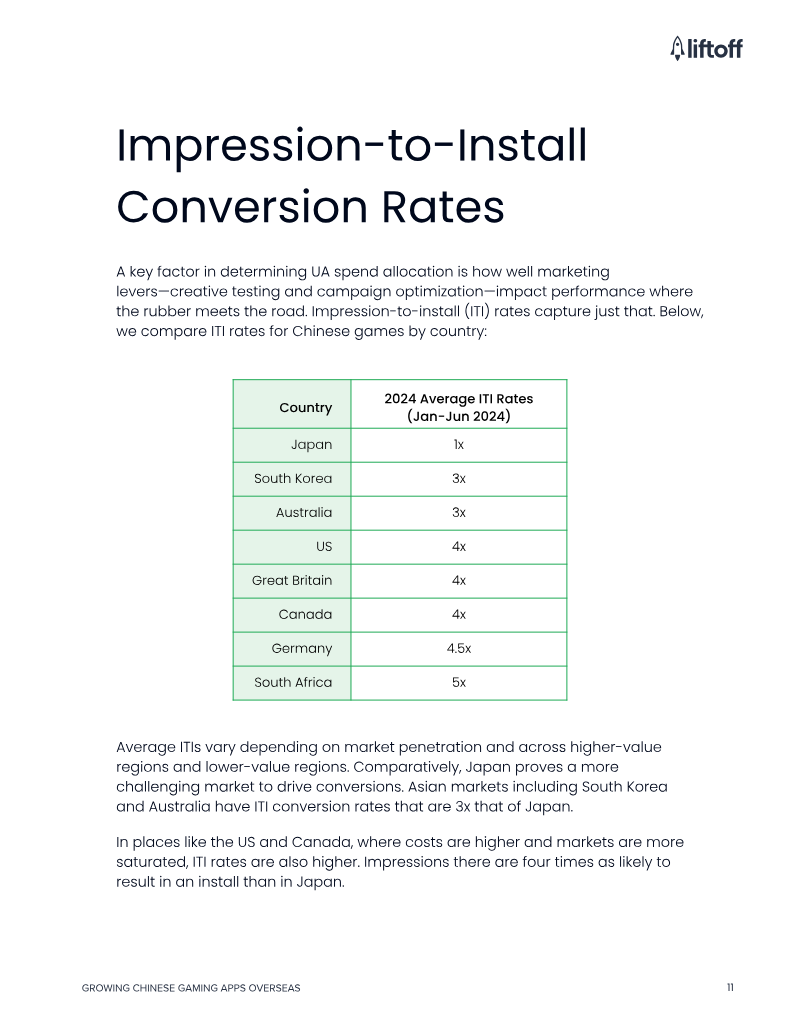
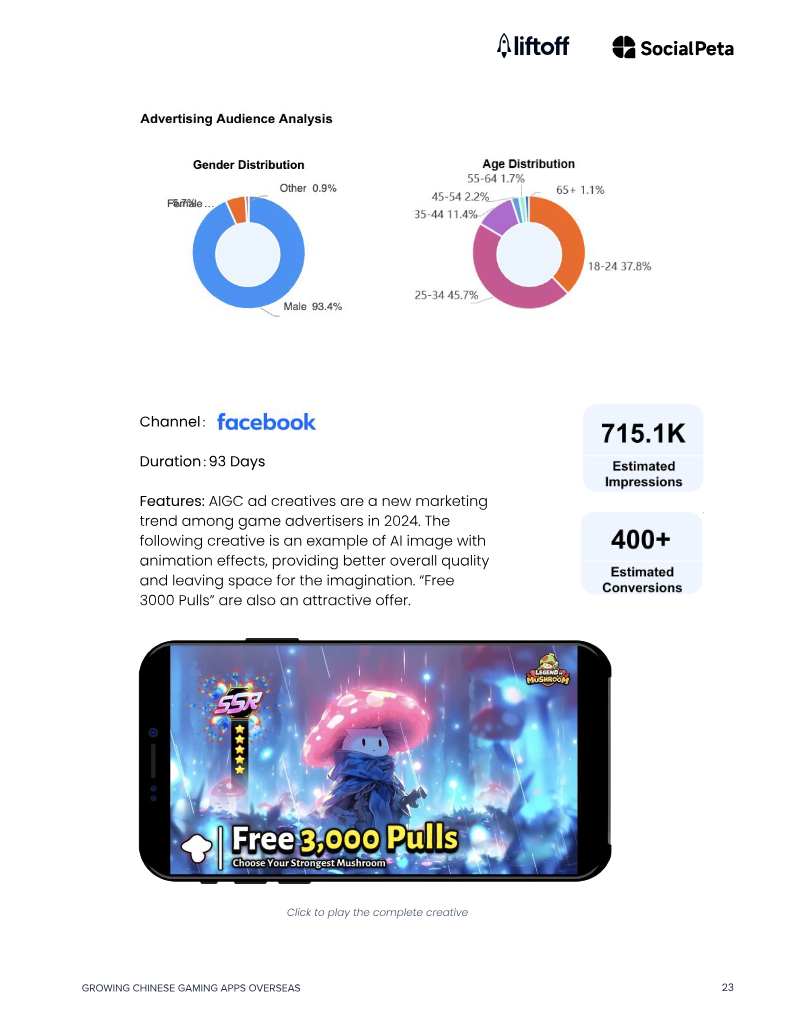
Guide to Growing Chinese Gaming Apps Overseas
Chinese gaming developers are aggressively expanding their global footprint by leveraging sophisticated monetization models and high-volume, AI-driven marketing strategies.
- Video advertising is the most effective monetization channel for Chinese developers in mature markets, currently yielding a 21% Day 7 return on ad spend.
- Generative AI is being deployed at scale to automate the production of localized ad creatives, voice-overs, and performance-tested copy to reduce costs and speed up regional market entry.
- Long-term player retention is increasingly driven by integrating social hangout spaces, customizable home systems, and minigames into core gameplay loops.
2025 eSports Player Rankings: By Game and Earnings in Korea
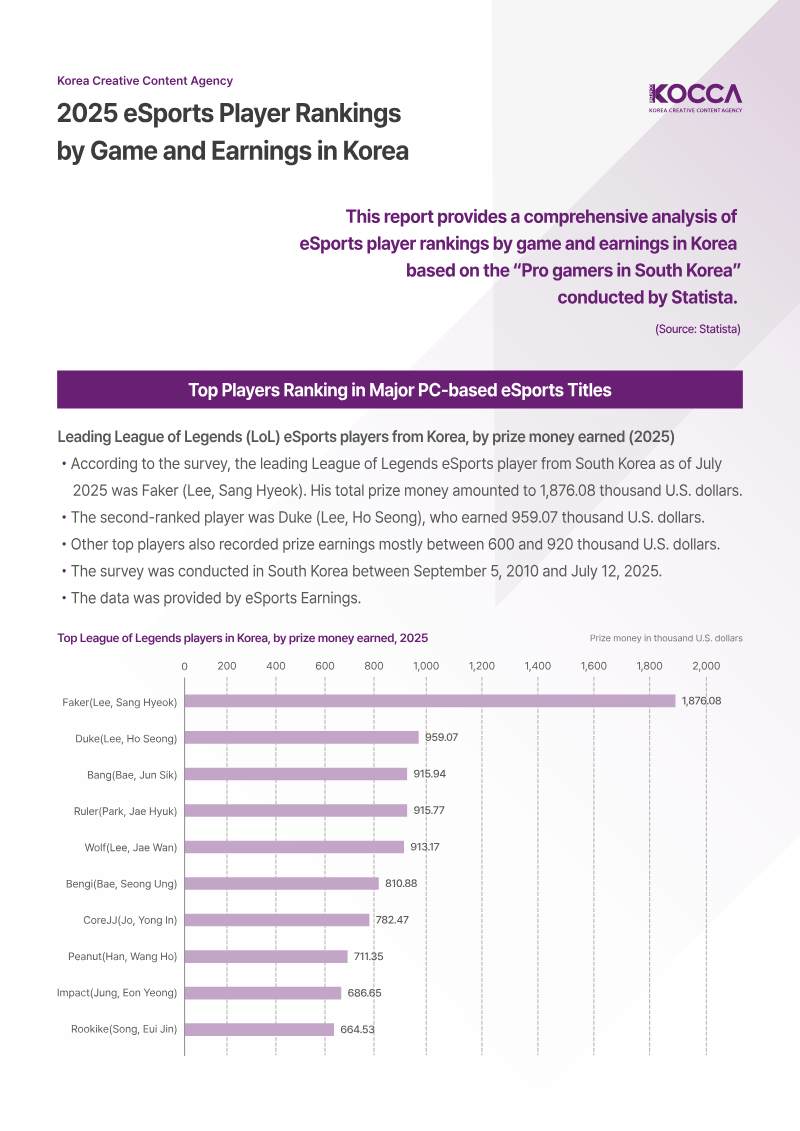
South Korea’s professional gaming landscape is characterized by a title-centered evaluation system where prize earnings are highly concentrated among elite players.
- League of Legends remains the most lucrative eSports title in South Korea, with top earner Lee Sang-hyeok (Faker) accumulating $1.88 million in prize money as of July 2025.
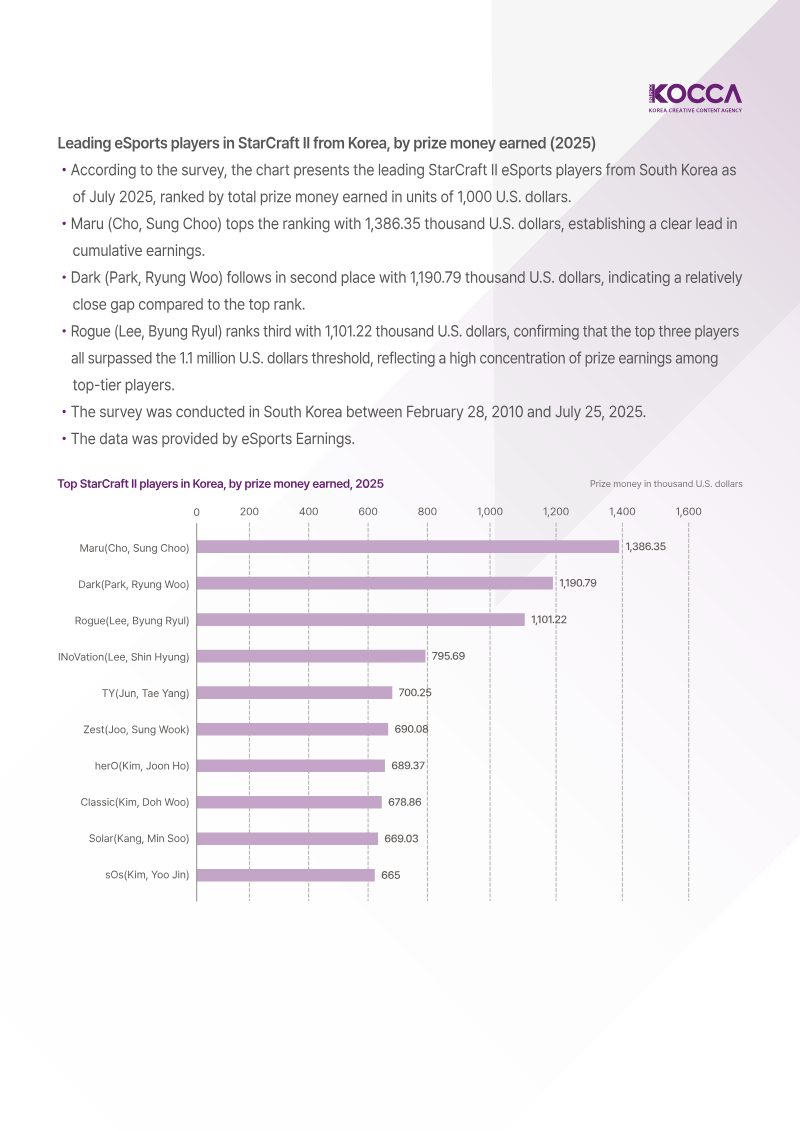
- Established titles offer significantly higher financial returns than newer games, as evidenced by StarCraft II leader Cho Sung-choo earning $1.39 million and PUBG leader Park Jung-young earning $1.25 million.
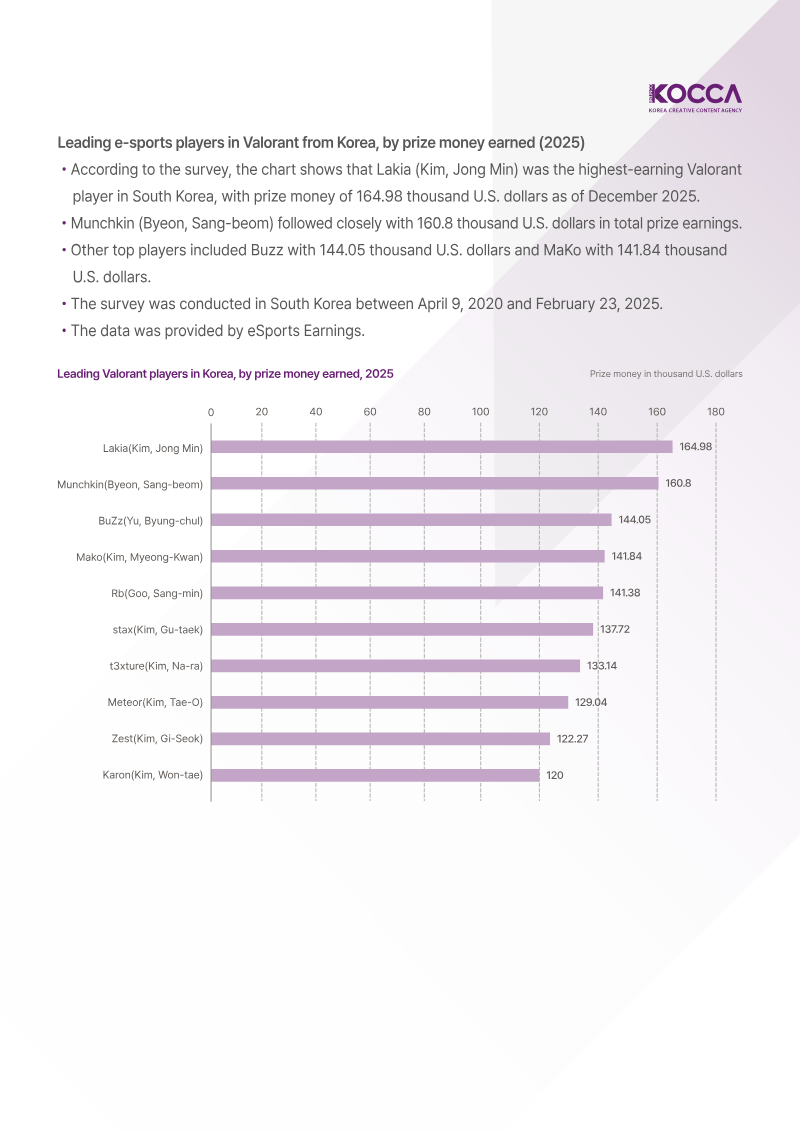
- Newer competitive titles show a substantial earnings gap compared to legacy games, with top Overwatch 2 player Choi Tae-min earning $375,450 and Valorant leader Kim Jong-min earning $164,980.
Global Business Strategies for K-Fashion: A Focus on K-Content
The analysis demonstrates that the future competitiveness of Korean fashion hinges on integrating cultural content with advanced technology and participatory fan ecosystems.
- AI integration is a primary driver of profitability, evidenced by Gentle Monster’s 25% revenue increase through recommendation engines and H&M’s reduction in refund rates via digital twins.
- Korean fashion brands are shifting influencer strategies from celebrity-based notoriety to value-aligned storytelling, treating fan-generated media as a core co-marketing partner to boost authenticity.
- On-demand production models, such as those utilized by Desigual, are effectively leveraging AI-driven forecasting to minimize inventory waste and improve supply chain sustainability.
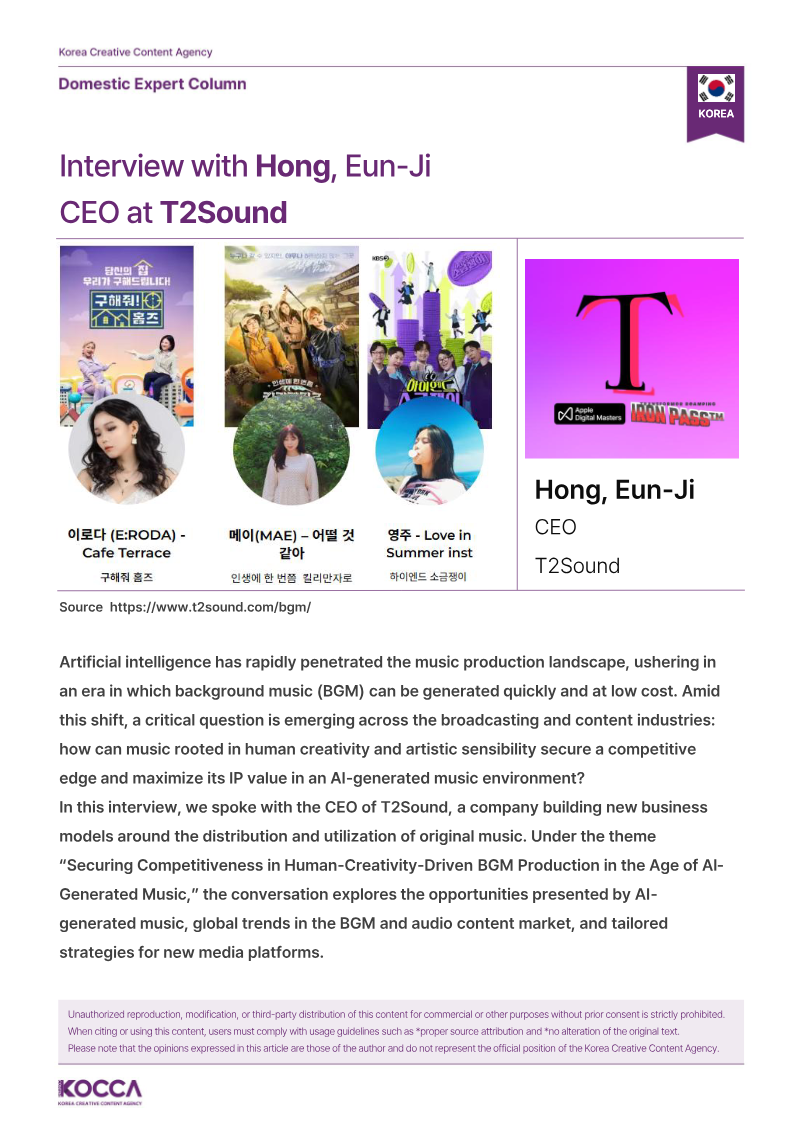
Securing Competitiveness in Human-Creativity-Driven BGM Production in the Age of AI-Generated Music: South Korea
The interview with Hong Eun-Ji, CEO of T2Sound, examines how background-music (BGM) producers in South Korea can preserve competitive advantage as AI-generated music becomes increasingly affordable and rapid.
- Human creativity remains the primary competitive advantage for BGM producers, as the ability to convey authentic emotion and intent cannot be replicated by AI.
- T2Sound maintains market competitiveness by prioritizing meticulous mixing and mastering to ensure high-quality emotional resonance, rather than competing solely on speed or cost.
- Global demand is shifting away from generic background music toward tracks with distinctive sonic signatures, with Korean BGM gaining traction due to its unique emotional texture.
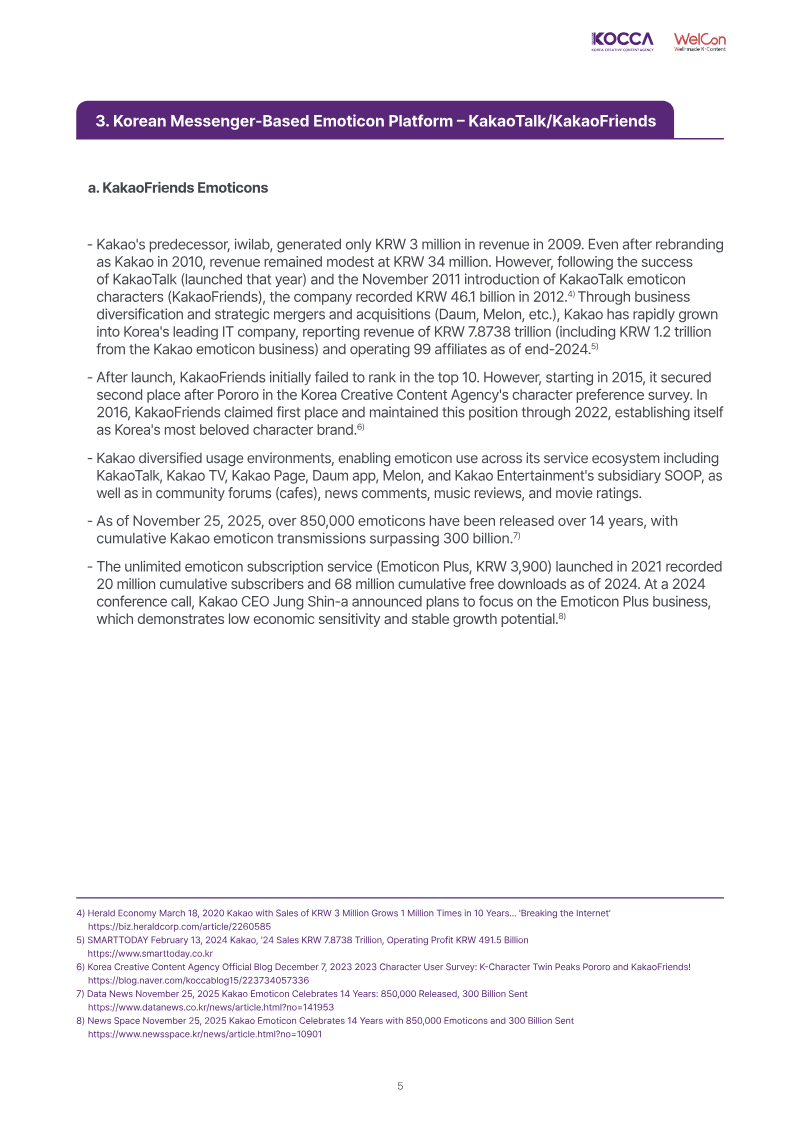
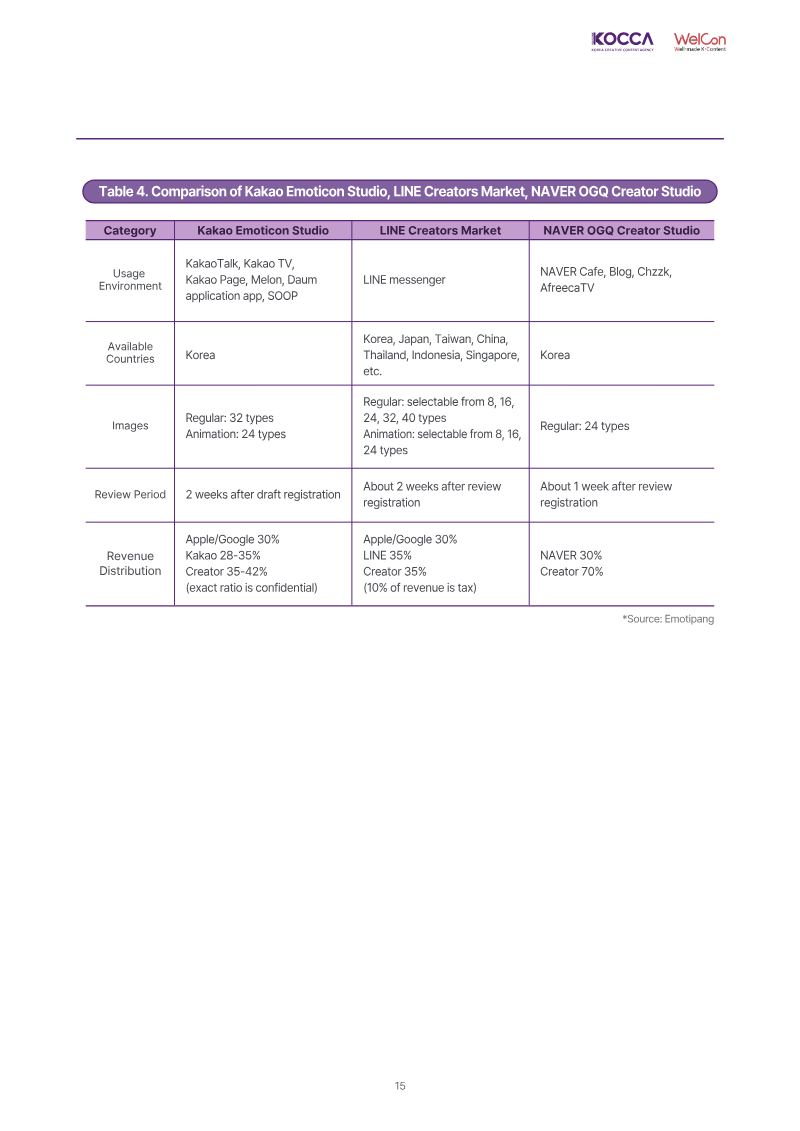
Growth of the Korean Emoticon Market: A New Distribution and Expansion Method for the K-Character Industry
The Korean emoticon market has evolved from a peripheral messaging feature into a multi-billion-won character-IP industry, now valued at roughly KRW 1.5 trillion (≈US$1.2 trillion).
- The Korean emoticon market has grown into a KRW 1.5 trillion (≈US$1.2 trillion) industry, anchored by the KakaoTalk platform.
- Over the last 14 years, the market has seen the release of more than 850,000 distinct emoticons, resulting in over 300 billion individual sends.
- Emoticons have evolved from simple messaging features into high-value intellectual property (IP) assets, such as KakaoFriends and LINE Friends, that drive revenue across merchandise, mobile games, and animation.
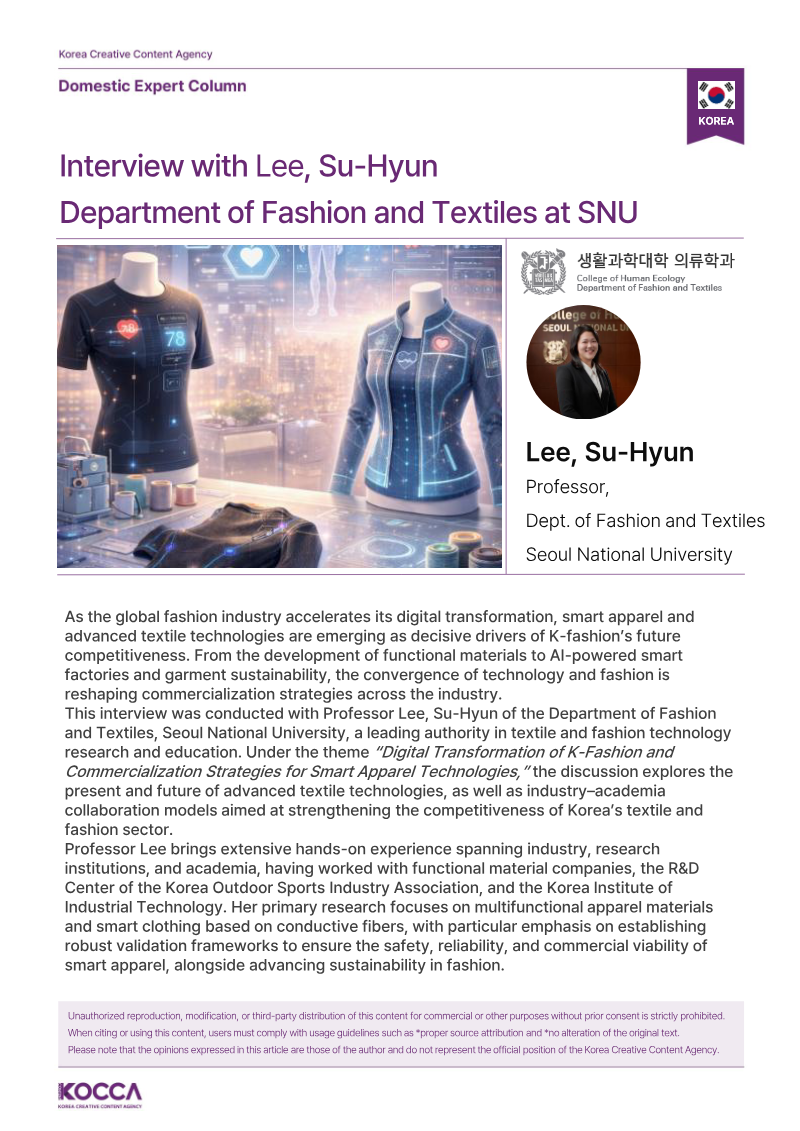
Interview with Lee, Su-Hyun: South Korea
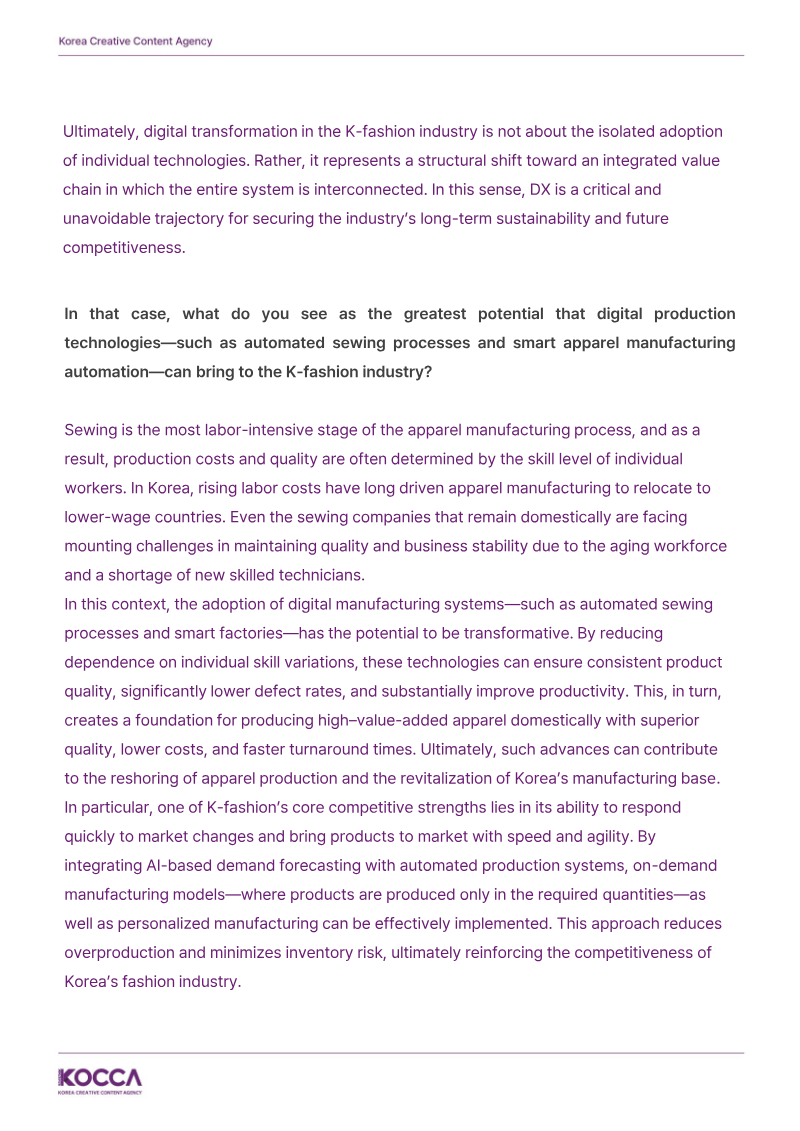
The interview with Professor Lee Su-Hyun of Seoul National University articulates digital transformation (DX) as a comprehensive restructuring of the Korean fashion value chain, extending beyond e-commerce to encompass AI-driven design, smart-factory automation, and data-centric marketing.
- South Korea’s fashion industry is undergoing a comprehensive digital transformation (DX) that integrates generative AI for 3-D virtual prototyping, smart-factory automation, and data-centric marketing to reduce sample costs and lead times.
- The adoption of on-demand production and digital traceability is being prioritized to meet carbon-neutral objectives and support circular-economy initiatives within the fashion value chain.
- Smart apparel development is currently limited to functional niches in sports, healthcare, and disaster safety, with technical progress hindered by the durability of conductive fibers and the need for miniaturized, flexible battery solutions.
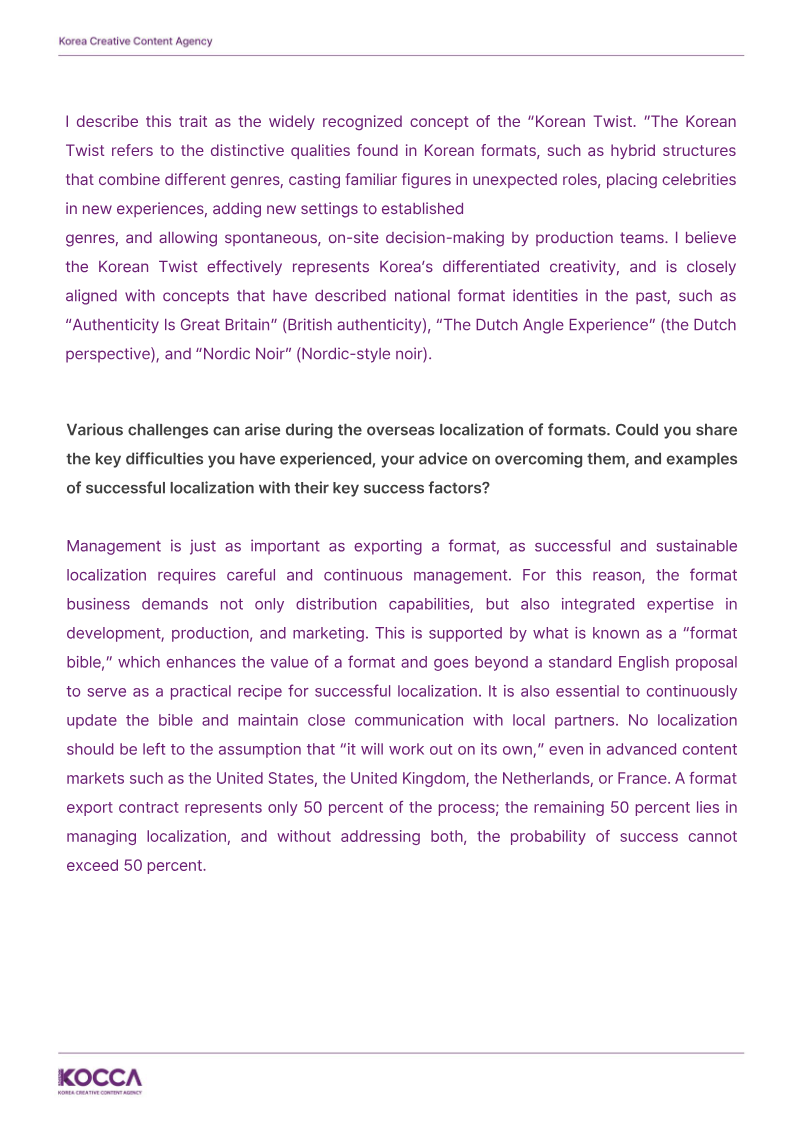
Strategies for Creating Global Hit Formats: Exporting and Localizing K-Broadcast Formats
The interview with Jin-Woo Hwang, CEO and executive producer of Something Special, outlines a strategic framework for turning Korean broadcast formats into globally successful products.
- Successful global format export requires a proactive strategy of deliberate localization rather than relying on passive inbound interest.
- Core attributes for cross-cultural success include simplicity, flexibility, scalability, authenticity, compelling storytelling, and play-along participation, often enhanced by a 'Korean Twist' of genre-blending.
- Protecting intellectual property is essential and should be managed through the FRAPA Format Registration System, detailed e-trail documentation, and the creation of a comprehensive 'format bible'.
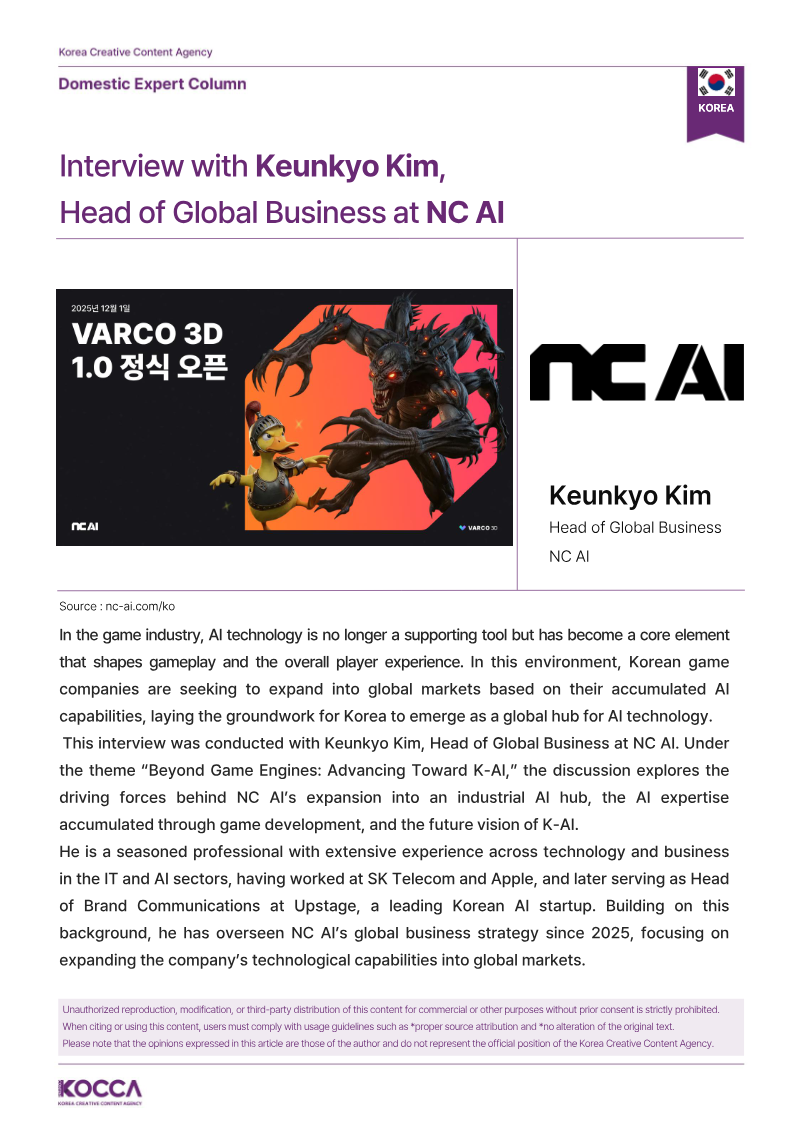
Interview with Keunkyo Kim, Head of Global Business at NC AI
The interview articulates NC AI’s transformation from a game-focused research lab into a national industrial-AI hub, positioning Korea as a global center for “K-AI.”
- NC AI is leveraging 14 years of MMORPG-based reinforcement learning and real-time processing expertise to expand from gaming into industrial sectors, including manufacturing, robotics, smart cities, and defense.
- The company is developing a dual-track AI strategy that balances a 200-billion-parameter large language model with lightweight, edge-optimized multimodal diffusion models for field efficiency.
- NC AI’s proprietary VARCO 3D engine enables the generation of physics-based 3D environments from text or images, while the open-source VARCO Vision 2.0 achieved over 10,000 downloads within ten days of release.
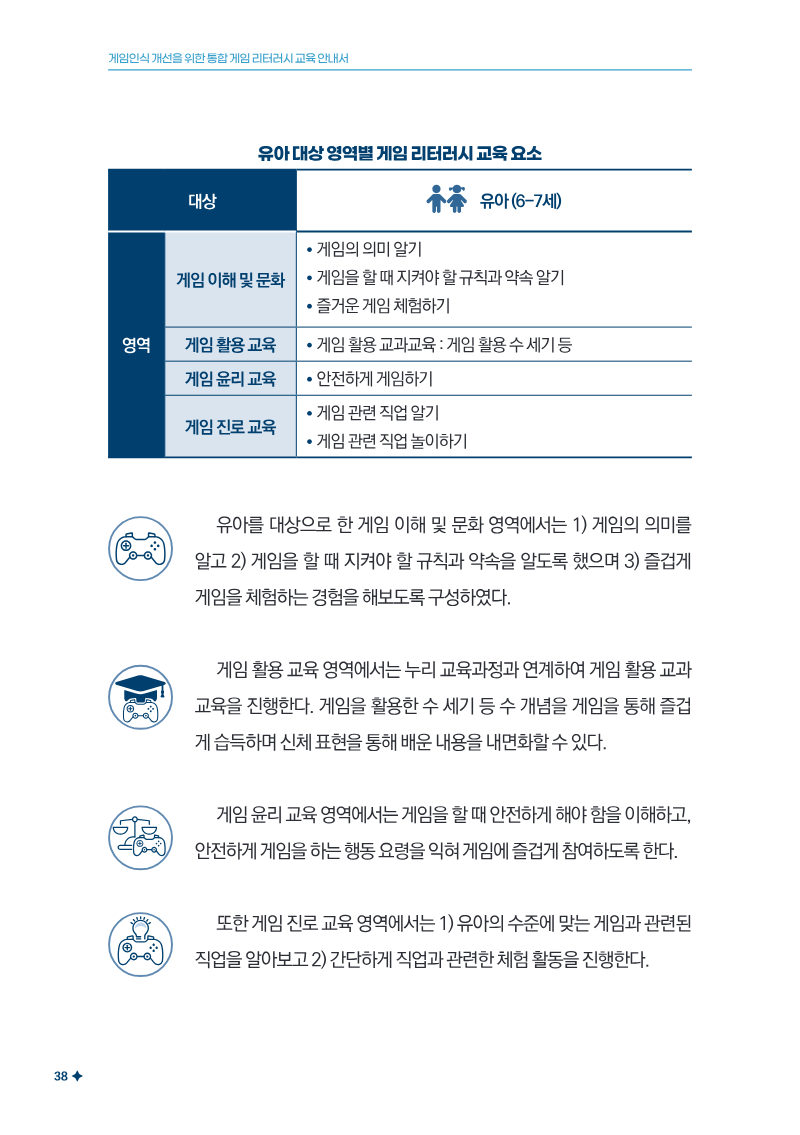
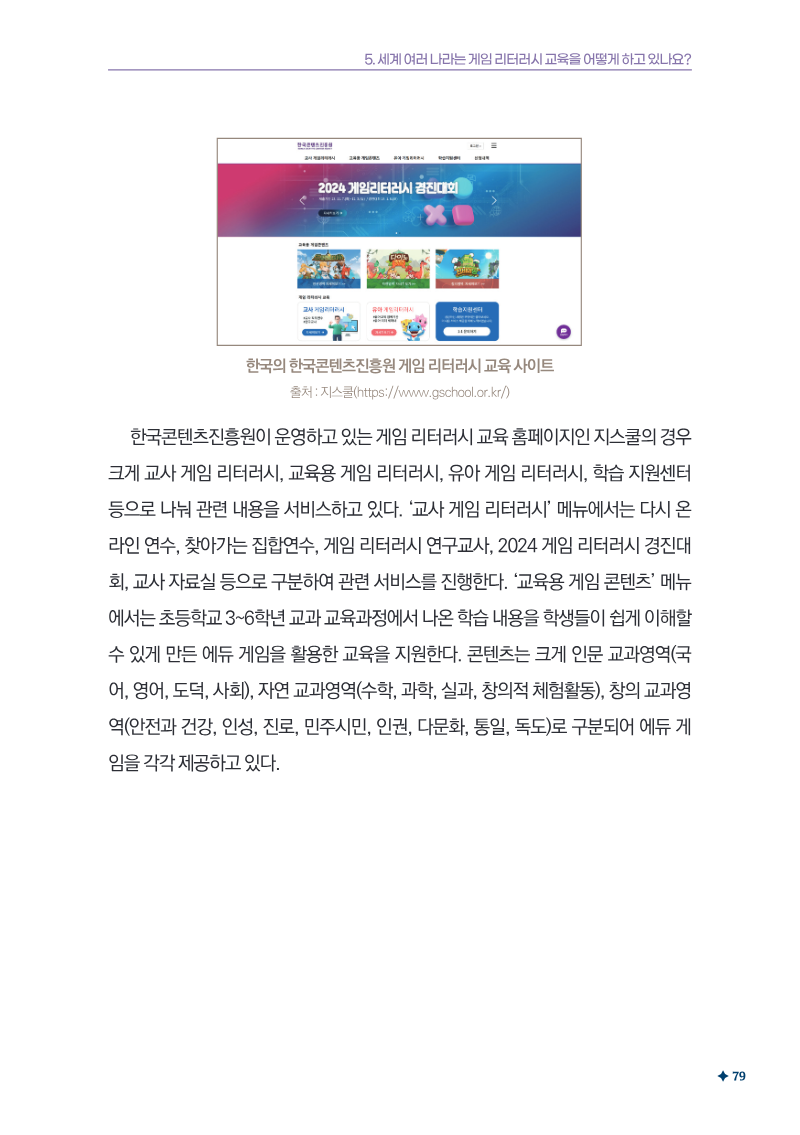
게임 리터러시 교육 안내서: 게임인식개선을 위한
Games have evolved beyond simple entertainment to become a significant cultural, artistic, and industrial force, serving as a primary engine for economic growth.
- The South Korean gaming market exceeded 22 trillion won in value as of 2022, contributing to a global landscape dominated by a duopoly between the United States and China.
- Game literacy education is being prioritized globally as a core component of media literacy, with countries like Germany, the United States, Japan, and Australia implementing systematic rating and educational frameworks.
- Daily average game usage times are rising across both PC and mobile platforms, reflecting a universal trend of gaming becoming a primary cultural and economic force.

South Korea Live Special: Market Review, Marketing strategies, UA channels, Creatives & Top games
South Korea stands as the world’s fourth-largest gaming market, contributing 7.6% to the global industry and accounting for 70% of the nation’s cultural content revenue.
- South Korea is the world's fourth-largest gaming market, representing 7.6% of the global industry and 70% of the nation's cultural content revenue.
- The market features a 92% mobile penetration rate and high geographic density, with 50% of the population concentrated in the Seoul metropolitan area.
- User demographics are split by platform and genre: older users (30–50) favor Android for hardcore MMORPGs, while younger players increasingly prefer iOS for hybrid-casual titles.