Transcript
Welcome to the Naavik Gaming Podcast, where it is our mission to explore the business and future of video games. We bring together the industry's brightest builders, investors, and thinkers to keep a pulse on current events, dissect emerging trends in games, share lessons learned, and have a great time. This podcast is also part of Naavik's growing ecosystem, which ranges from free and premium research to consulting and advisory services. For more information, visit www.naavik.co. This episode is brought to you by Reforge Labs. In today's crowded market, it's harder than ever for mobile games to get noticed. Studios spend thousands of dollars and weeks sifting through data to find ad creatives that work. It's just too expensive and time-consuming, and that's why Reforge Labs exist. Reforge Labs uses AI to
rapidly create video ads for mobile game studios like yours, helping you test and find a winning creative without breaking the bank. In 24 hours or less, Reforge Labs delivers ads that capture attention and elevate your game above the noise. Make marketing easy and fast with Reforge Labs so you can focus on building the game you love. To learn more, simply visit reforgelabs.com or check out the link in the show notes. And with that, let's dive into the episode. What's up, everyone, and welcome to the Naavik Gaming Podcast. I'm your host, Alex, and this is the interview and insights segment. This is our debut show of our 2025 slate, and I am super excited for everything we have in store for the audience this year. And so with that, um let's go. So, founded in 1997 Seoul, Korea, NCSoft initially focused on software development before shifting its focus to online gaming, a decision that many of us would know will shape its legacy. In 1998, the company launched Lineage, a title that most would consider to be an
evergreen mega-franchise. At its peak, Lineage boasted over 3 million online subscribers and generated over 5 billion in gross revenue across its seven iterations. Among these, Lineage 2 and Lineage M probably stand out as the most iconic entries. In 2003, NCSoft went public, marking a significant milestone in growth. And 2 years later, the company achieved widespread acclaim with the launch of Guild Wars. However, in 2009, the company discontinued Tabula Rasa, and by 2017, NCSoft began a strategic pivot towards mobile gaming, aligning with the industry's ever-evolving landscape. Um some notable business-related events in recent recent years include in 2021, they launched a K-pop platform. In 2022, the Saudi Public Investment Fund took a large stake in the company. And today, like many other players in the gaming industry, NCSoft is facing tough competition, rising development costs, and a market that keeps expanding and diversifying. But even with these challenges, uh NCSoft remains a major player in Korean gaming, standing alongside names like
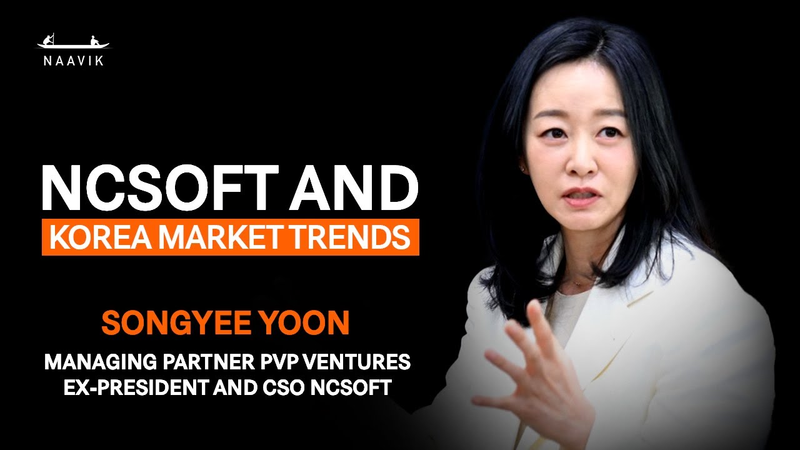
Nexon, Krafton, Pearl Abyss, Kakao, and Netmarble. So, what can we learn from NCSoft's long history in the gaming world, and where they might be headed next? So, my guest is Songyee Yoon, currently the founding and managing partner of PVP Partners, a VC firm with the mission to support AI-native companies. Songyee knows the Korean gaming scene inside and out. Before starting PVP in 2024, she spent 15 years at NCSoft, where she was the president and chief strategy officer. She joined the company in 2008 and played a key role in its growth and strategy during a transformative period for the gaming industry. Uh Songyee has been recognized by The Wall Street Journal as one of 50's women to watch in business, and also is a World Economic Forum Young Global Leader. Um she's also the author of Push Play, a book that celebrates the idea of play as an essential part of life, which is something that I of course really resonate with. And I'm super excited and honored to bring her on our show today. Um there's none better I think to discuss the history of NCSoft and trends in Korean gaming. Welcome.
Thank you. Thank you so much for having me today. Awesome. Yeah, um so everyone, you know, today we'll be spending some time talking about the history and lessons we can learn from NCSoft as well as also what can one can learn when they shift their career from a publicly traded company to the VC side. Um but Songyee, I gave you a bit of an intro, um but I'd love for you to share the story from your perspective. Um how did you stumble upon the role at NCSoft? Um where are you originally from and why do you like games? Yeah, that's a really great question. Uh so my I grew up in South Korea. I my my major is engineering. I wanted I always wanted to be a good engineer. So I did my PhD at MIT. Like uh back then it was very very uh rare like I studied artificial intelligence. Uh since then I used AI as kind of my tool and pillar for all my business career. But then uh my passion lies not just in like a technology but also like art.
Um and uh so I thought that gaming is a such an interesting intersection between art, technology, and business. And business and a kind of uh requires understanding customers and and like a human psychology. So I it I mean gaming itself is a kind of such a fascinating um endeavor uh not just as a gamer but like a from the like a business perspective as well. So I'm really excited to join NCSoft when that opportunity was presented and uh it was really uh wonderful right. Awesome. Yeah, definitely could not agree more with the with the triangulation between art, business, and technology. Um I think it definitely is exactly that. Um all right, so you joined NCSoft at this very formative period. You sounds like you had background being an engineer um and this role at NCsoft kind of you know you you wander into it, right? We're going to talk a little bit about your tenure there. You join in 2008 which is a very transformative time for
for gaming. So set the stage for us. You join NCsoft in 2008. What's happening in the industry and how is NCsoft positioned? Right. I mean I think it's a gaming I mean gaming was a very new thing. So I mean what when NCsoft started there were not many 3D gaming companies. So back then I would when I was in college I mean I don't know whether you we we played like a games like Doom on Unix terminal and every everything was in text. So we had all this commands in like a text and but it was really fun because it's connected. It's kind of based on internet and you could play with somewhere like somewhere in the on earth that not necessarily in the same country. So that joy and experience inspired founders at NCsoft. What if we can just kind of create 3D graphical interface to enable that interaction and it make it
more immersive and interesting. I think that's a kind of that's a motivation behind how NCsoft started starting with online 3D game multi MMORPG game game company. But then because there are not so there is there were not so many products like a games and the marketplaces we see today the good content itself was the kind of so selling so much and there's a lot of interest and demand from the user side. So this is perspective there is not there's no need to be very much a sophisticated. So from the very from the launch of the company that that we had only one business model. Uh it was all subscription. And the and even the price of the subscription was exactly the same for other games. So in 2008 was like a we launched Aion, which was kind of the like a second IP uh uh from
the departing from Lineage. And we and there was a kind of a I joined and we talked about like why should we keep the same price for subscription? It's different different uh it's a different heart. We're targeting different audience. It's a different game. And we also talked about uh what about like microtransactions? What why can't we sell this like a virtual uh uh product? So the first thing we sold was like a kind of t-shirt with a some kind of XP associated with and that was I mean today looks kind of such a such a common idea and everybody is doing it, but back then was like a such a novel idea and people are like uh why would people buy a t-shirt? Like uh it's like a so that was a kind of conversation that we were having back then, but I mean like uh the rest of the rest is history. Interesting. Yeah, I think that that is it really does set the scene, you know, back then in 2008 when you know, you have one business model, the
there's not too many products quite yet. You're launching a new title. You're even thinking about, you know, something that we would consider to be very common, like a CPG item being something super super special. Um and I think like you know, you were talking about like that's the way the company was thinking at the time. And so I would love for you to tell me a little bit about the framework that from which you saw the strategy of NCsoft being in, right? Like how did you build the strategic org to think in that manner? To think about pricing, to think about the different types of business pillars that you could potentially have and bring into the fold. Um you know, how did you guys actually like up that org in order to, you know, evolve NCSoft's business over time? I think it's it all came from the market. It came from the customers. So, I think it's when we when we had like very small number of products and we had a very homogeneous group of players, it was it was very simple. Like we kind of serve and like we meet their meet their need and interest best of our ability. But then as a as a public
company we had to keep growing. We had to kind of reach broader audience and quickly we realized that the desire for players play games is quite quite diverse. So, like there is there is certain number of certain kind of set up players who are really kind of go into deep into the content and and clear all the quests out there available and progress as quickly as possible and become the like a strongest person or like a leader of the guild of the server. That that seems like kind of a very typical player archetype. But there are other players just kind of find the joy in like wandering around the beautiful 3D world. Or like what the kind of solving problems and quizzes and like and also like a kind of collecting items is craft something that's that's new. So, we wanted to kind of provide
a present environment to be fun and engaging for all those people so that so that we can welcome more users and even for the players with one specific play type, they can it it's always more fun to have other users around and and that's kind of nature of the the MMORPG games. So, like for other different type of users, we need we had to have a different type of business models or business like a kind of way of entering into the world because they their commitment level of commitment and their like a it was quite different. So, that's why we kind of gradually uh diversified uh business models and offering and find the different channels to reach out to those customers and uh make that uh make that kind of a more environment more uh fertile and uh engaging and like just like a real world to have like a find the different type of players and friends and uh like a partners. Mhm.
Okay, so it sounds like a lot of that was very reactive. You know, some people started showing up to NCSoft's games and you were like, "Oh, player B is nothing like player A. How can we serve player B better?" versus it being proactively driven where um there might have been someone in specifically at the company that was like, "Mobile will be the future." or something like that. Um how did I think it's a combination. I think it's In the In the like in the in the business setting, we don't want to make a decision in a vacuum, right? So, like a we do have some hypothesis like kind of when we kind of when we were surprised like ourselves and we were like the huge demand and um like a for for the t-shirt, right? So, I think it's a it's it's a combination of uh the our recognition of the like a need to grow and diversify our user base and also just kind of having more users and kind of uh uh recognize the different play patterns. So, I think it's a I mean I think it's both uh sided is very
important. Mhm. And another thing that we were surprised is kind of uh uh again, today it seems nor- normal, but like uh we uh we had a we had a kind of a like a collaborative promotion with one of the cup noodle companies back then. That was a kind of first-ever collaboration. And because I mean that was kind of partly was driven by hypothesis uh that Oh, yeah, like a lot of our gamers like love having cup noodle like while playing cuz it's a kind of late night snack. So, why don't we have a coupon on top of the kind of a lid of the cup noodle so that they can have a uh something that they can uh uh exchange with interesting item in game. And uh that what that was very well received and to our surprise and the noodle company surprise uh because it's not uh you can kind of keep it for quite long time cuz it's like uh uh people bought like a lot more like than uh they could they can because she like during that period. So, like there's a 10x more uh like a uh demand
that they have to quickly uh make more lids with that uh with that uh code that they can exchange into the item in in our in our game. So, like we learned oh yeah, there it's something that there is a demand that like it actually plays welcome and uh all those kind of uh first steps was a very interesting experiment for us that gave us the uh ground to be more uh kind of a basis to be more creative and come up with different type of business models and with uh uh a broader audience. Yeah, that that example is fantastic and I think that's it's I'm so glad that you brought that up because something that we're going to talk about later today is some you know trends and culture in the Korean gaming market. Um and it's so funny that you mentioned this example of the cup of noodles which to me relates to today's strategy of like transmedia and cross-pollination and here we are back in 2008, 2009, 2010 having already done that in Korea, right? And I remember from like you know like Final Fantasy 15, I had a I could wear a
couple of noodles hat on my head. Um and that sort of stuff has been more intrinsic and so we'll we'll we'll table that transmedia kind of conversation for in a couple minutes, but I think that that's um that's interesting that uh it's you know it's it's a mono uh bidirectional, you know, you you're starting to see what your customers are doing and then you have a bunch of people inside the organization that are thinking about how to influence strategic direction and thinking about which company which direction to push the company in. Um, and when we talked before, you actually mentioned that there were some challenges sometimes in bringing rigor and like that kind of modern tactics to a business like NCSoft. Um, can you tell um our audience a little bit about how you landed that plane? Because it's I know it sounds like you know there's a lot of successful things happened, you know, after 2008. Yeah, I mean I think it's a it was a very interesting experience for me personally because I joined when I joined the company that was a still very early days. So most of the employees and especially that like a
leadership group were part of the founding team, right? Like kind of it was they were there like from day one. So I did I joined it still like a it's kind of very early stage and like a lot of most of them are like gamers and developers and doesn't have much of the business. I mean need for business cuz I mean I was kind of the games were like a selling itself, but like we're talking about growth and like talking about the shareholders cuz as as a public company. So there are like some some things that that from from personally joined like afterwards, it looked very obvious. Things like oh loyalty programs, right? I mean like kind of tiered programs where those like a depending on how much time you spend on like a how like how strong kind of connection with other other players that you have within a game or like a kind of using this kind of data science. Like to me like because of a background in artificial intelligence, it was very kind of it was a natural.
Like we have so much data, all the activities are done on online. So we can already kind of predict if a player is not engaged or like there is a kind of a we could kind of predict a probability of churn or you can just kind of approach those uh and offer what what can be more engaging for them so that they can like the game stay longer. So, uh we just kind of work on all it let's kind of launch all these ideas cuz it that's so uh common sensical. But then um what I was kind of uh faced with I kind of strong uh pushback. And because they said, "Oh, like you're saying it because you don't know gaming industry. You're You're saying it because like you're new to gaming." Uh so it took I mean, I think it's a even though it looked very um obvious it we had to like launch roll it out like step by like step in the in the in small steps to have that uh uh kind of a acceptance within the organization. But like eventually
uh we at NCsoft became the first uh gaming company with a with a large AI organization uh composed of like uh algorithm developers and like data scientists etc. But uh at kind of beginning was not was not um always easy. So, like I had a lot of uh conversations uh and persuasions and like trying out and um we'll we built a kind of from our the baby steps. I see. I see. Yeah, and I was I think one of the questions was whether or not you think that that was a gaming thing or potentially also, you know, a big big company or or culture, right? Um of the habituated nature of it being this is the way that games are done and trying to shift the strategy and steer the boat in a different in a different manner, which was why I was asking so much about kind of like how you structured the strategy work, right? Because it sounds like there could have been some challenges in moving a big company like NCsoft in a different direction. Right, right. Yeah, yeah. That's right.
Um okay. So, we talked a little bit about like what was going on NCsoft um at the time when you were there and some of the things that you you know, you you you helped pilot and and work through. Um I want to ask about some key moments of change during your time at the company. Um, pivotal like three pivotal shifts and what prompted them and how they reshaped the company's trajectory over that that period of time. So, if you kind of had to say like NCSoft chapter 1, chapter 2, and chapter 3, what are the shifts and were any of them technological? Like were the technological shifts that prompted them? Yeah, I think it's the first uh shift is what we were talking about. It's kind of transitioning business model from like a uh like a one one-tier like subscription model to a variety of models. Uh so, like that really changed how we develop the games and how we uh kind of design like
a leveling system because like a final leveling system when you uh is an experience has to be uh be different if it's uh sold as a kind of subscription game versus like free-to-play game. So, I think that's uh that also uh affected our lot of our design decisions and internally I think that was a kind of uh that took a lot of intentional uh kind of change in guidance to to the mission. I think second shift uh is probably uh that uh we had a we had a first uh partnership with a Tencent because I mean back then like at China was kind of growing as a kind of a market. Uh we tried to open uh an office in China, but we kind of quickly realized that uh there's a lot of uncertainty with like a policy decisions and what government wants to do like Chinese government wants to do with like a a gaming companies. So, we said that it's not a good idea to like it do everything by ourselves cuz I mean there are a lot of uncertainties. So, we kind of decide to
like a partner with Tencent and they started publishing our game uh from Blade & Soul uh in in China. And I think that's, uh, that was a one of the first like a real major partnership like external to our game our company. And, uh, that was that caused another challenge because I mean like every everything was done like internally, the time level of communication and frequency is just so easy. It's like we don't really have, uh, we don't like there's no like not much need to have a structured plan like longer term plan with a kind of a very articulated like deliverables and and having that kind of cadence of communication with that granular detail. And that's a kind of new task, right? I mean because we didn't have to do it. And that also, uh, kind of caused some kind of change it challenges and and we had to adapt to to that, uh, so now we have like multiple partners and I think that was a kind of big learning a kind of one of the state uh,
state learning curve. I think finally I think it probably, uh, for most people, uh, most companies I think, uh, for for I mean a companies that has been around as long as I just solved one of the biggest challenge was the shift into the mobile platform. And we started as 100% PC-based, uh, company. So up up until like, uh, 2015-2016, I mean we had a like a when when, uh, when, uh, mobile, uh, like a smartphone was introduced, we had like a smaller, uh, kind of content the games to have, uh, uh, to just kind of test out and understand what the what this new platform was like, how it can, uh, interact with the customers and etc. But then, uh, like 2015-2016 was a kind of a year that, uh, it was, uh, we were kind of faced with, uh, excessive digital risk because if you don't really address this like a mobile game mobile market, our revenue can be like substantially reduced because it was very clear that like our target audience and and gamers are
spending a lot more time on on mobile. They're not like they don't even update upgrade like their PCs and I think it's a lot of people who are in the PC ecosystem, I think probably face a similar challenge. So it was a it was a huge challenge because I mean like what the game's IP that was successful on PC and are not were not necessarily successful on mobile and especially our games was a kind of it's a larger scale MMO games. Sometimes are like 100 people like raid and like they're like 100 people on the screen. It was it was kind of a big question mark. Can we have the situation like large scale raid on like a smartphone screen and still provide that kind of immersive experience and interactive experience and and have a UI that lets players understand what's going on and and stay engaged. That was a big challenge and the social business model was different. And we don't have a direct contact with our
customers whereas in PC we kind of we know it like was there like who they are like if they have a direct direct contact but we always had to go through platform companies in the case of mobile. So like like that's a like a lot of different challenges not just about content development and the game design or like a business models and how we market how we kind of communicate with our target our users. So that but then I think that it was not it was not easy. We made several missteps and some of the games we had to drop but eventually we got to the point like more than half of the revenue are coming from mobile platform. So now that's kind of that's how ends up revenue competition like today. Yeah. Okay, so three big pivotal moments. The first is like you said like kind of leveling up like basic business tactics. Thinking about the business strategically, thinking about customer customer value proposition, and maybe
perhaps also I guess one could call it just being more product focused. The second shift is partnerships abroad. And the third shift is you know, in 2015 you make that decision 2015 2016 to move lineage onto mobile platforms. You know, take an IP that is winning on PC and seeing whether or not you could do all those things that you said to adapt it to a mobile platform. Um and you told me a little bit about what was going on the company in that in that time and I was this was one of the specific moments in NCSoft's history that I was going to ask you about but you've already addressed it. Um but I also want to go to the to the partner side as well. If I got my research correct, I think in 2012 you know, you said that you mentioned you did a partnership with Tencent but there was also internal uh sorry inter-Korea partnership where Nexon acquired about a 15% stake in NCSoft with the goal to combine NCSoft's IP with Nexon's expertise to administer free-to-play. Likely in preparation for
a lot of the mobile activity that you were just mentioning because the business model is different. But this partnership only lasts a couple years. So, what lessons did you learn from this and and what do you think maybe others should learn from this? And it's and then also for the audience there was a reversal of this partnership as well. So, tell me a little bit about the lessons there and potentially maybe like what you guys think you should have done in hindsight. I think it's a partnership is like a marriage like you should have a like a you should talk to eye to eye and I think it's if there's a kind of difference in understanding like what is the objective of this of this union and or the set of values and I think there is a big gap then it's it's hard to last. So, I think it's what I mean just like in any any partnership I think it's very important to have that upfront conversations even if that's kind of tough to bring up like we try to
cover as much as possible like when things go well, things that doesn't go well and then what is kind of the how we're going to make decisions and like we can't just say just because of your friends like oh yeah like we'll be able to we'll be able to figure out. So I think that's that's in any partnership I think that's the same. Some goes well, some doesn't and I think that was a time but then this is all the stride because of then there's like so much I mean they got Now we can talk about very peacefully but like it was it was a significant threat. It was the company that started in like PC problem. We're trying to do everything that was possible like this to that and see what what happens because it's not just about it's not just about setting the right strategic direction. It's also about execution and execution is like it can there's they're always like when you are executing a
strategy with this like a very large organization there a lot of uncertainties like because if they become up with a like a right business like a organization design you kind of put the right leaders in place but you never know how quickly the whole organization and everyone at every level will be aligned and follow and kind of be transformed just kind of follow through that execution at the level of speed and like and polish that that we need to really win this market in a global marketplace. So I think that's that's why we had to kind of assume that there are some uncertainties and their probability of like not not like a succeeding even if we have like a right direction and strategy. So I think there are there are like a lot of things that we were trying out and I think that was kind of one of the one of the things that that we tried. I see. Yeah, and I think you said something
interesting in there which I thought was which was that obviously you don't just go into a deal because you were friends. Of course, you should probably have those hard conversations just like a marriage. But many of the Korean gaming companies are headquartered actually in Seongnam which is slightly south of Seoul. And they're practically physically adjacent to one another. So I'm curious you know given that you've been there, right? In America I don't think that we sometimes we wouldn't put a headquarters of major conglomerates right next to one another because we feel this strong sense of competition. Like there's no Google headquarters that's right next to Apple. And so I would and you know you said like you and Nexon you were friends. And so what's kind of like the nature of like collectivism versus competition between some of the big Korean gaming companies. You know, and maybe what can the West learn from that in a positive way or in things that you think that we should be wary of. I think it's every country's different. I think Korea is very unique and um
like people like often forget that because it's kind of always punching above its weight in terms of a kind of influence of a K-pop and like all this content gaming businesses. But it's it's a quite small company countries like a smaller than California is like a like total like a population is uh somewhere like a 50 million is is it's a small small country. Yeah. So like a and so like that that's one thing. So and there are like just not in here in Silicon Valley probably see people from like all over the world and like it's you have different background and different different schooling and etc. But because it's such a small country and if you are interested in like certain subject and subject matter, it's as you as you grow up we kind of get to
know them already like high school like college cuz it's a degree of separation is very low. That's why like a lot of the most of the founders of those gaming companies went to like same like we all knew them like since our college days we know like like a friends and friends like so so I think that's that's that's kind of one difference between the US kind of the the startup scene versus the gaming market gaming industry in Korea. It looks like you mentioned Seoul and Pangyo. I think that I think it's provincial provincial government recognized the importance of like supporting gaming industry as a strategy I see. for this area. So they offered the land and helped with building like headquarter buildings and they took the government supported so like that was a such a good incentive for everyone to move down there. So that's why a lot of
the companies ended up getting there having their headquarters and I think it was a very interesting cuz I mean like you get to meet others from other country other companies at like a restaurant over lunch. You can and it it's just kind of like a block walk away to other other gaming companies. But there's a like a lot of there's a kind of a lot of like a fluidity and like a synergy and conversations and learn from each other while there's kind of very friendly competitions. I think it's a it's a very unique unique culture. Yeah, it definitely sounds like a yeah, a unique environment, right? I think a lot of the American gaming companies are very um it you know, there's like security around the outside. Like no one can see what Diablo is doing ever. Um we keep this stuff very like close to the chest. Um and so I think that obviously proximity, right? You're talking about the size of the country. There literally being less land in Korea and there's
also an incentive by the government to move to this specific land. Um and that kind of created that interesting, you know, friendly competition and dynamism between some of the companies. Um and so this is kind of leading into like one of our next topics, which is about trends and culture kind of in the Korean gaming market. Um and then you know, you we talked about in 2016 you guys making the shift to mobile, but in 2020 you also have a big push into just broader entertainment. Um and I want to spend some time talking about those things cuz you also mentioned, you know, Korea is somewhat punching above its weight in terms of influence with K-pop and all those types of things for being a small of a country that it is. Um and so maybe we'll start with that, right? Um there has been a huge influx of Korean influence into the West um with things like K-dramas and BTS and Blackpink and all the things, right? Um how important do you think K-pop is to gaming, right? Um and and how did that influence what you guys did at NCSoft
when you bought the K-pop a K-pop platform? So I think it's a uh I mean, we can talk about it in from many different aspects. Like often times uh you know, I think there's a kind of very famous quote, like who is a competition for iPhone like many many years ago and and they said, "Oh, like a real competition is Nike." Because like like people either go out and run or like kind of spend time on like phone. I think that was a uh just like that. I think it's a uh the competition to gaming is not just not not just another gaming. It's anything that can really engage uh or like a grab attention from our audience uh kind of uh through the very entertaining content. So, I don't think that uh there is it's too different that like a gaming content and and and overall entertainment market. It's they're trying to really come up with way of uh uh
providing that type engaging entertaining experience like uh like short-term short-form videos is another like they are not they don't say they're games, but like they are clearly uh uh taking the gamers' attention away and they could right? So, I think that's a I think that's kind of important for us to understand like what's what's data of this competition? Like why today's players and today's audience prefers and time more on this versus that. So, uh I think it from that like uh uh continuity spectrum, I think it's always helpful to have understanding in like adjacent industries and alternatives for our for our audience. That's one thing. And I think it from the uh and also and another thing that's interesting about gaming is I always think the gaming in gaming industry is a petri dish for all these new innovations and technology. So, um
and that's because uh what's at stake is uh this climate crash. Like I mean like if you and that like 10 years ago 15 years ago, if you apply AI to driverless cars, what's at stake is human life. Like you have to very very careful and have like a lot of the safety measure in place before applying it to like larger audience. Whereas in gaming, I think we can apply innovative like new uh technology even if it's not like too mature because uh one because the kind of what's at stake is a kind of clan crash like we can just kind of restart the re- re- reboot the client. But at the same time, our audience are early adopters. They have to enjoy and they actually like for us to kind of try out new things. They appreciate that our effort to incorporate new innovation in our content because that's part of the fun because that's part of fun to be early adopter. It's a part of the fun to kind of explore what's what's novel and what
has not been uh around for very long time. So uh in that in that sense like a lot of the technology is uh like like animation tools like the game engines uh like a cloud and then even the Kubernetes there's like an like a uh all of those things were uh adopted in daily polished and uh and went on to other industries. Mhm. One of the most uh uh industry that's a kind of proximity to gaming is an entertainment and movie and animation. So there's a lot of interchange of like a technology and talent uh like if you go like in Vancouver a lot of the the game uh artists are there, they I they can either work on a uh movie project or they can work on a gaming project. So there's a lot of a synergy uh in uh creating today's content and entertainment when we have that kind of strong foundation with the platform. So I think that's uh all those things kind of uh uh led us into
expanding and using our technology to uh to uh engage and like a communicate our users and uh your our players with a different meeting and that's uh that's entertainment that's kind of K-pop and that's uh that's platform that's different type of platform. Mhm. Interesting. Okay. So for you guys again, it's like K-pop is just, you know, thinking of thinking of yourself as an entertainment company. That's where K-pop fits into the fold versus thinking of yourselves as a gaming company. Um and so, there's I I feel like we could definitely go down the K-pop channel for a very long time, but um I've got so many other questions about some of the trends that are going on in the Korean gaming market. And the first is actually primarily that Korea is known for being a very hardcore player base, right? An audience that focuses on skill and competition probably more than a lot of others. Um but in the West right now, there's I think an ongoing trend towards casualization, cozy games, auto battlers, right? Is this trend happening
in Korea? Um and if not, why do you think that Korea is maybe going in a maybe asymmetric from maybe what the West is doing in terms of its preference for games? I mean, I think it that's a that's a very interesting question. I think it's a I mean, that's a kind of uh I think I look at the also uh related with a kind of entry into the gaming industry because one of the most successful games early on were not casual gaming companies. They were like hardcore MMORPG gaming companies like NCSoft, right? So, I think that when we think about gamers, that's kind of how it started. So, like we have a good foundation of the gamers who are who know how to play and who enjoy playing these hardcore games. And on top of that, we had a very strong culture of uh PC cafes uh when the broadband was first introduced, uh it is there's a lot of demand for high high-speed network and computers. And uh for Korea being such a kind of uh
high-density uh city and um uh again, an environment, it made sense to have like a PC cafes in every corner of the uh of the town just like a Starbucks. And people uh not only kind of did uh whatever was needed to be done internet, but they also played games. And I don't know whether if you have played a game in PC cafe, it's it's really fun. I mean, it's very, very different from like uh like it's it's very different from like kind of playing your in your room by yourself, even if it's a mobile like online game, because you yell at your friend like right next to you. Like it's kind of a hand way and it's it's it's a quite a different experience. And then because they know, like they have expressed what it is like, uh there is a lot of like a demand for that type of uh type of games. But I think it's also uh but but then uh so like a every country, I think at the the beginning of the the industry and how it happened to and there is difference like
a bit. That's why the original set of the uh the kind of the the players are a little different. But I think it's with a more global kind of uh in kind of a interconnectivity and and collaboration, uh it's it's getting similar to each other. So, I think that there are a lot more diverse type of players. In Korean market, there are a lot of casual players, or female players, and they they like kind of uh look for different type of games. So, like the now there are very successful casual game developers and like uh and and content and um yeah, like that's uh that's also being diversified. I see. Okay, so you think that there is a general trend that it may not be as severe as it is in the West, but you think that there's a new form of gamer arising in Korea. Um, one that might be more preferential towards casualization. And you think that some Korean gaming companies are moving to kind of satisfy that need. Um, okay, so there's that trend about
casualization and genres, etc. Um, another thing that I think has been really, really interesting and fascinating to watch is why the Korean gaming market is more bullish on blockchain and blockchain games than the West. Um what is the thesis and why is there a patience to play this very long game um on blockchain? I mean I think it's that it's the I don't think that's a just a gaming trend. I think it's a blockchain trend. I think blockchain trend. I think that Korea is a uh has a culture and um it interesting uh kind of uh tolerance to risk uh so to speak. Uh so I think that's uh that's uh uh it's a little different. So it has been always a case. It was the first country I mean it long before blockchain. It was the first country to uh sell and buy big appliances like uh like
a washing machine and like a refrigerator install payment. So it was like a before credit card. Mhm. Credit card market was like flourished. So I think it's it's a it's a it's kind of a in in I think it's a just that's that's kind of embedded a culture. I think a blockchain and like crypto kind of uh uh resonate with that type of uh interest and willingness. Mhm. So that's so like a they are not necessarily gamers. They think they are very interested in blockchain and I think uh as a part of utilizing uh finding utility in blockchain. They are like a combined with a game. I see. Okay, well I've watched enough K-dramas to know there's always like one character with like a really big gambling addiction. Um so I'm presuming that this is maybe where it's coming from. Um but I thought that that's Well I wouldn't say really I wouldn't say gambling but I guess it's kind of Yeah, risk. Risk is the better is the is
the is the finance word for it. Um but okay, interesting. Um and then you know, I kind of want to bring us back to uh one of the questions that we talked about earlier, right? Which was, you know, your you did this partnership with Cup of Noodles very early in NCSoft's inception, right? How does KR, or Korea, sorry, think about the transmedia trend and the buzzword that's been going on in the West, you know, new novel, or you know, potentially I could see one saying, "Oh, the West has just kind of been behind the ball. We've been doing this this whole time." Um, or do you think that there's anything different about the way that transmedia is occurring in the in the US right now, you know, in a collaboration between an Uncharted movie and an Uncharted game? Um, how do you guys see that this awakening to transmedia that's happening in the West? So, yeah, they think it's very interesting trend. Uh, but I think it's again, I think it's uh because uh the target audience is that there's so much overlap. Uh, I think it's just very
natural, right? Cuz I mean, uh I'm not I'm not I don't I'm not sure whether you're aware, the the reason I was introduced uh to NCSoft and the game was because of the transmedia collaboration. Um, back then, uh when when we launched uh Lineage 2, so it was like a very very like early 2000, uh we will launch uh the person who was promoting Lineage 2 was the singer Rain. And then, like Rain is like kind of the like one of the the first artist from uh produced by JYP. He was a very big uh kind of uh uh singer uh just like uh Psy uh back then. And he was the one who was promoting uh Lineage 2 uh costume into one of the uh uh the heroes of the game. So, that's uh uh to me, that's kind of transmedia collaboration because like uh like as uh singer and artist showed up
in gaming and that kind of generates different type of uh uh and a fan following and engagement uh another kind of fun for like interacting well with the with the rave. Um and I think that has been a very natural uh adoption in a Korean industry overall like when they uh like I I don't want to like date myself here again but like uh we are launching do you remember the year you remember 3G like when we launched the 3G it was a kind of time where we were very excited oh like finally we can uh see images on like a phone like uh like we can probably watch movie like on a phone and like when when the 3G was launched it was uh one of the J JYP's uh artist again that um that uh did a promotion. Mhm. It that kind of cross genre collaboration uh with with those like a uh with a artist from uh different uh different
domain has been always there and one of the most successful like uh uh Netflix shows in Korea are based on uh all the psycho webtoons and those of webtoon stories uh are chose that and and chosen uh uh based on their popularity and that those story and like those characters and they are like a setting and all of that inspire uh uh writers for games as well. So like there's a lot of like interplay between uh those like different segments of an entertainment and um I think they kind of has a kind of synergistic relation with each other. Mhm. Okay. Yeah, so it sounds like from your guys' perspective this was something that was already embedded into the culture right? This intrinsic partnership between music and film and TV and games and it was just always living and breathing and so I think the the thing for the examination that you might make of the West is that we're behind
and that you guys had discovered this a long time ago and found it to be very very I guess financially benefit financially beneficial and also great for the popularity of the franchise and the title. Um So, okay. And then there's one more question and I think like that's around, you know, the direction of of of mobile, right? Like you say Korea embracing mobile earlier than a lot of others, right? Mobile penetration in Asia is, you know, bigger than it is in the West. Um it's probably one of the most significant gaming platform at this point in time. And mobile right now is going through a bit of a reckoning, right? Um with ATT and all of the lack of the identifiers, etc. Do you think this is true in Korea as well, right? I'm under the impression that there's also a myriad of different storefronts, One Store and things like that that you may not be such so subjugated to what's happening between on Google and Apple and those and those and those spheres of business. Um what is it looking like in mobile for
Korea right now? I think it's a I mean like it's mobile is like one of the reason why the penetration was so high was because of massive rollout of the broadband like and also the kind of internet. So, already like early 2000 um people had a connectivity underground and subway. Like there's like a no like a a um kind of absence of the of the network in anywhere. So, I think that's because it's a so a kind of a it was so easy to connect that it was kind of you it provides a very reliable connection. That's why people uh adoption was was higher because it was a reliable platform that I could kind of carry it without worrying about ever losing the connection. And I think that's uh that really helped with uh like higher penetration in the adoption adoption of the of the of the mobile platform. It's only natural that like once you spend so much time on like one
platform, you like a kind of uh uh uh uh going to doing it for not just for communication, not just for like a productivity work, uh also for like entertainment and other things. So, like that uh that enabled the flourishing of the mobile games uh and higher uh uh a kind of a level of development. I think it's only Well, it in the like in the broader sense, I think I believe in uh the real uh good innovation for for all of us that's kind of beneficial for uh for not just uh uh not just the kind of players and customers, but also uh like a uh uh the businesses come from fair competition. And I think it's uh if if there is a structure that's uh uh that's uh unfair. I mean, like it there is a kind of a artificially providing some kind of unfair advantage. And if there's like a way to provide similar utility and a
more like a more uh user-friendly and uh cost-effectively, and I think that's always an attempt like someone uh is working on finding a solution. So, I think it's uh if you see that uh you see that kind of uh unnatural equilibrium, I think it'll just kind of get to the point that there is a of competition and there's openness and that's uh that's that because that's good for for all of us involved. So, it says it's got but momentarily at like at one one point in time, there could be some uh the kind of a local minimum, but I think it will eventually once this kind of get to the uh get to the global uh global uh minimum which is the best for for the industry. So, I think we're kind of we I mean, I think it could be uh we may not uh reach that uh yet. Like there is a lot of there could be a lot of changes and I think we all should be prepared for that. Mhm. Okay. So, in other words, I think you you basically see there being a a mobile rebound similar to um, and there
there eventually will be a mobile rebound, um, basically. Interesting. Um, okay. So, before we move to cuz we're we're we're getting up to the end of our episode here. Before we move to our conclusion, where I'm going to ask you a bit about your since you are the kickoff episode of 2025, some predictions for the 2025 global gaming market. Um, you know, you spent this whole this whole 15-year period of your life at NCsoft. And now you're moving it to the venture capital side. Um, how are you taking everything you've learned at NCsoft and applying it to venture? You know, if you had to say like these are your top three lessons that you've learned from your time at NCsoft and they're and applying it to venture capital, what are those top three things? It's a very great great question. So, like our thesis is very simple. Like if you look at like if you've been around, like a the the latest uh, uh, revolution is really digital
transformation, right? So, like a lot of there is a there has been a lot of investment that went into it. A lot of companies spent uh, like especially incumbents for for like digital transformation. But uh, if you look at top 10 Nasdaq companies, more than half of them are digital native companies who started after broadband, after introduction like a digital technology. I think similar thing is happening today that a lot of companies starting today are AI native companies. So, now they have they have access to all this different tech stack resources, compute, and the talent who understands AI native AI technology, data science inside and out. So, they can build the companies that we couldn't do 10 years ago more efficiently different text that with a kind of a better service offerings, etc. So, our PVP or venture fund is
is a is investing in those AI native companies that wish to be winners over the next decades. We're going to be shaping the business landscape and how we do things. And I think it's a it's the same similar thing is applied to gaming entertainment. I think gaming is a kind of evolving concept like in that like in like many many decades ago gaming was kind of board game and like it was very very it very strict kind of turn-based game. It's like a now we have like a different type of genre which we say this is gaming is a kind of one bucket, but we all know it's like it's so many different things. It could be a MMO RPG, be community game, collections card collection game like it's all very different. And I think it the the integration and of this new technology allow us to develop new type of fun and novelty that users will be really excited about that's different from what we have seen. And that's a kind of I
mean that's a nature of like the that's that's kind of a challenge and fun of being a gaming industry. We don't want to keep creating same thing over and over again with under the same name and just kind of a different cosmetic makeup. I think we want to be very creative and we want to use the new technology and and and tools available today and create something that's inspiring to the next generation of players. And we do have new type of tools that we didn't have before. But it's an opportunity for the gaming companies to come up with new type of content that's inspiring and more engaging that that's kind of a that's why it's very exciting time. All right, very nice. Okay, so I have to ask you about your 2025 predictions. And so the first question is what is your prediction for the 2025 global gaming
market? The second question is what do you think specifically is the opportunity for Korea in 2025? And the third question is where do you specifically see NCsoft going in 2025? I mean I uh I don't have a like a crystal ball. Like I'm not going to say why it's a prediction. Yeah. Well, I think as I said, I think it's a gaming I mean we've been in gaming market for decades, like a couple of decades now. I mean I think it's a it's an It was a new nascent market, but now it's a it's a it's a large and with like a there are like large international players and enterprises. It became a big industry that attracts uh not just the gamers, but like a good engineering talent as well as kind of uh the
seasoned business people and management. And I think it just like any maturing industry goes, there's a lot there will be a lot of consolidation like a kind of the collaboration to find more efficiency in and provide I mean providing the offerings to the to the audience. And there and at the same time for like a for more like mature franchise there's a like a for more more established companies there could be uh, continuing need to be uh, consolidated to find more efficiency, to continue build the business operations. At the same time, as I mentioned like a gaming has been evolved uh, as long as we've been around as a human species, right? I mean like a we I mean there's like a whole book about Homo Ludens. Like we live to play, right? I mean like we don't live to work. Uh, we refine and there's always a
novelty, new technology. We find a way to enjoy and interact and make connections with others. And because there's so many different uh, new technologies and and uh, breakthroughs, like I I kind of look forward to see new type of fun and entertainment that um, game designers will come up with with their like uh, amazing uh, imagination. So I think that's uh, something that I really always look forward to. And I think uh, ASUS Soft will also have to look to both ways, to find a way to be part of the kind of uh, this exercise of like a scaling and like find a collaboration with uh, international players and uh, find operational efficiency while like uh, not be complacent with finding uh, new innovative ways of keeping gamers engaged. Mhm. Okay. And then um, for Korea specifically in 2025, let's just say I'm an investor and I'm looking to um,
in- increase my my Korea exposure in my portfolio. Um, maybe the better question to ask is what do you think is currently being undervalued in the Korean gaming market? I think it's a Korean gaming market has like a uh, great talent. I mean I think it's uh, it's a lot of the great uh, programmers and engineers are in gaming sector. So I think there is a lot of I mean, I think it's a what's challenging is for Korean gaming company to really break out of Korean market, be global leaders and and and gain the scale. I think it's in terms of the the development talent. I think it's really spurs. So, I think there is a lot of potential with the right uh right framework and and um and and the leadership to to to kind of get to that stage. Mhm. All right. Um well, thank you so much. Um we're moving up onto onto time for us. Um this is clearly a very It's
so exciting because I think it's so cool to talk to someone who spent so much of their career in a completely different gaming market than, you know, perhaps the one that, you know, I'm familiar with or our audience might be familiar with. Um so many different cultural trends um not only amongst players and consumers, but also amongst the, you know, the actual builders of the space, the business minds, the engineering minds. Um so, I really appreciated like learning bit about the dynamic between some of the big Korean companies and the rich history that NCSoft has had. Um this is awesome. Now, I guess a a final thing that I might ask you is that um, you know, many of people in our audience are um are founders who are also potentially maybe working on an AI gaming company. If they are trying to maybe get in touch with PPP Ventures, um how can they reach out? Oh, yeah, we have a website uh principalvc.com or LinkedIn. So, I'm always welcome to uh meet new founders with a new ideas. Awesome. All right. Well, this is great.
Um as always, friends, um if you've got feedback or ideas, hit me up at [email protected]. I'm always open. And with that, um we're out. Uh see you next time. Bye. Thank you. Bye. If you enjoyed today's episode, whether on YouTube or your favorite podcast app, make sure to like, subscribe, comment, or give a five-star review. And if you want to reach out or provide feedback, shoot us a note at [email protected] or find us on Twitter and LinkedIn. Plus, if you want to learn more about what Navic has to offer, make sure to check out our website www.navic.co. There, you can sign up for the number one games industry newsletter, Navic Digest, or contact us to learn about our wide-ranging consulting and advisory services. Again, that is www.navic.co. Thanks for listening, and we'll catch you in the next episode.
Auto-generated captions from YouTube — names and numbers may be misheard.















Comments