South Korea gaming industry reports and market data
Documents

Monetizer: Wonder Tactics
Wonder Tactics, a free-to-play mobile RPG developed by Com2uS, utilizes a super-deformed, cutesy art style to target a specific niche within the mobile gaming market.
- Wonder Tactics by Com2uS utilizes a standard mobile RPG loop centered on hero collection, squad management, and progression through turn-based combat on a three-by-three grid.
- The monetization model relies on randomized hero acquisition via premium currency and tiered scrolls, supplemented by daily login bonuses and starter support kits.
- The game employs a character enhancement system where lower-level heroes are consumed as upgrade materials, a mechanic that includes a risk of failure common in Asian markets.
How to engage with Asian mobile publishers (Tencent, Gamevil, Nexon)
Engaging with major Asian mobile publishers—such as Tencent, Gamevil, and Nexon—requires a strategic approach that prioritizes long-term relationship building, deep market research, and a sophisticated understanding of free-to-play mechanics.
- Asian publishers prioritize developers who demonstrate a deep understanding of free-to-play mechanics, as this is the primary monetization model in markets like China.
- Publishers look for unique, innovative concepts rather than clones of existing hits; for example, Tencent evaluated over 6,200 games in a year but only a small fraction met their criteria for publishing.
- When pitching, developers must provide concrete, honest data, such as retention rates (e.g., Day 1, Day 7) and payment rates, rather than relying on best-case scenarios or anecdotal success.

Why you should visit Korean game show G-Star
G-Star serves as a critical window into the distinct operational and cultural differences between the South Korean and Western gaming markets.
- Independent game development at G-Star reflects a universal artistic framework that mirrors the experimental sensibilities found at Western events like E3 and Gamescom.
- Large-scale Korean studios frequently struggle to penetrate Western markets because their attempts to adopt Western tropes, such as mafia-themed narratives, often lack cultural authenticity.
- The South Korean gaming market maintains a cautious, delayed approach to virtual reality technology, contrasting with the aggressive investment and adoption trends observed in the West.

Biz Daily: How Com2uS become a world player
Com2uS has successfully transitioned from a localized South Korean mobile publisher into a significant global industry player, driven primarily by the sustained performance of its flagship RPG, Summoners War.
- Com2uS reported Q2 2015 sales of $97 million, representing a 16% increase quarter-on-quarter and over 100% growth compared to the same period in 2014.
- The RPG 'Summoners War' is the primary driver of company growth, necessitating an increase in quarterly marketing and user acquisition spend from $15 million to $18 million.
- Com2uS has successfully pivoted from a local Korean publisher to a global player, with 82% of its Q2 2015 sales generated outside of Korea.

Biz Daily: Why Vainglory dev Super Evil raised $26 million
Super Evil Megacorp has secured $26 million in new funding to pivot its mobile MOBA, Vainglory, toward an eSports-centric business model.
- Super Evil Megacorp raised $26 million to pivot its mobile MOBA, Vainglory, toward an eSports-centric business model.
- The company is prioritizing long-term ecosystem growth and user acquisition over immediate monetization to establish a spectator-driven experience similar to League of Legends.
- The strategy focuses on the Asian market, specifically South Korea and China, to leverage established eSports cultures.

Biz Daily: Lower App Store pricing for India and Indonesia
Apple has implemented a strategic adjustment to its App Store pricing structure, responding to shifting global exchange rates and tax regulations.
- Apple has introduced two new low-price tiers, 'alternate tier A' and 'alternate tier B,' to lower the cost of digital content in India, Indonesia, Russia, and other markets.
- South Korea, a key mobile gaming hub, is experiencing a 10% price increase on the App Store as part of a broader global pricing adjustment.
- Price increases are being implemented in four specific markets: South Africa, Mexico, Turkey, and South Korea, to account for shifting exchange rates and tax regulations.

Behind the numbers at King, Gamevil and Com2uS
The financial performance of King, Gamevil, and Com2uS during the 2014 fiscal year highlights critical shifts in mobile gaming monetization, regional expansion, and portfolio management.
- King reported $2.4 billion in 2014 annual sales, but year-on-year Q4 bookings declined 7% as the Candy Crush Saga franchise entered a mature phase.
- King is successfully diversifying its revenue, with non-Candy Crush Saga bookings reaching $324 million in Q4 2014, a 23% increase quarter-on-quarter.
- While King’s total number of unique paying players is declining, the company is offsetting this by increasing the average revenue per player through refined monetization mechanics.

What can we learn from Monument Valley's IAP?
The mobile gaming industry is currently navigating a significant shift in monetization expectations, highlighted by the controversy surrounding the expansion pack for the puzzle game Monument Valley.
- The developer of Monument Valley, ustwo, faced significant user backlash and one-star review bombing after releasing eight additional levels as a $2 in-app purchase for a game that originally cost $3.
- The controversy surrounding Monument Valley highlights a broader industry tension regarding whether post-launch content should be provided as free updates or paid downloadable content (DLC) in a market increasingly dominated by free-to-play models.
- Apple replaced the 'Free' button on App Store games with 'Get' in November 2014, a change prompted by ongoing pressure from European Union regulators regarding the transparency of free-to-play monetization.

Korean winners Com2uS and Gamevil, and King's good/bad IPO timing
The mobile gaming industry experienced significant financial shifts in late 2014, highlighted by the quarterly performance of Korean publishers Com2uS and Gamevil, alongside the market challenges faced by King.
- Com2uS achieved significant growth in late 2014, doubling its quarterly revenue to $85 million with a 50% profit margin, driven by the success of 'Summoners War' and 'Ace Fishing'.
- King reported a 13% decline in quarterly sales despite generating $514 million in revenue, highlighting the difficulty of sustaining growth after a peak driven by a single franchise, 'Candy Crush Saga'.
- To address investor concerns regarding its reliance on a flagship title, King highlighted that its non-Candy Crush business generates $1 billion in annual revenue and initiated a dividend strategy to provide shareholder value.

Why the lucrative Korean mobile games market is an uphill battle
The South Korean mobile gaming market represents a significant global opportunity, characterized by a population that views gaming as a lifestyle and a mature understanding of the free-to-play model.
- The South Korean market is dominated by local developers who excel at high-intensity 'games as a service' operations, including 24/7 engagement cycles and frequent daily events.
- Success in the region requires a 'digital-first' mindset where players treat virtual assets with the same gravity and value as physical property.
- Google Play is the primary distribution channel, while once-essential platforms like KakaoGame have seen their effectiveness decline due to overcrowding and discoverability issues.
English language games ignore two-thirds of global market says 6waves
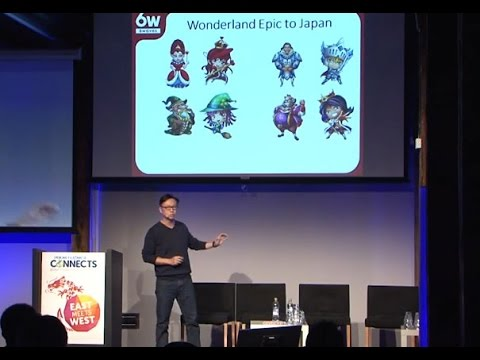
The global mobile gaming market is significantly underserved by developers who focus exclusively on English-language releases, effectively ignoring two-thirds of the potential audience.
- Releasing games only in English ignores approximately two-thirds of the global market, as 82% of current industry growth originates from Asia.
- Asia accounts for 45% of the total global games market, with seven Asian countries ranking in the top 20 for iOS and Google Play revenue.
- Localized game versions can yield significant revenue growth; for example, Supercell’s 'Boom Beach' saw a 17% increase in downloads and a 4x revenue increase after launching a Japanese version.

Difficult to crack but Japan, China and Korea are vital mobile gaming markets
Japan, China, and South Korea represent the most lucrative mobile gaming markets globally, consistently ranking at the top of Google Play and iOS App Store revenue charts.
- Japan, South Korea, and China represent the most lucrative mobile gaming markets globally, with Japan ranking first in both Google Play and iOS App Store gross revenue.
- Western marketing practices are largely ineffective in China, where developers must bypass the absence of Google Play by partnering with local marketplaces like Tencent or 360 to navigate a fragmented ecosystem of hundreds of Android stores.
- Success in South Korea requires collaboration with dominant local platforms like Kakao and experienced publishers such as CJ or WeMade to manage deep localization and unique, high-incentive marketing campaigns.