Gravity Game Vision Limited(*2)63,608
Source: Gravity Co. 20-F: FY2022PT Gravity Game Link3,268
Source: Gravity Co. 20-F: FY2022PT Gravity Game Link3,372(374)
Source: Gravity Co. 20-F: FY2022Gravity Game Tech Co., Ltd.40,204
Source: Gravity Co. 20-F: FY2022Depreciation and amortization 31.6 33.4
Source: DoubleDown Interactive 20‑F: Fiscal Year Ended December 31, 2020Foreign currency translation gain/(loss) 9,742
Source: DoubleDown Interactive 20‑F: Fiscal Year Ended December 31, 2020Average MAU (000s) 2,704
Source: DoubleDown Interactive 20‑F: Fiscal Year Ended December 31, 2020Under the Korea-U.S. income tax treaty, reduced rates of Korean withholding tax on dividends of 16.5% or 11%, respectively (including local income surtax), depending on your shareholding ratio, and an exemption from Korean withholding tax on capital gains are available to residents of the United States that are beneficial owners of the relevant dividend income or capital gains.
Source: DoubleDown Interactive 20‑F: Fiscal Year Ended December 31, 2020NEXON Co., Ltd. announced the Board’s selection of candidates for its 24th Annual General Meeting on March 25, 2026. The slate includes six directors, among them two new outside directors and three individuals who will serve concurrently on the Audit and Supervisory Committee. Current executives Junghun Lee, Shiro Uemura, Patrick Söderlund and Daehyun Kang are retained. New appointments comprise Alexander Iosilevich, a seasoned investment‑banking executive with no shareholding in NEXON, and Kaoru Hattori, a Japanese lawyer and partner at Nagashima Ohno & Tsunematsu who also holds trustee and board roles in Toyo Seikan Group Holdings. The Audit and Supervisory Committee will be strengthened by Shiro Kuniya, Naoya Tsurumi—an experienced Sega executive with extensive leadership roles across SEGA subsidiaries—and Hanmin Cho, a private‑equity professional who has led investment divisions at NXC Corporation and holds directorships in NXMH B.V. and Bitstamp Limited. The announcement details each candidate’s career trajectory, concurrent positions, and share ownership (all new candidates hold zero shares). The selection aligns with Korean Companies Act provisions for outside directors and reflects NEXON’s strategy to blend internal leadership continuity with external expertise in finance, gaming operations, and regulatory oversight. The candidates’ diverse backgrounds—spanning global investment banking, legal practice, gaming industry leadership, and private‑equity management—are intended to enhance governance, strategic direction, and risk oversight for the company’s operations in South Korea and its international markets.
The briefing outlines GREE’s performance and strategic outlook for the second quarter of FY2023, focusing on its Internet and Entertainment Business. Sales in the Game and Anime segment remained steady for “Heaven Burns Red,” though revenue tapered after the half‑year anniversary promotion; growth continued in Metaverse and Commerce & DX divisions. The company anticipates a one‑year anniversary event for the Japanese version of Heaven Burns Red and imminent releases in Korean and traditional Chinese, with pre‑registrations already generating significant buzz at local game shows. The Anime Business is positioned to secure and diversify intellectual property, enabling in‑house development of game‑to‑anime adaptations that can enhance user engagement and revenue. Metaverse operations, branded as REALITY, have surpassed the break‑even point and achieved profitability. Over the past six months, overseas sales grew markedly, with North America leading after Japan, followed by Indonesia and Thailand. User demographics skew female and Generation Z, with a strong preference for private communication features. Monetization streams—live‑stream gifting, avatar sales, and in‑game purchases—are expanding consistently across regions. Advertising spend is expected to rise in the third quarter, driven by anniversary events and new language releases for Heaven Burns Red, as well as intensified promotion of REALITY. Operating income projections for the Internet and Entertainment Business in Q3 FY2023 range from ¥1.0 billion to ¥1.5 billion, contingent on the performance of the Korean and Chinese versions. The Investment and Incubation Business remains cautious, with potential short‑term losses anticipated due to market conditions. However, diversified investment timing and targets are projected to stabilize contributions over the medium‑to‑long term.
PCF Group S.A. has entered into a formal production and publishing agreement with the South Korean firm Krafton Inc. as of September 10, 2024. This partnership centers on the development of a new gameplay mode, currently identified by the codename Project Echo, intended for an existing video game title owned by Krafton. The collaboration is structured as a work-for-hire arrangement, wherein the developer provides services and production expertise in exchange for agreed-upon compensation from the publisher. The agreement functions as a master services framework, establishing the foundational legal and operational terms for the partnership. Specific project parameters, including detailed service descriptions, production timelines, and precise financial remuneration, will be defined through subsequent individual statements of work. The terms governing this engagement align with standard industry practices for international production and publishing contracts, ensuring a conventional approach to project management and intellectual property rights. This strategic move directly supports the long-term objectives outlined in the company’s updated corporate strategy from January 2023. By securing this contract, the developer continues to execute its stated goal of pursuing high-value collaborations with reputable global partners within the work-for-hire business model. This development reinforces the company’s commitment to diversifying its project portfolio while leveraging its technical capabilities to support established titles in the global gaming market.
The analysis positions foreign‑original remakes as a central risk‑management tool for Korean producers confronting intensified OTT competition, arguing that the combination of proven intellectual property and Korean production expertise creates a “stable investment + globally optimized distribution” model. By tracing the evolution from early, unofficial adaptations of Japanese manga to the 2020‑2025 surge of genre‑rich works sourced from the United States, United Kingdom, France, Spain, Sweden and other markets, the study demonstrates a clear diversification of both source countries and narrative forms, ranging from crime thrillers to socially contentious dramas. Empirical evidence is drawn from a series of case studies released between 2020 and 2025, including high‑rating adaptations such as “The World of the Married” (28.4 % peak viewership) and award‑winning films like “No Other Choice,” which secured Best Director at Sitges and audience awards at Toronto and Venice. Success factors identified are deep cultural translation that embeds Korean legal and social structures, rapid pacing and emotional density, and the use of top‑tier acting talent. Conversely, failures are linked to rigid adherence to original tone, misalignment with Korean legal contexts—as illustrated by the poorly received “Mary Kills People” remake—and insufficient localization for domestic fandom expectations. The scope encompasses the Korean drama and film sectors from the early 2000s through 2025, with methodology based on comparative content analysis, viewership metrics, festival outcomes and industry interviews. Recommendations stress intelligent localization that prioritizes Korean sensibilities, resolves ethical and legal gaps through narrative devices, and leverages shorter, cinematic OTT formats to sustain growth in the global remake market.
The interview with Professor Lee Su‑Hyun of Seoul National University articulates digital transformation (DX) as a comprehensive restructuring of the Korean fashion value chain, extending beyond e‑commerce to encompass AI‑driven design, smart‑factory automation, and data‑centric marketing. By leveraging generative AI for 3‑D virtual prototyping, automated sewing, digital twins, and metaverse‑enabled retail experiences, the industry can cut sample costs, shorten lead times, and enhance personalized consumer interactions while supporting carbon‑neutral objectives such as on‑demand production and circular‑economy tracking. Professor Lee emphasizes that smart apparel remains in early commercial stages, with functional niches in sports, healthcare, and disaster safety already demonstrating pilot deployments. Critical technical barriers include washability and durability of conductive fibers, sensor performance after repeated laundering, and the need for flexible, miniaturized battery solutions. Rapid advances in printed textile batteries and energy‑harvesting technologies are narrowing these gaps, yet mass‑production capacity and system integration lag behind leading markets in the United States and Germany. Strategic recommendations focus on three business models: subscription‑based health and fitness services, interoperable platform modules detachable across garments, and specialized ceremonial wear where visible technology adds value. Successful scaling will require coordinated industry‑academia curricula, a robust talent pipeline, national standardization participation (e.g., IEC TC124), shared testing facilities, and proactive IP support to translate Korea’s strong patent portfolio into globally competitive products. Looking ahead to 2026, AI and sustainability are projected to dominate the fashion sector. AI will become an essential capability across design, inventory, and personalization, while sustainability will drive digital traceability, carbon‑neutral manufacturing, and circular‑economy initiatives, together reshaping competitiveness criteria for the Korean fashion industry.
The interview articulates NC AI’s transformation from a game‑focused research lab into a national industrial‑AI hub, positioning Korea as a global center for “K‑AI.” It outlines the company’s ambition to leverage fourteen years of game‑AI expertise to drive cross‑industry innovation, emphasizing that AI has moved from a supporting role to a core driver of gameplay, content creation, and broader economic competitiveness. NC AI, a subsidiary of NCSoft, has built a proprietary large‑language model called VARCO and the VARCO 3D engine, which can generate near‑realistic, physics‑based 3D environments from text or images. The firm was selected as one of five leaders in Korea’s Independent Foundation Model project and became the first Korean entity to deploy its LLM on AWS. An open‑source release of VARCO Vision 2.0 attracted over 10 000 downloads within ten days, reflecting a strategic push for global adoption and a vibrant developer ecosystem. The company’s real‑time processing and reinforcement‑learning capabilities, honed in massive MMORPG settings, are now applied to digital twins for manufacturing, robotics, smart‑city, and defense sectors. NC AI pursues a dual‑track model—developing a 200‑billion‑parameter LLM while simultaneously creating lightweight, edge‑optimized multimodal diffusion models—to balance scale with field efficiency. Its proprietary safety filter, Safeguard, has been integrated into NCSoft’s NCER chatbot, underscoring a commitment to AI trustworthiness and standards collaboration. Looking ahead, NC AI leads a consortium of 54 organizations to produce industry‑specific AI that validates in real‑world environments, aiming for Korean AI sovereignty and global leadership. By enabling user‑generated content through VARCO 3D, Voice, and animation tools, the firm promotes a “everyone can be a creator” ethos, encouraging young talent to contribute to a vertically integrated AI ecosystem that links industry, government, and academia and positions Korea as a powerhouse in the international AI landscape.
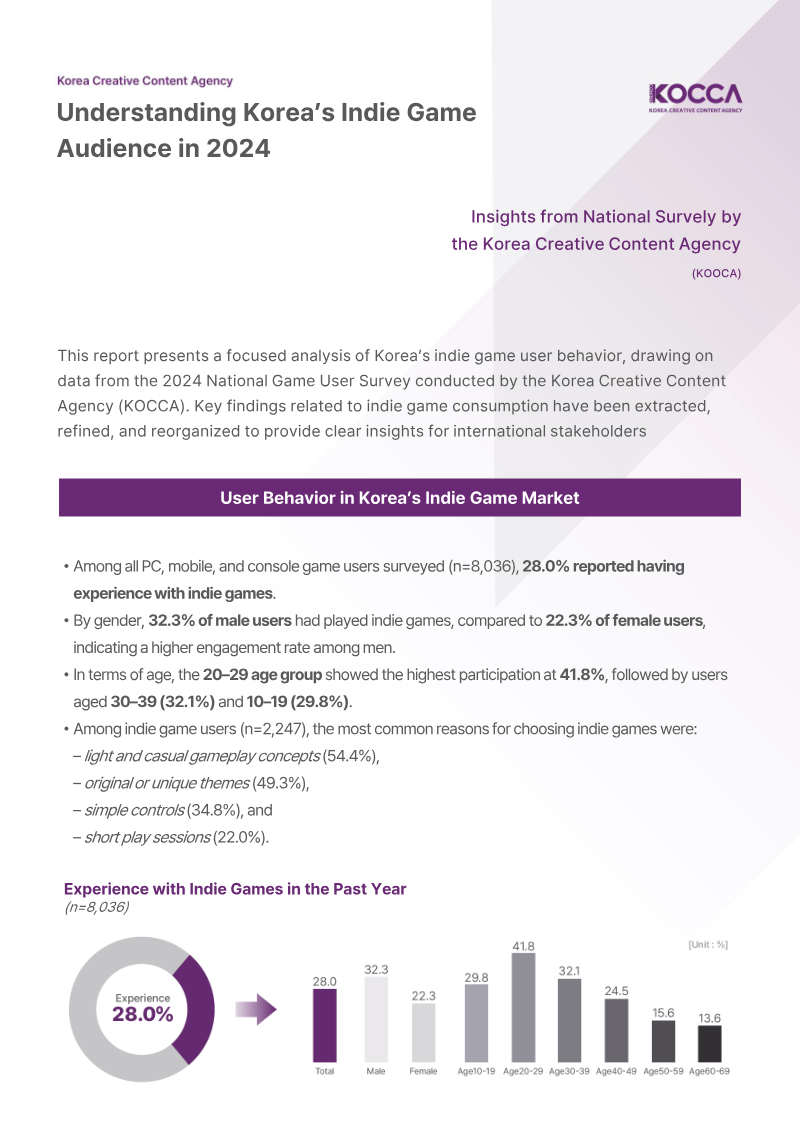
South Korea’s professional gaming landscape is characterized by a title-centered evaluation system where prize earnings are highly concentrated among elite players. Analysis of the country’s top eSports competitors across five major PC-based titles—League of Legends, StarCraft II, Valorant, Overwatch 2, and PlayerUnknown’s Battlegrounds (PUBG)—reveals significant disparities in cumulative wealth based on the longevity and global scale of each game’s competitive scene. League of Legends remains a dominant sector, with Lee Sang-hyeok (Faker) leading all players with approximately $1.88 million in prize money as of July 2025. This exceeds the top earners in other disciplines, such as Cho Sung-choo (Maru) in StarCraft II, who earned $1.39 million, and Park Jung-young (Loki) in PUBG, who secured $1.25 million. In contrast, newer or more recently transitioned titles like Overwatch 2 and Valorant show lower cumulative earnings, with top players Choi Tae-min (MER1T) and Kim Jong-min (Lakia) earning $375,450 and $164,980 respectively. The data, sourced from eSports Earnings and compiled by the Korea Creative Content Agency, utilizes a longitudinal methodology tracking performance from as early as 2010 through mid-2025. While the rankings for League of Legends, StarCraft II, and Valorant reflect 2025 figures, the data for Overwatch 2 and PUBG is current through late 2024. This segmentation highlights a fragmented domestic performance structure where success is measured by game-specific milestones rather than a unified national ranking. The findings underscore a mature market where established titles continue to provide the highest financial returns for top-tier professional talent.
The interview with Jin‑Woo Hwang, CEO and executive producer of Something Special, outlines a strategic framework for turning Korean broadcast formats into globally successful products. Central to the thesis is that formats must be conceived with a “global‑oriented concept” and then deliberately exported and localized, rather than relying on passive inbound interest. Hwang identifies six core attributes—simplicity, flexibility, scalability, authenticity, compelling storytelling, and play‑along participation—that distinguish formats capable of crossing cultural boundaries, and he emphasizes the “Korean Twist,” a hybrid, genre‑blending approach that reflects Korea’s dynamic audience preferences. The discussion situates these ideas within a practical scope that spans Asia, Europe, and North America. Something Special’s recent LEAP project with Taiwan’s Creative Content Agency, alongside new co‑development deals with major French and Spanish media firms, illustrates active outbound collaboration. Past successes such as “Grandpas Over Flowers” and “I Can See Your Voice” are cited as case studies where market insight, differentiation articulation, and extensive pitching were essential. Hwang stresses that legal risk management—registering formats with FRAPA’s Format Registration System, maintaining detailed e‑trail documentation, and constructing a “format bible” for localization—are critical to protecting intellectual property and enhancing commercial value. Technology is addressed as both an opportunity and a challenge; AI and VR can enrich format expression, yet integrating these tools abroad requires careful cost‑benefit analysis and protection of core technologies. Hwang warns that entering the U.S. market without experience in intermediate territories often demands significant sacrifice, underscoring the need for a stepwise, experience‑based expansion strategy. Ultimately, the interview calls for Korean producers to choose active global expansion, invest in long‑term partnerships, and view format export as a dual process of contract negotiation and sustained localization, positioning Something Special as a hub for Korea’s future format IP ecosystem.
The interview with Hong Eun‑Ji, CEO of T2Sound, examines how background‑music (BGM) producers in South Korea can preserve competitive advantage as AI‑generated music becomes increasingly affordable and rapid. The central thesis is that human creativity—particularly the ability to convey authentic emotion and intent—remains the decisive factor that AI cannot replicate, and that leveraging AI as a collaborative tool rather than a threat can enhance, not replace, the artistic value of BGM. Key insights emphasize that quality and emotional resonance, achieved through meticulous mixing and mastering, are the core values guiding T2Sound’s work. The company prioritises collaboration with external creators, believing that collective expertise yields richer nuance than isolated in‑house production. Market trends reveal a shift among overseas buyers toward tracks with distinctive sonic signatures rather than generic pleasantness, and Korean BGM’s success abroad is linked to its unique emotional line and texture. In short‑form media, the interview highlights the necessity of an immediate, memorable hook within the first few seconds to secure brand recognition and audience immersion. Looking ahead to 2026, the conversation predicts a consolidation around financially proven genres such as hip‑hop and trot in Korea, reflecting an industry increasingly driven by economic sustainability. The interview’s qualitative methodology—direct dialogue with a leading BGM provider—offers a focused perspective on the evolving interplay between AI tools, human artistry, and global market demands within the South Korean audio‑content sector.
Chinese gaming developers are aggressively expanding their global footprint by leveraging sophisticated monetization models and high-volume, AI-driven marketing strategies. The primary objective for these publishers is to balance the high revenue potential of mature markets like the United States, Japan, and South Korea against the rising costs of user acquisition. By prioritizing video advertising, which currently yields the highest Day 7 return on ad spend at 21%, developers are successfully capturing market share in competitive strategy and RPG segments. Success in these international territories is increasingly predicated on hyper-localization and technological integration. Publishers are utilizing generative AI to streamline the production of localized ad creatives, voice-overs, and performance-tested copy, allowing for rapid iteration and regional customization. Leading titles demonstrate that high-engagement gameplay loops—such as the inclusion of social hangout spaces, customizable home systems, and minigame integrations—are essential for sustaining long-term retention. These efforts are further bolstered by strategic partnerships with local influencers and the implementation of innovative, time-limited gacha mechanics. To maintain consistent growth, developers are diversifying their engagement tactics through gamified live events, including seasonal collections and interactive board-style challenges. These features, combined with trial character systems, allow publishers to cater to varied player motivations while maintaining a steady revenue stream. By synthesizing competitive intelligence with agile content updates, Chinese gaming apps are effectively navigating the complexities of global expansion, ensuring that both monetization and user interest remain high across diverse geographic regions.
The analysis demonstrates that the future competitiveness of Korean fashion hinges on integrating cultural content with advanced technology and participatory fan ecosystems. Influencer campaigns have evolved from reliance on celebrity notoriety to collaborations built on shared values and fan‑aligned storytelling, positioning fan‑generated media as an active co‑marketing partner rather than a peripheral buzz generator. This shift amplifies brand authenticity and deepens consumer loyalty across global markets. Artificial intelligence is identified as the primary catalyst reshaping product development, marketing, and sustainability. On‑demand production models, exemplified by Desigual’s AI‑driven forecasting, have markedly reduced inventory waste, while hyper‑personalized styling tools and virtual‑try‑on platforms are delivering measurable financial gains. Gentle Monster’s AI‑based recommendation engine lifted revenue by 25 %, and H&M’s deployment of digital twins curtailed refund rates, underscoring the profitability of AI integration. The emergence of agentic commerce, projected to mature by 2026, promises further automation of the purchase journey and deeper data‑driven consumer insights. Geographically, the findings span a global perspective, encompassing major fashion hubs in North America, Europe, and Asia, and cover the period from the early 2020s through the anticipated developments of 2026. The scope encompasses the apparel, accessories, and eyewear segments, with particular emphasis on digital fashion, AI‑enabled supply chains, and the symbiotic relationship between K‑content and international consumer culture. Collectively, these insights outline a strategic roadmap for Korean fashion brands seeking to leverage cultural capital and technological innovation to secure sustainable growth worldwide.
The Korean emoticon market has evolved from a peripheral messaging feature into a multi‑billion‑won character‑IP industry, now valued at roughly KRW 1.5 trillion (≈US$1.2 trillion). This transformation is anchored by KakaoTalk, whose emoticon platform expanded from an initial KRW 100 billion base in the early 2010s to a dominant revenue stream that underpins a broader ecosystem of licensed characters and digital content. Over the past fourteen years, more than 850 000 distinct emoticons have been released, generating in excess of 300 billion individual sends, illustrating both high user engagement and the low‑sensitivity nature of the market’s cash flow. The core of this growth lies in the development of unique intellectual‑property (IP) assets such as KakaoFriends and LINE Friends. These brands have transcended simple sticker usage to become central brand assets that are licensed across a spectrum of media, including merchandise, mobile games, animation, and information‑communication‑technology services. By converting emoticons into high‑value IP, companies have created diversified revenue channels that extend well beyond the messaging platform itself. Export potential is accelerating, driven by corporate collaborations and strategic international expansion. Partnerships with established IP owners enable Korean firms to tap into global distribution networks, while the modular nature of emoticon‑based branding facilitates rapid adaptation to foreign markets. The overall trajectory suggests that the emoticon sector will continue to serve as a catalyst for the broader K‑character industry, reinforcing Korea’s position as a leading exporter of digital cultural content.