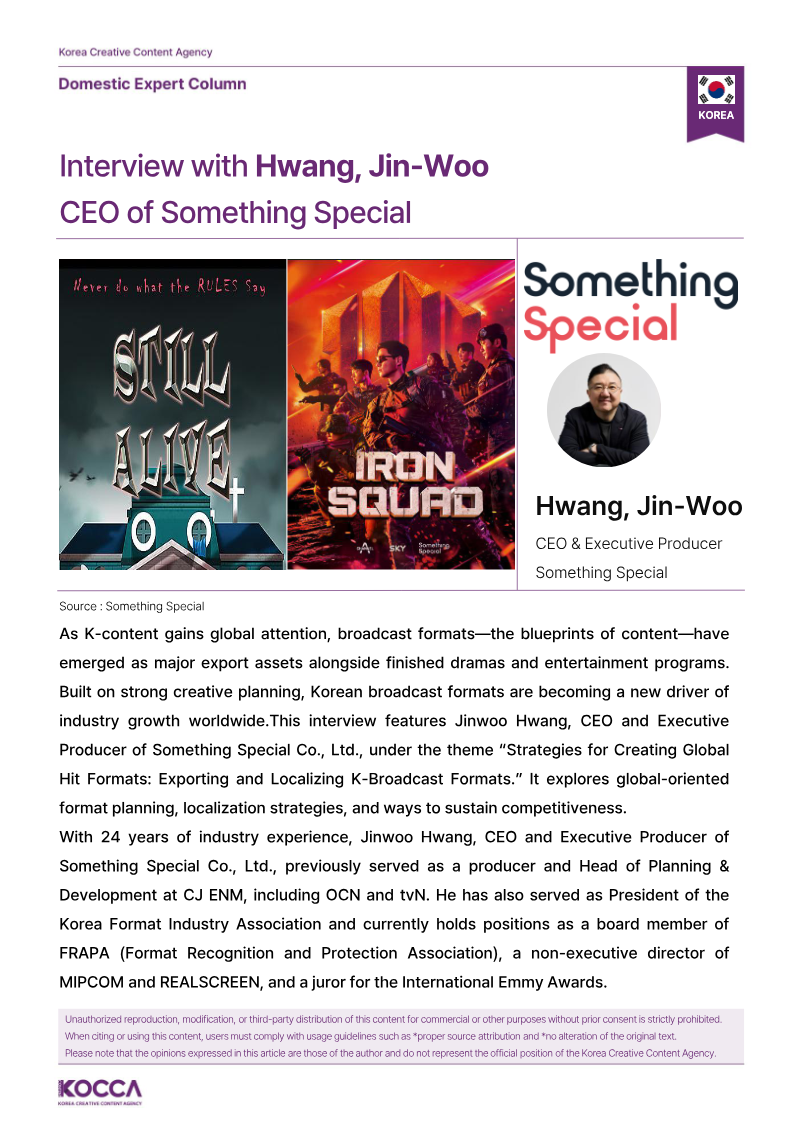
Strategies for Creating Global Hit Formats: Exporting and Localizing K-Broadcast Formats
20258 pages~21 min full read
The interview with Jin‑Woo Hwang, CEO and executive producer of Something Special, outlines a strategic framework for turning Korean broadcast formats into globally successful products. Central to the thesis is that formats must be conceived with a “global‑oriented concept” and then deliberately exported and localized, rather than relying on passive inbound interest. Hwang identifies six core attributes—simplicity, flexibility, scalability, authenticity, compelling storytelling, and play‑along participation—that distinguish formats capable of crossing cultural boundaries, and he emphasizes the “Korean Twist,” a hybrid, genre‑blending approach that reflects Korea’s dynamic audience preferences.
The discussion situates these ideas within a practical scope that spans Asia, Europe, and North America. Something Special’s recent LEAP project with Taiwan’s Creative Content Agency, alongside new co‑development deals with major French and Spanish media firms, illustrates active outbound collaboration. Past successes such as “Grandpas Over Flowers” and “I Can See Your Voice” are cited as case studies where market insight, differentiation articulation, and extensive pitching were essential. Hwang stresses that legal risk management—registering formats with FRAPA’s Format Registration System, maintaining detailed e‑trail documentation, and constructing a “format bible” for localization—are critical to protecting intellectual property and enhancing commercial value.
Technology is addressed as both an opportunity and a challenge; AI and VR can enrich format expression, yet integrating these tools abroad requires careful cost‑benefit analysis and protection of core technologies. Hwang warns that entering the U.S. market without experience in intermediate territories often demands significant sacrifice, underscoring the need for a stepwise, experience‑based expansion strategy. Ultimately, the interview calls for Korean producers to choose active global expansion, invest in long‑term partnerships, and view format export as a dual process of contract negotiation and sustained localization, positioning Something Special as a hub for Korea’s future format IP ecosystem.
KOCCA – Korea Creative Content Agency · 2025
KOCCA – Korea Creative Content Agency · 2025
KOCCA – Korea Creative Content Agency · 2025
KOCCA – Korea Creative Content Agency · 2025
KOCCA – Korea Creative Content Agency · 2025
KOCCA – Korea Creative Content Agency · 2025
KOCCA – Korea Creative Content Agency · 2025
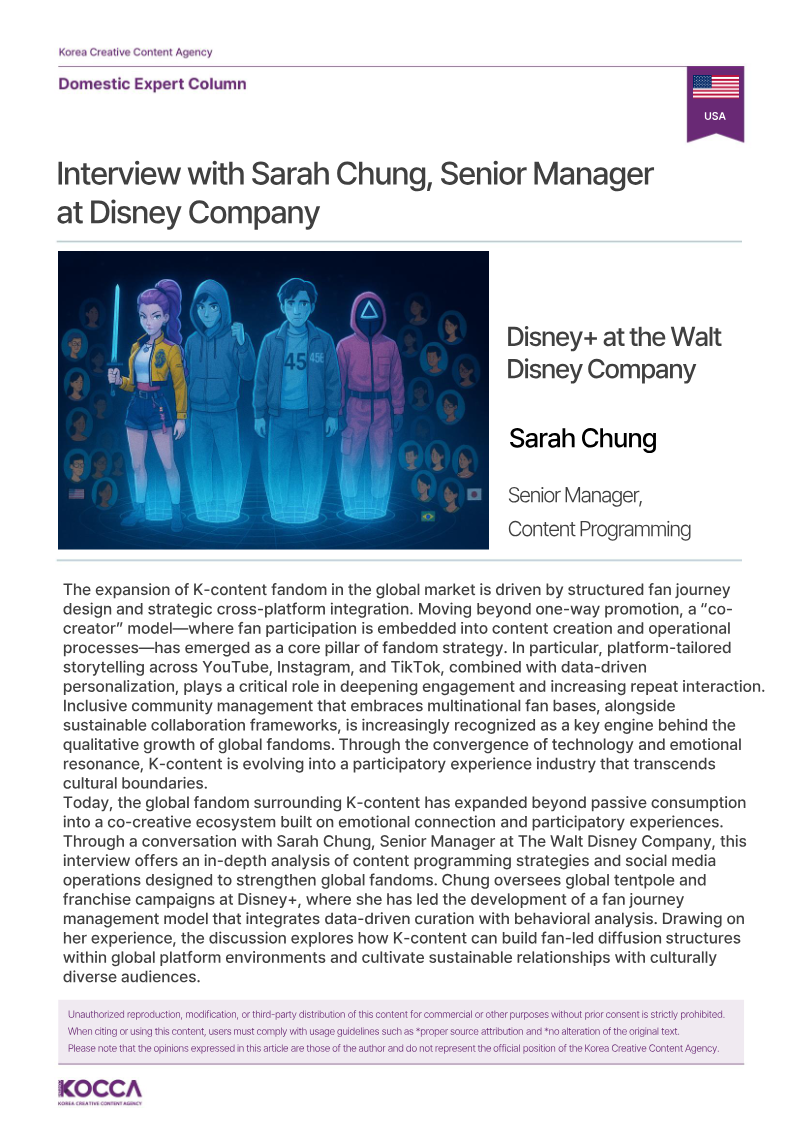
KOCCA – Korea Creative Content Agency · 2025
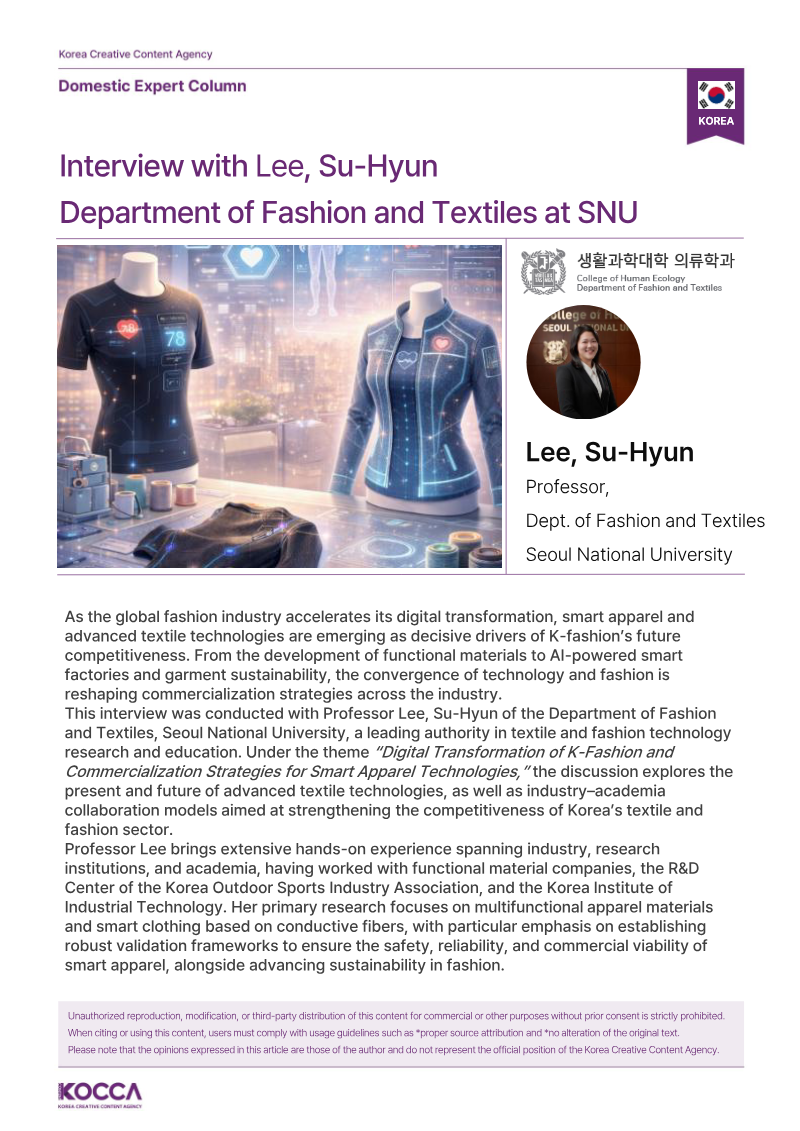
KOCCA – Korea Creative Content Agency · 2025
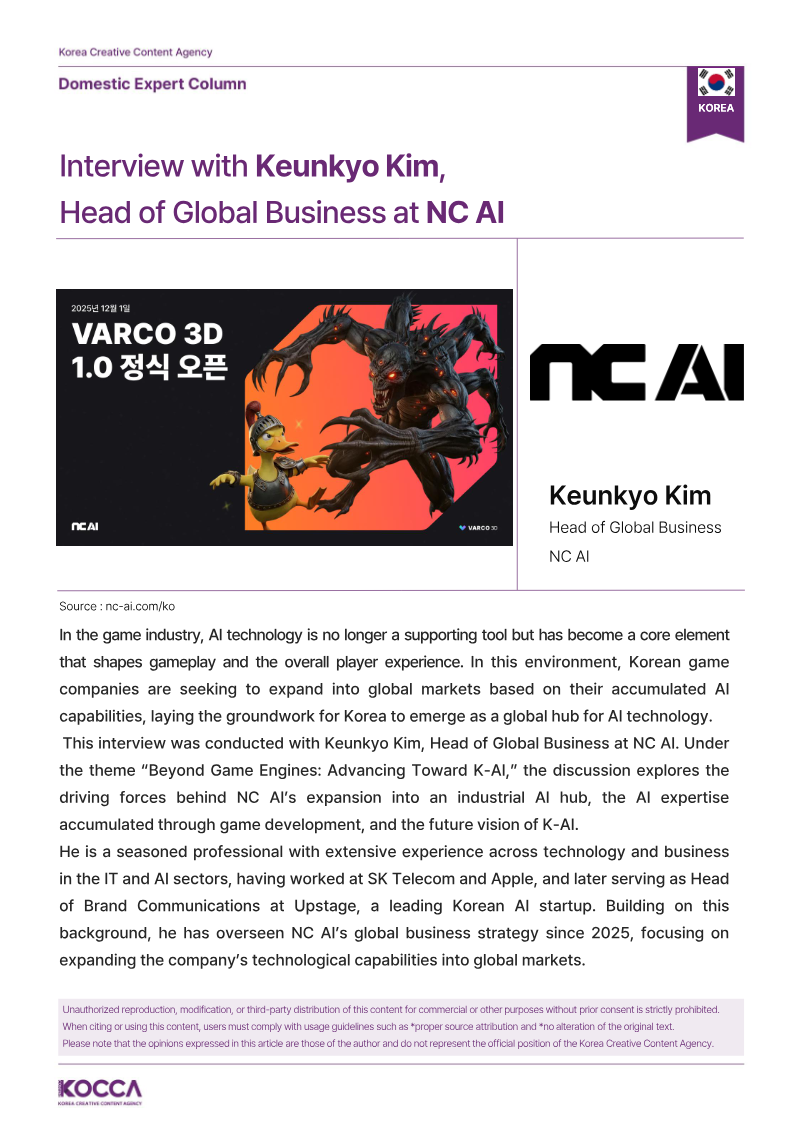
KOCCA – Korea Creative Content Agency · 2025
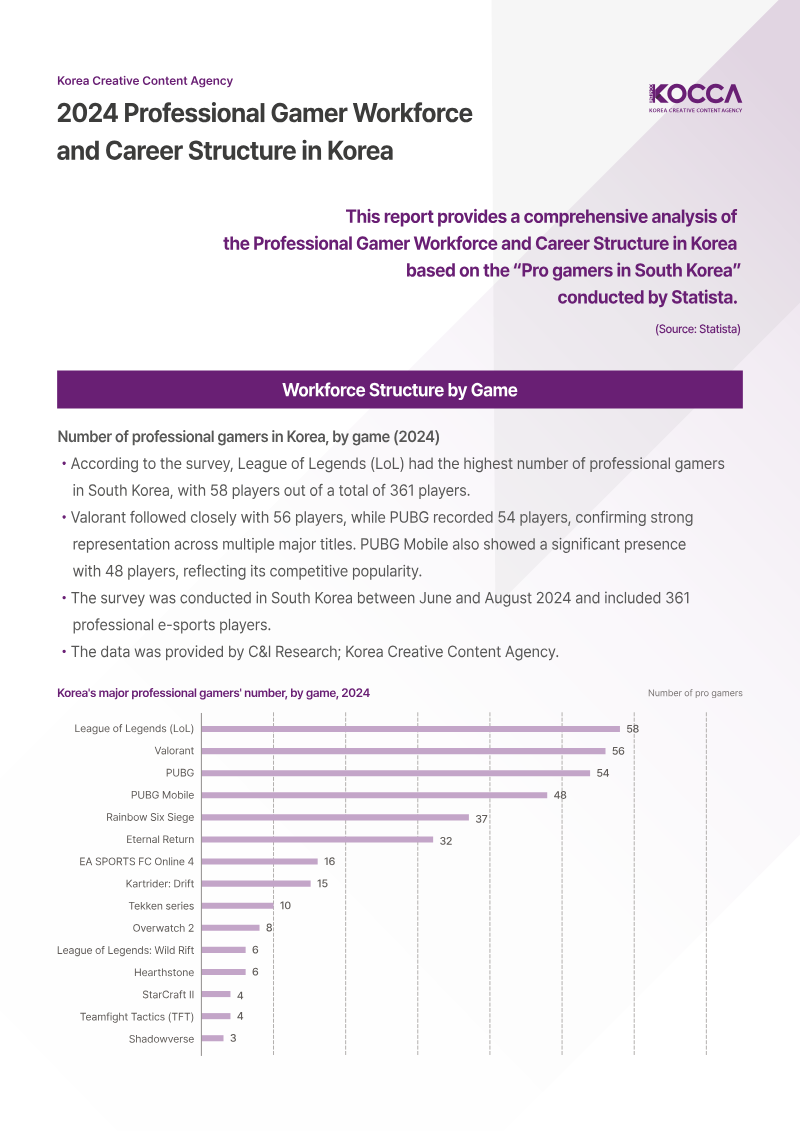
KOCCA – Korea Creative Content Agency · 2024
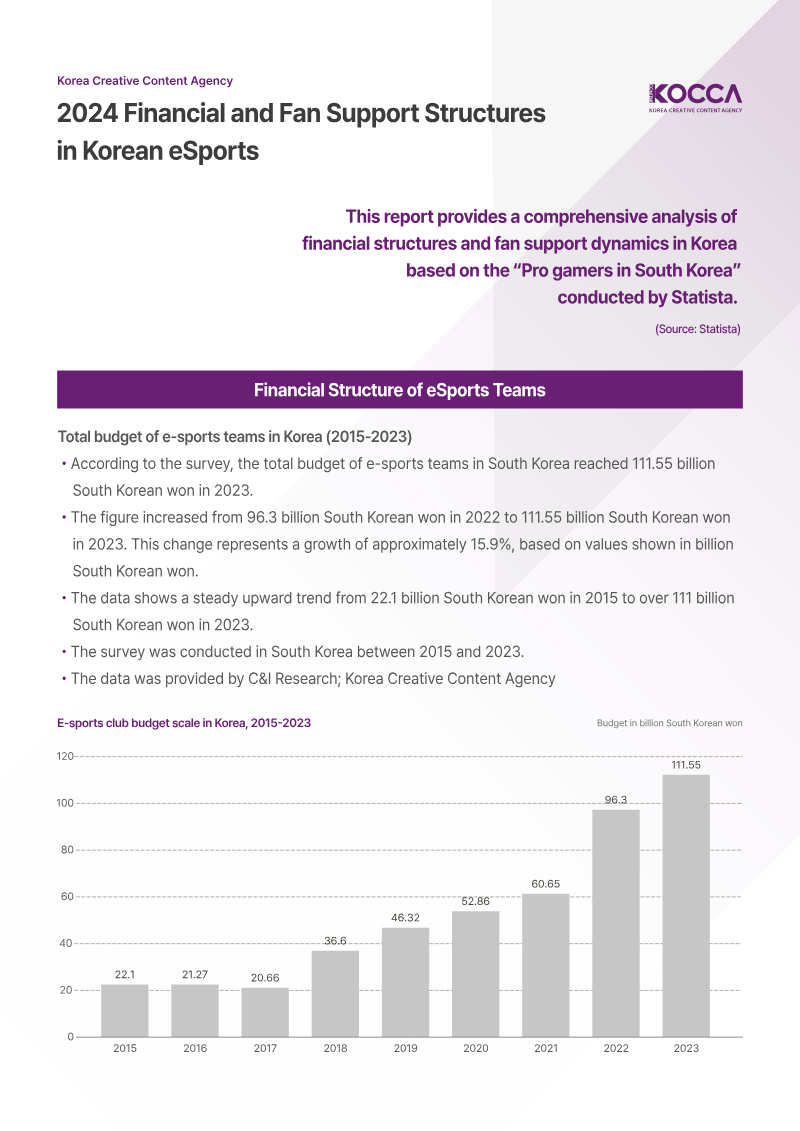
KOCCA – Korea Creative Content Agency · 2024

Virtuos · 2024
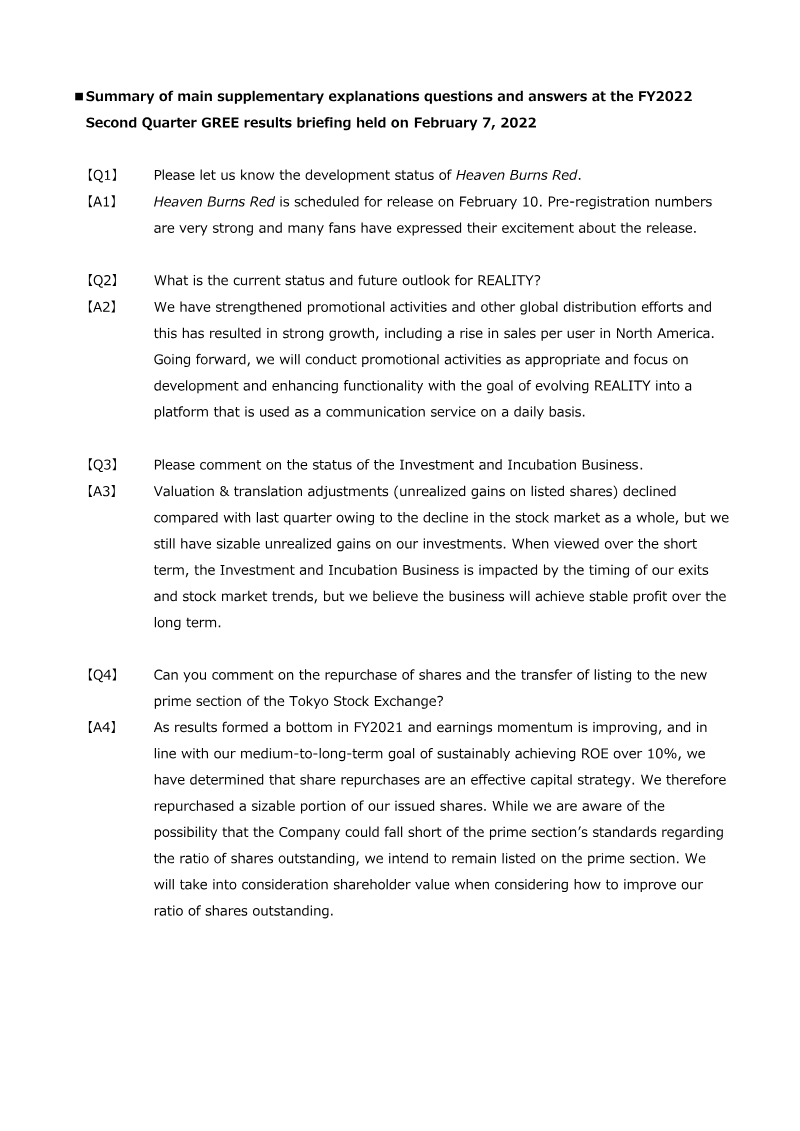
GREE

Adjust
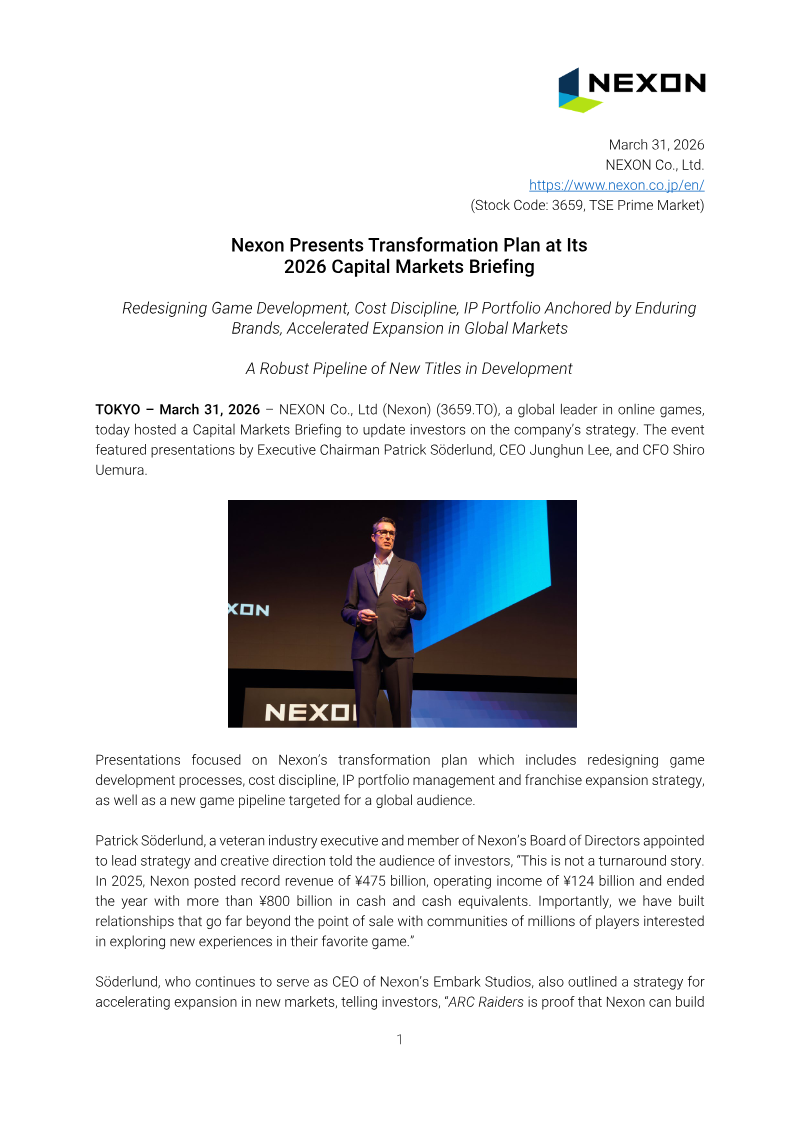
NEXON Co.
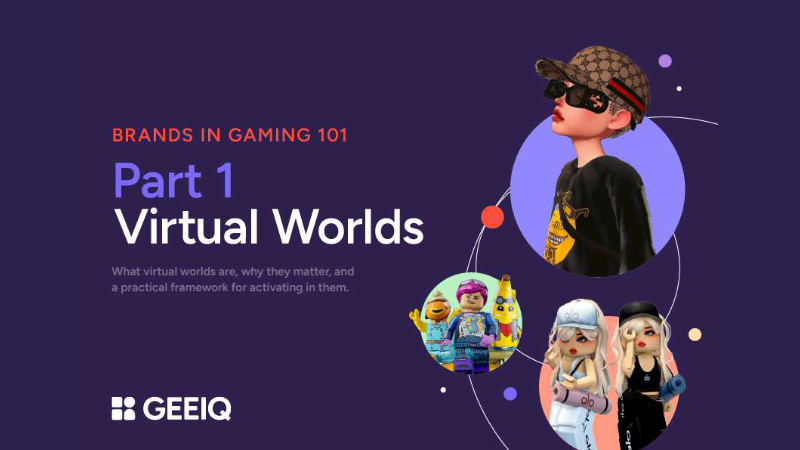
GEEIQ · 2026
Almedia · 2026
Poki · 2026
Gamesight · 2026
InvestGame · 2026
SocialPeta · 2026

SocialPeta · 2026
Anzu · 2026