Mobile reports and market data
Documents

IDFA:How the Right Publisher can Help Choose Tools, Partners & Prepare Data to Avoid the Apocalypse.
The deprecation of the Identifier for Advertisers (IDFA) marks a fundamental shift in the mobile gaming industry, signaling the end of granular, machine-learning-driven user acquisition.
- The deprecation of IDFA has rendered traditional, granular machine-learning-driven user acquisition and legacy Mobile Measurement Partner (MMP) attribution models obsolete.
- Developers must transition to privacy-centric frameworks like Apple’s SKAdNetwork, which complicates the ability to distinguish between organic and acquired user segments.
- Internal data infrastructure is increasingly insufficient, necessitating a shift toward advanced lifetime value (LTV) prediction algorithms and diversified monetization suites.

Panel: Working with Publishers from Different Cultures
The global gaming industry, currently valued at approximately $170 billion, is defined by rapid expansion and increasing fragmentation across diverse geographic territories.
- The global gaming industry is valued at approximately $170 billion, with the COVID-19 pandemic driving a 30% surge in engagement that necessitates a shift from simple translation to deep culturalization for long-term retention.
- Partnering with local publishers is a critical strategy for developers to navigate complex regional regulatory environments, manage attribution, and overcome technical barriers in diverse markets.
- Emerging high-growth regions like India and Africa are mobile-first landscapes that require developers to account for unique infrastructure constraints and a strong preference for free-to-play models.

Netcode for Multiplayer Games | Glenn Fiedler, Avinash Pandey, and Chris Wegman
Successful multiplayer game development hinges on the strategic selection of networking architectures that align with specific genre requirements and technical constraints.
- Multiplayer architecture must be chosen based on genre needs: deterministic lockstep is efficient for low player counts, while server-authoritative models are required for large-scale environments like battle royales to ensure state integrity.
- Developers should avoid building custom networking solutions from scratch, as it is a high-risk, multi-year endeavor that should only be pursued if networking is a core pillar of the studio's long-term engine strategy.
- Industry standards are shifting toward modular frameworks and genre-specific templates within engines like Unity and Unreal to allow teams to prioritize gameplay over commodity infrastructure.

Panel: How do we Prepare for the End of IDFA?
The deprecation of the Identifier for Advertisers (IDFA) represents a fundamental shift in the mobile gaming industry, necessitating a move away from granular, user-level tracking toward more sustainable, privacy-centric growth strategies.
- The deprecation of IDFA necessitates a shift from granular, user-level tracking to privacy-centric growth strategies like SKAdNetwork, incrementality testing, and media mix modeling.
- Performance-based advertising and retargeting are experiencing immediate volatility, resulting in initial declines in eCPM and overall ad revenue.
- Studios must transition toward predictive lifetime value modeling and cohort-based analysis to replace the lost efficacy of traditional user acquisition tactics.

Superstar Session: Hypercasual Live Ops- Building a Data-driven Growth Machine
Hypercasual game development relies on a systematic, data-driven growth machine to optimize performance and extend product lifecycles.
- Hypercasual studios should transition from intuition-based design to a systematic, data-driven growth machine that utilizes automated A/B testing across the entire user funnel.
- The core growth strategy relies on running hundreds of A/B tests in parallel to isolate variables in game mechanics, monetization, and user acquisition for cumulative, exponential performance gains.
- Internal scoring algorithms should be used to evaluate potential updates, ensuring that every product decision is backed by empirical evidence to maximize engagement and lifetime value.

Superstar Session: Do not Resuscitate - Why Publishing Managers are Life-guards, not Undertakers
Hyper-casual game publishing functions as a rigorous, data-centric enterprise where success is predicated on objective performance metrics rather than subjective creative intuition.
- Hyper-casual publishing prioritizes objective performance metrics over creative intuition to mitigate financial risk through early prototype testing and market analysis.
- The development lifecycle is highly compressed, typically moving from initial ideation to full market launch within a seven to twelve-week timeframe.
- Paid user acquisition is the primary engine for scaling, as organic growth is insufficient to maintain the performance benchmarks required for profitability.

Fireside Chat: Post-Pandemic Gaming Market Analysis
The global mobile gaming industry underwent a period of unprecedented expansion during the 2020 pandemic lockdowns, characterized by a 75 percent surge in quarterly downloads.
- The 2020 pandemic lockdowns triggered a 75 percent surge in quarterly mobile game downloads, fundamentally reshaping the competitive landscape for developers.
- The rapid expansion of the mobile gaming market led to a 43 percent increase in security threats, as malicious actors targeted the influx of new users.
- Cybersecurity risks have evolved into a complex ecosystem where hackers use automated tools to manipulate code, hijack ad revenue, and simulate fraudulent in-app purchases.

Fireside Chat: How we Transitioned from Successful Casual Games Developer to Hypercasual
The transition from traditional casual game development to the hypercasual market represents a fundamental shift in operational strategy, moving away from organic discoverability toward a model defined by aggressive user acquisition and rapid prototyping.
- Transitioning to hypercasual requires shifting from organic discoverability to a model driven by aggressive user acquisition and rapid prototyping.
- Sustainable growth in hypercasual development is achieved by cataloging successful mechanics to build a repository of intellectual property rather than creating purely disposable assets.
- Rigorous A/B testing and market validation are mandatory to identify viable projects before committing to full-scale production.
Superstar Session: Uncover Opportunities & Expand Your Portfolio by Understanding Gamer Preferences
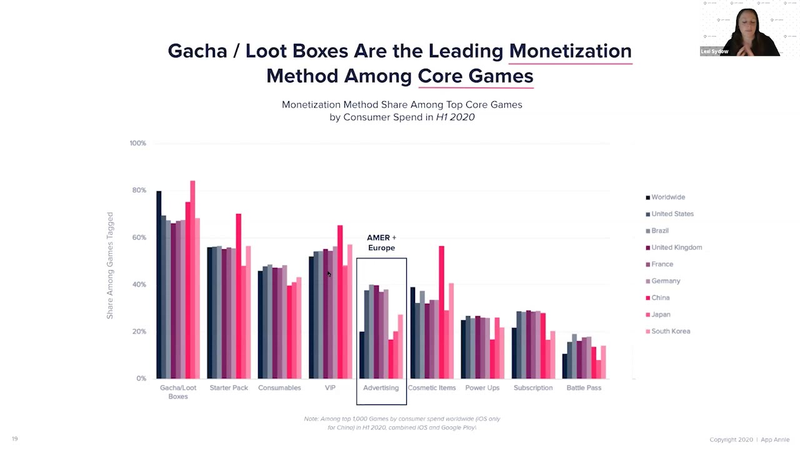
This session explores how granular market data and refined game taxonomies enable developers to identify growth opportunities and optimize portfolio expansion.
- Core games, specifically strategy and RPG titles, generated nearly 50% of global consumer spending during the first half of 2020.
- While hyper-casual games lead in total download volume, core games command the majority of total time spent by players.
- Battle royale titles maintain significant engagement depth despite accounting for only a small fraction of total mobile game downloads.

Panel: Have we Reached the End of Innovation with Hybrid Monetisation?
Hybrid monetization represents a strategic evolution in mobile gaming, shifting away from reliance on high-spending whales toward a balanced ecosystem that integrates in-app purchases, subscriptions, and diverse advertising formats.
- Hybrid monetization shifts mobile gaming strategy from whale-dependency to a balanced ecosystem of in-app purchases, subscriptions, and diverse ad formats to maximize total player lifetime value.
- Rewarded video ads should be positioned as high-utility consumables to improve player retention and serve as a gateway for non-paying users to eventually transition into spenders.
- Developers must treat ad revenue as a ring-fenced component of the game economy to prevent the cannibalization of in-app purchase revenue.

Speed Panel: The Death of IDFA & Cookies - Your Monetisation is at Risk
The deprecation of IDFA and third-party cookies necessitates a fundamental shift in mobile gaming monetization, moving away from intrusive, data-heavy targeting toward privacy-compliant, authentic advertising models.
- The deprecation of IDFA and third-party cookies requires a shift from intrusive, data-heavy targeting toward privacy-compliant, game-centric advertising models.
- Intrinsic advertising, such as placing ads on in-game billboards, allows developers to monetize the entire player base rather than relying solely on a small cohort of spenders.
- Successful intrinsic advertising depends on contextual alignment, where ad content must resonate with the game's setting and audience to maintain brand value.
Superstar Session: Don't Go Indie, Go Hyper!
The hypercasual gaming sector offers a distinct alternative to traditional indie development, characterized by rapid prototyping, high creative turnover, and a focus on gameplay over complex production values.
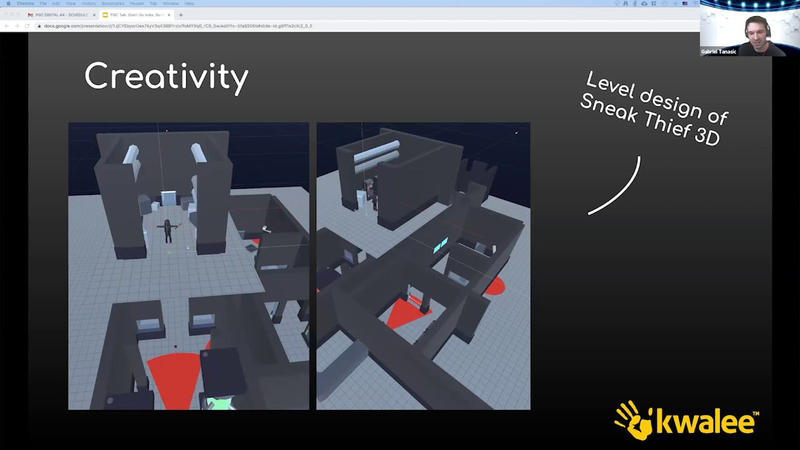
- Hypercasual development prioritizes rapid prototyping, with core functionality often developed in under one week to allow for immediate marketability testing via click-through rate (CTR) analysis.
- The business model mitigates financial risk by utilizing a 'fail fast' approach, where developers abandon underperforming concepts early to focus resources exclusively on high-potential projects.
- Hypercasual games rely on broad accessibility and engaging mechanics rather than deep narratives or high-fidelity graphics, allowing for the use of asset packs and simplified programming to lower entry barriers.
Writers
Games and companies
Games