1 free read left. Create a free account for unlimited reading + AI research.
Create free account
Fireside Chat: How we Transitioned from Successful Casual Games Developer to Hypercasual
Key insights
6 takeaways- 01Transitioning to hypercasual requires shifting from organic discoverability to a model driven by aggressive user acquisition and rapid prototyping.
- 02The hypercasual market is evolving to incorporate deeper core loops and retention strategies, moving toward a hybrid model that balances speed with long-term engagement.
- 03Sustainable growth in hypercasual development is achieved by cataloging successful mechanics to build a repository of intellectual property rather than creating purely disposable assets.
- 04Partnering with established publishers is a critical strategy for studios to access the infrastructure and analytical expertise required for large-scale user acquisition.
- 05Rigorous A/B testing and market validation are mandatory to identify viable projects before committing to full-scale production.
- 06Hypercasual development serves as a low-overhead testing ground for gauging audience interest and technical feasibility for broader industry trends.
Ask AI about this video
Transcript
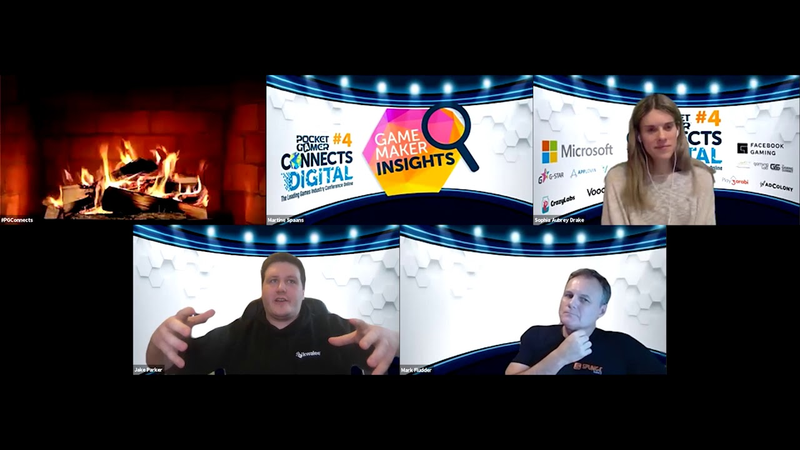
my lovely fire hopefully won't burn out and i can stay warm for another another session we've got my my good friends from kwali and uh you know we all know each other very well including uh yeah you know you and jake you know each other as well i'm judges for the big indie pitch see you as tomorrow as well yeah see you there i'll leave you to it thank you yeah so if you don't know what we're talking about we're obviously joined by uh you know jake from kwali and and mark one of the developers who work with uh quality and i'll i'll let mark introduce himself in a minute but just to let you all know what we're talking about so you're in the loop qualia one of our season sponsors for the big indy pitch um and have been supporting us for a long long time here not just through the digital but before
so uh yeah carly will be joining us again tomorrow for the big indie pitch and uh you know for any of you who might be pitching tomorrow i'm sure there'll be a lot of uh you know tidbits to take away within this talk um but apart from that there might be a lot of people who um you know i'm sure they know quality but they might not know you specifically jake um but why don't you give us a brief introduction of yourself and a little bit for quality so i am a senior publishing manager at uh kwali and we so we work on hyper-casual mobile games and we're a publisher and an internal development studio and so we're working with developers like um sponge games to find hit games test games that have strong potential in their hyper casual space and i think like one of the things that always excites me about hyper casual is that it's kind of genre spanning it's these games that kind of fill the time that you've got free like where you've got a few minutes you can kind of pick something up and quickly play it and then put it down and come back to it later and so yeah my role is essentially working with developers coaching
developers and kind of liaising with internal teams and development teams to take games from test to global launch yeah and one of those people is is mark now you know i'd like to first of all i think this shows the international nature of the show as well is jake you're obviously here in in the uk uh like i am but mark you're all the way over in australia aren't you yes queensland brisbane 8 30 at night here it's not as bad as the original time slot so that's uh that's good so uh yeah i'm glad it's a still a reasonable time for you um but yeah why don't you uh tell the audience a little bit about yourself for those of you who might not know who you and your studio are well um so sponge games is a relatively small independent studio uh based in brisbane queensland australia uh 15 we range between sort of 14 and 18 staff depending on where we are at the moment we also spun out of a rather large
animation studio so we have a sister company that does animations for disney and and um nickelodeon and companies like that so we get a lot of outcomes we're lucky our 15 people we don't include concept art and a lot of animation and stuff gets done outside so we're probably a little bit bigger than than 15. uh started in 2014 um lucky enough to have a couple of uh worldwide big hits in the failing failing breaks and faily ryder in 2016 um back before the hyper casual kind of boom so to speak so we started to transition away from self-publishing and away from that traditional sort of all organic users into our user acquisition driven business in about 2018 middle 2018 and then probably as we started to do that and hyper casual became a bigger thing we started to reach out and work with publishers sort of late 2019
so we've got um we've got three games that are out there now in in different um in different iterations on in in the hyper casual and publishing space and then we've got seven games that we've uh developed and self-publish and we're fantastic had about 80 million downloads uh across those games um so we've we're sort of in that mid-tier success range haven't quite got to become iconic but we're doing better you're getting better yeah we're not we're not exactly struggling but we're not far off it's absolutely lovely to have you here and um you know obviously the the title of this is you know um you know well specifically it's how we transition from success successful casual games developer to hyper casual and so i suppose um let's start with the clear one and you know and i suppose if we start with you jake and then we can move on to you mark and we can like i did in the last one we can keep reversing the order or or you guys can
just chip in when you you know have some input on it isn't but what would you say the main differences you found when switching from that casual market to this ever-growing hyper-casual market i suppose the hyper-casual market is in the scheme of games is fairly new although it's not brand new and so you know what would you say has been the main differences when transitioning through jake so i think my my understanding of casual games is going to be a lot less than marks um and i think like one of the biggest things is that the change in development cycles like hypercasual allows you to work quite quickly on a concept an idea that you've got and build that out to something that's testable and then verify whether that um has some market potential like this is why ctr tests and cpi tests are things that hypercasual publishers are always focused on because they allow you to kind of validate that concept before investing too much resource in kind of pushing ahead with it yeah and mark um yeah i think
the big sort of difference to me with the casual and and i don't know that hyper casual is kind of a buzzword i think i think the it's still casual gaming um but i think what what sort of changed with it is that the the notion of it it's um broad appeal it's mass market i think back in 2016 when we were doing our games we were trying to try to find a niche trying to find a little group that might that might like our game and then our challenge was discoverability and and the like and you know back in those days we were quite lucky that we got a lot of support from the platform holders in apple and google and were able to get a lot of free users but on a scale that was relatively small even though it was millions and tens of millions of users small in comparison hyper casual so what what we've kind of had to change in our thinking is how do we make these games with as broad an appeal and an accessibility as we can and and that's was a big challenge for us because we came out of the um
we were kind of inspired by flappy bird and games like that back in the day which were frustration games so we made a lot of our games in our early spaces certainly failing breaks was a game that was built on crashing and dying and difficulty and hard to master and and hyper casual is almost the opposite of that it it it's more tranquility it's more you know just uh a bit more a time consuming kind of game rather than than that traditional challenging game so that's been the big thing for us is how do we make a game that has a broader appeal so we can chase bigger markets yeah yeah like hypercasual has definitely transitioned from that kind of flappy bird era of games where it was frustrating it was challenging it was like keep hammering away at it and do better than you were you did last time to something that allows you to to feel a lot of satisfaction as a player and feel those kind of moments of of joy and those little smiles as opposed to something where you're kind of hammering away at it to try and get better and better every time yeah i mean and so you know addressing
flappy bird that obviously was a one-person developed thing and a lot of these experiences especially in the mobile space start from small beginnings in terms of new trends but you know now um hyper casual is massive you know it's such a massive market and what would you say the benefits of having a development team you know within a studio that's working on hyper casual development however we you know define it internally but as a longer term project rather than something to just capitalize on in the here and now and you know mark's probably in a great position to give some insight on that first i mean would you say that's important um yeah i think it's something that as a studio we're still trying to to come to terms with there's there's certainly differences in cultural approach to making games to what we were doing in 2016 to what we're doing in 2018. uh sorry 2020. um we i think um there there can be a bit of a
trap with hypercasual to think treat them and think of the games as disposable so you know how many how many quick little tests can i do how quickly can i do them i need to do a hundred in order to get a good game so let's just get in there and smash them out and and um hopefully we'll we'll pick up that piece of gold we'll stop that we'll stop our toe on something we'll pick it up and it'll be worth money um if you take that approach it's hard to have a long-term vision for what the studio is going to do you're almost sort of putting all your eggs in this basket hoping you get lucky and away you go so our approach is um we build a lot of mechanics um and i think uh in talking to jake and talking to quality that's what we talk to to the publisher about a lot is what's a little mechanic that might be fun that we can we can explore on and then we might try and take that mechanic and apply it to five or six different games two or three which may be hyper casual another one which may fall back into our self publishing in our own faily sort of franchise and trying to i mean
at the end of the day it's learning you've gotta you've gotta set this up in a way that you fail fast fail quick and all those buzzwords that we hear about hyper casual it's very true but you can't fail without learning so you've gotta take a longer approach like what can we do with this and like when we talk to quality now um quite often our discussions will go back to a mechanic that we made in 2017 that we think hey you know we did this what do you think of this little video and craig said hey i think we can we can find something there so we're always going back and looking at the catalog we we don't treat it as a disposable even though we are ever every day trying to become more efficient in testing quicker failing faster moving on finding the right thing it's never done in a disposable way yeah and and jake you work with a range of developers an awful lot of them i mean how important is it that they you know understand the long-term approach this development i think like there's
always there's always a commitment with hyper casual because you're not necessarily like you're not necessarily gonna just stumble across um one game there's gonna be a hit straight away it's not gonna be not necessarily gonna be the first game that you make that is a hit in fact when we started talking mark we were talking about another game that we tested that didn't work out um and we we gave it a few tries tried a few different iterations of it and then then decided to move on to and sharp shooter and it's it's exactly that like you shouldn't kind of approach it assuming that it's going to work straight away but every project that you work on is a learning experience and it kind of works both ways when you're working on casual and hyper casual games you can take things that you've built into a hyper-casual prototype and kind of use that to build up something a bit more in-depth and a bit more involved as a casual game and vice versa you'll have something that is in a casual game that you can apply to a hyper-casual game and strip away some of the other areas of that game that work as just a mechanic that engages and can market effectively on its own yeah i
mean and i know i said we were going to switch and swap but i want to come back to mark for the next question first because i think it's important to to address it in that order but um you know uh mark how important has it been you know you addressed this kind of touched on it right at the start about how you were self-publishing and then you've moved to working with a publisher especially as you've made more what we consider hyper casual experiences now you know how important is a publisher when transitioning into the hyper casual development for the first time how important has quality been as a partner to you guys um i think i think the publisher is is crucial uh to the process i mean you know gaming you develop games and then you've got to have discoverability in order to find a market you know there's got to be a way for the audience to become aware of what you're doing and you know as i said in our previous life we were getting that discoverability through the platform holders and the activities that they do
that that sort of market's not as strong as it used to be so now we need to find other ways to do that and and in a lot of ways that comes down to potentially spending a lot of money uh the money can be low risk and that's what this is all about but it's still spending a lot of money and being able to manage and test and iterate and all that sort of stuff and that's where um the partnership comes from speaking to jake earlier today uh just reminiscing about this you know when we first looked to do this and we we continued to do user activity and stuff ourselves on the games that we published previously but when i sat down and looked at this to do it on a scale that we wanted to do it at and a scale of what failing breaks in our previous games have been just sitting down and working out how to establish a team to do that you know you're talking about probably seven figures to make that happen and that's to just have it that doesn't make it good it doesn't mean it's going to work it's just setting up the infrastructure so why as you're starting out or why when you're getting into this
would you take on those those sort of tasks is a little bit for me but just one other thing i just wanted to quickly kind of like jake sort of said talking about another game and just to correct jack here we haven't quite given up on that game being up and we're we are still but more importantly it's again we're going to self-publish if it doesn't and the iteration and the learning and the stuff that we've done with quality while it hasn't got us to the scale where a partnership between sponge and quality might make sense we have got that game working to a point where it will make sense for us to do it ourselves on a smaller scale and i think that's going back to the last question of yeah how important to have this hyper-casual thing in there because that's what our other games don't have is that underlying build that we're doing now with in partnership with quality to set up a game that can be successful on very on a different different types of scale it doesn't have to be a multi-million dollar debt download hit we can get by with it being uh you know a nice compliment to the other stuff we're doing and we wouldn't have
got there with that game without working with kwali and working on the hyper casual space yeah exactly and and jake you know um i suppose you know to try and reword the question so it's not just you know a self con congratulatory question you know it's like what would you say to you know um to a developer who's sort of on the fence about working with a with or without a publisher in the hyper casual space you know what would you say that quali like are offering to developers that maybe mark hasn't touched on you know to help bring that idea to the next level so i think there's there's already an infrastructure in place to kind of test concepts and and work with the design team work with the marketing team to make the most of the concept that you've got and the prototype that you're the you're making and there's a huge like pool of knowledge and experience that me as a publishing manager i can dig into from our development team our design team our marketing team i can liaise with all of those and draw
that information and kind of use all of their knowledge essentially to help support a developer where as a developer going into it without a publisher i feel like um it would it would be a challenge to kind of set all of that stuff up yourself and kind of build out that knowledge for yourself you can kind of get a lot from a publisher in terms of working directly and like mark and i have regular calls where we'll just talk through ideas and talk through things that we've seen working recently and looking at ads and analyzing ads to understand how these games are performing so i think one of the biggest benefits of working with a publisher is that knowledge base that you've got as well as the the infrastructure that isn't necessarily feasible to set up and for a smaller team yeah i mean and so sticking with that idea and especially of um you know both in general but also specifically to the topic at hand of when transitioning a game from you know maybe a casual into a hyper casual experience you know
how involved are the in-house team you know your in-house designers at quality um you know and how does this work when adapting the game to hyper casual you know like is it is it a hands-off approach is it a very hands-on approach or is it bespoke you know how does it work it's pretty bespoke so it depends on the game itself in the studio itself like we're quite lucky with them sponge that you guys have got a lot of game design expertise and experience and there's a real passion there for hyper casual games and and a lot of knowledge that you guys bring to the table as well that we kind of collaborate on i think there's always a collaborative approach um between the design and marketing teams from the publisher with the teams from the developer and i think the best results always come from that collaboration as opposed to kind of these teams working in silos essentially and pushing towards the same goal but from different angles yeah and and mark has it been has that been an important
process for you in working with the publisher that collaboration on the the design elements obviously as jake says you've got a lot of you know very well experienced you know developers so you're probably on the side that you know maybe needs less help but how important is it nonetheless um i don't know about less help i think um i think you know there's a there's a long a long-standing adage in gaming and you know you the guys who develop the games are the worst people to be critiquing the game um you understand it you get it you built it because you can see the vision of what it's going to be and yeah and without immigration and the partnerships and all this sort of stuff you know and we've been there believe me our first two or three games were unbelievably unsuccessful and um you know it's not till the day you put it out that you realize that hey no one likes this uh because we didn't put it out because we didn't like it we put out because we thought it was great so collaboration is is really important and you know even in the last conversation you guys were just having talking about just that play testing and
setting up groups and getting the outside stuff is vitally important and having people like kwali or and publishers there to bring their access to data their their experience you know these guys like you know we've made you know we're a relatively successful developer we've got seven games i mean this guy's probably seven games a month um the experience that that brings to pass on to that stuff is really important and i think the other side of it is you know game game making is becoming more and more like you you see um people talking to singers and songwriters this overnight success stuff is nonsense you know you have to iterate through five or six games before you have a successful one and then the great misnomer you get with with students and people fresh into this is once the game's out and number one it's all over you just sit back and count the money well you know you've got years of supporting this game and and constant iteration and probably the thing we've learned
really heavily in the last 12 months is if you're not working on testing changing adapting your game every day your game's going backwards um failure breaks is five years old now and we're still a b testing it every week looking for ways to maintain it earning money and maintain it of interest and how do we maximize its performances and all this sort of stuff so again you know doing that on a big scale and doing that uh without a partner it would be very challenging yeah um so i mean i'm gonna ask one more quick question before we get to the q a because we've got a number of questions coming in but i suppose it addresses one of the things that i just think is really important because obviously especially working with independent developers as i do you see a lot of people getting down when something doesn't work or doesn't take i mean you know when obviously mark you just addressed then about testing testing different iterations of a game and at the start of our talk you said about you you can't be afraid to fail that's part of the learning process i mean
how important especially when transitioning a game or at least in in your case trying to take it to the next level how important is that constant testing iterating and that notion of not being afraid to make a mistake as long as you understand to correct it later on how important is all of that it's massive and and you know you can't be afraid of making mistakes because i'll guarantee you'll be wrong 9 out of 10 times in terms of the actual thing you're testing you'll never ever get it right what you'll get is is varying degrees of of success i mean most most testing we do really just brings another question um you don't solve there's no no i was saying to jake before we talk about this and and i sort of said you know if there was an answer here i'd have found it and i'd be living in the bahamas there's no answer there is just constant iteration constant going around in circles and sometimes i mean i talked to my team
that that does our a b testing and our use of performance today and and you know we've just spent a month doing this testing and we're we're basically back exactly where we started at the end of the month and at the beginning of the month and i just said the team goes we'll take this as a win because we didn't go backwards um you know where we are actually better off than we were at the month but maybe it doesn't justify the work we put in but in some ways if we weren't doing that we wouldn't have moved forward and um again that's where a good publisher that's not treating your games is as disposable that is working towards you is helping you learn you know what that's one of the things i like about quality you know even when we've got games that may not be successful we're still talking about how can we use that mechanic hey maybe if we tried that over here look at this game this game might work with that let's think about how we can iterate and keep moving keep learning and keep testing because you will not just sit down come up with an idea and have that game become a multi-million dollar hit it just doesn't happen
yeah and and jake in your case i mean i know this just from the pitch and all of our talks that we have afterwards in the judge and you know you guys might you know obviously as we see you've worked with mark on loads of different games and testing and evolving but you also might find a game that you think you know is let's say is what we would define as casual but you've maybe got that thing and it can be adapted or it can be taken into the hyper casual stage i mean you know how how important is testing on the quality process level i mean i i know we we've addressed it slightly in terms of how much you alluded to iterating with mark but you know i think to address the question directly yeah so in terms of testing games is essential it's the best way and really the only way to understand the potential of a game and a mechanic and how engaging that is for a wider audience like you're testing these things to understand whether they're scalable whether you're able to push that game and get it in front of millions of users worldwide and if it's if it doesn't work at that stage you can
analyze why it hasn't worked and potentially understand something that could be a different spin on it or look at it in a different way or understand that it's not worth it move on to the to the next thing because the more time you spend on something that doesn't necessarily work then the more frustrating it's going to be when you get to the end and you kind of say okay right it hasn't worked now we spend all of that time on it but you always gain that kind of learning from that testing process and from iterating on games and working through different prototypes and concepts yeah fantastic and yeah i mean we've got a couple of minutes to get into some questions and there is one question i think that's really quite good actually is um you know and addresses the topic and everything else and it's a question that many people might have so i'm going to start with you jake on this one is so the question is some people think hyper casual is just a phase others think that it's getting closer to high hyper casual games with deeper core loops um what are your views on the future of the market and i know it's a wide question but you know i think it's an important it's an important one to address even if briefly
we're so we're definitely seeing hyper casual games with with slightly deeper core loops i think there's there's a lot more content there's more like me and mark were talking about this earlier on there's more to show in these games now that is still something you can quickly pick up it's still something that has appealed to a mass audience and it's still it still feels hyper casual it still hits all of those marks all of these core principles of hyper casual and but there's more content to it people are looking for more like i think the the bar for quality in hyper casual games for players has kind of increased and increased over time like we've gone from 2017 to 2018 where we've got like flappy birds and games with like just primitive shapes where you're um controlling a sphere to games like let's be cops where you're playing as a police officer kind of scanning cars and then choosing whether to arrest people i think there's there is more depth in them but they're still quite distinct from casual games in that they're they fit into these smaller time
periods yeah and and mark i think i might have an idea to your answer given to what we you know you mentioned at the start and but you know i think if i'm not mistaken you're someone who sees a convergence you know in these in these fields to an extent i i'm a big believer and people like to label things um you know i i think casual games are casual games and they go through very different iterations of of what they are i think um i think hyper casual is a result of two things and that is the broadening of the market more people that aren't traditional gamers coming in using their mobile phones smartphones in their hands jacob i talked about it before i see casual games being very much across the modern day crossword puzzle they're things that people people interact with every day um at certain times and become very hamburg forming i think the other side of hyper casual is just that discoverability it's a market now where it's so broad that you have to be able to spend money
to to acquire users and if you're going to do that you've got to chase um broad markets so you've got to have access that's why they become simpler and easier we're appealing to the to that new market and that ever-growing market but they're becoming more sophisticated they've had the phones for longer you know that the generations are growing up so they're going to want more and more challenge out of the games that they're getting so i think we will see this um become a more more depth to these games because that's what the audience wants and and it's just a matter of over the past two years we've had a an immature audience in terms of the the greater number of people playing mobile games haven't come from a gaming background you know they've come from traditional um board games and crossword puzzles and suduko and all that sort of stuff and and as they're experiencing more games they're moving from those into into slowly more depth and more depth and they're trying out clash of clans and all the other things and they're just becoming more more um demanding of what they're going
to want so the games are going to have to to move with that yeah and unfortunately we're nearly at the nearly at time now but i'm going to try and squeeze in one last question which is um is hyper casual a good path for more unexperienced developers to get into the market and what do you think mark i think it's a lower risk in terms of you can fail a lot more quickly at a lower risk but but i do think to some extent if you if you're starting out there there is a bit of a labor of love involved in a game development you know i think i talk to students a lot about getting into the industry and they used to always be about going getting a job and working for a massive big aaa studio and they're all over the world well they've consolidated those jobs are sort of gone and and if you want to work in mobile and you want to work in an indie studio it's a passion thing so you i was talking about that's for you you've got to find your way of dealing with hyper casual i don't think there's a single hyper casual market out there
and all the developers are doing the same thing but i think quick iteration quick failure testing your game understanding that there's an interest out there there is a potential market for it is vital no matter what sort of mobile game you're making and hyper casual is the perfect way to test all of this stuff even the game we spoke to jake about testing today we're already saying well you know if we could test it right that comes out well we can build a hyper casual game but there's a vr game here and there's this game here and there's that game here but we'd be mad to go and try and build the vr one let's let's test it and find the audience before we go that way yeah yeah i think when it comes to hyper casual being a good place for inexperienced developers i think to an extent it is there's there's a lot of kind of in-depth knowledge this that's needed to make hyper casual games work but typically you can work with a publisher to get that kind of knowledge i think what hypercasual lends itself well to as mark said he's kind of failing fast and trying out a lot of different ideas and you can instead of deciding to kind
of all right i'm gonna learn game development by focusing on one massive game and learn all of these different elements of it you can make a bunch of tiny games a bunch of smaller games that you can test out and understand how they work you also get a bit of an understanding of the market for games and the business side of games which is hugely important if you're trying to build a career in game development right yeah fantastic sorry mark and there's a very high upside you know if you do manage to put together a game that's good and you know when we set up our studio one of the things i used to say to our board and investors and stuff to put into the studio when we started it was you know don't worry about the projections and the figures and all that sort of stuff you've got to believe you can make something in the top if you can believe you can make a game that's in the top 10 percent of games being made you'll do all right if you don't maybe you should think about doing something else yeah well fantastic thank you both that is uh literally time so i just want to say
thank you to to both of you for uh being a part of this fish i think there was you know some really interesting takeaways thank you mark for joining us from the other side of the world and and i'll see jake i'll be seeing you tomorrow so i'll look forward to that looking forward to it thank you for having us yeah thank you both thank you and and martine you'll get a break from me for an hour in which time i promise i'll fix my uh flickering green screen as it was doing it towards the end yeah i'll hear now this more issues will always be there yeah but yeah thank you thank you all in alam i'm sure i'll see everyone else in an hour for a panel but yeah thank you jake thanks mark bye you
Summary
The transition from traditional casual game development to the hypercasual market represents a fundamental shift in operational strategy, moving away from organic discoverability toward a model defined by aggressive user acquisition and rapid prototyping. Success in this space requires a departure from complex, frustration-based mechanics in favor of highly accessible, bite-sized gameplay loops designed for broad market appeal. While the industry emphasizes a fail-fast mentality, sustainable growth relies on cataloging successful mechanics and iterating upon them, ensuring that development efforts contribute to a long-term repository of intellectual property rather than purely disposable assets.
Navigating the hypercasual landscape necessitates a sophisticated approach to data, where constant A/B testing and rigorous market validation are essential to identify viable projects before committing to full-scale production. Because the costs and technical requirements of large-scale user acquisition are often prohibitive for individual studios, partnering with established publishers remains a critical strategy. These partnerships provide the necessary infrastructure and analytical expertise to interpret market signals, allowing developers to refine game performance and maximize reach in an increasingly competitive environment.
The hypercasual sector currently serves as a vital testing ground for broader industry trends, offering a framework to gauge audience interest and technical feasibility with minimal overhead. As the mobile gaming audience matures, the industry is witnessing a convergence where hypercasual titles are increasingly incorporating deeper core loops to maintain engagement. This evolution suggests that the future of the market lies in balancing the speed and agility of hypercasual development with the depth and retention strategies typically associated with more traditional gaming segments, ultimately creating a more sustainable and sophisticated ecosystem for mobile developers.