Global reports and market data
Documents

Using TV to drive app downloads at scale
Television remains a powerful tool for large-scale mobile app user acquisition, yet traditional advertising models often fail to meet the needs of modern mobile publishers due to their inherent rigidity and lack of performance-based data.
- Mobile publishers should shift from traditional broad-reach TV buying to a performance-based model that prioritizes agility, real-time optimization, and clear attribution.
- Attribution for TV campaigns is most accurately measured by monitoring organic install baselines and daily uplifts rather than relying on short-term, granular click-through windows.
- Performance analysis should utilize 24-hour cycles to account for the delay between viewing a TV spot and the user completing an app download.

Unlocking capital for your studio in a mature market
The mobile gaming industry currently operates within a mature market characterized by consolidation rather than a high volume of new entrants.
- Investors are prioritizing studios with proven live operations, genre-specific expertise, and sustainable cash flow over those seeking funding for user acquisition on unproven titles.
- Studios should prioritize deep specialization in a single genre over broad diversification, as high-level proficiency is the primary driver of investor interest in a consolidated market.
- Selling legacy or underperforming titles to larger publishers allows studios to generate non-dilutive capital for new development while offloading the operational burden of older games.
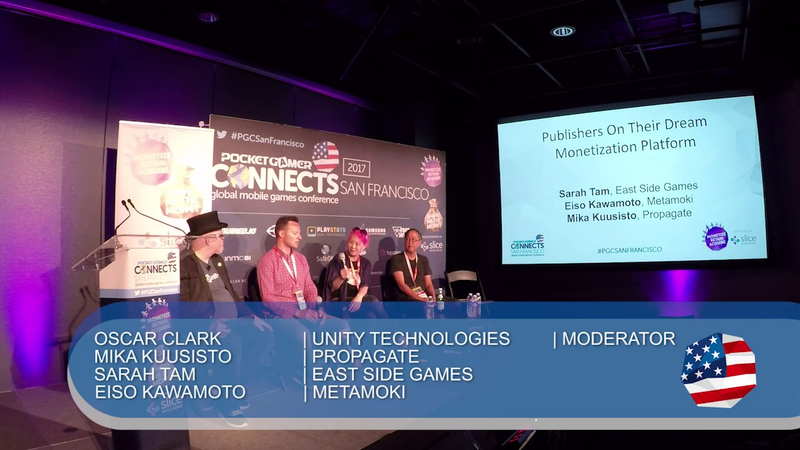
Publishers on their dream monetisation platform
Game developers and publishers currently face a fragmented monetization landscape characterized by high technical overhead and the burdensome management of multiple ad networks.
- Publishers prioritize low-friction, stable monetization SDKs over unproven yield increases to avoid technical debt and administrative overhead.
- Developers frequently encounter performance degradation in ad networks after the initial onboarding phase, necessitating scalable and reliable long-term solutions.
- The industry faces a persistent tension between the need for granular eCPM data and the requirement to maintain a high-quality, seamless player experience.
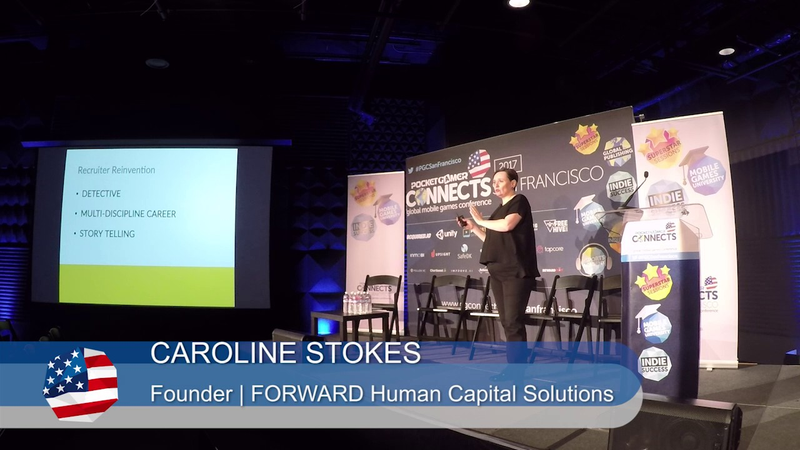
The talent acquisition masterclass
The talent acquisition landscape is undergoing a fundamental transformation, shifting from a transactional, volume-based model to a strategic, relationship-driven discipline.
- Talent acquisition must transition from a transactional, volume-based model to a strategic, relationship-driven discipline integrated directly into the C-suite.
- Recruiters must evolve into brand ambassadors and storytellers who possess deep knowledge of company culture rather than acting as simple resume processors.
- Organizations should adopt a 'care to win' model that prioritizes emotional intelligence, professional development, and honest, constructive feedback for all candidates.
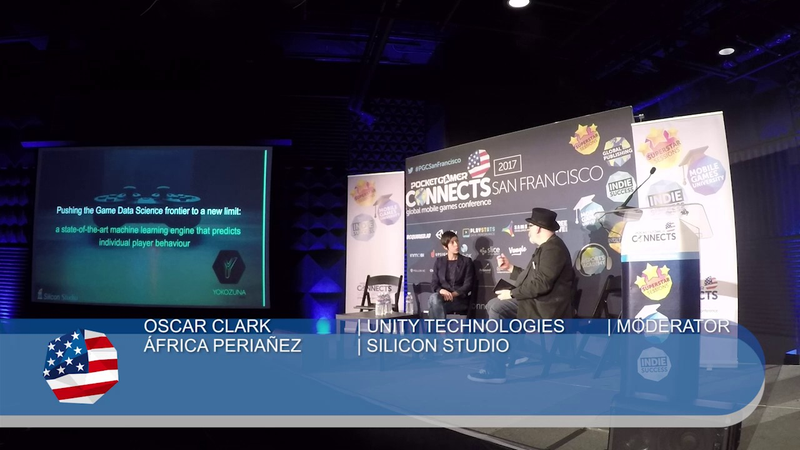
Design versus data in game development
The integration of data science into game design serves as a critical evolution for the industry, moving beyond simple heat maps toward sophisticated predictive modeling.
- Data science in game development is shifting from reactive heat maps to proactive, predictive modeling that anticipates player churn and purchase timing.
- Advanced statistical methods like survival analysis, traditionally used in medical research, are now being applied to accurately forecast individual player behavior.
- Effective game development requires interdisciplinary collaboration where designers define the intended player flow and data scientists apply algorithms to identify critical control points.
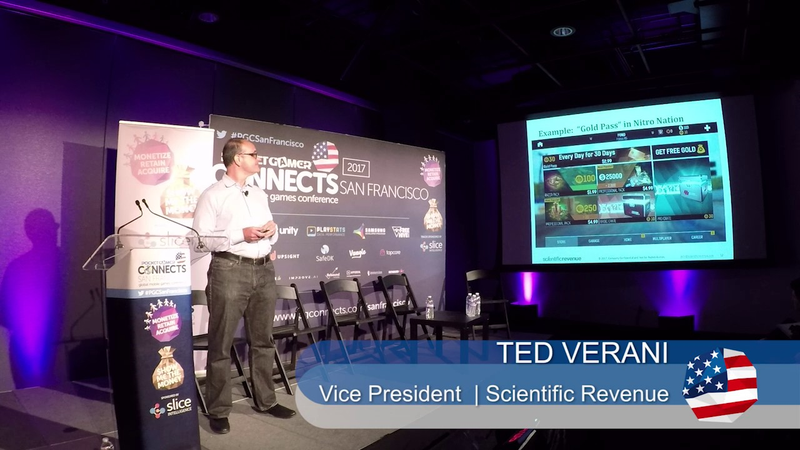
How to design annuities for your mobile game
Annuities serve as a strategic monetization tool in mobile gaming, designed to increase conversion, retention, and overall player satisfaction by targeting "planner" behavior rather than impulse purchasing.
- Annuities convert non-paying, highly engaged users by offering a large lump sum of virtual currency at a steep discount, delivered in daily increments to target 'planner' rather than impulse-driven behavior.
- To build player habits without cannibalizing full-price revenue, annuities should be structured for a duration of 14 to 28 days.
- Daily reward values must be calibrated by setting a minimum based on existing login bonuses and a maximum derived from the average daily spend of the player base.
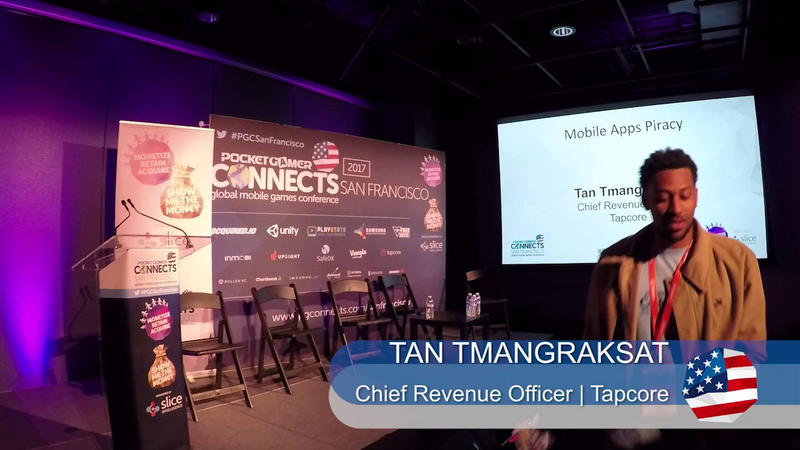
Fighting mobile apps piracy
Mobile app piracy represents a significant and growing threat to the global mobile ecosystem, affecting both premium and free-to-play titles across Android and iOS platforms.
- Piracy is a pervasive threat across all platforms, with pirated installations accounting for between 20% and 95% of a developer's total install base.
- Security research indicates that 97% of top Android premium apps and 87% of top iOS apps have been compromised, while 80% and 75% of top freemium titles are similarly affected.
- The financial impact of mobile app piracy is substantial, with projected losses reaching $14 billion by 2021.
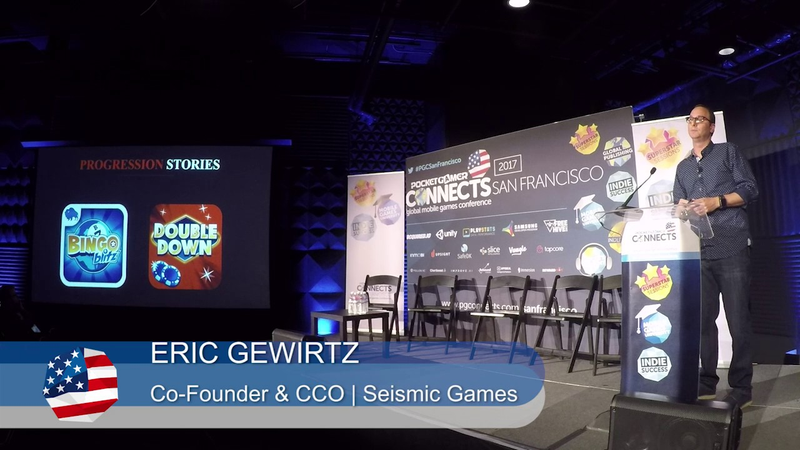
Storytelling In mobile and VR – The new narrative landscapes
Narrative design in mobile and virtual reality (VR) gaming requires a departure from traditional cinematic storytelling.
- Developers should pivot from scripted, linear storytelling to 'possibility engines' that empower players to act as the primary authors of their own narratives.
- Mobile narrative design succeeds by leveraging player-driven milestones and social competition, which integrate game achievements into a player's real-world personal life.
- VR narrative design must prioritize 'presence' and visceral emotional responses over traditional cinematography, as the player controls the camera and perspective.

Alibis for Adult Play: A Goffmanian Account of Escaping Embarrassment in Adult Play
Adult play frequently conflicts with societal norms that prioritize productivity, self-regulation, and professional responsibility.
- Adults frequently justify recreational play by reframing it as professional development, health-conscious therapy, or essential family bonding to align with societal expectations of productivity.
- The use of 'alibis' allows individuals to participate in leisure activities while mitigating the social stigma and potential embarrassment associated with non-productive behavior.
- Games function as vital structural frameworks that provide clear scripts and pre-established justifications, helping players manage the tension between the desire for play and the demands of labor.
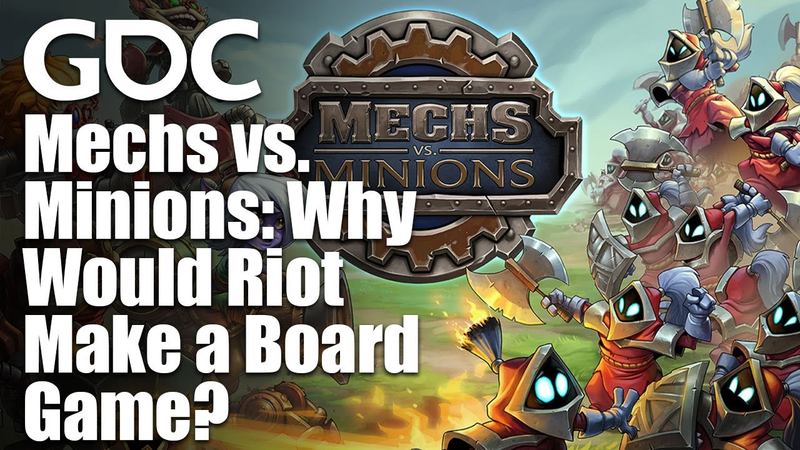
Mechs vs. Minions: Why Would Riot Make a Board Game?
Riot Games ventured into the tabletop market with Mechs vs. Minions to explore creative expression beyond digital platforms, utilizing the intellectual property of League of Legends to foster a unique, cooperative experience.
- Riot Games developed 'Mechs vs. Minions' not as a strategic market acquisition or user retention play, but as a passion project intended to explore their IP in a new medium and create a high-quality experience for their players.
- The project was driven by a small, internal team rather than a large studio mandate, allowing the developers to prioritize product quality over traditional profit margins by reallocating typical marketing budgets into high-end components and game tray design.
- The game design evolved from a competitive programming prototype called 'Weapons of Zombie Destruction' into a cooperative experience, as the team found that cooperative mechanics better suited the team-oriented nature of League of Legends players.
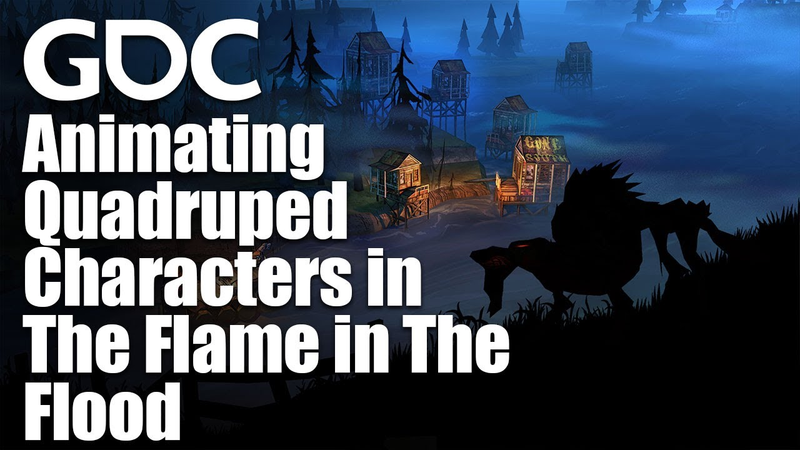
Animating Quadruped Characters in The Flame in The Flood
Animating quadruped characters in The Flame in the Flood requires a strategic balance between stylistic intent and technical efficiency.
- Achieve fluid quadruped locomotion by prioritizing grounded idle states and additive movement layers to minimize labor-intensive transition animations and foot sliding.
- Manage speed variations for stylized creatures like boars using linear blend spaces, while applying play-rate scaling and procedural spine rotation for more realistic entities like wolves.
- Ensure seamless directional changes by calculating the delta between a character’s facing direction and its movement vector.
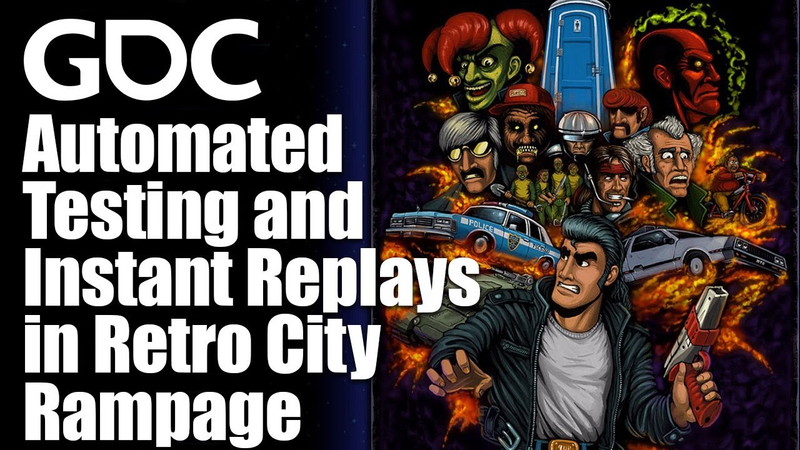
Automated Testing and Instant Replays in Retro City Rampage
The development of Retro City Rampage demonstrates the efficacy of a deterministic game engine architecture in streamlining quality assurance and feature implementation.
- Implementing a deterministic game engine architecture by prioritizing input recording over state logging enables high-efficiency file sizes for features like instant replays and leaderboard playback.
- Deterministic design allows for automated cross-platform testing and precise bug reproduction, significantly reducing the time and labor required for manual quality assurance cycles.
- Achieving determinism requires decoupling the game loop from rendering processes, utilizing fixed update loops, and enforcing strict state sandboxing to ensure consistent gameplay across different hardware.
Writers
Games and companies
Games