Global reports and market data
Documents
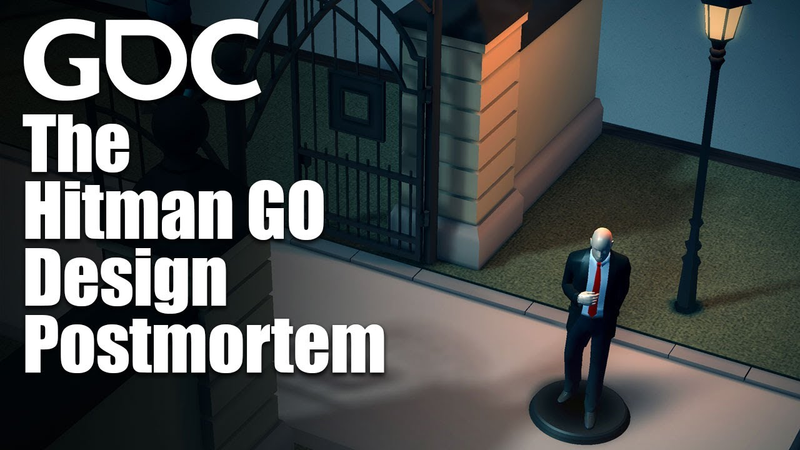
The Hitman GO Design Postmortem
The transition of Square Enix Montreal from cancelled AAA console development to mobile production necessitated a strategic pivot that prioritized creative incubation and brand adaptation.
- Square Enix Montreal developed Hitman GO within a six-month production window by utilizing a small, agile team and an incubation process that allowed staff to propose mobile-first concepts for established brands.
- The core gameplay mechanics were prototyped in just two weeks, focusing on turn-based strategy and diorama-style visuals to differentiate the title from traditional AAA stealth games.
- The team adopted a 'bottom-up' design philosophy, embracing unconventional ideas and constraints—such as the board game aesthetic—to solve the challenge of adapting a complex franchise for mobile platforms.
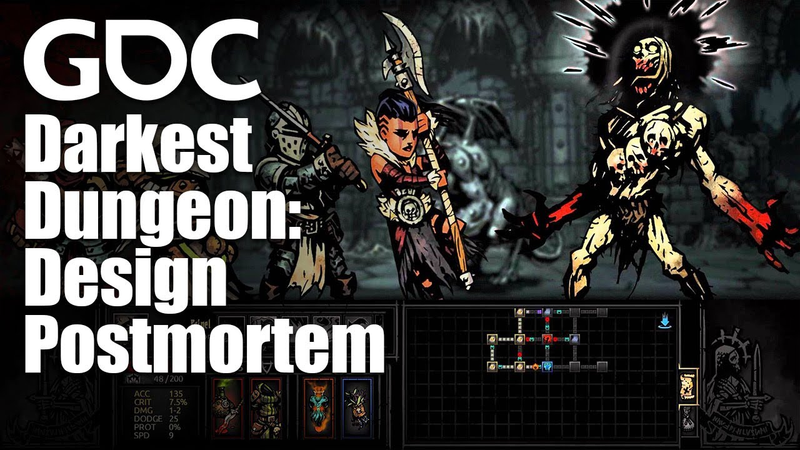
Darkest Dungeon: A Design Postmortem
Darkest Dungeon centers on the philosophy that the human experience of adventuring is defined by psychological trauma and permanent consequences rather than traditional power fantasies.
- Darkest Dungeon features approximately 70,000 words of text to support its Affliction system, which includes 15 character classes, seven distinct afflictions, and four virtues to simulate human emotional responses.
- The developers intentionally designed the game to prioritize the 'sword arm' over the 'sword,' focusing on the psychological state of heroes rather than traditional RPG power fantasies to create moments of triumph through the possibility of failure.
- The 'corpse' mechanic, introduced during Early Access to eliminate dominant combat strategies, caused significant player backlash because it was implemented as a major gameplay change that altered the experience for existing customers.
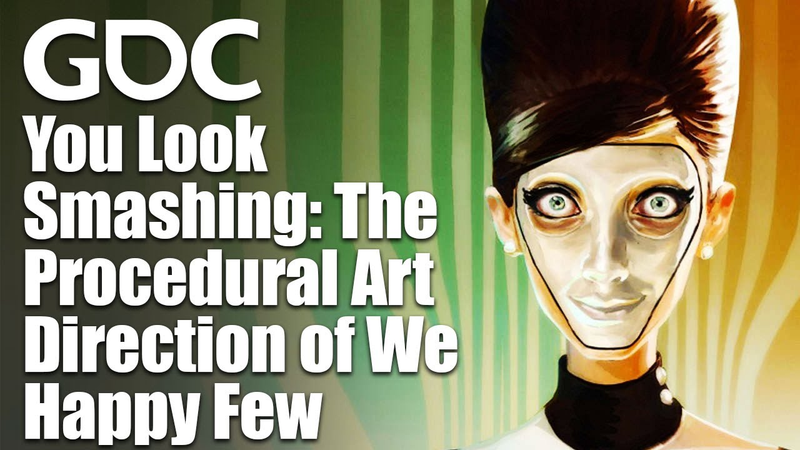
You Look Smashing: The Procedural Art Direction of We Happy Few
We Happy Few explores the psychological tension of a dystopian 1960s England, where a society maintains forced, drug-induced happiness to suppress collective trauma.
- Compulsion Games utilized a hybrid approach for 'We Happy Few,' combining procedural generation for road layouts, island geometry, and filler buildings with handcrafted interiors to ensure high-fidelity narrative and gameplay spaces.
- The art direction was built on three core pillars: conformity, paranoia, and suspicion, drawing inspiration from the British sitcom 'Keeping Up Appearances' and the film 'Hot Fuzz' rather than conventional gaming tropes.
- Procedural systems introduced significant environmental composition challenges, such as unnatural gaps between buildings and repetitive block patterns, which required extensive playtesting and the implementation of specific placement rules to resolve.
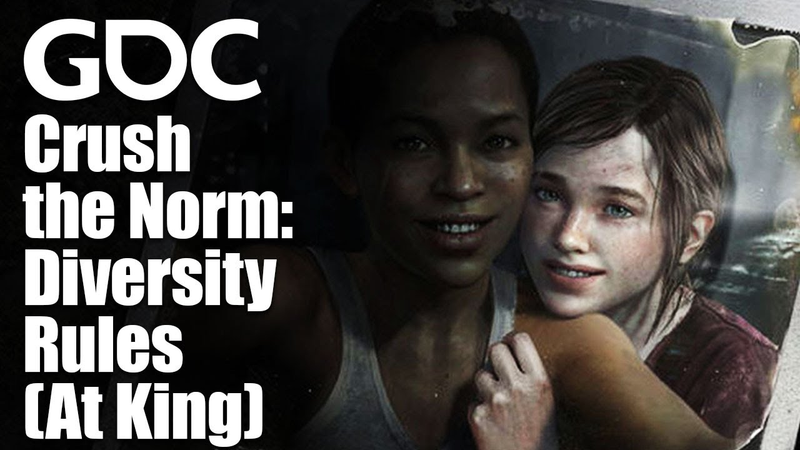
Crush the Norm: Diversity Rules (At King)
Game development requires a fundamental shift in character creation, moving away from reliance on traditional stereotypes toward a process that prioritizes personality and narrative depth before defining physical attributes.
- King has spent the last 18 months embedding a diversity mapping framework into its development pipeline to systematically move character design away from traditional Western stereotypes.
- The diversity mapping framework functions as an analytical tool that benchmarks character rosters against industry norms to identify and mitigate biases like the centering of whiteness and uniform body types.
- Effective character creation requires prioritizing personality and narrative depth before defining physical attributes to ensure more inclusive and original global representation.
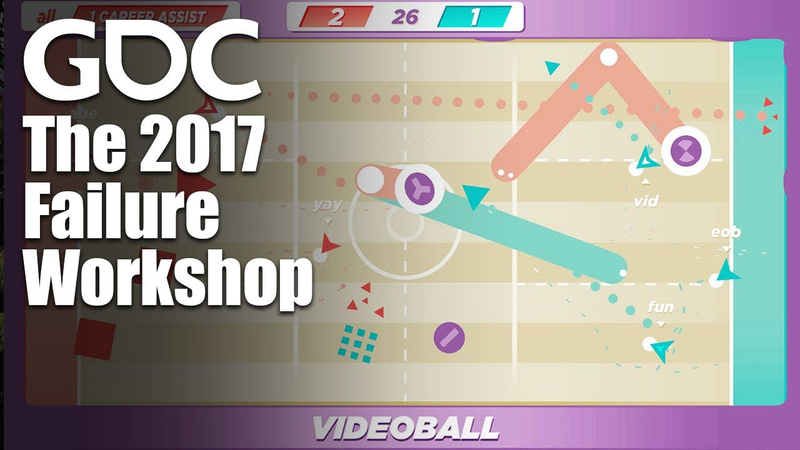
The 2017 Failure Workshop
The 2017 Failure Workshop examines the systemic operational and strategic pitfalls that lead to the collapse of independent game studios and projects.
- Excessive feature creep and over-scoping are the primary drivers of studio failure, as demonstrated by the collapse of projects like CityStream and Video Ball.
- Technical innovation and critical acclaim cannot compensate for poor business planning or structural instability, as evidenced by the dissolution of the Dutch studio Game Oven.
- Forcing an artificial e-sports identity and unnecessary cross-platform complexity, as seen in Video Ball, dilutes the core user experience and confuses the target audience.

Rebound's tips for launching your mobile game in Eastern markets
Successfully launching mobile games in Eastern markets, particularly South Korea and Japan, requires a fundamental shift in strategy for Western developers.
- Success in Eastern markets like Korea and Japan requires a heavy focus on brand advertising, including TV commercials and offline subway ads, rather than relying solely on Western-style digital performance marketing.
- Western developers often mistakenly believe that simply translating a game into the native language is sufficient for an Eastern launch, failing to account for the need for localized marketing strategies.
- Communication with players in Eastern markets occurs at a much faster pace than in the West, requiring more frequent in-game events to maintain engagement.
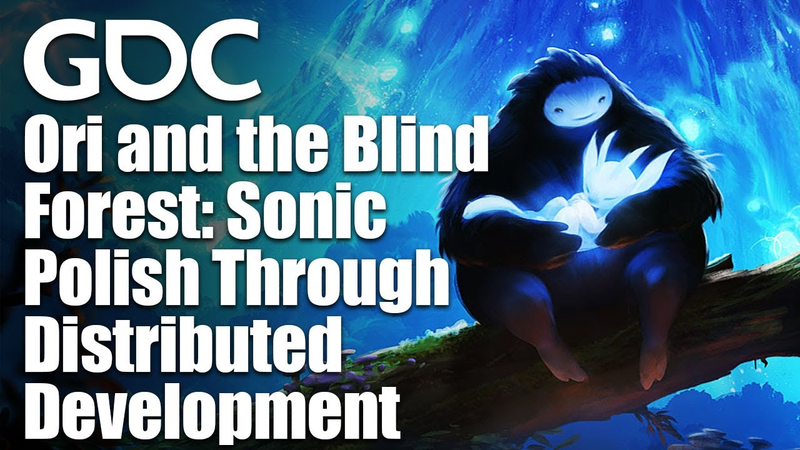
Ori and the Blind Forest: Sonic Polish Through Distributed Development
The development of Ori and the Blind Forest demonstrates that high-quality, immersive game design can be achieved through a decentralized, flat organizational structure rather than traditional hierarchical management.
- Moon Studios operated with a flat organizational structure, removing traditional management layers and placing the responsibility for resource management and project success on every individual team member.
- In the absence of formal management, the team resolved creative conflicts through a process where issues were addressed until everyone reached consensus, the dissenting party conceded, or the project deadline forced a final decision.
- The 'Ori and the Blind Forest' audio team avoided repetitive, gimmicky combat stingers by opting for a non-trigger-based music system, allowing for longer, more cohesive melodies that maintained player immersion over the 8-to-10-hour experience.

Why the post-app ecosystem offers a bigger market than the App Store
The post-app ecosystem represents a significant shift in mobile gaming, moving away from the traditional, high-friction App Store model toward instant, platform-integrated experiences.
- The post-app ecosystem bypasses traditional App Store friction by embedding games directly into platforms like Facebook Messenger or Rakuten, eliminating the need for lengthy downloads.
- Instant games require a design philosophy focused on hooking players within 15 seconds, followed by 30-second gameplay loops that provide immediate gratification.
- Large-scale collaborative multiplayer mechanics, such as boss raids supporting up to 200 participants, are highly effective for driving long-term retention.
FemShep: Féminité sexualisée ou subversive? Analyse du personnage féminin de la série Mass Effect
The character of Commander Shepard, specifically the female iteration known as FemShep within the Mass Effect series, occupies a complex position at the intersection of gender performance and industry-standard design.
- Only 18 percent of the Mass Effect player base opted to play as the female iteration of Commander Shepard, illustrating the niche status of the character within the series.
- BioWare’s marketing strategy frequently relegated FemShep to a secondary status, often utilizing superficial beauty-focused campaigns that prioritized heteronormative standards over genuine representation.
- FemShep was originally designed as a gender-blind copy of the male protagonist, sharing identical narrative arcs and animations rather than being built with a distinct female identity.
Andromeda on the Rocks: Retreading and Resisting Tropes of Female Sacrifice in Tomb Raider
The Tomb Raider reboot series, specifically the 2013 and 2015 installments, functions as a complex case study in the tension between narrative subversion and the perpetuation of regressive gender tropes.
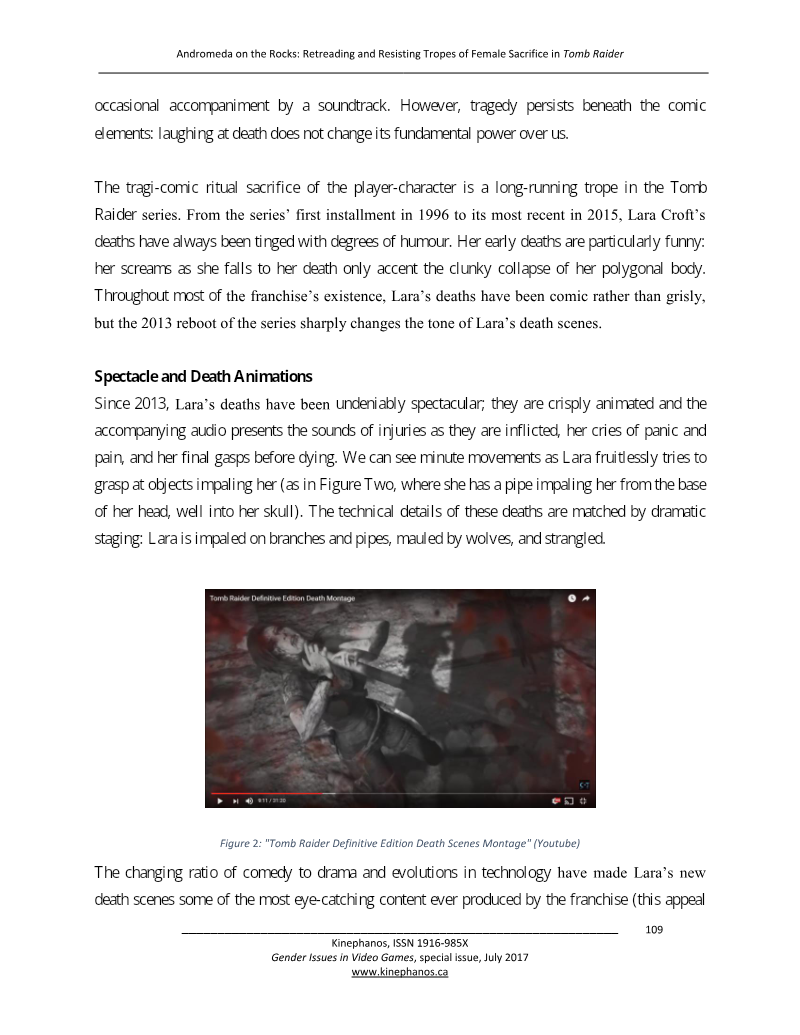
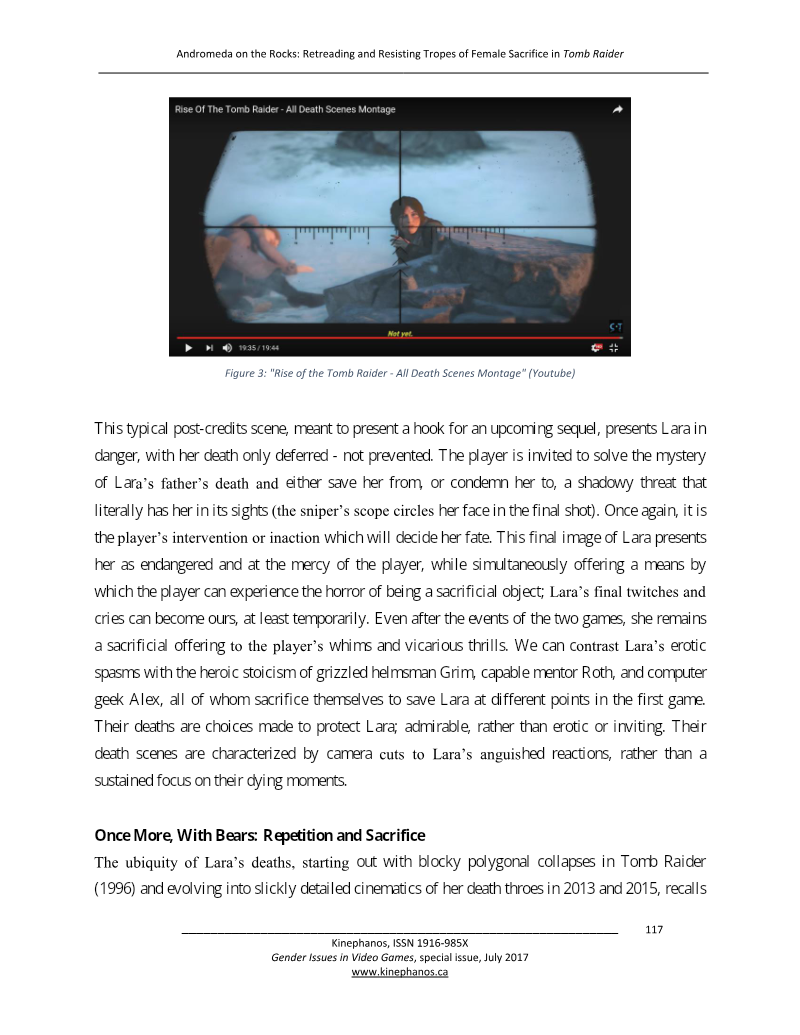
- The 2013 and 2015 Tomb Raider reboots utilize graphic, cinematic death animations that function as a form of ritualized sacrifice, undermining the games' claims of feminist empowerment.
- Gameplay mechanics in these titles commodify female vulnerability, positioning the player as both an observer and perpetrator of eroticized, violent spectacle.
- Despite narrative attempts to modernize character arcs for figures like Sam and Hoshi, the structural reliance on female peril and self-harm remains a persistent feature of the player experience.
Bridging Game Studies and Feminist Theories
Feminist theory serves as a critical lens for deconstructing the systemic gender stereotypes embedded within the global video game industry.
- Contemporary game design frequently relies on reductive archetypes—such as the damsel in distress and the hyper-sexualized avatar—that reinforce patriarchal structures and dehumanize female characters.
- The industry’s reliance on serial models of femininity prioritizes unrealistic beauty standards, which alienates female players and restricts the potential for nuanced storytelling.
- Game mechanics often normalize the subordination of women by confining female agency to domestic tasks or framing women as threats to be neutralized for the male gaze.
A Proposed Framework for the Collection of Health-Related Data from Serious Games and Apps
Serious games for health represent a significant opportunity to improve patient outcomes, yet the lack of standardized data collection remains a primary barrier to their clinical adoption.
- Serious Games for Health (SGFH) currently produce proprietary, non-standardized data that cannot be integrated into clinical workflows or Electronic Health Records (EHRs), creating significant barriers for physician adoption and patient treatment monitoring.
- The proposed framework aims to bridge the gap between game data and clinical systems by utilizing standardized interfaces such as HL7 FHIR to ensure health data is semantically rich and interoperable with Hospital Information Systems (HIS).
- A central component of the framework is a Decision Support System (DSS) that processes both game-proprietary metrics and medical data to generate actionable health recommendations for patients and clinicians.
Writers
Games and companies
Games