1 free read left. Create a free account for unlimited reading + AI research.
Create free account
Using TV to drive app downloads at scale
Key insights
6 takeaways- 01Media buying strategies should favor last-minute bookings and in-campaign adjustments to channel selection based on real-time performance data.
- 02Attribution for TV campaigns is most accurately measured by monitoring organic install baselines and daily uplifts rather than relying on short-term, granular click-through windows.
- 03Performance analysis should utilize 24-hour cycles to account for the delay between viewing a TV spot and the user completing an app download.
- 04Publishers can isolate the impact of television spend by establishing organic activity baselines and adjusting for external variables like store featuring or concurrent digital marketing efforts.
- 05Mobile publishers should shift from traditional broad-reach TV buying to a performance-based model that prioritizes agility, real-time optimization, and clear attribution.
- 06The primary objective of TV advertising for mobile apps is to translate campaign results into standard mobile metrics, specifically cost per install (CPI) and daily active user (DAU) growth.
Ask AI about this video
Transcript
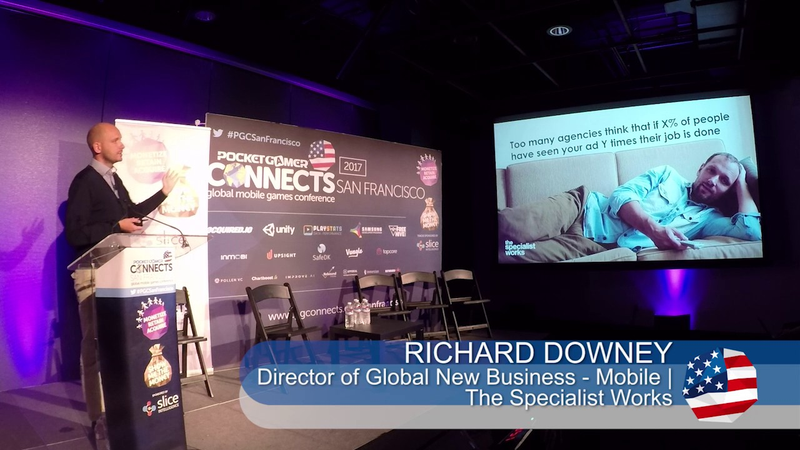
[Music] thank you very much hi my name is Richard and I am here representing a media buying agency called the specialist work and talk as it says on the screen they're about using TV to acquire retain and engage app users so obviously for all the app publishers in the audience to get to a point where even using TV as an acquisition or retention tool means that you're doing pretty well with your game and it's militarizing well enough to give you the confidence to be able to do this a little bit of background about myself so I've been working in mobile user acquisition for four or five years at a variety of mobile agencies in
London and the mobile agency I was working for and heading up was bought by the specialist works and I was introduced to the funny world of TV advertising and what became really clear to me was that what I call the traditional model of TV advertising very very much brand focused very much not about data or results or performance just wasn't fit for purpose for the kind of clients and the client of world that I knew which was mobile user acquisitions so let me just very very quick introduction so as I say we are a media agency headquartered in London but we have offices in New York in Germany and out of this month just opened an office in Beijing which is very exciting for us as well our business space around four divisions so broadcast or what we now call a V which means linear TV on
demand services such as web mobile and digital which is obviously my background press printing creative as a company we are now up to 150 and growing correctly so and the the world of TV bang really is dominated by the big huge global ad networks like WPP and Omni etc that have the vast majority of declines with the vast majority of the budgets we're a small fish in a very very big pond but we're trying to do things a little bit differently which is what I'm here to talk about today so there's a little bit torn up just kind of describe what I said those areas in dark red or where the specialist works actually has an office and the areas in pink aware we're an independent agency and we're part of a global network of like-minded independent agencies as well gives us a bit of scale and scope okay so I don't know how much of any
experience there is in the room in terms of using TV to drive mobile acquisition campaigns but certainly the three issues that are on the screen here in my experience are the biggest barriers to mobile app publishers actually taking the plunge and going into the big scary world of TV and as we go through this presentation I'll try and kind of look at these points one by one the first one is the television is extremely frustrating because of the left lack of flexibility that you get with it the second one is that TV agencies and the traditional TV agency model and just are built to work with clients who are extremely performance-based and then the third one is actually and tracking the effect that TV has on your app business can't be done properly so let's start with the first one so TV is
frustrating and inflexible I agree I think it is one of the reasons why I got interested in this space in the first place with that I was kind of running teams of mobile UA account managers and we'd be working with clients who have really strict CPI targets really strict CPI targets and if we deviated and went slightly above them even by a couple of cents you know we get the glorious client on the phone kind of threatening to pause the campaign and withdraw budget whereas at the same time you know this clients would be dropping millions in two dollars on TV and seemingly not being able to even get an idea as to whether it was working a lot and it really used to wire me up so this is why I kind of got into this space and so in terms of how TV is bought from a brand perspective the whole thing is set up to be rigid it's set up to be very inflexible because for the TV stations and for the media agencies themselves getting into a level of detail whereby
performance is analyzed and media buying is optimized just won't work with campaigns of that size I call it set and forget and I'll go a little bit more detail about this but this is very much again the traditional method of TV buying in so much as once the campaign is planned and the strategy is decided the campaign then runs kind of untouched unhindered for the length of it without any real analysis or performance into it at all any changes to the media buying so you know if you if you did decide that actually Saturday's on a good day for your ad to be aired but Wednesday is any changes can often be penalized from the TV sales house because again this rigidity to this buying structure is what works for them and very often agencies are forced to buy channels in groups rather than what works with a client in some territories the airtime
price can can rise in months so if viewing figures are higher than then its anticipated clients very oft end up being charged even more than they thought and there's not the level of flexibility or bespoke buying available and to agencies and key shows so again coming from a mobile user acquisition background where you know everything is about testing and learning and data analysis and optimization and this is this can be extraordinarily frustrating and can be one of the main reasons actually why mobile app publishers don't take that step the other thing as well is that the system currently the system that I'm describing is is set up to benefit the people that use it the most so the big global agency networks that have huge deals with the TV stations where they uncensored eyes to use particular TV stations and particular networks in order to receive a large rebate which
obviously means that very often and TV buying agencies are using channels and networks because it benefits them rather than necessarily benefits to clients but doesn't say that that's the traditional model you know there is another way and quite I'm quite useful where I think of demonstrating that the what I'm talking about today is is through this chart so this is kind of as I say that the typical or traditional if you like approach to TV buying whereby and the brief is just about reach and frequency so I have a product or an app that is primarily targeted at men aged 18 to 25 and I have two million dollars in with which to run a TV campaign you go to a traditional TV media agency and they will be able to put together a strategy and a plan for you that says here's a list of programs and has the list of
stations that will enable you to reach that male 18 to 25 audience and at the end of the campaign 60% of all the people in the country aged between 18 and 25 will have seen the ad at least twice the client says okay that's fine there's a huge gap between that decision being made and the campaign going live the campaign then goes live runs for however long it is and then at the end of the campaign they all sit down over a nice lunch or a nice glass of wine and they decide whether it's going to work or not whether they're going to do it again we approached a certain kind of more nimble and mobile focused agencies are taking goes very very different so for the first thing the the the pre-booking deadline is tested so rather than coming to a decision as to what all of the TV strategy would be six to eight weeks in advance there's a lot of the booking and a lot of the strategy is held off to the last minute which enables a level of flexibility
there's a lot of need for relationships with the stations and the sales houses here to be able to have that but what's really important I think is the fact that again bringing a digital or mobiles viewpoint into this is this kind of period of in campaign optimization so this is being able to know when and where you can make changes to the campaign based on the data and the results that you're seeing this way rather than the de KPI of the campaign being reaching a certain number of people in a certain period of time you can start looking at really valuable metrics such as cost per install cost per acquisition and things like that again making it really really kind of mobile and digital friendly what it also means is that you give insight as to how the campaign is going all the way through so you know if you if you do find out that Saturday is better than Tuesday because that's what the data tells you or whether the morning is better than the afternoon or down to the actual individual station and channel selection you still have the opportunity
to make the changes that you need to make and this is the more agile approach that starts to make linear TV feel like digital so of course huge huge topic of conversation at the moment is the fact that actual linear TV people watching TV broadcasts live as they go out within certain demographics is declining and that audience is either switching away from television programming at all or into new ways of consuming it what you can do on top of what we're talking about here is obviously layer on things like programmatic video layer on things like video on demand to be able to supplement that audience okay so second point is that TV agencies or certainly the agencies and by most of the TV space on response focused well as I just said there's too many agencies that think that as long as the ad is being seen by broadly speaking the right kind of people and the right kind of volumes that their job is done and this is the difference really kind of user Friday
Agatha as a way of explaining this although that Ness although that could actually work out cheaper in a cost per thousand basis just to say that that audience is very gay the people that we want and what what I've found from wearing the mobile user acquisition is actually if you can actually prove through your data and your attribution that the results are better by spending a little bit more time and effort and resource in ensuring that you're making the right choices and spending the money in the right way then that focus does deliver a much better cost per response okay so talked about cloud TV is bought talked about the flexibility that we can that we can bring into that process about how we're trying to disrupt the kind of traditional TV buying model that hasn't really changed in 50 years now obviously is is kind of the interesting but how do we actually find out how do we know whether it's working or not so and plenty of people obviously in the in
the mobile industry think is there every decision that they make from a mobile you a perspective is built on data and analysis and results and how do you get that for TV well the way that you do it is to analyze the information that's coming out of your organic data so leading attribution providers so there's four of them they're obviously those solutions were all built and all exists - primarily and judge the success of paid for mobile use user acquisition campaigns but there's also a ton of data that's being generated from the organic installs that take place that can be used as a way of evaluating the success or not of your TV campaigns so there's lots of products on the market that are that exist as TV and TV attribution and monitoring services so we use the specialist works one called advanced this one called PB squared and it's plenty more as well these things are
built predominantly to measure the effect that TV advertising has on web campaigns and they work really well because you know as you might imagine and in order to monitor the effectiveness of a web campaign you put a tracking pixel on them on a website and if somebody watches a TV ad with a call to action of a web URL and they pick up their phone or their tablet they go to that web URL as soon as they land on that Paige the tracking the monitoring software is able to identify a spike in web traffic and then attribute that back to the TV spot pretty easy pretty simple cost a lead hospital visit whatever you want to do of course the challenge and the B issue in using these attribution solutions is actually the first bit of data that we can get from ups flier or tune or whatever it is is a lot further down the line than picking up your phone go into a website and being tracked by a
tracking pixel as the as the as the speaker was saying a little bit earlier you know it's a longer and more complicated process right so you see and so one of our clients is ravio we run TV campaigns for Angry Birds in the UK in the US you know for us to be able to track and match that organic install back to that TV spot what do they have to do they have to see the Younger their dad they have to pick up their phone or their tablet open up the app store look for Angry Birds have a look at the app download page maybe check out the ratings install the app we still haven't got any data at this point we have to wait for the app to be open for the first time for the first bit of what we could what we need which is the time stamped organic install data to fire to our TV solution so rather than seeing this big spike that you get from web campaigns and web tracking and attribution what you see is a lot flatter and a lot and a lot more difficult to actually identified down to
the TV spot itself where the installs have come from so this just kind of explains what I've just said really so this is in our advanced analytics platform the top graph graphic there is an ideal scenarios for how an app install campaign would look in terms of to the second tracking realistically speaking but that's quite rare because of the protester people have to go through and also you know just confirms a user behavior if you're going to a give you an example one of our clients is Clash of Kings and the big game out of Beijing for elects we run a huge campaign for in the UK and we bought the first the whole of the first outbreak in the first episode of the last series of Game of Thrones cost us quite a lot of money but we were really excited about it because the audience was absolutely perfect and you know I was that keen I was kind of looking at my advanced dashboard as the ad went out and our attribution
window was 67 minutes attribution window finished zero installs and so we absolutely need I made a right mess of this and then once the program finished 60 minutes later huge spike in installs so obviously what happened was people had to a degree downloaded the app when they saw the art at the first ad break but rather than breaking off from this program that they probably waited a year to watch to start playing the game they waited until the games finished before the installed it so they opened it for the first time and of course it's only at that point of opening it for the first time do we get that data so we have to be a little bit more open-minded and and what we what we do instead is look at what we call ECPI rather than attributed CPI and so a better picture of TV influence actually can be gained by looking at an organic daily uplift so it's great to be able to look at individual spots and identify individual things but it's much more useful and valuable to look at the
effect that TV has had over a period of 24 hours and it's of course really important at this point that we understand the other factors that influence organic success we can't claim that every additional and incremental organic installers comodo result of our TV campaign if there's a featuring in the App Store or if there's a big char boosting activity going on Chah position apps of motion emails PR CLM whatever else is going on all has to be taken into account and we have to be able to effectively establish a baseline of organic installs working with the client before we can look to and prove or disprove any any uplift in terms of TV and once all those things are known any CPI can be formulated so this is this is an example of a big campaign that we did in the UK for a very very well-known mainstream gaming brand whereby if we'd have just a looked at that attributed CPI so these are the ones that actually all took
place from seeing the ad to install and get to open it that for the first time within the five or six minute window then the CPI would have been eye watering lehigh but actually when we were able to look at the effect stretched I was over the whole day it was a much much better picture and of course another way of looking at this kind of stuff is through App Store itself so for this same campaign we were very fortunate not only because the name the brand is very very well known and people reacted very well to seeing on TV for the first time in a long time but the clients also kind of parked all of their major and digital marketing and acquisition to kind of clear the way a little bit for TV and what we saw was that was these the App Store obviously in the UK with the light blue line being the overall at child position what we saw was when the campaign launched there was an absolutely immediate effect on an hour by hour and day by day basis in terms of app installs and then when we
won offer it dipped again so and this kind of saved as a little debt for this campaign because when we were just looking at the attributed cost per install the picture didn't look too great but when we were able to look at the app store itself and it's the Google Play app store for that game the effect on TV was absolutely undeniable so it just taught us to look a little bit in a bit more of a broad and contacts to the effect that TV was having and some of the thing we can do is measure reactivation so similar principles for acquisition establish an organic baseline ie what is going on before TV starts that happen before you can really measure any kind of uplift and what we do here is really quite and quite easy we look at you know an average number of DA use over a period of time and then look to rather than installs and then look to see what the uplift is we can't do spot by spot analysis here because of so you don't have that timestamp data
that we're getting from the installs you're not able to match reactivation necessarily but unless you have your enough attribution and provider setup to do something like this in which case you can but what it can do is it can help us optimize media buying by day so you know the assumption of course is that the weekend ads would be better in terms of reactivation because people have more time to play them but using this kind of thing we'll be able to prove that once once and for all but all of this in US organic data is only valuable if you use it right otherwise it's just kind of it's informing you of how people are using your game but it's not helping you with your actual TV campaign what you need to do is to have confidence in TVs to be able to approach it from a mobile-first perspective and the combination of the analytics the tracking and the flexible approach to TV buying is the optimum one that you want but there aren't many TV agencies out there let's do it like this because this methodology doesn't suit the model okay
so to summarize we believe that the traditional way of using TV is not fit for purpose for for progressive and ambitious modern app publishers just ensuring that your ID is seen by loads of people you isn't really enough it's ok if your machines owned and you want to put an ad in the Superbowl because that has lots of other benefits around it but if you're interested in to form and space metric it's not enough mobile focus TV campaigns can now start to be judged in terms of mobile language and in terms of mobile performance metrics and as always the solution is in the data just got to know where to find it and that's it thank you very much [Applause] [Music]
Summary
Television remains a powerful tool for large-scale mobile app user acquisition, yet traditional advertising models often fail to meet the needs of modern mobile publishers due to their inherent rigidity and lack of performance-based data. While legacy agencies prioritize broad reach and frequency, mobile-first publishers require agility, optimization, and clear attribution. The primary barrier to entry for many app developers is the perceived inability to track the direct impact of TV spots on install volume, as the user journey from viewing an advertisement to opening an app is significantly more complex than a standard web-based click-through.
To overcome these challenges, publishers should adopt a more flexible, data-driven approach to media buying. Rather than committing to long-term, static campaigns, agencies can utilize last-minute booking strategies and in-campaign optimization to adjust channel selection based on real-time performance. Attribution is best achieved by analyzing organic install baselines and monitoring daily uplifts rather than relying solely on narrow, short-term attribution windows. Because users often delay downloading or opening an app until they have finished watching a program, looking at 24-hour performance cycles and App Store ranking fluctuations provides a more accurate picture of TV’s influence than granular, spot-by-spot tracking.
Ultimately, the goal is to translate TV performance into the language of mobile marketing, specifically focusing on metrics like cost per install (CPI) and daily active user (DAU) growth. By establishing a baseline of organic activity and accounting for external factors such as store featuring or concurrent digital campaigns, publishers can effectively isolate the impact of their television spend. This methodology allows mobile-first companies to treat linear TV as a performance channel, enabling them to scale acquisition while maintaining the rigorous data standards expected in the mobile industry.


















Comments