1 free read left. Create a free account for unlimited reading + AI research.
Create free account
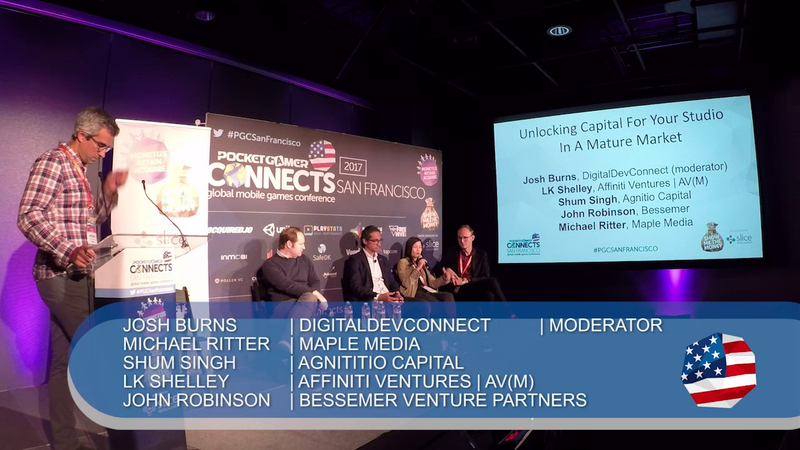
Unlocking capital for your studio in a mature market
Key insights
6 takeaways- 01Investors are prioritizing studios with proven live operations, genre-specific expertise, and sustainable cash flow over those seeking funding for user acquisition on unproven titles.
- 02Institutional venture capital is increasingly reserved for teams with significant experience at top-tier gaming companies, pushing smaller studios toward angel investment, strategic partnerships, or regional funding sources.
- 03Selling legacy or underperforming titles to larger publishers allows studios to generate non-dilutive capital for new development while offloading the operational burden of older games.
- 04While Western investment remains cautious due to public company performance, Asian firms such as Netmarble and Nexon continue to pursue aggressive expansion strategies focused on tentpole titles and dominant market positions.
- 05Emerging technologies including AR, VR, and eSports are currently viewed as long-term opportunities in a state of market maturation rather than immediate primary investment targets.
- 06Studios should prioritize deep specialization in a single genre over broad diversification, as high-level proficiency is the primary driver of investor interest in a consolidated market.
Ask AI about this video
Transcript
[Music] I guess we get started anyway so hopefully our fourth panelist will wander and shortly so yes there's a ultimate sort of panel focusing on the investment side our weekly following two stomachs great presentation so I think first with these two some quick introductions for folks why you your role is at your company what your company's focus on especially as it relates to investment and an M&A so myself Josh burns founder of digital about connect I'm working on developers I run a lot of key business days oh it's right on time perfect perfect I did the same thing that's more than growing by working with developers around key business areas including some stuff around investment especially around companies in the Asia side so Michael
once you go now I'm Michael Ritter I'm CEO of maple media we're a company focused on acquiring mobile apps you guys will ready to know all right hi I'm Alka Shelley I'm a managing partner of affinity ventures so we invest in technology startup and one of the pillar is focused on social mobile guinea john robinson i recently joined Bessemer Venture Partners were a local venture firm in the game space most notably we did twitch and played in the OMG pop over the last few years awesome so just to kick things off I mean I'm I'm some sort of the presentation and the question so if you look at it like the mobile gaming side from a Content perspective the folks agree that it really isn't much of an opportunity for studios to raise funding and climate that we're currently in and if you agree to disagree like is there any
sort of profile companies when there is more opportunity for fun great for fundraising I would say I think there is a lot of opportunity I think you're seeing a lot of people who have got a lot of expertise is some of the biggest game companies and I think that they're exploding off and start doing their own thing I think the cost to make kind of an initial game still fairly low so like the barrier to entry is is low so I think you can get a good game done for like a seed round or front and family round and then I think after that there's a lot of appetite at the series a series big growth stage for the companies that have any sort of traction and so that's basically studios that maybe have a track record from the previous companies I think I think there's more opportunity on that earlier side of failure have a good track record creating apps or games but I think it's tough when you've developed the game and you're looking for user acquisition I think that's kind of the tough place I see I'll see a lot of publishers or
developers come with me and say I've created this game and it's a great game and maybe it has good KPIs maybe not but they want you a investment that's kind of a tough point to get investment like obviously there's a lot of people with you hundred percent anyway I think if they're coming with you expertise that's one thing but a vast majority of them don't and to throw dollars at you a is just not a personally I don't think it's very good investment so I would encourage studios or publisher to come in either way before that or have a different proposition then I need you a yeah so I'm very basically you either like have a very good concept and then reach out to life example we see where we sort of bet on the future value rather than just looking at your existing matrix or you could also I think now they I think there are lots of strategy invested so even Europe recently I met a studio in Berlin about
two lungs ago I heard stories of you from some triple-a studios background but I didn't think it was in vegetable because they won they raced about two million before and then they develop a game that didn't even has an attraction but now I just heard that they raised six million yes treasure hunt yeah I didn't know IIIi did not see that coming I mean I would say that you know again to my point before I think and I think John mentioned it as well you know it's if you're in a situation where you have a great track record you've operated a you know a very viable top 200 grossing game you know you run you a you understand what it takes to scale that you know LiveOps I mean if you understand all those functions of game okay you got a chance VCS will look at your visas will talk they'll understand they'll build a
you know that you'll you'll get into the funnel you get meetings otherwise if you're if you're you know three four or five guys in in a small studio and you have a great game you're going to get a publishing deal you're not gonna get investment especially if the guys don't know you if you haven't come from big game companies you're going to get a publishing deal is there another sort of how does the studio to the best position itself for fundraising I mean obviously be talked about you know having that track record you know having an extra team to look publishing side in terms of marketing you a any other sort of insights their own stuff that kind of captures eyes and investors especially from the perspective like institutional investor versus late you know John just work an extra on like folks on the gaming side that are giving the investments of publishing any sort of other aspects or back ways to position yourself for the best sort of potential companies I I would actually advise the smaller studios to think about who the ideal
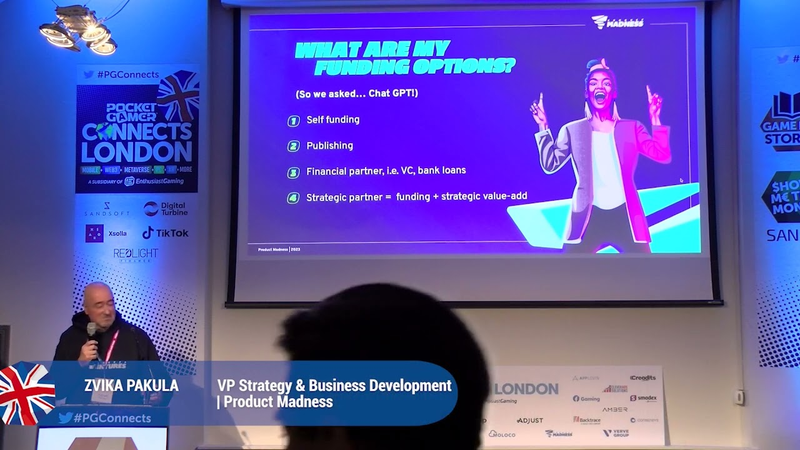
investor would actually be in and in a lot of cases I don't think it's a big publisher or traditional like a natural institution but rather angels or people who understand these can be very good cash businesses and so I think I think it's really bad I mean before the next one I did a indie game studio and really aligned kind of like my investor base with our goals and that was really your focus much more on creating a great stable cash flow business as opposed to swinging for a multi hundred million dollar exit because I think the cash flow business was much more straightforward path to success than traditional venture style back business yeah then you know if not that's a great suggestion but I'll throw out a different one in which is maybe go up in a strategic partnership that can help in the big most people want it I said it earlier you a most people want investment for user acquisition to grow the app but maybe there's a strategic partnership whether it's a brand or some kind of media company that specifically
makes sense for that game that can help kind of drive the promotion or the users that you need yeah most present to see in a small game companies when they get funding and I haven't heard of who it is but if you do local partners and I just think that this more thing like go find people who are interested in backing you in that region you can help you with your network you can help you bleed your team and you understand the business and trust you I think that's much better than bringing in an institutional investor so when you're raising funding for your game studio like how did you source those sort of lead or angel investors is just your network or and the insights to share well not i net worth individuals who I'd work with friends of friends I mean you just really just like screams you have an angel oh yeah I mean yeah just be super resourceful and so you're the sort of strategy around that that time person is there not in terms of like the profitability expectations things like this anymore real think especially is
that early early stages people are betting on you more than they're betting on the idea of you creating the next supercell and so I think it's really about those personal relationships well so I think one interesting thing I want to touch on that a couple you guys have been involved in the idea is sort of this buying and selling people like products or games Michael obviously that's a lot of your focus and show me you did a deal with gree for one of the games I'm curious to get you guys inside like this is kind of a new way to raise capital for companies that may be smaller than have a product that performs well or is the legacy product that drives revenue and they can then ship that into like new products that's exactly what we talk them to publishers about or studio's about which is you developed a you know a good game maybe it's not a huge home run but it's a good game drive steady cash flow for you but maybe there's a new game in the works that you have high hopes on and we see
ourselves is a good kind of financing of it which is sell off your current game generate the revenue that you would accumulate over a certain time period upfront because there's a good you know the time value of money invest that money into your new game which in theory should have a better return and then you'll be ahead of the game you didn't give up equity you didn't really give up any debt and a lot of times the archived games or the historic games are really dragging Studios down they're spending a lot of bandwidth on those games they're worrying about it thinking about it when it doesn't drive enough revenue or it doesn't have enough upside for the studio to really be focusing on are spending that time on it yeah I mean I think I think in the case of Dragon school I mean this was a game that was performing exceptionally well it was growing like a rocket and it was a title that gree felt internally they could really run the LiveOps really add value
in terms of you way in marketing that was a thesis and you know it served the shareholders a pair blue extremely well I mean they cashed out handsomely for for this title and they felt you know what great if you guys think you can do a better job here at keys and you know they've used the proceeds of that to go and you know develop another couple of titles and and have a lot more financial flexibility now what I also see is actually some larger publishers thinking about titles that don't perform as well - then source outsourcing those you know through rep share and royalty to smaller players so there's haven't personally been involved in that but certainly know of a couple of studios that that are doing that actually actively that that came from large publishers but now we're actively running studios and scaling them outside of California but then taking these older you know catalogs of games and actually increasing them and
every band is pretty successful that strategy both on the mobile side and TT said I think it's a really viable opportunity for people to want to move on to the next thing or teen idol big fix one and so what are the characteristic is product is it purely like what's the currently dealing as a revenue that's meaningful people looking for other maybe like a number operated game that they can do more in terms of events whose the revenue like what's the kind of profile product that people put Michael what are you interested in what folks mean to what extent is my hypothesis that's like a gain and soft launch that may be a decent metric no one's just buying something like that what is the stuff that people are really interested yeah we might I don't know if we're similar to most or different but we look at user the user so we look at the number of users the growth of those users whether it's increasing steady declining many vast majority obviously are generally declining but at what rate are the declining and what does it take to level that decay off I think there's
definitely a tough threshold as users we look at maybe ten or twenty thousand AAU as like a bare minimum of users that really matter where you can actually drive an impact but for us it's really about the growth the decay of those users although I think a good amount of Studios also might look at retention you know day one day seven retention I used to work at jam city and day 30 retention was really important to us but usually day 30 is driven by content and a lot of apps which aren't performing very well you know you don't support them with content so day 35 has goes I've seen that she's very aware actually I've got asked to buy casual games to do they have a lot of users but they don't have against new games idea so they're sort of looking for new games that's not being in the market that long
but they have a good sort of soft launch matrix even just a small small softbox or small scale and they would be willing to just pay by all the whole IP and then just talking into their network the universe structure so obviously what the touch on Asia or around the M&A investment as it relates to the Western market would love to get sort of the latest I know some you obviously shared stuff already but love to get like everyone's sort of inside like what kind of opportunities accommodation major looking during the last and Michael you're a gem fitting you made a lot of money from from that marble and working with like Indonesia and John's and Mex on so yet what's he gonna get what's the profile stuff that's interesting with those Sundays on the gaming side yeah so for us it was at the time of called s
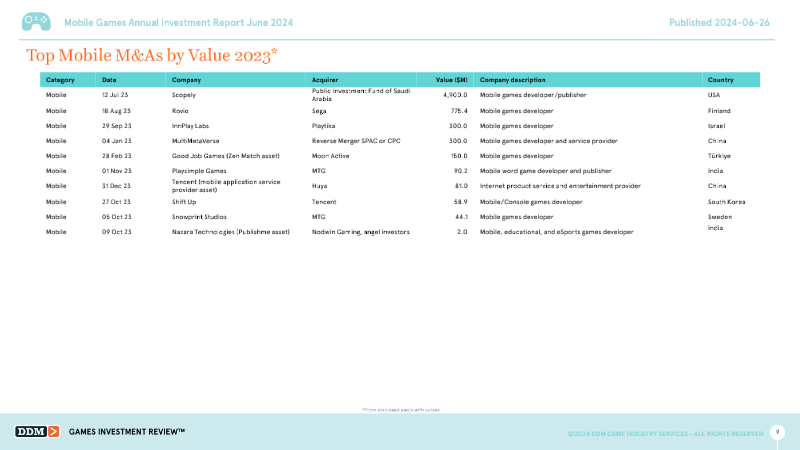
channel a change the name to gem city I apologize I still refer guys just yet we received a fairly large investment from that marble 130 million is about a year ago or a year and half ago and at the time and now recently they acquired Kabam and they really went public in Korea but they they want to extend their their reach into the u.s. so it's interesting that they you know they made investment house in Kabam and they really let us GN the team run the company as a u.s. entity and you know running as we as we would a lot of Chinese investors are becoming in - which is you know a lot of people talk about how they're trying to get US dollars to exchange you know Chinese currency into US dollars but I think a lot of those players are the law those people are really kind of knocking on a lot of doors and evaluating a lot the businesses are making a few deals so I'd be tempered by
you know a lot of those types of people come into the market there's a lot of them talking but few making deals yeah I think for the major Asian players with large balance sheets specifically than net marbles and the next island and a few others I think they're looking for really like tentpole titles annette marble gem city with Caban next on with big huge games I think they're all just looking for studios that can say this is our genre and we are number one or number two and that's kind of what we own and that's what we focus on I think that's much more appealing they kind of like a broader portfolio or just a strong cash flow business for most of the biggest acquires may I know specifically for netmarble that they really enjoyed actually a lot of Chinese companies they really IP so it's listing like China IP is pretty important there and you know it's probably not coincidental bit net Marvel acquired Kabam they both have both share the Marvel IP so I don't miss a coincidence there yeah yeah you know what I would
generally agree with a lot of that I think that yeah certainly Chinese players are speaking everybody there's no doubt about that but I think they'll continue to be more inquisitive I think with with both companies like netmarble Nexon Korean or Japanese flag matter they're very specific and for for a lot of the mid-size or even smaller becoming mid-sized players they're courting the Chinese players hard there's no doubt about that I guess I'm you know my experience about severally on a kind of larger size do they really look you know they pay attention to even pay attention to growth it's not just top-line revenue and note early on I'd say like two years ago is all about spend as much as you can grow a top-line as much as you can even as irrelevant I you know for us at least eBay da or when I was at jam city even though it's very important and I think it's going to continue to be even more important as a time as the market
matures so when you're in next time like how did you guys evaluate investment opportunities I get a high level share any for this I think was really just around kind of the strategic value like taking what next one was good at and kind of extending that to new geographies or new genres and that was really just about taking games which we thought were performing well we could use more expertise around live operations or scale basically okay cool so in terms of M&A trends I mean obviously you're some telling us a bit I mean it seems like on the western side you know stuff will be fairly limited it has been limited I mean and I'm like what your sgn and sorry jam city and you guys did some acquisitions I mean what was the sort of strategy behind that at a high level of it focus on just like add a different genre expertise it was probably early from a financial perspective now yeah it was actually the first one which was yeah expertise in
certain game categories for us we thought we were or we knew we were very good and puzzle and we wanted to expand out other genres and you know it's it's one skill set to make a puzzle game it's another skill set to make a casino game it's another skill set to make in a simulation and time management game and I think you guys would agree it's it's hard to be good at all those genres and I think there's studios out there like Zynga and glue and some of these bigger eyes that are kind of realizing that they can't have all these you know kind of random game categories and they need to fit together and share away some of certain expertise in certain areas and they're I guess the latest acquisition of TinyCo which was about eight or nine months ago was really for ibogaine strategic expertise in a certain game category and so then you talked about the deals will be deal second in the West that'll be pretty small scale is that Hawaiian kind of Michael describe the reasoning behind those or well yeah I mean I think I think for a lot of the US studios again just because you don't
have the same market appetite for for gaming assets a lot of that has been attributable to the difficulties of glue and Zingo over the years so you have this thin domino effect for all other companies and its really prevented a lot of interesting North American or European players from going public of course that's changing now there's at least some some some interesting you know companies come in a market now are in Sweden Sweden and Finland until that changes you know a lot of US companies from from an M&A standpoint are just they're going to be you know just really not that interested in buying companies I mean they'll make choice acquisitions you know which are near at home on the west coast immediately creative I mean who would sue is not going to do those deals but for something more significant or that's going to be company transforming they're they're going to be a little bit more cautious and then most of the focus be on like a strategic Ally
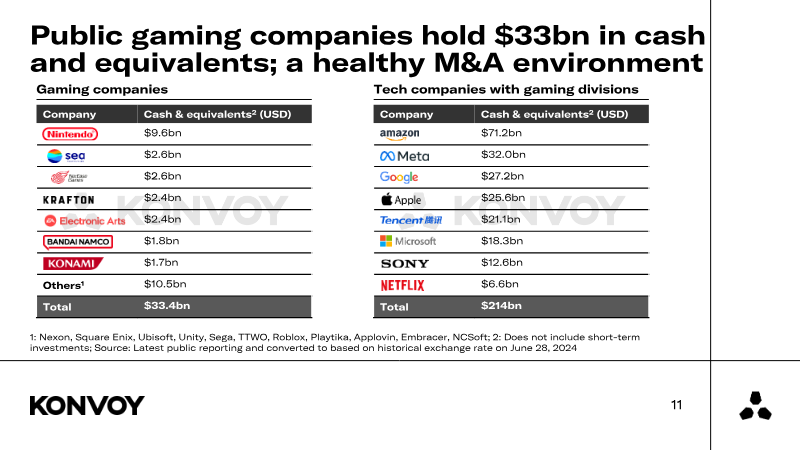
America in terms of Jean recipes hopefully being also probable 11 again I think I think being profitable is as he said you know it's critical super critical right now I don't think it's a nice to have it's absolutely critical actually think that men a market is going to change pretty significantly in the next couple years there's just been so much cash accruing on the balance sheet Activision Blizzard and VA 1010 will continue to be aggressive netmarble riot supercell I would expect all of them they're already aggressive investing so aggressively internally they're going to they're going to need new avenues to continue to grow out the rates that they have been in and I think external investment is going to be primary opportunities event yeah when I was raising money from April media my pitch was even as the new IPO and you just want to shut that out here that even as a new idea I guess I think there would be more occasions of players from
different industry by game companies to expand and monetization really like Amazon could be buying another we saw have a Fox right exactly very so that more also side cost much over yes MTG as well and then also my random random ones like some farmers I coach I'm always the random Chinese a Chinese strategy so you know we're kind of getting close to end here would love to kind of get feedback you know again we touched on this a little bit in the last session you know emerging areas a RvR esports location-based games stuff like this I mean how do you guys see that play insulate the interests and app type of investors especially as the types like the mobile gaming space I mean do you see the sort of appetite for investment even early stage still existing or is that kind of passed already people getting an early in though there is any sort of insights there's folks think about sort of
integrating that into their strategy a pitch for their studio may I just add one more thing to your list I'm not that interested in the other things that materially but recently I've been looking at the code how I should be coaching facilitate a more micro transaction like he would actually trade items for each item at a much lower value and doesn't cause any overhead call so I think that something could some fun picked up but now it's real existence that means some set of well when you're closing your previous speech which is I'm talking of in string until people start making real money off of that platform and each other with Facebook which is actually saying that started making huge money off of Facebook and I think Facebook learned early on that if other people can make a lot more a lot of money off of us and we can make even that much more money and you haven't seen that yet in the sector
but as soon as that happened then I think it's become a lot more interesting John NH is in sport gaining well one in their field a while that I mean how do you guys live as an institutional investor these areas just the time has passed or the fact that stage of your investments I'd say we're interested in everything right now we look at like it's a very very healthy market across the board keeps me council mobile eSports is growing like VR might be in like a trough of disillusionment right now but I could leave that belly bouncing back so if anything now might be a good time to think about what will the next three to five years might look like in VR and AR and start finding good teams now pull any questions from the folks in the audience right over here if
I proceeded like that this is kind of loud [Music] well I think I think maybe I alluded to that a bit but perhaps I didn't you know kind of articulated better but I I would say you know really if there's certain functional aspects that you do well or let's say particulars on rare games you do well or let's say you have great development capabilities but you're lacking you a then you know it might make sense to find other like-minded players you know who have those let's say functional sets or focus on parts of the value chain that you may not and you know merge with those companies that's that's generally you know in a competitive maturing industry probably one of the smartest things to do provided of course you find a deal structure that makes sense I guess my
advice would be maybe you're doing already here but I sometimes I experience even like kind of indie Studios spreading themselves to things there they don't want to put too many eggs in one basket which is generally the advice but I'd actually say that get really really good at something because you're really really good at that one thing you're going to be better than the others and that's what's making people interested in you [Music] oMG other foster whoa all right thank you thank you [Applause] [Music]
Summary
The mobile gaming industry currently operates within a mature market characterized by consolidation rather than a high volume of new entrants. Fundraising for studios in this climate requires a strategic approach that emphasizes proven track records, operational expertise, and financial sustainability. While institutional venture capital remains available for teams with significant experience at top-tier gaming companies, smaller or less-proven studios are increasingly encouraged to seek alternative paths, such as angel investment, strategic partnerships with media or brand entities, or regional funding sources that offer network support alongside capital.
Key findings indicate that investors are shifting away from funding user acquisition for unproven titles, favoring instead studios that demonstrate strong live operations, clear genre expertise, and sustainable cash flow. A notable trend involves the sale of legacy or underperforming titles to larger publishers. This allows studios to monetize existing assets to fund new development without diluting equity, while simultaneously offloading the operational burden of maintaining older games. For larger acquirers, particularly those based in Asia, the focus remains on securing "tentpole" titles and dominant market positions within specific genres, often leveraging established intellectual property.
The scope of this analysis covers the global mobile gaming landscape, with a specific focus on the differences between Western and Asian investment appetites. While the Western market remains cautious due to the performance history of public gaming companies, Asian firms—such as Netmarble and Nexon—continue to pursue aggressive expansion strategies. Emerging technologies like AR, VR, and eSports are viewed as long-term opportunities currently in a state of market maturation. Ultimately, the consensus among industry experts is that studios should prioritize deep specialization in a single genre over broad diversification, as high-level proficiency is the primary driver of investor interest and long-term viability in a competitive, consolidated market.
















Comments