Global reports and market data
Documents
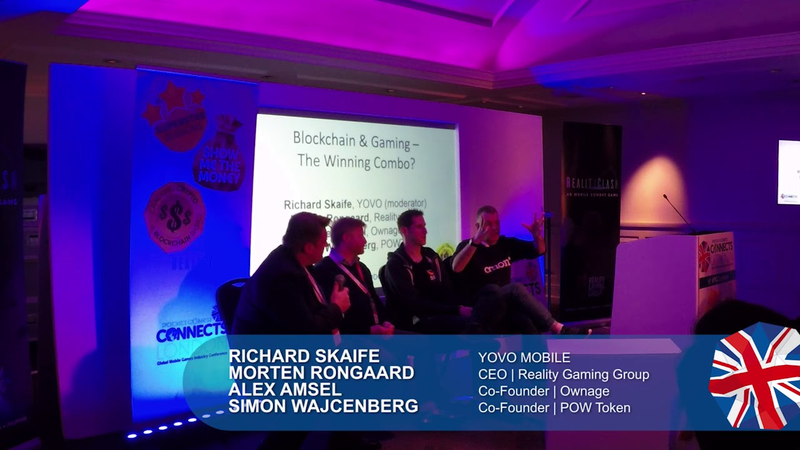
Panel: Blockchain and gaming – The winning combo?
Blockchain technology is fundamentally reshaping the gaming industry by enabling the creation of transferable digital assets and introducing sophisticated economic models that allow players to earn and trade value across diverse platforms.
- Blockchain gaming is shifting toward a mature phase defined by high-utility tokens and transparent economic models that enable genuine player ownership of transferable digital assets.
- The industry expects a transition over the next three years where the distinction between underlying blockchain infrastructure and speculative cryptocurrency becomes clear to the general public.
- Mass adoption depends on eliminating technical friction and security anxieties to ensure that blockchain interactions are as intuitive as standard financial applications.
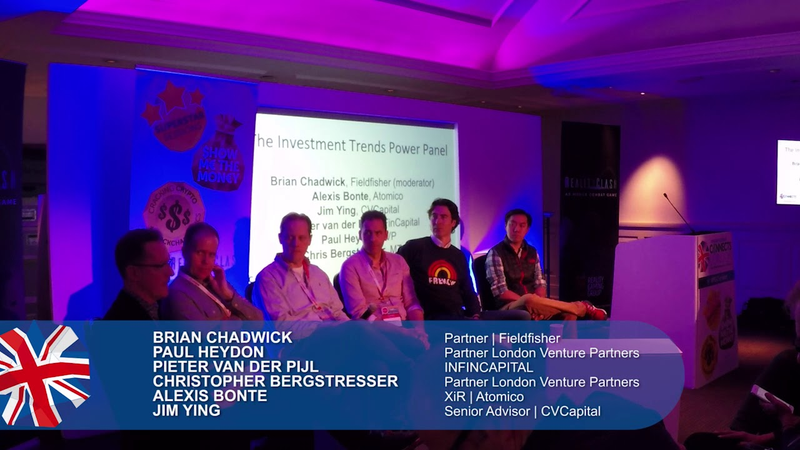
Panel: The investment trends power panel
The global gaming industry is undergoing a strategic recalibration as geopolitical tensions and heightened regulatory oversight, particularly from bodies like the Committee on Foreign Investment in the United States, reshape cross-border mergers and acquisitions.
- Geopolitical tensions and increased scrutiny from the Committee on Foreign Investment in the United States are forcing a shift away from aggressive, arbitrage-driven M&A toward deliberate, strategic investments by established industry players.
- European markets have become primary hubs for talent acquisition and asset consolidation due to attractive valuations and sustained liquidity as Chinese investment activity faces heightened regulatory barriers.
- Investors are prioritizing founders with deep technical expertise in vertical stacks, specifically those capable of developing proprietary engines, distribution systems, and 3D processing capabilities.
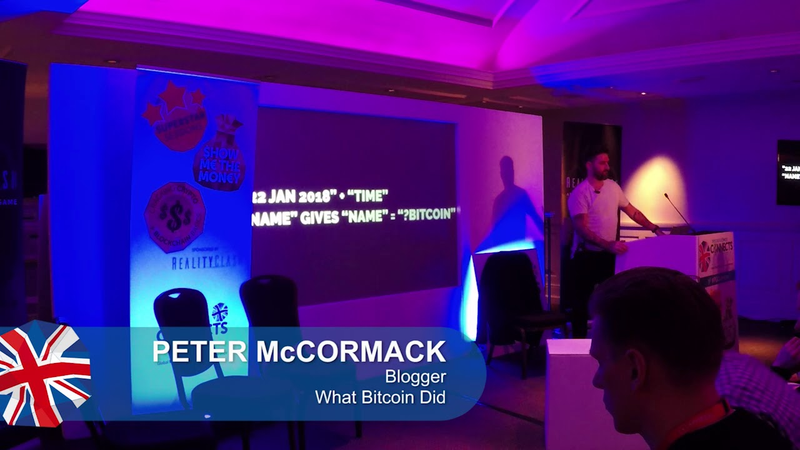
Blockchain 101
Blockchain technology functions as a decentralized, distributed ledger designed to record transactions or assets without the need for a central intermediary, such as a bank.
- Blockchain functions as a decentralized, distributed ledger that eliminates the need for central intermediaries by using a network of participants to validate transactions via consensus.
- Security is maintained through an immutable chain of blocks, where each block is sealed with a cryptographic hash linked to the preceding one.
- The proof-of-work mechanism requires miners to solve complex computational problems to validate transactions, providing a security layer backed by significant energy and computing power.
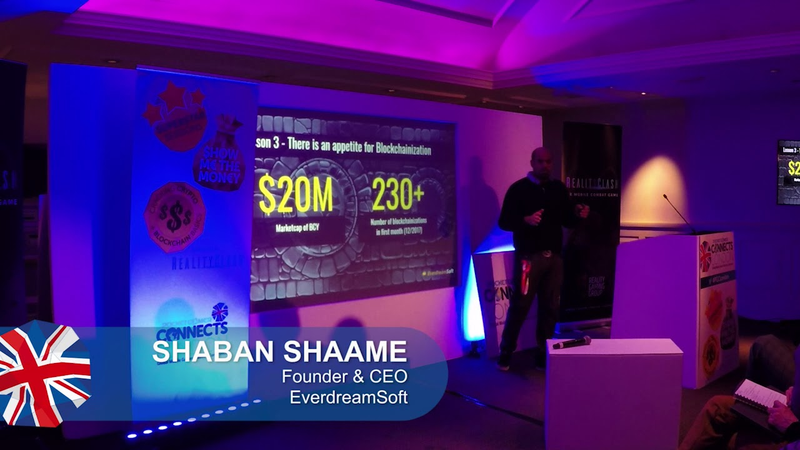
5 things we learnt from launching a mobile game on the blockchain
The integration of blockchain technology into mobile gaming offers a transformative shift in digital asset ownership and monetization.
- Players spend up to seven times more on digital assets when they retain the ability to trade or sell those items on a blockchain-based exchange.
- The global game item market is valued at approximately 15 billion dollars, representing a significant opportunity for blockchain infrastructure integration.
- Rare digital assets in Spells of Genesis have demonstrated high market demand, with some limited-edition cards trading for an average of 10,000 dollars.
Selling live games – A new strategic option for studios
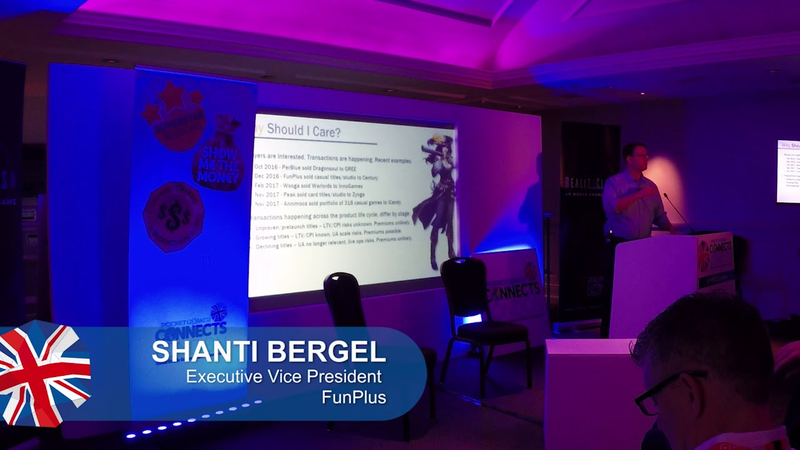
Selling live games as standalone assets has emerged as a viable strategic alternative to traditional company-wide mergers and acquisitions.
- Selling individual live games as standalone assets provides an alternative to full-company M&A, allowing studios to generate immediate liquidity without equity dilution or loss of corporate autonomy.
- For growing titles, asset sales enable developers to monetize proven performance and reallocate capital toward new projects, while for mature or declining titles, sales to specialized operators prevent shutdowns and offload non-core operational burdens.
- Buyers determine asset valuation by prioritizing revenue predictability, specifically scrutinizing historical performance, user acquisition metrics, and the consistency of LiveOps.
M&A in the games sector – 2017 recap and 2018 predictions
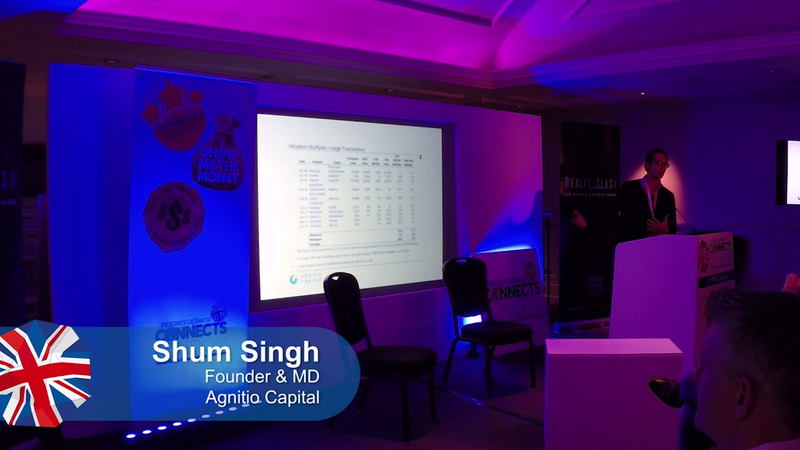
The gaming industry experienced a period of stabilization in 2017, following the record-breaking performance of 2016.
- The mobile gaming sector remains the primary driver of industry growth, consistently outpacing both PC and console segments.
- Publicly listed Nordic companies, including Stillfront, Paradox, and MTG, have emerged as aggressive acquirers of small-to-mid-sized studios, providing a new exit path for developers.
- Valuation multiples for large, mature companies are holding steady at approximately three times sales and eleven times EBITDA, typically executed via full cash payments.
The good, the bad and the ugly around launching and running a successful ICO
Initial Coin Offerings (ICOs) represent a transformative, high-growth mechanism for capital formation, functioning as a decentralized alternative to traditional equity-based funding.
- ICOs function as a decentralized capital formation alternative that bypasses traditional banking intermediaries to provide faster liquidity and direct access to a global investor base.
- A successful ICO campaign typically spans three to four months, structured into a pre-sale phase, a 30-to-60-day public sale, and a final token distribution period.
- Core infrastructure requirements for an ICO include a well-defined white paper, a transparent smart contract system, and a clear utility proposition for the issued tokens.

Crowdsourcing the Localization of Gone Home
The Fullbright Company utilized crowdsourced localization to bring the narrative-heavy indie game Gone Home to international markets without incurring the high costs associated with professional translation services.
- The Fullbright Company successfully localized Gone Home into over a dozen languages by utilizing a crowdsourced model to bypass the high costs of professional translation services.
- To overcome the challenge of narrative embedded in 3D assets, developers implemented a text-only system using dynamic overlays for in-game objects and standard subtitle files for audio.
- The localization workflow was designed for accessibility, allowing community volunteers to contribute using only simple XML and plain text files without requiring specialized software.
How we can leverage games to help people learn
The integration of education into gaming, often termed edutainment, succeeds when the core gameplay experience remains primary and the educational content is seamlessly embedded rather than forced.
- Effective educational games succeed by prioritizing core gameplay mechanics, ensuring that learning objectives emerge as a natural byproduct rather than a forced academic exercise.
- Users frequently reject products that merely wrap traditional schoolwork in superficial entertainment layers, necessitating a design approach where education is seamlessly embedded into the play experience.
- Successful educational titles often repurpose proven game genres, such as replacing standard monetization mechanics with math problems in endless runners or using logic-based commands to teach coding.
Low budget growth tactics that every games developer should know about
Game developers can achieve sustainable growth without relying on large marketing budgets by focusing on core product optimization and organic user engagement.
- Prioritize the first-time user experience (FTUE) because approximately 80% of users play a game only once, making the initial session the most critical window for retention.
- Avoid paid user acquisition until retention is optimized, as spending on games with high churn creates a 'leaking bucket' scenario that wastes capital.
- Delay push notification requests until a moment of high user value rather than triggering them immediately upon launch to reduce unnecessary friction.
The future of Hollywood and games
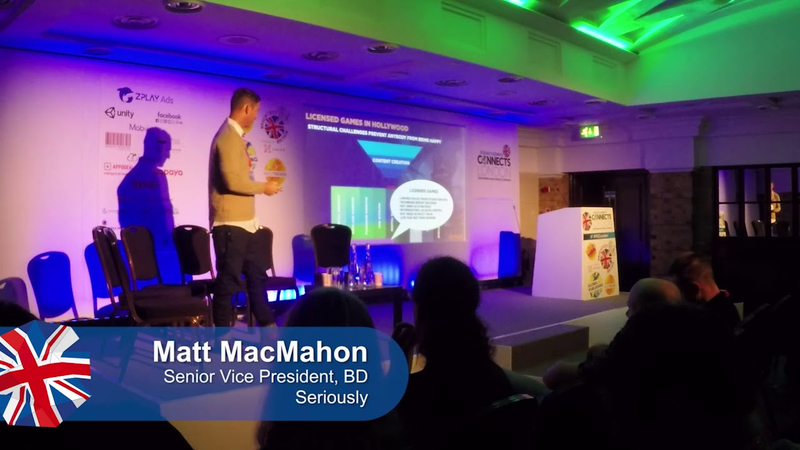
The traditional Hollywood studio model faces a significant existential challenge as it attempts to integrate with the gaming industry.
- Hollywood’s traditional business model is failing because it relies on slow, multi-year development cycles and fragmented, siloed internal departments that lack unified incentives for gaming.
- Mobile gaming now generates more revenue than the global box office, yet legacy studios continue to treat games as low-risk licensing deals rather than strategic, long-term assets.
- The fundamental disconnect between industries is the production cadence: movies are episodic three-year events, while successful gaming requires a live-service model with content updates every one to two months.
Space – The final app tier
Space Nation aims to democratize space exploration by transforming it from an exclusive pursuit into a global, accessible experience.
- Space Nation aims to send at least one civilian to space annually, with missions scaling from suborbital flights to the International Space Station and eventually the moon.
- The Space Nation Navigator app uses phenomena-based learning to train users in astronaut-level competencies through minigames, quizzes, and fitness routines.
- Top-performing users are selected via an annual process for an on-site, NASA-backed training program following a cycle of major content updates every three and a half months.
Writers
Games and companies
Games