1 free read left. Create a free account for unlimited reading + AI research.
Create free account
The future of Hollywood and games
Key insights
6 takeaways- 01To remain competitive, studios need to replace fragmented distribution windows with a centralized, data-driven strategy that coordinates IP across theatrical, broadcast, and digital platforms.
- 02Hollywood’s traditional business model is failing because it relies on slow, multi-year development cycles and fragmented, siloed internal departments that lack unified incentives for gaming.
- 03The fundamental disconnect between industries is the production cadence: movies are episodic three-year events, while successful gaming requires a live-service model with content updates every one to two months.
- 04Studios must transition to an entrepreneurial, startup-style approach that incubates IP through games to facilitate rapid market entry and continuous audience engagement.
- 05Mobile gaming now generates more revenue than the global box office, yet legacy studios continue to treat games as low-risk licensing deals rather than strategic, long-term assets.
- 06The future of entertainment requires abandoning legacy structures in favor of a direct-to-consumer ecosystem that prioritizes constant content iteration and deep, ongoing audience connection.
Ask AI about this video
Transcript
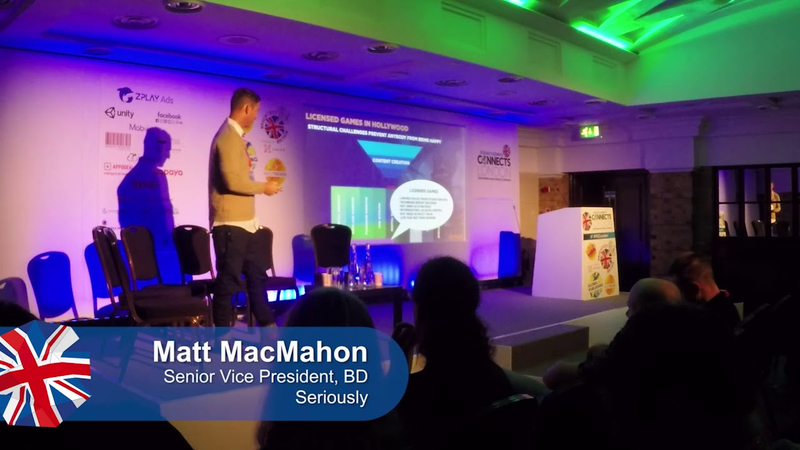
[Music] [Music] first of all thank you for having me hope everybody's having a good day I will talk about that let me stand over here that'd be a little bit better the theme of the panel is the future of Hollywood in gaming but from my mind I think it's actually before we even talk about the future it's the challenge of Hollywood in gaming and to give you a little context of where I come from with that I was a 20th Century Fox for 12 years before moving on to seriously where I've now been the the SVP at bizdev and kind of wear many hats the young startup where I've been there now for a couple years but in my 12 years at Fox I spent about half that time in theatrical marketing so really in the belly of the beast opening up the big movies and to date myself a little bit the very first movie I worked on was dodgeball so that I'll
kind of give you an idea it was back when like the Yahoo homepage mattered in digital theatrical marketing and then I kind of lived through the whole bit of Avatar and and some of the more recent things and obviously it's been pretty interesting to see Fox sell 80% of its assets off to Disney recently so a little bit of what I'm going to talk about now is a bit of the challenges of what pushed that sale forward and which I think will still really affect the games aspect of the Hollywood business going into it so this is the world we live in we know it everybody in the room knows that the problem is that Hollywood hasn't quite gotten their head around that they certainly pay lip service to it but mobile is the primary consumption screen now this is this is where it is footfalls of theatres is falling away revenue is now starting to fall too but they've kind of turned up the ticket prices people are going to IMAX they're going to 3d so there's been a little bit of a way to bridge that drop but less and less people are going to movies nobody buys a DVD anymore I mean this is really this again is the world we live in just some couple quick stats obviously again I don't think I'm saying anything
that people don't know and they're not aware of but the one that jumped out that came last week is that it's looking like projections are coming in that Apple's apps for revenue Apple alone was more than global box office last year so yeah Google to that yeah Chinese app stores to it you add a bunch of other sort of players and you could listen to it and really this is where again where the audience is where the revenue is being driven from so as Hollywood looks to move into games what does that mean well let's take a look at kind of what the typical Hollywood business mall understand where games fit into that and then we'll be able to sort of see what a big challenge it is for them to transition to games into this kind of directly connected ecosystem that apps and games let people have nowadays so this is the Hollywood content creation process it's really tough and it's very broken right so if you think of it as a big funnel you come and you spend years and years and years in development it's highly subjective its costly for every ten scripts to go into development they sit around for three or four years and at the whim of an executive they may make it into pre-production of the ten
scripts to go into pre-production maybe through that whole point in time as you attach a piece of talent to it you get a producer maybe you get an overseas distribution deal commitment ahead of it maybe it then moves into production production takes X number of time to and then eventually you get to theatrical release right and that little choke point comes through and it takes a little while it's really costly but then when you get to that this is where Hollywood was very efficient right the the top of the funnel really tough this is where it was fantastic but this world is changing massively right now so as you moved through each of those windows theatrical the the airline window the purchase window the VOD window a million other windows that I didn't even put in here there's slicing the Bologna really really thin and the studios were grapes you got paid in every single one of those windows but those are b2b windows and we live in a directed consumer world now I mean I want my content directly from the people who make the brand and the characters that I love right we all want to subscribe to director directly to Netflix I don't necessarily want to have to deal with three people in
between the folks that create avatar you know go to Walmart first or go to Verizon first or then go eventually it comes back to Fox this is changing in a big way obviously lots of players then you could system like I said so it's a b2b business and now a few those folks are starting to cut through but for the most part it's a bit of a legacy it's a lucrative legacy business there'll be a number of years where it's a nice long steady slide through this but again a tough business under challenge additionally in a live service world you can't go three years between our content updates which essentially is what a movie is right I teach comes out you'll love it you want to interact with it wait three years you at that point in time the studio is exploiting it making all the money little windows but as a fan you want to understand it I mean speaking from personal experience we had a couple mobile games out with game off great games two and a half million dear--you accumulative across the games I would go to the studio that made Ice Age blue sky studios they would get it can I create
some shorts can I create an extra content can I create an exclusive character to go in the game we've got this audience which is pain and spending significant amounts of their time in your world they'd say yes the the creators of it the writers of it the storyboard artists the graphic artists you come back to the studio and now it's in the sky Italian window now don't bother with it you know it's it's in the you know the free TV window don't bother we'll get onto it with Ice Age 4 it's not where things are anymore right Netflix isn't there Netflix you can get to it anytime you want the App Store Google Play I mean in the apps business certainly as we all know you update these things on a regular basis it's it's it's a different different world and it hasn't quite gotten in with Hollywood studios right so where do games sit in this right so games are this little purple line at the bottom and games have a lot of challenges with them right so and this is changing a little bit and I'll speak to that in a second as Hollywood look some Hollywood
studios look to go a little more direct in their media business with games but as it is and certainly while I was there for a lot of years it is it's a low risk but high margin business at the end of my time at Fox we were doing a nice amount of double-digit million dollars revenue and it was like an eighty eight or nine eighty nine percent contribution margin to the studio our little games group was basically the profit pool and kind of the bonus pool for the studio it was great but again there wasn't a larger business to be had there it was just taking the the revenue share from EAS gamer from Gameloft games or whatever else to but in the big scheme of it that's a rounding error it's not seen as strategic it's data-driven and that's God forbid I mean you know that that's just in anathema to the studio so we're getting better at it for sure but you know you have Nielsen ratings you have kind of a finger to win subjectivity about what's creative or what's not it's hard to process that data and think through so this is this is just a tough one and again people pay attention to it in
Hollywood from the optical window - maybe the VOD window because everything else in that three year span of that kind of valley between Ice Age movies it's done and it's handled through a different partner the studio doesn't have anybody actively working on it at the point in time which I left Fox they actually would there actually would be competing Facebook groups between the home entertainment group they would do the DVD and the theatrical marking that would put it out and it would speak a completely different way with completely different messages to completely different audiences because from one window to the other it just didn't transfer over so as your games group we did the Simpsons topped out wonderful game has made a boatload of money for EA for the studio but even in a successful game it's really hard to keep everybody happy cuz there's so many stakeholders in the business and the stakeholders in the business don't necessary have a vested interest in the games and so we were Fox digital and we would make Simpsons tapped out with EA EA wants to cross promote it but they kind of do they kind of don't because they're only seen a certain percentage of the revenue we wanted to push out over broadcast TV
and actually advertise it to the main audience that watches The Simpsons every Sunday night in America the Fox Broadcasting again it's not really their dog in a fights they'd sort of shrug and say yeah maybe the TV affiliates the consumer products it's the same type of thing then you have a stake holder in Gracie films who is wonderful to work with on this but they influence this entire process there's no one single stakeholder that can make a decision about this and it becomes tough because things fall through the cracks and you just can't scale a business with this many voices in it they don't necessary have a vested interest in the revenue that comes from it every single one of these folks is running a separate P&L that doesn't actually impact the game or doesn't profit from the game and so at the end of the day that's a tough way to motivate folks it's not being said that's kind of where Hollywood stands I'll now talk a little about what we're doing it seriously and it's it's one alternative this it's one sort of way that maybe it's a different approach to creating IP that could be a bit of a feature for Hollywood if Hollywood's willing to get a little more skunky a little more startup B and
be a little more entrepreneurial about how they approach it so for us we think it's again we think it's critical being the as some studios get this some don't disney gets it massively some just don't have the IP to build this off of but I mean this is really a Hollywood model right it's it's all sorts of sort of traditional businesses underpinned by games and underpinned by an IEP in the center bless you this is this is tough to Duke so you have to be able to create a world and characters people love but ultimately you can exploit on to some traditional platforms on some next-gen platforms like s5 but then underpin by the games and again the games are difficult and we have Wolfgang's from our development team here like they're hard but if you can get that going you can get it to market with a relatively small team you can get to revenue relatively quickly while you incubate your IP and while you create your IP and then you can live update your IP and again this is not the troughs of the three-year cycles between Ice Age movies right this is happening on a monthly basis sometimes twice a month we're giving the consumer something they want
all the time and that's again something where for Hollywood be successful in gaming they need to get to a content cycle that's gonna be a lot faster additionally again as we had the couple games with Gameloft for Ice Age a few years ago that's great we had two games we could talk to each other but then Gameloft is an incentivize to put it into their racing games isn't a set of ice to put in their shooter games parties are wrong demographics and partially because there's no reason that they don't make a cut from it back to it this is an IP that can that undergird the entire network of games so we're gonna build four best fiends marbles doing this a bit Star Wars only is doing this a bit sometimes with internal sometimes with external devs it's it's a right idea for sure going for going forward with it but it's all gonna be underpinned by a world in character that people love ultimately if you're gonna do a license deal for an obscure and obscure Hollywood property for I mean god we did some at Fox that were tertiary properties at best it's great we get a licensing fee there's a little bit of revenue against it again low risk
we take the money and kind of move on but the other day you got to do it about what people love and if you don't do about what people love you can't live update on an ongoing basis people aren't going to be in it three four or five years down the line you can't build a business around it you can take a quick little bit but you can't necessarily build a long-term business and so that's where in my mind I think it's gonna be tough for Hollywood to get their heads around the game data-driven direct-to-consumer constant content updates and it's I think it's a bit of a next-generation thing for them that's still to come so that's kind of running through really quickly but I wanted to leave time for questions for sure so if anybody has any I'm happy to answer anything [Music] [Music]
Summary
The traditional Hollywood studio model faces a significant existential challenge as it attempts to integrate with the gaming industry. While Hollywood has historically relied on a broken, highly subjective, and slow-moving funnel—characterized by multi-year development cycles and fragmented business-to-business distribution windows—the modern entertainment landscape has shifted toward a direct-to-consumer, data-driven ecosystem. Mobile gaming now generates revenue exceeding global box office figures, yet legacy studios struggle to adapt because their internal structures are siloed, with various departments operating under separate profit-and-loss statements that lack a unified incentive to support gaming initiatives.
The core conflict lies in the fundamental difference between film and game production cycles. Movies are episodic, three-year events that leave fans disconnected during long gaps between releases. In contrast, successful gaming requires a live-service model with frequent content updates, often occurring monthly or bi-monthly. Hollywood studios typically treat games as low-risk, high-margin licensing opportunities rather than strategic assets. This approach prevents the creation of a cohesive, long-term brand ecosystem, as studios often fail to leverage their own intellectual property (IP) across multiple platforms or coordinate marketing efforts between theatrical, home entertainment, and digital divisions.
To remain relevant, studios must pivot toward an entrepreneurial, "startup-style" approach to IP creation. This involves building worlds and characters that can be incubated through games, allowing for rapid market entry and continuous audience engagement. Rather than relying on tertiary licensing deals, studios need to embrace data-driven decision-making and establish centralized control over their IP to ensure that games, broadcast media, and consumer products work in concert. Ultimately, the future of Hollywood in gaming depends on the industry's ability to abandon its legacy, fragmented business model in favor of a unified, direct-to-consumer strategy that prioritizes constant content iteration and deep audience connection.



















Comments