Mobile reports and market data
Documents

Nature vs. Nurture: Unpacking Player Spending in F2P Games
Free-to-play monetization relies on a consistent industry reality where only one to five percent of the total player base generates revenue.
- Only one to five percent of a free-to-play player base generates revenue, making these individuals a distinct behavioral segment with a high propensity to spend across multiple titles.
- Developers should shift from vanity metrics to correlation analysis to identify specific KPIs that directly impact average revenue per user (ARPU) and lifetime value (LTV).
- Pricing entry points should typically range between five and twenty-five dollars, as setting prices too low conditions players to expect lower costs and limits long-term revenue potential.
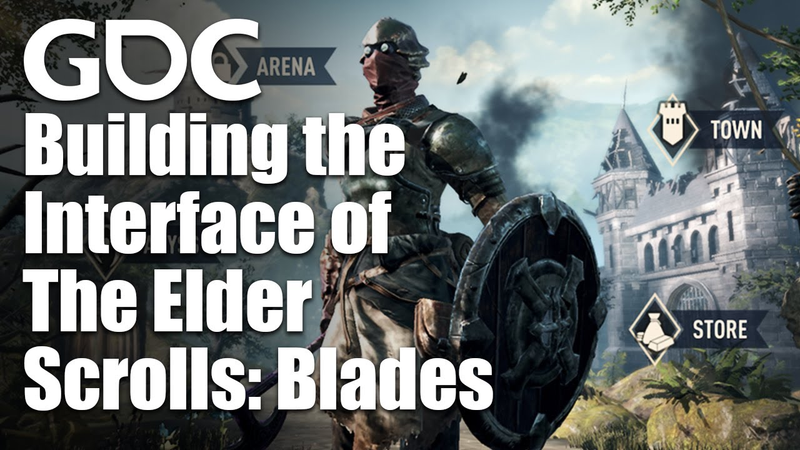
Building the Interface of The Elder Scrolls: Blades in Landscape and Portrait
The development of The Elder Scrolls: Blades for mobile devices necessitated a strategic decision regarding screen orientation, ultimately resulting in the implementation of both portrait and landscape modes.
- Supporting dual orientation in mobile game UI adds 20% to 60% to the total UI conception time, as every mock-up and wireframe must be produced for both landscape and portrait layouts.
- Portrait mode is a critical accessibility feature for mobile gaming, as it enables one-handed play for users in contexts where they cannot use both hands, such as during commutes or meetings.
- Designing for dual orientation forces UI simplification; for example, Bethesda distilled complex crafting information into simple visual indicators (red X or green check marks) to fit the narrower portrait screen, which improved user confidence during testing.
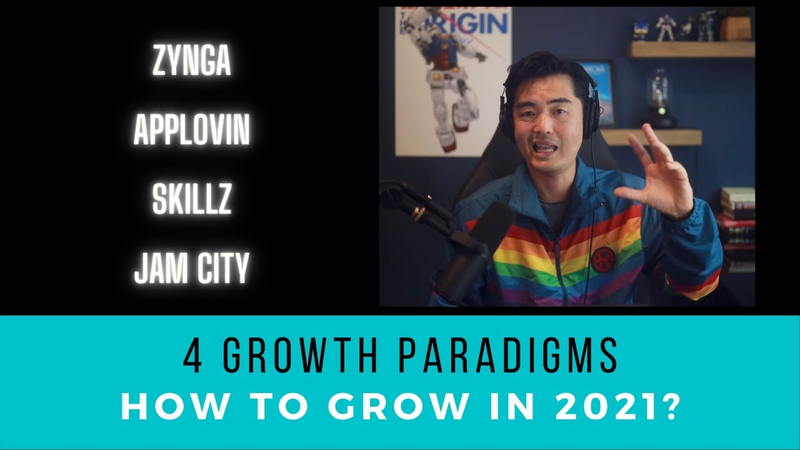
Game Company Growth Strategies in 2021 | Zynga, Applovin, Skillz, and Jam City
The mobile gaming industry is undergoing a fundamental transformation as traditional content-based mergers and acquisitions yield diminishing returns.
- The mobile gaming industry is shifting away from traditional content-based M&A toward vertical integration and cross-platform models to counter the impact of IDFA deprecation on user acquisition.
- AppLovin is attempting to transition from an ad-tech provider to a content-focused powerhouse, risking the alienation of its external client base by creating a potential walled garden.
- Zynga is pursuing ad-tech integration and cross-platform expansion, though its strategy faces significant industry skepticism regarding data privacy and trust.

Understanding the New Opportunities in Mobile Game Audio | PocketGamer.biz RoundTable
Audio has evolved from a secondary production element into a primary driver of player engagement and monetization within the mobile gaming industry.
- Mobile game audio has transitioned from a secondary production element into a primary driver of player engagement, monetization, and emotional connection.
- In-game audio advertising is emerging as a critical non-intrusive revenue stream to offset the impact of privacy-related data restrictions such as iOS 14’s IDFA changes.
- Developers are leveraging AI-driven voice synthesis and social audio to create immersive environments that align with modern multitasking and social interaction habits.

Defying Expectations: 7 Lessons from The Sims FreePlay
The Sims FreePlay demonstrates that long-term viability in the mobile gaming market relies on transitioning from static, premium development models to iterative, live-service frameworks.
- Long-term mobile game viability requires a transition from static, premium models to iterative, live-service frameworks centered on time-limited, quest-based engagement.
- Operational efficiency is achieved by providing designers with internal tools that enable content creation without constant engineering intervention, ensuring a consistent update cadence.
- Integrating user-generated content, such as player-designed housing, effectively removes development bottlenecks while simultaneously deepening community investment.

Developing a Novel Psychographic-Behavioral Qualitative Mapping Method for Exergames
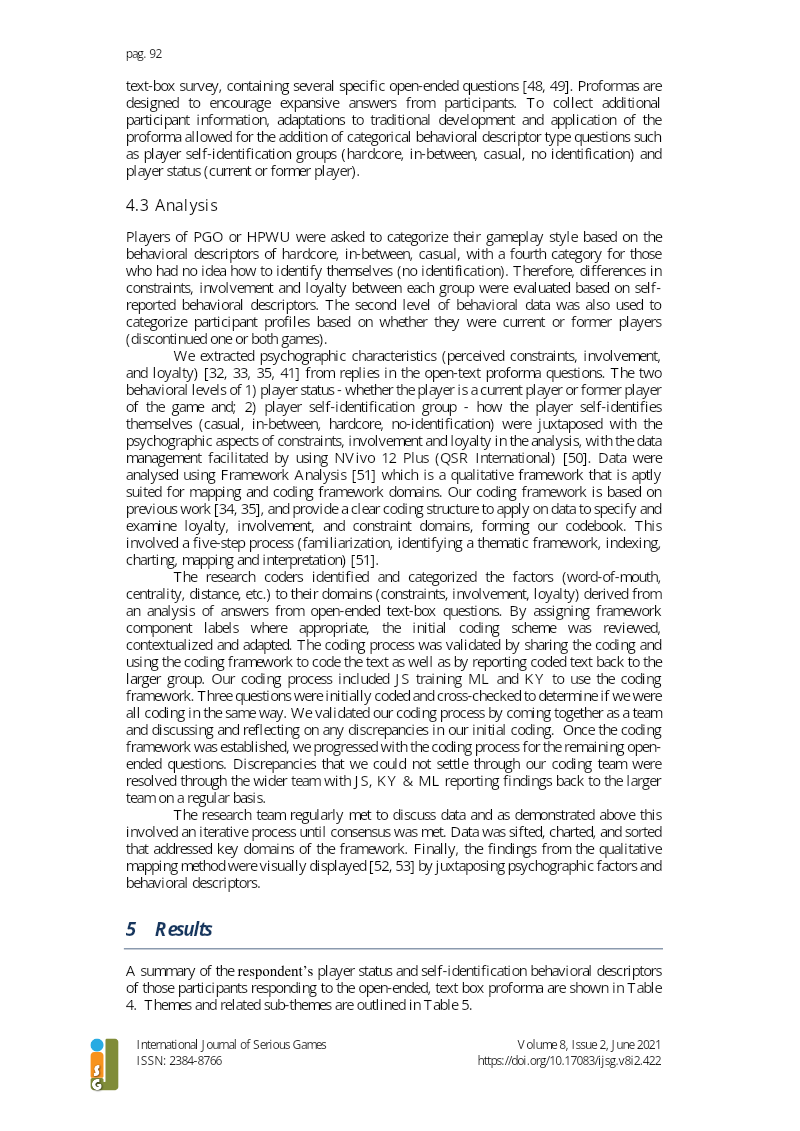
This paper, by James Smith, Matthew D. Lee, Louise A. Ellis, Kiran Ijaz and Kathleen Yin, published in the International Journal of Serious Games (June 2021), introduces a psychographic-behavioral qualitative mapping method for location-based augmented reality exergames.
- The study collected 1052 responses to an open-ended text-box survey posted on four subreddit forums over two weeks, with the sample spanning multiple age and country groups.
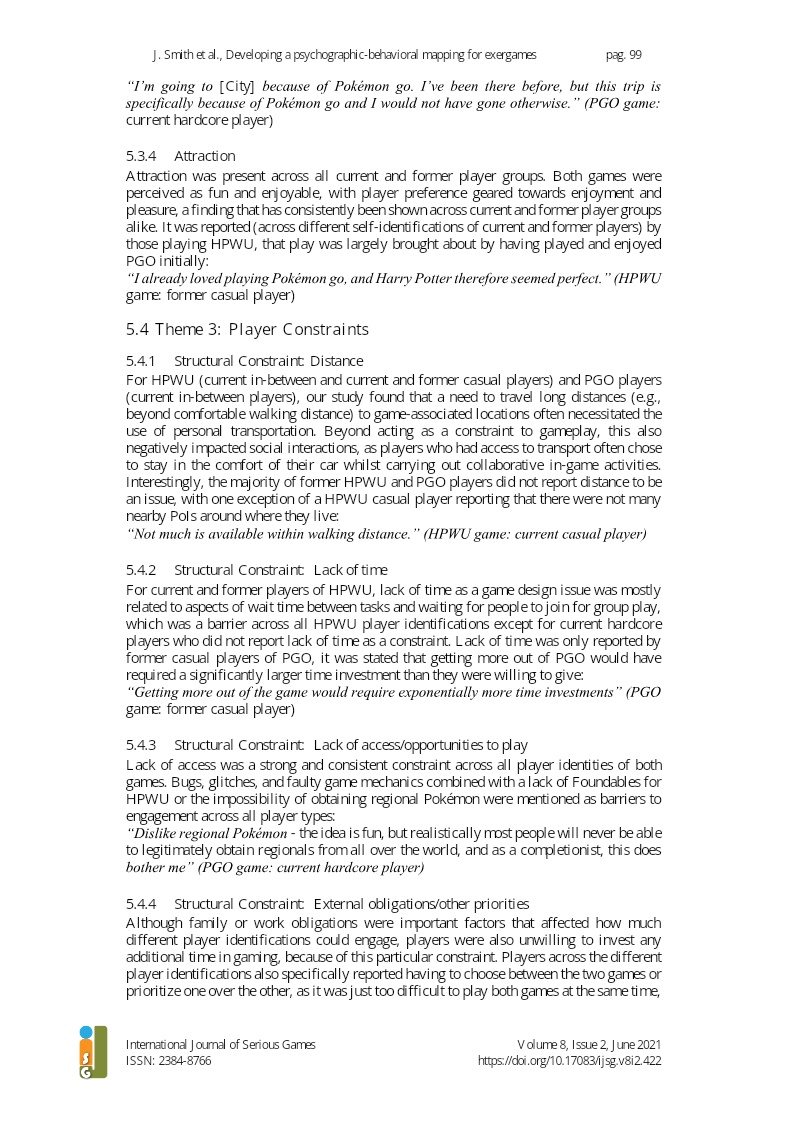
- The three themes identified were player loyalty, player involvement and player constraints.
- Constraints were reported as present across player groups, yet the authors observe they did not always result in players quitting the game.
RPG Genre Snapshot
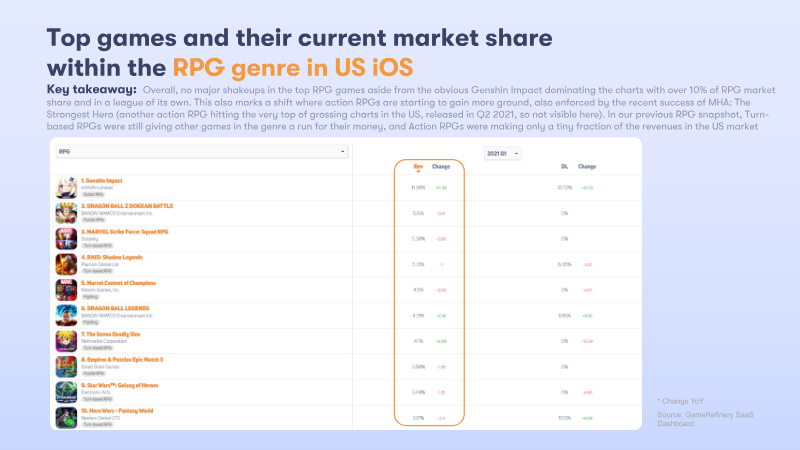
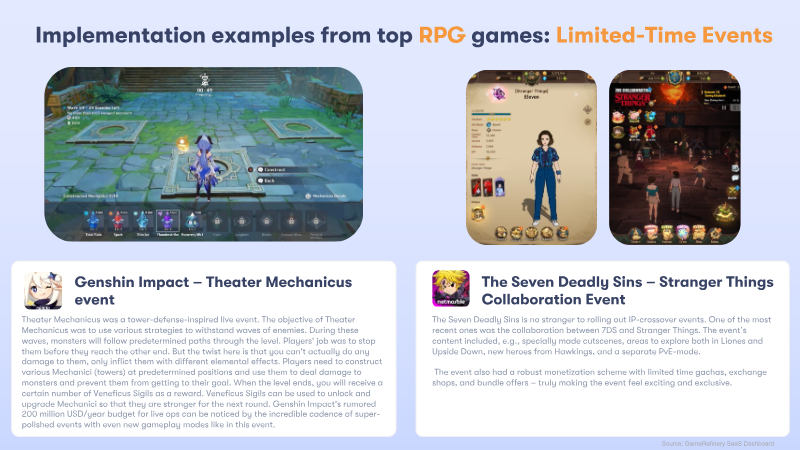
The RPG genre remains one of the largest in mobile gaming, ranking fourth in the US iOS market with roughly 14% of revenues.
- RPG titles account for 14% of the total revenue share on the US iOS mobile gaming market.
- Genshin Impact alone captures 10% of the total RPG market share, signaling a shift from turn-based titles toward high-production action RPGs.
- Market leaders are increasingly defined by console-quality production values, open-world environments, and narrative-heavy gameplay.
RPG Genre Snapshot Report June 2021
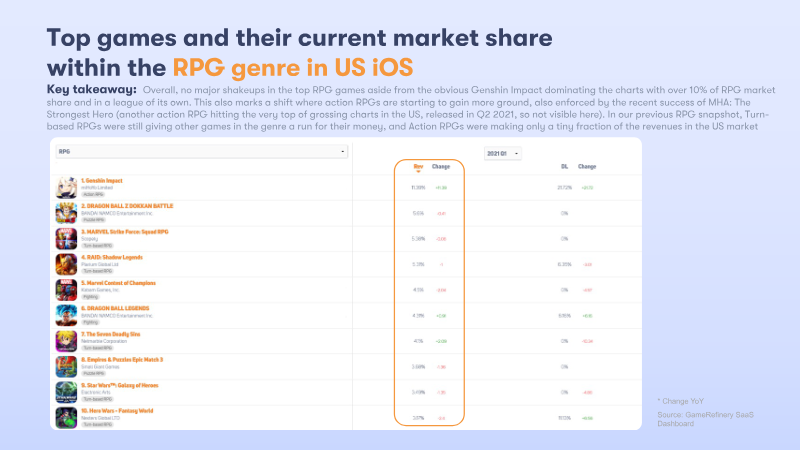
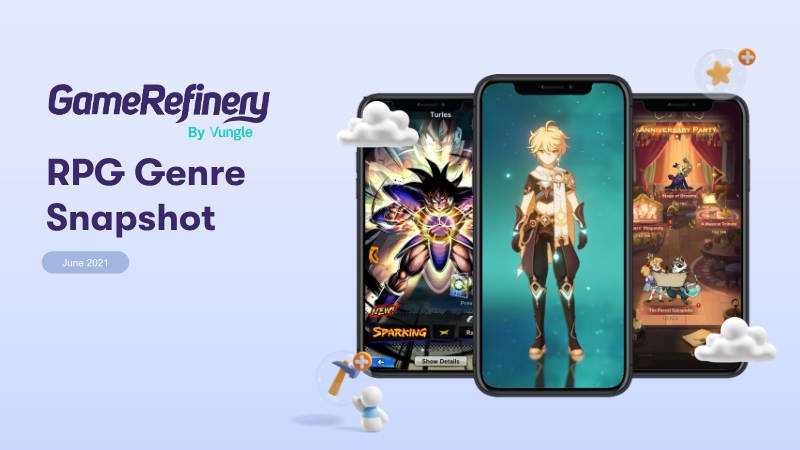
RPGs remain one of the largest mobile genres, ranking fourth in the US iOS market with roughly 14% of revenues.
- As of mid-2021, RPGs account for approximately 14% of total revenue on the US iOS mobile gaming platform.
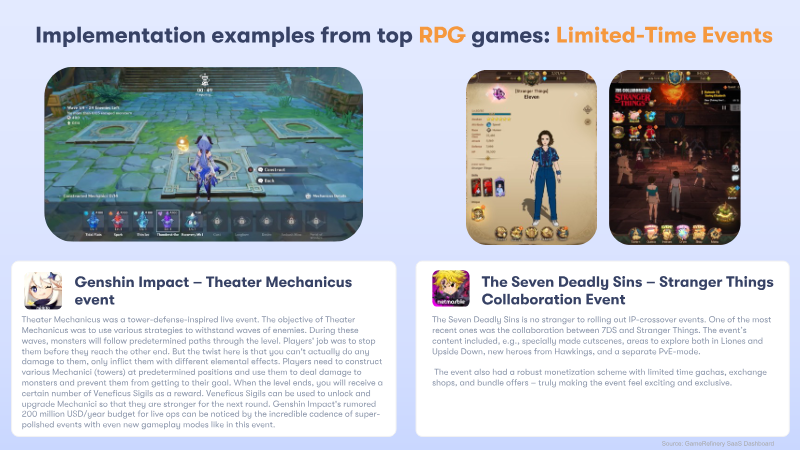
- The RPG market is shifting from traditional turn-based titles toward high-fidelity, open-world Action RPGs that offer console-quality experiences.
- Genshin Impact is the primary driver of the genre's evolution, currently commanding over 10% of the total RPG market share.

Q2 2021: Store Intelligence Data Digest
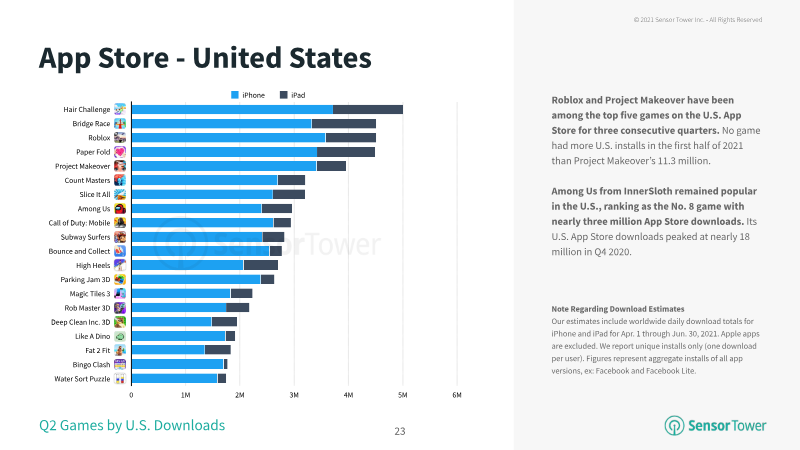
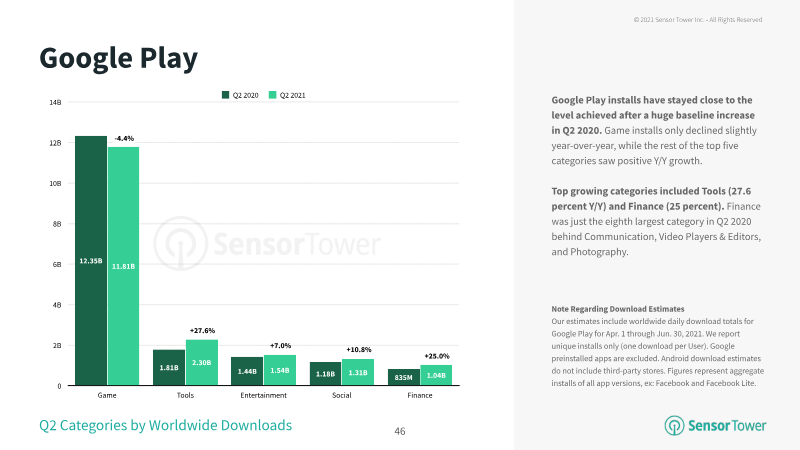
Sensor Tower's Q2 2021 Store Intelligence Data Digest examines global mobile app and game performance across the App Store and Google Play, with regional views of the U.S., Europe, and Asia.
- Global app downloads reached 35.9 billion in Q2 2021, a 4.8% year-over-year decline as the market stabilized from 2020 pandemic highs.
- TikTok maintained its position as the top global application with over 200 million installs during the quarter.
- India remained the largest market by volume, exceeding 7 billion downloads in Q2 2021.

When Trainers' Eyes Meet: Creating Real Time Combat for Pokemon GO
The introduction of real-time combat to Pokémon GO serves as a strategic initiative to bolster player retention and re-engage lapsed users by transitioning from traditional turn-based mechanics to a faster, more interactive system.
- The transition to real-time combat was a strategic move to increase player retention and re-engage lapsed users by shifting away from traditional turn-based mechanics.
- Developers balanced accessibility and competitive depth by combining simple tap-to-attack controls with tactical features like protect shields and secondary move slots.
- To mitigate pay-to-win concerns and ensure competitive integrity, the game utilizes tiered battle leagues (Great, Ultra, and Master) defined by specific combat power caps.

Match3 Genre Snapshot: US iOS (May 2021)
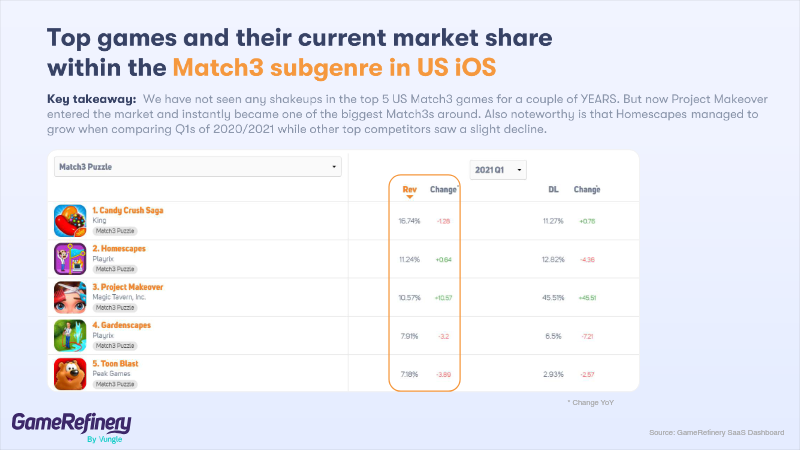
Match3 remains the largest subgenre in the US iOS market, generating roughly 16% of revenue (bubble shooters excluded) as of Q1 2021.
- As of May 2021, the Match3 subgenre accounts for approximately 16% of total US iOS mobile gaming revenue.
- No new Match3 titles entering the top 500 grossing rankings over the last 18 months utilize standard swapping mechanics, indicating a shift toward gameplay diversification.
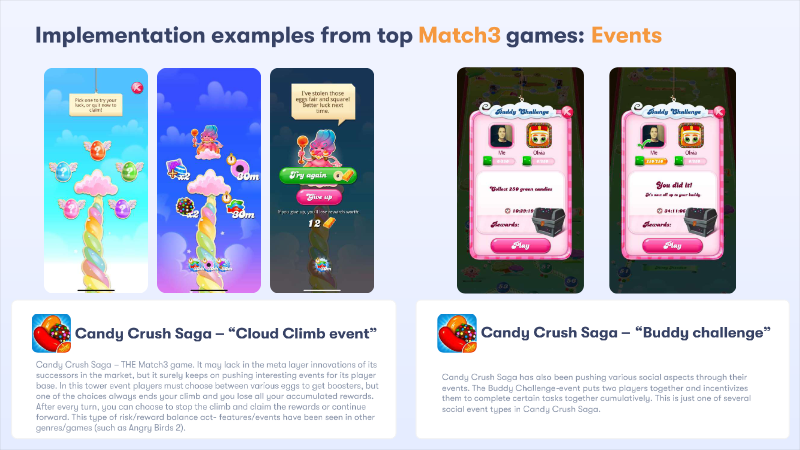
- Modern Match3 success is increasingly driven by meta-layers, specifically decoration and customization features seen in titles like Royal Match and Project Makeover.



Der Zusammenhang von Anfängen und Serialität in Computerspielen: Wie die konzeptionelle Serialität von Computerspielen Erwartungshaltungen gegenüber ihren Anfängen determiniert
Ilona Mader's essay, published in the Spiel|Formen journal (Heft 1: Anfänge), examines how different kinds of beginnings in computer games are shaped by distinct forms of seriality, and how these shape players' expectations.
- The author argues that players of serial games develop expectations that concern gameplay more than content, since most games in a series have closed narratives.
- The ending of Mass Effect's third part led many players to negatively rate the whole series afterwards, according to the essay.
- The essay links the failure of Tomb Raider: The Angel of Darkness to gameplay issues, such as the sluggish and delayed response of the character.
Writers
Games and companies
Games