
Global app downloads reached 35.9 billion in the second quarter of 2021, representing a 4.8% year-over-year decline as the market stabilized following the unprecedented pandemic-driven highs of 2020. Despite this slight contraction, the mobile ecosystem demonstrated significant resilience and evolution across various sectors. TikTok remained the dominant global application with over 200 million quarterly installs, while the mobile gaming sector saw Pokémon GO surpass the $5 billion lifetime revenue milestone. The quarter was characterized by a resurgence in travel and finance applications, such as Google Maps and Coinbase, alongside a notable surge in the gig economy as Uber and Lyft downloads returned to pre-pandemic levels.
The mobile gaming landscape was primarily defined by the continued dominance of the Hypercasual genre, with titles like Bridge Race and Hair Challenge leading global charts. Regional performance remained distinct, with Asian markets showing high stability through established titles like Ludo King, while the United States and Europe favored rapid-growth Hypercasual releases. India maintained its status as the world’s largest market by volume, exceeding 7 billion downloads. On the publisher side, Google and Facebook retained their global leadership, though Zynga and Supersonic Studios saw significant upward mobility due to aggressive expansions into the Hypercasual space.
Geographically, the market exhibited a clear divide in platform influence. Chinese firms like Tencent and ByteDance dominated the App Store in Asia, where China alone accounted for over half of all iOS installs. Conversely, U.S. publishers maintained a firm grip on domestic and European markets. Emerging trends in the Photo and Video category, driven by viral AI-based applications and video editing tools like CapCut, further illustrated the shifting consumer interests toward creative and social content. This period ultimately reflects a transition toward a post-pandemic equilibrium, marked by the recovery of service-based apps and the sustained profitability of established gaming franchises.
Sensor Tower · 2026
Adjust · 2026
Sensor Tower · 2026
Sensor Tower · 2026
Sensor Tower · 2026
Sensor Tower · 2026
Sensor Tower · 2026

Sensor Tower · 2026

Sensor Tower · 2026

Sensor Tower · 2026

Sensor Tower · 2026
Sensor Tower · 2026
Competition · 2026
Bryter · 2026

Almedia · 2026
GameAnalytics · 2026
AppLovin · 2026

SocialPeta · 2026
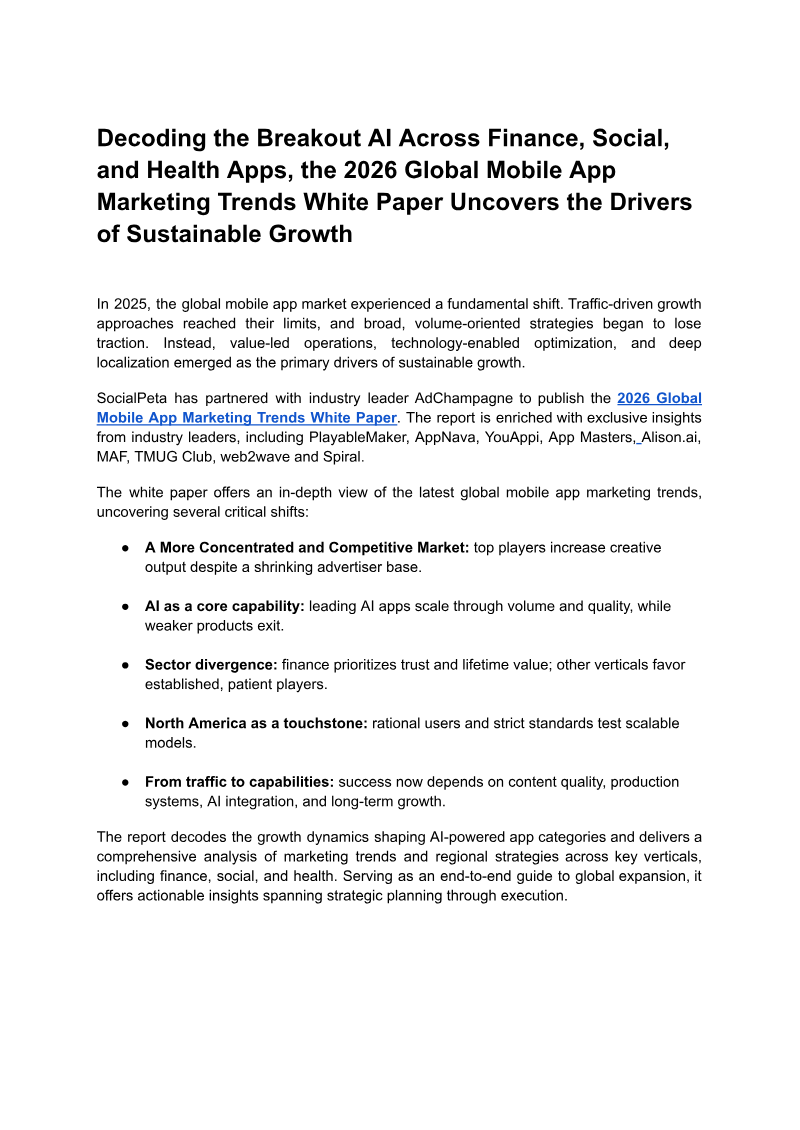
SocialPeta · 2026
BITKRAFT Ventures · 2026
Modern Times Group · 2026
AppMagic · 2026
Aream & Co · 2026
InvestGame · 2026