Mobile reports and market data
Documents

Uma Musume Pretty Derby - What is this game? ft. Junde Yu from App Annie
Uma Musume Pretty Derby represents a significant case study in the Japanese mobile gaming market, blending the traditionally male-dominated genre of horse racing simulation with the idol-training mechanics typically favored by female audiences.
- Japan accounts for over 70 percent of global downloads and more than 85 percent of global revenue for the idol-training subgenre, highlighting extreme regional concentration.
- Uma Musume Pretty Derby successfully hybridizes male-dominated horse racing simulation mechanics with female-oriented idol-training systems to broaden its demographic reach.
- The game utilizes high-production-value assets and established anime intellectual property to justify premium pricing within its gacha-based monetization model.

TWIG 142: Netflix Hires Facebook Gaming Executive Mike Verdu
Netflix’s recent appointment of former Facebook Gaming executive Mike Verdu to lead its gaming division signals a strategic pivot toward interactive entertainment.
- Netflix has hired former Facebook Gaming executive Mike Verdu to lead a new gaming division, signaling a strategic shift to capture consumer time share against broader entertainment platforms like Fortnite.
- The company plans to integrate gaming as an ad-free, value-added component for its existing base of approximately 200 million subscribers.
- Netflix intends to avoid the console-market approach that contributed to Google Stadia's failure, focusing instead on interactive experiences tailored to its own platform.

TWIG #141 Reactions to XCOM mobile bleeds to debate on free-to-play games
The recent soft launch of the XCOM mobile title serves as a focal point for broader industry tensions regarding the adaptation of core gaming intellectual property (IP) for mobile platforms.
- Adapting core gaming IP for mobile creates a strategic dilemma where simplifying mechanics to reach mass-market audiences risks alienating the loyal, core fan base.
- Franchises with highly distinct, mechanics-driven identities—such as XCOM, Command & Conquer, and Civilization—face significantly higher resistance to gameplay changes than IP that can easily decouple from specific genre expectations.
- The soft launch of the XCOM mobile title demonstrates that high production values and strong narrative elements are insufficient to overcome fan backlash when core strategic gameplay is perceived as diluted.

PocketGamer.biz Mobile Games Awards 2021
The mobile gaming sector reached a pivotal maturation point in 2021, solidifying its position as the dominant force in the global interactive entertainment market.
- The mobile gaming sector reached a valuation between $91 billion and $120 billion in 2021, accounting for approximately 50% of the total global games market.
- The industry experienced significant financial consolidation and investment, characterized by over $60 billion in mergers and acquisitions alongside increased venture capital funding for studios and service providers.
- Growth is increasingly driven by high-fidelity experiences and sophisticated live operations, with industry leaders like TiMi Studio Group, Tencent, and Supercell setting the standard for development.
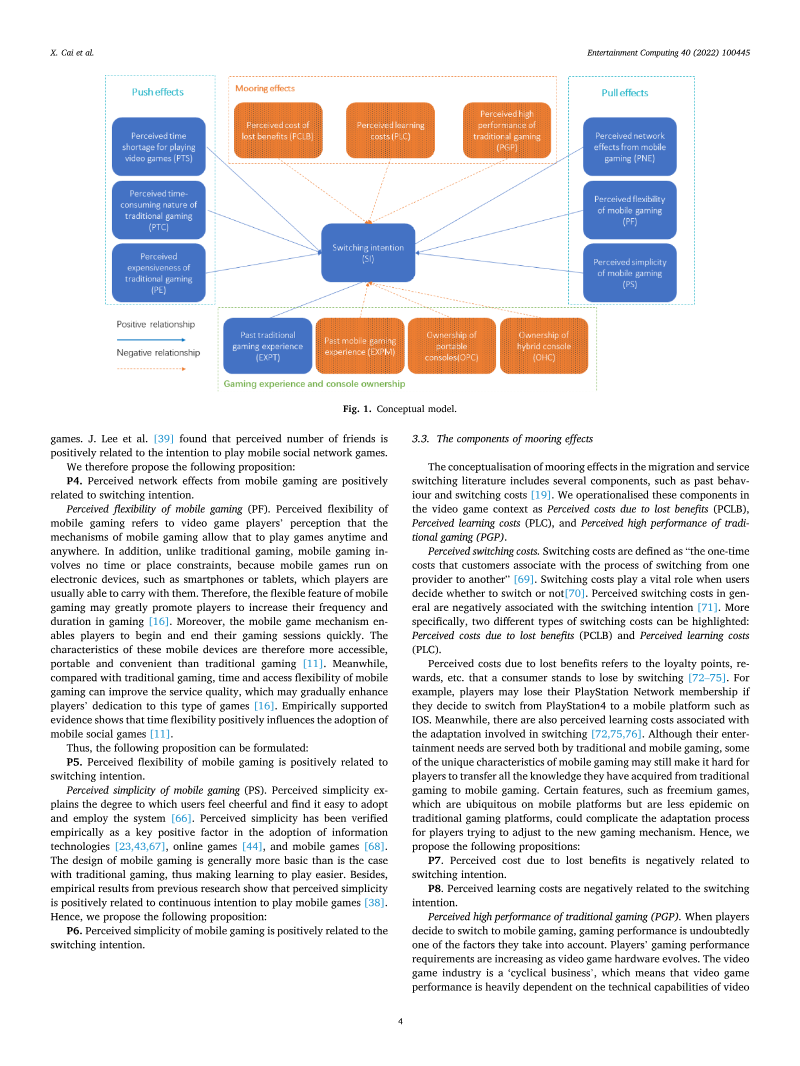
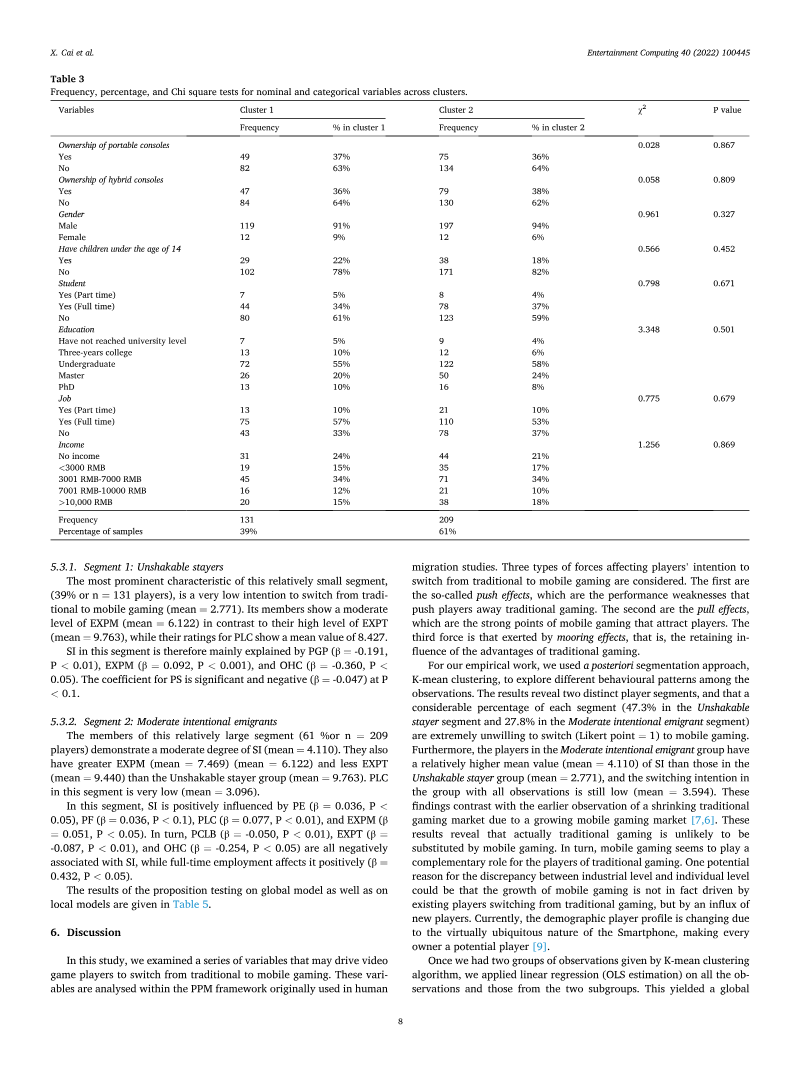
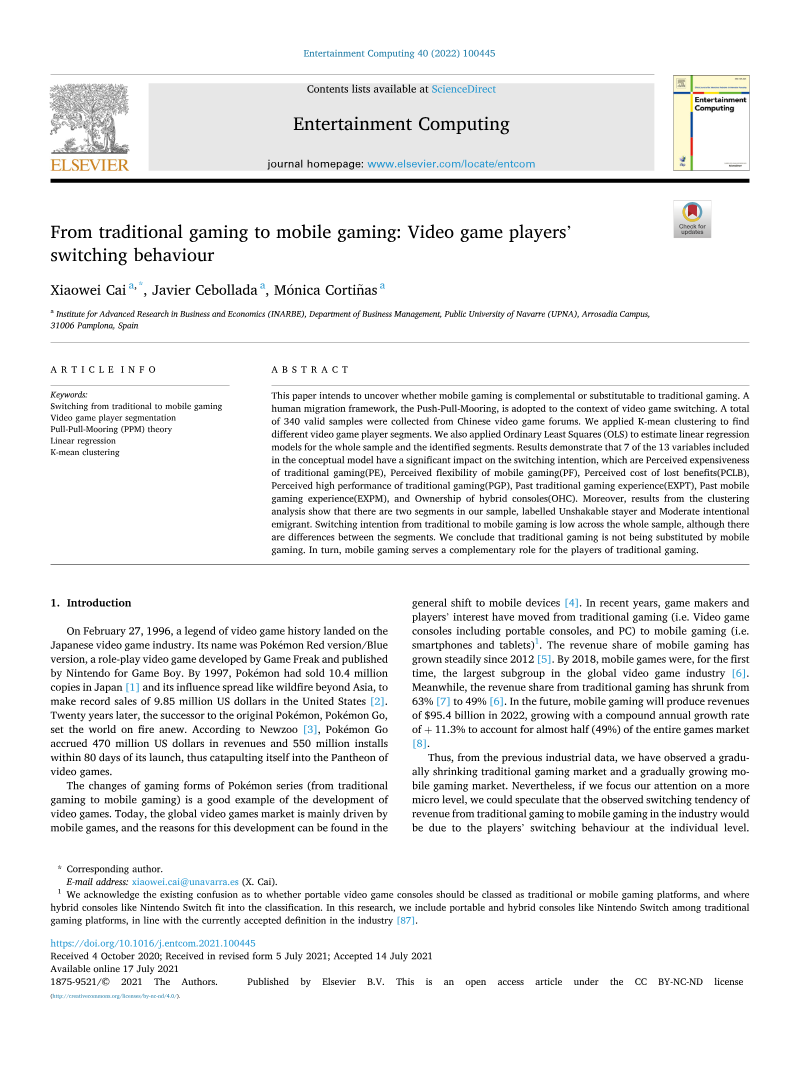
From Traditional Gaming to Mobile Gaming: Video Game Players' Switching Behaviour
This study, published in Entertainment Computing (2022) by Xiaowei Cai, Javier Cebollada and Monica Cortiñas of the Public University of Navarre, examines whether mobile gaming substitutes for or complements traditional gaming.
- Mean switching intention across all 340 respondents was 3.594 on an eleven-point scale, which the authors describe as relatively low.
- The authors conclude that traditional gaming is not being substituted by mobile gaming, with mobile gaming serving a complementary role for traditional gamers.
- Ownership of hybrid consoles such as Nintendo Switch was negatively associated with switching intention in the global model.

Building a Unified Cross-Project UI Framework
Sybo Games has addressed systemic inefficiencies in mobile game development by implementing a unified, reusable UI framework rooted in atomic design principles.
- Sybo Games implemented a unified, atomic-design-based UI framework to eliminate aesthetic inconsistencies and reduce technical bottlenecks in mobile game development.
- The framework shifts UI implementation responsibilities from engineers to designers, accelerating iteration cycles and allowing for the rapid assembly of high-fidelity interfaces.
- The system utilizes a modular architecture consisting of slices, view configurations, and animation targets to decouple UI components from rigid naming conventions and facilitate cross-project reusability.
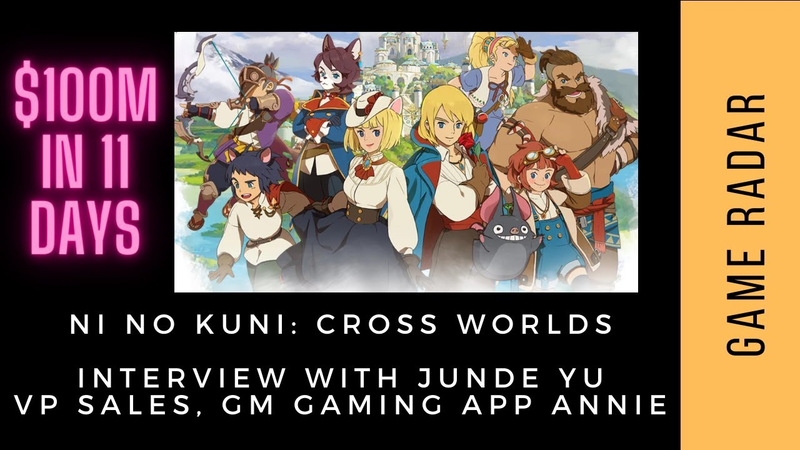
Ni No Kuni Cross Worlds to $100M in 11 Days | Talk with Junde Yu GM Gaming at App Annie
Ni No Kuni: Cross Worlds achieved significant commercial success upon its initial release in select Asian markets, generating $100 million in gross revenue within just 11 days.
- Ni No Kuni: Cross Worlds generated $100 million in gross revenue within 11 days of its initial launch in Japan, South Korea, Taiwan, and a few other Asian markets.
- The game combines kingdom-building mechanics with an action MMORPG structure, featuring a meta-narrative where the player character is a beta tester trapped inside a virtual reality game.
- High production values linked to the established Ni No Kuni IP allow for premium pricing on gacha items, as players are already familiar with the characters, voice acting, and storylines.

(P)Layer Character: Designing Immersive Narratives for Location-Based AR Layers
Effective augmented reality narrative design centers on the concept of seasoning physical environments with digital layers rather than attempting to overwrite reality.
- Effective AR narrative design should 'season' physical environments with digital layers rather than attempting to overwrite reality.
- Developers should utilize reverse level design, constructing narratives around existing physical architecture to ensure the experience remains grounded in the tangible world.
- To mitigate player self-consciousness in public spaces, designers should issue direct prompts that invite participants to define their own roles within the fiction.

State of Card Battler Mobile Games Report 2021
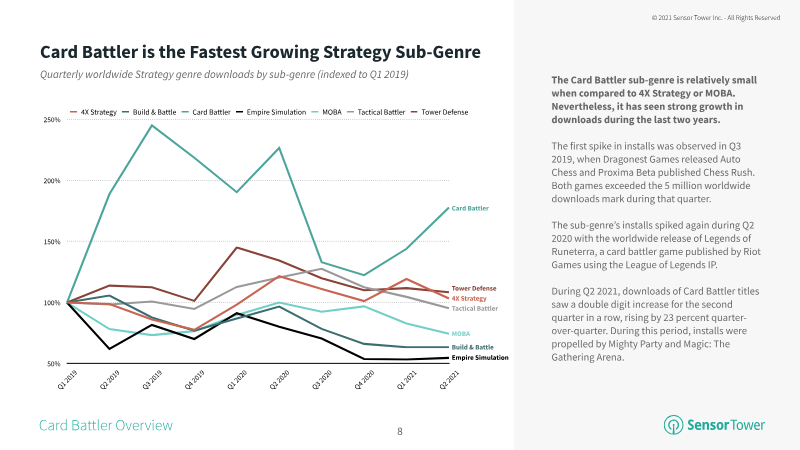
Card battler games are a small but fast-growing corner of mobile strategy, and the market is shifting toward Western players and newer entrants.
- Mid-core games drive 60 percent of total mobile player spending despite accounting for only 20 percent of worldwide installs.
- The U.S. has become a critical growth engine for card battlers, capturing 27 percent of the revenue market share and seeing a 53 percent increase in revenue per download.
- Mobile card battlers reached a new financial baseline of over $55 million in monthly player spending during the first half of 2021.


India: Mobile Market Spotlight: A Booming Mobile Economy
India's mobile economy expanded sharply across 2020 and 2021, driven by rising engagement, a leading position in global games, and fast-growing fintech adoption.
- India is a global mobile-first leader, ranking second in total app downloads with 24 billion installs in 2020, a 28% year-over-year increase.
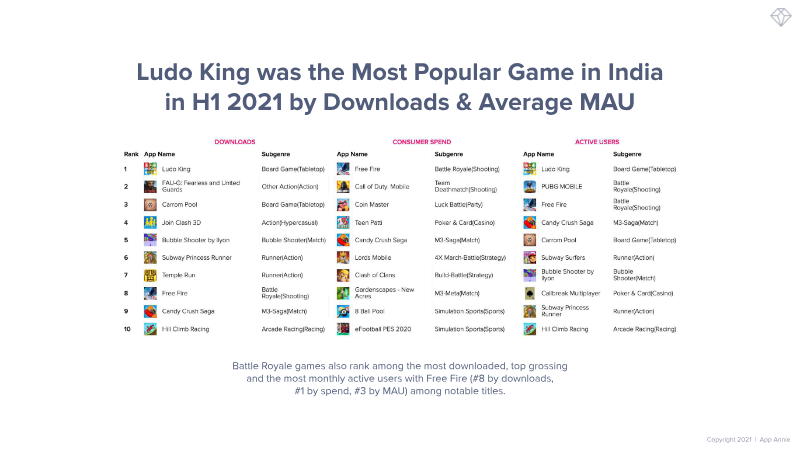
- India became the world's largest market for game downloads in the first half of 2021, accounting for nearly 20% of global installs.
- Daily mobile usage per user surged from 3.3 hours in 2019 to 4.8 hours by Q3 2021, fueled by pandemic-driven engagement.

Exploring The Opportunities of In-Play Advertising - PG.Biz Roundtable
In-play advertising represents a strategic evolution in mobile game monetization, shifting away from disruptive interstitial and rewarded video formats toward immersive, context-aware brand integrations.
- In-play advertising provides a non-disruptive revenue stream by embedding brand content directly into game environments, such as billboards or signage, rather than relying on interstitial or rewarded video formats.
- The primary barrier to scaling in-play advertising is the current lack of standardized measurement frameworks, which prevents risk-averse media agencies from shifting budgets into gaming.
- While rewarded video currently generates higher eCPMs, in-play advertising serves as a vital complementary revenue stream that protects player retention by avoiding gameplay interruptions.

Game Biz #3 | Game Company Growth Strategies ft Chris Petrovic and Eric Kress
The gaming industry is currently undergoing a structural transition as major players shift from a reliance on aggressive mergers and acquisitions toward the more complex challenge of organic growth.
- The gaming industry is shifting from an M&A-heavy growth model to a focus on organic growth, as high-quality independent acquisition targets become scarce and integration challenges persist.
- Investors are increasingly pressuring major firms like EA, Take-Two, and Zynga to demonstrate internal innovation and the ability to launch new franchises rather than relying on capital-intensive consolidation.
- Companies are pursuing vertical integration by acquiring ad-tech capabilities to optimize profitability and mirror the valuation models of firms like AppLovin.
Writers
Games and companies
Games