1 free read left. Create a free account for unlimited reading + AI research.
Create free account
Game Company Growth Strategies in 2021 | Zynga, Applovin, Skillz, and Jam City
Key insights
6 takeaways- 01The mobile gaming industry is shifting away from traditional content-based M&A toward vertical integration and cross-platform models to counter the impact of IDFA deprecation on user acquisition.
- 02Jam City is attempting to mitigate market volatility by acquiring early-stage studios and leveraging licensed intellectual property to drive user engagement.
- 03Long-term scalability in the 2021 mobile gaming market depends on a firm's ability to prove consistent growth while managing the execution risks of complex strategic pivots.
- 04Zynga is pursuing ad-tech integration and cross-platform expansion, though its strategy faces significant industry skepticism regarding data privacy and trust.
- 05AppLovin is attempting to transition from an ad-tech provider to a content-focused powerhouse, risking the alienation of its external client base by creating a potential walled garden.
- 06Skillz is currently facing operational challenges characterized by a narrow casual game portfolio, declining download metrics, and scrutiny over its revenue recognition practices.
Ask AI about this video
Transcript
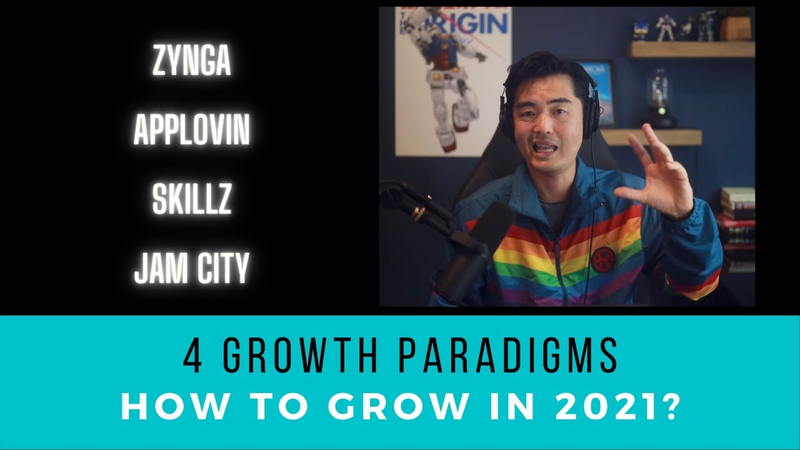
what's up everybody well last week we talked about how the game industry is actually facing structural transition especially this year with a lot of things changing in the marketplace that actually makes growth in our industry very difficult and so what i wanted to talk about today is what are different models for growth by game companies given a lot of these structural changes and so what i'm going to be talking about are four kind of growth paradigms that are being adopted by for public or soon to become public companies zynga applovin skills and jam city in each of these companies represents a different growth strategy which i want to discuss but kind of like a quick summary in terms of what these companies are doing first zynga so zynga is shifting from a content m a based strategy which is has been their strategy over the past five years and has been
largely responsible for essentially all of their growth going from that to an ad network ad tech vertical integration strategy one they've got two growth factors that as well as shifting increasingly cross-platform the second company we're going to look at is applovin which is really trying to become so they started as an ad network they then acquired a lot of content companies a lot of game studios but now they're actually trying to become the netflix of gaming and i'll explain later what that actually means because it's not like the cloud-based netflix of gaming definition that that you may be thinking of the third company we'll look at is skills which is actually trying to build a skilled competitive wagering platform so more of a platform type of play against competitive betting and then fourth jam city appears to be focusing on a essentially like an upstream and earlier stage
content m a strategy as well as focusing on launching ip-based games and so the first company i want to talk about in more depth is zynga essentially what we're talking about is the end of the m a graving train and as discussed if you missed it in in terms of last week's discussion but essentially the easy pickings phase for game company growth through content m a is essentially over in zynga has arguably been the most successful of mobile game companies that leveraging m a for growth over the past five years and so while zynga has continued to show growth over the past year and likely has growth locked in i would say just based upon their existing slate of acquisitions over the next let's say year or two the bigger question comes when we look further out into the future more into the mid to long term outlook for zynga
then how will zynga grow if not for content m a which has again been responsible for essentially all of its growth so i think that what we can do is just look at recent moves which do seem to indicate a strategic shift away from this model and so we'll talk about what i believe their next strategy is and so one of the things that we've seen from an executive team perspective is the departure of m a superstar chris petrovick who essentially led all of the the the m a for zing over the past five years it's been a massively successful run for those guys but when you see the key guy responsible for that leave i mean clearly that potentially indicates a shift in strategy we we've also seen indications by public announcements disclosure as well as from the the recent announcement of the acquisition of ad network company chart boost which was announced last month for uh 250 million dollars so we're seeing
that as they had indicated and from the this recent acquisition announcement that they do fully intend on shifting to kind of an ad tech owning ad network type of model and finally the the the other thing the other indication that we've seen in terms of the other growth factor that they're likely headed towards is probably a shift across platform and we've seen that through market moves in terms of the acquisition of actor games which is the the kind of arpg the torchlight 3 studio based in san francisco essentially it's expand cross-platform capabilities and but they've also announced cross cross platform on the the latest game that was announced star wars hunter star wars hunters which was announced as a cross-platform game both supporting mobile as well as switch you know so kind of like a small step but we can see
that that's kind of where they're headed and so in my own personal view i think what's been hap what happened is and this is speculative on my part but i believe that the zynga executive team basically saw the writing on the wall for continued growth at least through content m a and essentially just decided to follow app 11 into ad tech they saw what they were doing they saw the growth it that app lovin had based upon that strategy and decided to follow them further they also realized the potential for the cross-platform market given the success of games like and in particular gentian impact in addition to that more recently we've seen from the disclosures from the epic versus apple trial that when we saw for example the the platform share of fortnite across various platforms it was kind of widely discussed by a lot of people in the industry but there was a specific chart and i'll
put a link in the show notes that showed fortnite's revenue share on various platforms from march 2018 to july 2020 that essentially showed seven and a half percent of revenue coming from mobile and essentially 92.5 from pc and console now by the way i think the what you should take away from that chart is that console poses a very strong opportunity a market opportunity for free to play games however you should also note that with respect to the chart that that was disclosed to the well that was publicly disclosed that that console contribution is a bit overstated and the reason for that is for example when you think about the actual situation during when fortnight was first being launched we saw that on android the android launch was delayed and then only on samsung further epic opted to go with their own
launcher on android and so when they did that in all the friction that was caused by having their own launcher in terms of all these warning pop-ups that popped up and due to google's restrictions that created a very high friction fatoui an install process for their launcher further when we look at mobile we also saw that on ios at the during launch that it that fortnight had super high device requirements in in fact i think on ios of the top 100 grossing games that in terms of device requirements fortnite was number 100 out of 100 in terms of device support right so it was actually the worst despite being one of the top performers from a revenue perspective but then when you also look on the android side and android relatively underpowered relative to ios
we saw an even bleaker picture in terms of device support on the android side so anyway just to underscore the point that i'm trying to make there though is that that kind of indicates uh that the potential market opportunity on consoles actually quite good for free to play games that we are increasingly seeing the opportunity with cross-platform development frameworks like unity and like unreal that the costs to actually port are getting lower and lower in that when you look at the zynga management team there are a lot of ex ea executives so it's not like they don't understand the console or pc market as well right so that from that perspective that makes sense so in terms of an overall synga outlook i just want to make clear that i'm not a hater while i personally wasn't a huge fan of zynga
pre frank jabo i mean i've publicly commented on public podcasts very positively in terms of zynga's execution at least from an m a and growth perspective but clearly when we look at what's happening today in terms of the structural shifts that are happening in the industry and the shift from zynga's management team to a different strategy anytime a management team adopts a completely different strategy there's going to be some execution and market risk so given that while i am positive on zynga's growth over let's say the next year or two i think medium to long term zynga in my opinion is definitely challenged and so just think if you look at zynga's numbers is revenue numbers if you think what would have happened to zynga if they aren't able to for example find the next peak or small giant then a lot of that growth basically goes
away right so anyway just kind of summarizing here a few thoughts on there basically two growth vectors right so ad tech vertical integration and cross platform and on the first part that the ad tech vertical integration side so my belief is zynga's essentially opera opportunistically following this path largely based on essentially a copycat model of applovin but i think that they're kind of one step behind i mean when you look at comments from zynga's management team it does seem a bit confused and not super consistent in terms of approach or how this is going to work i mean are they going to be a walled garden or do they do more of an open ad network i'm not sure if zynga realizes fully this issue around data integrity and having a sort of compromised model with respect to having competitors share their data with
the ad network that they're using and zynga by having you know their own first party content studios that that does pose a competitive situation a competitive risk and so anyway i i think there's some some risk there of of that strategy not playing out the way that zynga thinks it'll play out i also think that zynga does not have a very specific view with respect to idfa deprecation which is totally fair given we're still learning more about the impact of idfa deprecation and still kind of playing out but it does seem like zing is kind of winging it here and at least i haven't today heard any clear articulation of what their perspective or how they plan to address idea feed deprecation is now they have said some things in terms of idfa or of idfv and addressing idfa deprecation through idfv but
even that is highly controversial and to me not a real clear response to idfa deprecation i i think there are other deeper implications from a product perspective monetization perspective things like that that's something that nobody from the zynga management team has specifically called out and so i so while i think that i think it's important to note that while zynga is kind of following app up and down this growth path of ad tech ad network vertical integration it does appear though that when you think from a strategic perspective they're not the same so applovin which i'll talk about in in in a few minutes they're going they're going more for a walled garden netflix of gaming approach at least by public comments anyway and whereas it seems like zynga is taking this approach of trying to have the best of all worlds by you know not only capturing additional
margin from owning the the ad network but also having an open ad network in which competitors will gladly you know participate in their ad network and give them their data and trust them not to abuse their data and that trust and i think that's naive right i mean it's naive either on the side of zynga or on the side of the customers so one or the other right you can't have both things being true and so for me this growth vector fundamentally holds the most risk i think game studios are becoming increasingly wary of sharing data with compromised ad networks and unless there is significant competitive advantage that comes from that ad network so either zyng is able to get enough scale so that if you want to get enough volume in terms of ads you have to engage with zynga's network or if zynga is able to come up with a
capability right like auto roads from potentially acquiring an mmp and doing some stuff that some of some of the things that i've talked about last week then i think that this path could face some significant challenges now on the other side in terms of cross-platform a lot more promise there i think there's a lot more capability and expertise as i mentioned from the management team on that side of the business and we'll see what happens there but certainly on the first growth vector i think that while i'm not going to count them out there's just too many things changing there's a lot of things that are happening right now there's certainly an opportunity for them to do that i just i would place a heavy discount against that growth vector and probably be watching more of the growth vector around cross platform instead so let's talk about the next company app 11 which by by the accounts of ceo adam ferrugi
he is calling the netflix of gaming and so according to adam fergie the app eleven ceo and let me actually read a quote from a quote from him for you he stated quote that first party data feeds our software and then creates ability for us to do much better at recommending future content to customers i guess maybe the best analogy to really compare that to is how netflix took their own data on their platform and rolled out personalized recommendations then they layered on their own original content which exploded the amount of consumption on their platform and gave them more insights into their audience replicating that same playbook in a new media format so that was uh that was a quote from adam fruge and so taken on the face of it a true netflix of gaming approach means that
app loving is viewing ads as our netflix style recommendation platform so this is a concept that i think has a lot of implications and so first let me explain that a little bit more right so when you think about netflix when you watch netflix netflix owns the app right you log into the netflix website or if you're watching it on your playstation there's an app where you see netflix and then the netflix app takes the data of what you've watched what you liked takes a lot of that behavioral data and then recommends other content to you now what adam fergie is saying is that they are the netflix of gaming not from a content consumption perspective but more from the perspective of personalized recommendations that that that app loven is going to study the behavior of their players on their own gaming their own gaming portfolio and then
the ads act as that recommendation platform that's the their app right so the ads will then say okay work we think that you we know who you are and we think that you're gonna like this other game and so that recommendation platform is essentially the ads the other thing to note though is that if that's right and you know and i think what we've seen and i think that based upon a lot of the comments from app 11 that that's probably the path that they are going after i mean what we've seen is that we're starting to see this build out of this recommendation platform right and so we have they've like applovin has essentially applied a ton of data analysis machine learning to optimize recommendations and prediction on ad serving and i also wanted to read you a quote from the app11s1
where it stated quote our core technologies are robust having processed over three petabytes of data per day on average as many as three trillion predictions per day and up to 6.5 trillion events per day in january 2021 while remaining flexible enough to rapidly adjust to our customers evolving needs our app graph stores and manages anonymized data from hundreds of millions of mobile devices we reach every day while our axon engine then leverages to pro to better predict and match each user to relevant advertising contacts so the question that i think we need to ask is if the crux of the business model is around this netflix of gaming model the recommendations engine predictions part does it make sense if let's say you're netflix to recommend content on competitive
services like amazon or hbo or disney plus i think the answer is no and so while i believe that that app 11 would like to continue to have an open ad network and serve external customers i think they are fully prepared for the situation in which they become a fully walled garden right and so i also think that when you look at the final financial disclosures from app11 that they've kind of prepared some of their financial disclosure in a way to prepare the public for a time in which that segment of revenue kind of goes away in terms of ads because right because one of the other things that happens is what happens to your ad revenue when you don't have external customers paying you for ad to promote their games basically that ad revenue goes to zero that ad revenue goes to zero but then you get additional margin
on the content side of your business if you think of the content layer expands in terms of revenue the ad revenue decreases right so i mean i won't go into too much of the uh the financial disclosures you can kind of look that up for yourself i'll leave a link in the show notes if you want to dig into that a little bit more but the way in which we saw applovin break out revenue by games not as a vertical but against like game revenue which which they're calling consumer revenue which is only iap based revenue and then they broke out everything else's business revenue i think what they want us to do is they're preparing us for a time of what happens if they shift to this model and that business revenue or the ad revenue does go to zero then they what they want you to see however is the consumer revenue
continuing to grow because essentially what they're going to want you to to continue to see or the public the public investing audience what they want them to see is continued growth against the core segment of their business the consumer revenue part so um so i think that you know this is something that i've i have spoken to a lot of people in the games industry about it it's hard for them to wrap their head around for whatever reason and a lot of people continue to call applovin oh they're just a gaming company right you've got the content game iap gaming st uh revenue you've got the iap or you've got the advertising revenue that's generated from the games but that's not how they're breaking it out so when you think about the sources of revenue and what could potentially happen based upon the shift in strategy i think it's important to understand that nuance because to be honest with you a lot of people in the gaming industry just don't get it and so that's what i think we can be
seeing in terms of app 11 that again business revenue or the the external advertising part of the business revenue could significantly decline potentially go to zero but then revenue should flow from business from the business to consumer revenue uh at least on account on a you know accounting perspective and so again while i fully expect app 11 to try to hold on to external customers that continue to feed that external ad revenue side of their business i do think they are fully preparing for that part to go away and the reason why i think that they're continuing to try to hold on to that external part is because we we do continue to hear about app love and potentially working on things like auto roast for example and that would be something that would provide that value to external customers that would then you know be a risk
decision right and so if you are an external customer thinking about should i give app 11 my data or not could they compete against me but then if you have these external capabilities if you have the additional skill or performance that you would get from participating in applovin's ad network then you may it's a business decision of whether you participate in that or not but another reason why i actually think that they potentially don't care about that business revenue or the ads part of the business revenue external ads part of the business revenue is that what we've seen is this continuation of actually competing against their own customers and so what we saw was the launch in like last month or maybe maybe it was a month before of a game called bit life life simulator and this is a game that's very or sorry the the app 11 launched a game called life
simulator best life which happens to be very similar to candy writer candy writer is a studio under still front a game that they have called bit life life simulator and i mean what we've seen is that candywriter is in applovin max customer as well as an apple of an ad network customer did something happen was data used again this is that this is that murky issue right we don't know we'll likely never know for sure but the potential there absolutely exists right and so my outlook in terms of app love and overall is that i have massive respect for the app level management team you could potentially consider them and likely they have the smartest most aggressive and execution capable executive team in the free-to-play industry and despite what you might consider
a huge vision and probably extremely difficult vision to execute in terms of netflix of gaming model i don't think it's wise to count them out and while i mean valuation is a separate issue i won't talk about valuation here but from a content perspective i think uh you know applovin's biggest challenge is going to be transitioning from having essentially a core competency in ad tech to content development and managing studios so that's what i would look for right i would look for their ability to do that netflix made a similar transition from logistics and infrastructure to streaming and content development so i think it's possible but then you'd want to see a number of moves that app 11 makes at the executive level that shows you that they're going to be able to make that transition to to better manage a uh
a wider set of content studios that's not just closer to top of funnel meaning more casual games games that have you know longer rpus payback periods games where you're going to have to understand deeper monetization uh you know much more complicated player behavior that you see in kind of mid-court or hardcore games and so while i think they have as big or even more of a challenge than zynga i've learned it's not wise to count count against ruthlessly executing management teams and i do think aptloven has that and so what are some of the things you should keep an eye out for you should keep an eye out for the evolution of kind of what they do from a walled garden versus open approach to their ad tech business and in particular you should watch this shift in terms of how they're reporting consumer versus business revenue you should try to keep tabs on app 11's ability to execute against additional capabilities in terms of
their their ad network such as an auto roast capability i think you should um also then also keep an eye out on their ability as i just mentioned before their ability to develop content development capability in the form of whether it's additional executive team hires or the ability to acquire additional studios in genre expansion capability anyway so that is that those are my thoughts on app lovin zynga and applovin and the third company i want to talk about is skills and so unlike the other free-to-play game companies skills is i would say playing especially fast loose and risky for growth they have the most risky business model in terms of difficulty but also having the highest upside i mean they're
differentiated in the sense that instead of you know kind of a pure content play they are essentially enabling a competitive matching and wagering service that would sit on top of content developed by other game developers today so to date they have achieved some scale against two specific game sub-genres bingo and solitaire however the big question mark for growth will really be around whether they can scale to a much wider audience and against other game genres or sub genres when we look at the skills prospectus we note that for the year ended december 31st 2020 solitaire cube and 21 blitz each developed by tether tethers the name of one of the game studios that they work with together with blackout bingo developed by big run which is the name another game studio that they work with accounted for 79 of our revenue games developed by tether
and big run accounted for 87 of our revenue for the year ended december 31st 2020. so essentially the the risk here is that again they're highly concentrated in terms of these two sub-genres of bingo and solitaire not only that these three particular games account for 80 of their revenue now both good and bad bad in the sense that they're not highly diversified but good in the sense that one other head game could potentially significantly drive growth for them but i think that if we were to look at some of the data and again i'll provide a link in the show notes if to the newsletter if you want to see some of the graphs and charts but when we look at the for example the the download performance over the past year we note that the current flagship titles that i that i just mentioned
those three titles have been declining the overall portfolio has been declining for skills even with kovid in 2020 which was the best year in the history of free-to-play gaming so i think that's a risk now having said that don't be surprised to see downloads a reported revenue spike i think word on the street is that there is kind of this new game from big run which may do pretty well they also have this announced partnership with nfl i think wagering and nfl kind of like peanut butter and chocolate so it's certainly possible for some new game to pop up for in terms of the nfl but i would think like in terms of aside from these like one-off ad hoc opportunistic opportunities if we think from more of a structural longer term perspective are they going to be able to achieve skill against multiple sub-genres in a
much bigger way i think that's the big question mark right and so their ability to prove out the model and to date i'd say they haven't proven that they've been able to scale a pro profitable model and have really i mean i don't think you can say that they fully achieve product market fit despite being a public games company and i think the more disturbing thing is to note that much of the current growth and revenue reported by skills largely could be due to accounting shenanigans now as reported by eagle eye research about skills let me read you a quote from eagle eye research they say we believe the company is round tripping their revenue and sales and marketing expenses they issue bonus cash to incentivize user engagement which they record as an expense users then wager this bonus
cash which generates revenue for skills effectively the company is recognizing revenue from virtual money it gave its customers to spend although no real cash is generated in the process we believe management has the ability to manufacture whatever revenue figure they desire they can simply decide to issue more bonus cash which quickly converts into revenue as it is spent we do not allege willful misconduct but simply point out that the risk exists recent high profile failures and frauds involving round tripping include luck and coffee and comscore both companies were coincidentally audited by the same audit firm as skills so in summary i've got huge concerns about the medium to long-term growth prospects for skills based upon
not only their model not only their ability to you know to prove out product market fit against their model but because of these type of issues as well they not only that they face you know existential threats based on app store policies from apple and google that could potentially shut down their business at any time and when you layer that on top of all these other issues like the accounting issues and the fact that they face declines in their core games during the best year in the history of free-to-play gaming it just it really just represents extremely high fundamental risk but i do admit high reward because they're not having to develop their own content they can partner for content development and they add this wagering competitive betting layer that that's much more scalable if they're able to prove out this model and so i would say in my opinion
super high risk potentially high reward but from my perspective the risk far outweighs the potential reward and the last growth strategy i want to mention the last company to talk about is jam city and so the way to think about jam city essentially is as a company that is still banking on growth through content right and so one of the things that i mentioned is if you think about the ecosystem game studios you let's say you have small scale game studios mid-tier game studios and large scale game studios that what we saw was a hollowing out of the middle the middle got kind of picked off and so we should see movement not to say the middle is completely gone but all the easy pickings are gone in the middle and so what would we expect we'd expect then that if you want to continue growth
at least from a content perspective you're either going to have to move to larger acquisitions or earlier stage acquisitions right and so i think that that's what we can what we can expect to see from gem city but in fact a two-pronged model so first i think that they're gonna go low they're gonna go earlier stage companies why because they only have 150 million dollars of cash posts back transits posts back transactions and so with that limited amount of capital i think that you're going to have to go for cheaper earlier stage acquisitions to beef up the content pipeline but i also think that what you would probably expect from a deal structure perspective is something that we've seen similar to recent deals structures from embracer that focus more on earn out to reduce the upfront purchase price and mitigate the risk of acquiring pre or early revenue based game studios and also
then provides an upside for management teams that that also get acquired gives them that incentive to stick around and make their games profitable and i think that the second strategy is going to be around ip license games uh jam city had been increasingly moving towards lice launching licensed ip based games that's been a shift that they've already been moving towards we saw this with the launch of harry potter hogwarts mystery we saw their acquisition of disney emoji blitz when disney exited gaming and we now see that even further with the acquisition of ludia who are ip specialists and as noted last week i think that this may be a good strategy in the sense that ip-based games may benefit from idfa deprecation uh so if that winds up being true again it's still to be determined but conceptually potentially something that will happen
then actually not a bad move when we also note when we look at some of the public disclosure from jam city in terms of their future pipeline you know some of the games that they mentioned are a disney pop town game launch some type of new dc based game an hdtv game a star wars game and an avatar game so clearly you can see this is where they're going they're moving towards ip licensed titles and to wrap this all up so damn city in terms of outlook for me and by the way i am a fan of the company and a lot of the people working there and but just to keep it real i do think that they are going to be challenged for growth i think you know any company can break out with a single hit game so there's always the potential for a big hit and massive massive growth off of that single hit however historically when we look at the data what we see from jam city in ludia has
not been a super high growth revenue or downloads trajectory even in the face of uh kovid in 2020 as well and i think that when we look at where jam city expects to get a lot of its growth when we look at some of the the spec transaction investor materials we see that they're essentially banking on almost all of the growth coming from new games and so if that is the case i just think that that's going to be fairly difficult so anyway in conclusion you kind of see all of these companies these four companies zynga applovin skills and jam city represent very differentiated approaches to this big question of 2021. how do we continue to get growth now just to be clear i am a little negative like we've been
on this huge bull market run in terms of games huge growth that we've been through but the tide is turning the market is shifting a little bit and so while i'm a huge fan of all game companies i've fully realized how difficult it is to find success in our market and so i mean despite the challenges i definitely hope all of all four of these companies i wish them all great success i believe we live in an infinite world so i definitely hope that they are successful but i do think that overall i feel like even with these four different models i think all of them are relatively challenged having said that just in conclusion here i'm also happy to speak to any representatives from the companies mentioned and happy to have a panel you know panel discussion one-on-one interview in response to any of the thoughts
that i have stated so if you are interested in talking me to be about this stuff just let me know and happy to publish that thanks guys that's it those are the fourth growth strategies from these four public or soon-to-be public companies as jam city is not fully specced yet but on its way and hopefully i will catch you all later bye everybody [Music] you
Summary
The mobile gaming industry is undergoing a fundamental transformation as traditional content-based mergers and acquisitions yield diminishing returns. Companies are increasingly forced to pivot toward vertical integration, platform-based models, and cross-platform development to navigate a landscape defined by significant data privacy shifts, most notably the deprecation of the Identifier for Advertisers (IDFA). These structural changes necessitate new growth vectors, as firms attempt to balance the risks of managing integrated ad networks with the imperative to secure sustainable user acquisition channels.
Zynga exemplifies this shift by moving toward ad-tech integration and cross-platform expansion, though its ad network ambitions face skepticism regarding data privacy and industry trust. Simultaneously, AppLovin is attempting a strategic evolution from an ad-tech provider to a content-focused powerhouse. By leveraging its robust data-processing capabilities, the company aims to establish a dominant position akin to a streaming service for gaming, though this transition risks creating a walled garden that could alienate its existing external client base.
Other market participants face more acute operational hurdles. Skillz struggles with a narrow portfolio of casual titles and declining download metrics, further complicated by scrutiny regarding its revenue recognition practices. Meanwhile, Jam City is attempting to insulate itself from market volatility by acquiring early-stage studios and utilizing licensed intellectual property to drive engagement. Ultimately, the industry is entering a period of consolidation and refinement where long-term scalability depends on a company’s ability to prove consistent growth in a maturing market while successfully mitigating the execution risks inherent in these complex strategic pivots.