Mobile reports and market data
Documents

Sell Your PC - Games Will be Created with Phones
The mobile gaming industry faces significant challenges regarding market saturation, high development costs, and the difficulty of game discovery.
- Frogmind’s Hype platform aims to democratize game development by shifting workflows from PC-based environments to a mobile-first, no-code editor.
- The platform enables rapid development by allowing users to 'remix' existing projects, reducing creation cycles from months to hours.
- Hype addresses mobile discovery challenges by using an algorithmic, short-form video-style feed that prioritizes personalized user engagement over static app store charts.

Superstar Fireside Chat: Playing the Content Game in the Great Mobile Consolidation
The mobile gaming industry is currently undergoing a transformative period of rapid expansion and consolidation, marking the onset of a new golden age for the sector.
- Mobile gaming is prioritizing long-term franchise development over short-term hits by leveraging machine learning, data analytics, and social features to maintain high daily retention rates.
- Industry leaders are adopting a hybrid operational model that combines a centralized core for user acquisition and technical infrastructure with a decentralized network of specialized studios to ensure creative autonomy.
- Future game development portfolios are shifting toward a mix of original intellectual property and high-profile licensed brands, with the latter projected to account for at least 50% of new titles.

Panel: Creative Ways to Grow: Innovating in User Acquisition & Retention
Sustainable growth in the modern gaming industry necessitates a holistic strategy that bridges the gap between marketing, product development, and community management.
- Retention is the primary driver of revenue and long-term scale, as acquiring new users is ineffective if the first-time user experience (FTUE) fails to engage players or if the game suffers from technical instability.
- Maintaining creative integrity in user acquisition (UA) is critical; using misleading ads that do not reflect actual gameplay can damage long-term app store rankings due to high visit-to-download drop-off rates.
- Influencer marketing campaigns can drive significant short-term install spikes, but they require careful tracking and coordination to avoid negative impacts on store algorithms if the traffic does not convert into sustained downloads.
Superstar Session: What's New for Mobile Game Developers at Google Play
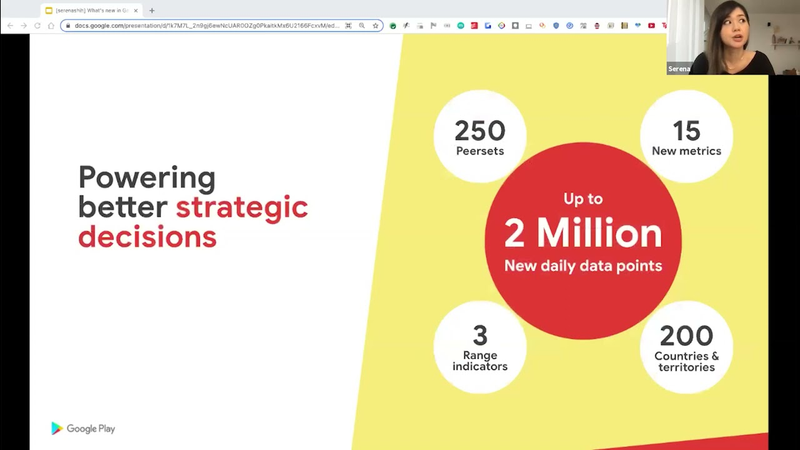
Google Play’s strategic partner manager, Serena Shih, outlines the platform's recent initiatives and tools designed to help mobile game developers scale their businesses, improve user engagement, and navigate evolving policy requirements.
- Google Play has implemented a reduced 15 percent service fee on the first $1 million of annual revenue to support sustainable developer growth.
- The platform now mandates the Android App Bundle format for all new applications, which reduces average app sizes by 15 percent.
- Google Play supports 2.5 billion monthly active users across 3 billion monthly active Android devices, with 140 billion annual installations.
Mastering the Market - Ideation for Your Next Hypercasual Hit
The hypercasual gaming market is characterized by intense competition, requiring developers to adopt systematic ideation strategies rather than simply chasing current top-chart trends.
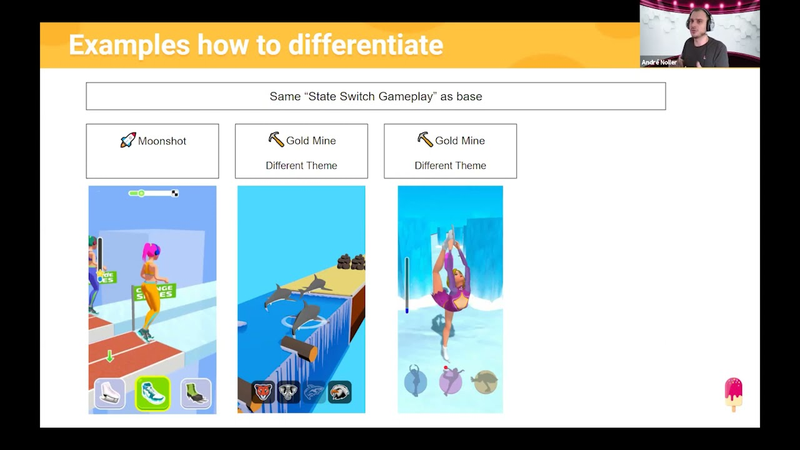
- Success in hypercasual gaming requires a systematic ideation strategy that balances trending mechanics with sufficient novelty to avoid saturated 'red ocean' markets.
- Developers should categorize concepts into four quadrants—moonshots, gold mines, clones, and gambles—to evaluate the risk and innovation potential of each project.
- Market timing is critical, as player interest follows a predictable lifecycle where audiences eventually tire of overused tropes and seek fresh, innovative mechanics.

Panel: The Challenges of Being Innovative & Unique in the Hypercasual Market
The hypercasual gaming market is currently undergoing a significant transformation, moving away from simple, disposable mechanics toward more sustainable, hybrid-casual models.
- Hypercasual development requires a mindset shift toward rapid failure, where studios often test dozens of prototypes over several months to identify viable projects.
- Successful hypercasual strategies often involve aligning game concepts with a team's specific internal strengths and passions rather than blindly chasing market trends.
- Developers can pivot failed hypercasual concepts with high user retention into more complex, successful products by adding meta-progression systems, as seen in the transition of the game Spire Blast to Apple Arcade.
Superstar Session: Long-lasting Publishing- How to Create Hypercasual Hits That Cross 100M Downloads
The hypercasual gaming market is undergoing a significant maturation phase, shifting from a model defined by short-lived chart dominance to one characterized by long-term engagement and sustained growth.
- The hypercasual market is shifting toward a 'hybrid-casual' model that combines low customer acquisition costs with deep retention mechanics to sustain titles beyond the traditional one-month lifecycle.
- Achieving 100 million downloads now requires robust live operations that transform simple gameplay loops into dynamic environments through progression and self-expression features.
- Long-term player retention is driven by integrating social and creative mechanics, such as competitive contests, voting systems, collectible items, and photo albums for sharing in-game designs.
Superstar Session: Game On or Game Over: Level Up Your Gaming Strategy in the EU
The global gaming industry maintains robust momentum, with consumer spending currently holding at 80 percent above pre-pandemic levels.
- Global gaming consumer spending remains 80 percent higher than pre-pandemic levels, indicating sustained industry momentum.
- Revenue generation is heavily concentrated in 4X strategy, role-playing games, and match-3 titles, despite hyper-casual games leading in total download volume.
- Growth is increasingly driven by shifting demographics, specifically an influx of female and older players, alongside rapid market expansion in regions like Turkey.
Grow Your Mobile Game Beyond Traditional Platforms
Mobile game publishers are increasingly shifting toward web-based storefronts to circumvent the restrictive payment ecosystems of traditional mobile platforms.
- Mobile game publishers are adopting direct-to-consumer web storefronts to bypass platform payment restrictions, thereby increasing profit margins and gaining control over monetization strategies.
- Integrating localized payment methods significantly expands market reach, increasing coverage by 40% in Latin America and 60% in Russia compared to default platform offerings.
- Web-based stores function as a growth engine by reducing transaction friction and improving conversion rates through payment options tailored to regional financial habits.
Fireside Chat: Ad Monetisation - Best Practices with Wooga
This discussion outlines best practices for mobile ad monetization, emphasizing the strategic balance between revenue generation and user experience.
- Prioritize user engagement and retention over aggressive ad tactics to ensure long-term success in free-to-play titles.
- Target an engagement rate where 80% to 90% of daily active users interact with at least one ad.
- Implement a robust mediation strategy using three to five ad networks from the start to maximize fill rates and eCPMs.
Balance Your Game’s Monetisation Mix for Greater Retention
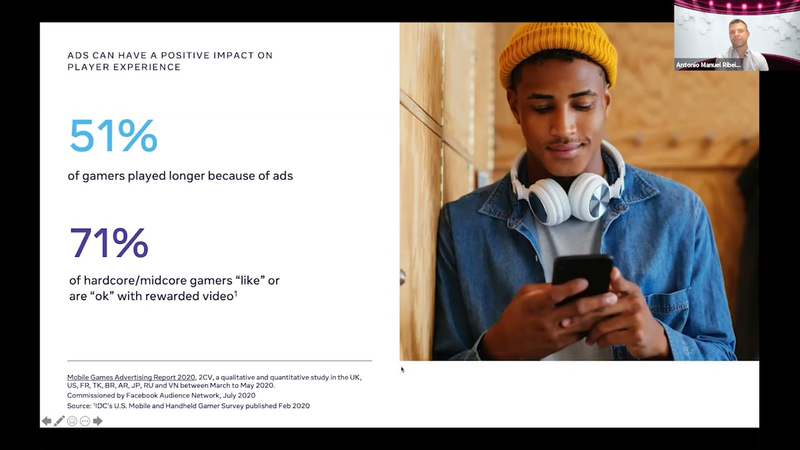
A hybrid monetization strategy that integrates in-app purchases with in-app advertising is essential for maximizing both player retention and long-term revenue.
- A hybrid monetization model combining in-app purchases (IAP) and in-app advertising is necessary because only approximately 5% of a typical player base engages with direct sales.
- Diversified monetization strategies are driving a 17% year-over-year growth in industry revenue.
- Incorporating opt-in rewarded video allows developers to monetize the remaining 95% of non-paying users without cannibalizing existing IAP revenue.
How to Design In-game Ad Placements
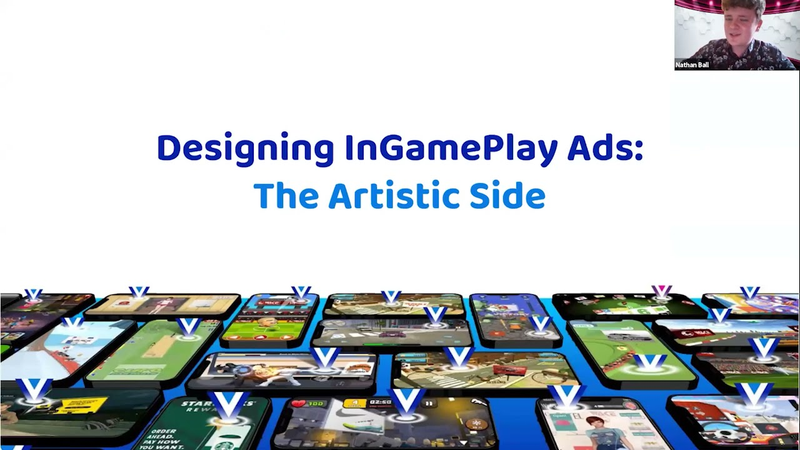
In-game brand advertising offers a monetization strategy that integrates ads directly into the game environment as native objects, providing a non-disruptive alternative to traditional banner or interstitial video ads.
- Integrated in-game advertising is preferred by 70% of consumers over traditional banner or interstitial video ads because it maintains immersion.
- Revenue for in-game ads is driven by viewability metrics—based on screen duration, size, and angle—rather than traditional click-through rates.
- To maximize impressions, developers should prioritize high-traffic static environments such as main menus, character customization screens, and level selection screens.
Writers
Games and companies
Games