1 free read left. Create a free account for unlimited reading + AI research.
Create free account
How to Design In-game Ad Placements
Key insights
6 takeaways- 01Integrated in-game advertising is preferred by 70% of consumers over traditional banner or interstitial video ads because it maintains immersion.
- 02Revenue for in-game ads is driven by viewability metrics—based on screen duration, size, and angle—rather than traditional click-through rates.
- 03To maximize impressions, developers should prioritize high-traffic static environments such as main menus, character customization screens, and level selection screens.
- 04Technical implementation can utilize shared placement keys to aggregate multiple ad locations into a single impression, which is ideal for fast-paced genres like racing or endless runners.
- 05Ads should be artistically contextualized using shaders, lighting effects, and environment-specific assets to ensure they blend naturally into the game's setting.
- 06While ads can be added post-development, integrating them during the initial design phase allows for more seamless world-building and optimized revenue potential.
Ask AI about this video
Transcript
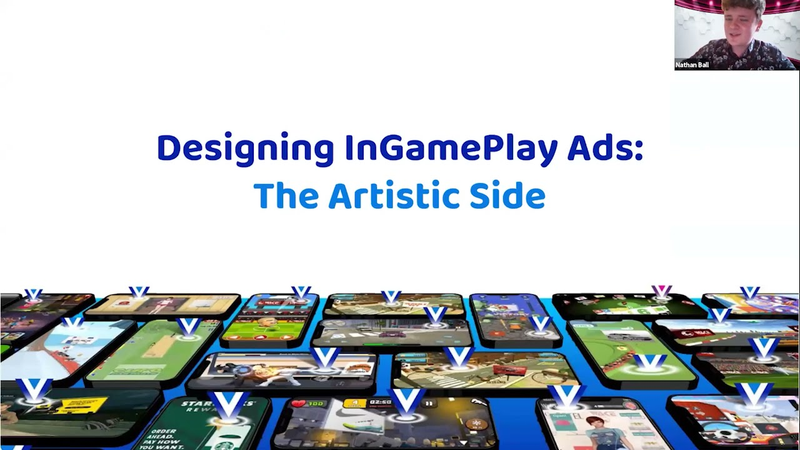
so we've gone from talking about how you create community and create experience now we're going to look at how you design in-game ad placements and i'm really excited about this because i went and downloaded the book we have nathan bell he is ad in mo game designer with a wealth of practical knowledge a really fascinating portfolio i have to say as well nathan and a very cool guide about designing in-game play brand ads so i think we just want to sit back and absorb this one nathan i will give it to you and again great work on what you've been doing so far so bring it on okeydoke thank you and good afternoon ladies and gents my name is nathan ball head of game design at adam mall and today i'm going to be talking to you about how to design in-game play ad placements this guy here is not me but he does look suspiciously like me considering he was
just a random google image result for a designer well good for thought uh so before we get into i'm going to be giving you kind of eight tips based on my experience with designing in gameplay ads today but first a bit of background so here we are we are adding mo we're an ad tech company and we provide an in-game play ad integration service for mobile game developers we do this through our sdk which is free to download on our website and is compatible with both the unity and unreal game engines and you can use that sdk to put in gameplay ads into your mobile games and so before we get into designing them i mean what even are in gameplay ads they're a relatively new phenomenon and not everyone will have heard of them so i'll just go over a bit about what exactly they are and the best way to do that i've found is to talk about them in the context of traditional mobile ads so i have a couple examples of those here and these are the kind of ads that you'll have seen everywhere if you're involved at all with mobile games
you've got your classic banner ads and interstitial video ads and just looking at these two pictures the issues with these kind of ads become immediately apparent and so you've got angry birds over here great game lovely art style and then you've got this ad just kind of sitting right on top of it it doesn't mesh visually and it's blocking part of the screen it just doesn't synergize with the game that is sitting on top of it all it visually disrupts the experience for the player and over here and you've got your interstitial video i mean you don't even know what game it originally was i mean you're literally in a different experience than you were a few seconds ago when you're playing the game you're not playing the game you're watching something from a different game again the experience is being disrupted and end gameplay ads are very much a direct response to those issues so these are ads that are built into the games themselves rather than being layered on top of them or interrupting them yes we've got some examples here ads on
billboards ads kind of around the edges of sports stadiums ads on trailing banners on the sides of planes these are all examples of locations and games where you can place in-game play ads anywhere that makes sense really and these will generate revenue and similar but not exactly the same fashion as traditional as we'll get to that in a second and we recently ran a consumer survey where we asked consumers to compare these kinds of ads with traditional ads side by side and 70 of them said that these ads provided a smoother gaming experience which is exactly what we're going for less disruptive more streamlined more in the game and so why would you want to monetize within gameplay ads there's kind of three main reasons first of all as i mentioned they're non-disruptive and within gameplay ads you're making money but the player is also always in your game that's not always the case with interstitial videos etc and they're getting taken out of the experience experiencing something else for a bit these ads keep you in the game keep you
playing and making money at the same time they also help maintain immersion much easier and as i mentioned before the art style of a lot of traditional ads doesn't mesh at all with most games and and that can be the case within gameplay ant as well but since they're objects within your game you have a lot more options in terms of blending them in making them feel more natural which we'll get into a bit later and thirdly they also add new revenue opportunities that you just didn't have before there are limits to traditional ads and you know they exist on top of the screen they exist as videos but there's a lot of space in between that that you can't take advantage of with them but you can within gameplay ads and we're actually launching a new developer survey this week and link should be down in the chat below my colleague should be posting that right about now and one of the most telling statistics from that was this question here we asked developers what their top three features are when they're integrating
with monetization platform and the clear winner this blue bar here it was that it doesn't interrupt gameplay and that's exactly what our ads do they deliver advertising without compromising on gateway and now one more thing there's a lot of background here but i think it's important and in-game play ads work quite differently to traditional ads and before we talk about how you design them i think it's important to talk about how they work because that doesn't form a lot of the design process so in gameplay ads don't generate revenue based on click through like with banner ads and but rather they generate it based on kind of screen time and views so in order to generate ads an in-game play ad has to generate impressions and to do that the ad needs to be on screen for a certain amount of time at a certain size and a certain angle to the player and if all three of those criteria are met then an impression is generated and those impressions translate directly into revenue so yeah it's a bit different and it does
inform a lot of how you design these so here we are i got through the background time for the main course so as i said there's going to be eight tips uh i've split these up into technical and artistic tips because there really is two sides to in-game play ad design and there's getting the ads to work and work the best they can in terms of generating revenue for you and there's also the artistic side as in blending them in making them feel natural and organic so i'll cover both of these starting with the technical side so tip number one is to place ads where your players spend the most time uh this is a fairly obvious one when you consider that uh as an ad generates more money the longer it's on street for and so you want to be placing your ads on screens where players are going to be spending a lot of time now as a developer you probably have numerous tools for identifying this but like analytics etc and if you don't know these things then some good examples are character customization
screens main menu screens level selects those kind of things so either screens where the player spends a lot of time on them all at once like a character creation screen or screens that the player will be returning to throughout their time of the game like with main menus level selects etc tip number two is to take advantage of static screens now one of the difficulties weapon gameplay ads when you're integrating them is in 3d games or games where the player has freedom of movement in a kind of 3d space it can be tricky because you know they could their movement's unpredictable and they might not go exactly where you want and they might not you may not get impressions off your ads because they might move in such a way that they are just slightly off screen they're slightly not big enough etc so it can be tricky designing with those and which is why static screens are such a blessing because there's no chance of that happening if the player is not able to move about and then your guaranteed impressions for as long as that screen is on the screen and they're very consistent and guaranteed
so some examples of these are kind of menu screens and a lot of puzzle games tend to feature their entire puzzles on a single screen so those are great candidates for in-game play ads for that reason tip number three is to reuse ad placement keys and fast moving games so the way it works is you have the sdk that you download and you also have the add-on developer portal and then you kind of work across both of these things in order to place your placements so you generate a placement key in the portal you bring that over into the sdk and your game engine you apply that to your ad placement and that is how the ads are delivered programmatically into your game and you can give different ad placements the same placement key and if you do that then those placements will show the same ad during the play session and every time and this also allows them to generate impressions cumulatively as well that's what this means is if one placement like in this example here a racing game with a bunch of billboards around the edge if
this billboard was only on screen for like half a second or something and it didn't meet the time criteria for an impression and the next one coming up could fulfill the rest of it and together those two placements would generate an impression for you now this is really important actually in a lot of games because there's a lot of fast-moving mobile games endless runners driving games etc and oftentimes you need to employ this tip to generate a good number of impressions uh there is also an artistic application for this as well and if you just want visual consistency and coherence across your game you can give them all the same placement key and it's guaranteed that they'll all show the same ads if that's something you're looking for you can achieve it with this as well tip number four is to think about the player's path through your game so this is kind of similar to the first tip and if you're kind of if you're developing like a shooter game or something or a 3d game and you're kind of tied into the community you'll know these things like the paths the players take you know you
probably set up the old design tricks arrows painted on walls trails of coins perhaps etc and you know that the player is more likely to take those routes than other routes um but once you've identified these routes then it's great to place your ads kind of on and around those routes because those areas get more attention than others and so the placements on them will get more attention as well and you'll generate more impressions and thus revenue from that okay so moving on to the artistic side now tip number five is to consider your game's world uh this is usually the first thing i do when i'm looking at a new game to integrate in-game play ads in and just really think about where the game is set uh when it's set as well time period is very important and just consider the environment the style the location and because ultimately the point of in-game play ads is to place them where they make sense because if they're displaced randomly then they're almost as disruptive as banner as that don't make sense you want
them to make sense and the easiest way to do that is to think about your game's world and where in that world it would make sense to feature ads and now this is easier in some cases than others in this example here this is an urban setting and in real life there are ads everywhere in urban states posters on walls billboards sides of bus shelters etc there's no shortage of options in that case but you know there are a lot of mobile game genres out there maybe your game's a medieval fantasy rpg and there's not immediately obvious where ads would come into that i mean they wouldn't have been in the actual time period but there are still ways to place them that will make sense to the player if they suspend their disbelief a little bit so maybe on this wooden signs let's say the barrels crates etc the kind of objects that would have existed in that type that do make sense to be branded and so yeah just give it a lot of thought because i think this is one of the most key parts of placing in gameplay ads tip number six is to make use of background players most games feature
background layers to some extent or another these are just kind of static mostly pieces of art in the background there to provide context for the game they don't tend to play a role in gameplay at all and those two things mean that they're perfect for placing ads on because you can put ads there and not worry that the gameplay will be compromised because the background isn't really a part of it and also backgrounds tend to be visible for the duration of levels um and that means that any ants placed there will get a good amount of screen time and therefore generate you a good amount of revenue as well tip number seven is to add new game objects to support your ads and now this is something i think will become quite a big thing as in gameplay advertising develops and i think it really is the direction it's headed in and so just a bit of background not every game has good locations for in-game play ads in it it's just a fact unfortunately but
you can create opportunities for yourself to place ads by adding new assets to your game to support them as an example this game over here uh there's this plane with a trailing banner with an add-on now that's a great integration it's a very dynamic ad experience for the player but none of this was in the game originally the developer added this plane and banner etc after development to support the ad and the result is a great ad experience for players and an additional opportunity for ad placements for the developer vista just didn't exist before you did that unless you develop both your game's world and your ad strategy in a single move so it's quite efficient in that regard it does work best airline development it's great if at the gdd stage you can be thinking about this like well a lot of these objects to support ads they make sense in our world and they'll let us generate some more revenue and but it's very much doable post development as well as i said this example the developer did add this after development was done and it worked out fine so yeah it's a very
key thing i think moving forward and the addition of new game objects to support ads and finally tip number eight is to use visual effects to blend your ads into your game now this is one of the big things that you can't do with traditional mobile ads but you can with in-game play ads and since they are actual objects within your game you can apply effects like shaders lighting effect etc to them that you just couldn't do to sort of over-the-top traditional ads and that means you can blend them in to your game so they feel a lot more natural like in this example here you've got kind of dimly lit city street and this ad in the background has been adjusted so that it's dimly lit as well and thus blends in better and you wouldn't have been able to do that traditional ad this ad probably would have been a lot brighter but because of in-game play ads are built into the game you can adjust that and make it look much more natural and this just creates a settler ad
experience without compromising your revenue that's all so yeah that has been eight tips for placing in-game play ads in your game i hope you found it interesting if you did and we do have a design guide on our website that's free to download that covers similar things in a bit more depth and we have a lot of content on youtube as well a series covering different games they've integrated with us these kind of core principles i've been discussing as well and finally if you're a developer watching this making a mobile game and you think man that sounds pretty cool then give us an email at designclinic at addingmode.com send us a link to your game and i'll take a look at it and point out some great locations for in-game play ads in it free of charge and yeah so thank you very much for listening i've been nathan ball nathan we're not gonna let you go that quickly you've got a lot of questions here do you want to take a couple with us yeah let's do it okay let's do the simple ones first straightforward um some people number of them anonymous
they have the same question it's all about the clickability of the ad and therefore if you can't uh if you can or can't click them because if you can't click them on in a game how do you measure success so are they clickable yes or no yeah they are not clickable in terms of how you measure success i did mention that a few slides back it's in terms of viewability so okay the ad needs to be on screen for like x amount of time um at x size and x angle and if those three criteria are met then you'll get an impression and that translates into revenue so it's quite different to how traditional ads work okay so viewability it's a bit like bit like marketing in uh outside of mobile games with movie yeah ability so it's it's a similar it's a similar uh approach there speaking of approaches uh one person again anonymous they want to understand when do they actually approach a company like yours when should they start thinking about ad placements in the game the usual answer would be at the very
start but if you can't do it at the very start you have a game already um you know you're maybe in development stage with stage of development yeah very star is obviously ideal and it gives you a lot more scope to plan things out and but really any other point in development is fine and a lot of the games that we've worked with so far have been post development like the game's already out and we're adding ads into them then and that's very much doable and the earlier the better though because if you can sort of build parts of your game around it it's a lot easier to integrate and gameplay ads okay uh another com another question sort of in that same vein is they just uh a few of them here want to understand okay so at what point um will they be able to work with uh you or what point do you work with games rather to integrate these panels or static screens that you've been showing yeah so the way we've been working it so
far is and we talk to developers and if they're interested then i'll do uh an integration document so i'll have a look at their game play through it um and then what's gonna take a bunch of screenshots and point out what i think our good locations based on and i experience integrating in the past and just my general design designer experience as well that's what we do currently a couple of questions about understanding the technology but also understanding the relationship with the brand to advertise in your game do you have any tips that you can offer to ensure that you're getting the right ad for your game and vice versa currently we're not able to kind of guarantee specific types of ads it's all delivered programmatically but that is definitely a feature that is on our radar we know it's something that developers will want and the ability to kind of filter what kind of ads will be in specific locations in your game and that's something we're working on and we'll hopefully be getting out soon
okay and a couple people said nice talk great thank you and you've got your uh link to the study you did the research you did they also want you to share your other playbooks i'm hoping you'll do that as well and wondering um are there certain ads suitable for certain types of games or are they suitable for all types of games so is this something that you really want to have um maybe in uh in games where since you're talking about being very uh non-interruptive non you know it's it's not interrupting the gameplay maybe it can be for everything also as long you know the mid core the hardcore and not just the sort of the short snackable hyper casual casual games what would you say which genres um absolutely yeah i mean and beyond genre even i think the most important factor as to whether these kind of ads fit or not is just the game's environment and it's setting and there are some where they don't make a lot of sense but there are loads where they do
and as i mentioned you can add additional objects to fit them in better and there's not really a limit and they can go into games of any genre type casual hardcore midway etc and just it really comes down to the individual game and often you'd be surprised whereas concert may just not have thought of some of the locations they can go you've showed some examples here i guess uh they want some other examples i don't know maybe you can just walk us through them you know any that you can blow our minds with implementations of of ad approaches are there any that are outstanding or any that you're currently uh working on um there's a few good ones yeah we actually have a playlist on our youtube channel called in game play review where i take a look at just kind of the best games i've integrated with us and point out the kind of why they why it's so good you know like what they've done and how they've designed them that's up on our youtube channel if kevin could pop a link to that in the
chat that'd be great um so that's there's some great examples in there and recently we worked with a game called snakes and ladders 3d and which set in like a jungle environment playing a classic board game none other and neither of those things sound like you'd be able to adds in there but they actually did really well and they kind of placed them as wooden signs and they had them consistently throughout different parts of the game and it created this really consistent ad identity and so like because they're signed in different screens they kind of reinforce each other you know they make more sense because they appear frequently and that's something i like to push when i'm giving out these integration docs is creating a consistent identity and that game did it really well okay um just to get a feel for this as well in practice good and bad practice um let's get back to the metrics for a moment i've got one question it makes a lot of sense it's clearly it's about viewability and what you've been discussing there as measurements of
success but what should a game aim for yeah that's um that is a tricky one and it's a very there's a lot of nuance to it because these are much more complex than traditional ads you know those can i have very simple make money or don't states whereas with these there's a lot of space in between because it depends on the individual integration as well and my game can have loads of our ads placed in it or a few and depending on how many and how often they show up and how many impressions they generate the amount of revenue that you'll get from it can fluctuate quite a lot and the best integrations tend to be the ones that balance the two things really well i mean you don't want to flood the game screen with ads and that will make you a lot of money but it also goes against kind of the entire point which is the non-disruptive nature of them and you want them to be blended and you want i mean the ideal is one ad that generates impressions consistently because it's on a screen
that you spend a lot of time on and those those are the kind of ones i try to recommend the most when i'm doing my recommendations so in a perfect world you're going to have more than one deal and you're going to have several several placements a lot going on um i'm not sure if you mentioned this i was live tweeting so paying a lot of attention but not always looking at your slides more like writing about your slides uh anything about the number and the frequency because that was the thing with uh you know with with ads in the ordinary sense it was how many should i be showing should i have some sort of cap how shall i be rotating this so it was really making certain that you had the right number now that will always depend but this is not really an ad it's it's part of the fabric of the game so do those apply or are there other um ways of looking at the best practice here i think they do still apply i mean you can still place too many ads like these
and that will compromise your game visually and but i think it is easier to place more because they are built into the game i mean if you've got constant interstitial videos that's just a bad experience and lots of ads that you walk past you're still playing the game and there's a lot of that's going around but you know you're still playing the game ultimately that's what it comes down to and yeah i do still recommend restraint usually i don't you know flooding out with ads is not going to look great and as i've said you know you want your game to be looking good if you're using these kind of ads that's that's the big point it's so important to use as you said to follow the user journey and we have a couple of people who are wondering a bit more about that context i mean it's uh it's probably very important what data you have to understand your audience but also understand that journey and you're going to need multiple journeys for multiple types of players as well anything you can offer in the way of the high level advice around
making this an effective journey but also sort of an emotionally interesting journey so it's a little bit not just about the behavioral data or the straight data but also the psychographics and understanding you know what goes where in the journey and you know it's a bit more complex and early in the day when it was very simple it was just like have ads when there are moments of accomplishment and glee and happiness and everyone will say hey this is great i'll look at an ad now but again you're not that type of ad so i can have you at different places it opens up a lot of opportunities but i think that's what some of the people in the audience are concerned about you can do anything um what can i do so again that's sort of that in the journey any thoughts about where it fits where it doesn't because it's a totally different type of experience and you want to keep it as you said consistent contextual but also fun yeah i suppose that's quite an interesting question actually and usually when i'm recommending ads
and thinking about where they go it's more about just kind of authenticity and then player journey like if an ad would make sense there then that's usually what i'll go for it's not so much about which point in the experience and although of course having an ad like a big moment or that kind of thing can kind of weigh it down i think there's less so with ads like these because they're not over the top they're not interrupting they're just there and and ideally in a lot of cases the players don't even notice they're just sitting there generating revenue quietly in the background and so yeah i think it's more about uh the location and authenticity that player experience so obviously that is very important to consider as well and the quality it's interesting with the fading and the background and trying to make it really part of the fabric of the game is that the case that a lot of designers they have to rethink this very drastically to include that i'm not certain if there's what's the heavy lifting i guess is a final question for you nathan before you go
of really having this not just integrated because i can go to add in mo and i can i can figure that out i'm talking about the design the creativity i mean this was this was at some point someone's baby and now they have to change it is there a lot of heavy lifting involved there or even for that matter uh sitting down with the creative team and saying hey guys let's have a talk here it's all okay but we're going to have to redo some stuff um what what is that what is that like what is that process like yeah i mean it definitely is more involved than the traditional answer because as i mentioned there is an actual creative process that goes along with this you're not just kind of popping them in at specific intervals uh you are placing them into your game i mean i think the fact that you have that scope for designing them literally um is very valuable and you can do this to a greater or lesser extent depending on and you know how far you want to go with it like not everyone does blend their ads in and but the one the developers that do they know they look better they
feel more integrated and so there's a lot of kind of options really and but the fact that you have those options is really one of the big advantages of this format excellent well there are questions there we have to move on but maybe you'll stick around and yeah i'll be honest afterwards on the discord if anyone wants to ask any more questions perfect absolutely well thank you nathan it was uh really a pleasure and thank you for sharing and also those links that we have in chat if anyone wants to make a note of them i've already pulled them off someplace and i'm going to check them out later so thanks again thank you very much you
Summary
In-game brand advertising offers a monetization strategy that integrates ads directly into the game environment as native objects, providing a non-disruptive alternative to traditional banner or interstitial video ads. By embedding advertisements into the game world—such as on billboards, stadium signage, or background assets—developers can maintain player immersion while generating revenue. Research indicates that 70% of consumers perceive these integrated placements as providing a smoother, more streamlined gaming experience compared to traditional ad formats.
Unlike traditional ads that rely on click-through rates, in-game play ads generate revenue based on viewability. An impression is recorded when an ad remains on-screen for a specific duration, size, and angle. To maximize these impressions, developers should prioritize placing ads in high-traffic areas, such as character customization screens, main menus, or level selection screens. For 3D games with unpredictable player movement, static screens offer the most consistent and reliable opportunities for impression generation.
Effective design requires both technical and artistic considerations. Technically, developers can use shared placement keys to allow multiple ad locations to act cumulatively toward a single impression, which is particularly useful in fast-paced genres like racing or endless runners. Artistically, ads should be contextualized to fit the game’s setting, time period, and visual style. Developers can further enhance integration by adding new game objects specifically to support ads or by applying shaders and lighting effects to ensure the advertisements blend naturally into the environment. While these placements can be integrated post-development, incorporating them during the initial design phase allows for more seamless world-building and optimized revenue potential.












Comments