Mobile reports and market data
Documents

Apex Legends Mobile footage from mobilegamer.biz. Captured from the Australian soft launch build.
Apex Legends Mobile successfully translates the core mechanics and high-intensity gameplay of the original battle royale title to mobile platforms.
- Apex Legends Mobile successfully replicates the core battle royale mechanics of the original franchise, including squad-based dynamics, the tactical ping system, and high-intensity combat.
- The mobile build maintains consistency with console and PC versions by utilizing identical loot rarity systems, such as level four sniper magazines and level three body shields.
- Gameplay remains centered on familiar resource management loops, requiring players to navigate shrinking zones while utilizing shield batteries and armor upgrades.
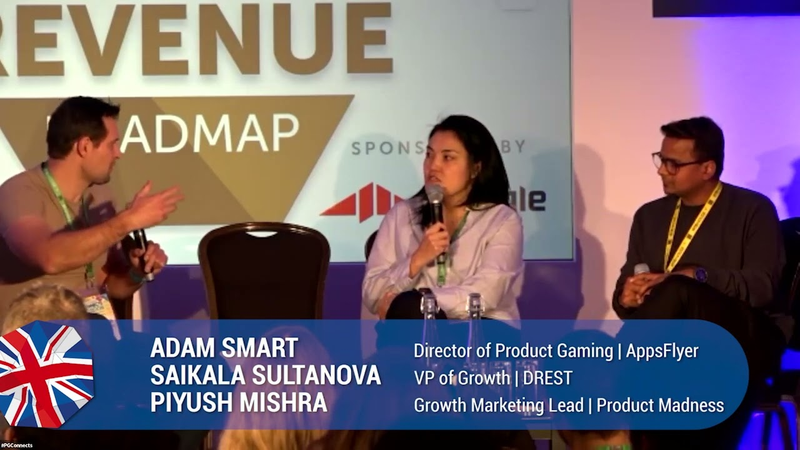
In Conversation: Growth Hacking 2022
This discussion explores the evolving landscape of user acquisition (UA) and growth marketing within the mobile gaming industry as of early 2022.
- The mobile gaming industry is shifting from granular, user-level data tracking to contextual targeting and creative-led strategies due to privacy-centric changes on iOS and Android.
- Traditional metrics like cost-per-install (CPI) have become unreliable, forcing a transition toward 'cost-per-player' as a more accurate indicator of campaign performance.
- Marketers must move away from platform-provided targeting and instead utilize internal audience insights and impression-level data to execute smart, contextual campaigns.

Keynote: Maximising IAP Revenue Through Localised Pricing & Promotions
Maximizing in-app purchase (IAP) revenue in mobile gaming requires a two-tiered strategy: establishing optimized global pricing on a per-country basis and implementing personalized promotional pricing for individual users.
- Developers should abandon one-size-fits-all pricing models in favor of a two-tiered strategy that combines optimized global pricing with personalized, user-level promotional offers.
- Global pricing must be adjusted per country by layering macroeconomic data like GDP and exchange rates with game-specific metrics such as device penetration and genre popularity.
- Lowering price points in emerging markets like India, Brazil, and Indonesia can significantly increase payer conversion rates and total transaction volume.

Superstar Panel: Navigating M&A During a Global Crisis
The global gaming industry is undergoing a structural shift in its mergers and acquisitions landscape, transitioning from a period of valuation-driven frenzy toward a more disciplined, strategic approach.
- The gaming M&A landscape has shifted from valuation-driven frenzy to a disciplined, strategic model focused on tangible synergies and clear payback periods.
- Acquirers are prioritizing established studios with proven key performance indicators and scalable talent over speculative ventures due to a disconnect between private valuation expectations and cooling public markets.
- Industry leaders are adopting a wait-and-see approach toward Web3 and blockchain acquisitions, favoring internal development or long-term monitoring due to regulatory uncertainty and high risk.

Sky Children of Light developer thatgamecompany gets $160 million dollars!
ThatGameCompany, the developer behind titles such as Journey and Sky: Children of the Light, has secured $160 million in a new funding round led by venture capital firms TPG and Sequoia.
- ThatGamecompany has secured $160 million in a new funding round led by venture capital firms TPG and Sequoia.
- The studio will use the capital to expand its development team, infrastructure, and organizational capacity to support future projects.
- Pixar co-founder Ed Catmull has joined the studio as a principal advisor to provide guidance on creative culture and long-term growth.

Why audio advertising is the new frontier with Wilfrid Obeng from AudioMob
Audio advertising represents an emerging frontier in mobile gaming, offering a non-intrusive alternative to traditional visual formats.
- Audio advertising in mobile games has demonstrated a 2,000 percent increase in engagement compared to standard banner ads.
- AudioMob’s technology integrates ads into game environments by monitoring device volume thresholds and offering in-game rewards to users who unmute.
- The platform is currently utilized by over 50 game development studios, scaling from indie projects to titles with 50,000 to 100,000 daily active users.

How to Break Through the Noise: Reasons You Really Need to Start Automating Today!
The mobile gaming industry has experienced significant growth over the last 15 years, reaching a valuation of approximately $165 billion by 2020.
- The mobile gaming market is projected to grow from a $165 billion valuation in 2020 to $220 billion by 2023.
- Marketing professionals currently spend 80% of their time on manual data management, which prevents strategic optimization and leads to paralyzed decision-making.
- Automation platforms address data fragmentation by centralizing metrics across advertising partners, enabling real-time optimization of creative testing, budget allocation, bidding, and audience targeting.
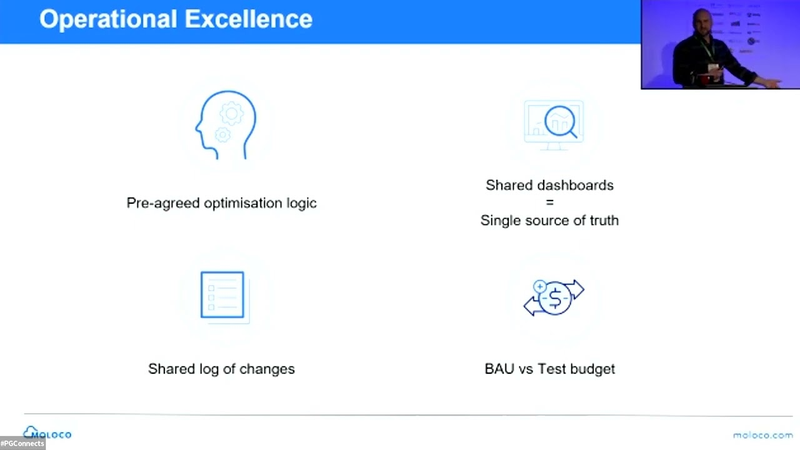
Scale for Success: A Developer's Guide on UA Strategy & DSP Partnerships
Effective user acquisition (UA) at scale requires a strategic, collaborative partnership between mobile developers and demand-side platforms (DSPs).
- Successful UA scaling requires a unified 'source of truth' for data, as discrepancies between internal business intelligence and mobile measurement partners (MMPs) prevent effective ML optimization.
- DSP machine learning models require a four-to-six-week stabilization period to learn effectively, necessitating the separation of 'business as usual' budgets from experimental test budgets.
- DSPs are essential for capturing the 63% of ad impressions that exist outside of major 'walled garden' ecosystems.
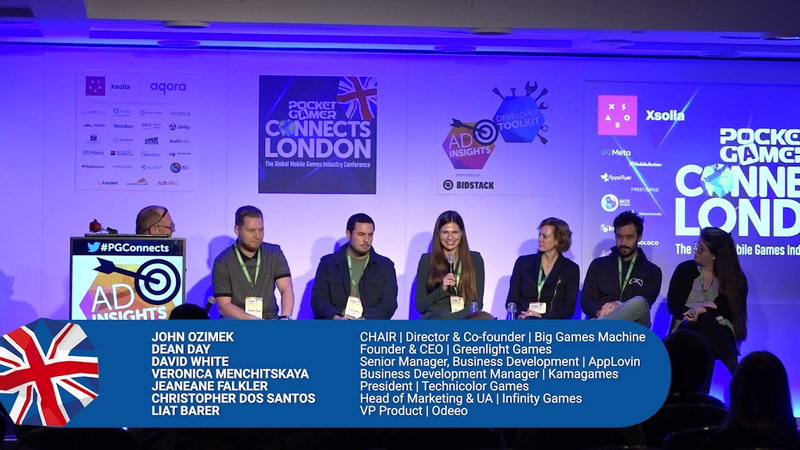
Panel: How Can We Create Authentic & Engaging Ads?
Mobile gaming advertising is undergoing a critical transition away from deceptive, high-frequency tactics toward strategies rooted in authenticity and user-centric design.
- Mobile gaming advertising is shifting away from deceptive clickbait toward authentic creative content that accurately reflects the actual gameplay experience to improve long-term retention.
- Developers are increasingly prioritizing opt-in engagement formats, such as interactive playables and rewarded videos, to replace forced, intrusive ad interruptions.
- Synthetic audio ads and sonic branding are emerging as effective, non-disruptive alternatives that maintain the game's atmosphere while ensuring high brand memorability.
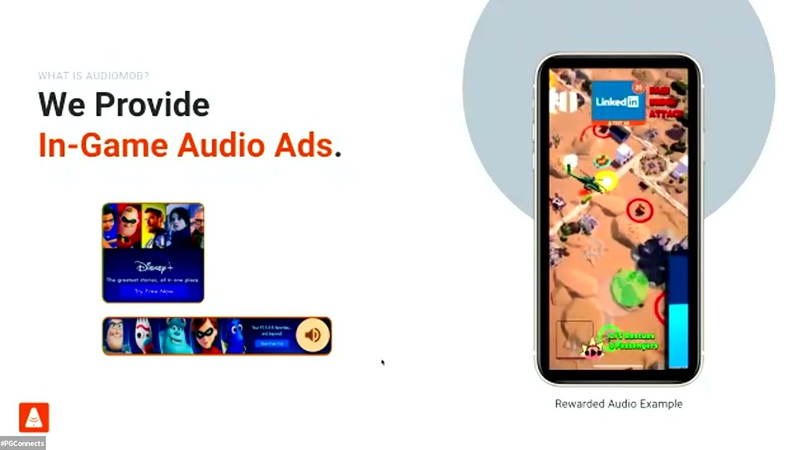
Why are Audio Ads Here to Stay?
Audio advertising has emerged as a significant monetization strategy for the gaming industry, offering a non-intrusive alternative to traditional video and banner ads.
- Audio advertising provides a privacy-compliant monetization alternative to traditional ads by relying on contextual data like game genre and geography rather than granular user tracking.
- The format is highly viable for mobile gaming, as 61% of players keep their audio enabled during gameplay.
- Audio ads offer a robust revenue stream for developers with CPMs ranging from $5 to $15.
Reimagining Games Advertising
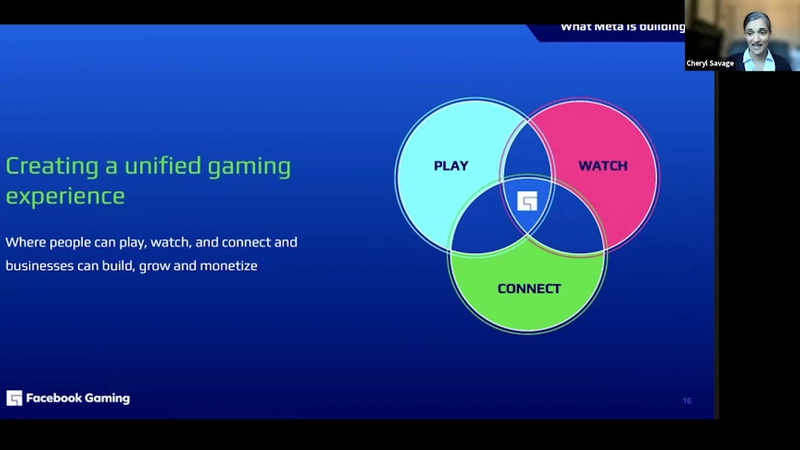
The gaming industry is currently navigating a significant inflection point driven by evolving privacy regulations, shifting consumer data expectations, and a changing advertising ecosystem.
- The gaming industry must pivot away from third-party data reliance due to stricter privacy regulations, such as Apple's tracking permissions and the phasing out of browser cookies.
- Meta is mitigating attribution and reporting challenges by deploying the Conversions API, which establishes a direct, secure link between first-party marketing data and its systems.
- To maintain performance optimization, Meta is investing in privacy-enhancing technologies including secure multi-party computation, on-device learning, and data de-identification.
Panel: What is the Future of Mobile Advertising?
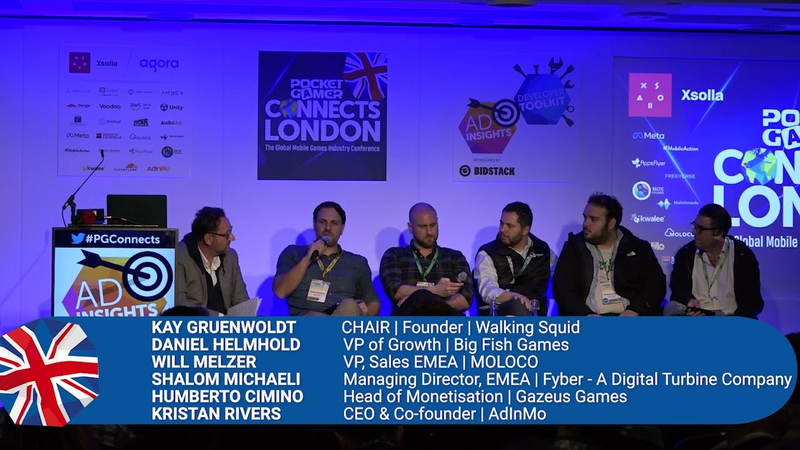
The mobile gaming industry is undergoing a fundamental transition, moving away from intrusive, performance-only advertising toward a hybrid model that prioritizes brand integration and user retention.
- Mobile gaming is shifting from intrusive performance-only advertising to a hybrid model that integrates monetization into the initial game design phase to protect user retention.
- Rising user acquisition costs and stricter privacy regulations are forcing a move away from traditional waterfall models toward header bidding and seller-defined audiences.
- Ad formats are evolving from standard video toward high-fidelity playable ads and immersive, avatar-based brand experiences within virtual environments.
Writers
Games and companies
Games