1 free read left. Create a free account for unlimited reading + AI research.
Create free account
How to Break Through the Noise: Reasons You Really Need to Start Automating Today!
Key insights
6 takeaways- 01The mobile gaming market is projected to grow from a $165 billion valuation in 2020 to $220 billion by 2023.
- 02Hyper-casual gaming titles rely on high-volume user acquisition and ad-based revenue, whereas casual games prioritize in-app purchases and higher average revenue per user.
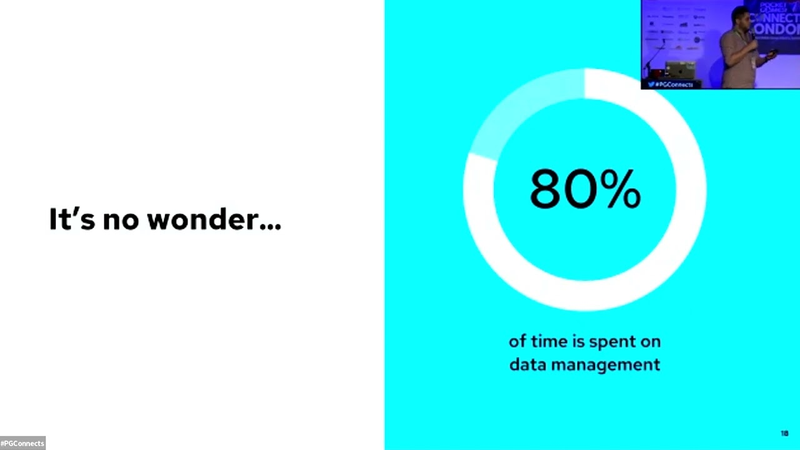
- 03Marketing professionals currently spend 80% of their time on manual data management, which prevents strategic optimization and leads to paralyzed decision-making.
- 04Rule-based automation engines allow companies to automatically scale high-performing campaigns and terminate underperforming ones based on historical session performance.
- 05Implementing automation is essential for maintaining actionable data insights and marketing efficiency in response to privacy shifts like iOS 14 and SKAdNetwork.
- 06Automation platforms address data fragmentation by centralizing metrics across advertising partners, enabling real-time optimization of creative testing, budget allocation, bidding, and audience targeting.
Ask AI about this video
Transcript
[Music] [Music] so um our next speaker is um from adjust is jonathan mamu um i don't know if you're there jonathan i can't see hi um jonathan's gonna talk about breaking through the noise and the reasons you need to start automating today so i will not take up your time jonathan thanks guys for having me so it has been 15 years since smartphone came into our world right it looked like only yesterday we played with the snack with the with the snake game on the on the nokia phone
and since then the last 15 years we have been going through mergers acquisitions ipos obviously the industry grew and we became professionals with this growth and i believe that now in 2022 after all this pandemic that we have been going together and it's amazing to see all of us again uh here today i think it's a moment as a gaming expert right to stop and think about what we really want to achieve what are our goals what differentiate good companies from a highly successful companies and want what is needed to take ourselves to the next level so today i'm going to stick with you why you really need to start automating all your marketing activities i start by presenting myself so i'm jonathan i'm the original director in najas for the uk the netherlands and for israel two years and a half in the company 10 years in the
industry today we'll be covering the gaming industry numbers the benefits of automation and the automation types that we've used a bit about adjust so the company was found in 2012 we have more than 600 employees we grew rapidly through the years raised over 250 million over the years obviously the company expanded a lot and now we have 16 offices worldwide we are integrated in more than 60 000 applications and we are working with 3 000 partners adjust is the leading analytics platform that marketeers trust to drive growth what does it mean we are tracking measuring all your marketing activities reflecting it back to you so you can take smarter decisions and obviously connect the dots between your marketing activities and your business business objective and we do that by making it smarter easier and more secure smarter means
thank you smarter means connecting the dots from your marketing objectives to how it actually delivers right you can count on the platform and see hey how my campaigns are working how my creative are performing and taking smarter decision accordingly obviously the goal is to make it also easier for you we are connecting more than 2000 partners you can see everything in one platform and security is obviously essential right because in the end there are more and more fraudulent activities there you want to make sure that your data is being centralized and protected so today we are going to speak a bit about the gaming industry in vertical speaking on the trends insights and benchmarks so what we have been going through through the pandemic the mobile gaming industry is valuated in more than about 165 billion dollar by 2020 38 of this revenue is actually by users that are willing to pay so we see an increase of users actually
paying more and more into games they have more time at home they want to pay and they want to enjoy the game asia is by far their biggest market and 51 is from this revenues that is gene generating in these games we are evaluating that by 2023 2023 the mobile gaming industry will reach 220 million dollars if you compare hyper casual to just casual games we can see that our increase in the entering the pandemic again more people were spending more time at home or just wanted to have something fun to play with and this afterwards we see this decrease when people just started to get back into office and we see it also nowadays if you're comparing between the paid and the organic ratio we can see that there was a big difference specifically on q4 right so again hyper casual it's a it's a it's a vertical that a lot of users are standing to play many many times and
once they stop they just go to another and but the organic flow of the paid users is quite massive compared to other protocols if you're just looking about tcp so this we see the really dramatic change between the casual and the upper casual gaming right it's about 10 times more this is because hyper casual games user doesn't really want to pay it mostly by ads while in normal gaming users are paying inside games and this is why also dcp are currently about 10 times more session times as well we see that there was in higher session time in 2022 in 2020 and this is again as we go outside of the pandemic the session time is going a bit less consistent with that hyper casual games need to have volume they need to have scale so if you compare hyper casual to start a gaming go to other verticals nine to seven you want to work with as many partners as you can you want to
reach as many users out there in many many platforms so about nine to seven if we look in terms of the a market reach by partners so if you are running your campaigns and second campaign basically look right basic right you're just overcoming you just have your campaigns but if you dive a bit deeper into it it looks like this you have many assets and you have many creatives and in the end you are looking on a massive way of how to manage all your marketing activities not mentioned if you are working with many partners out there facebook google snaps so it's in the end the the day of a marketeer look like this look on this lady she's trying to jingle between all these campaigns right try to understand hey how i can just measure manage everything in one time of course this is possible but really not efficient it's quite difficult as we see it and it's not wonder that most of the
market is that we encounter spend eighty percent of their time on data management obviously you as the gaming professionals you want to focus on what you do best it's creating an amazing app properly just jingling between all this type of marketing activities and in the end it looked like this you have fragmented reporting you are downloading the from facebook from google from all these type of different type of marketing activities try to understand different dashboards different kpis in the end it goes to that your data is getting paralyzed because it's different metrics from different platform and it stop your decision making need to stop hey what i'm seeing here hey what i'm seeing there oh let's match this metrics to these kpis and in the end it's make all your life much much harder this is why we believe that marketing automation heals this complexity it will simplify the process of your all your marketing activities and we do it by four type of
automation creative budget bidding and targeting and i will dive into each one of them right now creative is king why creative skin because in the end you want to match the audience based on your kpis so you can run many many creative and try to allocate each one of this creative to the to the specific audience obviously to drive better engagement obviously the more tailored that you will do it the of the messages of the messaging of this creative you will get more audience that is willing to engage with it and you want to test this on a scale we said that if you work with many many different type of client of partners you want to understand hey which of this creative is working good and i want to test it on scale and replicate it again and again if we move forward budget so budget actually allows you with the platform of automation to manage this budget if you in efficient efficient way
right you can increase the bids on the highest performing performing campaigns but the one that doesn't work you want to stop them immediately and you want to also allocate more budget to the one that actually highly successful this goes the line if you are looking if you are looking into this automation rule right let's take this an example right retention day is day one if it's about the specific x specific x so the ros day zero is more than a specifics let's let's increase the campaign right but if it's below you just kill it and you want to make it automated you don't want to go into each one of the dashboard and try to understand again it goes well with the bidding you want to bid automatically when the bid is right so we are helping mobile marketeers with this bidding automatically with the platform by looking on the account history on the day time session and now algorithm will try to show the best ad in the real time to the best bid and the
best bid will actually win targeting so we cover creative we covered the budget now we are looking into the targeting right so in the end once you have all of this together you want to pull it together from different type of sources and just to to target it to the relevant audience based on your criterias all the all the users that actually qualify more than days day one with a certain ex more than eras with different saturn type of a goal we want to actually help the machine learning to replicate it again and again and to make it more and more efficient obviously ios 14 this is the elephant in the room right we can also use it for ski network data so everything that is going along just with regular traffic wants to replicate with this card network and you can also use it to any type of network activities i'm going back to what i started
most of the most successful companies started by taking smarter decisions and many of these companies that we are working with implemented they're using automation on the day-to-day basis i believe you know some of them here we can give a couple of examples the first one is mel soft so they started to use our solution they took the automation platform when they used to aggregate all the marketing data into one single dashboard they use the rule engine to to power scale and optimize and in the end it help them to increase the marketing efficiency and to double their executive activities and as well with donuts right so again the goal is to use the automation to find the right audience target them and then replicate it again and again to conclude personalization require automation you want to manage in scale multiple different channels you want to create hyper segmented
audiences once you find it you want to pair this the creative of the segments to the right a testing budget that is steady testing bid and then to try to scale it again and again thanks a lot guys if you have any questions i'm happy to answer [Applause] uh this this strategy of automation about automation so basically it didn't really impact it because we are connected to the sql network by default in our framework once we are connected with all the more than 20 partners we can automatically buy our api change the bids and budgets it's read and write api so it doesn't
affect it this is why we built the solution that is also compatible with sql network it's still on testing phase right because in the end it's quite new but it's working quite good [Music] [Music] you
Summary
The mobile gaming industry has experienced significant growth over the last 15 years, reaching a valuation of approximately $165 billion by 2020. Driven by increased user engagement during the pandemic, the market is projected to reach $220 billion by 2023. This sector is characterized by distinct behavioral differences between hyper-casual and casual gaming segments, with hyper-casual titles relying heavily on ad-based revenue and high-volume user acquisition, while casual games focus on in-app purchases and higher average revenue per user.
Marketing professionals in this space face increasing complexity due to fragmented data sources, multiple advertising partners, and the need to manage diverse creative assets. Research indicates that marketers often spend 80% of their time on manual data management rather than strategic optimization. This inefficiency leads to paralyzed decision-making, as disparate metrics across platforms prevent a unified view of campaign performance.
To overcome these challenges, the industry is shifting toward marketing automation. Automation platforms centralize data and streamline four critical areas: creative testing, budget allocation, bidding, and audience targeting. By implementing rule-based engines, companies can automatically scale high-performing campaigns, terminate underperforming ones, and optimize bids in real-time based on historical data and session performance. This approach allows for hyper-segmentation and the ability to replicate successful strategies across multiple channels.
The integration of automation is particularly relevant for navigating modern privacy landscapes, such as iOS 14 and SKAdNetwork, by ensuring that data remains actionable despite industry-wide shifts in tracking. Successful implementation of these tools has been shown to significantly increase marketing efficiency and allow teams to focus on core product development rather than manual reporting. Ultimately, automation serves as a necessary foundation for scaling operations and maintaining a competitive edge in an increasingly crowded global gaming market.