Mobile reports and market data
Documents

Keynote: How to Monetise Mobile Games Beyond the App Stores
The mobile gaming industry faces a significant limitation in revenue growth due to its reliance on closed ecosystems, such as the Apple App Store and Google Play Store.
- Reliance on closed ecosystems like the Apple App Store and Google Play Store excludes approximately 260 million potential paying players globally who lack access to standard payment methods.
- Implementing alternative payment methods in Europe could expand developer reach by 40%, capturing an additional 3 million paying customers.
- Major growth markets including Brazil, China, South Korea, Russia, Japan, and Turkey rely heavily on local payment solutions like Pix, Boleto, digital wallets, and cash-based systems that are currently unsupported by major app store infrastructure.
Building a Winning Creative Strategy for Games in 2022
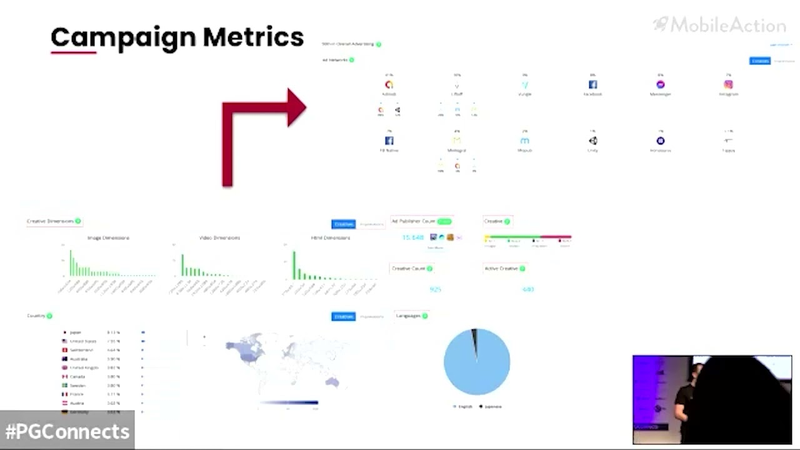
Building a winning creative strategy in the mobile gaming industry requires a data-driven approach to competitor analysis, specifically focusing on user acquisition (UA) and creative performance.
- Competitive intelligence platforms now track over 44 million mobile gaming creatives, with approximately 2 million new assets added to the database each month.
- Developers can optimize ad spend and reduce waste by benchmarking their creative performance and messaging strategies against top-performing industry competitors.
- Effective creative strategy requires tracking specific metrics including impression share, creative longevity, and the distribution of ad formats across various networks.

The 'Flappy Bird' That Laid the Golden Egg: Success in Hyper-Casual
The hyper-casual game industry has evolved into a high-volume, data-driven market that prioritizes rapid prototyping and aggressive user acquisition over traditional game design depth.
- Hyper-casual games now account for over 50% of all mobile game downloads, driven by a business model centered on the arbitrage of rewarded video ads.
- Publishers like Voodoo utilize a 'swarm' strategy, testing hundreds of prototypes simultaneously to identify hits based on day-one retention and cost-per-install metrics.
- Success in the sector is dictated by mathematical efficiency and rapid prototyping rather than creative innovation, mirroring the pop music industry's focus on a singular, addictive hook.

Playtest to Success with Christian Ress, CEO of PlaytestCloud
Mobile game development requires a shift from reactive, late-stage troubleshooting to proactive, continuous validation of player experiences.
- Shift mobile game development from late-stage troubleshooting to proactive, continuous validation by using remote, unmoderated testing to capture qualitative data like screen recordings and think-aloud commentary.
- Utilize longitudinal studies, where players engage with a title over several days, to diagnose the root causes of churn and retention issues rather than relying solely on quantitative analytics.
- Integrate playtesting throughout the entire development lifecycle to identify friction points in tutorials, UI, and design mechanics before committing to full-scale production.
API Security & Performance for Gaming
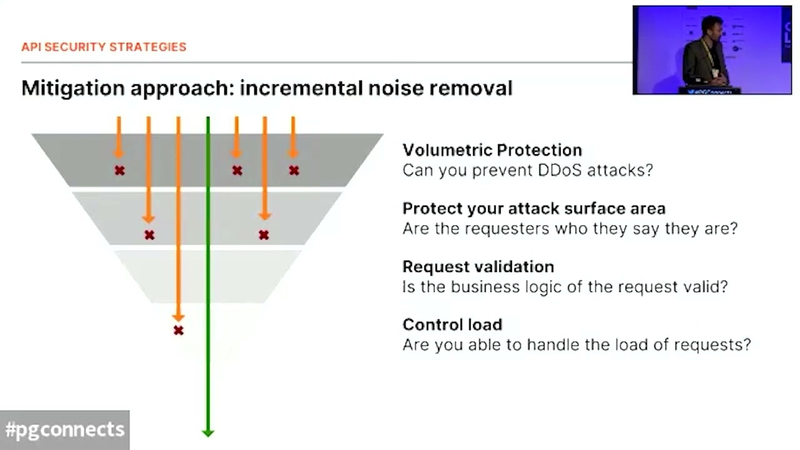
API security has become a critical priority for the gaming industry as mobile applications increasingly rely on APIs as their primary communication backbone.
- APIs now account for over 50 percent of all proxied internet traffic, with growth rates significantly outpacing traditional web traffic.
- A multi-layered security strategy is required to address unique API risks, including the exposure of sensitive business logic and the difficulty of distinguishing legitimate users from malicious bots.
- Developers must maintain visibility over their attack surface by identifying all active endpoints and deprecating legacy versions that may contain vulnerabilities.

Keynote: Thriving in the App-ocalypse
The mobile app marketing landscape has undergone a significant transformation due to privacy-centric changes, most notably the deprecation of the Identifier for Advertisers (IDFA) and the implementation of Apple’s App Tracking Transparency (ATT) framework.
- Approximately 80% of mobile users now opt out of tracking following the implementation of Apple’s App Tracking Transparency (ATT) framework and the deprecation of the Identifier for Advertisers (IDFA).
- Developers can maintain profitable growth by shifting from deterministic, IDFA-reliant tracking to probabilistic modeling and alternative data signals.
- Purchase behavior targeting, which identifies high-value users based on transaction history rather than device identifiers, is a highly effective method for improving return on ad spend (ROAS) and reducing acquisition costs.
Using Lean Analytics to Make Better Games
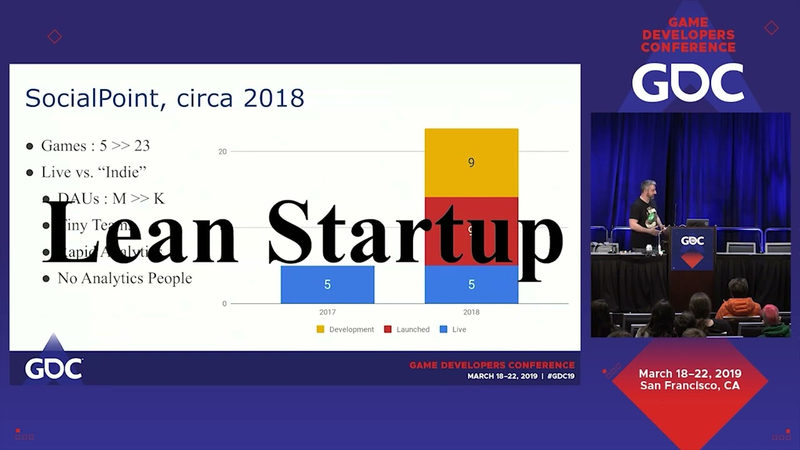
Adopting a lean analytics framework allows game studios to manage high-volume development pipelines by prioritizing rapid iteration and the minimization of failure costs.
- Transition from dedicated per-game analysts to a centralized, agile consulting model to allow for rapid resource reallocation away from underperforming titles.
- Prioritize a select group of 'super KPIs'—specifically retention, conversion, and lifetime value—to avoid the operational inefficiency of data saturation.
- Utilize Bayesian statistical methods to achieve faster testing results with smaller sample sizes, increasing development velocity.

Panel: CFO Confidential: Best Practice Tips & Tricks
Scaling a gaming company requires a transition from informal financial management to the integration of a dedicated, full-time finance leader as the business approaches Series A funding.
- Companies should transition from informal financial management to a dedicated, full-time finance leader as they approach Series A funding to manage increasing complexity in cap tables and investor relations.
- Finance must be treated as a core strategic pillar for long-term growth and resource allocation rather than a purely transactional or accounting function.
- Operational efficiency is best achieved by dismantling silos and adopting a game-centric structure where finance, user acquisition, and product teams are aligned around specific titles.

Panel: Independent vs Traditional Publishing on App Stores: What Can we Learn from Each Other?
The mobile gaming industry currently faces a strategic crossroads where the choice between independent and traditional publishing models hinges on a studio’s development stage, financial capacity, and desire for creative autonomy.
- Mobile studios must integrate user acquisition, organic marketing, and product development into a single cross-functional workflow to effectively navigate privacy-centric frameworks like SKAdNetwork.
- Traditional publishers offer essential infrastructure and brand equity for scaling, while independent studios prioritize operational agility and the retention of long-term intellectual property rights.
- Sustained growth in the current mobile landscape requires balancing a long-term product roadmap with the flexibility to pivot based on real-time market feedback.
Superstar Session: What to Expect in ASO in 2022
The mobile app industry is undergoing a significant transformation as App Store Optimization (ASO) evolves from a siloed marketing function into a cross-departmental strategy.
- App Store Optimization (ASO) is increasingly resilient to privacy-driven tracking limitations because it does not rely on user behavior tracking, unlike other paid user acquisition channels affected by iOS 14.5 and App Tracking Transparency.
- Apple's iOS 15 introduced critical ASO features including In-App Events, Product Page Optimization (PPO), and Custom Product Pages (CPP), though current A/B testing on iOS remains limited because tests are automatically interrupted whenever a new app version is released.
- Custom Product Pages on iOS currently face integration challenges, as only two networks—IronSource and Apple Search Ads—are fully compatible with tracking performance post-install.
Keynote: Turn up the Volume: Let Your Users PlayOn With In-game Audio Ads
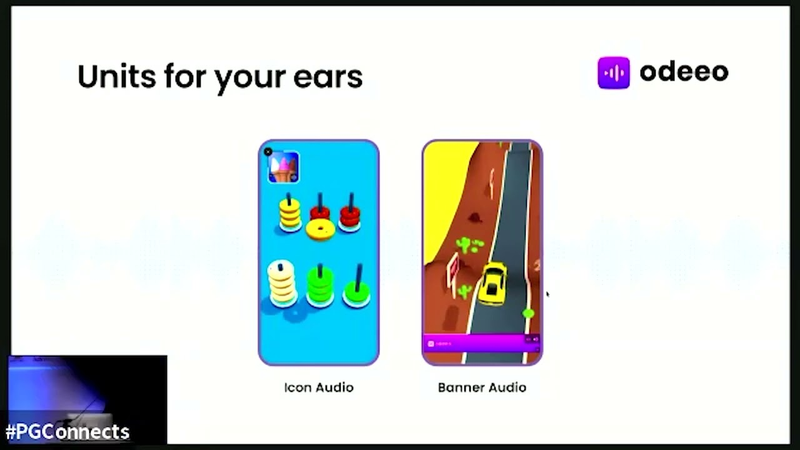
In-game audio advertising represents a strategic evolution in mobile game monetization, designed to replace intrusive visual formats with a seamless, non-disruptive user experience.
- In-game audio ads increase average revenue per daily active user (ARPDAU) by 10% to 15% by offering a non-disruptive alternative to intrusive visual formats.
- Standard CPM rates for audio ads in tier-one markets typically range from $5 to $15, with direct deals occasionally reaching $30.
- Proprietary SDKs ensure ad delivery by performing real-time, on-device analysis of device volume, mute status, and competing audio sources to prevent playback conflicts.
State of Mobile Gaming 2022
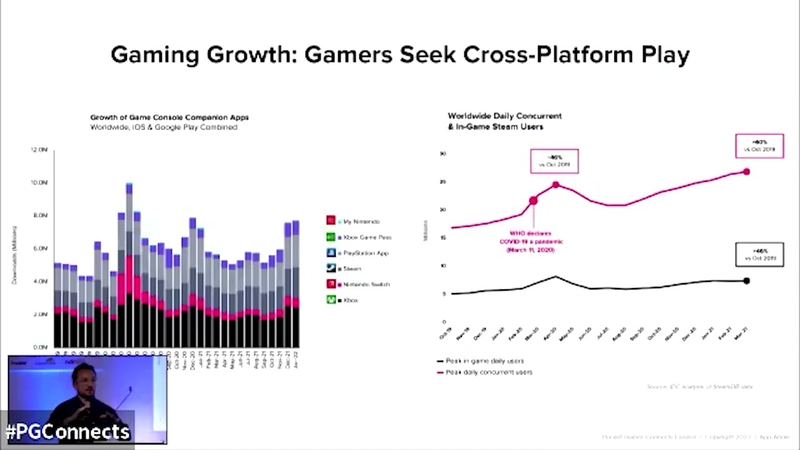
The mobile gaming industry experienced significant growth in 2021, characterized by a shift toward sustained high engagement and increased consumer spending.
- Global mobile gaming consumer spending surged to $170 billion in 2021, marking a 42% increase over pre-pandemic levels.
- The number of mobile games generating over $100 million in annual consumer spend rose to 174 in 2021, a 20% year-over-year increase.
- Global mobile gaming downloads reached 230 billion in 2021, representing a 13% increase compared to pre-pandemic figures.
Writers
Games and companies
Games