Mobile reports and market data
Documents
Mobile Game Trends White Paper: Simulation Games in Asia Pacific
This white paper analyzes trends in the mobile simulation game (SLG) market within the Asia Pacific region during Q1 2023, with comparisons to Q4 2022.
- The Asia-Pacific SLG market reached 106.97 million players by Q1 2023, with over 40% of the total player base actively spending to enhance their experience.
- Thailand and Hong Kong are the region's top monetization markets, with more than 50% of SLG players contributing revenue.
- Indonesia remains a commercially viable market with 18 million paying players, despite experiencing a slight year-over-year decline in the number of paying users.


Creative Analytics: Mobile Market Analytics and Ad Intelligence
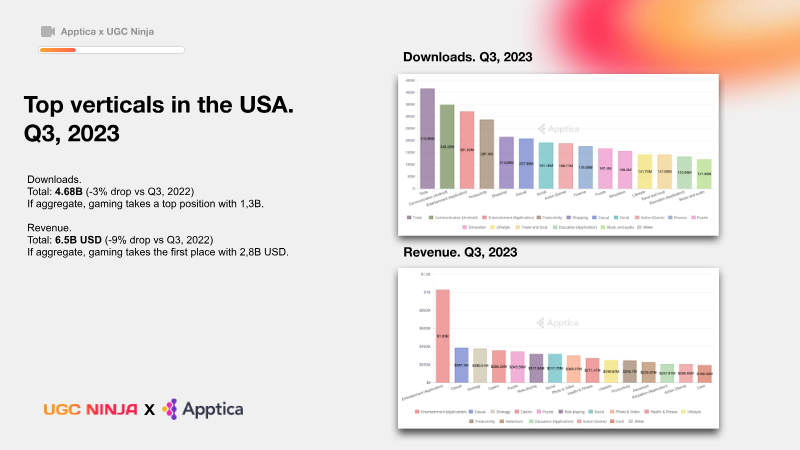
This analysis, conducted by Apptica and UGC Ninja, provides an overview of mobile market analytics and ad intelligence, with a specific focus on user-generated content (UGC) advertising trends.
- Video formats now dominate the mobile advertising landscape, accounting for 80% of all ad creatives in Q3 2023, up from 69% in the previous quarter.
- The mobile advertising market saw a 7% decline in active advertisers year-over-year, totaling 54.9 thousand in Q3 2023.
- Gaming remains the leading industry vertical, generating 1.3 billion downloads and $2.8 billion in revenue during Q3 2023.

Embrace’s Eric Futoran On Understanding Every Player Experience For Record-Breaking Issue Resolution
Long-term profitability in the mobile gaming industry depends on maintaining high player lifetime value through rigorous technical performance standards.
- Mobile game developers face a 'death by a thousand cuts' scenario where unresolved performance issues like crashes and ANRs degrade LTV and can trigger a permanent downward spiral in user retention and store rankings.
- Standard diagnostic tools often provide insufficient data, such as generic stack traces from app store consoles that identify the end of a crash rather than the root cause, forcing engineers into reactive, time-consuming cycles.
- Proactive observability requires collecting granular 'app exhaust'—a play-by-play of the user experience—to allow engineers to identify specific code-level triggers, such as thread-specific coroutine issues, rather than relying on high-level error reports.

7 x GAME INDUSTRY TRUTHS with CHRIS HEWISH, PRESIDENT of XSOLLA
The global gaming industry has entered a period of structural realignment, transitioning from an era of cheap capital and hyper-growth to a disciplined environment defined by high interest rates and inflation.
- The gaming industry has shifted from a hyper-growth model to a disciplined environment focused on profitability, sustainable business models, and rigorous profit-and-loss management due to high interest rates and inflation.
- Personalized player experiences driven by behavioral economics can increase consumer spending by nearly 40% when grounded in psychological theory rather than industry imitation.
- Developers are increasingly adopting direct-to-consumer distribution models to bypass traditional storefront fees and reclaim margins in an environment of shrinking revenue.

ConsultMyApp’s Mike Rhodes On 4 Smart Strategies To End Q4 With A Bang
Mobile gaming studios must bridge the critical gap between user acquisition and long-term engagement by shifting from static analysis to a dynamic, data-driven lifecycle management approach.
- Studios can increase monthly organic install volumes by 10-15x by effectively combining acquisition and engagement strategies to build a loyal user base.
- Traditional ASO tools rely on 48-hour lagged data and weighted moving averages, which obscure critical intraday and intra-week keyword variances that impact search traffic.
- Developers should utilize secondary app store categories, as many puzzle games fail to leverage this feature despite its potential to improve search rankings and visibility.
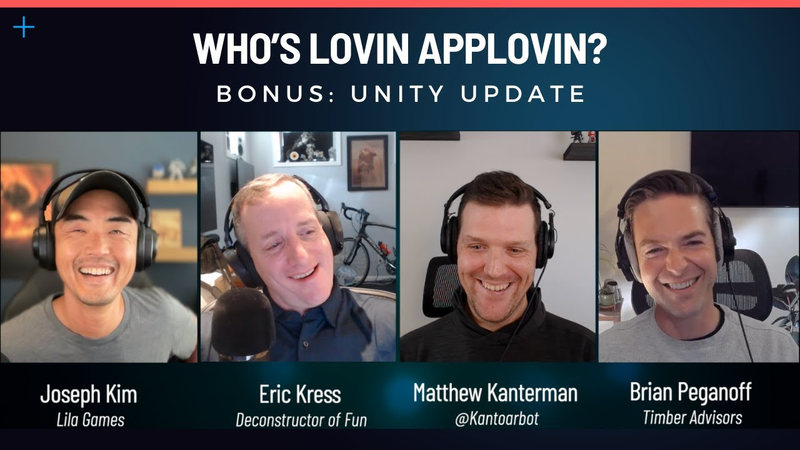
Who's Lovin Applovin (APP) | Plus Unity Update
Unity is currently navigating a period of significant organizational transition following the retirement of CEO John Riccitiello.
- AppLovin’s software segment is currently driving performance with 28% growth and 67% EBITDA margins, largely fueled by controversial fingerprinting techniques for user acquisition.
- AppLovin faces significant regulatory risk as Apple intensifies enforcement against fingerprinting, which could lead to an App Store ban and the disruption of its primary revenue stream.
- Unity is undergoing major organizational restructuring and cost-cutting following the retirement of CEO John Riccitiello, though its dominant market share makes a mass migration to Unreal Engine unlikely in the near term.

Warcraft Rumble: Deep dive into game's complexity, spend depth, systems, vectors, UA, creatives(#84)
Warcraft Rumble represents a strategic evolution of the mobile lane-battler genre, successfully adapting the Clash Royale formula by integrating expansive, scrolling maps and intricate gold-mining mechanics.
- Warcraft Rumble features an aggressive monetization model where fully maxing a single deck costs approximately €4,700, with a full collection completion estimated at €40,000.
- The game generates daily revenues between $250,000 and $600,000, positioning it as a high-engagement niche product for existing Blizzard fans rather than a mass-market mobile title.
- User acquisition is currently limited and conservative, relying on organic reach and repurposed trailer footage rather than performance-driven creatives or aggressive mobile-first strategies.
Celebrating 10 Years of Pocket Gamer Connects: The Story Behind the Brand
Pocket Gamer Connects emerged in 2014 as a strategic response to the lack of dedicated, mobile-focused business-to-business events within the gaming sector.
- Founded in 2014 by Steel Media, Pocket Gamer Connects was established to fill a market gap for dedicated, mobile-focused B2B gaming events.
- The inaugural London event attracted 500 attendees, serving as the foundation for a rapid international expansion that eventually spanned markets including Helsinki, Bangalore, San Francisco, and Hong Kong.
- The brand has successfully evolved from its original mobile-only scope to include broader industry segments such as PC, console, virtual reality, and Web3.
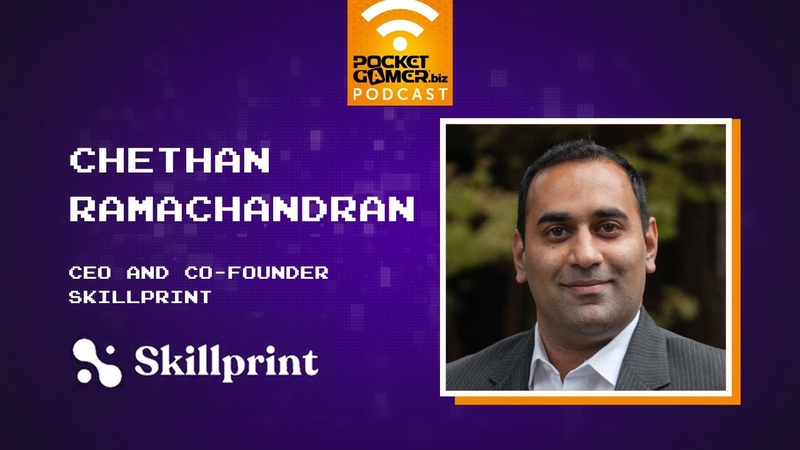
Skillprint’s Chethan Ramachandran On Combining Neuroscience And AI For An Adaptive Play Solution
The integration of neuroscience and artificial intelligence offers a transformative approach to game design, shifting the industry toward highly personalized, adaptive play experiences.
- Skillprint uses neuroscience and AI to create adaptive game experiences that maintain players in a 'flow state' by dynamically balancing difficulty to prevent boredom or frustration.
- The platform functions as an automated LiveOps tool, providing developers with actionable data on player personality, behavior, and cognitive traits to improve engagement, retention, and monetization.
- Skillprint developed its data model by cross-referencing player performance in games with established neuroscience and cognitive science exam batteries to create a high-fidelity mapping of human behavior.

The Genius Game Design of Genshin Impact’s Login Screen - Extra Credits
Effective game design often operates on a subconscious level, utilizing the initial moments of a player’s experience—such as login screens, loading sequences, and opening music—to prime them for the intended gameplay loop.
- Effective game design utilizes the login screen and loading sequences to subconsciously prime players for the intended gameplay experience, ensuring their expectations align with the game's core loop.
- Genshin Impact’s login screen uses calm music and imagery of ruins and infinite paths to establish an atmosphere of exploration and wonder, steering players away from high-intensity action expectations.
- Designers must identify the core 'hook' of their game and reinforce that specific fantasy through every element of the opening, including music, visuals, and load-time transitions.
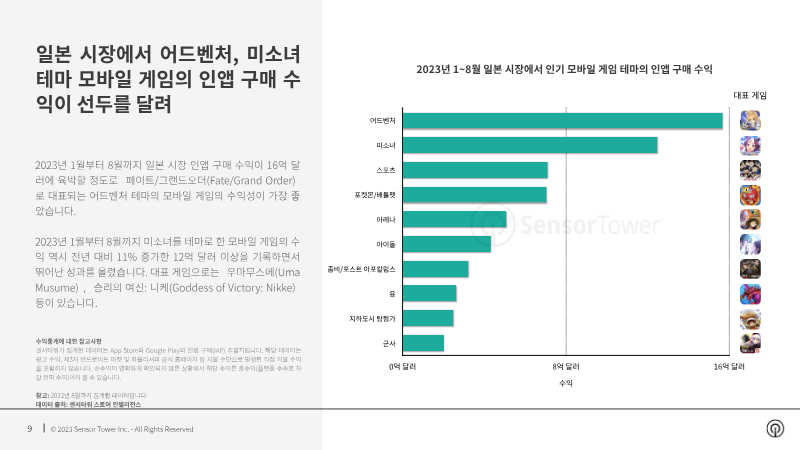
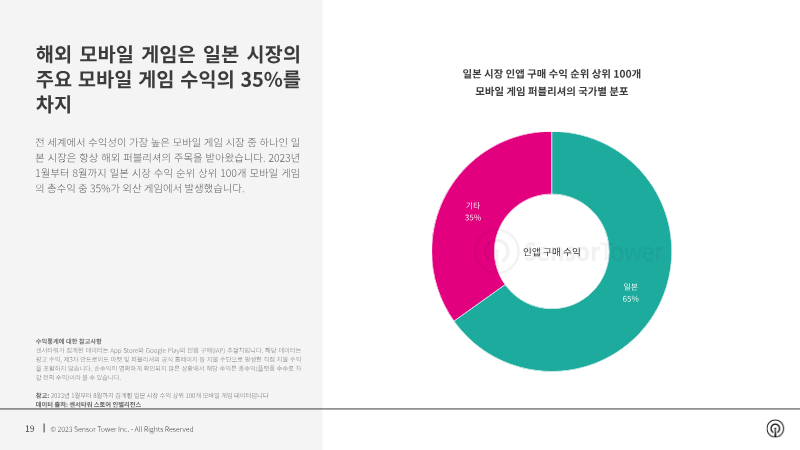

2023 Japan Mobile Game Market Trends
This report analyzes trends and key performance indicators within the Japanese mobile game market, focusing on the period from January to August 2023, with some projections for the full year.
- Japan remains the world's third-largest mobile gaming market, generating 18% of global revenue with projected annual earnings of nearly $14 billion.
- The market maintains the highest revenue per download (RPD) globally at $21, significantly outperforming the United States.
- Role-Playing Games (RPGs) dominate the sector, accounting for 48% of total market revenue, followed by strategy and sports titles.
Mobile Game Market Review: November 2023
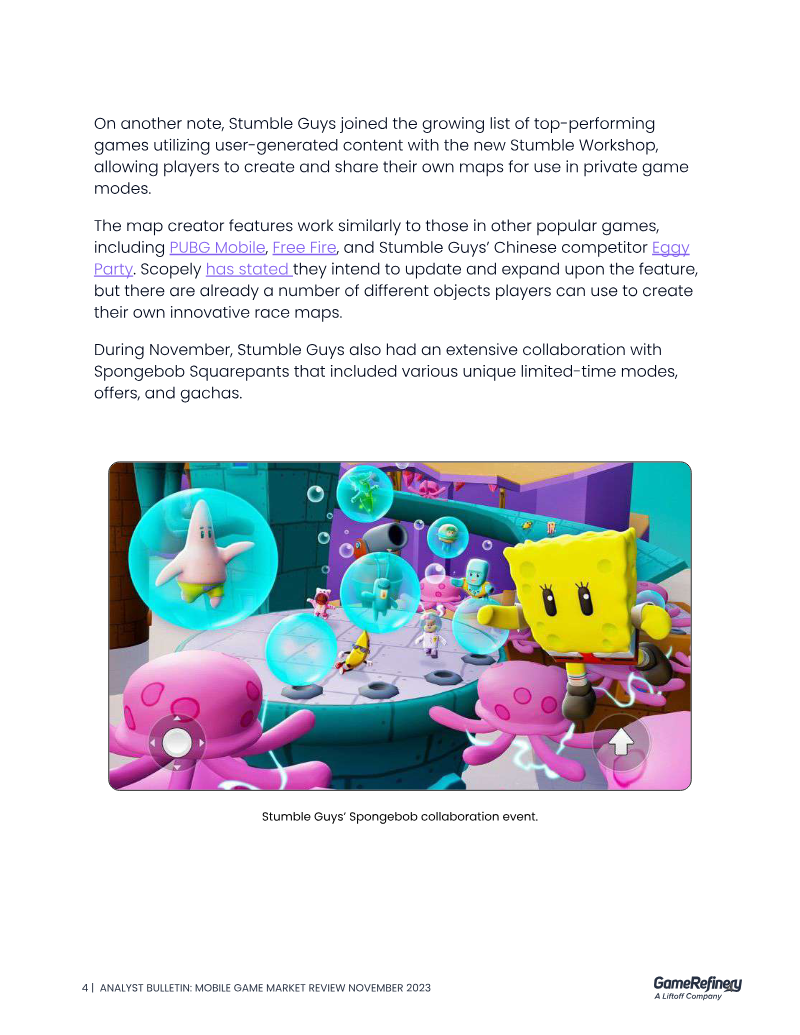
Mobile game developers spent November 2023 experimenting with live events, copying proven mechanics, and chasing emerging subgenres.
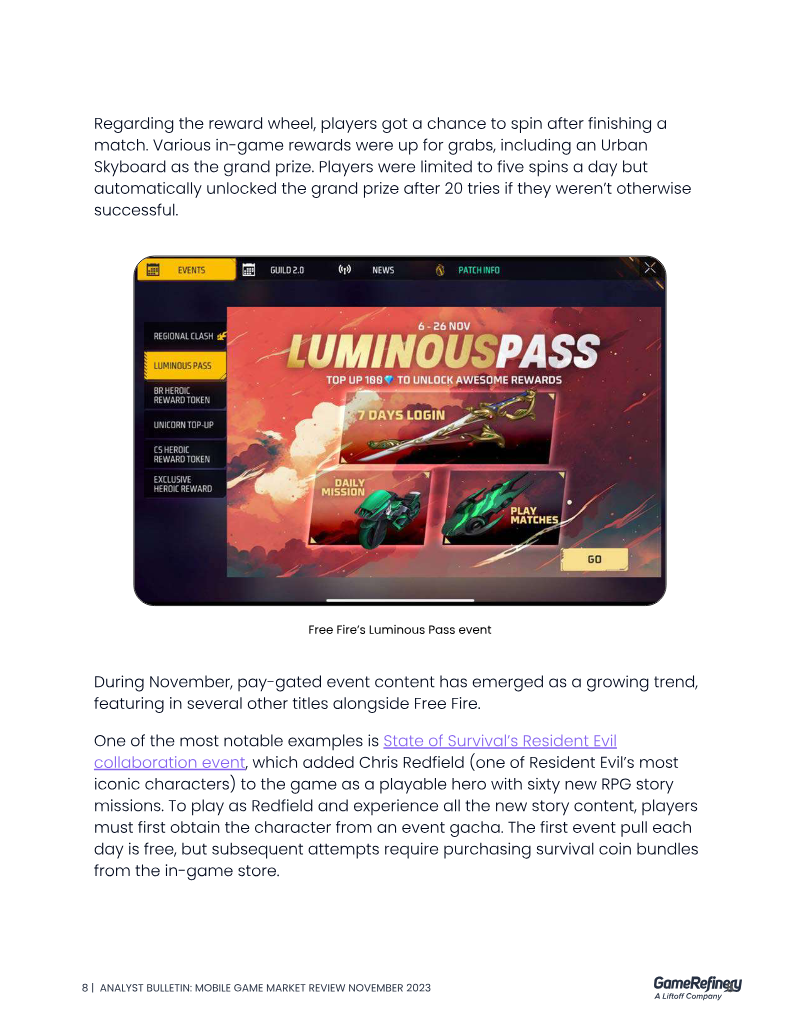
- Midcore mobile titles are increasingly gating core event gameplay and story missions behind paywalls, as seen in Free Fire’s Luminous Pass and State of Survival’s Resident Evil collaboration.
- The casual gaming sector is experiencing widespread mechanical imitation, specifically the adoption of 'Social Win Streak' and 'Digging Minigame' features by major titles like Monopoly GO! and Matchington Mansion.
- The 3D match subgenre is seeing rapid expansion and increased competition from industry leaders, with King and Peak launching Candy Crush 3D and Match Factory to challenge the success of Triple Match 3D.
Writers
Games and companies
Games