VideoExtra Credits
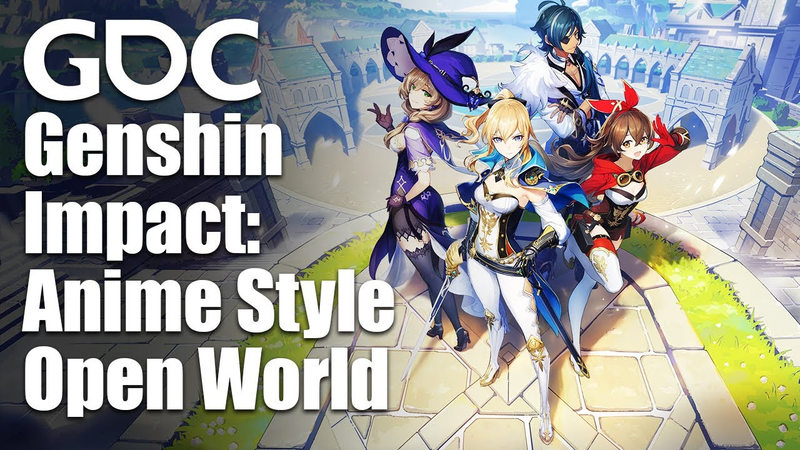
The Genius Game Design of Genshin Impact’s Login Screen - Extra Credits
1 Nov 20239 min video
Transcript
Chances are, you clicked this video because either A, you agree with our title, or B, you think we're battier than a batch of seasons. Well, either way, I don't want to keep you waiting. So, to start, we're going to show you the login screen of Genshin Impact because we think it's genius and primes the player exactly how the designers wanted it to. You ready, Zoey? Ooh, Hoyoverse, please don't DMCA us. Hit that play button. Oof, did you feel how jarring our intro was there? Yeah, we wanted to cut it together that way because it's going to perfectly illustrate the point of this whole episode, which by the way, is brought to you by Nebula, where you can watch this and all of our other episodes without ads like this one. While much of game design acts on our conscious mind, our choices, actions, and the things we do, turns out some of the greatest design is the design that you don't notice because some of the greatest design acts on your
subconscious. And that ties into Genshin's login screen, why it's brilliant, and why our intro there was so jarring. You see, good designers will always use the throwaway space at the opening of a game to psychologically prep the player to have the best experience with the game they're about to play because the menu screen, the opening music, the initial load time, these are all part of the experience of that play. Now, of course, many games just put stuff here without giving it too much thought, but good designers design every part of the player experience. And the Genshin designers know they have a challenging task in front of them. They have players coming in expecting an action RPG, but that's not really quite Genshin, is it? Genshin's not Devil May Cry, after all. Heck, it's not really even Diablo. So, they have to put the players in the right headspace for their type of game because if you fire up Genshin after seeing the action tag on the store page, and then go in thinking you're getting God of War or something, you are going to be very disappointed. So, first, the designers have to identify what the hook of their game is, where the core engagement really lies. Sure, they're
going to want to reinforce that everywhere, but they really have to nail it here, in that opening, because getting you to want that specific experience is all these first few seconds are about. So, on that note, what really is the selling point of Genshin Impact? Well, I would posit that it's a world to escape to, a place for you to sort of explore as you please, you know, to find wonder in, to uncover its secrets, to spend a little time roaming whenever you want without the pressure of most action games. The ruins of the login screen hint at the secrets to be explored. The infinite path suggests a never-ending nature of the experience. But, the load screen itself does in fact have to end. So, what happens when the game actually loads? A literal door to another world opens before you. Yeah, it's pretty on the nose how much they're pushing your subconscious towards the game's core escape fantasy, towards the expectations and type of play that, if they can get you engaged in, will keep you coming back for more. Okay, now, let's listen to the music again.
How does this make you feel? Does it get you pumped, you know, ready to smash some heads? No, it's calm, slow, and gets you ready for a more measured experience, which is not to say that there's not exciting moments or high action in Genshin, but it's just not what the game is most fundamentally about. The music helps set your expectations and gets you in the right headspace to play the game. It's also the same reason we're floating gently through the clouds rather than, say, running through a burning city. Now, imagine we put, say, the Dynasty Warriors music over that intro. Actually, you don't have to imagine it, we did it for you. Roll that clip. Feel how jarring that was? How the pieces just didn't fit together at all? That is because it is no longer a crafted experience. The parts are not aimed towards delivering a single unified state of mind. And that's really the beauty of the parts of a game that are aimed at your subconscious. Done right and you don't notice them at all, done wrong and you sure do. And with
that knowledge, dear viewer, I'm afraid we've probably cursed you. Now you may never be able to not see what games are trying to do to you subconsciously. So you know, with that in mind, I guess we might as well run through a few more, right? For instance, the early Final Fantasy games are a good example of this. Stuff like the Amano art and the Uematsu music were all there to get you to buy into the much grander world than the early hardware could deliver. Want another fun one? Go watch the cutscenes of the different seasons of Fortnite. They show off this zany fantastic world that the games can't possibly really deliver totally on, right? They usually present the characters doing awesome actions that are beyond what you can do in game. It gets you hyped for the game, sure, but look carefully. Count the number of different cosmetics they're showing off during those cutscenes. Count the ones in the background as well as the ones that are only on for a second or two. The number is actually ridiculous. Because what are they prepping you subconsciously to do? To buy. You see that Attack on Titan character bouncing around the Fortnite world like a total badass in a cutscene and then maybe not you, but some portion
of people watching are going to be like, "That is awesome. I want to be that." And then sales go up. Because the fantasy they're selling you is part of being a cool action hero, right? And part of that is having your own unique style. So how do they sell that? By showing action heroes doing awesome stuff in their world, or rather a version of their world, each with their own sense of style. It's an inceptiontisement. It's an advertisement that pretends to be for the whole game that's actually, without ever once telling you to buy anything, secretly trying to sell you things within the game. And look, from their revenue numbers, it's working. And this subconscious prepping can extend into the early minutes of the game as well. If there are things that you have to put there, like your tutorial or an opening cutscene, you might as well use those, too, right? In things like Call of Duty or Symphony of the Night, the tutorial definitely plays a role setting the mood here. Whereas, the opening cutscene in Xenogears gets the player to buy into the mystery of it all, and thus gets them to stick around through what might seem like a middle-of-the-road RPG while
the designers set up the story. Heck, even old games used to use the manuals in this way, right? To prep you subconsciously for the game's experience through the art and the story that you're reading on the car ride home. Ah, those were the days. Look, there are many different ways to subconsciously prep the player to have the best experience, or at least the experience you want them to have with your game. But to do it, you have to make sure you don't throw away those early moments, those unavoidable bits that have to be in your game, but that exist before the player truly engages with it. And to do that effectively, you really need to know what the core of your game is. And this is why what you see when logging into Genshin Impact is just secretly genius. They could have built any number of ways for you to start your adventure in their world, but they knew how they needed to get you to feel going into their game and made sure that every element of that opening helps to get you there, and in turn keep you there. And with that, I got a little homework assignment for you. I want you to go and boot up some of your favorite games. And if you keep this episode in mind, I bet you're going to be able to find a ton of
interesting design intent in their openings that you never knew that your subconscious was already chewing on. And after that, if you're still hungry for more thoughtful discussions of game design from us and a bunch of other awesome creators, all ad-free, then may I suggest Nebula. Nebula of course is the independent creator-owned and operated streaming service that we are very proud to be a part of for just a ton of reasons with tons of videos from our ever-growing roster of 180 plus of your favorite creators on the internet. Dang, when we joined it was like 90-something. Actually, when I wrote the script those numbers weren't filled in, so I didn't see them before. That's pretty cool. In fact, a recent addition to Nebula that I've just been devouring lately is ClimateTown, a phenomenal channel that was once best described by Jason from Not Just Bikes, another great channel by the way, as and I quote, "a low-rent John Oliver but for climate change." In all seriousness though, Raleigh's content is whip smart and just the perfect spoonful of sugar to help this very important medicine go down. They're all great watches, definitely check them out. And if you don't have access to Nebula yet, not to worry. You can sign up right now by using our link
in the description to get a huge discount on Nebula, which works out to be around $2.50 a month when you sign up for an annual plan. And real talk, this is just an excellent way to help support our channels because we receive a portion of that money not just when you sign up, but for as long as you stay subscribed, which has just been a wonderful boon. Thank you so much for that. So, click right here to check out Nebula for yourself or right here for another of our videos on the YouTube machine. Probably has ads though. Once upon a time, Michael Hogg at Kuyakoy Joseph Blame, Easy Coin, Dominic Valenciana, Arclight Games, Angelo Valenciana, and Ahmed Ziad Turk were the best legendary patrons. That time is now.
Auto-generated captions from YouTube — names and numbers may be misheard.
Key insights
6 takeaways · ~2 min read- 01Effective game design utilizes the login screen and loading sequences to subconsciously prime players for the intended gameplay experience, ensuring their expectations align with the game's core loop.
- 02Genshin Impact’s login screen uses calm music and imagery of ruins and infinite paths to establish an atmosphere of exploration and wonder, steering players away from high-intensity action expectations.
- 03Designers must identify the core 'hook' of their game and reinforce that specific fantasy through every element of the opening, including music, visuals, and load-time transitions.
- 04Games like Fortnite use cinematic cutscenes to subconsciously drive monetization by showcasing a high volume of character cosmetics in action, creating a desire for players to acquire those specific styles.
- 05A lack of cohesion between a game's opening atmosphere and its actual gameplay mechanics creates a jarring experience that can negatively impact player engagement.
- 06Historical and modern game design, from early Final Fantasy manuals to Xenogears' opening cutscenes, consistently uses pre-game and early-game content to build mystery and establish the necessary headspace for the player.
Ask AI about this video
Cite this video
Citation
Generating citation…

















Comments