Mobile reports and market data
Documents
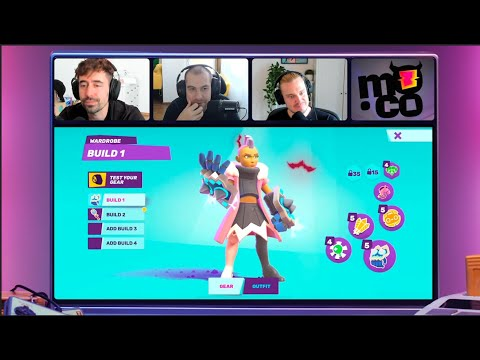
Supercell's Mo.co: First look! New game in closed beta - not even in soft launch yet
Supercell is currently testing Mo.co, an isometric, player-versus-environment action RPG that marks a strategic departure from the company’s traditional focus on competitive, player-versus-player titles.
- Supercell's Mo.co is a PvE-focused action RPG, marking a strategic departure from the company's historically PvP-dominant portfolio.
- The game utilizes a mission-based progression system where XP is gated exclusively by completing specific tasks, preventing players from grinding XP through general gameplay.
- Progression is heavily reliant on a gear-check mechanic where item upgrades are strictly tied to the player's character level, preventing the concentration of resources into a single piece of equipment.

Inside Scopely: Monopoly Go, Stumble Guys, & Its Future
Scopely has emerged as the leading mobile gaming company in the United States, achieving significant scale through a combination of strategic acquisitions and the development of high-performing titles.
- Scopely has tripled its revenue over the past 30 months and now employs over 2,000 people following its $4.9 billion acquisition by Savvy Games Group.
- The company is shifting its strategic focus from mobile-only development to cross-platform expansion, specifically targeting PC and console markets.
- Monopoly GO! serves as the company's primary growth engine, utilizing social mechanics to achieve industry-leading player retention and organic virality.
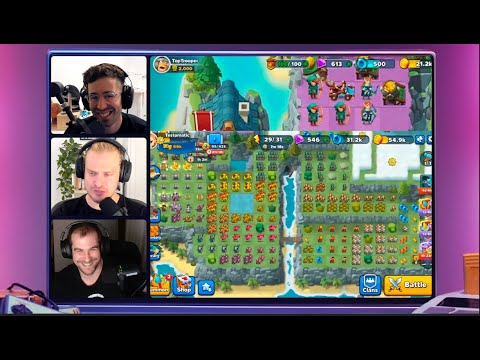
Top Troops Global launch case study: Game design, Ad monetisation & UA review (#82)
Top Troops represents a strategic evolution of the Battle Legion formula, transitioning from a PvP-focused meta to a PvE-centric progression system.
- Top Troops launched globally on October 4th, but experienced a slow start with approximately $6,000 in daily revenue during its first week despite years of development.
- The game utilizes a merge mechanic that lacks strategic depth, as players primarily brute-force progression using legendary units while ignoring a large portion of the available unit roster.
- Top Troops prioritizes IAP-driven revenue and currently generates less than 10% of its total income from ad monetization, significantly lower than comparable titles like Dragon City which reach 30%.

The Future of Hybridcasual
The hybridcasual genre has emerged as a critical strategic evolution for developers navigating the decline of the hypercasual market, which experienced a 15 percent drop in downloads by 2022.
- Hybridcasual has become a critical strategic pivot as the hypercasual market share dropped from 50 percent in 2021 to 30 percent by early 2023.
- The hybridcasual segment reached 5 billion downloads in 2022 by bridging hypercasual accessibility with the deeper progression systems of midcore gaming.
- Long-term retention is being addressed by integrating robust power progression, live operations, and hybrid monetization models that combine advertising with in-app purchases.

Jam City’s Rose Agozzino On Powerful Partnerships To Promote Cross-Generational, Ground-Shaking Play
The mobile gaming industry relies heavily on strategic partnerships and nostalgia-driven content to maintain long-term player engagement.
- Jurassic World Alive has achieved 33 million downloads and 2.3 billion play minutes over its five-year lifespan by utilizing a geolocation-based model.
- Strategic partnerships, such as the collaboration with Mattel to integrate 1993-era assets, successfully leverage nostalgia to bridge physical and digital gaming experiences.
- Cross-generational appeal is a primary growth driver, allowing parents to share gaming experiences with their children and expand the title's demographic reach.
MIXI Group Integrated Report 2023
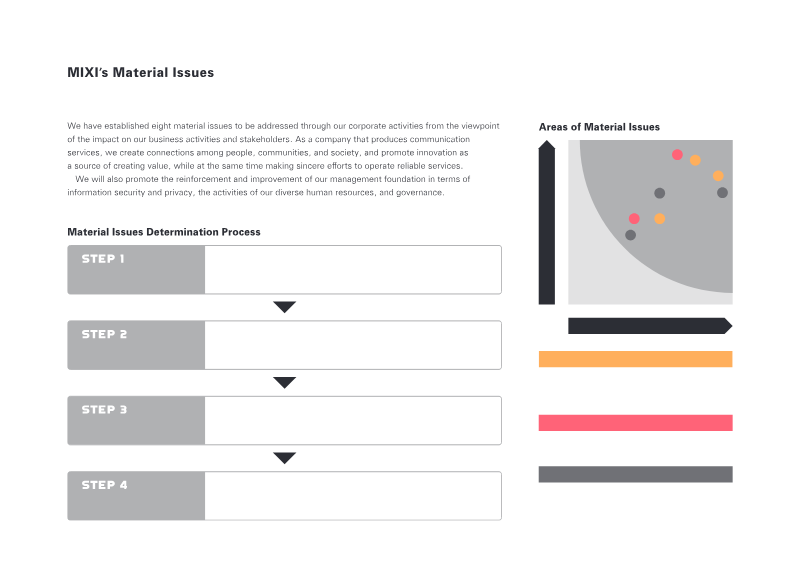
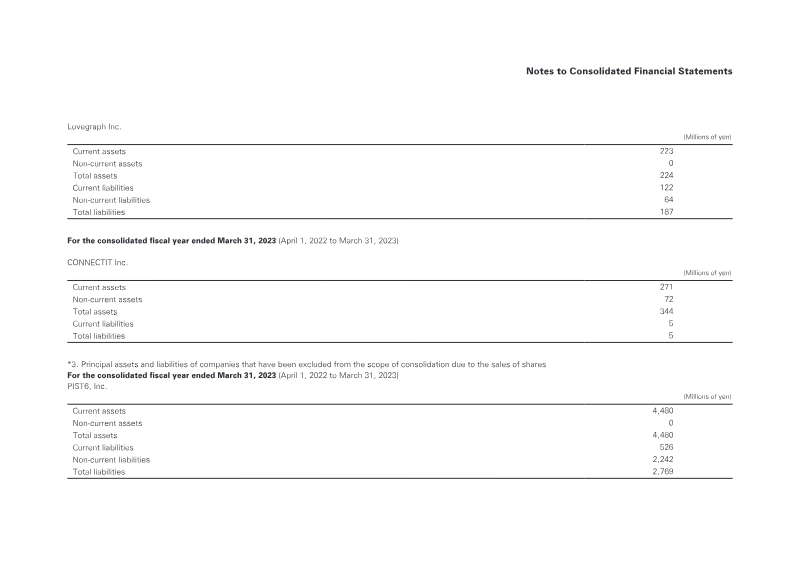
MIXI, Inc. and its subsidiaries present their Integrated Report 2023, covering fiscal year 2023 (April 1, 2022 through March 31, 2023), with some information on activities before and after that period.
- Consolidated net sales for FY2023 rose 20.4% year on year to ¥146,867 million, and EBITDA rose 33.6% to ¥29,482 million.
- Profit attributable to owners of parent fell 49.7% to ¥5,161 million in FY2023, which the company links partly to extraordinary losses from joint venture dissolutions and suspended game development.
- The company forecasts FY2024 consolidated net sales of ¥138,000 million, a 6.0% decline, and operating income of ¥12,000 million, down 51.7%.
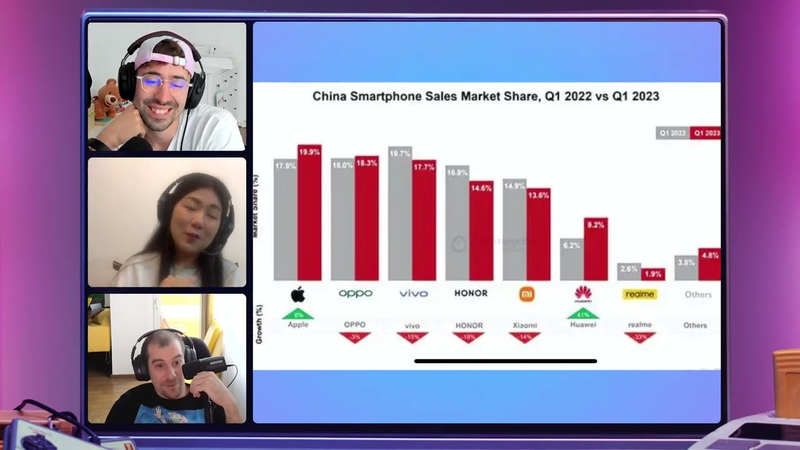
China Special West to East: market situation, cultural adaptation, publishing, UA & creatives
The Chinese mobile gaming market is experiencing a robust post-pandemic recovery, characterized by a significant acceleration in government licensing approvals for foreign titles.
- The Chinese government has increased game approval rates following the post-pandemic recovery, signaling a more favorable regulatory environment for new titles.
- HTML5 (H5) games serve as a strategic entry point for the Chinese market because they are easier to manage and often bypass the mandatory ISBN license requirement.
- User acquisition on Android in China is highly complex and requires working with local agencies, whereas iOS remains the most accessible platform for self-managed publishing.
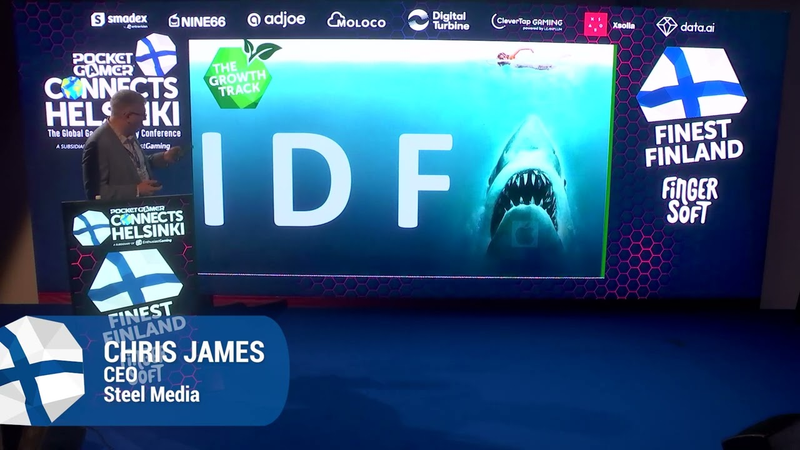
Introduction to Pocket Gamer Connects, Helsinki 2023 - Chris James, Steel Media Ltd.
Pocket Gamer Connects Helsinki 2023 serves as a central hub for the global games industry, emphasizing the importance of community, knowledge sharing, and networking.
- The Finnish games industry has become a major economic driver, generating $3.2 billion in annual revenue and employing over 4,100 professionals.
- Pocket Gamer Connects has facilitated over 100,000 meetings across 44 conferences, contributing to an estimated $1 billion in total industry deals.
- Despite a cooling in investment and M&A activity compared to the 2020–2021 peak, recent high-profile acquisitions indicate a potential resurgence in market confidence.

How to Disrupt the Shooter Market
The shooter genre remains a dominant force in the global gaming landscape, maintaining high monthly active engagement across PC and console platforms while capturing significant revenue in mobile markets.
- Disruption in the saturated shooter market is shifting from technical fidelity to community-responsive models that prioritize social identity and long-term player retention.
- Developers are capturing high-growth markets like India by utilizing Indo-futurism themes and optimizing technical performance for low-end hardware.
- Monetization strategies are moving away from pay-to-win structures toward identity-based models that emphasize cosmetic and social expression.

Monster Hunter Now Launch / Luda Raises For AI Sim / CS:GO 2 Launch
The gaming industry is currently defined by a tension between established live-service giants and emerging technological shifts.
- Valve’s transition to Counter-Strike 2 highlights the extreme profitability of mature live-service ecosystems, where a robust skin economy generates millions of dollars in revenue per hour.
- Niantic’s Monster Hunter Now generated $15 million in revenue within its first two weeks, proving the continued commercial viability of location-based mobile gaming when paired with high-profile IP.
- The esports industry is undergoing a structural reset as the traditional publisher-led marketing model proves financially unsustainable, shifting toward decentralized, profit-oriented structures.
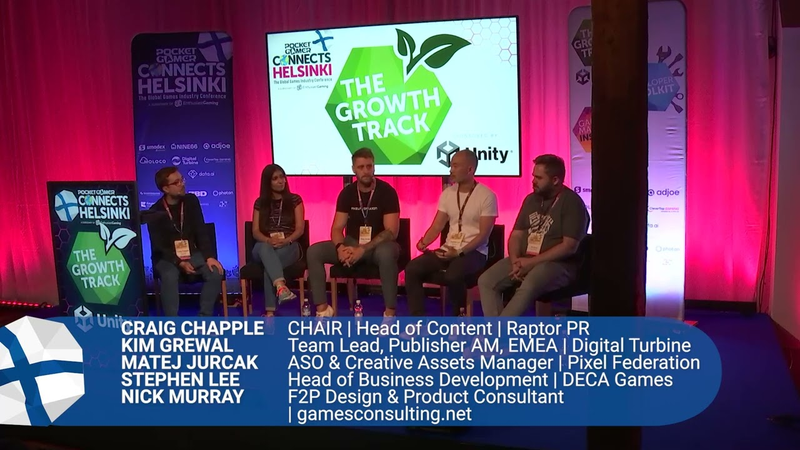
Panel: Beyond Acquisition: Lessons for Better Player Retention.
Long-term player retention in the modern gaming landscape relies on a strategic balance between structured progression and the prevention of player burnout.
- Long-term retention requires balancing structured progression with 'breathing room' to prevent player burnout and churn caused by relentless content treadmills.
- Monetization must prioritize non-intrusive models like season passes over aggressive mechanics or value-inflating economies to maintain player trust and long-term reputation.
- Marketing creatives must accurately reflect the actual gameplay experience to protect app store ratings and ensure positive player sentiment.
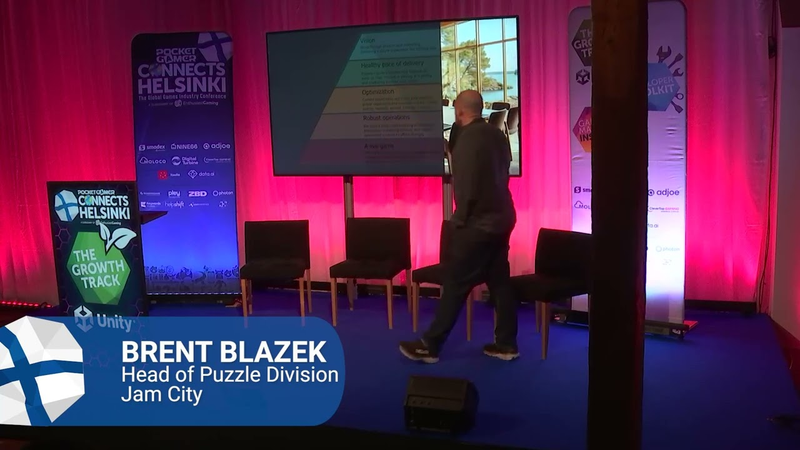
Reignite Your Strategy - Brent Blazek, Jam City.
The primary challenge for mobile game publishers is sustaining growth in mature titles, which remain critical to long-term business health despite the difficulty of achieving year-over-year revenue increases.
- Only 21% of mobile games achieve year-over-year revenue growth, highlighting the difficulty of sustaining performance in mature titles.
- 58% of top mobile publishers still rely on the same flagship titles they managed five years ago, making long-term retention of these assets critical to business health.
- A hierarchy of needs framework should be used to prioritize game development, starting with technical stability and crash resolution before moving to optimization or long-term vision.
Writers
Games and companies
Games