Global reports and market data
Documents
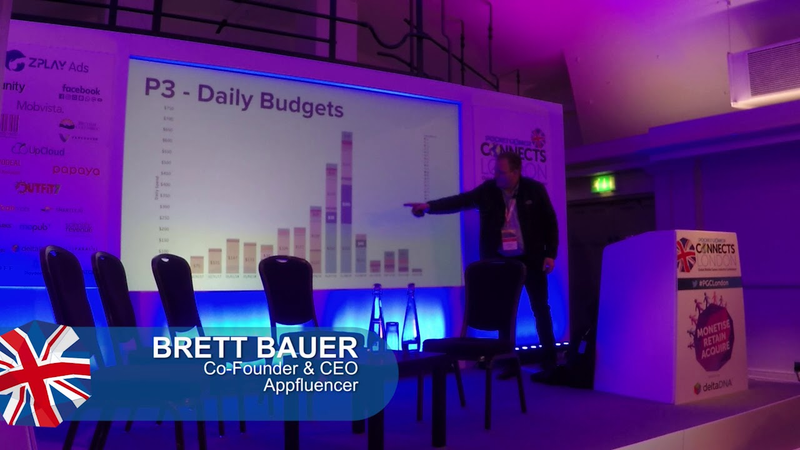
Through the looking glass – Following the rabbit down the data… Whole
This analysis explores a data-driven methodology for optimizing user acquisition (UA) campaigns through transparent, real-time bidding (RTB) platforms.
- Shift user acquisition focus from vanity metrics like click-through rates to value-based outcomes, specifically long-term user retention and monetization.
- High click-through rates are poor indicators of performance, as some low-engagement creatives have been shown to generate double the installs at a fraction of the cost.
- Utilize machine learning systems capable of processing over 24 trillion daily calculations to automate complex decisions regarding country targeting, app selection, and dynamic pricing.
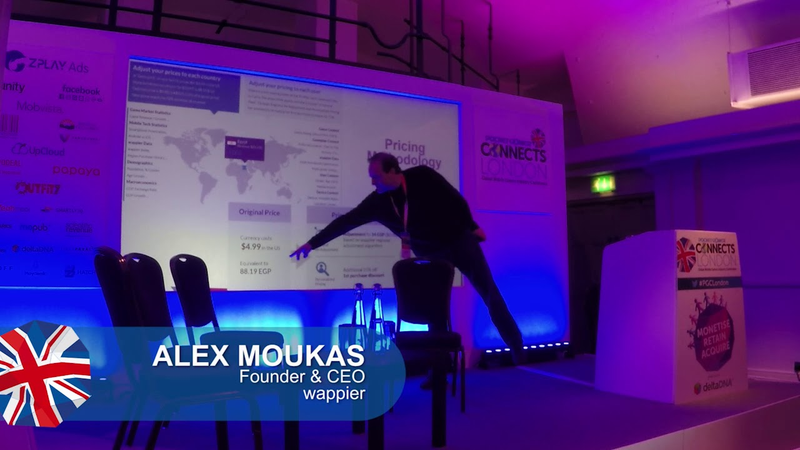
Don't do it like a virgin – Automated revenue management in gaming
The mobile gaming industry is experiencing rapid growth, with in-app purchase revenue projected to reach $140 billion within four years.
- Automated Revenue Management (ARM) systems leverage machine learning to shift focus from user acquisition to maximizing lifetime value (LTV) through personalized monetization.
- Adjusting pricing to local economic conditions can increase transaction volume by over 170% in specific markets.
- Data-driven loyalty programs and automated engagement tactics can improve player retention rates by 20% to 40%.
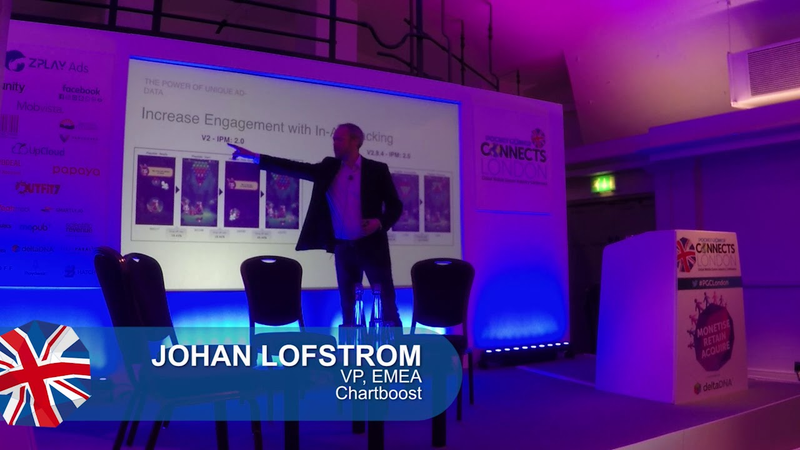
5 reasons why you need to embrace interactive ads now
Interactive advertising represents the next generation of mobile marketing, offering superior performance compared to traditional banners, interstitials, and standard video units.
- Interactive ads, including playables and interactive videos, outperform traditional banners and interstitials by driving higher conversion rates, improved brand recall, and superior long-term user retention.
- Interactive formats provide granular data that allows developers to track user behavior within the ad, identifying specific drop-off points to optimize ad funnels.
- Analyzing metrics like installs per mille (IPM) enables developers to refine ad content, remove unnecessary tutorial steps, and highlight the most compelling gameplay elements to increase revenue and ROI.
Hatch and the new opportunity of on-demand gaming
The emergence of on-demand, cloud-based gaming represents a significant shift in the mobile industry, mirroring the transition from ownership to subscription models seen in music and video streaming.
- The platform utilizes cloud architecture to stream native Android games, eliminating the need for HTML5 ports and reducing multiplayer prototype development time from months to days.
- The service operates on a dual-revenue model combining advertising and subscriptions, with a commitment to share 70% of generated revenue with content partners.
- The business model shifts mobile gaming from free-to-play monetization loops to a subscription-based, on-demand format that prioritizes premium content quality.

Influencer marketing: The tips that your app needs
Influencer marketing has emerged as a high-growth channel for mobile game user acquisition, driven by increasing consumer trust in content creators and the widespread adoption of ad-blocking technology.
- Influencer marketing serves as a high-growth user acquisition channel that bypasses ad-blocking technology by leveraging the authentic trust between creators and their audiences.
- Mid-tier creators often outperform top-tier influencers in both cost-efficiency and campaign performance, making them a more strategic focus for most mobile game developers.
- Campaign success relies on providing creators with language-specific briefs and in-app incentives to drive conversions, supported by 24/7 communication to manage operational needs.
The unreasonable effectiveness of data for better monetisation
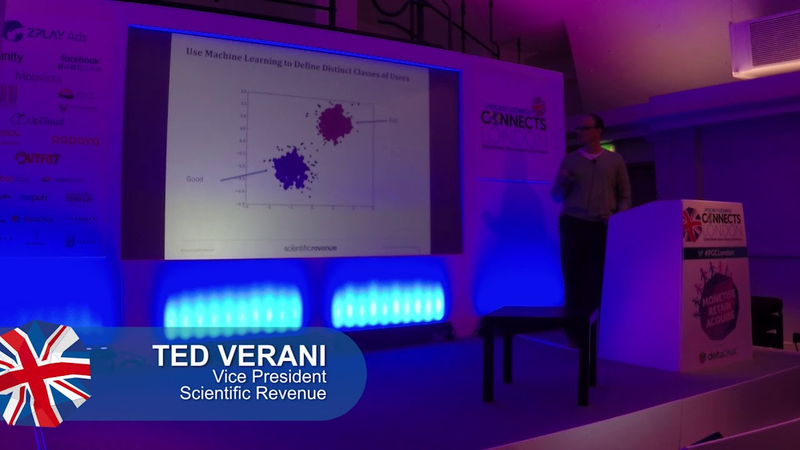
The primary thesis of this analysis is that mobile game developers can achieve significant revenue growth and improved performance by applying machine learning to existing user data.
- Dynamic pricing and data-driven user acquisition strategies can increase total game revenue by 20% to 40% compared to static models.
- Applying predictive lifetime value (LTV) modeling to user acquisition campaigns can drive a 400% increase in average revenue per user (ARPU) over a 45-day period.
- Machine learning models consistently outperform human intuition in monetization tasks, despite the potential for occasional false positives.

A fireside chat with games industry legends Peter Vesterbacka and David Helgason
Mobile gaming continues to serve as the primary engine for global industry growth, maintaining its dominance even as hardware saturation approaches.
- Mobile gaming remains the primary driver of global industry growth, maintaining its market dominance despite approaching hardware saturation.
- The Chinese market is shifting toward premium gaming experiences, offering independent developers a lucrative alternative to traditional free-to-play models.
- Artificial intelligence is identified as the most significant driver of future industry innovation, while eSports is viewed as a nascent sector with the potential to eventually rival traditional sports.

Next generation playable ads on mobile
Playable ads represent a high-performing but underutilized format in the mobile gaming industry.
- Playable ads deliver conversion rates two to three times higher than traditional video ads, yet their adoption is restricted by high production costs and technical limitations.
- Current HTML5 playable ad production can exceed $25,000 per unit, effectively pricing out developers with lower lifetime value (LTV) games or smaller user acquisition budgets.
- Next-generation playable ad technology reduces production costs to as low as $1,000 per campaign by utilizing the game’s original user interface rather than building custom mini-games.
How to get the most out of your ad strategy
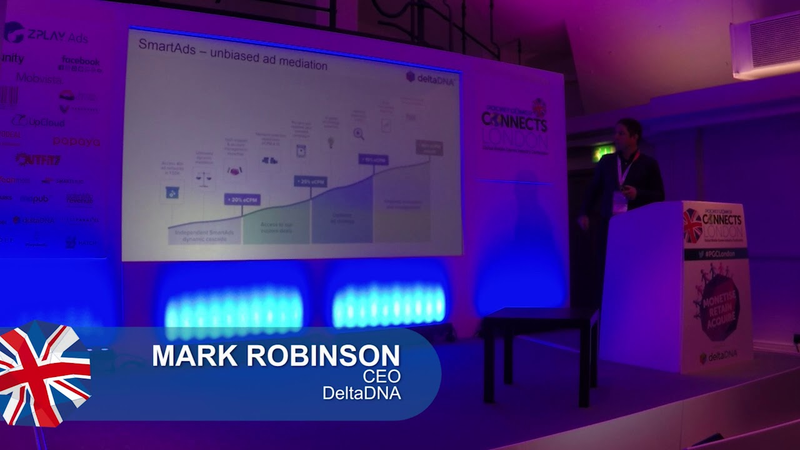
The mobile gaming industry has undergone a significant shift in its approach to advertising, moving from viewing ads as a necessary evil to recognizing them as a vital, strategic component of game monetization.
- Advertising has become a core revenue driver, with many mobile titles now generating between 20% and 60% of their total income from ad placements.
- Industry sentiment has shifted significantly, with twice as many publishers now viewing ads as a strategic monetization opportunity rather than a necessary evil.
- Successful monetization requires integrating advertising early in the development lifecycle rather than treating it as an afterthought.
Living games: Jagex, RuneScape and the evolution of live games
The evolution of the gaming industry has shifted from traditional product launches toward the "living game" model, characterized by persistent, social, and service-oriented experiences.
- The 'living game' model prioritizes long-term retention over traditional product launches to offset rising user acquisition costs and capture player investment in deeper, persistent experiences.
- Jagex achieved an average player lifespan exceeding seven years for the RuneScape franchise by restructuring operations to focus on core intellectual property and service-driven engagement.
- Developers can drive long-term retention by integrating RPG mechanics—such as progression, collections, and leveling—into diverse game genres.
Profiling Casual, Core, and Hardcore: What We Learned from 350,000 Gamers
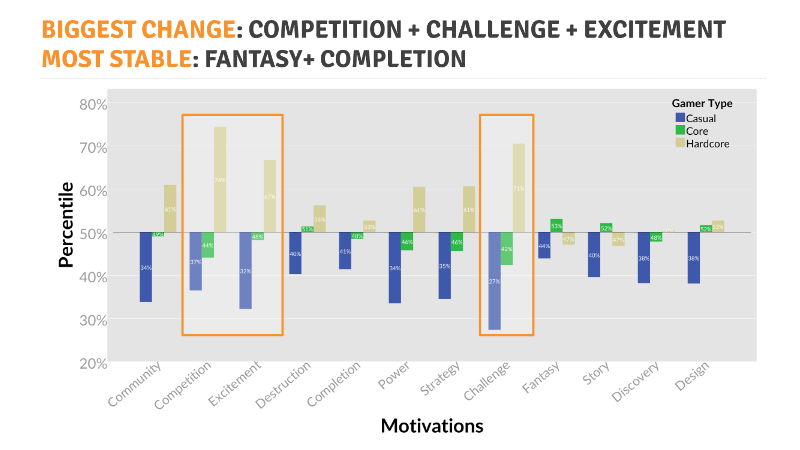
The analysis of over 350,000 gamers provides a comprehensive profile of casual, core, and hardcore players, challenging common assumptions about gamer demographics and motivations.
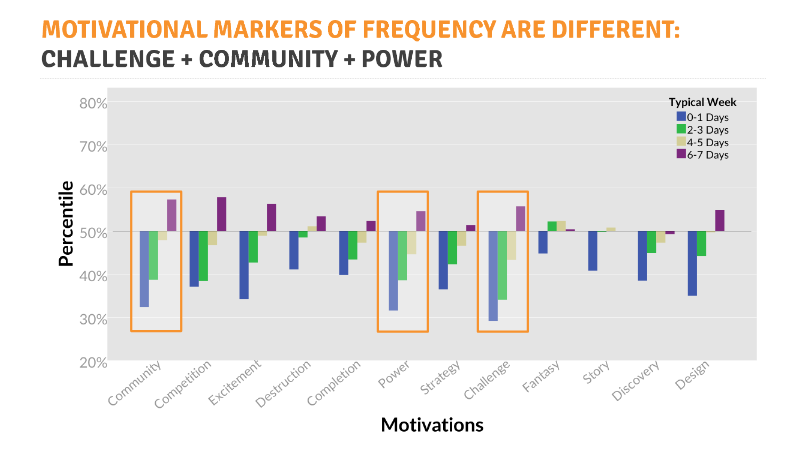
- Traditional industry labels of casual, core, and hardcore are ineffective at predicting player behavior, as they function more as demographic markers than accurate reflections of play style.
- Gaming motivations are universal, with an 86 percent overlap in preferences between genders, debunking the idea that play styles are defined by demographic stereotypes.
- While men and women show distinct preferences—men favoring competition and destruction, and women favoring design and completion—women match men in their interest in challenge and competition.


Gaming Spotlight 2017 Review
Mobile gaming's dominance of consumer spending, and the rise of live player-versus-player (PvP) and co-op play across platforms, are the central themes of this 2017 review of global and U.S. game markets.
- Mobile gaming solidified its market dominance in 2017, with consumer spending exceeding the combined total of home consoles, PC, Mac, and handhelds by more than one-third.
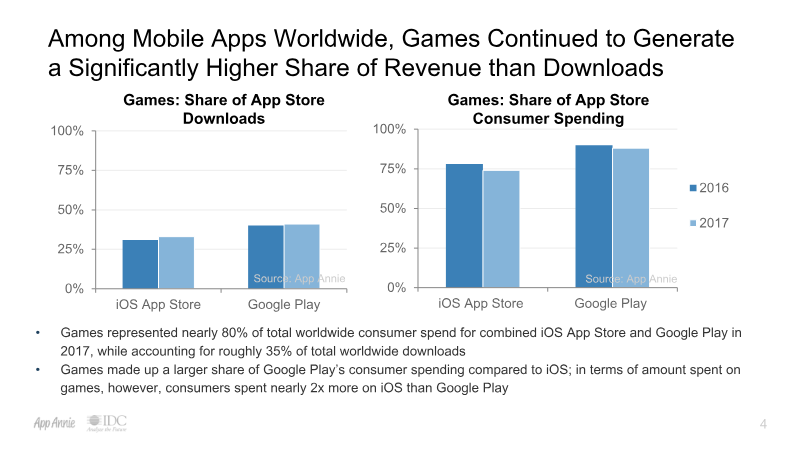
- Mobile games generated nearly 80% of total consumer spending on the iOS App Store and Google Play, despite accounting for less than 40% of total app downloads.
- The Asia-Pacific region, led by China, Japan, and South Korea, drove mobile growth by accounting for over 60% of all global mobile game spending.
Writers
Games and companies
Games