1 free read left. Create a free account for unlimited reading + AI research.
Create free account
Don't do it like a virgin – Automated revenue management in gaming
Key insights
6 takeaways- 01Automated Revenue Management (ARM) systems leverage machine learning to shift focus from user acquisition to maximizing lifetime value (LTV) through personalized monetization.
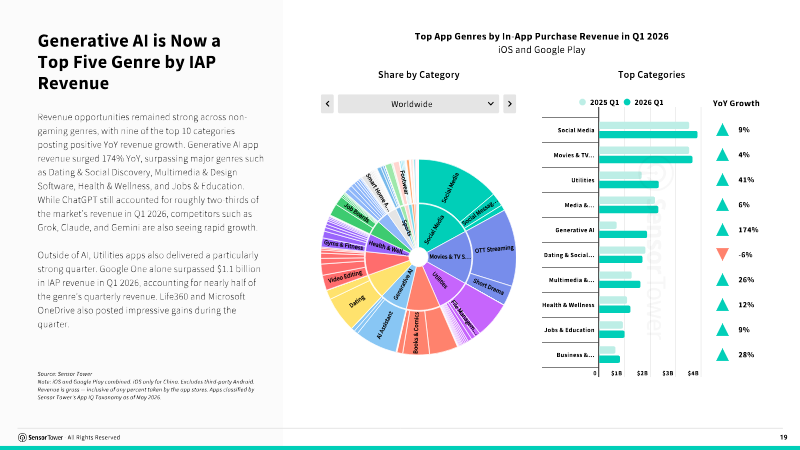
- 02In-app purchase revenue in the mobile gaming industry is projected to reach $140 billion within the next four years.
- 03Adjusting pricing to local economic conditions can increase transaction volume by over 170% in specific markets.
- 04Dynamic pricing strategies allow developers to increase both revenue and unit sales simultaneously in inelastic markets by accounting for individual consumer price elasticity.
- 05Machine-learning-based management enables developers to scale operations across millions of users without increasing headcount by automating multivariate testing and segment-specific engagement.
- 06Data-driven loyalty programs and automated engagement tactics can improve player retention rates by 20% to 40%.
Ask AI about this video
Transcript
[Music] [Music] so I'm trying to give a sort of high-level overview what we leave the market where the market is right now and where it's heading if you think about myself I'm sort of I'm a geek by training this is my fifth company that I've started with sort of varying levels of success couple of them went under sold one four hundred plus million I had a couple of IPOs one in London one in one in Nasdaq so what I really want to talk about the only sort of just give you a high-level overview about the market all of us are sort of immense into this sort of day to day and it's sort of sometimes it's not often that we take a step back and look where the
market is today and where it's heading so the market I'm talking about is that of in-app purchases the market was worth less than a billion ten years ago who's plotting non-existant if you look at the market today it's worth 90 odd billion and it's going to grow to 140 billion in in the next sort of four years and that's sort of that's a very significant growth what's even more interesting is that if you look at the market in terms of a gross profit it's a hundred billion class why is that interesting that's a huge freaking number maybe we don't we still don't sit back and look at the soft and the interesting sort of at this number it's sort of it's a billion it's a hundred billion dollars of people buying magic shorts and sort of random stuff we thin out yet even though that market looks sort of insane and it is it's it's it's a serious number in my mind the market is going to grow quite faster over the next following years so it's an exponential curve I mean humans were really bad that we usually
underestimate how long something's going to take an exponential curve but we also underestimate how big is going to be so the next generation of salads coming on like sort of all of the new AR stuff it's really going to monetize with the two stores plus facebook plus Amazon so and that's really going to be through in-app purchases so trying to optimize in-app purchases and increasing and managing consumers - that is sort of critical and if you look at the size of the market of the market if you take out the towards percentage at a hundred billion plus in terms of gross profit that's larger than the automotive industry so I mean the industry were all-in with really minimal capital investments right it's larger in terms of gross profit than the automotive industry sort of mind blowing now let's talk a bit about the model Nationals right and what what the talk is about so this is really about looking at acquire new consumers versus leveraging existing customers and what is the right balance between the two so if you look at global advertising
agents like the WB piece of this world the IPG is the omnicons if you look at how their customers the multinational spend their budgets a third is for above the line staff advertising usually associated with acquisition and two-thirds is marketing below the line stuff that's usually associated with how do you essentially cultivate leopards milk however you want to call it existing customers it's also sort of a very well known secret that it's much cheaper to essentially make money out of an existing customer make more money out of an existing customer make a larger gross profit out of an existing customer as opposed to go out there and keep trying to acquire new customers so it's really critical to convert more non-payers into payers and then continue to build the existing customers and then the final thing is that there's really a way to do that outside the core product what I mean outside the core product is yeah I mean it's very easy to say hey I'm gonna build an even better up an even better game and yes obviously if
it's better or worse it's gonna monetize better but revenue optimization and milk the existing customers leverage against the customer has to do with doing all of that above and beyond the actual app so what are the other things you could be doing outside making the best app out there in order to monetize best because that's critical every other industry is doing it I mean it's like saying hey I'm just going to be building out a larger drug on so I can sell you larger sword and doing nothing outside that it's like being Vodafone and saying hey as long as you have sort of you know at least three bars here who's my core product hey my cell phone towers work I'm not going to do anything else there's no advertising there's no loyalty there's no marketing and obviously large companies do all this other stuff because they can make more money now obviously why aren't people sort of doing that and why so much of the spending of the spending right now function on the acquisition side as opposed to sort of everything else on the marketing side the answer is simple
it's a freaking hard problem internal scalable problem to date meaning that it's very easy to go out there and spend a lot of money let's say to acquire stuff spend money on CPI on Facebook and acquire new consumers it's it's much less scalable try to run do the same thing for your own sort of customers throughout the app the existing let's say industry doesn't release of more tools from the existing industries don't really help us so if in this industry why because for the first time in history where 50 people companies trying to manage 50 million consumers the tools that exist in traditional industries you know who had 50 million consumers 10 years ago you know the large telcos the versions of this world and the waterfronts of this world the the the car manufacturers the tools that exist for them in terms of managing their consumers revenue optimising and running CRM systems don't apply in our industry why because somebody like a Vodafone is going to have hundreds of people managing their existing customers it's not the tools that Vodafone is using hey
I'm gonna build a dozen let's call it sort of personas of consumers you know the young millennial they're likely to turn then I'm gonna run another dozen of workflows on top of its consumer create my matrix go and run different it's like nobody has time for this I mean this requires serious sort of headcount so it's a hard problem to solve and above and beyond that there's not a lot of expertise in the industry because it sort of it's a young industry it's a nascent industry we feel we're sort of you know cooler than this sort of industries out there let's call it the process don't exist the system does exist that allow us should've do that and do that I mean having a closed-loop system using machine learning that automatically decides what is the optimal price for its consumer and how to retain consumers sort of longer class building of the plumbing because if give you let's say amazing reports and amazing infographics amazing sort of analytics if I don't close the loop that's that's freaking useless yes you
can show to the board and say hey look at how cool this looks but unless you close the loop unless you come up with next best action sort of automatically that doesn't really affect your bottom line and this is sort of what we believe is always a big hole in terms of technology in terms of software and this is something that we're trying to address now let's look a bit about sort of what we feel is the future and well part of the future I hope because this thing doesn't really lead anywhere we don't need to change that it's one of the companies I go under exactly so anyways so what we feel people should be focusing on right we do two things one is how do you retain consumers longer by managing and deploying a retention program an automated loyalty and retention program so in traditional industries of previous lives one of the companies I'm sort of chairing the board of I mean we're still
running Vodafone's global loyalty programs t-mobile's global oil probes it's tedious and it's freaking hard but even on em even alright let's call it industry that's pretty much saturate we're still increasing retention by twenty twenty five percent we're increasing sort of art before these guys for thirty percent plus because you tend to retain the consumers that are that are paying more so that's that's one make sure that consumers that come to the app stay or the game stay longer and the second days okay how on earth do we make more money how to convert more payers not more players to the payers how to make sure we extend the lifetime value how do we come up with the next best action right in terms of how do we maximize the net present value of the lifetime value of the consumer instead of just doing sort of same less plugs for technology I'm gonna show you sort of some results in terms of case studies and hopefully it's going to be a bit more interesting if you are bored just start looking at your cell phones and I'm gonna run accelerate okay okay so
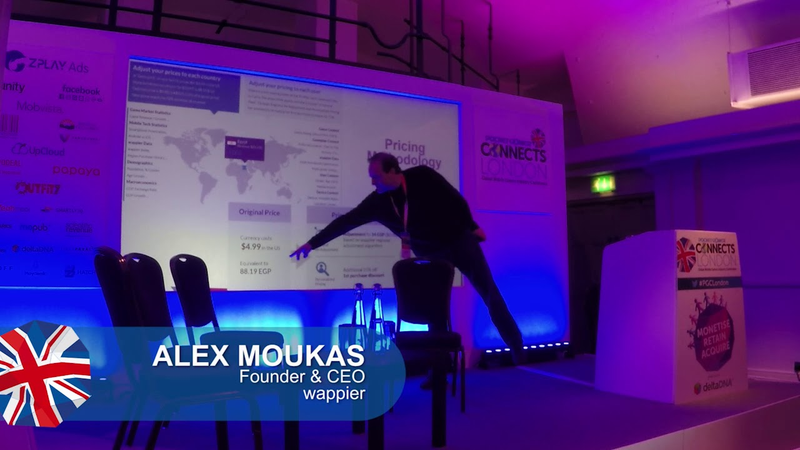
the first thing is the first thing that we do is in terms of dynamic pricing the first thing that we do general pricing okay what is regional pricing obviously when you're selling something for 99 cents in sort of New York City and you try to solve the same thing for 99 cents in in a random country across the world the equivalent local currency that's not going to sell that well and obviously there are a lot of folks out there that sort of folks on the top five markets and sort of optimize their price for the top five markets but there's a big world out there so what I show here give you an example this is country for right what country for says is that look you should be selling at sixteen cents to the dollar so if you're searching for something 99 cents in New York there you should be searching sixteen cents but you're gonna be selling fifteen times 17 times the number of units so your revenue is going to go up at least a hundred seventy percent I mean it's a basic macroeconomics so we have predictive analytic econometrics models that go and discover the supply and demand curves the price elasticities of its in a purchase of its game across the
world and not only that we don't magically go and we upload it sort of to the stores on your behalf so you know just sort of giving you analytics a this is a great price how do we do this I mean it's this is not just a sort of PPP purchasing pricing sort of adjusted type of approach I mean we're calculating really the propensity of each consumer to buy based on sort of demographic specific data that we have type of game genre et cetera so that's number one sort of readjusting and that's a tip right Egypt sixteen cents to the dollar believe it or not try it out tomorrow that one is free on us so no seriously make you look a lot of people have their have the hardener in the right place and they say okay is it it's a poor country maybe who's researching sort of 80 cents seventy cents no guys I mean it's it's shocking how deep the discounts have to be at some at at certain countries and sometimes how much you're under charging other countries
I mean it's shocking we're looking at countries take a look at this one it's real fascinating you're both increasing the price bicep forty seven percent of the item and you're selling more units this is hugely hugely price inelastic country right because the golden plated Lamborghini there that you pay five million for is so much better than the half a million regular L'Amour it's more expensive people perceive it as more valuable and they buy more stuff at a more expensive price at the higher price so that's one that's not dynamic pricing yet right here you readjust the whole country so everybody this can in the different country see sort of different price the second the second sort of area is going and doing dynamic pricing on a per consumer basis so in general because the marginal cost is very close to zero you can price wherever you want provided number one that you don't create the sense of unfairness in the mind of the consumers that's very important number two you don't screw your your in-game economics I mean these are sort of two very very
important hard constraints and I cannot I mean I I cannot sort of overemphasize how important they are but in general I mean with technology that says okay you're a consumer in Egypt instead of spending five bucks for the bundle which is eighty eight Egyptian pounds which a lot of money everybody Deniz if you're going to be spending eighty cents and that specific consumers they're gonna see it twenty five percent additional discount why is that because our predictive analytics show us that this is gonna maximize the probability of converting the consumer from a non payer into a pair does that make sense I mean where do you discount in general you discount earlier the lifecycle to convert non pairs and payers you discount towards the end of the life cycle so you can milk consumers a bit a bit longer when they start saying discounts for stuff that they used to be much more expensive you creates a set of value and then the final thing that we do is bundling so we figure out what are the negatively correlated goods and we bound them together I mean this is bundling theory so for instance magic shoes magic shield
a magic short my propensity of mean people like me to buy all three together is one point two out of three consumer is going to see sort of an offer saying hey next eight hours it's 50% off huge value in their head twenty five percent upsell for the publishers that that user technology again we try to find negatively correlated goods it's it's it's quite effective I mean the way it works it's you log in using your your App Store or Google Play credentials our platform goes in and sucks in all of the in-app purchases of your game it shows a different price in the different countries you see the in-app purchases here these are the initial prices these are the sort of suggested prices you can fine-tune these in any way you want in reality most people put in order pilot initially they maximize the free to build ratio after launch to maximize the number of pairs and then they turn it on autopilot and maximize revenue and our
platform goals automatically sort of changes that obviously it's a non-trivial problem right so let's call it typical games of 20 in-app purchases let's call it 500 combinations of bundles times 50 countries times a couple of stores suddenly you need to have a couple of management system that manages you know tens of thousands of items so you cannot do dynamic pricing if you don't have the underlying technology if you have to go if you have to manually go and upload sort of CSV files to the store and we sort of do all that some examples take a look at Russia sort of tripling the free to bill ratio increasing number of transactions are down more than doubled Brazil is an interesting one because you're seeing a sort of a higher lovely from the transaction done on the the arc Tao but one of my favorite ones is also Soviet Ally because you know it'll is a eurozone country right it's an OECD country you wouldn't expect things to be sort of so missed price
should be closer to you know the civilized world and I'm Greek so I can make that joke you guys can't or most of you can't so so Italy our tower increased by 66% so that's number one pricing and I'm running out of time so let me accelerate the second thing that we do in addition to pricing is loyalty so loyalty and retention so on a high level if you look at loyalty relation right what are we trying to achieve consumers take certain actions and perform processes all your events from within the game contracts lifetime journeys for the typical you know player hey they 5 they just kill the dragon and they 20 they saved princess then the same thing for the payers versus the non-payers then the same thing for Wales and then tries to figure out what are the events that are making servers more likely to actually go and go from sort of lower spending state to a higher spending state and we
reward with virtual points these events more so the typical loyalty program you give out points to consumers and you give more points to drive into behaviors that you want them to you know to drive them to show what we're trying to do here is on one hand reward consumers and slightly change their behavior and on the other hand do that in a way that well it's not it's beneficial to the whole to the whole consumer experience so the way it works very quickly is you know you you integrator is the key and yes you have an SDK and yes you have to integrate it and life is tough guys you know you wanna make more money you have to do a bit of engineering work so you can click on the icon so what our loyalty looks like is there's a visual overlay that comes out and we render all of these you can read it yourself through our API but it's a lot of work you see here the loyalty card of the typical consumer right you know that many points they're silver that many points to gold you know you get 10 points for a new
high score you get 500 points for a completely tutorial why because you know consumers of computers are more likely to make a purchase everything else that you see here is what we call tactics so on the typical loyalty program you have an acquisition of points but then you need to have tactical mean we're not just giving you a sort of how do we put it a blank sheet of paper a clean slate to actually do stuff on because we doing loyalties hard I mean we've been doing this another interview for sort of for for that for for more than 2,000 years if you look at our platform it's more than a million lines of code me there's a lot of data here there's a lot of stuff so what we give you is we give you more than 30 pre-configured tactics that we know work and if you have a casual game let's say use these 15 tactics if you have a multiplayer game use this sort of 22 you can use all of them but frankly the consumer can normally see at any given time some of them right so we have a tactic you know you want to improve like
say gameplay progression you have a tactic that looks like a quest what's a quest you know a lot of consumers are dropping 11 9 you're gonna have something they win something at level 10 believe it or not that increases by 12% plus the number of consumers that stick around and again there are a lot of little things that all if you run them selves together essentially drive a very compelling consumer experience and again you can think of this as a sort of as a visual overlay into your app a way to add and drive consumers to different behaviors that you want which is make them stick around longer and make them essentially spend more money yeah obviously you can configure everything and let me give you some sort of results they're quite interesting so these are some of the tactics so what I'm showing you here we're not Terry picking Sol our database of millions of consumers 22 countries that we're running on right now they want retention from 32 percent to 46 percent up 43 percent look at the
session paper time from 7 minutes to 10 minutes for the bill conversion and again the LPP you I mean look it grows a lot right I mean if you look at our pilots right now we're more than doubling people's revenue if you're doing no optimisation your revenue I mean that's not surprising I'm old enough to remember that click-through rates on the web used to be 5% you know they're not there anymore but but we believe that you can really I gave you the examples or the large telcos you can really improve your attention and improve your ARPA materially so of 20 30 40 percent by running a focus sort of loyalty program and again the look of tactics that you might be doing already what you have here is a multivariate testing system that sits on top of machine learning that allows you to sort of run a lot of different tactics for a lot of segments of your consumer base at the same time and see what works and see what clicks and that concludes my opening statement any questions guys
please sugar sit down want to try that okay do you see an overarching trend that today's audience is reacting differently to your frameworks tactics and methodologies then let's say two years ago background of my question is like I got the bad feeling that there's a certain reluctance towards payment of what form in any form like if the incremental payments are not subscription it's a fair question right so I mean the quick answer is I I'm good at spotting trends I'm not that good at spotting the correct trends I think that's true for every single one of us because I mean we're looking at billions of rows of data and we're looking so hundreds of columns I mean it's it's really hard to make sense of something especially sort of long-term sort of evolution right I totally understand
what you're saying my one comment here is what we're seeing is that we're seeing that the amount of money consumers spend for the time of entertainment they're getting is still quite a small part of their wallet means you talk some people it's it's really hard to find the place where you can spend some of 99 cents and have an hour's worth of entertainment it's really hard to do that in any sort of other industry right knobs are sort of in the in the OCD countries but let's say in the industrial in the g25 right or in the next twenty so totally understand will say there is a trend there that works for certain type robots for certain types of games but in general we're looking at sort of monetization or something much more so I would say overarching but in my mind it's all a battle of the right offered the right consumer at that point in time that's why you see me struggling trying to make a generalization
hi thanks my name is Jessica I'm a data scientist at King and I think this is a very interesting topic with dynamic pricing and one thing that you mentioned already was this that you have to be careful about this sense of unfairness between players and if you also keep in the back of your mind another thing that I've heard throughout the day which is the sense of community and players connecting with each other through digital channels right how do you marry those two and how do you keep in mind ethical and maybe even legal issues that you might encounter so legal issues are legal issues and you know we leave this to the lawyers right I mean on a high level you have to know it's important right I mean there are places where you cannot do price discrimination is sort of as U+ that what you can do though is over specific discounts or to everybody the same discount if they hit a certain trigger right good news is a world
processing enough data here that you can find unique characteristics for his consumers that can warrant a specific offer that to the consumer right you know they were scratching the right ear as they were you can become specific that's it that does a soldier of the other sort of issue the other problem or the other super opportunity which is how do you not create and sense of unfairness especially to gave the have a sort of a strong community that's where you go and you do a lot of your work and in what we call sort of bundling right where you're seeing and trying to see if I have a slide here and of course I don't you can you create bundles and you create these panels and you give sort of freely sort of good discounts to consumers that creates value in their head but these are things they wouldn't normally buy together so your revenue still goes up but I mean you know you know you guys essentially invented how you milk consumers long right and sometimes in an annoying way I have I have installed myself one or two of your games when I was very annoyed but but
yes I mean there's it's important thing that's why we feel everything should be done in the sort of in the context of a loyalty program because consumer stick around the lawyer because they want to you're not forcing them you're not tricking them they get points that win brownie points they can redeem those points with with sort of something and at the end hopefully everybody's happy and the interesting thing is because you rewarding the B here is you wanna reward you tend to retain the more valuable consumers does that make sense so even though you might increase retention by 20% you're going to increase our Q by 25 or 30 [Music] [Music]
Summary
The mobile gaming industry is experiencing rapid growth, with in-app purchase revenue projected to reach $140 billion within four years. Despite this expansion, many developers struggle to maximize consumer lifetime value (LTV) because they rely heavily on user acquisition rather than optimizing revenue from existing players. Automated Revenue Management (ARM) systems, utilizing machine learning and predictive analytics, offer a solution to this challenge by shifting focus toward retention and personalized monetization strategies that operate outside the core gameplay loop.
Key findings indicate that traditional industry tools are often insufficient for managing the massive, diverse user bases typical of modern mobile games. Effective revenue optimization requires a closed-loop system that automatically adjusts pricing and loyalty programs based on individual consumer behavior. Dynamic pricing, for example, can significantly boost revenue by accounting for regional purchasing power and price elasticity. Data shows that in some markets, adjusting prices to local economic conditions can increase transaction volume by over 170%, while in other, more inelastic markets, price increases can simultaneously raise revenue and unit sales.
Beyond pricing, loyalty programs serve as a critical mechanism for increasing retention and average revenue per user (ARPU). By deploying automated, data-driven tactics—such as rewarding specific in-game milestones or bundling negatively correlated virtual goods—developers can improve retention rates by 20% to 40%. These systems allow for multivariate testing, enabling developers to identify the most effective engagement strategies for different user segments. Ultimately, the integration of automated, machine-learning-based management allows developers to scale their operations, effectively managing millions of consumers without the need for prohibitive headcount, thereby maximizing the net present value of the player base while maintaining a positive user experience.

















Comments