1 free read left. Create a free account for unlimited reading + AI research.
Create free account
Living games: Jagex, RuneScape and the evolution of live games
Key insights
6 takeaways- 01Jagex achieved an average player lifespan exceeding seven years for the RuneScape franchise by restructuring operations to focus on core intellectual property and service-driven engagement.
- 02Developers can drive long-term retention by integrating RPG mechanics—such as progression, collections, and leveling—into diverse game genres.
- 03Empowering player communities through direct influence, such as implementing player-led polling for content updates, creates deeper emotional investment and loyalty.
- 04The 'living game' model prioritizes long-term retention over traditional product launches to offset rising user acquisition costs and capture player investment in deeper, persistent experiences.
- 05Successful living games require a five-pillar strategy: evergreen design, community-led development, frequent content updates, robust social features, and extending the experience into real-world events.
- 06Jagex is scaling its business model by expanding core titles to mobile with full cross-play functionality and partnering with external developers to export its service-driven expertise.
Ask AI about this video
Transcript
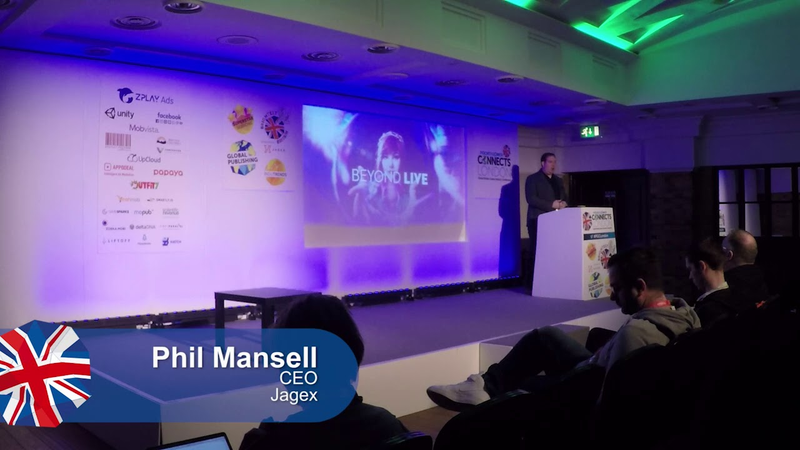
[Music] oh good morning everyone I'm Phil I'm the CEO Jagex and delighted to be able to open the bright historic Britain tract pgc today today I'm going to explore in my talk some trends within live games and talk about our theory for where they go into the future and there's also a bit of a side story about the studio that's we found its purpose and is entering a new era of energy and ambition but first I just want to start with a very quick back story Jax was founded as a startup coming out of Cambridge University's computer science lab founded by the Gower brothers who are in this picture and they released the very first version of runescape back in 2001 and it grew
quickly exploded in popularity in the mid-2000s and with millions of players and hundreds of staff coming on investors came into the company there's a big rough to build the next big hit game and this was what I think of as the second era of the company it's between 2011 2014 and also it was quite turbulent but fortunately during this period with the runescape we we were still doing well we were modernizing the game updating the tech and the content and we even got to a place where we split the game in two we had a more retro nostalgic version of the game that we called old school runescape for the real traditionalists in the audience and then we had just what we called runescape the contemporary version that we kept on modernizing so by 2015 when the turbulence had mostly passed and their management had changed the company was refocused around runescape and all
of that time the things we've done were really paying off the revenue climbed back above its previous peak and the user base activity levels were consistently growing and this is what brought us into what I think of as the Third Age the turnaround in the game led to the acquisition in 2016 of Jagex by Phu Kong Interactive out of Shanghai China and Ament jagex became the Western facing part of a global game group it was also when I stepped up as CEO having previously run runescape and a lot of the company's operations for the previous few years so it was a new era and this gave us an opportunity to look again at our company vision and our company mission to be ambitious but also to be smart and to think long term not to do this well we wanted to have a good amount of introspection we looked at how what we've done well what we've done not so well we've looked at what we really cared about what we were interested in but more importantly we looked out to the games industry as well we wanted to
pair our passions with the gaps and opportunities that were out there in the market and we found some trends that were particularly interesting and relevant to us and that's what I'll be going through over the next few slides probably the biggest gaming trend in my opinion at least over the last decade is the rise of live games live operations and games as a service so in that time in the last ten years we've seen things like the emergence of the big free-to-play giants the League of Legends the Team Fortress 2 a half stone World of Tanks and then in the Triple Aim console space we've we've also seen a move towards games as a service and even MMO influences in destiny for honor division and even probably the most stalwart game around there FIFA have been running for so long has been really transformed by ultimate team game mode with it's free-to-play inspired Gacha and collection gameplay and within the last 10 years there's been the huge rise
and dominance of mobile and those games very quickly became sophisticated in the live game sense persistent with a clan and so at soy clan and event-driven social experiences I think this big meta trend has been substantial and has permanently changed the world of gaming and it was important for us where we were sort of re-evaluating things to understand what was going on beneath the surface one aspect is how publishers have dealt with the increasing cost of development and increasing cost of user acquisition doing this by extending game life cycles to keep players engaged and to have ongoing revenue it started with publishers trying to eke out a bit more revenue post-launch with downloadable content or trying to slow the immediate player churn after launch with patches and other add-ons then to where we are now it's evolved into games having incredibly rich social features
active community management regular new content and regular events to the point where a successful game launch now can continue growing well beyond launch and have many many years of growth and profitability as something that fascinated me was there's an equivalent trend on the player site on the on the demand site if you like there's a lot of analyst research that shows how more players are putting down roots they're putting more time and more money into games and they're sticking with them for longer and I think this is because players enjoy striving for mastery they want to immerse themselves in communities they want to share experiences with other players they want to compete with other players and increasingly they like that their long term or their time dedication to a game is being reflected back at them as being rewarded however and the analysts information also shows that while players are putting down roots as we say
they're also concentrating their time and their money into fewer games overall so we've got this situation where games becoming more life they're capturing more value from players a player's life cycle but then is greater competition to acquire and to hold on to those players one of the ways that that then drove evolution was companies finding more ways to have players stick around for longer and for me one of the biggest symbols of that is how RPG influences are ubiquitous in games now almost every type of game has XP gained leveling up completing collections random prize draw or loot mechanics when all this stuff used to just be confined to a niche area of the games market the one that we've always been in now it's an everything from casual puzzle games to military shooters they're all infused with this RPG gameplay tropes so we looked at all this
and we concluded pretty obviously that live games aren't going away they're just going to continue and grow and this is because it's driven by like a self-fulfilling cycle of the supply and demand what their game makers and what the game players are both valuing are both enjoying and this then means that there's going to be increasing competition for player loyalty so we were going through all this and we realized that our skill set in running big feature-rich social online games have become really relevant to where games had got to in in a big way and where games were going so we knew is a big opportunity for us it meant finding a way to use our skills and push the forefront of live games standing out by offering the most fulfilling and engrossing game experiences so we looked at what drove our success we looked out to the best of the other big online games and we've defined five principles that we believe can elevate a game and take it beyond live I'll take you
through those five now the first principle is evergreen design this is having a game with the depth to hold the players interest for a long term and ideally hold it indefinitely and as a game designer or game producer it's thinking really differently and I went through this transition myself you could have think about a game being fundamentally inexhaustible and thinking about how as it's continually expanded it's not becoming overwhelming in its complexity but it's also not becoming dull from too much of the same thing and these aren't considerations that are just there in the pre-launch period you need to keep them front of mind and keep this kind of careful curation of the game for the rest of its life the next principle is about empowering players and giving the community a real voice in how the game is shaped and run this is important because when players have a say they feel like they have a stake in the game and that gives them it makes them more emotionally bought in
and the other benefit of this is that if you're really listening to what players are are same then the game is going to better reflect their preferences and better do you want do what they're after to do this effectively it's pretty hard that needs to be very good communication between you and in the community we tried lots of different things in our time for things for us that work the best our player polls and surveys to inform future content we do a lot of interactivity with the community through live streams through reddit through Twitter through our own forums and it's not just talking and listening we share our design Docs we share our concept our we pitch the players the ideas we've got for the future and they pitch back to us I think the area we've pushed the boundary most is with old school runescape that retro version where any update to the game there isn't a pure bug fix but really any update has to pass a majority poll with the players so if it doesn't have at least 75 percent pass rate within a poll that doesn't go into the game this is very extreme but
it works for this game and it works for that community and it does restrict us a lot but the benefit of it is the game the the players really feel like the game is their own and I think that's one of the big reasons for its success the third principle is about ensuring the game feels truly alive making sure it's vibrant always active there's always something going on it's exciting but it's also an unpredictable place to be you must want to keep players on their toes they don't always know what's around the next corner similarly it's about keeping the game feeling fresh always updating it frequently so for current players there's always something new to be explored something new to look forward to and for players we've lapsed out there's growing RIT like the longer they're away the more there is to come back and check out the fourth principle is meaning free social features features that really foster human connection where players can share experiences
together make genuine friendships rivalries maybe even players become famous within the game community and this is far more than it's something we've learned is I think it's far more than basic chat and and functionality I look at a lot of games now or live games now and it is nice to be able to import your Facebook friends or to be Auto joined into a clan after a few minutes but I think we need to go a lot further to build truly emotional connections between players and for them to feel part of a active community I think actually you can get to a point where there's deeper loyalty from players to the community even more so than the game and I think if you get to that point you're really on the road to success and the final principle is about providing experiences that go beyond the game screen out onto social media the wider internet and ultimately into real life we started doing this by providing support and encouragement to our most enthusiastic fans to help them
go about this but it became even better when we took it into our own hands whether that's building tools inside the game for content creators or actually running big real-life events now I think that if you can take the experience out of a game that represents the threshold from going from a hobby for someone to being able to be a lifestyle for them and if you can have fans we really treat your game as a lifestyle then you know you can have a real longevity so in our view those are the five principles that push beyond live games and that's what we're calling living games and we're saying this to make a point that there's is another level another level of immersion and emotional connection that players can have with the game and with the community and I really get believe that a particular type this particular type of game that where there's a depth persistence rich social features can be the most satisfying and most fulfilling for players of all types of games now
we're really lucky to have done much of this in our inscape games so I want to show you inside the bubble of what it looks like to run a living game this is a picture from green Fest it's our annual fan convention thousands of players come from all over the roll wrote all over the world to celebrate the game and the community that they love how part of that is cosplay we've got attendees who spend tens of hours some hundreds of hours designing tailoring constructing these outfits some of them are based of famous characters from the game but some of them our players are bringing their avatars to real life and I think that is that's just amazing we've tried to embrace this we helped some of our top community cosplayers these are photos from China joy where we took a chap called Marcos with us and you know he he had better cosplay standards than most other you know the
big publishers at that show of course there are people who are a bit less Pro but we encourage them more nonetheless this is a photo from one of our eSports tournaments so we do a number of these a year and we reach over a hundred thousand simultaneous viewers this is great for the games great for building awareness but it also drives a lot of attention to our top players and our top clans who in turn make up some of the thousands of live streamers who have made the game one of the most-watched in the world and then there's all types of creativity from the community that we get to see there's a lot of memes every day from the sublime to the ridiculous but then there's things with a bit more talent involved there are players we've drilled a Lee comics and make amazing illustrations and other types of artwork some of that artwork gets made permanent it's a surprisingly large amount of tattoos based on runescape out there there's loads of other types of very
nice arts and crafts that go on as well and of course there's lots of cakes we get made - these are just some of the things that we get to see from a read deeply engaged fan base who have taken the game into their hearts and what it's done for us it's allowed us to build a very successful and robust business I'm very proud of some of these lifetime stats of course but for me the most important thing is the momentum that this generates going into the future by striving to embody these living game principles in in how we've been working recently our escape communities are really healthy and growing we've got over seven years average player life really big presence on twitch and YouTube and social media and our we've got growing subscription and activity levels think there's are all good measures of health and what we've decided to do now is to take these principles and apply them to our wider business and our plans for the future and this is this is where I will wrap up our way of summing this all up is our
ambition to be the home of living games that's what we're set ourselves as a challenge we want to be the foremost experts both from development and publishing perspectives and to keep evolving what live games what living games can be I hope maybe to be back in a few years talking about a different five principles new ones that we've been with in part of pioneering we're going to be doing this in a few different ways we are going to be nurturing our existing living games of runescape and old-school and as you saw the video at the beginning we're bringing both of them to mobile this year we think this is a pretty big deal not just the first big Western MMOs coming to mobile but the first to have complete cross play between PC and mobile so players can play wherever they are soon we're also investing in new living games guided by the principles I talked about today we're going to strive to innovate both in the gameplay and in the service we provide around the games and finally and probably most importantly for us we're preparing to help other developers who
share in these principles bring their games to market to find an audience and to run a great service for their players around the world for the long term so if you're interested in being part of this we would absolutely love to hear from you so that's after the story of our journey our views into live and living games thank you all very much for listening today and I hope you enjoy the rest of the conference thank you very much [Applause] [Music] [Music]
Summary
The evolution of the gaming industry has shifted from traditional product launches toward the "living game" model, characterized by persistent, social, and service-oriented experiences. This transition is driven by a symbiotic relationship between developers seeking to extend game lifecycles to offset rising acquisition costs and players who increasingly concentrate their time and financial investment into fewer, deeper titles. By leveraging RPG mechanics—such as leveling, collections, and progression—across diverse genres, studios can foster long-term player retention and community engagement.
To successfully transition from standard live operations to living games, developers should adhere to five core principles. First, evergreen design ensures the game remains inexhaustible and complex without becoming overwhelming. Second, empowering the community through direct influence—such as player-led polling for content updates—creates emotional investment. Third, maintaining a vibrant, unpredictable, and frequently updated environment keeps the game feeling alive. Fourth, fostering meaningful social features allows for genuine human connection, often creating loyalty to the community that transcends the game itself. Finally, extending the experience beyond the screen into social media and real-world events transforms a hobby into a lifestyle for the player base.
Jagex, the studio behind the RuneScape franchise, serves as a primary case study for this model. Following a period of organizational restructuring and a focus on its core intellectual property, the company achieved significant growth by implementing these principles, resulting in an average player lifespan exceeding seven years. Moving forward, the studio aims to solidify its position as a hub for living games by expanding its existing titles to mobile with full cross-play functionality and partnering with external developers to bring similar long-term, service-driven experiences to the global market.