1 free read left. Create a free account for unlimited reading + AI research.
Create free account
Next generation playable ads on mobile
Key insights
7 takeaways- 01This technology is optimized for global scalability, specifically targeting emerging markets in Southeast Asia, Latin America, and Africa that are currently underserved by standard rich-media ad requirements.
- 02Current HTML5 playable ad production can exceed $25,000 per unit, effectively pricing out developers with lower lifetime value (LTV) games or smaller user acquisition budgets.
- 03New playable ad formats are designed to support 3D action games more effectively by maintaining visual fidelity and speed that standard HTML5 formats often fail to capture.
- 04Next-generation playable ad technology reduces production costs to as low as $1,000 per campaign by utilizing the game’s original user interface rather than building custom mini-games.
- 05Development teams in Europe are currently refining this technology to ensure seamless integration that minimizes memory strain while preserving high-performance conversion benefits.
- 06Playable ads deliver conversion rates two to three times higher than traditional video ads, yet their adoption is restricted by high production costs and technical limitations.
- 07When implemented for monetization, these next-generation playable ads have the potential to double the performance metrics of traditional rewarded video formats.
Ask AI about this video
Transcript
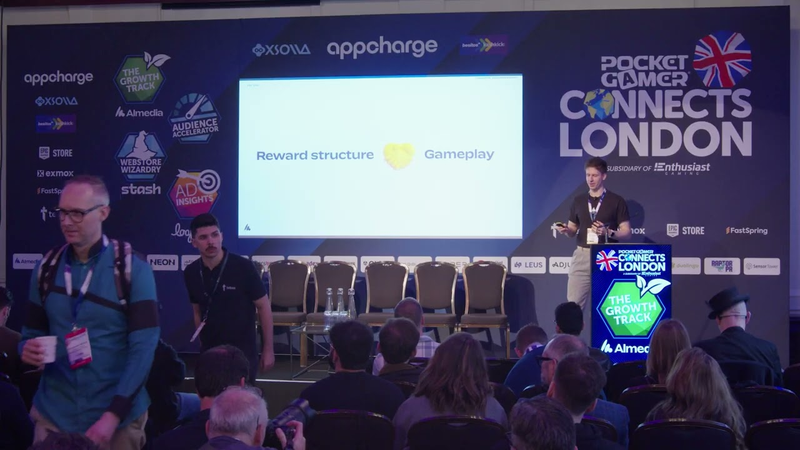
So yes, my name is Randy. I'm from Zplay and I'm here to talk to you about uh next generation playable ads. So just as an opening statement, uh playable ads have really established themselves as a format that really all game companies should be considering for uh promotion and also monetization. You can always do at least one of the two. And we're going to introduce today a new format, one that's not really so well known, but probably one that will be fairly well known soon. And uh this format seeks to provide an incremental solution to what's available today. So it's going to extend the
capabilities, it's going to extend the reach. It's also going to make this playable ad format more accessible to companies that want to run playables. So that's the nature of the presentation. And just to frame it a little bit further, you know, what's Zplay's connection to playables? You know, why is it that Zplay is here sharing uh a talk about playables? And it's it's really a a natural good fit for us. Zplay is almost 8 years old uh and May of 2010 it was just three people in a room uh starting to publish games. Um fairly early in our lifespan, we had the good fortune to to run into a game that became a top grossing free-to-play, thank the heavens, kind of success story. And uh we're very grateful for that, but one of the things we realized back then that the ad revenue was terrible for that game.
Uh we were using other people's tech and we were using other people's advertisers and we just weren't getting a good deal. So we built out our own tech and you know, if you fast forward a few years, uh this is an oversimplification, but we've got the whole ad tech stack. And once we built the total conventional ad tech stack, the question became, well, what's next? So Zplay is a publisher, we're an ad tech company, uh we're in the game space, the natural next step for us was playables. And so, you know, after 2 years of research and hard work, we also came up with our own playables platform. And you know, today that's that's what we're going to share share with you here at the show today. And and that's the perspective from what from which we're sharing. So to to frame this, I mean, when I say we're introducing a new format, it's a it's a new format incremental to the the
two approaches that are most typical in the space today. So streaming has been around a long time. HTML5 has become the probably predominant format that everyone's familiar with, the the H5 uh mini game. And we've got a solution that's in- incremental to those because, you know, in the case of the H5 mini game, you're going to learn that there are some limitations, some, you know, valuable things that we tried to get past and bring extra value to the to the community uh with this new format. So I I just want to quick take a quick poll by show of hands, how many people today have actually used playables as a promotion strategy? All the way up, come on. Okay. So I saw four or five hands. Of the people that have used playables, how many would say that it's their primary marketing strategy? So that's pretty much what I expected to see. So this is really been the question
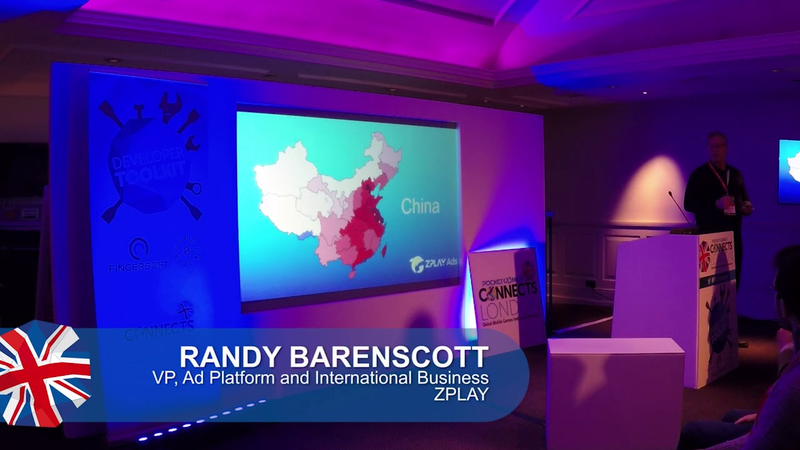
for us is it's been the year of playables for 3 years now. Last year AdColony said, you know, this is the ad format that everyone wants to run, like more than twice as much as video. And yet we're not seeing those dollars drop into the campaign budgets in the way that maybe everyone expected. So I I didn't wasn't surprised by that response. And uh Oops, sorry, I I'm way behind here. So street streaming in HT- H5. And and so what's been slowing down the uptake of this great uh producing format? It produces up to two to three times the conversions. What's been what's been holding it back? It's not China. China's not been holding back. So you but China does illustrate an important limitation of the H- H5 ad
format. H5 ads tend to require M rate inventory. And that's really a tier one ad market phenomena. So you can find lots of M rate inventory, you know, get your rich media support and run playable ads fine throughout that market. But that doesn't represent the whole world. I mean, Zplay itself has made most of its money outside of tier one ad markets. So when we're looking for a solution for playable ads, we're looking for a solution that works throughout the world. And that means, you know, Central Asia, that means Southeast Asia, that includes Africa, that includes Latin America, you know, all these markets that are more or less ignored by, you know, the M rate standard. So the next barrier is uh
this one. And uh the these these three companies are not a barrier either, but they do represent a challenge for for H5 uh for playable ads in that it's a really a pay-to-play system. If you have a game that with a high enough LTV and you have the money to support it in doing your paid UA, then things are great. So, you know, with that in mind, who here has a higher LTV game and budget to support paid UA at scale? Okay. So I've got four or five hands. I've genetically marked you guys for a lifetime of retargeting from Zplay ads. But I mean, the the funny the funny thing that, you know, all kidding aside, you know, this is another area that we're trying to solve. We're trying to make this ad format more accessible. You don't need a $25,000
UA budget to get someone to make you a playable ad. You don't need that much money to get an ad that's going to convert two to three times better. And so that's really the barrier that we're trying to get past. You know, we want we want an ad that can support casual games. We want an ad that can support test budgets. We want an ad that can support soft launches. You know, why why should you have to spend a fortune get some data on your game? Or what you're going to spend, why shouldn't you get double or triple the data for the money that you spend or have to spend that much less to get it? So these are problems that we're trying to solve for ourselves, but we're making these solutions available to everybody. Now the the next couple of slides
contrast a playable ad for 3D and action games. And this is a third area where this new ad type really provides an an an additional solution. So H5 doesn't work well in that space. It's difficult. And so I'm going to run this first ad, it runs automatically when I go to the next slide. And it does a pretty good job of trying to service uh 3D action game. Sorry, there's no sound in either ad.
So, you know, kudos to the developer for, you know, doing a great job of trying to service this 3D action game and present something that has a 3D look and feel that tries to capture some of the speed and and so on that's present in the real game. But, you know, it does and that ad will probably perform well. But it doesn't do the best job and it's just a matter of H5 maybe not being a cost-effective solution for servicing these kinds of games. You'd have to spend a fortune try- trying to do it. So this next ad is is the new ad that we're they're talking about. We can make this ad for 2D games, but this is just uh comparative on the same on the same game promotion.
So, you can you can see in this case that we've got an ad that doesn't water down the experience. It uses the original UI of the game. Uh it gives you all the flavor and visual impact that the game has available. And, you know, the interesting fact, of course, is that we can make this ad for substantially less money than the prior ad. And we can make it faster. We can make it at a at a cost and a and a time frame that's so economical that we can
actually afford for certain campaign sizes to make multiple versions of this ad to do split testing. And that ad can run everywhere. And that ad is economical enough that we can offer it to you on a on a UA campaign for as little as a thousand dollars. You know, it's not a 15 or 25 thousand dollar commitment for us to make an ad for you. So, we we see this as a real game changer. It really makes playable ads more accessible to everybody here. Everyone has a use case where playables, um you know, they they want the extra impact that playables can deliver. And now you don't have to spend a ton of money to go and do that. And, of course, on the flip side, you've still got all the monetization benefit as a publisher. So, you know, you just just as valuable to run this ad in your inventory as it would be for an
H5 mini game. So, just in closing, this this tech was actually developed here in Europe. Uh we have a team that's here in Europe continuing to improve this technology and and build build they build all our ads for our customers. Um so, you know, we invite you to have a deeper conversation with us here at the show if you want to get more details on how it works and what it can do for you. Come up to the top floor. Zplay's got a booth there and we'd be happy to talk to you at length about what playables can do for you and what this new format can do for you incremental to those other formats. Uh now, I've got some We started a little early, but I've got uh time for questions now. Questions?
Any questions at all? Too too early for questions? No, I can't. Yes. Can you swipe your finger on the microphone, please? Cheers. Um so, if you compare these playable ads to, for an example, let's say traditional rewarded video ads, what kind of CPMs would you or do you have like any estimation about what you expect like if we go to monetization? It's a really good question. And and so, what we find We've tested this extensively on our own inventory. And becau- because this ad has a similar boost to conversion rates and and so on, it's it's really a very capable paying ad. So, I would expect if you were running uh say a rewarded video ad versus a rewarded playable in the same same space, you might see double. Yeah, you might see double. All right, thanks.
Thank you. More? Um would you say the the the clunk- the clunkiness that I've experienced in playable ads from early Mobile Strike where you're placing tower defense games, has has all of that kind of gone now and you fixed it? Um I would say in general, yes. So, the way that uh ad tech companies deal with this is they, you know, say in the case of a rewarded playable, we're loading that playable asset as early as possible. So, you know, the person starts playing, we've already started to bring that into the game engine. And that asset should be available to run seamlessly without uh without any of the clunkiness uh when the time comes. Uh but does that mean that you have a huge sort of like memory hit that could be used for the actual game that I'm Um no, no more of a memory hit
than uh than, you know, the kinds of ads that are out there running today. So, it's in the same spectrum uh of uh of strain memory strain that that we're faced with now. Thank you. Any other questions? Anyone else? So, we're booth 120 on the top floor. We've got a team of five or six here available to answer your questions. Uh please, if you want to talk more about playables, come come and see us. All right, thank you very much. Thank you.
Summary
Playable ads represent a high-performing but underutilized format in the mobile gaming industry. Despite evidence that playables can generate two to three times the conversion rates of traditional video ads, widespread adoption remains limited by technical and financial barriers. The primary thesis is that a new, next-generation playable ad format can overcome these limitations, making the technology more accessible to a broader range of developers, including those working on casual games, smaller budgets, or in emerging markets.
Current industry standards, such as HTML5 (H5) mini-games, often rely on high-end, tier-one ad inventory and require significant financial investment, sometimes exceeding $25,000 for production. These requirements exclude many developers who lack high lifetime value (LTV) games or large user acquisition budgets. Furthermore, H5 formats often struggle to effectively represent 3D action games, as they frequently fail to capture the visual fidelity and speed of the original experience.
The proposed next-generation format addresses these issues by utilizing the game’s original user interface, allowing for higher visual impact at a significantly lower production cost and faster turnaround time. This efficiency enables developers to conduct split testing and run campaigns with budgets as low as $1,000. Additionally, the technology is designed to function across diverse global markets, including Southeast Asia, Latin America, and Africa, which are often ignored by standard rich-media requirements.
By lowering the barrier to entry, this approach aims to democratize access to high-conversion ad units. When used for monetization, these playable ads can potentially double the performance of traditional rewarded video formats. The technology is currently being refined by development teams in Europe, with a focus on seamless integration that minimizes memory strain while maintaining the performance benefits of the playable format.