Game Development reports and market data
Documents
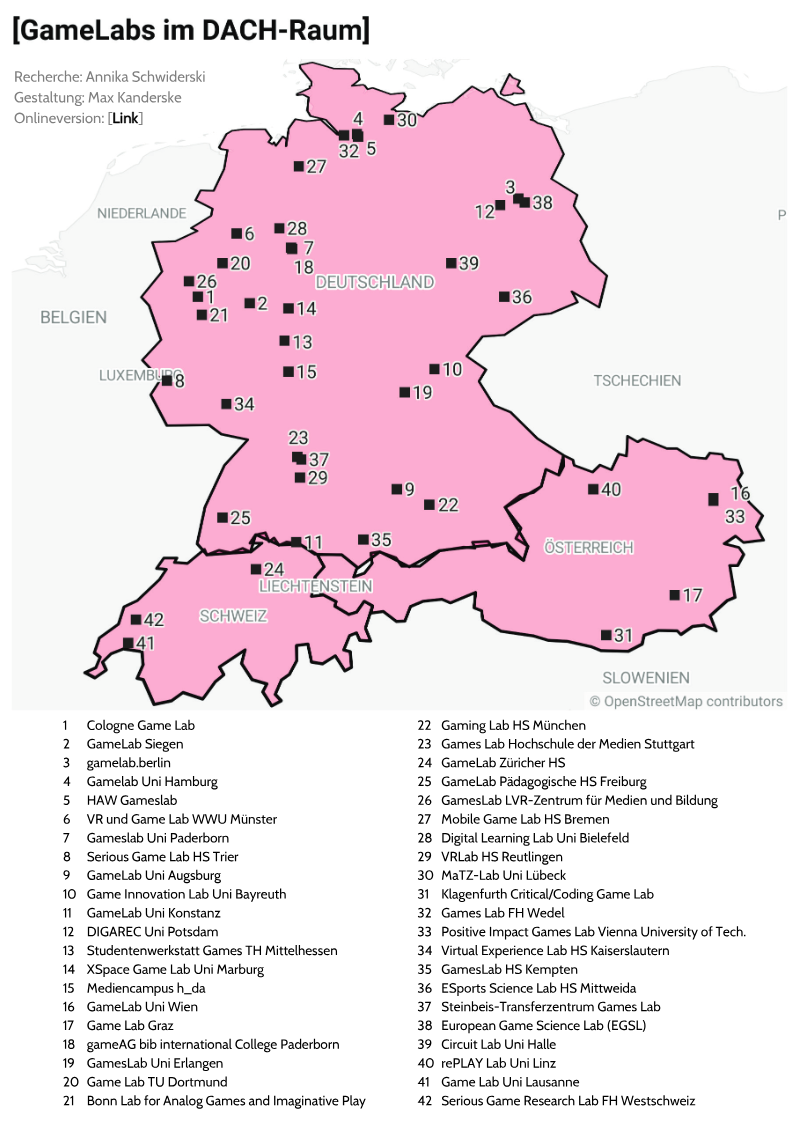
Game Labs im DACH-Raum
The landscape of game-focused research and development facilities across the DACH region—Germany, Austria, and Switzerland—is characterized by a dense network of forty specialized laboratories integrated into academic and vocational institutions.
- The DACH region (Germany, Austria, Switzerland) hosts a network of at least 40 specialized game laboratories integrated into universities and research institutions.
- Game labs are widely distributed across the region, with significant concentrations in major academic hubs including Cologne, Berlin, Hamburg, Munich, Stuttgart, Vienna, and Zurich.
- The labs focus on diverse specializations, ranging from serious games and virtual reality (VR) to esports science, mobile gaming, and critical coding.



Digitale Welten, Analoge Verfahren: Ein Praxiskurs zwischen GameLab und Fotolabor
This pedagogical project explores the intersection of digital game culture and historical analog photography, specifically through the practice of virtual photography.
- Combining virtual photography from games like Red Dead Redemption II with the 19th-century cyanotype process creates physical artifacts that bridge digital aesthetics with historical materiality.
- The cyanotype process, developed by John Herschel in 1842, is a non-toxic, iron-based photographic technique that serves as an accessible pedagogical tool for exploring game culture and image production.
- Virtual photography challenges traditional definitions of the medium by creating images independent of real-world referents, yet these images often mimic the technical characteristics of historical photography to achieve perceived authenticity.
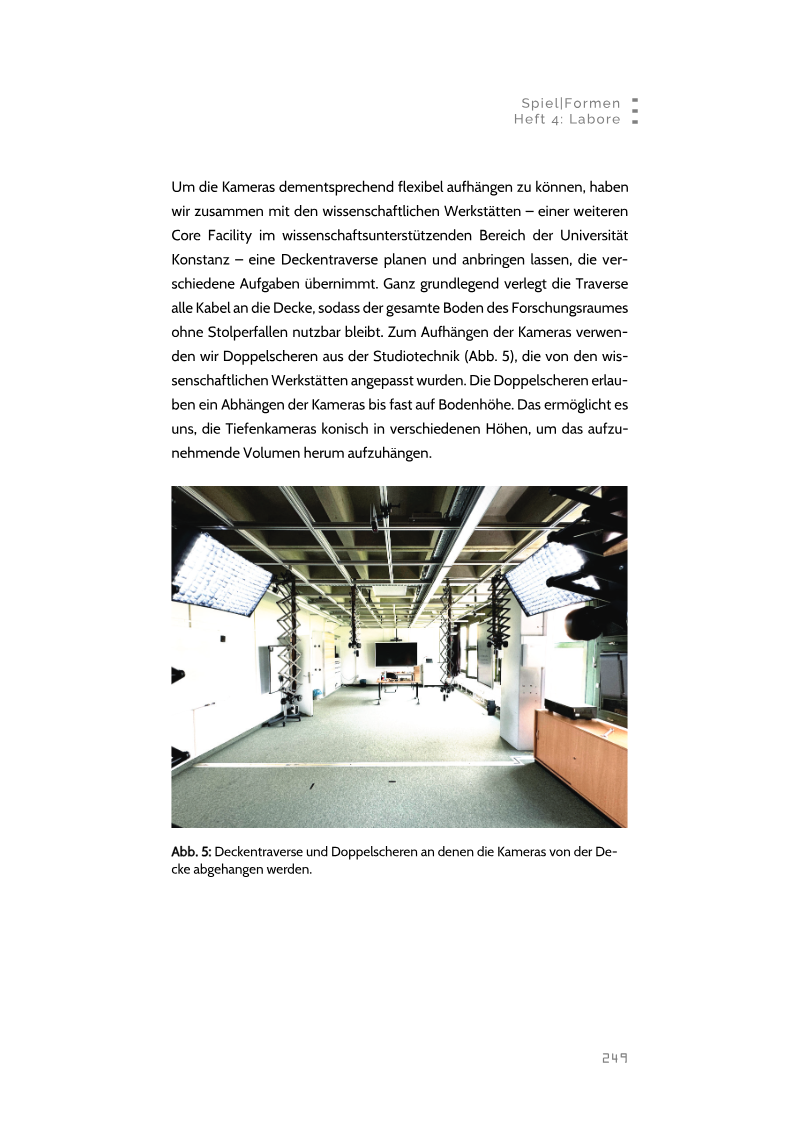
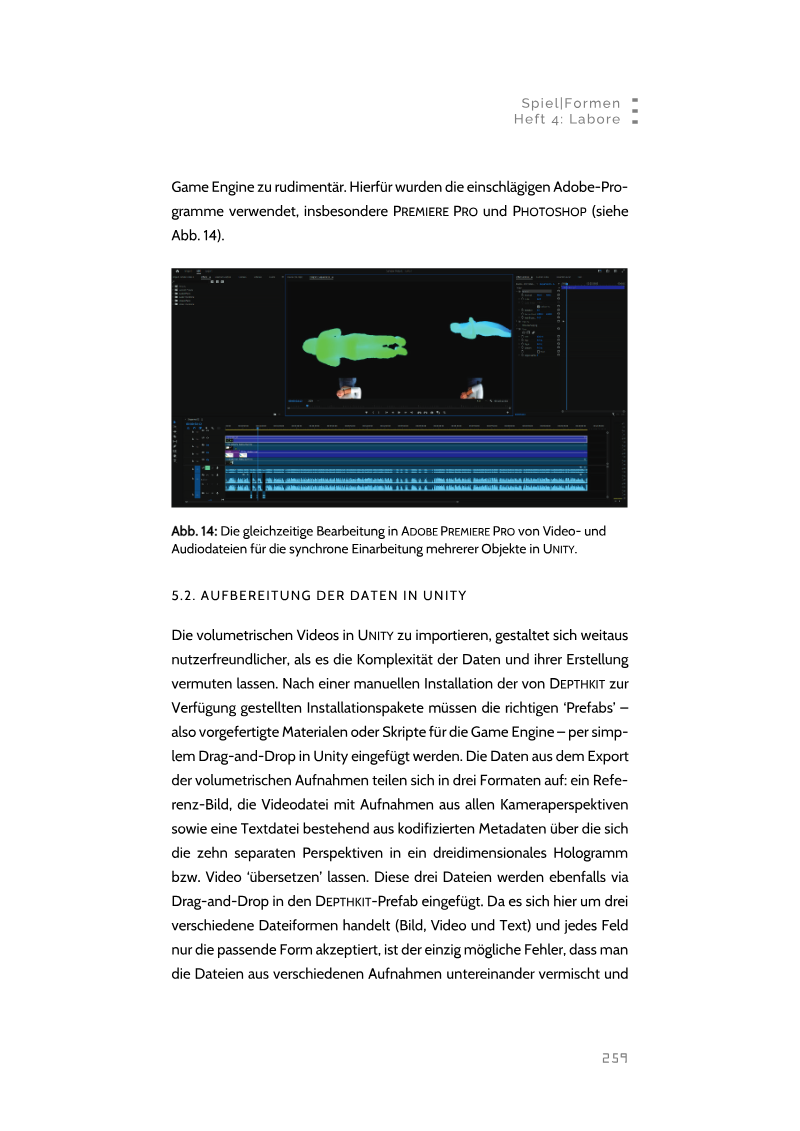

Volumetrische Videos zur Datenerhebung: Laborbericht einer spielerischen Annäherung im GameLab
The document is a lab report by Marko Jevtic and Benjamin Schäfer from the GameLab at Universität Konstanz, describing the setup and post-production of a volumetric video camera system used in the MARS-D research project led by Prof.
- The authors built a ten-camera volumetric system in the GameLab research room, which they describe as limited to ten cameras to keep costs and administrative effort low given its exploratory aim.
- Calibrating the ten-camera setup with DEPTHKIT took about 15 minutes, and the authors found concentric, expanding circles around the estimated volume centre gave the best result.
- The authors found the system captured objects such as bottles, apples and laptops incompletely or in different geometry, and screens were not recognised by the cameras.

How I Went From a 3D Artist to GM of a Billion-Dollar Game - Justin MacFarlane
Professional advancement in the gaming industry is best achieved by prioritizing cross-functional mastery and the proactive identification of organizational needs over rigid adherence to specific job titles.
- Operational excellence in live service games requires integrating data-informed decision-making with rapid, iterative development cycles to respond to real-time player engagement metrics.
- Physical proximity of product, analytics, and development teams is a critical strategy for maintaining the high-speed collaboration necessary to manage complex, billion-dollar live service ecosystems.
- Career advancement in the gaming industry is best achieved by prioritizing cross-functional mastery and internal mobility over rigid adherence to specific job titles.

#1ReasonToBe
The game industry serves as a potent vehicle for social impact, cultural representation, and personal transformation, provided that developers actively challenge systemic barriers.
- The game industry must transition from viewing accessibility and inclusion as individual responsibilities to treating them as systemic imperatives for the workplace.
- A significant disconnect exists between the high engagement levels of commercial entertainment and the functional utility of serious games, requiring deeper collaboration between researchers and developers to bridge the gap.
- Marginalized creators—including women, immigrants, and trans individuals—face structural barriers such as visa restrictions, professional isolation, and pervasive harassment that threaten their career longevity.

UNCUT: Co-CEO Javier Ferreira and The Scopely Playbook Behind $5B Monopoly GO!
Scopely has evolved from a modest enterprise generating $12 million in annual revenue in 2014 to a global powerhouse exceeding $2.8 billion by 2023.
- Scopely scaled its annual revenue from $12 million in 2014 to over $2.8 billion by 2023, anchored by the $5 billion performance of Monopoly GO!.
- The company’s growth strategy centers on aligning high-quality intellectual property with product mechanics that specifically honor the established fantasies of existing fanbases.
- Scopely treats M&A as a daily operational function rather than a sporadic event, utilizing shared incentives and long-term alignment to mitigate the risks of scaling.
Building Hit Games from Scratch on Roblox with Twin Atlas
Twin Atlas has established itself as a premier developer within the Roblox ecosystem by successfully scaling from individual creator roots into a sustainable, professionalized studio.
- Twin Atlas maintains a portfolio of Roblox experiences that regularly reach 50,000 to 100,000 concurrent players and includes three titles that have surpassed 1 billion total plays.
- The studio prioritizes long-term sustainability over short-term spikes by focusing on recurring revenue and player retention rather than quick, high-churn monetization models.
- Twin Atlas formed through a strategic merger of two existing studios to pool resources and maintain independence, allowing them to compete with venture-backed developers without relying on external funding.


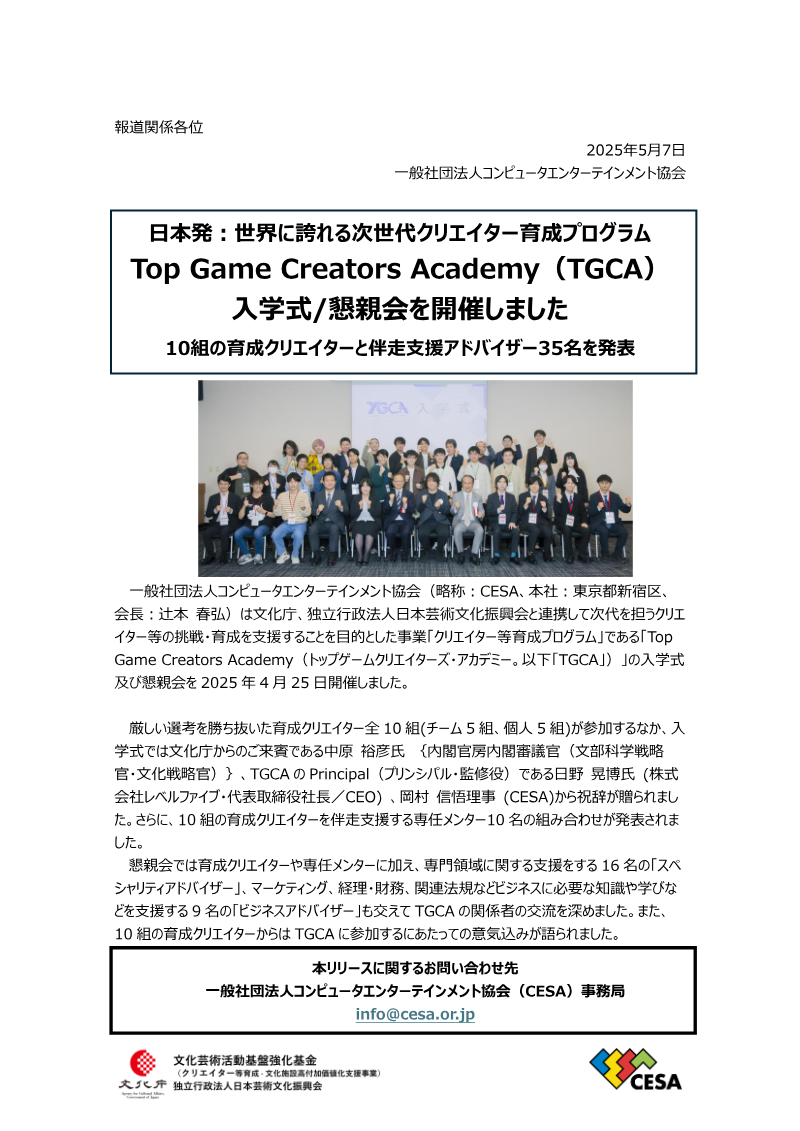
Top Game Creators Academy: 入学式/懇親会を開催しました
一般社団法人コンピュータエンターテインメント協会(CESA)は、文化庁および日本芸術文化振興会と連携する「クリエイター等育成プログラム」Top Game Creators Academy(TGCA)の入学式と懇親会を2025年4月25日に開催した。世界で評価されるオリジナルのゲームIPやコンテンツを生み出せる若手クリエイターの育成が目的で、文化芸術活動基盤強化基金を活用している。選考を通過した育成クリエイターは10組(チーム5組、個人5組)、総勢21名である。…
- The Top Game Creators Academy (TGCA) launched on 25 April 2025 to develop globally competitive original IP through a two-year intensive mentorship program.
- The cohort consists of 10 teams—5 groups and 5 individuals—supported by a network of 35 advisors, including 16 specialty experts and 9 business consultants.
- Mentorship is provided by industry leaders from major studios, specifically Bandai Namco, Capcom, and Square Enix.

The BILLION User Goldmine: Gaming with AI + Telegram (DEEP DIVE)
Telegram has emerged as a high-growth distribution frontier for the gaming industry, mirroring the viral potential of early social media platforms.
- Telegram serves as a high-growth distribution channel that bypasses traditional app store friction by utilizing HTML5-based architecture and the TON ecosystem for crypto-native transactions.
- AI-native operational models allow studios to accelerate development cycles by five to ten times compared to legacy production methods.
- Messenger-based gaming platforms leverage social mechanics like referral loops and collaborative leaderboards to bridge the gap between Web3 infrastructure and mainstream user accessibility.

Daniel Mullins: Making Games Alone (ish), Burning Through Savings & Failing Upwards | Ep. #042
The trajectory of independent game development is defined by a strategic blend of creative intuition, financial pragmatism, and iterative learning.
- Daniel Mullins attributes much of his early career success to luck, including an unsolicited $5,000 contract for a children's math game he received at age 18 after a stranger discovered his early work online.
- To ensure high streamability, Mullins designs games around 'whoa' moments—unexpected shifts in gameplay similar to those in Bioshock or Portal—which provide streamers with natural opportunities to display reactive personality.
- When working with publishers, developers should be wary of 'greenlight' deals where the publisher takes a revenue percentage without providing significant value-add services or marketing support.

Mobile Game Publishing 101: How to Get Your Game Published
The mobile gaming landscape has reached a state of significant consolidation, rendering self-publishing an increasingly difficult path for independent studios.
- Publishers require specific retention benchmarks for partnership consideration: 35–40% Day 1, 20% Day 3, and 10% Day 7 retention rates.
- Success in the current mobile market is defined by unit economics where the lifetime value (LTV) of a user consistently exceeds the cost per install (CPI).
- Developers should implement hybrid monetization models that combine advertising and in-app purchases to ensure financial stability during the soft launch phase.

Dear Creatives, I Bet You Can Relate. Let's fix it!
The primary challenge for independent game developers and creative professionals is the tendency to juggle an excessive number of projects, leading to paralysis and a lack of focus.
- Optimize creative output by adopting a rigid project hierarchy consisting of one main project, one side project, and multiple low-priority learning or tool-development tasks.
- Evaluate project viability using the Ikigai framework, which requires the intersection of personal passion, existing skills, market demand, and financial sustainability.
- Mitigate the sunk cost fallacy and shiny object syndrome by treating every project as a calculated bet with a defined exit strategy and estimated return on investment.
Writers
Games and companies
Games