Transcript
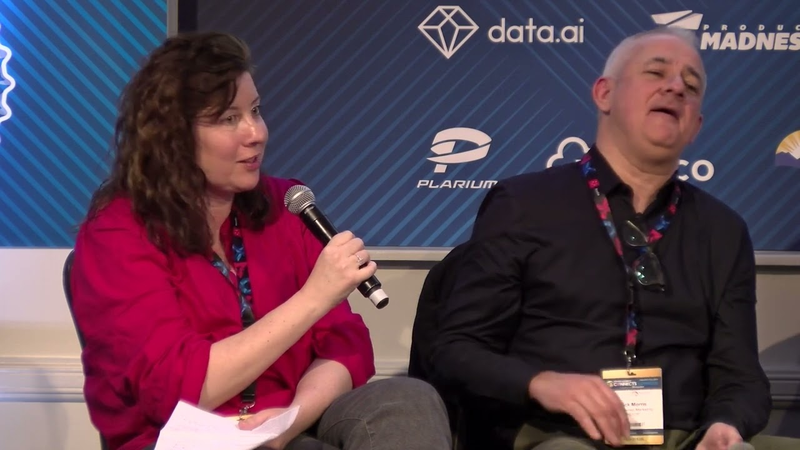
[Music] Okay. So, thank you for being here today. I am Laabi. I am from Urua, co-founder of a small indie studio called Pinser Games. We are only three. I am the coordinator of the Latin video games federation and also part of the game awards future class and proud organizer of what I believe is one of the most magical and unique panels of all GDC. So, welcome to number one reason to be 2025 [Applause] everyone. So, um let's go back for some. Yeah. So, there. Okay. So
I always start with history because the legacy of this panel matters and it's worth addressing to those who don't know it yet. So the number one reason to be started on 2013 uh by the legendary Brenda Romero and Lee Alexander and when the number one reason why hashtag emerged on Twitter and it started the conversation of the importance of women in our industry. So then Ramy is smile continued the panel uh switching the conversation and giving the spotlight to uh game developers around the world that would not normally have the chance to speak in one of the most important conferences in the world. people from different countries, economic realities in a beautiful attempt to break with this cycle that we often see here of only listening to speakers from the United States, Europe or maybe huge success cases or companies. Now I continue with the
former organizer torch with combining both visions bringing you together women from all over the world and underrepresented sectors. So this is a space to open our minds to different realities and ways of perceiving what is like for many devs around the world. This panel is not just about uh them having this space. For many of them it is the first time in this country. For many of them is the first time speaking at GDC or even though they uh live here. And in just a minute you will find that something very unique and magical happen when you bring together the underdog women and let them speak freely. So I must make a warning though. [Music] Um this panel is about women speaking about the realities and the truth for many uh uh for many women's uh is uncomfortable to hear especially on on
the face of what the world is like today. So unfortunately world the world has gotten worse for women since the panel started on 2013. And for this reason this panel is worth defending and is relevant even today after all so many years. This panel is the conclusion of one year of work. So we need months of preparation in order to ensure the right people come and um unfortunately we have to face with crash dreams. So since we have to face with visa denials, a lot of uh devs and women from all over the world like get invited but never get the chance to come here and speak to you today. For this reason is that we ask you like to um rate us after the panel because that uh shows CDC that it matters and it um help us to try for next year for those who who couldn't make it this year. So let me present to you the five
panelists that we have with us on this 2025 edition. So we have Han Maki from Saudi Arabia. We have Javis Pulva from Chile. We have Morgan Baker from the United States. We have Lyanna McKenzie also from the United States and for the first time ever we are introducing the role of a godmother. So uh to empower the panel we are so so uh honored and excited to have Kate Edwards with us today. So please uh keep an open mind, open hearts and enjoy listening to their number one reason to be in this industry. So let's start with Han. All
yours. Thank you Lyanna. Thank you very much. My name is Halan Maki. I have a PhD in serious games which is I'm developer researcher and I work with uh studios like a startups in uh in in Saudi Arabia and I I love conducting research that combine with uh with gaming because there is really really gap in in the field. So today I will talk about a life changer perspective on games. Have you ever played a game that changed the way you think? For myself, I'm going to started game as a starters like like you. We play games since we were like child. We know games. It's for entertainment. And I never thought that games will shape my uh my my career in research, education and development in in general and perspective of learning.
It's like game nowadays. It's not just about entertainment. So I saw games as a fun or something to detach from reality. And this is one of the games I when I started playing it. I was so young. I were playing it with um my brothers, my peers. I was really bad at playing, but he was the the one who was uh playing the game and cheering him. And that was the the first exposure uh of the game. Yeah, I look so young but I'm not young that much. So that was like when when he started game is just playing. Even when we're traveling abroad for vacation, we're like all the time we have our console with us. But for today's journey, I wanted to show you a bit earlier before even I play uh video games. when I started I started with Arabic calligraphy and it was really great exposure for me uh with my uh my father because back then was
like we not rely on pieces we were like you rely on your beautiful handwriting and this is when I get a sense of art and design and so on that even before I started uh school it was like obligation I I needed to have beautiful handwriting then later on I was like when I was before I started higher school. I was a bit rebellion. I don't wanted to go to normal schools and I wanted to go something related to art and design and that was a bit devastating for my mom because both of them are well educated and they were like what are you going to do? I was like anything else related to art and design something with crafting and so on. So this is one one day actually we discovered there is a higher school is for like vocational high school you kind of specialize whether in in fashion design or in um in cooking and so on. So this is why another thing from early stage I uh or milestone I would say I
understand about problem solving how to find solutions and so on in during or uh throughing the uh fashion design then I study um Islamic art in my bachelor degree which was if you wanted to study art uh back then you can find it more in college not in in university and that was time for me no I'm not going to be lower than my parents who got you know uh their degrees from university. So I did in Islamic art and then actually it's in heavily influence my games later on because that what I care how I can export my heritage and culture not in the form of religion is more in form of of culture. So this is when I went abroad and study my my master degree in design innovation and that was first time ever I heard about interdisciplinary uh project which I was doing it for my entire life I would say because I don't
feel myself in only um one disciplines it's always connected together and here when first experience started in my master degree to learn about Maya and unity and maya to you know to to um to to model your objects Unity just the environment and I wouldn't like understand the concept of gaming back then but then being introduced by one of the candidates uh amazing Gerard from uh Mexico he ex introduced me to serious games that can be used in heritage culture museums education and so on and that was a moment it was really mind-blowing for me was like wow they are actually teaching it in university So first experience with me for with serious games was uh for autistic children. Uh when I started doing literature uh I identified there were like a great gap in uh literature about something called a sensory processing
disorder. Most of the games or most of the studies focusing on social interaction in autism but never tackle the issues on the the sensitivity whether it's hypo or hyper sensitivity either in sounds vision and touch and so on and this is where like okay this is amazing I identify this then how we going to develop the games for artistic and I remember that moment I had one of close friends like try to pursue me not to go there because I don't have experience in autism either in game developments like C and I was like and this is like it's going to be a very difficult journey as PhD uh journey I was like whether like if you wanted to do PhD in is going to be difficult anyway so I wanted to do something I really desire and love and yeah I started learn C# by myself it was selftaught it wasn't really great I would say but it was really rewarding uh experience even the art I did that this
artist just in one day because I have a good background in art but I didn't have a the team to develop with me and it was really um tight budget although I was uh um fully supported by the government Saudi government but to have the team it's it's you know how cost is going to be so this is when I uh I decided identified and then I was like a bit concerned and another concern is it okay to use one of these beautiful story from Arabia like Arabian Knights in my game and this is when was like my supervisor yeah why not actually autistic children they are into fancy and here when I dis I started to explore serious game more in depth for autistic so I explore serious games is more like it's not just entertaining it's more like for educational purposes for mental health accessibility and cultural storytelling how to make it relatable to the uh
target audience. So here when when you desire game are not just for fun are they are more and more for impact for more for the community and more for other disciplines and uh in in in the term even entertainment games it's if you wanted to work you needed to have different discipline and this is what I love being in in game development. So moment I saw games change lives and this is uh I I remember I was like I just halfway in my PhD here and I I told my mom it's like I I I I feel like I already got my PhD because I saw immediately the impact actually in the um in the experience uh or the experiment I did. So when they started they played the game they were like everyone isolated they don't communicate they just focusing they wanted to finish the game and that's it then they struggle at some point because the game is progressly uh getting difficult uh by
the time they starting talking to each other and helping each other and sharing it was like wow we find the magic flower because one of the object was in the environment magic flower and I was like wow I didn't meant I didn't design for this but this is amazing because The purpose of the game itself, it was about how to um improve or uh tolerant the uh sound sensitivity in them which is shows already and approved by amount of time playing this game is decreased their over sensitivity to this certain sounds which is mainly high pitch sounds like um fire engine and baby crying. But this is when I saw what is could be the impact of that kind of games for uh certain population. So why serious games work? Definitely is that what I learned from my PhD engagement which is wasn't really meant back then. Uh safe to fail as well because you have control environment. You have uh think that you can fail as much as you can. You don't
feel judges by by people. It's personal connection. You are in the same environment. you are um playing with your uh peers and you can have that kind of sense uh connections with with others. So why this matters today is still after I started in 2014 with my my PhD and still there is really big gap and lack in not just in autism in serious game in general the quality of the game is it's really horrible sorry to say this word it's really horrible because mainly the researcher they are working in this or maybe people from computer science but they never been in in engaged in the uh or the sense of game game play or rewarding system and so on. I've seen a lot of serious game they call it serious game but it's more like gamification. There is no uh rewarding system there is no game play there is nothing while serious game is needed to be like commercial games but there is collecting
data there or skills you needed to improve but it should be compete with the uh existing game and this is wouldn't happen with uh help of uh existing developers from industry. How game transform to your field? Where wherever you are from software engineer in architecture and so on, you can use serious games to teach your students or even to um use simulations to train certain uh machine or whatever in in the um industry and definitely this is we need to understand how we can impact games here and this is just uh one reason to be here. It's let's act now and lead the change because without your help as a developers there wouldn't be uh a good serious games. I wouldn't improve the uh research field. Thank you very much. So I I will leave now to the next uh speaker. Thank you.
Hey everyone, can you hear me? All right. Excellent, because I can't. That's a deaf joke. So, my name is Morgan Baker and I am a game accessibility lead and inclusive game development leader over at Electronic Arts. I'm going to be talking a little bit today about my hashtag or my number one reason to be. This is going to be in the form of a story where I'm going to tell you a bit about my career and how I got to where I am today to show you how I am motivated to be here currently. During my story, I will be talking about deafness and I will be talking about disability. And I do this not to make you all feel like uncomfy or like think about like pity or stuff like that. I just want you all to get into the headsp space of my journey and how I came to where I am right now. So, without further ado, I wrote it down
because I always get off track. So, you're welcome. So, when I was younger, I woke up deaf. Now, I'd already experienced hearing loss at that point, mild, moderate, severe, profound. They have a whole list on the chart. But one day, the rest of it just disappeared. Around the same time, I developed other chronic conditions, too, affecting my joints, skin, and like other kind of important organs that you kind of like to keep. So, we had to make sure that that was okay. You'll be lucky if she graduates college, my doctor told my parents. She is, please insert the Spongebob rainbow meme, chronically illun. Well, not only did I graduate with a degree in mathematics, becoming one of the first deaf people to walk across my university stage, but I also got a graduate degree, too. So, you know how it
be? I like to say chronically ill more like chronically fabulous. Am I right? But I began in this time period learning more about disability history, immersing myself in deaf culture, which yes, is a thing and has a massive community that was warm and welcoming to me, especially during a admittedly terrifying time. I began to learn a lot about disability rights and what it means to have an identity like this. And at the same time, I also learned and quickly began to realize that the world was not necessarily always designed for people like me, people who are deaf, folks who have disabilities. And this is how I learned about accessibility, too. If you're not familiar, accessibility is about removing and reducing barriers. It isn't about fixing individuals. It's about removing the barrier altogether. It's not that I can't enjoy a movie at
the theaters because I'm deaf. It's that the theater doesn't have captions or subtitles. It's not that I can't book an appointment with my doctor on the phone because I'm deaf. It's that they don't offer online scheduling. This issue doesn't have to be fixed to me. We have a whole system problem happening right now. And this mindset, I don't know about y'all, if this is the first time you're hearing about it, it blew my young Morgan mind. So often we fix disability to the individual, but inaccessibility oftent times is more about a product, social, and an environmental issue. It's not a you problem. It's not a me problem. It's like an everything problem. It's not working. And so this realization at this time period extended to games, too. huge gamer started with the Sega Genesis and I was constantly thinking about this but I realized it wasn't that games or
rather it wasn't that I sucked at games. Sometimes games just kind of sucked for me and well although sometimes I'm not that good. Don't ask me about my Marvel rivals ranking right now. Okay, like we're we're going to ignore that. So what did I do with this newfound revelation? Well, absolutely nothing at the time because accessibility was and in most places still is a grassroots thing. It never occurred to me I could make a career in gamedev out of this. And so what did I do when I graduated school? Well, I did what most people, most millennials do. I frantically applied to like a bazillion jobs so I could make my rent at the end of the month. I actually ended up landing an interview at a dream studio during this period and is between myself and one other candidate I made it to the final round and in the call in person. They came the last question that
they asked me. So how do you plan to deal with this whole deaf thing? That's yikes. Um, and to no surprise, I did not get that job. This would actually become a pattern and would be a theme in my early career as every single time I went out of my way to disclose my need for accommodations due to deafness. Interview offers were consistently rescended from me, as you can imagine. We can unpack that, oh my gosh, a whole another day. But I tell this to you because I want to tell you about how I was feeling in that moment. And I was feeling hurt. I was young, impressionable, and gosh, what a first impression of the industry that was. I would go on to not apply for another games job for many years after that. Instead, I ended up working in accessibility. As it turns out, y'all
surprised, it actually is a career outside of games. And so, I began working in accessibility. But my love for games of course never stopped. I was very involved in the deaf gaming community and the disability gaming community cuz I'm a nerd and I love video games. And sometimes for fun I would like stream games and because I was expert in accessibility I would like talk and analyze games and talk about like the barriers in them. And this is just for funsies. As it turned out it wasn't just disabled gamers who were listening and watching and chatting with me but game developers too. And one thing led to another. folks would reach out to me and they say, "This is really interesting that you brought up this point in my game. How can I make it better for you? Let's talk about this more." What that like again blew my mind. And long story short, it went from come over to our studio, we can chat to, hey, can we offer you a consultancy contract? We want to have more regular touch points with you. I began working with these studios and I saw real tangible impact. games were changing.
And though I want to say I was just like a teeny tiny part of this massive thing, I became really hopeful. Games really can be for everyone. So eventually, keep in mind guys, like during this time, I still had a job and so I was like juggling like like full-time contracts and part-time contracts with my full-time job and it was just becoming too much for me. And I was talking to a game designer, my close friend Carol. We were working on a project late night for something and she just turns to me and goes like, "Well, why don't you just go get a job as a game designer then?" What? That like never occurred to me. And it it's just kind of funny how belonging works that way. And so I went for it and I got a game design job, which actually one of the coolest projects I worked on was Harmonium. I don't know if any of y'all are familiar with it, but it's a game that involves deaf culture, sign language, and
exploring deafhood from like the lens of a young girl who is deaf. And so I was able to like take like my own experiences and take my love for access building, game design, and really hone in there. Uh eventually years passed and now I am a game accessibility lead for electronic arts. I do want to say though that the advocacy it never stops. Securing ASL interpreters at conferences took years and many still don't offer them. I have two today though. They can wave and thank you in advance for interpreting for me. Um I also want to point out that oftentimes I still have to ask for transcripts on calls and a majority of dev resources out there don't even have subtitles. Imagine having to disclose your disability multiple times a week just to do the basic parts of your job. And I do want to point out that I have my own privileges. I am quite hearing passing. I was born hearing and became deaf later. I can speak. I'm
white and I had access to graduate degrees. But of course, all of this is always compounding. I'm a woman in a, let's be honest, male-dominated culture. and I'm part of deaf culture and the deaf community, a culture built on shared language tradition and values that most of you may not even heard about today, but you should look it up. It's really cool. And I experienced what we often call in disability studies deaf rage, which I often joke sometimes single-handedly uh gets me out of bed in the morning to do this work. Someone's got to do it. Pass me the controller. But change is happening. Last week, a respond director asked, "Morgan, would you prefer if we switched to Google Meet? I recall you mentioning that that was better for you. The captions are more accurate." So, that's really cool. I didn't even have to ask or say anything. It gets better. So, my one reason to be, my number one reason is I do this for my community so that no more young Morgans are asked, "How do
you plan to deal with that whole deaf thing?" So disabled people never have to wonder if they belong in this industry because they are worthy and they deserve to be here. We deserve to be here. And I do this to normalize disability, to make advocacy easier for those who come after me, to ensure that games truly are for everyone. And this industry is truly for everyone. And I'm not alone. I'm surrounded by loving folks in a determined disabled gaming community. And though again I'm just a teeny tiny piece, it's an honor to be an advocate in this space. So that's my one reason to be. Thanks everyone. I'll be passing it over now to our next speaker. Ha, there you go.
there I think. Yes. Hi, my name is Javi. My pronouns are she, her. I am based in Germany. I'm Chileian. I am migrant latina visexual uh autistic ADHD. Uh I have been working in the quality assurance field since 2016. Um currently work at Koliver games. So I had the privilege of being the first woman in my family to be able to pursue higher education. Oops. So in Chile at that time education was still larger privata size. So I need to take a 25 years loan to be able to study video game design and development. I always knew I wanted to live abroad and I thought with a university degree it will be easier which was true and false because there is a lot of government that don't recognize video game development as a
professional degree for example Germany. I choose this industry because I always loved games. I always love playing games and I create my first game when I was eight years old with PowerPoint and hyperlinks. I share it with all my friends through a floppy disc. I was 20 when I started my studies and right away I saw the concept of of what I will have to face. In my first semester, there were 40 men and we were only four women. In the second semester, there were 35 men and only me. All my life I had heard that women weren't interested in technology. I started to realize it was not about interest. It was about the treatment, the access and the lack of rights and voice. I lost count of how many times male professor because of course we only had male professors made comments about my clothes, my body or my abilities. One time a professor told me,
"You don't need to learn how to code because you are cute. So everyone will do it free for you." as if I if I were a currency to be exchanged. Thus that year I helped to organize the second edition of global ging in Chile. Instead of professional networking, I received unwanted advances. A man 10 years older than me and working in the industry decided my not was not enough. I felt frustrated and isolated. I wanted to quit and find an easier industry. But I had the pressure and opportunity at the same time of being the first person in my family to have a professional career. I fear not be believe I didn't had English skills to reach out internationally and I didn't know how to connect with other women's. So with my boyfriend at the time now husband he helped me to brainstorm some ideas to deal with the situation. My grandfather who lived through 17 years of Chilean dictatorship taught me what he learned during that time. That our
most important tool is our community. So I decide to create the first Facebook group called the Syas, the first Spanish speaker community exclusively for women. When I announced it in existing group, I was accused of trying to segregate our industry. Uh but through it I learned I wasn't alone. My experience weren't isolated. They were systemic. I focused on building a safe space for my community. I started working on my own projects on 2014 and I was hired by my first company in 2016 as QA. While I love my work, um I already I felt already tired of being constantly vicious or being too loud or too confrontational because I've had very extreme views as there should be more women in this industry. I start giving talks workshop and coorganize an addition of gears makes games in Chile. In 2018
with another Chileian women's we start an NGO called Muerbe um a collaborative and safe space for women international industry. We organize workshops and studies spoking IT panels and offers free workshop to public schools where resources are often limited. But of course some men online thought this was not our place. We receive a lot of threats after I announced a workshop for teenagers to teach coding tools. Anonymous user in forum threatened us and we need to cancel that workshop. We went to the police but they said online threats weren't enough to them to act. So for at least three months uh we were doing online journals achieving everything men online said about us. Then covid came with chief online start to more online workshop streaming talks and I helped to organize the first
few edition of government game jam in Chile and continue supporting future ones. Eventually my husband and I had the opportunity to relocate to Berlin. A new challenge because I was not anymore just a woman in the industry. Now I was a immigrant in a country where I don't speak the language. As an immigrant, my right to be here depend on government policies on immigration and giving a job in an industry known for layoff. I found an amazing workplace games, a diverse and kite team with a very the best hearts in the world. So what is my reason to be is to be here to be loud to use a space. For too long I felt this industry wasn't for me that I was alone even when I wasn't. As long as I am in this industry, I will be as approachable as possible. I will be as visible pro as possible. I will uplift other because in my culture, our communities our strongest tool because
we not only belong in this industry, this is our place. Thank you. Give me a second. Got to get my my speech up. My phone of course never cooperates with me. Hello. Uh my name is Lyanna McKenzie. Uh I am one of the hosts of the Asians Represent podcast. Uh we are a podcast where we discuss Asian representation in games often tabletop but expanding to other media of course. Uh, and I'm also the owner of Valeris Games, uh, where I published the tabletop role playing game I co-created. Uh, Valor is a tabletop RPG about being able to kind of live out your action anime fantasies. Uh, you can create any kind of character. You can, you know, build your own combat abilities. You can
do all sorts of cool things with it. Uh, you can also get rewarded in the game for shouting attack names or giving dramatic monologues, you know, being super extra and anime about it. Uh, and this game is probably one of the proudest achievements of my life. I still love playing it and running it to this day. Fortunate since I'm, you know, publishing it. Uh, but also it is a deep expression of the transess of myself and Quinn, my co-creator. Uh we came together in college to design this and what it let us do and express and envision was a world in which we weren't confined by boxes and where we could be whatever we could imagine. Uh being trans, I often find myself wondering what if what if I had been born sis? What if I had had a body that matched my mind? Could I have explored other interests? maybe experienced less ostracization and
bullying, been a normal girl, you know, who loves fashion and makeup. Uh, no matter what may have been, however, I know that my love for games would still be as strong as ever. Uh, while they were a rock growing up as a bullied little girl in a boy's body, they've always been my passion as well. Before I knew who or what I wanted to be, I knew that games would be a central part of the life I wanted to create. I've never been good at accepting my circumstances. Even at a young age, I would confront and argue with my parents uh if I wanted something or if I thought they weren't being fair to me. I spent energy on things that interested me, even at the expense of other things that didn't like school. Even in the face of the bullying, I used games as a way to connect with the boys in the class. Uh finding whatever friends I could. Uh it was hard. It was very hard. But I was lucky to have a family that loved me and accepted me and also had the resources
and the mindset to teach me that I was capable of anything. Uh my disinterest in school and subsequent frequent groundings for that failure turned out to be the spark that set me on my game development journey. Uh my grades often left me grounded uh unable to play the video games that I loved. I was however permitted to use the computer to write. Uh, I had always believed that I was going to be a novelist someday, but I always struggled to finish more than two chapters on any book I might try and write. Uh, games were different. I designed over 40 games of my own during my middle school and high school years. Uh, and these will never see the light of day. Thank you. Um, and in college, I kind of first started designing seriously. uh first modifying the DND 3.5 system to be able to play the anime Bleach. Uh if you see Bleach D20 online, that is built from my original material. And also I am sorry.
Uh after that profoundly frustrating project, uh I decided to turn to my own ideas. Uh I've always been ambitious. I suppose that comes with a territory when you refuse to accept things that you don't like. Uh when I first approached Quinn about making Valor, in the back of my mind, I was thinking that this might be the way to get into the industry that I loved, have a game under my name, maybe I can get a job. Uh but as we got further in development, I just started thinking, what if I make my own company, publish this myself? That's exactly what I did. It's not been an easy journey. I've worked a desk job to fund my passion. I've sacrificed the hallmarks of a normal life like vacation and home ownership. Uh but honestly, I wasn't ever really meant for a normal life. What I do I do out of love. The ambition made transitioning both easy and difficult. Uh knowing how difficult it is to be in this industry
as a woman, much less a trans woman. My fear forced me to run from the truth most my life. But when I finally accepted who I was and with the help of my wonderful wife who has always supported and loved my ambition and drive and was also gay this whole time, um transitioning ended up being one of the best decisions in my life. Uh in typical fashion, I threw myself into it and for the first time I was able to look in the mirror and loved who I saw. I am beyond fortunate that the communities that I've been a part of accepted and embraced me wholeheartedly. The fans of Valor, new and old, came together to fund the first reprint, correcting the names on the book to properly reflect the truth of the creators. As a trans person and a developer, I could not be more thrilled. And yet, even standing here today, there is a fear. A fear of the hate, the harassment, the ugliness that you know is lurking just below the surface and is ready to devour you as soon as you pass
in the line of sight. It's a fear that makes one want to be small, to not seize opportunities to protect oneself. But in the end, I ambitious. I can't turn away, which is why I am here. To be trans is to fight for your existence. To say being trans right now is terrifying is a profound understatement. We are under attack from all sides and suppressed by a government that is salivating at the thought of our annihilation. And yet, despite all of this, I don't regret my decision, even if it means that my fate is to meet my end at the hands of ascendant fascism. The reason I have no regrets is because despite everything, I have never been happier in my life. Uh before my transition, the only time I can remember having smiled was on my wedding day. But now I smile all the time. I'm sorry I'm getting a bit choked up. Uh there's a
certain unfathomable joy to being the woman that I always have been deep down. It's the little things getting complimented on uh on my fashion or my hair, getting called ma'am or miss on the phone or in person. Uh even these small things fill me with the warmth and a sense of belonging that's hard to describe. It's a feeling of acceptance and validation of finally feeling like the world around me and the woman I am inside are aligned. I love being a woman and the happiness is not something I can ever will ever give up. And at the end of the day, that's all any of us are trying to do. Even now, the world defines our transness as aarent, attention-seeking, deceptive, advantage seeking, and ultimately sinister and wrong. But these attacks are so far from the truth. We're just people. People trying to live, to love, to make the most of our existence in this ugly and
beautiful world. No trans person asked for our circumstances. Indeed, I don't think any of us have ever asked for our circumstances. All we are doing is trying to make the best of what we were born with. In a kinder world, that would be enough. As I speak today, I feel the walls closing in on our community. Uh while it is heartening to see support and protest for rights, it's impossible not to see the vitriol, the hate driving the movement against us, as well as the indifference, if not outright betrayal from many of those who would happily claim themselves our allies when it suits them. All we can do is be visible. To beg and plead for a right to exist, our basic humanity. The world is a scary place and scarier still when you feel like many wouldn't care if you died and certainly wouldn't lift a finger to prevent it. And in these circumstances for me, I must continue to create, to design
games, create worlds, tell stories. I'd love to say there is some high-minded ideals driving me, some need to represent my community's best face maybe or defy those who would see us dead. And I guess that is true to a point, but that's not the truth at my core. My one reason to be is simple. I love making games far too much to ever stop. Thank you. Hi. Uh, my name is Kate Edwards and um, I've been around this industry a long time and before I get started on my one reason to be, I just want to say what an incredible privilege it is for me to be the mentor of this panel. I'm on the GDC advisory board and part of my job is to
make sure that this panel exists and to make sure that is supported and to help people get visas if they need visas to get into this country. I won't go into that right now. Um but uh it's just a incredible privilege. So thank you Lia. Thank you all of you uh for in having me on this panel. Um I feel like I don't belong here because I'm here to support you. But I was asked to be here as the godmother which I like that title. Um, I need like a fairy godmother dress or something or a wand, but um, I don't have that. Anyway, um, I've been around this industry a really long time, 32 years. This is my 32nd year of working in this industry. I'm originally from LA, uh, Los Angeles, Southern California, uh, which is not that, that's Los Santos. Um, but it's close enough. It's pretty much the same place. Um, I've been exploring this interaction uh between what is real and what is represented and what is perceived in the
game worlds that we make because I'm a geographer. I am a geographer and a ctographer who found my way into this industry through a whole vicarious uh path that I will not go into great detail about but basically give you an idea. I was growing up uh I was I'm I turned 60 years old three weeks ago and I uh was alive to see the moon landing in 1969. I was four years old and I will never forget it watching on my grandmother's TV and I'm like I want to do that. And so when I graduated high school I wanted to be an astronaut. Calculus killed me in aerospace engineering. So I switched to industrial design because I wanted to be a conceptual artist for Lucasfilm because I had the artistic skill. I wanted to do what they do. I wanted to work on a Star Wars film so bad because I was 12 years old when the very first one came out. Uh it was a massive impact on my generation and so I did industrial design, picked up the skills, but then I just got disenfranchised with the program and decided to switch to geography. As I've
always loved culture, I've always loved travel. I love maps. I could take my skills, use them for cgraphy. My parents were school teachers. So every summer they were off work and so they put us my brother and I in a car and we road trippped everywhere Canada, Mexico, all across the United States. I was in Washington DC on July 4th se 1976 for the bsentennial. It was just magical experiences that kind of awakened in me a desire to discover and the and the love of other cultures and the love of meeting people and the respect you build by meeting other people. And so I basically switched my major. I graduated in geography. I got my master's degree about VR and uh using VR for cgraphy in 1991 when VR hardly even worked. Um and then suddenly I found myself at Microsoft a year later. They needed a cgrapher to work on in Carta encyclopedia. And so I that's what drew me into Microsoft. I made all the maps for the original In Carta, which is a
precursor to Wikipedia for those of you who don't know In Carta. Um and one thing led to another. I my job grew. It expanded. Eventually they needed me to do other work um like help them with all the the mapping sensitivities uh because they were doing a big push into mapping products at Microsoft. Um and so they said here write your job description and we'll hire you into that role. So I called myself geopolitical strategist. I was Microsoft's first geopolitical strategist and was working on these products. And then a few years later, we had a problem where we had a problem in one of the mapping products. Got us in big trouble in a country. We fixed the problems. We kind of controlled the government backlash in PR. And then eventually it exploded three months later when Age of Empires came out and they repeated some of the same mistakes we had fixed before. And that's because that product team and Enarta is way over on this side of the company. And Encarta was made in Dallas te or excuse me, Age of Empires in Dallas, Texas. uh and
those groups had no reason to talk to each other. So that gave me the idea we need a way of coordinating this risk across the company. So I created an internal team called geopolitical strategy. It took me seven months pitching to five different VPs. Um the fifth VP approved it in three minutes because he was the only one not from the US. He was from South Africa and he completely understood what I was trying to achieve. Now at that point I had already worked on my first game, Flight Sim 5.0 0 in 1993. That was the first time I worked on a game. They had reached out to me for cardographic advice. And I'm like, I grew up with Pong. That was my first video game. And I was just, you know, blown away as my generation was with the console era in high school. I was in high school from 79 to 83, golden age of the arcade. We had no internet. We had no cell phones. And so for us, games and the video game arcade was where our entire social network interaction took place. So, I always loved games, but I never aspired to work in the industry because there was no real industry that you could go
into at that time. You kind of fell into it through some other back door, but I still love games. But when I was at Microsoft working on Flight Sim, and then I had other teams approach me and I'm like, "This is really fun. I'm doing what I call culturalization work on a lot of products at Microsoft, Word, Office, Internet Explorer, all that stuff." But when the games came to me, that's when I was really excited. I'm like, "This is so cool to be able to work on this stuff." And so basically, uh, but the games group kept telling me, "No, we don't really need you because, you know, games can be edgy and cool and offensive. We don't really need your help." And I kept insisting, but no, I can help you. Trust me. And they're like, "No, your skills don't fit here." And I kept insisting that even though my skills don't fit, my skills do belong, you know? So, who are you to tell me that I don't belong in this industry? I will find a way to help you whether you like it or not. And I did because a few years later they had a huge fauxpaw with a game. I won't go into the story. It takes a long time to tell it. But essentially they made a massive mistake
that offended all of Islam. And I ended up having to go to Riad to apologize to Microsoft to the face of the religious council of the Saudi government on behalf of Microsoft for this problem. And after that happened, I get back to Redmond. I got a call from the VP at the time who said, "You know that stuff you've been telling us to do for a few years? I think we should do that on every game. And I said, "That is why they make you VP. You're so smart." So, so from that point forward, I worked on everything at Microsoft, all the Halos and Fables and Age of Empires and Forza and all of those games, and I was like completely in the zone. I was doing everything. I love creativity. I didn't get to work on a Star Wars film, but I'm still working on video games and creativity. I get to bring in the cultural aspect and geography aspect. I get to work in technology as well. So I decided eventually to leave the company in 2005 and uh basically become a consultant. So at the end of this month I'll celebrate 20 years of self-employment which is hard to
believe. Um in that time I have worked on 296 games in my career. The and these are just some of the franchises I've worked on during that time. Now about 101 15 years ago though despite my success at Microsoft despite the fact that I said I can be self-employed. I'm going to do this work I had a real crisis where I was completely nervous every single time I sent a client a response to some issue that they sent me. I knew that this was the moment where they were going to uncover the fact that I didn't know jack about what I was talking about. But the matrix saved me and I'll explain how it saved me. So, I hope you've seen The Matrix. There's only one film, by the way, 1999. Um, but um, so I love movie scores. I that's pretty much the majority I listen to. So, I went to a concert in Seattle where I'm based. The Seattle Symphony did, you know, where they have a a concert showing the film where they play the live orchestra to the score. Don
Davis, who composed the Matrix score, was there to conduct his own music. So, I'm like geeking out completely. So, I'm sitting there with a friend of mine in the symphony hall watching the movie above the the stage and then I and I'm at a crisis point. I'm at a point in my career where I'm just like, why do I get so worked up when I send when I hit send on that email and I send it to a client and I'm I know that they're going to call me out and say, "No, you're totally wrong." Even though the evidence showed even at that point, nobody had ever said I was wrong. Nobody ever said, "Oh, you made a big mistake." But I still felt that this was the moment. It had to happen. And yes, I'm talking to some degree about imposttor syndrome. But what happened is I'm sitting there watching this film. I get to the part in the film where the the main mentor Morpheus tells Neo, the protagonist, he says, "Don't think you are. Know you are." And when he says that and I'm sitting there in the symphony hall, I just start balling because I realize that was my problem. It's like I know
that people keep saying you're an expert. I know that they keep saying, "Yeah, you know, thanks so much for your help." But I did not internalize that at all. I didn't realize that I actually knew what I was talking about and I was not willing to listen to other people around me who kept validating that over and over and over again in every interaction I had with them. They're like, "Thank you so much for your help. You saved us from this big problem." But I'm like, "Nah, it wasn't me. It's just an accident." You know, so it really kind of changed things significantly for me. There was a real internal change when I finally realized that this was part of my problem that I was not knowing the the essence of who I am and what I could do in the game industry. So I realized that disbelief in my own skills doesn't make them disappear to the people around you including your parents who are always you know yes you know everything. Um so I had to realize that you have to know the reality of what others perceive in you even if you struggle to think if you have those skills or not. And that means trusting the people around you tr and trusting
the validation that you are getting and being open to the communication you're getting from people around you. So once this happened to me and this was happening at a big period in my life. I recently left Microsoft. Um my I I was had turned 40. My daughter left home for for high for for college my only child. Um so a lot of life changes were going on. I was struggling with self-employment. I go through this period and I was struggling with divorce through that period. Plus, two of my long-term pets had just passed away at the same time. So, there was a lot of lot of things going on. But I had this realization in that very moment where there was such a crossroads of issues going on from my personal life. And when this happened and when I kind of embraced this realization, something totally snapped in me. And so, what happened is that I became what a lot of my friends said, "You seem fierce now. you seem unleashed. It's like, what happened to you? And I said, it's because I don't give a anymore
about what people think about me. It's like I I embraced what I feel like I I maybe I'm an am an expert. I'll never call myself that because I'm always learning. I'm always curious and that's why I love my work. But I started embracing it. This also coincides why I started cosplaying at the same time. And well, it helps that my daughter's a costume designer. So, I started cosplaying and so and a I had a lot of people ask me what what's with the cosplay? What is it about? And I said, it's because it's the external representation of how I now feel about myself. I feel kick-ass. I feel like I can take on the world. I feel like I stop. I don't have to doubt myself anymore. And so, this led me to a complete shift in my focus. While I still love the culturalization work I do, and I do it to this day, this told me that I need to do more for the people around me. At this point, I'd been working in games for about probably 15 years or so around that. And I work with some of the most amazing people on earth. I love game developers. I love
working with these people. and the fact that they accepted me as a geographer, someone who really doesn't have a skill set that is off the shelf for this industry, but they embraced me. And I even the last day I was at Microsoft, March 31st, 2005, one of the people that I really had a great rapport with in the game uh game uh division at Microsoft told me as we were parting our ways said, "You know, the reason we listened to you because we always knew that you were one of us. We know that you love games just like we do and that was enough for us to trust your judgment on what we were doing. So I now had this fierceness. I had this like feeling of power. What do I do now? So that's when I decided to embrace a more advocacy side of my career in this industry. That's when I was approached to uh run the international game developers association to run I was the interim executive director of take this. I'm still on the board. I ran the global game jam for three years. I'm still on the board. Running the IGA was a challenge because I was running it
during a difficult time for the industry, but it gave me a chance to basically go out and help others. I feel empowered now. Now I want to empower you. I want to go around the world and help people understand that you are one of us as well. I traveled to a lot of emerging markets around the world and spread that message including going to Iran a few years ago to make sure they understand that despite the sanctions, despite the political, you know, distance and everything else, you are one of us. You are just as much a part of this industry as anyone else's anywhere in the world. So I felt that we wanted to make change. I tried to be a vocal advocate for this industry and to speak up and to basically try and make as much change happen as possible. um because I want this industry to be better and I want it to be better for developers. I want developers to have better leverage including unionization. I want things like that to happen. But it was not easy because when I was running the IGDA, this was at when Gamergate happened. And so because of Gamergate, I became one of their primary targets. Um and I dealt with death
threats and harassment from them for over two years straight because why? Because I spoke out against them. because I decided that, you know, their message was wrong and that we need to speak out against it. And I was willing to be that target and and I quickly learned that once you have a hundred arrows in your back, you don't feel the rest. So, you just keep on going because my personality is such that if you push me, I will push back harder and I will push back harder. And what I had to do in order to cope with all of that that mess at the time you was leveraging my skills as a social scientist and using myself as the subject matter of study to understand their culture and I actually developed a certain level of empathy for people on that side because they had their own culture in this echo chamber that was really unfortunate and we're seeing that of course today in all kinds of circles but I felt that by using myself as the subject of study I was able to actually understand who they are and try and develop the slightest amount of empathy because whatever they're saying about me, whatever they're doing,
they are still human beings, you know, and they still deserve respect, which has been my mission all along, is that we have to respect the people who play our games and who we interact with. And really what I was being driven by at this time was this notion that evil triumphs when good people do nothing. And I made a conscious decision that that is not going to be me. I'm not going to sit back and wait for someone to fall or wait to something to happen and just say this is not my problem. It is my problem. It's all of our problem, you know, because if we imagine if all of us stood up and did something if if somebody fell or or somebody needed help, you know, and especially in these times. So that's why I embraced public speaking because I am a introvert. I am faking extraversion right before you right now. I am being defiant of my introversion right now. Now, I'm being defiant of the of the people who said I don't belong in the industry because of my skill set or because of my gender or because of other issues. And so I when I was young, there is no way in hell I
would ever be on a stage like this. And now I do this very frequently. Last year alone, you take all the combined time I was on stage was three and a half days of speaking around the world. So what I encourage you to do is think about embracing your adversity. I had to go through a my own period of adversity as we all do. We're all dealing with things every single day whether it's personal or work or anything. Your adversity really is your crucible. It's your forge. If you follow Joseph Campbell, it's what he calls the in the hero's journey your supreme ordeal where you start out as a normal person. You go through the supreme ordeal and you come out with superpowers because that's what you have. Every single one of us has superpowers and it is our level of defiance that embracing the superpowers is defiance against the stereotype of what it might be stopping you. Defiance about people telling you no that you don't belong here that you can't do what you want to do. You can do what you want to do. I'm a living example of that. I
am a living anomaly of defiance. Not only just professionally but also physically. I'm 191 centimeters tall, woman, 6'3, left-handed, etc., etc. So, this industry in the world really needs you now more than ever to embrace those superpowers truly. And so, what is my one reason to be? Well, my one reason to be used to be to basically help people in this industry respect other cultures and to embrace the fact that they are not like you. But at this point, my run reason to be is not me. My run one my one reason to be to do what I do is you. So thank you. Thank you. So yeah. So um the panelist just took us on a ride on different topics that are worth addressing when we are talking
about game development like what it's like to be harassed and threatened when you are trying to build a better community for everyone. Uh why it's so crucial to have accessibility in the first row of game development. how actually games can change the lives of particular people like what Hanan is doing and what it's like for uh trans women to make games in the face of what our political lands landscape looks like today. So um games have always inspired us with the stories about underdogs challenging the system when President Shinra abuse it the planet and its people. we could could join cloud and avalanche to rebel. Um, another scrap treasure show us the consequences of neglected c capitalism and cyberpunk 2077 show us a pretty accurate picture of what happens when you let millionaire companies control the government, something that is happening
today. But at least in games, uh, evil corporation have the decency to serve as fashion. So points for video games. Games have always had the power to transform the way we think and give us the agency to rebel against the system. So these women are here revealing the system in their own personal way. Developers have the power to change lives and inspire a better future. So since we are here today, I want to ask each one of you, what is your number one reason to be in this industry? Thank you so much. [Music]
Auto-generated captions from YouTube — names and numbers may be misheard.
Key insights
Distilling the key insights…
Ask AI about this video
Cite this video
Citation
Generating citation…






















Comments