Transcript
[Music] Welcome to the Navit Gaming Podcast, where it is our mission to explore the business and future of video games. We bring together the industry's brightest builders, investors, and thinkers to keep a pulse on current events, dissect emerging trends and games, share lessons learned, and have a great time. This podcast is also part of Navik's growing ecosystem which ranges from free and premium research to consulting and advisory services. For more information, visit [Music] www.navic.co. In gaming, protecting revenue from fraudsters is crucial, and that's where Insure AI, this episode sponsor, comes in. Insure AI provides payment fraud prevention that's effective and tailored to your needs. The team's adaptive AI creates a dedicated model based on your data, focusing on behavioral patterns to catch
even the most sophisticated fraud attempts. With decisions made in under half a second and up to 98% approval rates, Insure AI ensures more legitimate transactions get approved, delivering a seamless experience for players. Plus, with a chargeback guarantee, you can focus on growing your business while the risk is handled for you. Keep players in the game and turn payment fraud into a profit center with Insure AI. To learn more, simply head to insure.ai/gaming or check out the link in the show notes. This episode is brought to you by Overwolf. With over 1,500 games supported, 165,000 creators, and 38 million monthly active users, Overwolf is the guild for in-game creators. Whether you're a gamer, creator, or game studio, Overwolf is the ultimate destination for integrating UGC in games. For game studios, Overwolf offers Curse Forge for studios, a white
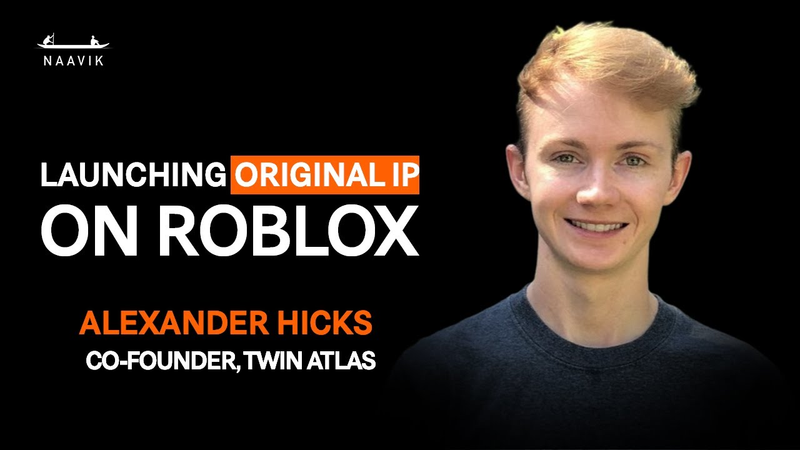
label solution that lets game makers and publishers easily integrate mods safely and seamlessly into their games, both existing and new, at zero cost. It's battle tested by AAA studios and games, including Maxis with The Sims 4, Studio Wildcard with Ark, Take 2 Interactive, and others. For creators, Overwolf is the all-in-one platform that enables creators to build, distribute, and monetize in-game apps, mods, and game servers. In 2022, Overwolf paid over $160 million to in-game creators, proving that they truly value the talents and contributions of the gaming community. You can check out everything Overwolf has to offer at overwolf.com or check out the details in the show notes. And with that, let's jump into the episode. Welcome to the Nava Gaming Podcast. I'm your host, David Taylor, and today I'm thrilled to be joined by Alex, the co-founder of Twin Atalice, one of the most innovative studios in the Roblox ecosystem. Twin
Atlas is the team behind Experiences like Creatures of Scenario, which according to creator exchange.io is a top 30 Roblox game in terms of revenue and engagement. At the time of this recording, Twin Atlas has over 50,000 concurrent players in their experiences, but in the last couple weeks, that's peaked as high as 100,000 concurrent players. Furthermore, they have three experiences that have surpassed the coveted billion plays mark and is one of the few Roblox studios that have been able to consistently launch successful Roblox games from scratch. From his early days at Red Manta to the strategic merger that created Twin Atlas, Alex has been at the forefront of building games that re resonate with millions. He's seen the platform evolve and continues to push creative boundaries in gameplay, animation, and live ops. Alex, welcome to the podcast. Thank you. How's it going? Um, so I've shared a little bit on your background, but would love for you to sort of fill in the uh the blanks a bit. Like could you just give us, you know, uh the background on how you got to where you are today? I know you have a long history on the Roblox platform and would just love to understand it
from the beginning, like how you got onto the platform and then what the journey's been like since then. Yeah. So, uh I guess I was always into video games from a young age. So, I got my first Game Boy when I was uh 6 years old. Started out with Pokemon Yellow. didn't really know what I was doing. I was just bumping around walls trying to catch things. Uh but from that young age, I was always really fascinated with video games. I was playing them on my Game Boy, Nintendo DS, Nintendo 64, really into all that. And it got to a point where when I was about 12 years old, I thought, I want to make my own games. And I'd tried a bunch of different software that I'd seen online. And this was in, you know, 2008, 2009. So there was some tooling out there, but there wasn't a lot of tooling that made it easy for someone who was 12 years old, maybe not super versed in programming, artwork, computer science, anything like that. And I think I was on I don't know if it was Mini Clip or Congregate or something. And I saw an ad for Roblox on the side and clicked on
it. And the rest is kind of history from there. So joined when I was uh it was 2009, so I was about 12 years old at the time. And uh that's when I started just trying to put stuff together. I didn't really figure out programming for a year or two. But because Roblox kind of let you introduce yourself to the game engine without needing to understand all of those intricacies, I was able to kind of step my way up to writing code. That led to me eventually uh shipping some games on the platform which did okay for back in the day which I then applied to a Roblox internship. Loved the experience that I had there. And then one of the games that uh I was working on at night called Robloxy in high school. That ended up blowing up to the point where it was way bigger revenue-wise than my internship was paying. And that's when the decision was made, okay, you know, should this be spun off into a company? and um my co-creator of that game and I decided, yeah, let's start a company. We can
probably build something that no one else has built before. And that's how Red Mantle was founded. A couple questions on this. So, um how so how old were you at the time? And then also like who was your co-creator and how did you end up linking up with him or Yeah. So, uh, I was 21 when, uh, Red Manta was founded. Uh, or it might have been I might have been 22, but RHS, the high school game, really took off when I was 21. So, you'd been developing for 10 10 years at that point. Or, is that right? Did I get that right? Yeah. Yeah. About 10 years at that point. Um, maybe slightly less. I think it might have been more around seven or seven or so years. Okay. Um, but that was the first game that had really taken off to that scale to the point where it was the top game on the platform at one point, the most amount of concurrent users. Yeah, I saw it as a bill that's one of your billion play games. So, obviously this was a massive game back in the day and also Roblox wasn't as big
as it is today back then. So, uh, you know, the fact that it was that big is is uh all the more impressive. Um, okay. So, you founded Red Manta after Roblox in high school started off. Um, what, you know, what was it like as a 21-year-old having, you know, done the Roblox internship and now all of a sudden you've got this game that's blowing up? Like, what were the things that you were thinking about? What, you know, how did you need to grow in order to meet the opportunity? So, uh, initially the the biggest first question was, "How do I do this full-time?" Because I have an internship and I went to my boss and I said, "Here's the situation. I've got this job with you guys, but I've also got a game on the platform. So, you know, which should I be doing? It feels like the answer is to build the game." And he totally agreed. He said, "Absolutely. We would support you if you want to end your internship early and go focus on that full-time." So that's what we ended
up doing. Um I think at first we thought we need an office and we looked at a lot of traditional things that we thought that a company needed and I think over time we actually peeled back on some of that structure because we already had a formula that was working for us. You didn't need to add on all those other bits that you see other companies uh necessarily having. So I guess a good example of that is we saw this with when every company went work from home, right? So precoid, Red Manta was already technically work from home because we were just a group of people that were very spread out doing remote work and in our head the next step was to be in office. So it was really interesting because a year after that we watched the rest of the world try to convert to copy the business model that we'd been using growing up all along. So ever since we've been 13 years old we'd been a part of these online communities where we
could meet other people who were interested in building things and collaborating with them. So I think that was a really interesting learning experience that we don't necessarily need to throw all of our resources into copying what these other traditional companies are doing. In fact, we had a model that was nowadays it would be called a hybrid work structure. Back then, we just that's what we were, but it didn't have a name. Where were you guys in the world at this time? So, uh, we set up an office in the Bay Area. Uh, it was very close to Roblox headquarters. Okay. And we operated that for about a year before CO hit. And luckily we decided to not renew the uh office right before that cuz we would have been stuck with a building we couldn't have used. Got it. Makes sense. So So the the game blew up and then how did you guys go about bringing people to help you out on the game and how many people did you have working on it at its peak?
Yeah. So, at its peak, uh, I don't think we ever had more than five people directly working on the game, but we were using the revenue that the game brought in to start funding new projects. So, uh, that started out with a pirate project that didn't really go anywhere and we spent a lot of money building that. So, that was sort of our big first learning experience. And uh the second game that we developed was World Zero, which has obviously been a huge success because it's still around today, six years later, seven years later. So uh first failure kind of folded into those uh next experiences. For those who don't know, World Zero is sort of like the iconic RPG adventure game on on Roblox. Um, I don't know. You could probably do a better job of explaining what it is, Alex, but uh, every, you know, I think it's it's smaller than it it had than it was in the past today, but it's still like a widely recognized brand on on the platform. Yeah. Uh, I think our goal
back in 2018 was we were all huge fans of traditional MMO RPGs. So, we grew up playing games like Runescape, World of Warcraft, Guild Wars, all that kind of stuff. And we wanted a game like that on Roblox. And I think that given the challenges of the platform, we did a really good job because we originally tried launching the game like one of those traditional uh MMO RPGs and we found that it just doesn't work because people burn through all of your content and then they will go play a different game until you add more content, which that makes sense. But with an RPG, you're not building a new level to your obby. You're building a new world that needs to have dungeons. It needs to have bosses with unique animations, boss fights. You need weapon drops. If you have five different classes, you need to make sure you have equipment for all those classes, skills. So, the list of things that you need to add into an RPG is it's kind of like building 10 games in one is how we like to think of it
with all of the sub loops that are in there. So, it's very much playing on hard mode, but I think the lessons that we learned from that kind of taught us how to survive. So, we were able to adapt the game to be more of a mix between an open world game and a dungeon crawler. And I think that strategic shift is what allowed us to build something like that. Whereas, if we just tried to put Runescape or World of Warcraft on the platform, I don't think that that would have worked. Super interesting. And it's funny you mentioned Guild Wars as sort of part of your inspiration because we had uh Kristen Cox on the podcast uh last week and she headed up monetization for Guild Wars. So, just some some good synchronicity across uh across guests on the podcast. And we were actually talking about how like the the players of MMOs back in the 2000s 2010s would become the Roblox players of today and those Roblox or creator Roblox players and creators of today and how the Roblox players and creators of today will then
become, you know, the AAA, you know, developers and players of tomorrow. And so I think it's just really interesting to hear that like you know your one of your big successes on the platform was inspired by the the very MMOs that were we were discussing just last week. Uh the other thing I would think is really interesting about what you're saying is about just sort of how you design a game in order to be sustainable from a live ops perspective. And so, you know, we were going to I was going to say this for later on in the in the in the podcast, but I was curious just to get your perspective on your game design approach when it comes to, you know, you're not just thinking about what's going to be immediately compelling to players, but like how is this going to be a game that we can sustain long term and and have be economical to sustain over a long period of time? could you sort of share a little bit more on like your approach not just for RPGs necessarily but also other genres that you that you work on? Yeah, so with a company uh a big goal
that we have is to scale up over time. So when we're looking at a lot of games on the platform that are you could call them simpler maybe they have lifespans where they pop up really fast then they have a tail and they don't tend to recover from that. So, I think those kind of games can be really good for, you know, a couple independent creators. You can make a couple hundred thousand, maybe even a couple million. And if you're two or three people, that is fantastic. But when we're trying to scale out a company, give people full-time jobs where they can come to work for years, we have to think about, okay, you know, if this game is going to make money, do we want something that makes $2 million right now and then nothing next year, or do we want something that makes $500,000 a year for the next 10 years? And so, obviously, the further out you think, you can't really predict the future. Everything's always changing. But we definitely try to think about how can we build a more established audience. So, people that will keep coming back to the game, but not even just that, it could also be
they'll engage with the IP in the sense that if we sell merch for the game, they'll be interested in that. Or if we want to go make a TV series based on the IP, they'd be interested in that. Or big one as well is sequels. So, if we go launch a World Zero sequel, for example, hopefully everyone who's seen World Zero over the past 5 years is going to recognize that IP and be interested in checking it out. Whereas if it was a game that popped up for two months and then died five years later, you might have a much harder time with brand recognition on that. So that's why even though we could go for some of those smaller type of games, we're trying to go for the more sustainable plays long term because I think if you look at the trend of our business growth, that's what's going to give us a constant upturn. Otherwise, we're going to have years where you have a huge jump up because you launched some crazy success, then the next year is back down. And we're just interested in that steady grow. Yeah, that makes sense. I mean, Creatures of Sinaria is obviously like
uh you know, at this point, I think it's a pretty wellestablished IP, I'm sure someday, if there's not already people asking you. Uh someone's going to like want to make a TV show or a movie out of it. Um have you been approached, by the way, just out of curiosity, like have have people approached you about that? Yeah, I think we've actually announced uh before that we've been in the works doing a Creatures of Scenaria TV show uh with another studio. I believe it's still in the early stages. I I'm not very involved with that, but uh I know that it's something we're absolutely looking at. There's like huge fans of things just like Pokemon, How to Train Your Dragon, all of these kinds of like people who enjoy this stuff want us to be giving them that for RIP as well. So, we're absolutely interested in doing that. That's awesome. Yeah. I mean, there's so many people that come. If you have a billion visits, you know, there's probably hundreds of millions of players who have engaged with your your game. And so, uh, yeah, the the potential there is
obviously huge, and I'm surprised I don't see more Roblox IP being made into TV shows and movies. I'm I'm sure that people will catch on eventually. Um, well, I think the Minecraft movie success, u, just anecdotally, I know on Twitter, I saw a lot of people kind of joking about how Roblox needs to make a Roblox movie. And that could spin into its whole own discussion about, you know, what is a Roblox movie? What games would be in that cuz they don't necessarily own the IP the way Minecraft does. But just seeing that discussion, I think, kind of told me there is absolutely an appetite for that kind of content. Yeah, that actually makes a lot of sense. I mean, le Lego le the Lego movie, right, which combines IPs from different universes uh into like their sort of umbrella toy IP um could obviously easily be converted into Roblox where you're using the Roblox IP. And then you saw from that initial LEGO success, there were these sort of spin-offs of specific characters like
Batman was like a huge hit in the original Lego movie. Then they made the, you know, Batman Lego movie. You can see that being the case. Um, but in and I think that a lot of these IPs would just work independently of of Roblox too. Like you don't need Roblox to be the sort of umbrella IP on that for it to to resonate. Um, I want to go back to sort of your design process though and thinking through like you mentioned all right you're so you're building for long-term you know growth, long-term um, you know, sustainability. What are some of the things the mechanics or the the game design decisions that you make to say like okay this is the these are the types of things that work for long term versus being like you know a quick money grab. Yeah. Uh that is a good question. So for long-term design I think we think a lot about what does the amount of content we can add to the game look like. So, if I'm designing, let's say, like an obby,
for example, where I'm just adding a new stage every week, at what point is a user going to get bored of just playing a new stage every week, what mechanics does it actually need? So, this is when you start to think about things. Um, like this is very traditional game industry at this point, but battle passes were a really big one just because they added a subloop onto your core game, so people were progressing. It's almost like a second level in XP bar cuz a big issue that a lot of MMO RPGs will have is you have a player level, right? So someone who's played World Zero since 2019, they're probably not coming back in the game looking for the level to increase by 10 every week because even if we do that, our level cap would be in the thousands at this point. And that's just not sustainable because now a new player is going to see people who are level 2,000 and they're going to think, well, I'm not going to spend 5 years playing. I'm just going to go play whatever game launched last week cuz I'll actually have a chance. So, we think a lot about what that long-term like stretching out the gameplay looks like. So, with World
Zero, we tried a lot of different approaches. Like when you hit the max level, we let you prestige and replay the game again, but you got better drop rates, better XP rates. So, it's kind of like you beat the game, you're clearly into it, let's let you run it again, but in kind of a new game plus type of mode. So, that's worked out for as well. Uh, community features work very well, too. So, we've had guild seasons in World Zero where players create their own guilds and then they compete every month on a leaderboard to see who can earn the most points. And, uh, also just adding cosmetics has been a huge one. People love to collect cosmetics to customize their avatar. We found that this transcends all genres. If you just uh if your game has a lot of depth where people are collecting items and customizing either their character or their creatures or pets or whatnot, that's a huge draw to the game. Once people have that collection built, they start to value it and want to come back to keep growing it. Interesting. A quick question on the cosmetic side. So
there's like the UGC cosmetics that you're able to like take across experiences. Like I'm I'm guessing you mean just like game specific cosmetics that you guys are selling, but how do you think about UGC? Like do you guys ever rely on it for anything or are you purely building uh sort of non UGC cosmetics in your experience? Yeah. So, UGC is a tricky one because it does have a lot of player interest. So, when we're looking at it, you know, if a player has $10 to spend and they're going to spend it on Roblox, the platform, are they spending that $10 in the catalog or are they spending it in a game? And maybe it's an equal split, right? They'll spend some on their avatar, some in a game. But I think as game developers, we are competing with the Roblox catalog to a certain extent. So, uh, with games like World Zero, where we have a custom avatar and now anime life, uh, we do the
custom avatar because we want more control over what the outfits look like. And we also want consistency so that when you're playing World Zero, you know that every person in that game looks like a World Zero person. They don't you don't have a giant piece of toast or a refrigerator running around. So, it's World Zero characters, just just so people can visualize who are unfamiliar, World Zero characters don't look like your typical Bloxy like Roblox character, right? Like these are Yeah, they're a custom uh anime avatar. So, you don't get to use your Roblox avatar whatsoever. It's completely custom. And that's definitely been a double-edged sword for us. There's people that expect their avatar to be brought in. They say, "I've invested a bunch of time and money into my avatar. why would I create a new one? And that can be difficult to convince those people to play your game. But on the flip side, we found that the people who do like your avatar and get invested, you now own that UGC catalog effectively. So you're collecting all of
the revenue from it. And I think just looking at I'm sure this would have been a fascinating discussion with the Guild Wars monetization, but cosmetics are largely what a lot of these MMOs survive off of. Because if I'm running a game where you're fighting monsters and I'm a free player, I don't want to see an option to double my power for $2 because now I kind of feel like this game's pay to win. It's dirty. So when you're designing these games, you're typically not letting people pay to win. So you're left with monetizing things that are not impacting the game balance as much. And that's where cosmetics really come in. So, I think that cosmetics with World Zero, had we just used Roblox avatars, I don't know if it would have been sustainable without all the revenue we've collected from that. That's really interesting. That's a that's a really interesting point that uh it's, you know, it's a barrier, but then it it leads to the player being more sticky and more willing to spend once they once they get past it. And I think it's um
like you can look at a lot of top games right now. So, Fortnite, Apex Legends, Call of Duty, Genshin Impact, anything of that degree, it's largely based around cosmetics, I guess. Genshin, not quite. It's more so characters, but you're rolling for these cosmetics. And so, it's definitely an interesting question about what game design on Roblox looks like because you can't copy those models. You can't go put a Fortnite on Roblox unless you're also in charge of the Avatar because that's where they make all of their revenue. So without Avatar, a lot of games that we see as top games right now are not sustainable. So Roblox removing that from the creators creates a really interesting dynamic. And I'm not saying it's necessarily a pro or a con. I just think that it makes you have to think differently about how you're going to design your game, how you're going to monetize it because you don't have that avatar uh to lean on as much. Yeah. Yeah, I mean what I one thing I've seen with Roblox games is there seems to be way more uh of an appetite for pay to-
win monetization on on Roblox. Um but I can also understand that if you are a free player and you see those things, it is definitely like a disincentive for you to really buy into the economy and into the world that you've built. But I'm but I'm curious like as a game designer, how much flexibility have you seen in terms of people's app like um I guess free players appetite to withstand pay to- win mechanics? Like do you end up getting called out by players in your community or are people you know pretty you know um comfortable with it? Uh there's always people that are going to be upset that something is paid and that's just going to be true in 100 years true 100 years ago. Uh so they're always going to send a complaint about how the whole thing should be free. You just have to know to ignore that and kind of weigh the feedback. You know, when are we being too aggressive or not aggressive enough? Um, what I found is
that if you make stuff obtainable by free users, uh, but it just takes actual gameplay to unlock, that's the best way to go about it. So, an example would be in our in World Zero, we have a lot of cosmetics and they're purchased with a premium currency, but those users who buy it can then go trade that to other users. So, maybe I got a really rare sword, I can go trade that to someone for a cool mount that they spent real money on. So, even though I'm a free player, I can now go trade some other cool items that I've collected for those paid items. And on top of that, we also let people earn small amounts of our paid currency through things like daily quests and that lets them build up that wallet without actually having to spend money. So, I think if you straight up like stonewall people with a payw wall, then that can be a lot like that that's what you don't want to do. Um, but in terms of Roblox players having a pay to- win appetite, I think it lends itself to
those games that are the quicker games where you're having a lot of fun fast. You spend a lot of money fast, but what does the tail end of those models tend to look like after one year? Not as favorable a lot of the time. Got it. That makes sense. Um, I want to sort of zoom back out for a sec. go back to the, you know, the story arc that we had sort of um been discussing uh earlier. So you were at Red Manta, you guys launched um Roblox in High School and World Zero, and then at some point, I think it was in 2002 maybe, that you decided to uh merge with Sonar Studios and just trying I I'd love to understand sort of what what the uh state of Roblox was at that time or what you were seeing at that time or the state of your studio at the time that led you to, you know, go and and merge with another studio. Like it's something that I haven't seen happen
since I I hadn't seen it happen before. So sort of this unique moment in time where like two successful studios like merged together and I just want to understand like what what the opportunity you guys were seeing. So in 2022 uh I was in Las Vegas. We'd relocated here because we'd been in California. It was work from home and we kind of thought it's really expensive to be here. everyone's locked indoors. Why don't we try somewhere else that's cheaper to operate a business, especially if we're going to be locked indoors for however long. So, we uh went to Las Vegas and it was just a lot cheaper to live there, much better tax situation. And then that's where we met uh Sam, who is the founder of Sonar Studios, and we realized that we had kind of the same business where we were self-funded, self-started. We had small teams working on two or three games and we had a lot of redundancies between our companies. So I was spending 2 to three
hours a day on the exact same things that Sam was spending 2 to three hours a day on. They were trying to figure out various sides of the operation that we were trying to figure out. And we kind of realized there's a lot of competition that's coming into the space that is backed by a lot of big money venture capitalists etc. And we thought, okay, we're in a unique position where we haven't had to touch that funding yet because of our success. Maybe we should merge the two companies together since we're already basically the same business just under two different names. And then combine our resources. We can own all of it. We don't have to worry about outside investors. And then also it'll give us a better model to compete with all these other studios that are getting lots of funding by just kind of pulling everything under one umbrella. So it felt like a very natural decision. I don't think there was ever a point where I thought is this the right idea? I want to do things alone still. Uh, it was Sam who originally pitched it and I
think once he pitched it in my head I heard it as I can spend less time focusing on operations and get more time back to the game development side of things which is where my passion really is. Awesome. And so like what were some of the like benefits? Did that did that you know benefit realize itself? What were some of the other benefits in terms of pooling resources that were unlocked through the merger? I think it was just the efficiencies. So by having uh less of our top talent spending time on trying to run a business and more time on actually developing the products that has definitely uh shown itself in terms of our metrics. Uh so under Twin Atlas we developed a game called Drive World. Uh so this was uh myself and Adam were developing it from the Red Manta side and then we had artists from the Sonar side and this was kind of our first joint venture together after the merger
and that was Driveworld that went on to become a huge success. We've uh almost got 400 million visits. We partnered with Paramount for Transformers 1. We've worked with Amazon to have their delivery vehicles in the game. We've worked with Indie 500. So that right there I think is just a really great success story right off the bat after our merger. Uh so you're talking about brands uh now which is a great great qu uh question I'd love to ask is like um how do you think about opportunities to integrate brands? Is it a brand building exercise for you guys? Is it is it a monetization opportunity? Uh what's your guys's approach to all the brands that have started to take interest in the space? So when we did the merger that kind of pulled our two portfolios together, which was another benefit of doing that. So we'd worked with a couple of brands. Sonar had worked with a couple of brands, but once we'd merged, we had a really nice pitch deck where we could say we've worked with these 12 brands before and it looked a lot more
impressive. So yeah, we definitely like that. And keeping with that theme, a lot of the brand integrations that we've done have been just to try and get our foot in the door. So, we don't take things that we think are going to be a huge detriment to the studio, but we're we've definitely done deals where we're not necessarily getting paid a ton, but we're working with a brand that is a brand we've known about for years. It's a dream to work with them. We can put that in our portfolio. So, it's it's definitely been a mix of both where we're absolutely making money through our brand integration business and we're continuing to grow that portion of things, but there's also a lot of brands out there that we just respect as brands and we would be happy to work with them for less favorable terms than some of the smaller brands we've worked with. Yeah. I mean, I think there's there's I think people often confuse like brands is sort of this big umbrella term, but on on one side you've got advertisers and on the other side you've got licensers and and then there's sort of
gray areas in between. Um, and so like you know, Transformers is one where it's like I'm I I could see that being either a licensing deal or an advertising deal, right? Because they came out with the movie uh and I think they wanted to use your guys' activation to promote the movie. Um, but also like it's a great fit for your game, so it probably added value and and like you probably saw hopefully an increase in engagement around that that uh activation. Yeah, cuz the new Transformers movie, you got to go to Cybertron, which um just skipping all the plot details, it's this big world that's got upside down roads and all this crazy stuff. So for the event, players actually were able to go to Cybertron. we had it built out in the game and then you were able to unlock uh you could have Optimus, we had Megatron and also Bumblebee. So the three of those you were able to get as unlockable vehicles which you can still use in the game now. And that was really cool to our players because yeah, it's
not just an advertisement where you join the game and it says buy this food or buy this drink. It was, "Wait a minute, I'm playing one of the games that I already like and you're telling me I can get a tank and be Megatron now." Like, that's cool. So, it's a value ad to our players and a value ad to the brand. So, those are kind of the dream activations where it's a win-win-win for everyone involved. Yeah, that makes a lot of sense. Um, do you think that like for an activation like that, do you think that the movie is driving more players to your game or do you think that the game is driving more people to the to the movies? Very hard to attribute. I would say that we're driving people towards the movie just because, you know, our game tells you Transformers movie. The Transformers movie does not tell you drive world. That would be very expensive, I'm sure, to get that put in there. But, uh, that would be my takeaway. I'm sure there's some recognition. So, people who see the movie, we absolutely have the
Transformers one logo on our game when we did that. And I think we definitely derived some players from that. But obviously, the point of the integration is Big Movie is using us to promote their IP. Yeah. When you're doing game design, when you're thinking about new games, are you thinking like, is this going to be a good fit for for uh brand integration? Cuz like when I look at a lot of your guys' games, like they're very much seem like distinct IPs. Creatures of Senaria, like Dragon Adventures. These are uh horse uh horse world or horse life. Horse life these are all games that I wouldn't necessarily be able to imagine uh a brand integrating into. And yet it seems like brand integrations given like everything you were describing about the merger opening up new opportunities and obviously you guys being a really talented developer and professionalized developer that a brand might trust with their brand. Uh it seems like it could be like a big opportunity a big revenue
opportunity beyond just like the in-game revenue that we've been talking about. Yeah. So the there's definitely some games that lend themselves better to brand integrations. uh when we're designing the game, I wouldn't say that that's something that we it's not like a core pillar, but it's absolutely like a happy accident at times. A good example of that might be World Zero and Anime Life both use the same avatar. So, it's a custom anime avatar. And with World Zero, we found kind of like I talked about earlier, cosmetics were a really big part of that. People loved customizing their avatar. And one day we just thought, okay, well, if people love customizing these avatars, maybe there's some of those people that aren't interested in playing a fantasy MMO RPG and slaying a bunch of dragons or orcs and whatnot just to be able to customize an avatar.
So that's where Anime Life came from where we kind of pulled the dress up game out of that and said, "What if the dressup game was its own game so that we're not blocking people who are into that?" And so far that hypothesis has proven true. People are loving it. They're playing a lot of dress up. And I think this now becomes a really good place to do a brand integration because we have these consistent avatars. Things like shoes look really good. So, we could easily just throw a Nike store, an Adidas store, whatever shoe brand you want into the game. And if you think about a MMO RPG, it would look very out of place throwing a shoe store in the middle of your medieval town. But when we have this game that's now based on dressup, it really lends itself well to these brands because it takes place in a modern city. We could add food chains into the game. So, I wouldn't say we designed it with that in mind, but the game setting and game loop absolutely lends itself better to brands. Yeah, but now that I've suggested it, the next game you design might be thinking about
that. Um, uh, so I'm just looking at your guys' stats on creator exchange.io, and it seems like visits have been growing gradually over the last few weeks. Um, CCU growing gradually as well. I I'd love for you to just sort of share like your read on things, right? Like you you've launched this new game, Anime Life. Like how do you guys go about bu building a game, launching it, making sure that it's set up for success so that all of the work that you did ends up, you know, paying off? And just would love to understand that whole process from like before you guys launch when there's no players in it, like what are you guys doing? Are you doing advertising? Are you messaging people in Discord? like what are all the things that you do to ensure that there's like a good base level of of players or that the algorithm at least connects you to the right players on the platform so that you can you know um steadily grow it and and would also just love your current read on things like what are the
things that are going well what are the things that you feel like you need to fix so for the algorithm I think it's always 50/50 like you can do everything right for the algorithm but at the end of the day is your game fun is a huge part of that question. So, with Anime Life, we did initially uh get a bunch of our World Zero audience. We promoted it to them and said, "Hey, come check this out for us and let us know if you like it." Cuz it uses the same avatar. So, we knew this would be a very forgiving test audience for the game. So, we ported them in, maybe got 500 or so players, but we really got more luck just running ads for the game. And I don't think that there's necessarily a right or wrong strategy for how you do that, but people who are playing the game were playing it for 20 plus minutes on their first session. So if you do the math, you know, any person you put in there is going to stay for 20 minutes on average. If you're putting three people an hour in, that's one CCU. So as long as you're scaling up the amount of people that you're putting in there, if your game is
fun, people will play it. So you can seed that with an existing audience. You can seed that with an ad system. You can just sit in there yourself and play it for days with your friends and hope that more people will organically come in. So, I guess with Anime Life, we didn't have a crazy launch strategy. The strategy was sort of this is a really weird game and we have no idea if it's going to really resonate with people, if it's just not going to land at all. And so, we kind of soft launched it. And just last night even, we saw it get bumped up another algorithm tier where yesterday's impressions are 3x the impressions of the day before that. And you know, last week's impressions are 3x the week before that. So, anytime we see a huge jump like this, we look at it two weeks later and we can barely see that jump. It looks like a flat line on our curve. So, we're still seeing this uh week-overweek growth, which is really awesome. And we didn't have to focus too much on marketing. We just focused on how do we make a fun game? Are the people that are getting thrown into this
having a good time? Yes or no? And I think now we're starting to think more about the community building, but we've just been so focused on that. Are people having fun that it's worked out? So I that all sounds great. Give me some details on like what didn't go so well, like what did you have to, you know, scramble to fix or what are some of the metrics that you feel like you need to improve in order to get to the next tier in the algorithm? The only thing that didn't go well, I guess if I could criticize our development process, is we took about five months to put it together. Uh, obviously hindsight is 2020, but I think we could have done it in three. I think there was just a lot of the critical things that we added to the game were added in the last few weeks of development, whereas the months before that, we were investing in features that ended up not playing a huge role in the launch. So, I think just the amount of time we spent in a vacuum is not good. I don't think you should spend five months. That's a bit too long. Um, obviously it went well. So, I can't say
that I wish we did it any differently. But in terms of this challenge with the game right now, that would be monetization. So, uh, for roleplay games in particular on Roblox, you'll see that the monetization is just a lot lower than something like an RPG. So, even though we have a lot of players right now, we're trying to figure out what can we get them to spend on to make this sustainable without making the game feel like it's paywalled or feeling like it's predatory, that kind of stuff, while still keeping that spirit of you can hop in and have plenty of fun without spending money. Do you think that's a function of uh the game or do you think that's a function of the audience that you've brought into the game? I'm just curious what your why you think the monetization is lower. So, we see this trend with lots of roleplay games on the platform. You can look at um there's tons of examples, Brook Haven, Livetopia, just listing some big ones. Um but if you compare them where they are on their earnings,
you'll see games that have 1/5if of their CCU, but those games will have substantially more revenue. And so I do think this comes down to the game design more so than the audience. I do think there is an audience that likes to spend and roleplay games are probably not where they're coming in to just do that. But I do think that I I think it's just the genre itself and it also reaches a really wide audience as well. So especially if you have a larger international audience, you might see a decrease spend too. Got it. I want to also go back to something you said earlier around sort of that early that early base level where you're saying like, you know, as long as you put one more player in there, uh, you know, you're going to get you'll get to one CCU, right? like is that is that sort of a am I reading between the lines there where you're looking at CCU and as long as you can push the CCU number up whether that's or like through the
algorithm or through some artificial demand that you've created off platform on Discord or YouTube that you'll be rewarded for that that growth or is that just sort of like uh am I misinterpreting that So CCU is a very messy number. I think that it's used as one of the highest level performance indicators for a game. Even in the beginning of this interview, you mentioned we had 100,000 cc recently. So people absolutely look at it. I think it's like view counts on a YouTube video. Big number impresses people, but it absolutely doesn't tell you the story of where that comes from. So, are 20% of those players brand new and the remaining 80% have been playing for months or do I have a game where 90% of them this is their first day and the remaining 10% are all a week old. So, that's really important context and we definitely see this where we have some games that are getting fed a lot of players by the algorithm and that's how
they sustain their high player count numbers. Whereas we have some that don't get fed as many players by the algorithm, but they're sustaining their high player count numbers through returning users. And returning users are absolutely going to be more valuable than new ones just because they're more engaged. They care about your IP more. They've decided to come back. So, in terms of like CCU, we do think about it, but we're thinking about that long-term audience growth as well. Are we actually growing our monthly active users? Are we building, you know, even if the game's not growing, are we building an IP that we can launch a sequel to? That kind of thing. Is the platform big enough that you can sustain a game purely on new users or at some point do you run out of players and like then your game basically uh like slowly dies. So if your game uh totally depends on the size. I think for games that have less than like our games that have under 10,000 concurrents online, we see a huge amount of new players being thrown into
those games every single day by the algorithm. So, if that went away, it would be a substantial chunk of our games. And I think this is true for most games on the platform. Mhm. Um, if you're a game that has a million CCU, I think then the discussion becomes what percentage of the platform's daily active users have already tried your game. Yeah. But in terms of us, we would love to have that problem where we have a game that's so big that we've kind of absorbed half of the platform, but we're not quite there yet. Got it. Okay. Well, that's good to know because, you know, I I see, you know, some games that have 70% new players, you know, other games that have 30% new players. And with those with those games that are 70% new players, I just wonder like can the platform is the platform growing its player base at the point where you can just live off of algorithm forever and you don't necessarily need to retain the players that you're that you're getting.
Um, and it sounds like you can. I I think you can. We absolutely have some games that the algorithm has effectively kept them propped up. And I think that's true for a lot of games on the platform to some degree, especially if you look at the homepage now. It's just showing you a list of games that Roblox wants you to play. It's not like Steam where I have a library of games that I intentionally want it to show me. So yes, you can survive on the algorithm. Obviously, the big risk to that is you are beholden to the algorithm. So if they change something overnight, that can completely change your business. And that is scary to us. So, it makes us think about, you know, we don't want if Roblox makes an algorithm change, we want our fans to be our fans, not just Roblox fans. Yeah, that makes sense. Um, so I'm curious, like, anime life seems to be going well, uh, but I imagine not all of the games you guys have created have been successes. Can you sort of describe the process for both how you
spawn new games, like how do you guys what's your innovation process? And then also like how do you know when you've got a success or something that is probably not going to make it and it's time to move on to the next next thing. So for building new projects, we try to have a couple releasing every year. It really depends on the scope of each project. So I could say I want to ship three games a year, but if you know one of them ends up being bigger like Anime Life, it might be two games a year. But that's not the end of the world if the game ends up doing well. So it's a bit loose in terms of that structure. Typically we just try to look at where do we have an advantage. So uh for Horse Life for example, the studio has a ton of experience with creature games and not just experience but a lot of technology for that too. So getting the prototype built out for that game was relatively quick. And then also a huge audience of players who loved creature games to begin with were able
to help seed that. So that's an example of where we thought, yeah, we have an advantage. Let's jump on that. Anime Life's a very similar situation where we saw World Zero having a huge fashion gameplay loop, but it was locked behind a fantasy RPG. So we pulled that out to build it to a new game. And we also had 5 years worth of World Zero content in terms of cosmetics to lean on for anime life. So that's another good example where we're kind of just looking at where do we have an opportunity and then even the simple stuff we have a division where we're trying to build really rapid uh prototypes. So this division is building games where one month release the game if it becomes the next you know front page dead rails that's great. If it doesn't we cut it and move on. So we're trying to be very rapid there where we're launching like 10 simple games a year under that division. So, but so then going back to the sort of the original question though, like how do you know like what does it look like? Is it like just clear as day what
success and not success is or do you ever feel like there's things that you could do that might take it to to successful? Like I I kind of want to understand like what are you looking for to know if you've got a hit or you've got something that's worth continuing to invest in or you've got something that you know isn't going to make it. Yeah. Yeah, the opportunity cost is kind of the name of the game there, right? Should I spend 6 months trying to put 50% more players into this game or should I spend that 6 months building a new game which will just have twice the players of that old game? Um, we're always trying to figure that out. I don't think there's always a right answer from the get- go. With hindsight, it's easier to know if you made the right call or not. Yeah. Um, in terms if you shut it down, then you'll you'll never know if you made the right call. Exactly. If you keep doing it, then you'll find out. So, we try to not shut things down if they're profitable, right? If a game's making 10,000 a month and it only takes one developer to
upkeep that, then we will typically keep that game going just because we're still making a bit of money. It's another piece of IP in our portfolio. It lets us keep someone employed who's also getting experience that can potentially be moved on to another project if we fold that one down or it scales up. Uh, in terms of when do we decide to sunset a game, I think when it's clear that there's a consistent downtrend and we don't have any ideas to revamp it. So, if we have a game that's trending downwards, we might have a mentality of there's nothing to lose. Let's try something crazy and just see what it does. So, that's usually this the way that we go about it is just player interest. We don't usually sunset games. And I think just also the development team, if you can tell that their passion is waning, you know, if the development team is not interested in the game, players aren't going to be interested in it either. Yeah, that's a really good point. Um, I want to know about like so one of the
things I talk about is like talent being the scarcest resource in UGC games. And you know, you see platforms like Fortnite and GTA like talking to Roblox developers and trying to convince them to come over and build games for them. I'm curious if you have a similar experience as a studio on Roblox with talent. Like do you do you find that it's difficult to find highquality developers within the ecosystem or is it pretty easy that like you know if you were to have you know you mentioned this $10,000 game where you can just have one dev on it, right? Let's say you, you know, you had five more $10,000 games come up. Like, would it be easy for you to go into the community and and bring in people to work on those games or do you find that like you really have to be selective and there's not as many talented developers and therefore the opportunity cost that you mentioned is even more preient because you won't necessarily be able to find anybody to come in and operate again.
So for bringing on new people, uh talent is absolutely the most scarce resource. So with something like a game that's making 10,000, you can often pull from the community because their community will not necessarily be big, but it'll be highly dedicated players. So, it's usually possible to find someone who's maybe not, you know, the top tier programmer that's going to go get a job at OpenAI, but they know enough about how to work their way around a game engine where they can take a project almost like Modic in a way, right? We're not bringing them on to build a new game. We've got a product and we're just saying, can you add some new swords and bosses and whatnot every month? We'll pay you and then they get to work on a product that they love. So, we found this model works with a lot of our smaller games where we don't necessarily want to maintain them, but we have community members that say, "Hey, can we just take this off your hands?" Um, so that's a model that we've definitely looked at before. That is fascinating
because that I mean that that is exactly what happens in the like AAA or you know double A world as well of like a lot of passionate players end up becoming these contractors for these games that have you know that are like you know five five plus years old that have established player bases and they're just going to be living on forever. And so the like owning studio will bring on developers from their actual community to to work on them. I think it's super fascinating that that continues to be the case even on in Roblox. Do these community members like have hard skills that they're coming in with or does the Roblox tool set allow for basically anyone to be sufficient as long as they have the right direction? Uh typically they have some experience using Roblox. So, if we're going to bring someone on and pay them, they're typically they know what they're doing in terms of programming, uh, how assets work in the engine, but a lot of them
are selftaught. So, you're not getting people that went to college to be a 3D modeler. Um, we have one guy who has his PhD in like particle physics, and he's like half of his day he's busy trying to create black holes to end the universe, but then he loves to come home at night and build medieval towns. He's just loves it. like huge Game of Thrones, Lord of the Rings, etc. fan. So, we find some people like that where you could go hire an artist, but they're never gonna bring that level of passion to the project compared to that guy who wants to come home from work and just wants to build something and then we're paying him for it. What a bonus. So, wow. Those kinds of people you don't get from regular job application pipelines. Well, and so for people who are wondering if Roblox is aging up effectively, they have uh PhDs who are who are playing their their RPG games and and then being so invested in it that they want to come work for the studios on there. Uh that's
amazing. Um so I want to think I want to zoom out a little bit uh with a few few minutes we have left and just like you've seen this platform evolve for over a decade. I'm curious if you could sort of give us a perspective on how it's changed and then maybe like given that given that trajectory what you're expecting from the future. I think the biggest change is probably the wide audience that they've uh managed to capture. So, when I joined Roblox, it was very much a tight-knit circle. And this had a lot of benefits to it where, you know, anyone who was playing in 2009, I probably know them by name. I've run into them in person. You know, you can call them on your phone. So, just a lot of the original developers have those connections, which is really nice. But Roblox has grown so much since then. So, I guess back then, everyone on the platform was almost like a a nerd in a
sense. like you liked physics, you liked Lego especially cuz it was all blocky back then. So you just had people that were really into that kind of uh space and then Roblox has really expanded over the past decade to appeal to way more people. So when Roblox originally launched, it was very much marketed as a creator platform, right? So it was marketed as like build anything, play anything. I'm sure they've had dozens of slogans over the years, but it was very much marketed as you will get to make games. And nowadays, that has completely transitioned, right? So, if you go sign up for a Roblox account, I maybe I'm wrong, but I don't believe there's any marketing anymore that's trying to tell you sign up and make games. It's just telling you, you know, we have the games now, right? They've kind of evolved to that next step where they don't need to market that as hard. So, I think that's the biggest change. It's early days of Roblox. Everyone was a creator, which really helped a lot of studios like ours get their footing because when you were
bumping into people, chances are they were not just a player, but they had some development skills as well. Um, whereas nowadays most people on the platform are just here to play the games. And I think that's a good thing, right? I don't want it to be onetenth the size and just all builders. But, uh, that that's probably the biggest change. And then just of course the international expansion. 10 years ago, we did not have people from Japan, from Brazil, Roblox in different languages. Like that just didn't exist. Super interesting. When you think about So Roblox has been sort of introducing generative AI tools. I'm curious what your experience has been using those tools, what you think about them, and also what they might mean for the future of Roblox. Uh, so we use them a ton. uh mainly chat GPT just for knocking out tons of mundane tasks. So if it's something simple like I've got this sheet of data from one of Roblox's analytics pages um like their new ads manager doesn't tell you the playthrough rate. I don't know
why it lists like 10 other stats but there's no playthrough rate. Just using this as an example but I take a screenshot of that throw it in chat GPT and I say can you calculate that data for me? And you know, you could have done it with a calculator yourself, but it's just taking things that would have taken 5 minutes and turning them into 1 minute. So, a lot of I don't know if GBT is the best tool for calculating numbers. I've thrown some numbers in there and it will just make up stuff. You got to sanity check them. Yeah. Yeah. But it's really good at just speeding things up, especially formatting. So, if you've got text that's in an image and you need stuff pulled out, whatnot. Uh, and then code, code code generation being a massive part of that where it's 2025. We don't need people writing a code pattern that's been written a billion times the last 20 years. That's a solved problem. Have the AI spit it out so that our programmers can focus on the actual problems. Yeah. And with uh hiring, I think that's been very uh front of mind,
right? So when we're bringing people on board, we want to make sure they can leverage this AI tooling and that they're not like an AI tool themselves in a sense, right? So you don't want a programmer where you're telling them, write X, okay, now write Y, now write Z, because that's effectively what AI is and it's going to be replacing in a year or two. So we're looking for people that are able to fill in those gaps and then use AI to build it. Got it. That makes a lot of sense. and and so it sounds like you've really benefited from chat GPT, but Roblox has been unrolling their own uh um tools and so have you guys used that at all? Is it ready for production? Um do you think that they will be useful? Like I think they they had the sort of like prompt and it'll generate a 3D object or a 3D environment. Like have you guys explored that at all? Is it useful or is it still in too early to tell? We've played with it. Um in terms of the user side of AI, which
is how it is. So, not like a developer tooling side of things, but literally giving users raw access to to AI in real time is a very different way to think about it. Um, just because yeah, you're creating unknown content in your experience. Um, this is the same as let's say you have an NPC that's hooked up to a large language model. You don't necessarily know what that NPC is going to say. And so that's not to say you can't build a fun product with that, but when you're approaching it from like an IP development standpoint, it's a completely different approach cuz you need to think, I'm not going to be writing the exact voice lines my players experience. I'm not going to be creating and curating the exact models that my players see. So how do you design around essentially random content being put into your experience? Uh we haven't found tons of use cases for that. Biggest one I could see is maybe hairstyles, right? So instead of having our artist or any MMO you played, there's a 100 hairstyles to pick from,
but the one you're looking for is just not quite there. So I could see that being a place for AI where you tell it, "Yeah, I want to have spiky hair with a ponytail on the back and it's got green tips or something like that and it could just figure that out." I could see that being uh useful. Yeah. Interesting. Okay. So these are all user inputs. like you would build an experience and then you would sort of have this chat GPT prompt that a user could use, but nothing has been introduced on the creator side where you could say like reskin this asset to be, you know, have lizard skin instead of fox fur. Like they do have those uh they they have this tech. It's at a place where it's so so uh a good example is code autocomplete. they have that it's trained on tons of data from Roblox. Problem is, it's just not at the same place as something like Claude or Chhat
GPT. And I think that's just a a question of, you know, is Roblox going to be able to build a better AI code assistant than companies where that's their entire pitch? Yeah, maybe, maybe not. It really depends on the tech, but I feel like that's not somewhere they should be trying to win because it's kind of a solved problem. Uh they're also trying stuff like, okay, like you said, the texturing, can I retexture a model? This stuff does work, but it's good for the prototyping is what we've found. So, it's not perfect, but it can be really good for if you have a someone who's doing design, they say, "I kind of want it to look like this. I'll have an artist do it for real later, but I just needed to throw this in now so that I can visualize it or so that my programmer and I are on the same page. We found that's a really good use case for that kind of tooling. Awesome. What's something that you're really excited about just like as the co-founder of Twin Atlas like thinking about the future? What's something that gets you really excited?
Gets me excited. There's a lot going on so that's tough. It could be multiple things. Yeah. So, I guess on the Roblox side of things, I think I'm mostly just excited to see what's going to be next for the platform. So, it's not necessarily there's one specific thing I'm excited for, but they're making a lot of adjustments to how the algorithm works. Um, potentially incentivizing new types of games. Um, I think that if they keep tweaking this to promote games that are trying to like find new types of gameplay, that's going to be a really good thing for the platform. And we are seeing this. So, they're constantly adjusting the algorithm. Um, but also other forms of socializing I would be really excited for on Roblox. So, they're introducing that party system that's coming out. I would love to just see people more engaged with the Roblox ecosystem when they're not in a game. So maybe uh like
I guess Twitter is a good example of what this looked like at one point in time where there used to be a very big uh Roblox developer community on Twitter. So if I went on Twitter, scrolled through it, I would just see tons of Roblox development posts. Now this scene has kind of died down the past few years, but it does make you think about, okay, well, what is a Roblox version of that look like where I can just open up the Roblox app and I have a notification about an update in one of my games. I can see comments on that and it's all done through Roblox rather than having to go to external platforms. I think they're just there's a lot of lowhanging fruit that they're not even touching and I think it's starting to pop up on their radar and so they're going to start going for that. Interesting. Well, I'm excited to see if all of that comes to fruition. Uh then we'll know that at least Roblox is listening to you on Navic or off Navic. Um it's been awesome to have you on the podcast, Alex. If people want to follow you or or uh track you down, what's the best way for them to get in touch? Yeah.
Um, abstract Alex on Twitter or abstract Alex on Discord or Alex twinalis.com. You can reach out via email as well. Awesome. All right. Well, thanks so much for being here and uh thanks everyone for listening. [Music] If you enjoyed today's episode, whether on YouTube or your favorite podcast app, make sure to like, subscribe, comment, or give a five-star review. And if you want to reach out, or provide feedback, shoot us a note at [email protected] or find us on Twitter and LinkedIn. Plus, if you want to learn more about what Navic has to offer, make sure to check out our website, www.navic.co. There you can sign up for the number one games industry newsletter, Navic Digest, or contact us to learn about our wide-ranging consulting and advisory services. Again, that is www.navic.co. Thanks for listening and we'll catch you in the next episode.
Auto-generated captions from YouTube — names and numbers may be misheard.

















Comments