VideoDeconstructor of Fun
How I Went From a 3D Artist to GM of a Billion-Dollar Game - Justin MacFarlane
12 May 202535 min video
[Music] Josh McFarland. McFarland. McFarland podcast. Thank you. Thank you. That's a powerful name. Scottish. Scott. Yeah. Thank you. I appreciate it. So, so you're a GM of Jackpot Party Casino. That's right. A pretty big game. Uh, but I'd love to talk about that. I'd love to talk about how you became a general manager, how you worked at at site site play for 17 years. I'd like to talk about live ops. I'd like to talk about how you introduce complex features to casual audiences. But what I really want to start this off with is in the pre-recording. Mhm. You're you're taking this podcast from Cedar Falls. Yes. which for the unknown audience in everywhere is is a 40,000 person town in Midwest. Yeah. Iowa. Uh well, Cedar
Falls has been um for me where like I've grown at the company is it's it's been the studio where social gaming for Sciplay really started off. Um it's where Jackpot Party was founded, which a lot of people don't know. It's where we built the team originally. It's where we first launched the product. Um, and what happened was throughout COVID, um, we've expanded the company, multiple over the the last decade. Uh, going into Austin, Texas, going to Tail Viv Israel. We're trying to bring in product knowledge to Jackpot Party. We're trying to bring more experts um to the game team. And so, we allowed ourselves to kind of, you know, lean into the remote working as it became a little bit more prominent in the industry. our entire product team, our entire analytics team was in Austin and our entire development studio. Some of the people that I've worked with my entire career that I, you know, a lot of my success I I dictate like around like Michael Gasman who is our director of engineering is based out of Cedar Falls, Iowa. So you have the development team here in Cedar Falls, Iowa where it's
always been and suddenly we had this product and analytics team in Austin, Texas. Um, which was great for the time. We were making we were doing what a lot of companies were doing co co just making it work and you know we thought there was this illusion that it was it was something that was okay. It was all right conditions. We were able to use technology to be have able to have video calls having conversations like you and I are having right now. Like it was feasible. It was something that was sustainable. Um as a as a team I'm a huge advocate like the product is a reflection of the environment it's built in. It's a reflection of the chemistry as a team you have working together. And you are starting to see that disconnect not only in the product itself, but in some of the strategies and then you certainly see it in the morale of the team and the understanding and just the overall engagement. And what was missing was really that just the thing I love about making games in the first place. It's just that connection working with people and uh and and that spirit of collaboration that it takes like because
it's it's making games. It's creative. It's collaborative. It's it's whiteboards. It's standing up. It's it's it's it's energy. It's all that stuff that goes into games. And that fourth wall of trying to get people to work together was just a huge barrier. So, it was we made the decision in December and uh it's kind of ironic because I'm talking to you in a temporary office as we invest in in the new studio and remodel in it. like the environment is a reflection of where we're at as a game team because it's very much rebuilding for for a team on jackpot party bringing members from Austin Tech and asking our product team members to relocate from Austin um which is a really really tough choice for a lot of those people and some of the people uh who weren't able to do it we made the hard choice of prioritizing the team over individuals and so that meant bringing new leadership in and moving on from some leadership because we said we want people together you know one of the that we believe in at Scyplay is playing together and playing together is what
helps drive great gameplay. And so we made the tough decision to move on. So we're we're bringing building a new leadership team on the game. Um we're renovating the office space like so there's a lot going on right now I guess is is kind of where you're going at with the question I should say. Was there any business decision behind it? I think it was uh you know there's a lot of like data points like a lot of team members we have a really really strong production staff that leans into like production data. So you can you can see in stuff like in terms of like the gaps in even just like work getting completed and like the the time between stuff. So there is certainly an element of that type of data, but I have to say the intangibles, the feeling is really what drove it and really supporting the development team. you know, that, you know, the art team that's in Cedar Falls already, the existing talent that we've built over the years. Um, and probably adaptt and at least from our standpoint, maybe this is a little bit egotistical, but uh it it's what Phantom or Sciplay
has done for years. Like for 15 years, we've brought people who haven't had necessarily experiment experience in the game industry, but they had passion and they had raw talent and they had drive. And that's what like as a business it's like let's get back to what was growing talent what worked for us 15 years ago what worked with us a decade ago and and now you're in a stage where you've changed the uh the locations you're integrating your team to work out of Cedar Falls. How did you manage to do this transition and how did you manage to keep the business up and going and growing? It's a little rocky I tell you uh as good as we could um you know because at that same point you know you're transition you're identifying who is going to be able to make that jump so you have to answer who is going to be a part of the team uh and then you have to continue to run the business in the short term. Um, we just fortunate a couple of the members actually yesterday was their first day in office and it was it was like the payoff, the reward was
right there. Like you saw it. You saw everybody like like literally like high-fiving, hugging, happy to be together, be one another. Um, but how we tried to manage this, we we try to say, hey, we've come out and said that's important for people to work together. People obviously can't move in a day, in a week. We have to have a an onboarding process. So, we try to get people to come up and visit at least a couple times for a weekend and to start that process. Um, with that, there was a lot of just, okay, this is a new leadership group that we're building. This is a new game team. We have to run the dayto-day. So, there's some things that we have to do. We're probably doing that a little bit more top down in terms of the strategies that we're putting out, in terms of the decisions that we're making, but it's a good opportunity for us to just look at all of our processes, all of the things we do as a game team, and just re-evaluate like is that the right way for us to do it? We're talking about things like, you know, how do we build our live ops calendar? Who what do those those phases look like? Um are they as efficient as they could be? Do
they serve a purpose? Do they serve the team? Um, so there was a lot of just kind of rebuilding some of those processes just because it's different people who are going to be involved with the process and people have different, you know, expertise. They have different ways that they want to do things. Another thing that I really wanted to hear from you is like how come you've been at site play for 17 years? That's not normal. You know, I started in art and UI design, 3D modeling. That's it's probably not a consistent GM path to to be honest. And if you would have told me I would have been at slots for 17 years, I would have said I would not have expected to do that. And once I graduated, I moved back home and I started shipping out my demo reel to different studios across the world looking for that first gig. And by chance, I found at the time what was called Family Effects, which was a small game studio that uh basically made at the time they made slot games that were just sold brickandmortar stores like at Walmart for like $20. It wasn't free to play, wasn't mobile. Mobile games
weren't even a thing. This was back in 2008, so it was a long time. And so I was brought in basically to do UI work, to help do menu design, um, and art background. Um, but I'm the type of individual I love to learn. I love challenges. I love that. That's what's rewarding to me is trying to do new things. And so, um, when I was working at the studio, one, I just love the people. So, when you love the people you work with, you that's the number one thing. It's it's going to be always hard to leave a place like that because you you learn to work with different people. And two, this was right around the time that the studio was explored and doing new things. And one of those new things was was uh Facebook gaming at the time. Like somebody like Josh was on the podcast. I don't know if he's ever told the story uh about how we built Jackpot Party, but it was literally like three guys. Uh I was brought into UI at the time and in art. Uh we had an engineer whose name is Forest Stow. He's now the CTO of the company and Josh was
effectively our product manager at the time and uh we saw a game had a game on Facebook. It was using Unity and we just said, "Hey, can we can we put it on? Can we do that?" And I'm I'm really shortening the story. Obviously, there's a lot of details that I I don't want to leave out or anything like that, but it there was no expectations with that project. It was just trying something new and and obviously it became something that blew up. And I I kind of love to tell the story where like everybody's celebrating around the DAU, the revenue, how quickly the game is getting adopted. Meanwhile, poor Forest is having like a like a meltdown because he's trying to build the server architecture on the fly. And it turned into something that nobody really expected. And I think the reason I tell that story is because that's what I love about the company. It's always never been afraid to try new things. It's never been afraid to innovate. And so my growth is a reflection of the company's growth because it's always been an opportunity as if you're the right person with the the right passion and the right thirst to learn and and try to
be challenged. It is the best environment in mobile gaming. I mean and maybe honestly in any industry if you ask me. So when people ask me how have you been at the same company for 17 years? My answer is usually like why would I ever leave? I've been challenged. I've had career development. I've been able to tackle new projects. I work with some of the most talented people in the industry and every day I get to learn something new. Um it's a incredibly rewarding experience. I'm I'm a very fortunate person. So that's you know that that's the answer I give people when I talk about why I've worked. So from a 3D artist to eventually a general manager over seven well not 17 years. So first seven years you were an art track and then somehow you pivoted to general management. Can you can you talk a little bit about like to somebody who's three years in in their company who is a 3D artist or an animator or even an art director like how do you move from that position to general management what are the
important elements that you looked into and overall how do you think about career change because going from an art track to a business track is just resetting your progress. Sure. So I'm just curious of like how did your decision-m go and what were the steps that took you to such a drastic career choice? So I think the the first jump I made really was from art to like production based like maybe not so much project management but production in terms of like we talk about why I personally liked getting into the industry was like working with different people of different backgrounds to make something reality. That was my passion. I love doing I like working with people and I like taking something that's an idea to reality and that fell very in line with production. They needed somebody to say hey we have a whole lot of people who want to do something cool but we need somebody to kind of bring it together almost like uh Eddie Dorsy who is a phenomenal uh uh production mind at the company says somebody who could be the glue for the operation. um just and that's something that I think naturally
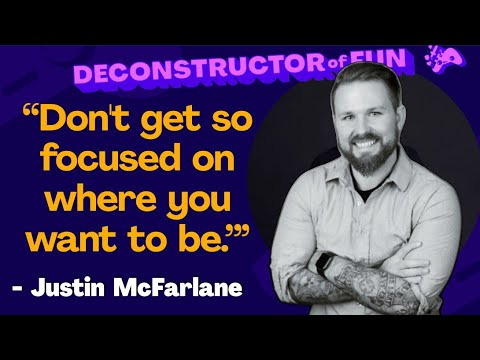
kind of falls into my personal wheelhouse. But in terms of like trying to take that step and with the steps I had to do, I think the biggest thing is just taking the time to learn. Um, and that's something like I'm a very curious person and I I would advocate to anybody like you know the number of hours I've spent outside of the normal nineto-5 of just learning things like learning Jira which is not the most exciting thing in the world like like I I I know enough about it but like it's it's I'm almost don't get atlassian and mad at me but like it's it's like the nerdiest part of the job. Um but to have people who have that knowledge it makes an impact on the game team. It helps the cause. helps us bring our vision together. Um, and so naturally, like I I try to advocate like don't get so focused on where you want to be. Focus more on the things you want to learn and where you want to improve and the rest can take care of itself. Like if you're somebody who's like, I want to learn that. I want to understand that. I want to question that. I want to challenge that. Those are the type of
things I think that have helped me personally. And the people that I've seen be successful around me as well are people who don't just wait, you know, to to to be taught or instructed, but looking for gaps in the organization, looking for gaps in their own knowledge space and and just trying to be proactive about learning. Um, and that is what Scyplay tries to do. tries to provide opportunity for people who have that passion to learn and improve their career and learn things outside like like you know if it doesn't matter if you're in QA and you want to learn production there's tracks there where they can go out and find that information we built around like the LinkedIn learning platform and built in our own like uh Nick Elliot and and Matt Beecher at the company are working on something called Scipplay Academy which provides all this video content to anybody that's out there to just learn how to do things that are outside of your wheelhouse. Because the more well-rounded we are as a team, the better we are going to be as a team. And that also helps people make those type of jumps. How do you take
what what kept you at side play empowerment and ambition of of the entire company? How do you kind of distill that to your team so that they are as bought in to what you're doing and they are experiencing the same career progression or similar? Of course, you start with a much smaller company, but they're also experiencing that that wide career progression where you from an artist, you can become, you know, general producer and general manager. From a producer, you become an artist. I don't know if that goes the other way around, but but you know, who who can't draw a slot? For sure. Um, yeah, that's that's the challenge. Um, because now like as a team, we're what 72 people in Cedar Falls. It's it's a bigger like when I started like I said it was three it was me Josh and and Forest and then it was Patrick we building analytics and it grew but it was still always tightly knit and suddenly you have this massive team. So the ability to empower everyone to that level of impact is is certainly
a challenge and it's just a constant I was you know it's you know at some points it's making sure you don't make decisions for people. You don't go too top down. You let the team fail. You let the team have the opportunity to make decisions. You let them grow. Um, and that is a challenge because sometimes like I'm I'm somebody who likes to solve problems. So I will just like jump in and try to throw every solution I can think of and I have to sometimes pause as GM because I have a different role. My role is to pass along that same empowerment that drives me. And so it's it's probably tried to not do that as much and let the team members come up with solutions. let the team members find where that next opportunity, that next gap is and kind of let them steer the ship and get them the opportunity to have their voice heard. The more we can do that, the more sense of purpose we give the people that have an impact on the team. Um, I won't say it's easy because it's it's much easier to just say, "Hey, I know what the answer is. I want to do that or at least I have a pretty good idea of what the answer is." Um, so it's it's a daily effort to do that. But that is the goal
is to make sure everyone has that same level of empowerment, has that same level of uh sense of ownership I should say over the game that we have the opportunity to operate. It's like a top 10 game. Millions of people play the game every month. And uh and so the opportunity to make that level of impact is there. It's on us as leaders to pass along that that responsibility and that sense of empowerment. What's the balance between you making the, you know, direct decision and you allowing the team to search for it? Uh, it's it's recognizing the impact. Is this a decision that will kill the feature? Like, is this a decision in my in my gut like it's just not going to be successful? Um, so really it's it's looking at the the impact and what we can afford as a business. Um, and trying to make some best guess guesses when that is to make the decision versus when it's not. Well, interesting. So I last thing that I wanted to talk about which is a big thing is live bombs. Uh looking at
sideplay success like you've been growing year over year since 2013 pretty much no matter who owns the company no matter if there's IDFA if there's not IDFA if there's co if there's not co you guys keep growing. Can you talk a little bit how your live ops is structured and what makes it so good? Yeah. Um well it's it's still relatively Jackpot Party is still relatively new. Like if you look at the trajectory of the game um you saw a spike probably 2020 2021 somewhere. And honestly before that like our live ops was very very thin. Like we didn't even do like asset releases. We didn't even do content releases. Um I give a ton of credit to Daphna Benon who came on to the project to help build our live ops. Um, and so it's it was a lot of learning for us, for me as a GM because I had to learn about what live ops was, what drove it, and we had to build basically mechanisms to be able to understand what move players behavior, what kind of challenges they like to
engage with. Um, really as a game team and the number one goal for live ops is engagement based. And I don't think I'm the first person is like how do we we create a situation and environment where the game feels fresh every single day and there's something you new and unique to be able to challenge the player with based on where they're at from a a currency standpoint. And so for us over the last uh couple years there's there's a number of different angles to talk about live ops. There's the strategy of how we build our roadmap, how we build our calendar, how we build the promotions in game, how it all works together. There's how we measure it, which is what we have we spend a lot of time considering like in terms of what is effective in game, what isn't. And there's honestly even the logistics of live ops. Like as a game team, like we had to go from a team that was very uh project based and planning long-term projects. They're used to building things over time to suddenly we're making pivots and changes in the live game like on an hourly basis, which is a lot of thrash for a development team to be able to do that type of to reaction.
Um, so we had to basically sit down with the team and make sure they understood the impact that we make. Make sure we gave the context to the decisions we were making when we're making a pivot when we're adding a new promotion. Um, I think one of the things that helps Sciplay be successful in the live ops space is not only how they recognize the importance of live ops in general, like how the game must be fresh, how it must be a live game and it's a destination, but also their sense of urgency and ability to analyze and evaluate how effective it is. So, there's a lot of talented people who who build, you know, obviously the right way to evaluate and look at the game on an hourly basis versus our expectations. understand how our players are interacting with the game and understand what's working or what isn't and then we're not afraid as an organization to react and make changes like like that and very fast. Um and over the past couple years we we've built processes like leaning more into conbon and lean processes that allow the team to pivot very quickly um and then
build the right tooling to be able to support that type of thing. So like admin tools, being able to to change the right levels levers. We have a ton of proprietary um solutions to be able to manage and operate the live game. I could probably go on for an hour and just ramble on about about live ops and and all of the work that goes into making it happen. Um but I think at the end of the day, it's just the level of importance that Scyplay puts onto it and that's why you see us be so successful in that space. But can you let if you if you want to go a little bit more practical level? Sure. Can you explain what you do on hourly basis, daily, weekly, monthly and quarterly? Like what are the different elements of the live ops that you focus on different time spans like hourly is probably different type of offers and yep you know just just a little bit of concrete examples uh to just understand how how um how robust your live ops engine and work is. Sure. So there's
there's different levels of strategy that go into play with the live ops calendar. We we look at it in terms of like like a month is a series of campaigns. Every single day is part of a campaign and what we call like in terms of like this is what the player is going to care about on given day. So we will sit down months in advance and we'll plan out the whole month. We'll know what important weekends, what's going on from like are there holidays that are going on? Um, and we know things like our big meta features like uh party cards, which is this big collectible feature. It lasts three months. There's there's milestones in that that fall on certain days. Uh, we have our diamond pass feature, which is jackpot parties, battle pass that expires every month. We know when that thing's going to end. And so, you kind of identify your cornerstones of of when big events are happening in the game. And then you understand your gaps like when there's not a lot going on in the game, and you say, "Okay, we need to get creative here. We need to build something for the player that they're going to care about. Our goal is to make every day feel like it's December 25th, like it's Christmas.
Like there's no such thing as a a boring day on jackpot party. So, a lot of effort goes into just the strategic side of building out the calendar of laying out the major events and challenges. And then you kind of go into more like the weekly planning of like, okay, we need we know we're going to do challenges. We know we're going to have these types of rewards. Then you get into the fine-tuning of like all the tuning and the different like segmentation that's going to happen and you evaluate where the players are at currently in terms of like their different currencies like their bank rolls for you know we've got things like bingo balls which ties into our bingo feature. We've got things like you know obviously coins are staple of the economy but there's a like diamonds which drives the progression of diamond pass. There's all these different currencies that the players care about. And so finding a way to balance that throughout the month is more kind of like as you get closer to the month, you're starting to work out those details. And you're working with the art team, our our phenomenal art director Elliot Ling, to bring it all together like in terms of like the vision, like the creative side to the game. How do we like what is it going to feel like when
the player comes into? So once we're through the planning stage, then we go into what we call the production stage, which is we're building it. We're making the configurations. We're setting all the game events. Boom. We've got a month of content ready for the player. That the important thing is it doesn't stop there. The important thing is as we get to the week of, we're seeing where the game's at from a business standpoint. We see how, you know, how is revenue doing, how is engagement doing, what are the players responding to, what are they not. And that's where I think one of the most important sauces is we're not afraid to make changes to the plan. Even though we've had months of work in pre-production that have gone into this plan, we're not saying we're locked into this. And so we'll make a series of changes. We'll work with the game team, which is why it's so important that everybody's together because this has to happen very efficiently. Um, and you want to deliver that context to the team face to face so you get all the non-verbal cues and everything. And um, we'll reddraft a plan. We'll make some pivots. We'll add obviously we'll add store sales, store logic changes based
on where the players are at, but we'll do things like we'll tweak the events that we're running. Like maybe players are falling behind in their progression. And so it's an opportunity to give them rewards like more diamonds for their diamond pass season. All sorts of stuff like that um that we do on a weekly basis. And then when it gets to hourly, you are looking at things that like either moving up sale times, changing uh offers that you're giving players because they're playing a lot more than we expected over a given weekend. You're either decreasing the level of difficulty of challenges, you're adding new challenges. you are adding stuff to the calendar, but when we're talking hourly, we tend to do stuff that's like what we call like our canned we call audles. I I don't a lot of us are football fans, so it's almost like calling an audible. Like, hey, there's something different than we planned. Let's call an audible. And then that drives a okay, we need to retune something and we get it into the game. So, uh the team is is crazy. Like if we can get an audible into the game in like 15 minutes from like conception to in
the player's hand. Um that's because we lean on like pre-built like designs and configurations that we can release at given moments. What's what's an example of an audible? Uh a great example is okay. Hey um players are like engagement is low. We we didn't actually know like we didn't anticipate you. We're playing the game. I guess I'm going to take a step back before I answer your question and just really underline the importance of like as I play of also playing the game. That's something that everybody is expected to do. So as we play the game, it's different when you're playing in pre-production. It's different when you're you're designing your whiteboard solutions. When you have it in your hand and you try to put yourself truly in the player's shoes, you really you can understand things that there are gaps. And so some people play the game like, "Hey, there's nothing really. it just doesn't feel like there's something for me to chase as a player. There's nothing that like like I really care about. And so a good example would be like we'll add a quest that gives a player like a wild card, which is like party cards.
It's a wild card is a very valuable thing to the player because they could substitute any collectible with it. So if you're ever stuck on a set, you have that opportunity. And if there's a low if the game feels like it's just missing something and it is in line with like some of the data that we're seeing where the engagement looks low, that is an audible we might call where we add a single quest for a player, a challenge to be able to get this rare item and then we would get that in the game within within an hour. Um, and so we'll respond to the data. Um, and I think the reason I brought up the play side of stuff because I mean Sciplay is called Scipplay for a reason. It's part science, it's part data, but it's part play, it's part feel in the game. And so there is a level of intuition sometimes with those calls. Um, but you can normally see it be backed by the data that we actually track. So this is fascinating. I know. Thanks for underlining this because you have planning and goal setting on monthly content. You got the production going on all the time. So development of the actual features. Uh, you got measurement
going on all the time that leads to adjustments. That is daily. that is weekly that is you know well daily and weekly mostly and then there's releases and everything happens at the same time. So the people who are planning for the future content are probably also doing the measurement and adjusting the current content and so there's you know you're planning for the future you're acting on today. Yeah, absolutely. It's it's a constant cycle. It's a it's a very busy life for sure for anybody on live ops. But, uh, if you're the type of person that loves that environment, loves the challenge, and loves that pace, it's a an amazing environment. It's it's a So, do you miss new game development? Uh, you know, that's a great question. Sometimes, yeah, I for sure like that's one of the like from a out of the basis of like being able to create something from scratch. There's a level of just like excitement that comes with it. Um, so yeah, there's definitely I can't say no, I don't miss that from time to time. Uh I try to approach everything like
every everything that we have like a new game development. I recognize how new it is to the game team. Uh that's why I try to coach on the team like you have people who have been on the game team like I've been here for 17 years. a lot of people like engineers direct like Michael our director of engineer Michael Gasman has been here I'm going to say at least 10 years it feels like and so everyone in the game team you've got to look at yeah we're on the same product but everything we do is changing that product dramatically and so it's recognizing and finding the challenge and finding the new in everything we do on jackpot party and I think that helps us be successful because we don't get complacent at what we do on the game I think that helps drives our our success. Uh, regarding that, do you think a person who is in such a grind of live ops is has the right skill set for new game development and vice versa, somebody who's really thinking about how to build this product out of nothing can actually think about this super reactive live ops grind? Uh, no, no, it's not for
everybody. I like some people for sure. Uh, I I've absolutely saw that. You know, it's it's definitely a different mindset. I think if you can if you can do both sides of it, I would advocate anybody who is in games should try to do both sides because there is a huge value in somebody who understands both styles of development. Um, and if you could do both, well, like that's like a unicorn. But there are definitely people like like producers for example, like we've had people who are very project- minded. They like long-term projects. they want to do a riskbased approach, plan out this long thing and they're not typically huge advocates of change. They like to have their plan and follow it through. So we've had issues where it just it does it's just like a right brain leftrain thing. It just doesn't work. Um so you have to recognize that as a leader and say this is not going to be the right role for that person. Um for sure there are definitely people who are fit better in the spot. But I would always try to push and challenge people to be outside of their comfort zone and say even if you prefer to be here, you
should try both sides because it's just great to get that experience. Kind of going back to what helps people grow in their careers. Which one is the better way to start your career in games? Live live game or new game? I would say live game because I think you put yourselves in the player's footstep the best. I'd say that's if if I'm a startup, if I'm building a a game from scratch, I'm thinking about my live ops processes and my live services. I'm thinking about how I'm going to build the team around that because to me today, the live game is everything. And it at the end of the day, it is it's what you're it's what you're providing. So, you understand the features you're going to build better if you live in that environment where you are manage it and operate the game. So when you go back to build those features, uh you you try to avoid some of the mistakes we've made. I've made personally where I've built a feature just thinking about how awesome this is in a vacuum in a silo. And I don't think about the impact that happens when I it's it's like tossing a stone to water.
It's going to reverberate. It's going to make a changes throughout the whole game. When you live in live ops, you're you're constantly thinking about the big picture. You're thinking about the player experience. And you take those experiences to build your feature. Your feature is going to be better. I guarantee. So, long story short, that's I would definitely start in live ops. It's probably the easier adjustment to make, too. Yeah. Yeah. I couldn't agree more. It's very descriptive. You can ship a lot in a very short amount of time. And most importantly to me at least from the product side you understand that how to build a player journey and what different features are almost like milestones in that like you would like player level is the most typical one but you don't understand that it's really important because I need to measure player level against wallet player level against this element player level against that element. It's my measuring stick. It's my milestone. That's why I need this feature even though you might not seem as important. just a small example of of things. And you wouldn't know that unless you were actually ciphering the data and
adjusting based on it and then cursing that you don't have a milestone stick to to actually segment your players correctly. For sure. Absolutely. Well, Justin, I'm going to let you go, but last thing, why should people join you in Cedar Falls and what kind of people you're looking for? Uh, if you look you should join PE in Cedar Falls if you love making games. I think the people that we have assembled that uh one we have the right level of understanding of what makes great games and that's great people and and building an environment where great people can be empowered and make an impact and doing it together. Uh I know it'll be fun. I we build a really fun environment like I I truly believe a product is is a reflection of the the environment it's built in. So if you're having a good time, if you're enjoying your job, your product is going to be more enjoyable. And so I think anybody who joins our team in Cedar Falls is going to find that fun that we're trying to find in the game. Uh you're going to be challenged if you're if you're
looking for a challenge. The people who come to Iowa are hardworking people and that's is a is a real thing. And uh if you're somebody who is goal driven, wants to make an impact and be part of one of the best games in in mobile gaming, Cedar Falls is the right spot. So and there's of course Sidlay has many other location than Cedar Falls. You got Austin, you got Tel Aviv, you got a lo location in Turkey and probably many more that I'm uh not in into accounting, but what we know is the company is growing year over year and has a amazing culture and people who come and stay for pretty much their entire careers as it looks like. Yeah, we hope that's our goal. we when people come to the company I I hope I'm one of many stories of of rather than building the ex exception trying to build people who are in it for the long term uh and never feel the the urge and need to leave because it's just an amazing experience. Well, thank you Justin for for sharing
your your experiences uh your insights and um can't wait to to follow your your Cedar Falls studio growing and thriving even more. Thank you very much. Uh, thanks for having me on by the way. I appreciate it. Thanks everybody for listening. Uh, Justin's information in the description below. So connect if you if you want to work with him or at site. Thank you.
Auto-generated captions from YouTube — names and numbers may be misheard.
Professional advancement in the gaming industry is best achieved by prioritizing cross-functional mastery and the proactive identification of organizational needs over rigid adherence to specific job titles. A career trajectory spanning nearly two decades demonstrates that sustained success stems from a culture of continuous learning and internal mobility. By transitioning from technical roles like 3D artistry into executive leadership, individuals can better bridge the gap between creative execution and high-level product strategy. This holistic understanding of the development lifecycle is essential for managing complex, billion-dollar live service titles.
Operational excellence in the social casino sector relies heavily on the integration of data-informed decision-making and rapid, iterative development cycles. Maintaining a competitive edge requires an agile, audible-based culture where teams possess the autonomy to pivot product features in response to real-time player engagement metrics. To facilitate this level of responsiveness and foster necessary team chemistry, physical proximity remains a critical component of studio strategy. Consolidating product, analytics, and development teams in a centralized location ensures the high-speed collaboration required to manage the intricacies of a live service ecosystem.
The live operations environment serves as an ideal training ground for developers, offering unparalleled exposure to the full player journey and the long-term consequences of feature implementation. By moving away from siloed development, teams learn to build features that contribute to the broader health of the game ecosystem. Ultimately, the most effective organizations empower their staff to take ownership of the product, seeking out goal-oriented professionals who thrive in challenging, fast-paced environments. This approach ensures that both the product and the workforce remain resilient and capable of evolving alongside shifting market demands.

Deconstructor of Fun · 2026

Deconstructor of Fun · 2026

Deconstructor of Fun · 2026

Deconstructor of Fun · 2026

Deconstructor of Fun · 2026

Deconstructor of Fun · 2026

Deconstructor of Fun · 2026

Deconstructor of Fun · 2026

Deconstructor of Fun · 2026

Deconstructor of Fun · 2026

Deconstructor of Fun · 2026

Deconstructor of Fun · 2026

Deconstructor of Fun · 2026
Deconstructor of Fun · 2025
Naavik · 2024
Deconstructor of Fun · 2024
GREE

Deconstructor of Fun · 2026

Deconstructor of Fun · 2026
Deconstructor of Fun · 2026

Deconstructor of Fun · 2026

Deconstructor of Fun · 2026

Deconstructor of Fun · 2026
Deconstructor of Fun · 2026
Comments