Game Development reports and market data
Documents

Panel: Stop Shooting Your Game in the Foot - The Damages of not Starting Live Ops Early
Integrating live operations into the earliest stages of game development is essential for avoiding technical debt and ensuring long-term product viability.
- Live operations must be integrated into the earliest stages of game development to prevent technical debt and avoid the rigid, shoehorned systems that result from treating services as an afterthought.
- Technical architecture should be designed to support frequent updates, A/B testing, and player segmentation without requiring constant code redeploys.
- Operational tools, including analytics, crash reporting, and content management systems, must be accessible to non-technical staff like product managers to enable rapid, data-driven adjustments.

5 Things: About Autonomous Teams
Hutch has achieved significant commercial success, reaching an $80 million annual run rate and 300 million lifetime players, by fundamentally restructuring its operations around autonomous, cross-functional teams.
- Hutch achieved an $80 million annual run rate and 300 million lifetime players by restructuring operations into autonomous, cross-functional teams that hold full accountability for both creative and financial outcomes.
- Decentralizing decision-making power from management to developers serves as the primary engine for scaling the studio while maintaining consistent profitability.
- Effective Agile implementation at Hutch prioritizes psychological safety and developer empowerment over rigid processes, with leadership acting as servants to self-organizing teams.

From Casual to Hypercasual - How to Turn Your Casual Production Team to a Hypercasual Commando Unit
Hypercasual gaming has emerged as a dominant force in the mobile market, experiencing a 40 percent surge in downloads during the pandemic as the genre successfully captures a vast audience of non-traditional players.
- Transitioning to a hypercasual model requires small, agile teams of two to three people to minimize financial risk and maximize production velocity.
- Studios should aim to reach revenue milestones within a seven to twelve-week window, accepting that early prototype failure is a standard part of the process.
- Market viability must be validated before full-scale production using ad-based click-through rate tests to ensure only high-potential mechanics are developed.
Reinventing the Discovery Process
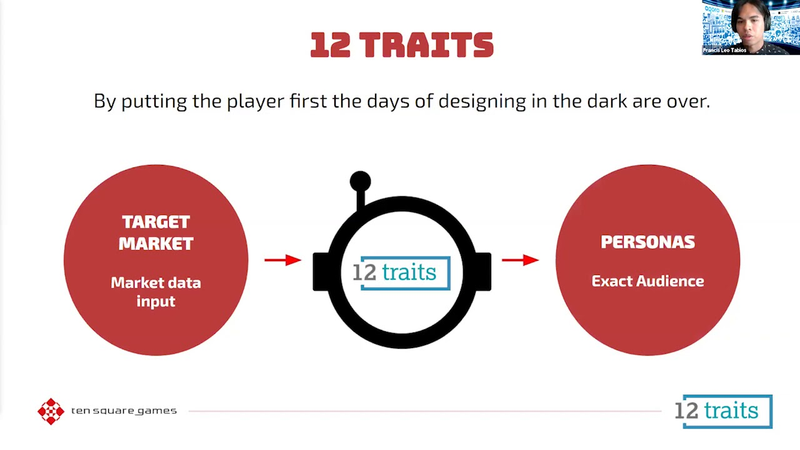
The modern game development landscape requires a shift toward a player-centered discovery process that prioritizes rigorous validation before full-scale production begins.
- Studios must shift to a player-centered discovery process that mandates rigorous validation of game concepts, mechanics, and art styles before full-scale production begins.
- Development teams should utilize detailed, data-backed player personas—developed alongside behavioral research firms—to map psychological traits and motivations directly to monetization and design strategies.
- Integrating big data analytics into the discovery phase allows studios to replace generalized assumptions with targeted experiences that align with specific, sustainable market opportunities.

Panel: Putting the Hype into Social Games - Deconstructing Hypercasual & Social Games
The gaming industry is currently navigating a strategic convergence between hypercasual and social gaming models, driven by a shared need for accessible, high-volume engagement.
- Developers are increasingly adopting 'hybrid-casual' models that combine hypercasual ad-based monetization with social gaming's in-app purchase mechanics to maximize profitability.
- The loss of IDFA tracking under iOS 14 has forced the industry to move away from granular user targeting toward privacy-compliant lifetime value calculation technologies.
- Hypercasual games, traditionally focused on short-term 30-day lifetime value, are now integrating social features like voice and video chat to boost long-term retention.
From Zero to Hero - Give Gamers What They Want with Rapid User Testing
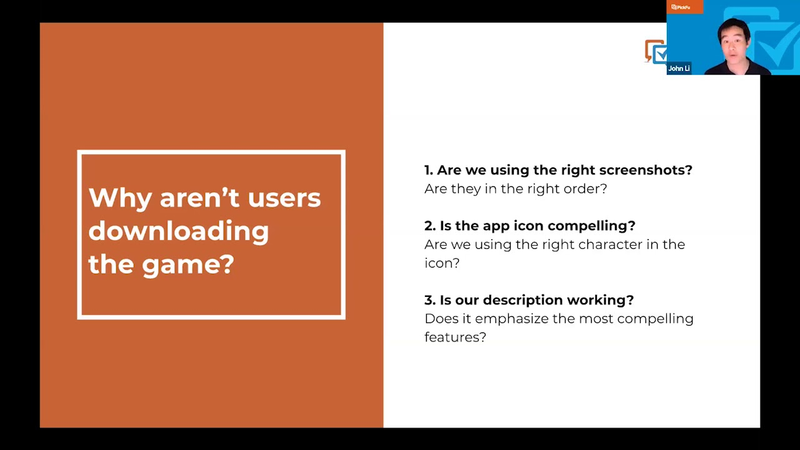
Rapid user testing serves as a critical bridge between raw quantitative analytics and subjective community feedback, enabling game developers to refine their products through direct consumer insights.
- Rapid user testing bridges the gap between quantitative analytics and subjective community feedback, allowing studios to validate creative assets and gameplay mechanics with precision.
- Implementing testing protocols early in the development lifecycle reduces financial risk and production time by ensuring concepts resonate with target audiences before significant resource investment.
- The methodology transforms development from speculative decision-making into a data-driven workflow, enabling teams to iterate and optimize conversion metrics both pre- and post-launch.

Workshop : How to Implement Video Chat into Unreal Engine
Integrating real-time video communication into Unreal Engine projects requires a structured technical workflow centered on the Agora SDK.
- Integrating real-time video into Unreal Engine projects is primarily achieved by utilizing the Agora SDK, which provides the framework for managing communication channels.
- The implementation requires initializing the Agora engine with a unique App ID and creating custom actor blueprints and UI widgets to render local and remote video feeds.
- Developers must configure specific callback events to manage connection states and bind video streams to dedicated video holder blueprints within the game environment.
Fireside Chat: Unique Insights into Mobile Games Piracy (A Developer’s Guide)
Mobile gaming security faces a significant shift as the industry moves away from traditional piracy concerns toward the more pressing threat of in-game cheating.
- Mobile gaming security has shifted from traditional piracy to in-game cheating, with 86% of mobile titles currently harboring vulnerabilities such as memory manipulation and license bypassing.
- Cheating is highly prevalent in the top tier of the market, as 43 of the top 50 mobile games contain at least one accessible exploit.
- Developers can implement robust anti-tamper technology without compromising performance, as demonstrated by Battle Legion, which maintains frame rates and battery life through advanced compression and binary optimization.

Panel: Doubling Down on Repeat Players- Moving to Retention as a Focus to Making Money
Retention and monetization function as interdependent pillars of long-term financial success in the mobile gaming industry.
- Retention is the fundamental prerequisite for monetization; aggressive ad frequency or excessive in-app purchase pop-ups can degrade the user experience and ultimately destroy long-term revenue potential.
- Return on Ad Spend (ROAS) serves as a critical metric for balancing monetization and retention, as high-performing ROAS models allow for increased investment in user acquisition.
- Ad placements that are player-controlled, such as optional rewards for players who have run out of content, can function as retention features rather than just monetization tools.
Fireside Chat: What do Game Developers Really Think About Monetisation?
The modern game development landscape is undergoing a significant shift toward monetization strategies that prioritize player retention and immersion over traditional, disruptive advertising.
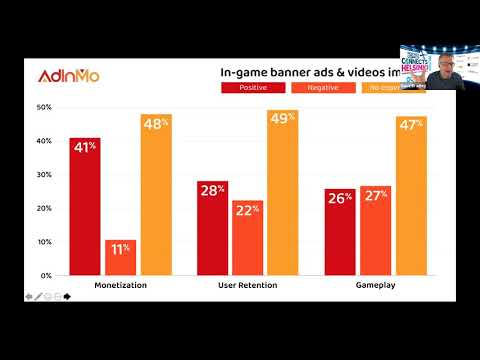
- Approximately 75% of game developers now prioritize non-intrusive monetization strategies, such as ambient in-game placements, over disruptive advertising models.
- Gamers are three times more likely to prefer native, integrated advertising formats compared to conventional, disruptive ad breaks.
- Developers are increasingly demanding greater control and transparency over displayed ad content to protect brand integrity and prevent the promotion of direct competitors.

The Game Developer's Guide to iOS 14: Expectations & Preparations
The introduction of Apple’s App Tracking Transparency (ATT) framework represents a significant shift in mobile privacy, moving permission management from the device level to the individual app level.
- Apple’s App Tracking Transparency (ATT) framework mandates that developers obtain explicit user consent to access the Identifier for Advertisers (IDFA), which is critical for user acquisition, retargeting, and ad monetization.
- Approximately 30% to 40% of users in major markets like the United States already have 'Limit Ad Tracking' enabled, meaning they will not receive the ATT prompt and will effectively opt out of IDFA tracking by default.
- Because the ATT prompt can only be displayed once per app, developers must strategically determine the optimal timing and placement to maximize consent rates while minimizing user churn.

Introducing Gaming Services: Login, Sharing & Player Finder for Games
Facebook is introducing a new suite of gaming services designed to enhance player acquisition, retention, and social engagement through its ecosystem. The initiative focuses on three core pillars: watch, play, and share.
- Facebook is launching a suite of gaming services targeting its community of over 700 million monthly active users to improve player acquisition, retention, and social engagement.
- The revamped Facebook Login for Games allows players to maintain cross-platform progress while utilizing customizable identities like selectable avatars and player names.
- New sharing integrations enable users to post gaming content directly to Facebook and Instagram feeds, stories, and groups to foster organic growth.
Writers
Games and companies
Games