Game Development reports and market data
Documents
Bridging the Gap Between UX Principles and Game Design
This analysis explores the integration of User Experience (UX) principles into game design, arguing that both disciplines share the fundamental goals of clarifying player intent, fostering empathy, and providing meaningful experiences.
- Apply Gestalt laws of proximity and similarity to 3D combat encounters to help players intuitively prioritize threats without relying on intrusive UI elements.
- Use consistent visual language, such as specific shapes to denote safety or danger, to guide player navigation through 3D environments instinctively.
- Implement backend adjustments, such as the 'magic bullets' system used in Gears of War, to ensure core mechanics remain rewarding for both novice and expert players.
AMA: Diverse Teams
The game industry faces a persistent stagnation in diversity, characterized by Black representation remaining at a marginal 1–2% for over three decades.
- Black representation in the game industry has remained stagnant at a marginal 1–2% for over three decades.
- Systemic hiring barriers, including an over-reliance on elite university pipelines and subjective cultural fit assessments, must be replaced by a focus on candidate capability and direct outreach to historically Black colleges.
- The industry’s reliance on unsustainable development models like crunch culture and rigid, traditional hiring backgrounds limits both creative potential and long-term cultural relevance.
Game Art Remastered: From Crash, to Kerrigan, to Corley Motors
Modernizing classic video games requires a delicate balance between technical innovation and the preservation of original design intent.
- Successful game remasters require a balance between modern technical upgrades and the preservation of original design intent, silhouettes, and core gameplay mechanics.
- Remastering projects like StarCraft, the Crash Bandicoot trilogy, and Full Throttle often necessitate reverse-engineering legacy architecture and building custom tools to support 4K and widescreen standards.
- Production cycles are frequently complicated by the loss of original source files and documentation, forcing teams to rely on archival research and manual rotoscoping to reconstruct missing assets.
AMA: Hopping and Skipping Your way into Last Place Q&A with Zaire Lanier
Securing a sustainable career in the game industry requires a strategic shift away from traditional cold applications toward the cultivation of a genuine, peer-based professional network.
- Professional advancement in the game industry is driven primarily by peer-based networking and referrals rather than traditional cold applications.
- Building a portfolio through game jams and small-scale projects like Twine games is the most effective way to demonstrate skills and gain community entry.
- Financial literacy is essential for career longevity, requiring freelancers to account for taxes, benefits, and overhead when setting rates.
Accessibility Best Practices: In-Game Communication
Accessibility in modern gaming functions as a critical bridge between diverse player needs and digital environments, requiring developers to proactively eliminate mismatches that hinder engagement.
- Prioritize legible typography by using a minimum font size of 28 pixels tall and 3 pixels wide on a 1080p screen, while maintaining a 4.5:1 contrast ratio to ensure accessibility for all players.
- Implement a 'welcome screen' or 'hospitality screen' that allows players to configure essential accessibility settings, such as volume and communication preferences, before the game fully installs or begins.
- Provide menu narration to assist players with vision impairments, using either pre-recorded audio for straightforward implementation or text-to-speech engines like IBM Watson or CMU Flite for dynamic, scalable solutions.
Game Jam Showcase - ep 6 - Take Care - Extra Credits
The sixth Extra Credits game jam, centered on the theme of Take Care, highlights the creative potential of rapid game development within a 72-hour timeframe.
- The sixth Extra Credits game jam, sponsored by Core, generated over 500 game submissions centered on the theme of 'Take Care' within a 72-hour development window.
- Modern game development platforms like Core allow creators to build functional, polished, and multiplayer-capable titles without requiring extensive coding experience.
- The event showcased a wide range of design philosophies, including procedural generation in 'Game of 1000+ Poems', meditative multiplayer tools like 'Now', and minimalist UI-driven storytelling in 'Fall of Bronze'.
Adapting: Working in Games with Chronic Illness
The game industry faces a significant challenge regarding inclusivity, as approximately 60% of U.S. adults live with a chronic disease.
- Approximately 60% of U.S. adults live with a chronic disease, highlighting a critical need for the game industry to adapt its high-stress development environments to be more inclusive.
- Early disclosure of chronic illness is recommended to proactively secure necessary accommodations, such as ergonomic equipment, flexible scheduling, or remote work, before health crises occur.
- Workplace accommodations should be framed as essential tools for equity rather than preferential treatment to ensure employees can maintain productivity without exceeding their physical limits.
Find Funding During CoVID Times with Pontus Mahler | Game Dev Unchained Episode 237
Securing capital in the modern gaming landscape requires a shift from creative-only focus to a rigorous, business-oriented strategy.
- Investors prioritize the team's business acumen and professional maturity over the game concept, requiring founders to demonstrate a clear growth strategy and adaptability to feedback.
- Studios should dedicate approximately 50% of their operational time to targeted networking and relationship building rather than generic outreach.
- Financial plans for budgets exceeding €500,000 must include a three-to-six-month buffer to mitigate risks associated with development delays and post-launch stability.

Scaling a Games Studio: How to Win?
Early-stage game studios face significant risks when founders become overly attached to initial concepts, often leading to excessive capital expenditure on unproven ideas.
- Mitigate early-stage financial risk by prioritizing rapid prototyping and market validation through ad testing before committing to full-scale development.
- Scale by adopting a decentralized, horizontal organizational structure that treats individual teams as independent startups to preserve speed and agility.
- Embed core values into hiring and performance review processes from the outset to ensure cultural alignment, as culture is defined by the trade-offs made during development.

Superstar Session: From Ten Square Meters to 1800 - Keeping the Culture that Drives Your Growth
Ten Square Games, a prominent Polish mobile gaming studio, emphasizes the necessity of maintaining a startup-like culture and organizational agility while scaling operations.
- Ten Square Games scaled from a three-person team in a 10-square-meter office to a publicly traded company with nearly 300 employees while maintaining a flat, agile organizational structure.
- The company utilizes an autonomous product team model where specialized departments like finance and marketing act as support functions rather than top-down decision-makers.
- Rapid market responsiveness and experimentation are maintained by granting independent teams full authority to develop and test new game concepts in short timeframes.

Panel: Live Ops Best Practices: How to Make them more Engaging & Profitable
Successful live operations demand a fundamental shift in development philosophy, prioritizing the post-launch lifecycle as the most critical phase for long-term viability.
- Prioritize early retention by optimizing technical performance, specifically by reducing loading times and fixing crashes, before focusing on long-term content expansion.
- Implement a rigorous testing pipeline by deploying updates to a small subset of players (5-10%) before a full rollout to ensure stability and gather data.
- Adopt a 'restaurant' mindset for live operations, where teams must be prepped for a high-frequency, agile development cycle that often requires weekly content releases.
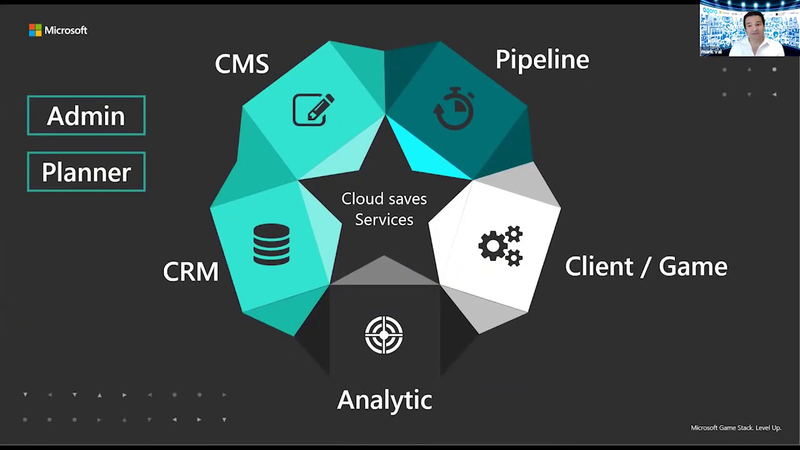
Superstar Session: Live Ops: A Ten Year Journey of Iteration & Best Practices
Live operations (LiveOps) serve as a critical framework for modern game development, shifting the focus from a static product release to a continuous, iterative service model.
- LiveOps requires shifting from a static product release model to a continuous, iterative service model that treats games as evolving ecosystems.
- Monetization strategies—whether advertising, virtual goods, or premium content—must be defined during early development to dictate the required technical stack and engagement models.
- Studios should prioritize early content releases to facilitate rapid iteration rather than relying on unpredictable viral success.
Writers
Games and companies
Games