1 free read left. Create a free account for unlimited reading + AI research.
Create free account
Panel: Stop Shooting Your Game in the Foot - The Damages of not Starting Live Ops Early
Key insights
6 takeaways- 01Studios should transition from a traditional ship-and-move-on mindset to an iterative, service-oriented framework to maintain long-term product viability.
- 02Live operations must be integrated into the earliest stages of game development to prevent technical debt and avoid the rigid, shoehorned systems that result from treating services as an afterthought.
- 03Technical architecture should be designed to support frequent updates, A/B testing, and player segmentation without requiring constant code redeploys.
- 04Future competitiveness depends on tighter alignment between user acquisition and product teams, supported by increased automation throughout the development lifecycle.
- 05Operational tools, including analytics, crash reporting, and content management systems, must be accessible to non-technical staff like product managers to enable rapid, data-driven adjustments.
- 06Sustained engagement requires a player-centric approach that balances quantitative data analysis with qualitative community feedback.
Ask AI about this video
Transcript
it is time actually for our uh last talk of the liveops track uh which is a panel um the panel will be moderated by steven lee from deca games i think he's joining right now hey stephen hello how are you i'm good how are you very well thank you nice to see you as always yes absolutely i see that your panelists are one by one joining as well um i will leave it up to you to introduce them very good thank you all of them so i will shut up and i'll leave you to it thank you see
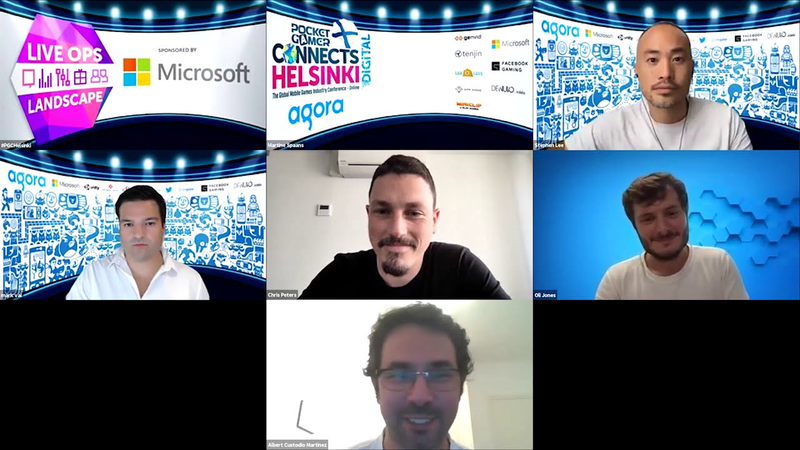
is everyone here almost everyone i think that's everyone yes awesome well um yeah good day everyone or good morning to some of you uh in north america um really really a pleasure to be here uh in this panel and i'm really really honored to be moderating such a esteemed group of industry veterans today we're here to speak about live operations and i think most of the people tuning in are familiar with live operations and and i think it's definitely become an increasingly important part of the games industry so i'm excited to dive in with with all of you before we do that i'd love to go around and give each of you a chance to introduce yourself introduce your company what you're working on uh where you're located and i always like to throw in a personal question as well so why
don't we also um share what game that you're you've most recently been hooked on or addicted to or maybe even spent money on um so i'll start i'm stephen with deca games based in berlin germany at deca games we we help developers to take over operations of their existing lab games so that provides developers with more flexibility to focus on on more important projects um personally i'm still uh playing a lot of marvel strikeforce on mobile i find that game pretty addictive and uh i like supporting uh those guys who i'm very friendly with so um with that uh why don't we go to mark next because he's left on my screen go ahead mark yeah hi hi sven um yeah so i'm mark val so i'm part of azure play fab so i've been in the online industry for about 20 years i've built studios for ubisoft and unity
and these days i'm playing war zone with some cousins and friends uh simply to shoot each other up which is great uh on mobile i'm actually back on some supercell games just to see how it changed in the last three years because they always do a lot of updates and but i'm playing just too many games but these are the top two right now thank you what about uh chris why don't you why don't you go next well yes i'm chris i work for mag interactive we're a mobile free-to-play developer based in stockholm and brighton and i am beaming out of the brighton studio today um yeah we're not a massive studio maybe about 100 people in total but uh our biggest new game is uh called worthy and it's uh it's a tile based [Music]
word game like yahtzee yeah it's really good and what uh what game have you been playing most recently chris um most recently i've been hooked on a new release called frontier justice mainly because it's a western game it it's sort of like um i don't know like desperados that's kind of sort of gameplay i kind of like reminds me of that cool thank you and ali hey yeah uh i i just introduced myself on the previous talk but i'm olly i work for bombay play as you might have guessed that's based in india and we make kind of social casino card games um what i'm playing is but it's a bit cliche but i play a lot of pub g right up until it was banned in india um which made me very sad as i had an
account with over a thousand dollars on it but you know could always vpn so there's still a silver lining there all right thank you and last but not least albert take it away um hi i'm albert i'm director of liveops product at square enix mobile publishing we're based in london and uh yeah i'm overseeing a full team of products with pms producers analysts uh you name it and other roles and we're like and responsible also for the portfolio that we're having here in the company um yeah and it's been in the industry for quite a few years always in protocols and uh yeah right now in terms of games i'm playing i'm playing a bunch but the ones that right now i'm enjoying the most uh i would say arcedo rivia royale it's fun and uh epic seven also
i'm on this three mainly super thank you um great so let's dive in uh thank you for the introductions everyone so i guess the the um the title of today's panel which was uh so generously provided to us by the folks at pocketgamer stop shooting your game in the foot the damages of not starting liveops early so i think that actually implies quite quite a few things um a lot of us actually in the past have launched games or shipped games where you just kind of work you focus on the development and the game is shipped and and you kind of sort of move on or or you you know figure out what to do with the game after after that but i think increasingly uh that that has started to change in our industry industry so um i'd like to talk about um you know damages of not starting live ops early and and what does that mean to you guys
specifically and are there are there actually is there an ideal time for example to start thinking about and implementing liveops anyone uh want to jump in on this one sure i can i can start um well obviously for any games that is live today and doesn't have live ups there's a lot of technical depth that will come both in the client and in the tools required to operate it but um the most should i say important part is that if you have the same team moving from uh should i say a waterfall type of production to a more iterative and dialogue there's a lot of education and alignment that needs to be done in the team and um and the whole process of iterating with liveops obviously is extremely different than having a box title and so so it could be clash
it's a business decision there's people that don't necessarily like to to go through this process necessarily uh it's way more intensive you see i've found the success it's um there's a lot more work to be done we've been saying for a very long time that you know building the game is after work and the other half is uh building the liveops part and some teams actually are 10 people building the game and then you have you know 50 plus people operating the game so obviously for the sea levels all the way down to the customer support there's a lot of change in alignment that needs to be done and if nothing gets aligned then you cannot accelerate the goal of liveops is we need to go fast to find the golden nuggets um so
um so i'll say yeah so so these are the two major part which is uh team alignment and obviously the old technical depth that comes with it which can be um very hard to um and very long to get back into okay anyone else want to have a different uh or similar viewpoint that wanna would like to add some some color yeah i i have a guy um so the i i think the way that we've done it historically and mag in the past is uh we've thought about live ops after we've we've got a product um uh like uh wordbrain is one of our games that i manage and we're shoehorning tools into that to make it easier to live operate and it's not the best experience it doesn't allow us the flexibility we need to give our players what they want um and it's slower and our team's very small and you know we can't get as
much done so with our new titles we've got bigger teams um and we're we're thinking about live ups like far ahead like we've thought about the road map way before the developers on the features or even thought about exactly how they're going to do it so what we need ahead of time and i think that's that's the key um it makes it a lot easier to maintain in the future okay that's super interesting so um so specifically for the developers that are tuning in right now chris where at what stage where are you guys actually planning the live upside for for the latest game well so uh we've got like a road map of like nine months of features and we've already like planned the live ops for that nine months ahead already um and we're working alongside that game team to to deliver the features we need to to be able to deliver the game themes features to the end players okay and and and this
is the first time in your studios experience that you're doing approaching it from this perspective in terms of the timing of the liveops right yeah pretty much and it's mainly because the liveops team's only been around for two or so years um in our company um and we were all we're working on like old old catalog games as you like um the live ops is just now a feature but um this is we're going to be like part of all the other games going forward like from the start okay um ali albert what about you guys what is your experience in terms of the timing uh when when are you guys typically starting to consider live ops and plan around that sure i'll just i'll just add on to something chris was saying like being right live ops ready before you go out is uh even no matter how small your your team is you should certainly have something in place like maybe it doesn't seem important while you're building the game uh like hey hey uh do we really need to
account for this scenario that scenario but i'll give you just two examples um when you launch a game maybe you want to tune the balance uh how do you do that like if you don't have your economy sheets and like if you if you're not if your designers aren't even able to upload their new economy balancing to the servers without crashing the game or going through several developers then you're in trouble um you like it it's very simple to get that set up uh ahead of time and uh i think the second thing sort of along the same lines is like bombay play we we do card games they're like kind of live multiplayer so if you want to do a change to your server for example like do a lot game logic change and launch that how does that affect the people who are playing right now you know um you could you could end up like ruining the experience for your conco like concurrent users so how do you get set up for like the smooth like how do you actually update your game in a smooth manner is a problem like that new liveops teams actually end
up running into and inadvertently like shooting themselves in in the foot um so yeah absolutely like you should be started considering liveops from that perspective just how you do your updates no matter how simple from uh from pretty much the in the inception um of your economy design and uh you just tech stack yeah i wanted to add uh here like it's first of all i'm glad to hear all that my peers are saying i'm very glad to have these conversations um i agree with absolutely everything honestly it's really good um i would say like uh yeah uh i would just yeah let's let's start thinking since the beginning i would say one of the things that we're doing right now with the developers that we're working for example is like let's let's think about at least the user stories now we provide user stories what do we want to do with the features with the systems when they go live
because as you guys said if it's not planned in advance it's a nightmare to do it later and and most likely is functionally technical that you're not going to be focused on improving some other areas all the team will need to be focused here so you need to consider all of these in advance it's it's an exercise of abstraction somehow but it's more than needed uh to invest on this tech also behind during the development of the game so when you go to war launch it's not that you launch actually all the liveops like crazy but you have all these systems that as you guys said allow you to fine tune without breaking anything or you know like to react to the to the to the uh to the player's life without being in a hospital and being eventually crushing the game or like i don't know doing many deploys just for one single little change no um super key cool so um yeah it sounds like albert you just mentioned a couple of things that will happen
uh or ways that developers will will actually shoot themselves in the foot if they don't think about it early and i think all if i'm understanding all of you correctly the time to start thinking about ops is basically as soon as you're starting to think about the game so um i think that's uh we're all in agreement there um one of actually a number of you guys also uh just mentioned systems and tools i'd like to dive into that and and maybe give some of our the people tuning in um some practical um things that um they could potentially be using for for their own development and for their own uh success of their own games so um are there specific tools um or you know technologies that you guys are using systems for example um that have worked really well uh feel free to name and and be specific as possible mark i'm sure you have a few that you can also name but um yeah i'd love to for you guys to share uh specifically what are you guys using in your games that has worked really
well for you uh from a liveops perspective okay i'll go first so um we use firebase a lot so we've got the crashlytics um the [Music] push notifications things like that they're all handled within that system um we also have a lot of internal systems so unfortunately they're not available but the things that those systems do are the same across many tools so like segmentation a b tests updates of the air like forced update just there's tons and tons of things and and there's like many tools out there that we mainly use firebase and then our internal tools but yeah these like ways to deliver new functionality are pretty standard um yeah and we use them a lot and really benefit i think a b testing and
segmentation they're prime examples of really good tech okay and the internal tools those are things that you've built in like proprietary uh tech that you guys uh yeah okay pretty much and because obviously we've been going like 10 years so we we've built these tools to do the same functionality but before other tools like firebase and playfab i guess uh have got right up there got it okay what about the rest of you guys are you also using internal tech or are there third-party tools that you guys can recommend um okay can i be a bit cheeky and i'll just say the main tool we use is our brain um and uh just just trying to plan for these scenarios right i mean a lot of tools like firebase uh facilitate like over-the-air updates you know cloud storage et cetera it's not it's not like rocket science to know that you know uh to do that but the way you need to
employ the real tool um is is in the execution right so when you do like what is the flow here what is the user experience when uh they log into the game and there's a new update um and so if you're a small team uh like in in our case we we tend to uh you know we do very simple things not so fancy uh maybe there are tools that allow for sort of streaming and and all this sort of fancy stuff but you know most people just say okay just stop uh update the jsons like update update your economy then move on you know just try and uh think of the most simplest solution to solve for liveops that tends to work uh up until the point you're trying to optimize and then i feel like more advanced logic can start kicking in great anyone else with any final thoughts in terms of tools or technologies could go on and on but i
think i'm gonna let albert go before no i just um honestly with uh external uh partners in terms of tools we didn't have that much experience yet because uh all the tools and the systems that we were developing previously at social point where i was working were internally we really developed as this is as this is core of the business and we understood it was core of the business already in 2015 2016 when we started with all of that it was developed internally what i can say and this was allow us was allowing us to to run um because we were counting this um 400 laps per month uh in the game in one of the games and that that allows a lot of flexibility and and be able to to reach the numbers that actually the game is still reaching sometimes entering again in the top hundred monster legends after being live for six seven years that's that's quite quite impressive um so yeah i'm glad my previous team um but what we're doing
at screenix now it's a mix of like some of you guys said so we're trying to develop some of the internal tools with some of the external partners that can plug in all these types of segmentation pushes and at the end creating some something that would allow us to do changes in the systems in the game's life without having to go again through deploys and and a bunch of files and jsons that go that go crazy ultimately all these tools should be able to be managed by someone that is not tech all these tools should be able to be managed by your live ops manager or a pm or live up specialist so it's like they have to be built like that and right now we're working on this at square enix thank you albert i think that's a really important point in being able to design the systems or have tools in place such that non-technical uh team can actually um use that so uh thank you for highlighting that um
we actually have some live questions so i'd like to that seem relevant so i'm gonna go ahead and throw some of these at you guys if you don't mind um uh we have one from psy it says please suggest a tool for a b testing to track custom metrics like level progression ads watch etc um does anyone have a yeah i can i can answer that and i'll answer the previous question as well um i think that that before like thinking about the tech stack is about really have a common understanding uh in the project slash team about what you're gonna monetize so if you're advertising base uh versus virtual goods versus premium content the stack is different because if you are aiming for advertising then what you're selling is the players it's not the game so you you need behavioral psychotraits and understanding of the spending habits of the players and and also how much they are worth when
they are whether the ad is being clicked and then for virtual goods then then we go into all what i call the tools that you operate in the future so it means that you have to be ahead of what's happening now by at least three weeks to a month to three months um and so so what does that mean is that mean that you you need a full cms for your game obviously you need a ball to segment and later a b test and to do this you need a proper pipeline to be able to version to target geographically and when you're doing those um hub deploy which means that the game is live and you're changing content it means that you need also a railing system so a railing system means that you're going to target a small amount of your players to test out if the uh if the end-to-end scenario that you're pushing is actually working properly and um obviously through all that you're
gonna need your analytic tools that needs to give feedback to your game designer monetization strategies to be able to see if the change that you have input actually is doing the aspect that they're that they want you to bring up you need a calendar to be able to forecast which events are going to come in the future if you're making monetization events retention events or maybe you're making an update so that it's shared across all the verticals of the team you need your administration layer to be able to give access remove access to everyone because when you have operating a live game you're going to have multiple tools but also multiple services to all of that obviously you have the game services such as leaderboard or if you have tournaments or multiplayer tools or maybe voice chats all of these needs to be maintained in a pool of servers worldwide um and then we go to the planning scenario where you can have your backlogs that needs to be attached with the crash analytics that
you're probably going to have somewhere um and all of this needs to be bubbling up in three different verticals so you're gonna have the support uh the committee management and also the analytic with the guts of the game designers so these four parts of the team needs to be able to understand what's going on through all of these various pipelines to come with the decisions that they're going to start producing in release and forecasts what's going to happen because more or less everything that you're doing is only forecasting so so in a nutshell it's a lot of tools but but it starts really by having a client that is very much being able to be dynamic and being able to be changed on the fly and then that trickles all the way down to the shop and to the buttons colors once you have a successful game
um well yeah definitely a lot of tools that was amazing that we i think we could have encapsulate encapsulated that into like a mini talk that was very informative thank you mark um yeah thanks everyone for coming that's uh that's gonna be it for today no i'm kidding um so i guess um i'd like to talk in about more specific examples so albert you you previously mentioned your your uh positive experience at social point i'd love to for each one of um you gentlemen here today to um highlight an example of a game uh you know could be a game that you guys have worked on or with your your partners for example where you really thought that they did a really good job of lob ops and and feel free to point out um one aspect of that that you really liked um if it's not a an example from your own experience it could be with a game that you're playing from from a personal level or a game that you've seen yourself where you're like okay wow these guys are really doing it right um i would love for each of you to share
an example of um your favorite or most gratifying or most impressive liveops experience um let's go ahead and start with you chris since you were leading us off earlier okay so i was just putting up some notes but basically i i would say that for us as a company i i think our word domination game has done a pretty good job of live ops um i mean it started off as a multiplayer game and we we tracked usage and player feedback and moved into like a solo game mode against like bots and other players as well um i think it's just kind of adapted to give players more choice in the game um yeah that's that's one of the things and we we added subscriptions as well so that the
the players can i guess opt-in to um to get more exciting features and um items to share and brag about and sort of you know highlight that they're really good at this game um yeah i think world domination cool thank you uh what about you ali is there an example that you have that you want to speak about sure we've worked on a bunch of casino titles so uh i i'll kind of go from that angle uh where in casino i mean there is content like new features events and all that stuff but that tends to come a bit later when we uh just as like a a small team we we launched a game called teen patty uh here here in india which later grew to like 3.5 million daily active users um so like but we didn't go broad on that game initially we went deep uh we really had to understand what was the in casual casino you're gonna go deep into the user behaviors uh
and and what really drives monetization uh at what point do people monetize um so and how do you match make people when they when they join a table uh that's kind of thing and once we once we really cracked that nut uh we were able to scale up the game quite kind of uh quite significantly um there was also a casual casino there's a whole lot of economy balancing i mean there is in every game but your economy if it goes out of whack in in casino i mean you're trying to build effectively like a zero-sum kind of game where people are betting against each other and there's there's a rake and all that stuff um yeah it's just uh really like fine-tuning the numbers little by little month or month until you you find that small thing which that small knob you can turn to really drive monetization um and and it's so satisfying when you finally get there it's just and it seems so simple um when you when you do get there but the the amount of
time it takes and dedication in your in your live ops data science uh just uh break down your your user behaviors and and find that moment uh is is colossal so that's probably my proudest moment um not only in my in my previous startup but my in my current as well uh just just finding that that one knob that really drives uh drive success that's great thank you for sharing albert mark any of you guys um yeah i think that um there's still today but also in the past 20 years a game that executed liveops in a way that is quite unique um if we if we look at the virus styles that that happen more recently obviously there's fortnite that that made the wave and the news everywhere if you're able to reach the level where you're making an event and it goes in the broadcast of the tv networks it means that you're
successful um it's literally about bringing new players on board but also making sure that the uh the current one are sticking but if i go back a little bit um one of the uh best experiments i had in the last like four years was with a game made by lilith games so it was art of conquest so when it uh when it release you know it was you know the the way it works first is per server so everyone is part of their own server and which means that everyone is segregated into the pool of players that are playing so it means that the community is very much alive and there's a lot of exchanges um now it changed a lot now the the game went in the way that it's very much paid to win but there was a time where they were releasing updates at every with the cadence of three weeks but the updates were gigantic and and then the community were always in oe and and and and you could and me i was
tracking on the side with virus tools what's going on with the community retentions and all these things and and also the payment and you could see everything going up going up going up going up at every updates and it's a good feeling to be part of the seeing the committee being alive accepting the change and also moving moving upward i mean at deca games you guys have made some tremendous uh good examples as well of of communities that were there for years and years and nothing was happening and then all of a sudden the team takes the game and move it forward and everyone is like why let's go let's go forward and people are happy so so there's there's two answers to that so there's the answers of live ups which are in the cadence of three weeks to a month more like seasonal and then there's the uh the the daily life party style which is that every day there's something new and um and i think those two needs a topic on their own an actual
panel just about that but um yeah right thank you for the shout out i i did not pay you for that but i bet maybe i will later um we have just a few minutes left but i i did want to talk to you guys about um you know forward and looking ahead i know we talked about where liveops has come from and how things used to be some of you have alluded to kind of the future i'd love to to take a a minute or two to talk about that so um where do you guys see um live ops headed in the future because obviously it has continued to evolve over time you guys spoke a little bit about community which i think is a really important aspect but i'd love to hear some thoughts um if you could share them for the audience here about you know where do you think liveops is headed where do you see things developing um what are your general thoughts or or crazy ideas that um or maybe even things that you would like like to see in the future in terms of how games are handled from a live ops perspective
um i can i can see here um how how i see the evolution of the liveops in the in the free-to-play system so i would say back in the days i would say seven years ago and even eight nine at least um it was more like all liveops is uh uh uh people understood liveops as a discount in her currency she's like oh live ops is monetization only and it's just to do that it's it's far away from that no like i would say that live ops now and then uh it was to manage uh the live game honestly and and making the game fresh for the users constantly introducing a game it's a game as a service it's not a console or pc game so it doesn't only touch monetization liveops touch retention touch engagement it touches everything and should be very connected to the players to the player base so you always should be like really player-centric see what once you build the game no it
keeps evolving see what the players want which are like the metas for example that are in the game that are more trending that are like really what they like at the end you always need to go for what the player wants not for your customers what what do they want and keep building these features and these liveops events that move toward that i i see i see it's not by coincidence i would say that when you take a look at the the most of them i would say uh top grossing games that are in in in the in the charts they have really really good systems to do liveops because liveops is not manual stuff you can systemize and automate a lot of stuff that that's critical we've mentioned it before but they really have good systems and they really know what the player wants at different levels of and each stage know the player life cycle beginner no middle stage after one year playing the game so it's like it's going to be more and more relevant what i've seen in the evolution is that people are starting to starting some of them late some of them early in the times
think the relevance of the liveops and seeing that it's not something that is apart but it's part of the main game now as we said before when you already developed and concept the game you're already thinking of that more and more people and teams are trying to are seeing this right now and i think it's going to evolve more on towards that and my opinion we're going to see like also more more companies with expertise doing liveops helping other developers that they're lacking these expertise and i would say like i think we're going to see like more and more tech uh towers towards the liveops on how to automate how to simplify and how to really make changes live in the game without damaging your current players and being able to offer them something new i would agree with uh albert on that one maybe it's a bit of hopes and dreams but i i really hope that live ops gets smaller in terms of team sizes like i working at you know experience we had a glue with zingo you know hundred hundred person live ops teams and uh you know everything was kind of manual uh but now i think we're starting to see
success in with smaller teams um and hopefully like automation especially on in the ad space we've seen really good automation uh kind of reduce the requirement for for kind of um acquisition like large acquisition teams churning out creatives and stuff like that um and i really hope that this level of automation finds its way into other functions as well uh just so you can just focus on just building the stuff cool um we actually have two related questions from the audience and just a few minutes left so i'd love to throw the questions at you guys and see if we can get some answers um one is to ollie and albert what are the most effective process or tools of analyzing user behavior finding the perfect knob motivation in teen patty and monster legends so albert do you want to take it or i'll
go ahead go ahead go ahead i mean magic tool here um i'm sorry i wish um but having a function that looks into that you know you i mean we did nothing more complicated than like track a whole lot of things um and have data scientists really troll through that and uh you know do that over and over and over again until you work out what that knob is um i hope one day there'll be a tool that tells you hey this is you know just do this man but uh it doesn't exist uh hard work is the only answer yeah i would yeah as as as always said i would say it's like dedicated teams so it's really i wouldn't say it's like you you really need to depends on the size of the companies that's why sometimes you want to externalize it it depends but it's it's a matter of feeling the relevance that it has to to find all of these and it's not like something that you do it in the evening after you you work
like on other features like you need a dedicated team usually it has analysts usually it has product managers liveops managers and this it's just about analyzing data patterns and a lot of player experience manager that we haven't mentioned too much but it's very linked to that you really have to have very very experienced managers the social channels discords etc you really need to be in contact with your users what do they want you most of the times you will detect symptoms in what they say it's not that you really need to do directly what they're mentioning because most of the time i give me everything for free but that's not the kind of the things that you want to hear but you need to understand what is behind these reasons and try to figure out then this which is information with users qualitative plus data which is quantitative and a good team of pms liveops etc uh this is how you fine-tune instead of a tool it's it's a team okay so we've got three more questions i want to see if we can get to them and we've only got two minutes left but i'm gonna i'm gonna give it a shot
so uh from an anonymous attendee your thoughts on ai slash ml for balancing game automatically um can you guys see that question in the in the q a anyone want to take that unless there's anyone else i'll just give a go for it we're short on time slightly controversial answer to this but like there are very fancy tools out there that will give you predictions but the simple assumptions often take you eighty percent of the journey um if somebody is losing a lot make them win you know just just do the basic stuff i mean i'd say start with that kind of experiment before you start diving deep into more advanced ml cool thank you final question because one of them got taken off the board how do you connect live ops with ua anyone have some insights on that one i think some of you alluded to it with the data part go ahead mark
yeah sure so um um so use acquisition per se you you need to be able to track the user journey from the moment that you see the ad to all the way down to any convert so it means there's a huge pipeline beyond it of tracking um you have to make it all anonymized so that you are compliant with all the gdpr and other privacy policies worldwide and um but by any means like um um the to make live ads per se um has been tried in the past with some level of success um and some of these ads were actually turning to games afterwards simply because they were just so popular and that's quite funny to see in the the app sectors um so by any means like um ua is marketing so you have to be creative um and um uh the more thing you try the same as in the games the same policy so it means you have to gather the crowd
uh making sure you're targeting properly and then do the same thing inside the game afterwards and try to get more of the same user but definitely the customer installs is always tricky there is no new users per se everyone is on mobile nowadays i think things will change in the next five years or so based on some technology i saw but um but yeah but the future is pretty bright for all content creators yeah one thing the last thing i would add here is like that ua and liveops which is his product need to be very very very linked that's that's that's at least how i perceive it also um that's why for example ua is is under my team in the product side um we need to very linked they need to speak they need to speak on a daily basis they need to understand the ua needs to know everything about the game and the
the the the product theme that the pms have to tell everything to the ua person what are they trying to achieve with this feature or this new event or this new offer or this new whatever so it's just that combination that that would link uh perfectly so the ua will tell you okay now i get everything i understand the game i understand the competitors understand what you mean let me i'm going to bring the players that we need in particular so they really need to be it's not like two teams just one super um and i know that there were some other questions that came in um for those of you that submitted the questions thank you so much um i think you you can definitely find everyone in this panel online through all the uh the pocket gamer literature um our contact details should be there so please feel free to reach out to us um collectively or individually we're really grateful for that and with that i would like to say that we are up on time thank you so much to each of you uh panelists for the
amazingly detailed responses and for all sharing all of your experience um it's been an amazingly informative panel so thank you guys very much all right and thank you steven for for moderating the panel so much
Summary
Integrating live operations into the earliest stages of game development is essential for avoiding technical debt and ensuring long-term product viability. Treating live services as an afterthought often results in rigid, shoehorned systems that prevent developers from iterating effectively or balancing game economies without disrupting the user experience. By shifting from a traditional ship-and-move-on mindset to an iterative, service-oriented framework, studios can better support their titles post-launch and respond dynamically to evolving player needs.
Successful implementation requires a robust technical architecture designed to support frequent updates, A/B testing, and player segmentation without necessitating constant code redeploys. These systems must be accessible to non-technical staff, such as product managers and live operations specialists, to facilitate rapid, data-driven adjustments. Whether utilizing internal infrastructure or third-party solutions, the integration of analytics, crash reporting, and content management tools is vital for continuous forecasting and optimization.
Ultimately, live operations function best when treated as a core product pillar rather than a manual, reactive task. A player-centric approach, which balances quantitative data analysis with qualitative community feedback, is necessary to drive sustained engagement and retention. Future success in the industry depends on tighter alignment between user acquisition and product teams, supported by increased automation. By embedding these operational capabilities into the development lifecycle from inception, studios can scale their games more efficiently and maintain a competitive edge in a service-driven market.