1 free read left. Create a free account for unlimited reading + AI research.
Create free account
Panel: Putting the Hype into Social Games - Deconstructing Hypercasual & Social Games
Key insights
6 takeaways- 01Platforms such as Facebook Messenger and Snapchat are becoming critical environments for fostering organic growth through integrated social features.
- 02Hypercasual games, traditionally focused on short-term 30-day lifetime value, are now integrating social features like voice and video chat to boost long-term retention.
- 03Data-driven iteration remains the primary operational strategy for both sectors to maintain high-volume engagement in a maturing digital market.
- 04Developers are increasingly adopting 'hybrid-casual' models that combine hypercasual ad-based monetization with social gaming's in-app purchase mechanics to maximize profitability.
- 05The loss of IDFA tracking under iOS 14 has forced the industry to move away from granular user targeting toward privacy-compliant lifetime value calculation technologies.
- 06The industry is shifting toward flexible development strategies that leverage platform-specific tools while reducing dependency on closed ecosystems.
Ask AI about this video
Transcript
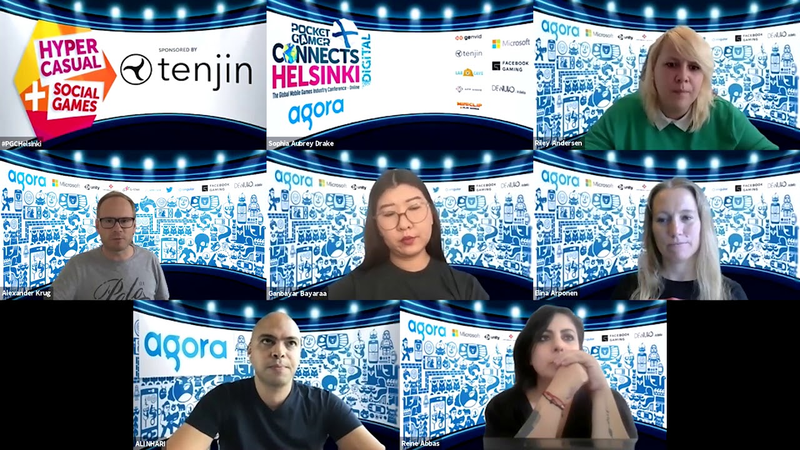
we're gonna move on to our panel right on time right on schedule see i knew we'd make it back uh which is uh putting the hype into social games deconstructing hyper casual and social games and uh leading this panel rejoining me now is uh riley anderson uh from umami who you heard from earlier hi again riley good to have you again and i'll just i'll just do a quick intro to everyone to say that um you know obviously on this panel i'll let them introduce themselves and i'll let riley kick off in a moment but uh you know i want to say obviously a big welcome to um alexander from soft games who's joining us now alina from quicksave who you saw before kana from tenjin our lovely uh track sponsors who we can't do this without so
a big thank you to tenjin and to kana for joining us uh to renee from wixel studios and of course the ali from agora dot io who are our diamond sponsors and uh helping us make this uh possible so i can see they're all slowly joining but uh i'll stay here with you but uh until then they all arrive but how are you uh riley you all good i'm all good here yes very good good and hopefully everyone else here is uh is feeling good we're looking forward to the panel uh that should be a great way to end what's been a brilliant track so uh yeah i suppose um everyone's still joining but um i'll leave it to you riley um i'll come back at the end if you need any help with the with the q a but uh obviously for everyone in the audience you've got that q a button in the bottom right make sure as you've been doing there all morning or whatever time zone it is for you make sure you throw in your q and a's for our lovely uh tracks um our speakers here our panelists who have kindly well
joined us for the first time or in some cases rejoined us so uh yeah thank you thank you to everyone and um i will be back at the end thank you sophia for that that was super great so today we are going to uh talk about putting the hype into social games and deconstructing hyper casual and social games uh so there was a quick introduction but i think it would be great to elaborate a little bit uh from my screen here maybe alexander you could start a little bit about introducing yourself and uh what what your company is doing in your role yeah sure um so hi uh hello to everybody we're very happy to be here today uh so my name is alexander i'm the ceo and co-founder of soft games we are a tech company who is developing games social games uh mainly for facebook and the app stores uh we have a clear focus on solitaire uh and maturity games um and our flagship titles
like um solitaire tripix um sorry to story try picks for example or cookie man for example i haven't played over 100 a million times um we are uh based in in berlin and toronto and around like 80 people that sounds super cool and a little bit i'm trying to divide you guys a little bit into who's developers who's platform holders and stuff so maybe we'll jump to you er elena could you elaborate a little bit over you because as far as i know you're a developer as well yes hi hello everyone uh so my name is elena i'm the ceo and co-founder of quicksave interactive and yes we develop games well we uh we've done some proprietary technology but uh it's mainly about game development for the social super apps so uh like alexander here we do also games for facebook instant games and other such platforms then let's move a little bit on to uh more of what i'll call like the service providers or platform holders uh how about you can
from from champion could you tell a little bit about your role and and a little bit more about shenzhen uh yes so uh i am gun buyer and most people call me hannah and i have uh background in e-commerce which led me to the game industry and right now i am a customer success manager at tengen so attention my role is specifically helping indie hyper casual game developers grow into enterprise level gaming companies so we provide a lot of tools and trainings that the bigger guys develop in-house and we are also an attribution provider so which kind of connects uh the user acquisition with the demonstration part to help like developers measure their marketing success like accurately that sounds super interesting especially
yeah i have a background hyper casual myself is super data driven uh how about you ali you're a service provider as well could you tell a little bit about you and your role at agor io yes hi everyone so glad to be here with you so i am ali i am the director of sales for the emea region within agora we are on rte bus provider which means real time engagement platform as a service and we enable games whether they are hyper casual multiplayer socials et cetera to embed live engagement features into their games so whether it's video chat voice voice chat live interactive streaming as well so that's that's what we do in a global scale that sounds super interesting and then here joining us uh as well uh uh could you tell we just talked about that alexander and the leaner they're more like on the development side um
whereas kana and ailey is a more service provider where would you place yourself and could you tell a little bit about yourself i'm rena abbas i'm a co founder of works studios and speaker tech uh what's yours we are publishers and developers so we develop and publish games social games educational games casual games and recently we are helping small companies in lebanon and the region to do and to produce casual uh hyper casual games sounds super good and actually let's jump right into our first uh topic like hyper cashflow software games because in many ways those type of games are similar but there's also some areas that are unique for each genre and maybe should we start with either some of the developers explaining a little bit how would you define a hyper casual and social game
i'm looking at you elena for example uh yeah sure so so we are obviously more on that on the social gaming end and how i look at the social gaming now is i see this kind of new new wave of social gaming coming through these messaging applications and and the social platforms like there was the like 10 years ago there was the social gaming era in facebook but uh but now we are seeing something new uh something that is more recent and there is a lot of hyper-casual games in these social bathrooms obviously but it can be also other genres it's not limited to be only hyper casual what about you alexander would you define your games as social games or hyper casual games is it a mix um no it's basically so we're coming from the so we're coming from the web area um mainly and then we yeah we focus mainly on hyper casual but um we are on facebook we
clearly focus on more their let's say the complex casual games sort of uh with a strong beta layer uh um and strong also like retention figures and so on um and i would say like we have on social games for sure um because due to the nature of the platform um so like playing together with friends uh um sharing excitement or experience with friends uh are very crucial for for our gameplay uh of our games um so um yeah so we are definitely not in the hyper-casual area because we believe okay hey that the audience we have uh which is more mature uh more females from the u.s and how they they like to play more complex um games which you can drive into like a deep story and you know proceed over time you know not like just playing five minutes and then like okay or even probably two minutes and then uh they're they're they're away from the next game so it's more like long session times and this
kind of stuff so it's not like we had like this pre-talk where you can use you mentioned that the hyper cache you would define it as a short and sweet uh i don't know whether you could elaborate a little bit on like your understanding of what a hyper casual game is um yeah so uh we call it kind of like a snackable right so it's the kind of games that you want to quickly go into the other room and uh you know the way you munch on chocolates you know makes you happy right uh takes only like a minute or two and this is the kind of feeling that we're trying to shoot for when we talk about hyper casual games so um as an analytics provider we have a little bit more uh like specific definition on how uh what a high casual game is so basically we say that casual is usually on the mobile because it has kind of like location you know free um you could be anywhere and also um
it's usually monetizing on ads so you don't have to be going through like a complex process of like doing in-app purchases or things like this and um very um easy you know a very fast development cycle and um [Music] yeah i think that's about it so in a way we could say alexander you're like on on one side of the the social games uh with with more deeper monetization levels and then we have the hyper casual which a bit in in the other end uh whereas it's easier um with the monetization layers shoulder development cycles and stuff i think that's kind of interesting uh that then there's some areas that overlap and some that are unique and how about you you said you you guys you create hyper casual games as well but also educational games uh how does that affect your gaming uh
i think you're muted uh so yeah we developed since 2008 all kinds of games educational casual console games online games we have two business models we have also we have clients so we do advert games simulations and also we publish and we produce our own games so recently um also we started to uh to found the small companies to to have developers in lebanon and the region to enter the market with less cost and to enter the hyper casual you know model um you know because it's a hyper-casual concept uh you know um it's all it's actually against the standard formula of creating uh creating normal games you know the cost is lower you need a really small team you don't have expensive you know
testing polishing you know small you know simple graphics really smart gameplay [Music] for them to to enter the market and to gain money also although i think it's not a business in itself you know a new company is uh pop up all the time you know uh changed very fast so it's a there's a big competition uh in this um in this section um so uh you can do re reading a lot of games and waiting for one game to to you know to shine this is really the opposite what we were doing for all these years you know we pop we do a game for seven months you know big game 3d game that's a big risk but to uh we don't know if it will work
or not you know uh graphics big team so that's why we're trying to uh to enter the hyper casual market with small teams and uh we have publishers you know um we have also i i will tell something we have and um like investors they are willing they are paying this small team that we founded paying them like a day monthly payments to create a lot of uh casual hyper-casual games uh and to try these hyper-casual games so it's really it's a business it's not a business in itself it's three it's a new you know new kind of business attracting new kind of investors and i don't know it's really uh going fast and we have to to be uh you know to go fast with it at the same time i definitely agree it's uh like the
market has changed a little bit from being more the developers market today and i also agree that it's super smart with like risk management in general like with one thing is hyper cash i also think the whole rapid development approach which is like the key within hyper casual is something that's super relevant within all different kind of genres of gaming um but you talk a little bit alexander with like the attacking audience because that was something i think it's interesting like social games and hyper casual games is it the same type of white audience for both of them um [Music] um i mean i can't i can talk only mainly to say for um for let's say more complex casual or social games we want to call them um i mean like probably it's also due to the nature of our games i said like it's solitaire try peaks on the one hand and that's met three on the other hand uh so probably these kind of you know games traditionally on facebook appear more to a more it's
like a mature audience um i don't know how it is um for for the hyper casual games uh if it's if it's um you know probably you know can you kind of write a bit on this how it is on facebook let's say um [Music] what i know what i heard but from own experience that uh hyper casual on in the app stores is more more more male more let's say india brazil these kind of countries but i'd leave this up to somebody else who has more insights on on that side maybe it's you elena and caiman who knows a little bit more about like the the users uh do you you elena is that on facebook you normally uh your games are yeah so we also like uh on facebook so um um yeah and we we also doing like games that are more on the kind of casual um but still casual games but they have a more uh deeper meta game um yeah
so i'm not doing like purely hypocrites we've done some like you could classify them as hyper but but the latest ones are are a bit bit more than that uh in the in the depth of the game um but yeah in facebook you can you can target uh like different groups i mean it has two billion users so so you can you can find your own audience uh among those those people yeah yeah yeah because it's funny with them with the different types of um like the social games or social features in general because i know you ali you have uh like i think we just chatted about like what we call classical social games and social features where we normally see them but i know you have another definition of how wide social social features can be could you talk a little bit about that yes so basically to to come back to uh what is he casual on social so i think both genres are open to very
large audience so because of their simplicity on the instant gameplay so you don't need necessarily you know a guide to a guide to to play the games it's very simple you can play them uh within within a few minutes but uh on i think that they they are both uh used by the same uh demographics as well uh because of their simplicity um but they differ on on many thing so hyper casual games are mainly playable like by yourself uh without interaction with with other players where social you can interact with the with other players and you you need other other members you know to play with how do you think that how does that affect them like the monetization uh strategy like maybe the long-term monetization is it your experience that some of the social features is helping on the long-term retention
yes yes and due to different factors so we know that the the hipper casual games is is a bit crowded now and that advantage advertising revenues are decreasing and on the new ios 14 which is coming as well uh so there are many factors which are pushing uh regions the game jumps like hyper casual to uh to diversify their monetization models so where he per casual are many relying on advertising for their monetization so they will now think about uh diversifying their monetization model and embedding new features uh a video chat or voice chat or where you can have a different type of of monetization so you can you can buy filters or mask or avatars so this is these are all things that you can sell to your
to your players uh so this is one one of the option but there are like many different monetization model model so i think the the path where we are going we will we force some genre to diversify their monetization model where on social it's much more enough projects for us like virtual currencies virtual goods uh etc etc unless less relying on advertising and i think both jar are complementary and both generals are have a lot to learn from each other definitely definitely and that's i saw one i think that's super interesting that it's different metrics we're going for the different games but i guess in all of them like an overall goal is once you actually created a game that is is interesting both with metrics and with users then
how do we optimize how do we analyze the data within the game to actually optimize uh the return of ad spend we get um i think canaan you could elaborate a little bit like what what is what could we do in uh within hyper casual uh what are you looking for when you're analyzing or trying to optimize could you tell a little bit about the process you guys use uh yeah so this is um exactly what tension uh kind of provides so uh it's very crucial for game developers to measure their ltv which is the lifetime value and um i know for other you know genres it can be like 90 days or so but for hyper casual usually uh you make most of your money from day 7 to day thirty and now uh some of the games you know they're even like um they have a target to make their money back on day three right so um it's it's a huge uh rush right and also um it kind of presents a
challenge for like the internal um internal like uh the setup of the company into processing data so so much faster and accurately and also making predictions right so like attention you can get um ad revenue ltv like um on the dashboard where you just have to you know go to your dashboard and it just shows you like um what your ltb is and um also like since we're catering to you know any apps um not just hyper casual we can also like um have ip lts so um measuring this kind of thing is is very crucial and um so when you have like um ltv uh most hyper casuals go in and um automatic automates their bidding right so you kind of get like the the ltv so the basically the money that you're making from each campaign
or from each source and then uh you uh automate the bidding to uh make better bidding decisions like when you go into that network so um yeah it's it's at a very like advanced stage right now it sounds super i can only say as a hyper-casual developer myself it sounds like a lot of the stuff that would be super valuable especially when you're like a team of three or five or seven people where maybe you don't have a dedicated ua person yet uh so i think that sounds super interesting and how about you alexander alina in in your social games uh how long when do you expect to make most of the money back uh it's it could sound like for you alexander that it's not just between day seven and day thirty uh i would love to actually yeah that's a problem with the more complex games as soon as you're going to this direction
uh you have to pay a bit more for a user uh rather than like for half a casual like a cpi of three two six cents whatever like the guy before told us the unrealistic essay but uh the good thing on facebook especially is that um we get a lot of let's say like our user acquisition is done purely organically right now that's that's a good thing so uh we don't have to rely like in the app stores on um yeah big marketing campaigns where you have to spend like um at least 20k in order to get some kind of data at the beginning uh how does it work on facebook is that um you i said organically get a good bunch of of organic users so you can test your game and optimize your game uh you don't have to you know ask anybody hey can i please um update uh release this new update yeah basically automatically there you can iterate super fast uh which makes this kind of platform super attractive for any kinds of
developers for showing not everything is super easy and super bright but at the end of the day um you do not have to spend like a lot of money for user acquisition and if we spend money for user position then the um ros gold is like far behind like 30 60 or 90 days and say uh right now but sure working on this to lower that i think that sounds stupid what about you and lynette and cause we talked a little bit about earlier that you and alexander what you're doing is a little bit the same but still not totally but maybe you're you haven't alexander has been in the game for many years and in in compared to that you are a little bit newer in the game how has it been getting into the social gaming uh market uh has it been um how has it been coming into facebook and learning social game and has your games the same organic uh yeah yeah there's definitely
um there is better kind of organic flows although we are uh we're doing some uh uas as well uh to kind of like get the get the seed audience uh depending on how how we how we uh uh do with each game um but yeah i mean this this uh this facebook market is is about us as old as our company so uh so we we do have some some background not not from this company but the team has from from like a previous uh previous company where we were doing doing games for one specific uh chat app and uh and so i've uh i've been looking into this kind of intersection of like how to design games that kind of coexist between between the chat and the and the game and and what is there what is the communication there and and i think that there is like a new new design challenges in this area but when it comes to the kind of analytics and and um and all that so obviously it's it's
quite similar to to mobile games so that you would like iterate and it is true that it's pretty um it's easy to iterate fast with the with this platform like you can you can just set updates and and check your data again and um and yeah and of course like the social numbers are very important like you would you would look at the things like uh are people where people are coming in from are they are they coming in from prince or are they are they are they are they organic where are they coming from and you're trying to increase the kind of friend different messaging and and that kind of viral um it doesn't smell like an i'm going a little bit off track in the in general but in hyper casual we see a lot of these trends like mechanic trends like when you're thinking more on the science side we see a lot of different mechanics that are trending could be like a shooting mechanic or whatever in social games do we see is it the same that it's like a market that says rapidly changing the mechanics out all the time or is it like this you can see some
you can see some trends like there was in the beginning when the the bots the game boards were not with opt-in in the beginning everyone was you know focusing more on the bottom entities but now that they have opt-in it's not quite as as uh as crucial or it's not that i mean it's still important but it's it's not that big and um and then um there was a point where you know there were more games about sharing now there's there's a lot of context to play uh he was you're starting to see tournaments so so yeah i mean as the platforms develop and there's new features that that also affects kind of the trends and and what kind of things are in the games yeah but but there are still alexander room for the the classic uh social game that's match-free and stuff like that well absolutely clearly i mean like uh if you look to the just let's look into the metrics of uh who's using facebook right now like the the young age got older you know uh and they learned how to play at the early days uh the farm wills and the uh the candy crushes of the world
uh so now they got a bit older they have children at home you know uh they're a bit bored so what they're doing in the evening they go again to facebook either in the in the app or on the browser and they keep on playing um so there's definitely um still like a like a huge audience who's interested in playing this kind of games uh but that's a good thing on facebook as well you know it's basically open like you have like different you have audience for both types kinds of uh of types of games my god uh on the one hand like people were just you know like snackable stuff hey i want to play something quickly and watch ads okay i'm fine uh or the ones where i said i know like going deeper into like like a whole universe of gaming experience um so that's i said i know clearly a place for both sides of of of games like hyper casual and uh the more complex one if you look to the who's which which kind of games are successful you see clearly also like the upper casual games there so yeah definitely
um and then should we move on to a little bit talking about how does the market look right now and the future of hyper casual and social games uh um maybe canaan you can also talk a little bit about we've seen how the monetization side of hyper casual game has gotten a little deeper we talked about like hybrid casual and could you elaborate a little bit on what's going on there yeah so uh hyper casual you know started out as like a development uh strategy and also um yeah like the game play the the technical parts of the the the mechanics of the play right um but now it's um becoming more popular as like a marketing strategy and um yeah release strategy so basically what's happening is that um a lot of the other genres are starting to adopt the hyper casual um you know techniques which is like fast development cycle
um testing like the creative and then based on the feedback uh creating the game after which is yeah hard to imagine yes but it does happen uh and then uh so what we see is that you know hyper mid core um for example is like a mix between mid core and and hypergaso and um basically it still has um ips right in-app purchases and then even on the social side like it it has um games um sometimes that you can play with other players in real time like short and sweet and then go so there's still like a social aspect to it you know so we're seeing like the merging of different genres and then um yeah that's um so basically like the future of hype casual is that um it's it's expanding uh in terms of genres also within the hyper casual and um um yeah so like the game itself is also
like becoming more deep so we have like from say games um johnny sugar it's a really good um happy casual game where you're you know shooting and actually going in a kind of like a space like mario does right so that's that's that that's hard to say that it's hyper casual mechanics right but but it is really easy and sweet and you know um we also have like loop games uh which uh develops uh happy casual and puzzle games right so um it is yeah people are thinking about like how to increase the retention but also you know make sure that uh they acquire very gener generic audiences and um um make them you know um make like quick money from uh ads yeah yeah yeah i think that's super interesting uh and how about then with the social games uh i don't know whether elena alexander
who who thinks the knows more but like how how is that market developing is is it good being in social games uh at the moment you say like no it's the worst thing you can do now yeah the good thing is like we're acting in an in an attractive niche which is not not really we don't have the the tough competition what you used to have in the app store so now it's it's i don't want to say it's um it's a wallet guard that for sure not so everybody can basically everybody's open and free to uh to upload the game and try to succeed over there uh but still it's it's um uh the hype um is basically went away a bit you know so like they're like you know each other you know like there's basically the same developers you know each other know what they're doing and who's going well who's not doing that well who's trying and you know who's succeeding right now we basically are predicted uh but but at the same time doesn't mean
that the market is not developing and evolving and that it's not possible to make money there that for sure not uh it's like at the beginning just the fact that you do not have to invest a lot of money uh in marketing that you basically ten can test ideas you can uh yeah there's ideas of new games with very little uh effort just like the development of what you have to do uh is is super attractive and it looks like facebook is um supporting the developers uh very much with a lot of tools and there's always somebody who's uh who hasn't had has an open open ear uh it's pushing a lot of very interesting uh features which is like pushing let's say like the the social aspect even more uh going a bit more towards what they initially thought about like hey please send me this gift and blah it's more like uh yeah it's kind of competition um aspect which is like super that's super interesting especially for the hyper casual area uh but also on the on the more complex side as well i said you know
you have a lot of opportunities and tools with the the bots um which are more like the notifications on on in the app stores a lot of other things which definitely helps help you as a developer and um so i i still believe very very much in on this platform that's why you're also investing uh hardly um since like i know some danish devils that also does like the mohako side of the the facebook social games and they have been doing very well as well uh so yeah so it seems uh yeah a niche but if you're good at the niche uh you can also make some pretty good results there how about you kind of you you have noticed that many of the developers now can get some some kind of like payment for prototype for monthly payment we have the same experience i think
that's a very positive development at least for the for the small studio developers um is that that's something how do you see the hyper casual market developing uh i just know one thing that we have to be really super appealing for the wide audience out there you know as much as possible so we have to i think we have to be appealing to billions not millions so uh yeah and uh billions are playing hyper casual games so uh yeah i think this is good i think this is a really good thing for the developers and the developers to have some money and to develop you know a lot of games and maybe one title and to get money to do this you know because you know it's really hard to gain money in this industry if you're a few or small group or
whatever so yeah it's good thing to get paid every month to do six games per month and and to throw it on the store and and i think this is a good for our region because in our region the gaming industry is still really um developing and we need to create jobs uh and i think covet 19 is helping us because we don't you don't have to live anywhere you can you can recruit teams from home and work together uh to produce these games and now we're having a really uh more and more publishers from the globe to to help these small teams to to work from our region and to to to create success stories and to boost the gaming industry from reg and to create jobs and i know you will ask about
covet 19 and what we were doing i think this is your last question so i'm really excited to answer this section but i know from me from i'm from the region and i think hyper casual production it's uh it will it's really helping our developers and artists to to start producing games and hopefully to have success stories uh from here so i'm making sure to do this yeah that's why i'm helping small teams and small startups or you don't they don't have to be startups you know small group of developers and artists and game designers together uh to do this sounds super cool yeah cause let's let's uh use this last five minutes just on uh focusing on like the big 2020s uh yeah so of course that's been the corona uh pandemic uh over that has been that has changed
both revenues conditions uh many of us are working from home but i think even more relevant at least in this year um it's also like the ios 14. like i think we really should just uh have like just a few minutes around that how will that affect like the marketing going further maybe we should start with you alexander if you are doing a lot of targeting no you did the you didn't do that much uh payment um so i mean like like i said on the morning in march but it recovered pretty fast let's say uh um so we are more or less where we've been before uh a hand interestingly on the on the ua campaign side we're doing uh we don't see let's say any any impact let's say on on cpm so it's it's still quite pricey uh um as we only can focus on on facebook um there
um so i i don't hope that the pandemic continues for sure uh because it doesn't help anybody uh but somebody who said i don't know how i know i don't know how it is on the application but so far for our kinds of games we didn't see any let's say positive impact on the on on the cpi's we have to pay at the end of the day kind of the same experience we have nothing kanan you can uh you know a lot about like the effects and what can be done how have tension prepared for ios 14 uh uh yes so i was fourteen is a big change and um so before i talked about uh the bigger companies that built like in-house um technologies on uh automating the bits right and uh all the ad networks connection run on this thing that is going to disappear which is the idfa the identifier so basically it's kind of like a level you know industry leveling uh activity that's going on here so this is
like good and bad at the same time which gives a lot of um opportunities for new developers because you're going to be on the same page on um as the big guys where where they're trying to scramble and trying to get things right um you know if you move fast then you can do this too and about the effects of um ios 14 um the cpi is going to go down and um the ecpm is of course going to follow but um hyper casuals are going to be less hit than like other genres because we have a very generic targeting so i think that's going to kind of you know um survive but um yeah we have uh technologies um that um help you you know track what kind of ads are being watched so we're like adapting and you know we have like a training that uh helps um developers um calculate their ltvs uh with the use
of like conversion values so it sounds good sounds like you guys are prepared uh how about you ryan you have some uh some insider on the corona as well uh of course yeah i agree that since everything has now gone we're not physically meeting it doesn't matter as much whether you're like located next to each other or or not uh how else has the corona affected you have have you managed to get by financially or has it gone up or down so is there a question from me sorry it could be for both of you yeah okay maybe sorry then because you but after ailee so me first yes yes let's try so yeah i get this question uh from the first uh first day of lockdown so i think uh because we do services so uh our business was doing really good
during corona because everyone wants to go digital everyone wants to do games because everyone is staying home and playing games and the demand even the clients are doing at their games they wanted to do hyper casual and free games because they know during corona more people are using their downtown down time to discover new games you know and sometimes they are bringing old favorite games also that's why the clients are were were wanted to do also do other games hyper casual uh other games because they know uh the this uh this category was uh you know was dominating uh uh before corona and it was increased during corona so uh so that's why um yeah all the clients
new clients everyone wants to do games for for people to advertise their new products uh through this jar jar of games so uh yeah it was good for the business i recruited more people actually because they don't need you know they don't need to uh to um to relocate uh i don't need permanent uh permit visas i don't they don't anything they need only they only have and they can work from home so we recruited more people more developers and it was a really big chance for me to recruit developers and artists from the region adding to the teams in europe so yeah i recruited more people i gave chance more for the developers and new developers new artists because everyone wants to do games for people so yeah business-wise it was good yeah i think most of them can be that how about than anyone
yeah how about you then let's just round out you and then we have a few questions as well for a q a i'm a little unsure sophia is supposed to do that or not but let's start by hearing you ali um so so yeah basically we have seen a uh a big increase uh in demand from from the gaming space for our future like whether it's video chat or voice chat so especially during during this period where people cannot meet physically so they can play with with each other while talking and seeing each other you know whether on on we have seen that from different type of of games like you know genres that that we could we might not imagine you know going to going to social uh that fast so on on the i think the biggest uh uh uh increase was from hyper casual games yeah yeah then elena i'm sorry i think we will have to go to the q a
but maybe there will be something i've got yeah already yeah i'm not really sure sofia well i should do the q a yeah i think i think i'll leave you to do the q a riley it seems to make the most sense to me so i'll still be here in the background but uh as long as you've got the questions in front of you then i'll leave it to you yeah so we have one question here asking how much do mobile hyper casual and facebook messenger games users overlap um i'm not sure who's most valuable maybe elena is that you uh do you guys miss both uh hypercash on facebook messenger games um so yeah we've made a couple of i guess could classify as hypercastor so then you know that there's a full overlap because they are they are in the social space um but yeah i i'd say that uh um potentially how i see like a hyper casual um
maybe even more successful on like pure hyper casual like maybe even more successful in the in the mobile front like the app store because uh if you don't have any social features like you have to at least have some sort of things in it to to be like a big success in the uh in the instant games in the facebook side so um but there are those actually guests so those are there are successful high professional games that have um have this inviting of friends or leaderboards and all kinds of things that kind of tie it to social and then it can can be fully successful on the on the social side as well and then of course in the social um gaming side you can do games that are not hypercast so like we are doing as well that that have much more metagame and and a longer lifetime because also i don't know well the rest of you guys agree but i would also as a developer say that it's also not about thinking about the platform right so maybe the same mechanic could work both as a social game and on mobile but since it's two different platforms you have to think
some about some of the technical stuff that's unique for each uh platform you're you're porting the game to um you know i would say like that you find like that the audience forever casual games probably even more on snapchat than on facebook um because they they they do not have uh the complex as a the casual games and the hypercaster games but they just basically focus purely on hyper casual so because they have the more younger audience and say probably even even more male audience so i i don't know which direction this kind of question is going it's more on the on the ua side of is more going like hey i have an idea of a casual game i bring it to facebook um then i probably would recommend uh like bringing it to snap rather than on facebook or with a hd it's html5 so you can basically try both platforms at the end of the day um so yeah then we also have a very like concrete
uh question maybe this could be for you kena how do the hyper casual games ad monetization mediation and attribution work in china if a game is published through service like app2d [Music] i'm not sure i've heard about that before but i think if we just say like how does administration mediation attribution work in china um um yeah obviously like yeah china is a big topic right uh we usually go through you know other providers like natalix on the ua side um and then um but yeah um yeah i'm not so sure about exactly what the specifics are um know i never heard about actually as well uh but i guess what we can say overall is that there is a difference whether you wanna uh publish a game in china or in usa it is different you have to sometimes like you have to
uh publish like a different app because it's a different app store right so basically you have to cater to china requirements and um i heard about like things that you have to be like certified by chinese government and you know to be able to publish things there so um there's obviously a lot of like um agencies that do this and yeah yeah so partnering up with someone who knows the chinese market uh might be a good idea then we have one last question i think maybe that could be you elena or alexander so someone asks in facebook messenger can you then monetize only using fan for app and how do the mediation attribution ua landscape looked there and now um so maybe let's start with can you monetize only using fan for it yes yes i'm trying to create an ecosystem so i think they would never ever allow anybody else to
uh like fan is basically the facebook ad network uh well it's dense uh and um yeah we we always ask them like hey do you need uh how do what do you think about more competition on the platform to probably even increase the the cpms uh and then they said like no no no we probably don't want anybody else to run advertisement in on our platform that's the thing right like our games running within within facebook uh so uh that would be the same if google would allow anybody else to run uh uh the inventory on their on their search environment let's say yeah yeah and i guess with the ua landscape attribution uh mediation we have chatted a little bit about it could you maybe sum up uh like how that works uh in in facebook messenger yeah i mean like they are like they said it's it's it's it's like early days uh on the ua landscape on
facebook um so they we are definitely not not that far like the whole let's say market it's not that far and developed as is in the app stores um they are now raw um uh tools available uh but they are pretty new um uh but i said that facebook is trying to create an ecosystem there and so it's definitely um definitely definitely like they have a clear focus on making um uh ua um possible or let's say always positive for for every for everybody uh so i think it will evolve within the next couple of months um probably even ios 14 is an uh opportunity uh for facebook for sorry for for instant games because like facebook still has all the the data uh but yeah yeah that was the last thing like a small prediction for the future uh but thank you i think that will be
around it guys otherwise i will also had stuff there's a lot of topics right we've seen epic and apple fighting a bit as well but that would be for another pattern uh i think for now we'll say thank you very much for your time and thank you sophia for organizing it no no well obviously i need to then in turn say thank you to the team like patty and everyone and uh sally and catherine who's in the background for helping put together such an amazing day of tracks thank you all for being here and helping close off our hyper casual and social games track it's it's been an amazing uh morning as the time is here of talks and obviously this panel as well and obviously i want to say a massive thank you to tenjin for making the track possible and of course to agora the io who you can see here our diamond sponsors yeah so thank you to and and thank you of course to to all of our other sponsors as well i'll let you guys go off before i thank all of our other sponsors but uh enjoy the rest of your day and uh hopefully we'll see you on the meet to match the discord or maybe yeah checking
out one of the tracks later on thank you thank you thanks bye you
Summary
The gaming industry is currently navigating a strategic convergence between hypercasual and social gaming models, driven by a shared need for accessible, high-volume engagement. Hypercasual gaming is defined by rapid development cycles, "snackable" gameplay, and a reliance on ad-based monetization, typically targeting short-term lifetime value within a 30-day window. In contrast, social gaming prioritizes long-term retention through complex meta-games, community building, and virtual goods. While these sectors historically occupied distinct niches, they are increasingly overlapping as developers adopt hybrid-casual models that integrate in-app purchases with traditional advertising to maximize profitability.
Data-driven iteration remains the cornerstone of success for both segments, particularly as developers adapt to significant shifts in the digital landscape. The loss of IDFA tracking under iOS 14 has forced a transition toward generic audience targeting and more sophisticated, privacy-compliant lifetime value calculation technologies. Simultaneously, the industry is witnessing a surge in demand for integrated social features, such as voice and video chat, even within traditionally solitary hypercasual experiences. These features are increasingly essential for fostering player investment and organic growth across platforms like Facebook Messenger and Snapchat.
Looking forward, the industry is characterized by a move toward more flexible development strategies that leverage platform-specific tools while mitigating the risks of closed ecosystems. The global demand for digital content, accelerated by the COVID-19 pandemic, has further incentivized developers to refine their user acquisition strategies and technical infrastructure. By blending the rapid testing capabilities of hypercasual development with the sustained engagement mechanics of social gaming, developers are successfully navigating a maturing market that demands both immediate accessibility and long-term community value.