2015
Company
Documents about 2015
Prosthetic Metaphors, Rejection, and Representation in Games
This paper proposes that the prosthetic metaphor, long used in game studies to describe how players attach to avatars, can be sharpened by drawing on medical and disability scholarship about prosthetic rejection.
- The paper proposes using the medical concept of prosthetic rejection (non-use or minimal use of a fitted device) as an analytical lens for how players respond when virtual avatars do not fit them, refining the existing prosthetic metaphor in game studies.
- The authors use the survival game Rust as a case study, where a 2015 update randomly and retroactively diversified avatar skin tones, physical traits, and genitalia, provoking backlash from players accustomed to default white male avatars.
- Backlash was documented through press coverage and player reactions, including refund requests, negative reviews, and hostile forum messages, which the authors interpret as rejection in the medical sense.
From Trash to Treasure: Exploring How Video Games Are Moving from Popular Culture to Cultural Heritage
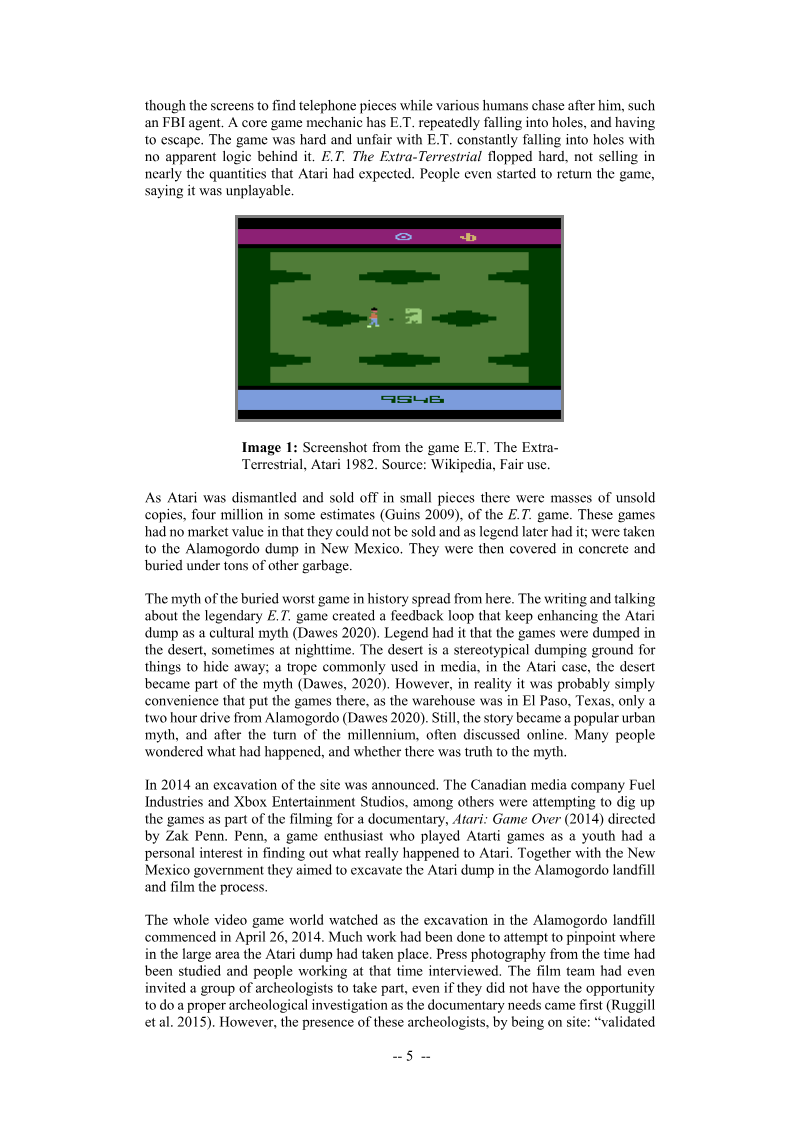
Lina Eklund's study examines how video games are shifting from disposable popular culture into recognized cultural heritage, using the 2014 excavation of Atari E.T. cartridges from an Alamogordo, New Mexico landfill as a central case.
- The 2014 excavation of an Alamogordo, New Mexico landfill recovered roughly 1,300 Atari E.T. cartridges, turning a long-standing cultural myth into tangible artifacts.
- Heritage value is socially constructed rather than inherent in objects; the spectacle and emotional investment surrounding the dig gave the recovered games new meaning.
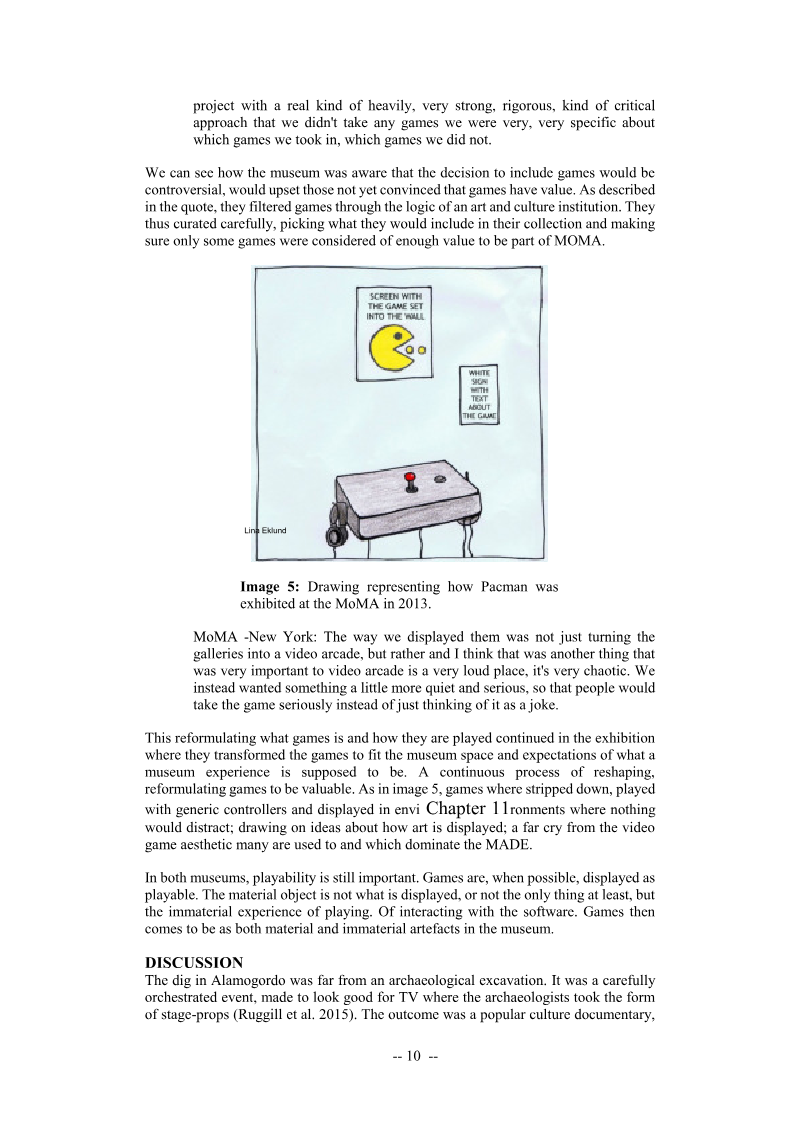
- MoMA pursues a selective, art-focused collecting strategy, while The MADE, a volunteer-run Oakland institution, aims to preserve nearly everything from an enthusiast-driven, bottom-up perspective.
Stories and Changing Social Norms: Representation of Gender in Video Games from 2007 to 2017
This study examines how gender is represented in three major video game franchises between 2007 and 2017, arguing that changes in game narratives reflect a broader shift in North American sociocultural attitudes toward gender.
- The study argues that gender representation in three major franchises (Dragon Age, Mass Effect, Uncharted) shifted between 2007 and 2017, moving from overt sexism, sexual violence, and objectification toward greater female agency and inclusivity in later installments.
- Dragon Age: Origins is described as containing overt sexism, sexual violence, and objectification, while Dragon Age II and Dragon Age: Inquisition present more agency and inclusivity for female characters.
- Because the three franchises were built by different developers, the author treats their parallel trajectories as evidence of a broader North American cultural pattern rather than studio-specific quirks.
"Fear the Old Blood": The Gothicism of Bloodborne
Bloodborne, FromSoftware's 2015 action role-playing game, is examined here as a sustained work of Gothic horror, with its atmosphere, narrative structure, and imagery read through established critical frameworks of the Gothic and the Lovecraftian.
- The report's central claim is that Bloodborne's gradual empowerment of the player does not dissolve its Gothic mood: a pervasive threatening gaze keeps pressure on the player, who must assemble a fragmented narrative like a detective, while themes of cosmic indifference and Frankensteinian hubris persist throughout.
- The analysis frames Bloodborne's Gothicism through Krzywinska's account of Gothic in games, which identifies coordinating elements such as the false hero, mise-en-scène, affective states, style, and function.
- Doubling and the uncanny are shown through the imposter Iosefka and a lifeless doll modeled on Lady Maria, which together expose the obsessive, displaced desire of Gehrman.
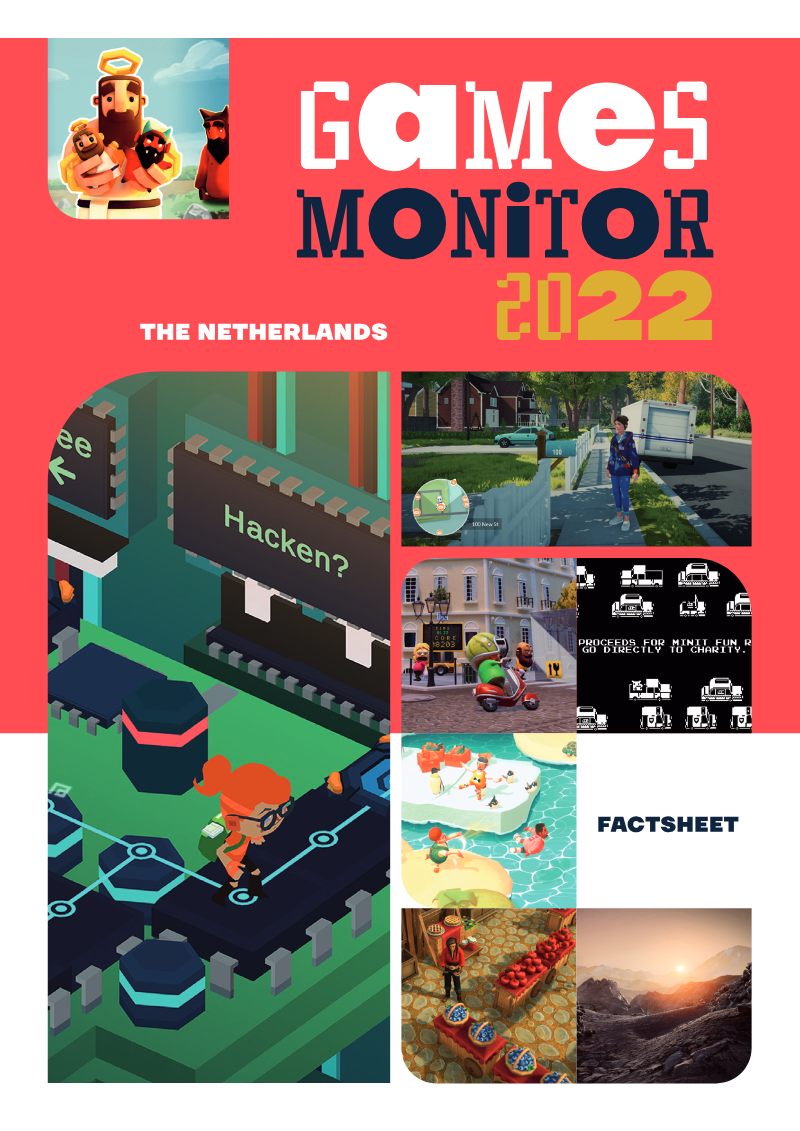
Dutch Games Monitor 2022: Factsheet
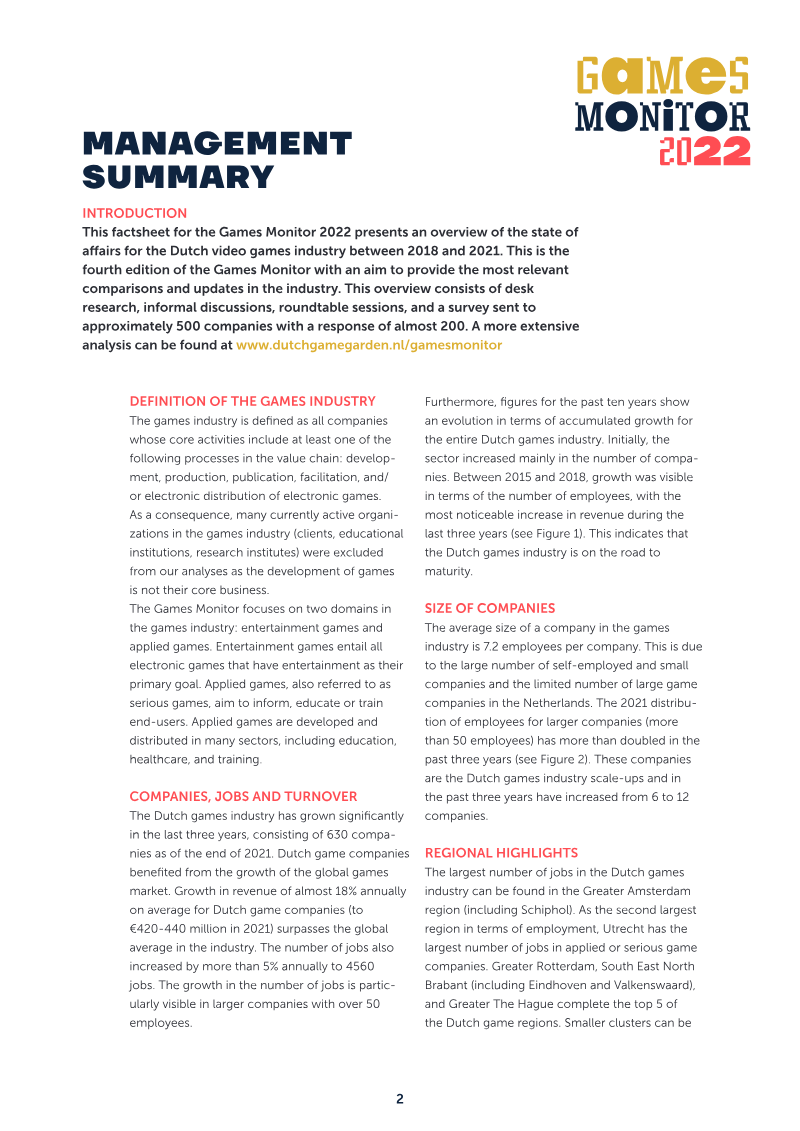
The Games Monitor 2022 is the fourth edition of a recurring assessment of the Dutch video games industry, covering 2018 to 2021.
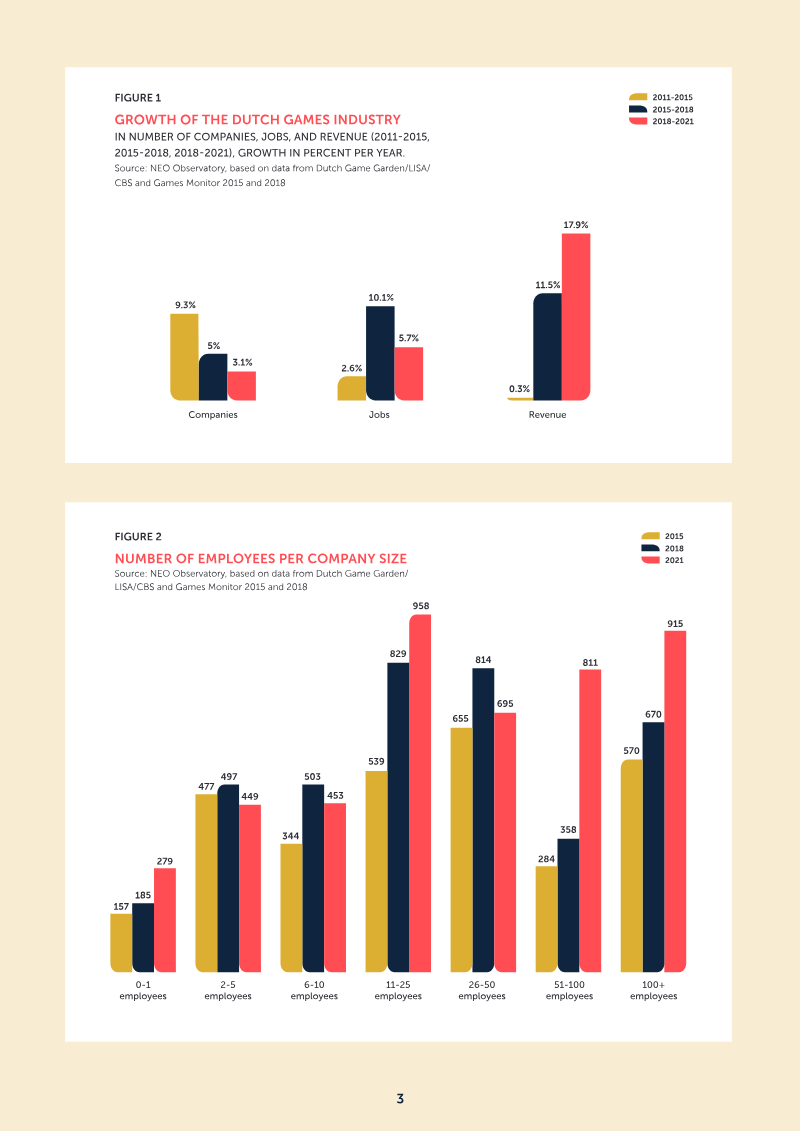
- The Dutch games industry generated between €420 million and €440 million in annual revenue by the end of 2021, achieving an average annual growth rate of nearly 18%.
- Total employment in the sector reached 4,560 jobs by 2021, reflecting an annual growth rate of over 5%.
- The industry is scaling up, with the number of companies employing more than 50 people doubling to 12 firms between 2018 and 2021.


Construyendo un Sector del Videojuego en Igualdad
"Construyendo un Sector del Videojuego en Igualdad" es la segunda edición (tras la de 2018) de la guía elaborada por AEVI y Women in Games, con apoyo de ISFE e InGAME.
- Women comprise 48% of the 18 million players in the Spanish market, yet they hold only 20% of development roles within the 90,000-person European industry.
- Systemic hiring reforms—including gender-neutral job advertisements, transparent salary bands, and multi-reviewer processes—are essential to increasing the entry and retention of women in development roles.
- Companies such as Wooga have achieved higher retention and increased female representation in senior leadership by utilizing unconscious-bias training, inclusion nudges, and data-driven KPIs.



Brazil Games Industry Report 2022
Brazil's games industry has grown rapidly and is maturing, though it remains highly concentrated and constrained by funding, tax, and talent problems.
- Brazil is the 12th largest games market globally and the leader in Latin America, generating approximately USD 2.3 billion in 2021.
- The industry has experienced rapid expansion, with a 102% increase in active studios since 2018 and a 336% revenue increase in USD since 2015.
- The sector is shifting toward original intellectual property, with 93% of companies now focusing on proprietary IP rather than a pure service-provider model.
Nordic Culture and the Gothic as Commonplaces in Virtual Reality: Representation of Historical Style in Selected Examples of Fantasy Computer Games
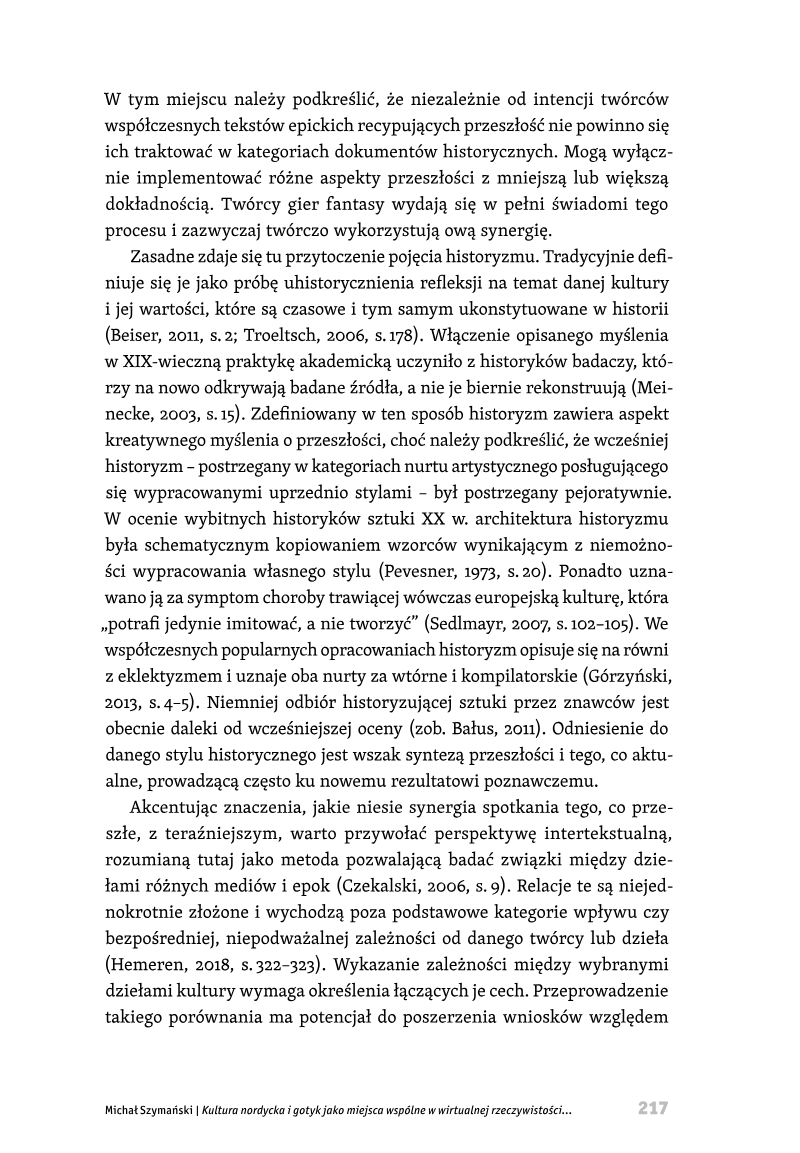
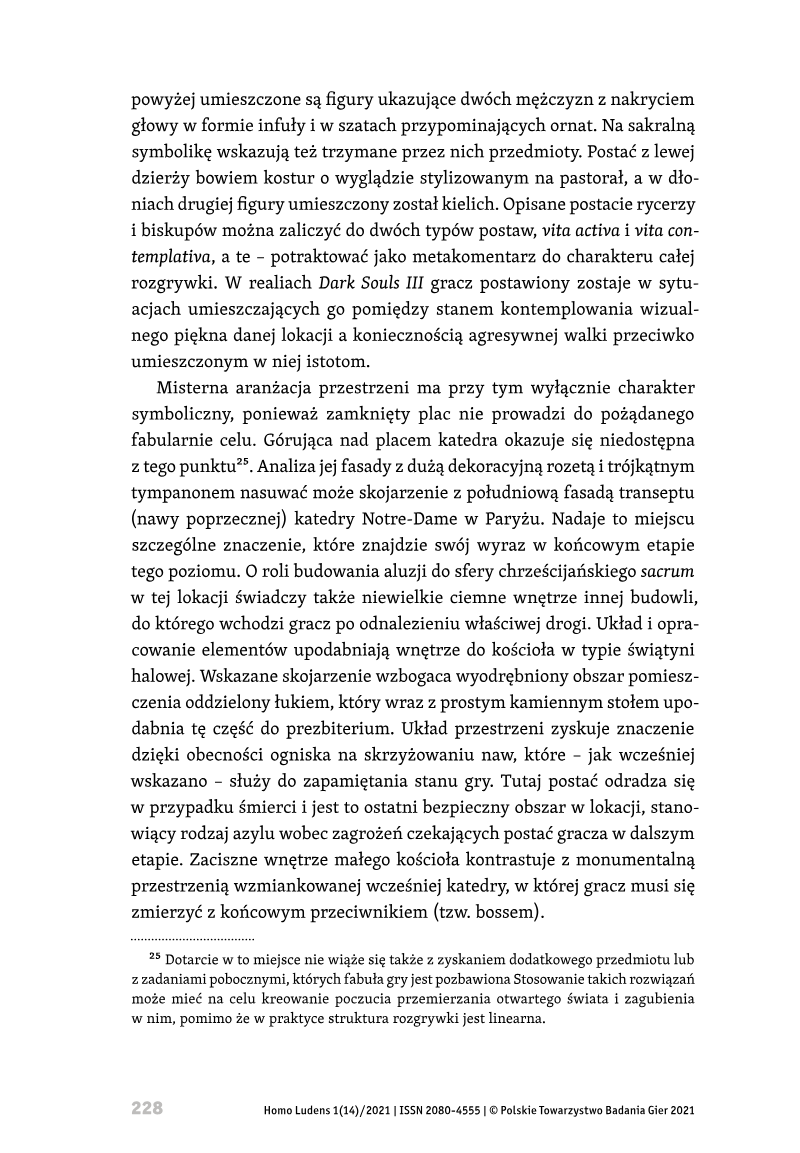
Szymański's article, published in Homo Ludens in 2021, examines how fantasy computer games reproduce historical art styles, particularly Nordic and Gothic visual traditions, as commonplaces of visual culture.
- Szymański (Homo Ludens, 2021) argues that fantasy games use recognizable visual stereotypes of Nordic and Gothic art as commonplaces, and these simplifications are better read as creative, intertextual reinterpretations than as historical documents.
- The author attributes many historical simplifications in games such as Civilization, Medieval Total War: Viking Invasion, and The Elder Scrolls V: Skyrim, including horned Viking helmets derived from nineteenth-century visual culture, mainly to marketing and gameplay requirements rather than deliberate distortion.
- Commercially successful titles typically blend historical settings with fantastical elements, while educational serious games remain less popular, according to the article's survey from Perseus and Andromeda (1983) through Civilization (1991 onward) to the Assassin's Creed series.
Modern Slavery Statement 2021
Liftoff Mobile Limited maintains a formal commitment to preventing modern slavery and human trafficking across its global operations.
- Liftoff Mobile Limited assesses its inherent risk of modern slavery and human trafficking as low due to its business model as a digital services provider rather than a manufacturer.
- The company enforces a zero-tolerance Anti-Slavery Policy that requires all partners, contractors, and vendors to comply with the Modern Slavery Act 2015.
- Contractual compliance regarding human rights standards is managed and overseen by the company’s internal legal team.

Six Years of UKGTF
Established in 2015, the UK Games Fund serves as a critical support mechanism for the nation’s independent games development sector.
- Since its 2015 launch, the UK Games Fund has supported nearly 200 independent game projects with individual grants of up to £25,000.
- The fund has directly supported approximately £14 million in early-stage projects, generating an estimated £20 million in wider economic leverage.
- Portfolio companies report an average staff growth of 45% following their initial funding application.
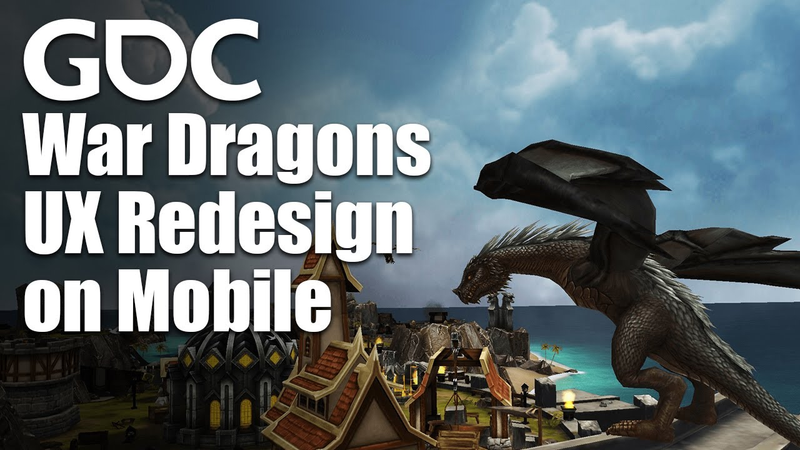
Changing Navigation Mid-Flight: 'War Dragons', a UX Redesign on Mobile
The modernization of the mobile title War Dragons centers on a comprehensive user experience overhaul designed to resolve navigation inconsistencies and inefficient screen utilization.
- The 'War Dragons' UX redesign resulted in a 30% increase in time spent in-game, a 27% increase in daily active users (DAU), and a 10% improvement in early player retention.
- A phased rollout strategy—moving through concept, engineering, and testing phases—allowed the team to mitigate risk and gather continuous feedback while maintaining a live product.
- To modernize the 2015-era interface, the team replaced fragmented, undersized windows with standardized mobile design patterns, such as carousels and consistent sidebar navigation, to improve ergonomics and discoverability.

Three Questions to: Tiny Roar
The interview with Maurice Hagelstein, co-founder and game director of the Hamburg-based indie studio Tiny Roar, highlights the company's evolution and its strategic focus on ambitious project development.
- Founded in 2015, the Hamburg-based indie studio Tiny Roar has scaled from a three-person team to 19 employees.
- The studio is currently developing its most ambitious project to date, a sci-fi action-adventure game titled XEL.
- Tiny Roar’s growth strategy prioritizes maintaining a modest organizational identity and sustainable development practices alongside team expansion.