1 free read left. Create a free account for unlimited reading + AI research.
Create free accountArticle DiGRA
1 free read left. Create a free account for unlimited reading + AI research.
Create free accountArticleDiGRA
A pervasive threatening gaze keeps pressure on the player throughout.
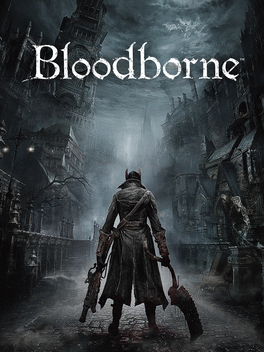
Bloodborne, FromSoftware's 2015 action role-playing game, is examined here as a sustained work of Gothic horror, with its atmosphere, narrative structure, and imagery read through established critical frameworks of the Gothic and the Lovecraftian. The analysis draws on Krzywinska's account of Gothic in games, which identifies coordinating elements such as the false hero, mise-en-scène, affective states, style, and function. Its central claim is that the player's gradual empowerment does not dissolve the game's Gothic mood. Instead, the player remains pressured by a pervasive threatening gaze and must assemble a fragmented narrative in the manner of a detective, while the game's themes of cosmic indifference and the hubris of the Frankensteinian protagonist persist throughout.
The argument proceeds by identifying the mechanisms through which Gothic qualities take hold. Doubling and the uncanny appear in the imposter Iosefka and the lifeless doll modeled on Lady Maria, which together expose the obsessive, displaced desire of Gehrman. Entrapment functions as a pervasive theme, evident in the imprisoned characters, in a restrictive traversal and locked city that contrast sharply with open-world titles such as Skyrim and Breath of the Wild, and in the structure of boss-gated progression. The game's illusions and unreliable world, shaped by Lovecraftian cosmic horror and the insight mechanic, deliberately misdirect the player, a dynamic embodied by the Chapel Dweller, whose appearance deceives.
The analysis culminates in a reading of Bloodborne's perversion of Christian sacred imagery, including the Healing Church and its corrupted Old Blood rituals, the monstrous transformation of clerics, and Eucharistic and Pietà references in figures such as Laurence and Vicar Amelia. Its treatment of immaculate conception motifs and the pregnancies of Arianna and Iosefka is read through Hogle and Fiedler as reflecting patriarchal anxieties about women's roles. The overall conclusion positions Bloodborne's Gothicism as a vehicle for socio-political, psychological, and existential inquiry, and identifies video games as a productive field for further Gothic scholarship.
Each row is a game or company this document names, each column a document, oldest first. A mark means that document names it. Select a row to see those documents.

DiGRA · 2026

DiGRA · 2026



DiGRA · 2026
DiGRA · 2026