2015
Company
Documents about 2015
Kemenekraf dan Tencent Bidik Peningkatan Kontribusi Gim Lokal yang Baru 7%
Indonesia's game industry generated US$1.3 billion in revenue in 2025 and created US$1.8 billion in value added, equivalent to 0.12% of national GDP, according to a white paper titled "The Video Game Industry: Unlocking the Next Level of Economic and Social Development in Southeast Asia," launched in Jakarta in October 2026.
- Kemenekraf and Tencent aim to increase the contribution of local game development and publishing, which currently stands at only 7% of Indonesia's game industry value added.
- In 2025, Indonesia's game industry generated US$1.3 billion in revenue and US$1.8 billion in value added, accounting for 0.12% of the country's GDP.
- The largest contributions to the Indonesian game industry's value added come from hardware and peripherals (47%), esports (24%), and retail (21%), with game development and publishing contributing only 7%.

Oligopoly Go!
Game publishing has been consolidating since 2020, and the trend is not yet over. That is the central argument of this analysis, which opens a series on the games industry's structural transformation.
- The ten largest game publishers now control 56% of all publishing revenue, a significant increase from the 45% low recorded in 2020.
- The four largest game publishers hold 39% of the market, placing the industry in a concentration tier comparable to airlines and cell carriers.
- Industry concentration is projected to reach two-thirds of total publishing revenue by 2030, as larger firms continue to grow faster than the rest of the market.
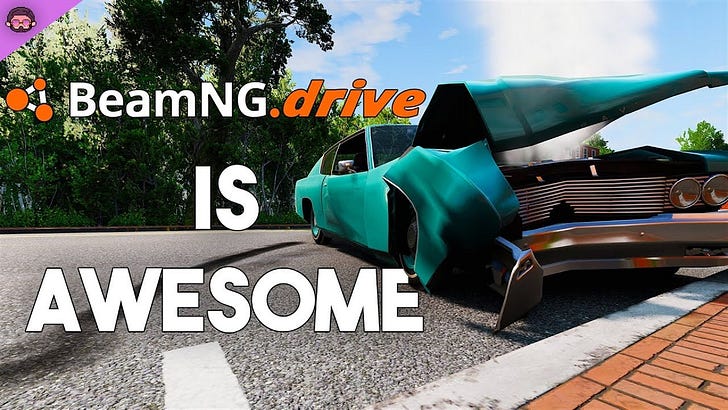
BeamNG.drive: The Biggest Driving Game Hit Nobody Analyzes?
The analysis examines the sustained success of the vehicle simulation title BeamNG.drive, positioning it as a significant yet under-analyzed evergreen hit in the PC gaming market.
- BeamNG.drive has achieved an estimated $200 million in lifetime gross Steam revenue with over 10 million copies sold, including 1.3 million copies sold in the last 12 months alone.
- The game's success is driven by its 'soft-body physics' engine, which serves as both a consumer-facing vehicle simulator and an enterprise-grade tool for autonomous driving research via BeamNG.Tech.
- Community-driven User Generated Content (UGC) and modding are critical to the game's longevity, with third-party platforms hosting extensive libraries of real-world vehicle models that expand the game's appeal beyond its base offerings.

The Real Value of Licensed IP
The value of licensed intellectual property (IP) in the video game industry is often overstated as a guarantee of success.
- External IP is significantly more effective at amplifying success than preventing failure, as the bottom 25% of licensed games still underperform compared to the median original IP.
- External IP provides the greatest commercial uplift for games rated 'Very Positive' (4.51x median revenue) rather than 'Overwhelmingly Positive' (2.06x), suggesting the license is most effective for good—but not exceptional—titles.
- Accounting for typical royalty rates of 9–26% significantly erodes the revenue advantage of licensed IP, reducing the median performance uplift from a range of 1.52x–2.62x down to 1.22x–2.10x.

The Fall and Rise of Game Journalism
The gaming industry is currently experiencing a profound transformation in its information ecosystem, characterized by a sharp decline in traditional editorial journalism and a simultaneous shift toward independent, personality-driven reporting.
- The game journalism industry is in a sharp decline, losing approximately 800 specialist and mainstream reporters between 2024 and the first half of 2026.
- Platform operator power has surged significantly, with revenue from app stores, console marketplaces, and digital storefronts growing 191%—from $14 billion to $41 billion—over the decade leading up to 2025.
- The rise of AI-driven content and corporate cost-cutting has led to a proliferation of low-quality information, making it increasingly difficult for consumers to navigate the gaming market and identify relevant content.

Newly Funded Companies Announced: UK Games Fund
The UK Games Fund has announced its largest cohort of funded companies since its inception in 2015, marking a significant expansion in support for the nation’s independent games sector.
- The UK Games Fund has secured an additional £28.5 million in government funding to support the independent games sector over the next three years.
- The UK Games Fund announced its largest cohort of funded companies since its inception in 2015, following a strong response to the reopened Prototype Fund.
- The 33 newly funded companies include studios such as Toyumi, Draknek & Friends, Kaizen Game Works, Team Folon, and Perchang.
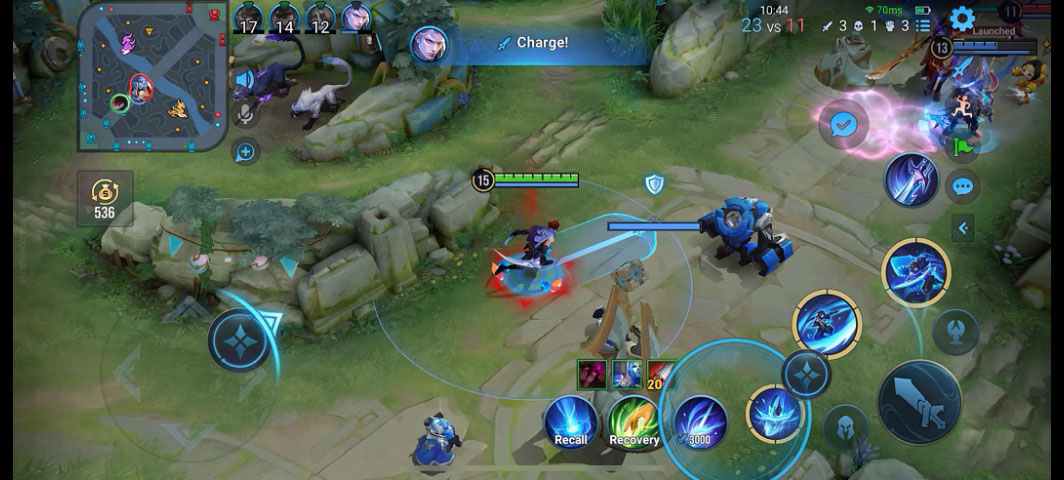
Honor of Kings Revenue & Monthly Player Count Stats 2026
Honor of Kings, Tencent's 5v5 mobile MOBA, is presented as the highest-grossing mobile game in history, and the analysis shows a mature title that has settled into a slow audience decline while spending holds near record levels.
- Honor of Kings remains the world's highest-grossing mobile title with $14.5 billion in lifetime revenue, though early 2026 monthly revenue declined 17% to $161 million.
- The game experienced a 48% drop in monthly active users (MAU), falling from 100.3 million to 51.9 million, while daily active users (DAU) remained stable at approximately 10.3 million.
- Monetization is driven by a high-spending whale population and cosmetic sales, resulting in a revenue-per-MAU of $283.71 and a revenue-per-download of $32.40.

Fate/Grand Order: Revenue and Active Player Stats 2026
Fate/Grand Order, the Aniplex-published gacha RPG that launched in Japan in July 2015, is presented as one of the highest-earning mobile games ever and a rare title that has stayed relevant for over a decade.
- Fate/Grand Order has generated $4.8 billion in lifetime IAP revenue since its 2015 launch, maintaining its status as a top-grossing title despite a decline from its 2018 peak of nearly $700 million in annual revenue.
- The game is heavily reliant on the Japanese market, which accounts for 81.1% of its total lifetime player spending, while China follows at 8.1% and the United States at 5.8%.
- As of 2026, the game is in a mature retention phase with approximately 600,448 monthly active users and 137,239 daily active users, representing a 65% decline in MAU from its peak.
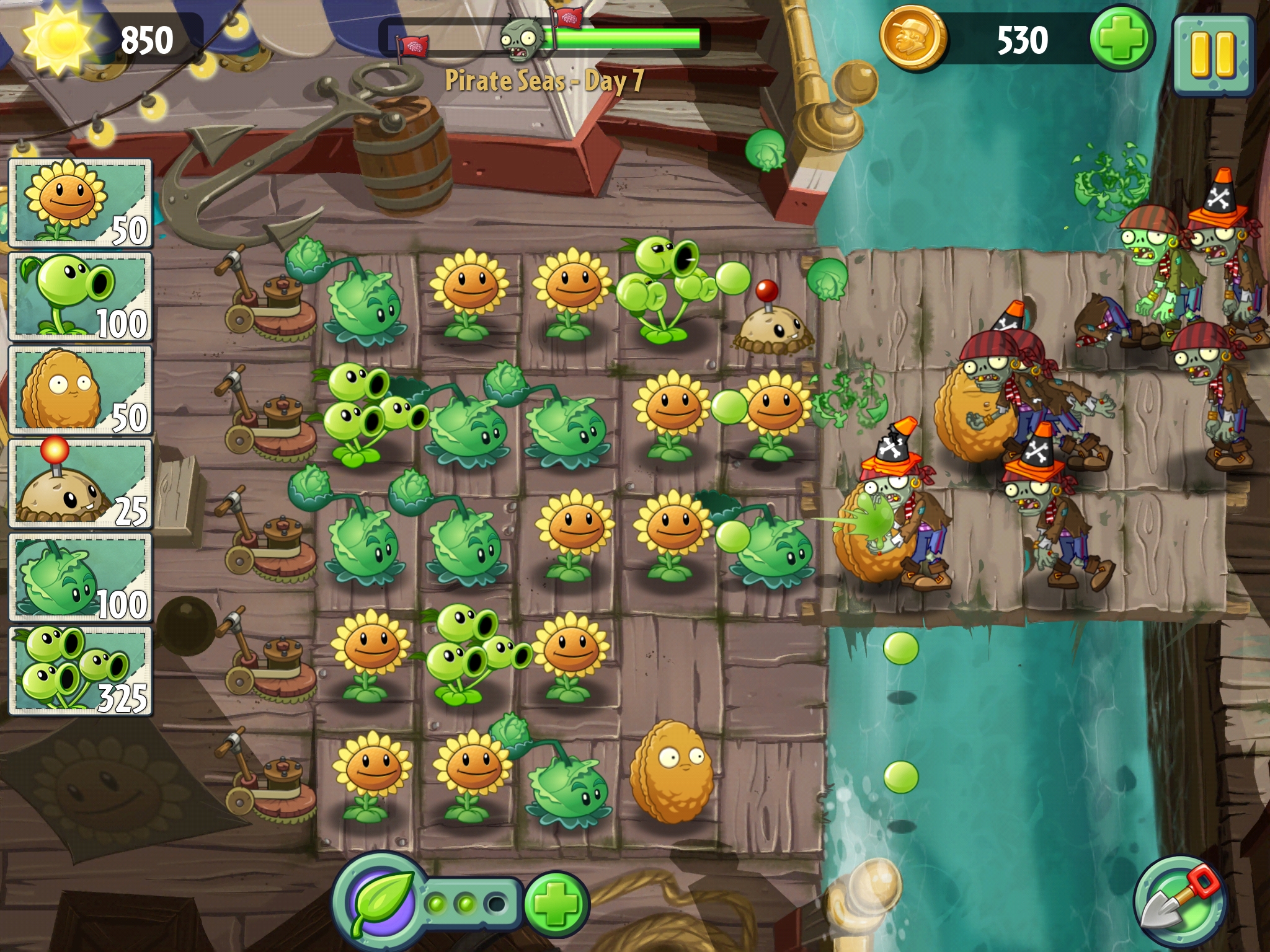
Plants vs. Zombies 2 Player Count, Revenue & Download Stats
Plants vs. Zombies 2, the EA-published, PopCap-developed tower defense title launched in 2013, remains commercially viable in 2026 despite being well past its peak.
- Plants vs. Zombies 2 remains a stable, long-term performer with 8.2 million monthly active users and 2.1 million daily active users as of mid-2026.
- The game has accumulated 421.9 million lifetime downloads and continues to generate approximately 25 to 30 million new installs annually.
- Lifetime in-app purchase revenue stands at $186.6 million, with annual earnings remaining consistent at roughly $15 million per year since 2023.
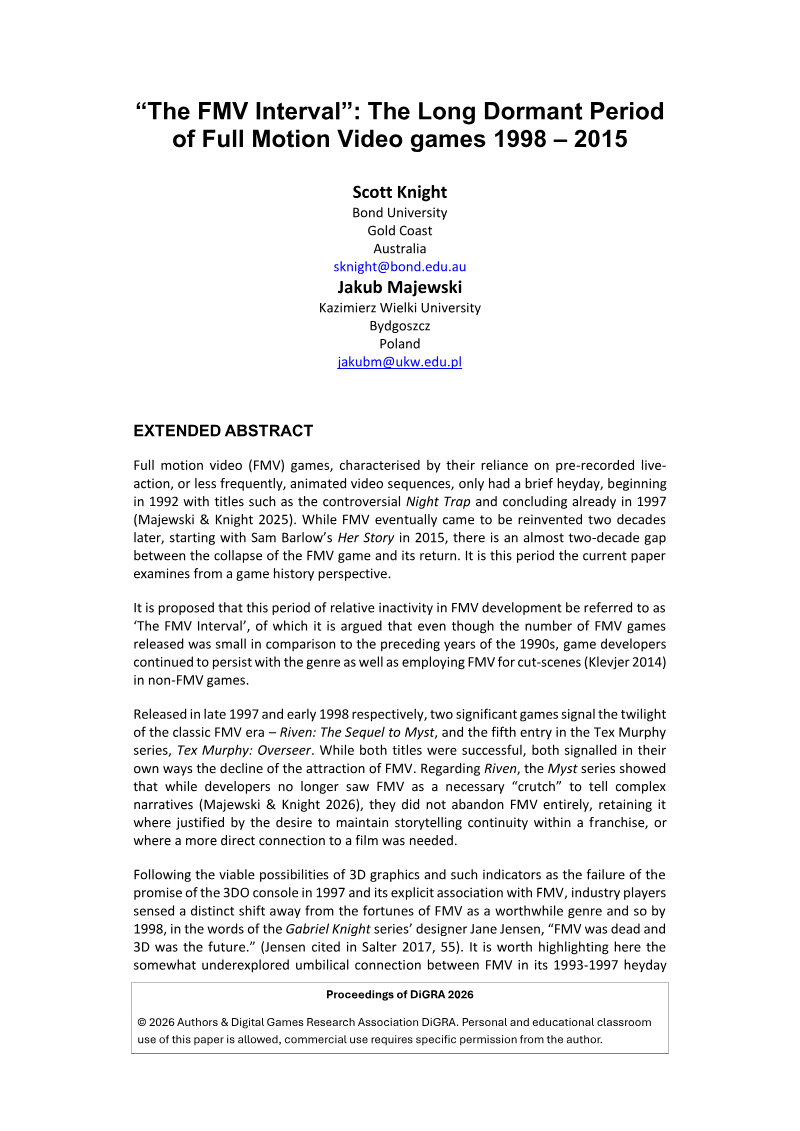
The FMV Interval: The Long Dormant Period of Full Motion Video Games 1998-2015
This paper, authored by Scott Knight and Jakub Majewski, proposes the term "The FMV Interval" to describe the roughly two-decade period between the collapse of the full motion video (FMV) game boom of the 1990s and the genre's revival with Sam Barlow's Her Story in 2015.
- The paper coins the term "The FMV Interval" for the roughly two-decade gap (1998–2015) between the collapse of the 1990s full motion video game boom and the genre's revival with Sam Barlow's Her Story in 2015.
- Its central argument is that FMV development never fully disappeared during this period: releases fell sharply, but developers kept using the format, and FMV continued to appear in cut-scenes within non-FMV games.
- The late 1990s are framed as the twilight of the classic FMV era, with Riven (1997) and Tex Murphy: Overseer (1998) cited as signs of waning appeal and industry sentiment that "FMV was dead and 3D was the future."
Let's Play the 'Refugee Crisis': A Postcolonial Deconstruction of the Refugee in Post-2015 European Videogames
This extended abstract offers a postcolonial critique of European videogames about refugees produced after 2015, a period shaped by the so-called "refugee crisis" and the growing influence of far-right ideology across Europe.
- The paper argues that post-2015 European refugee-themed games take two contrasting approaches: independent 'empathy machine' titles (e.g., Bury Me, My Love, Path Out, Salaam) that aim to rehumanize refugees, and mainstream AAA titles (e.g., The Witcher III, the Horizon series, Baldur's Gate 3) that treat refugees in a less overt, depoliticized way.
- Its central claim is that both approaches reify the refugee as a passive morality object, whether as a figure for European altruistic redemption or as a vehicle for increasingly fascist fantasies of control.
- The author contends that even empathy-driven games reproduce colonial logics of heroic Western intervention and Orientalist assumptions about the Western gaze's right to observe distant suffering.
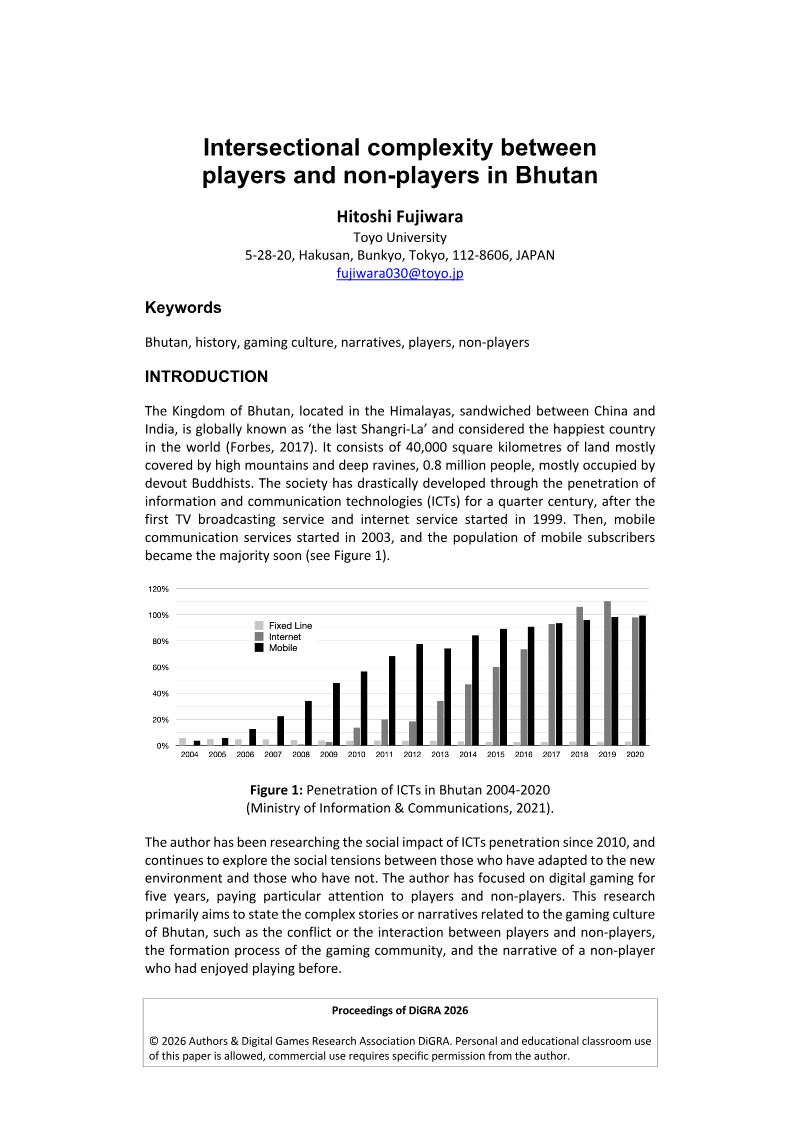
Intersectional Complexity Between Players and Non-Players in Bhutan
This paper by Hitoshi Fujiwara examines the gaming culture of Bhutan, a Himalayan kingdom of roughly 0.8 million people, focusing on the tensions and interactions between players and non-players.
- Bhutan's gaming culture grew mainly through mobile phones: smartphones spread from around 2013 and penetrated the market between 2015 and 2016, while console, arcade and PC gaming had been too expensive for most Bhutanese before then.
- PUBG Mobile (Tencent, 2018) was reported as the most popular game in Bhutan from about 2019, with thousands of players forming Facebook groups that led to the founding of the Bhutan Mobile Gaming Association and its membership in the Bhutan Olympics Committee.
- Between 2019 and 2020, traditional media broadly covered PUBG Mobile negatively, citing addiction and violence, and the government temporarily banned downloads of the game, which players strongly opposed and which pushed player–non-player tensions to a breaking point.