2015
Company
Documents about 2015
Towards a Revised LM-GM Framework for Classroom Analysis: A Systematic Literature Review
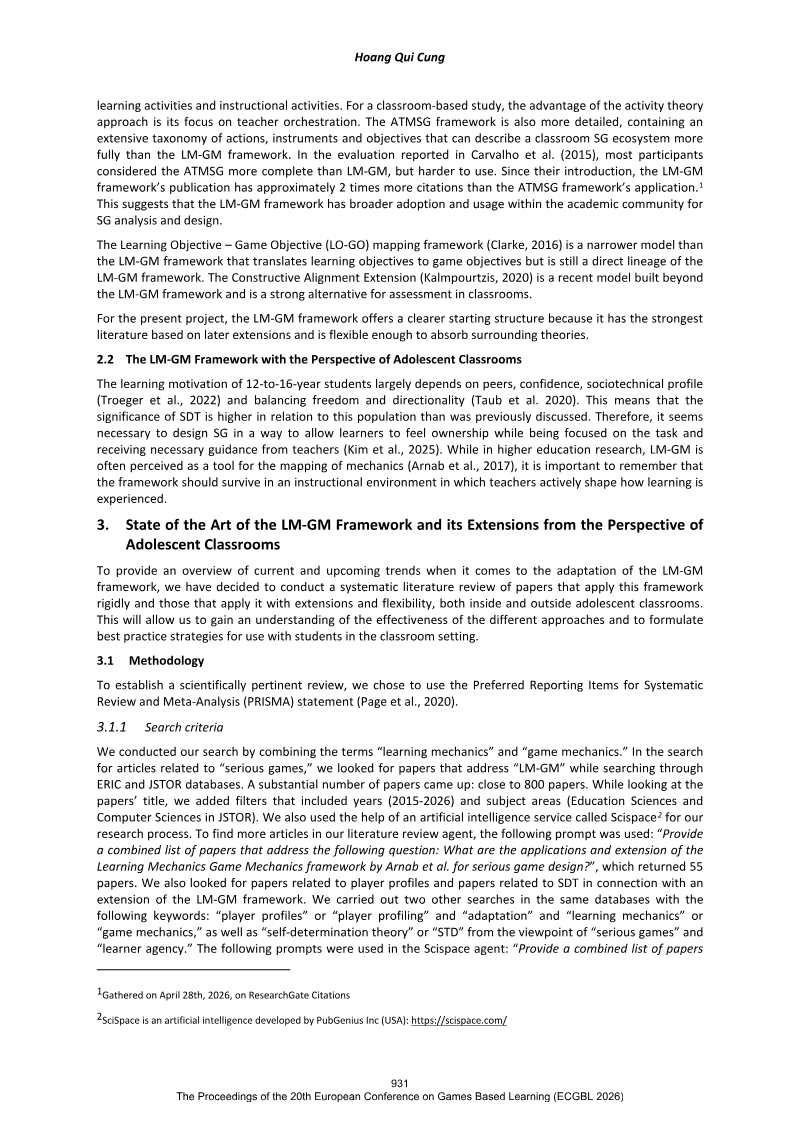
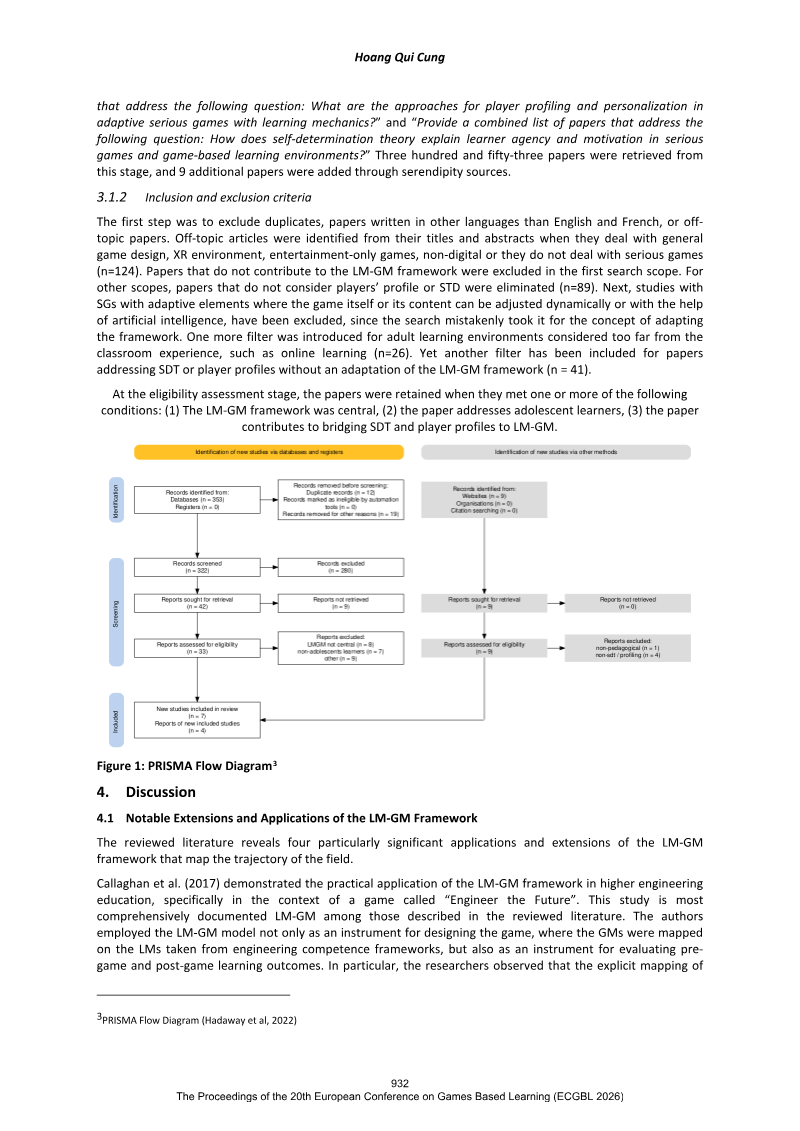
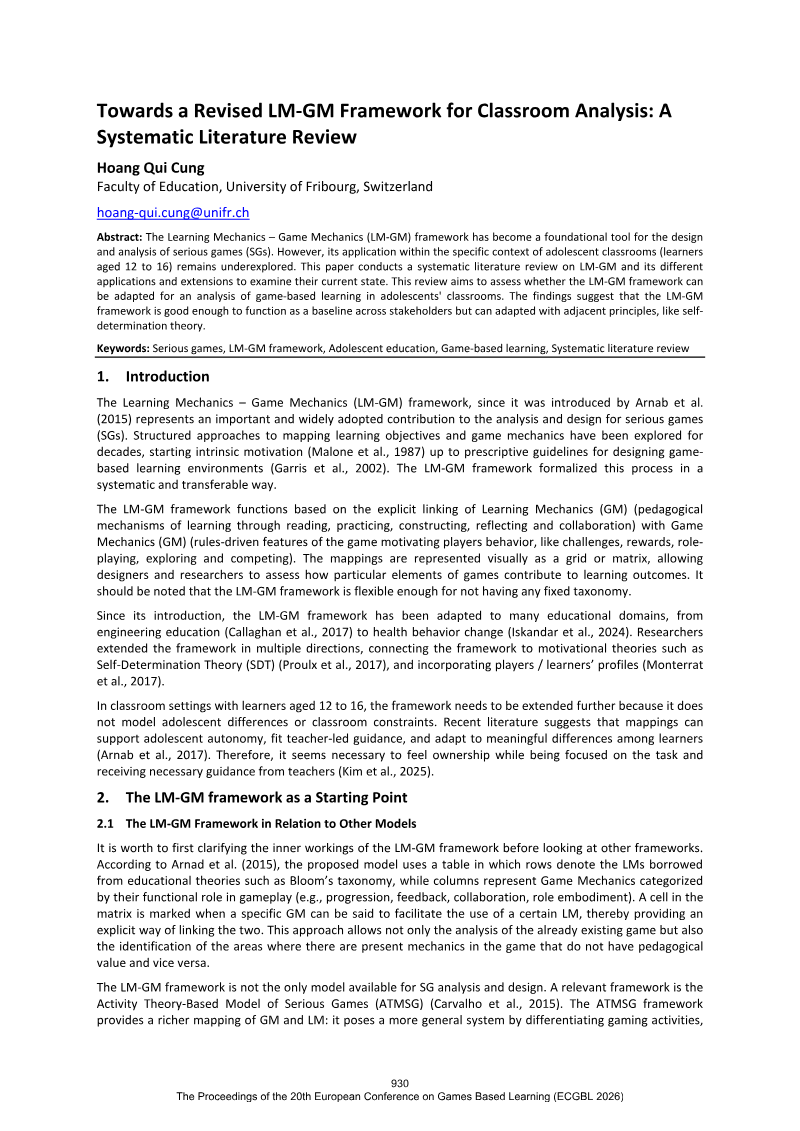
This systematic literature review examines whether the Learning Mechanics–Game Mechanics (LM-GM) framework, introduced by Arnab et al.
- The LM-GM framework (Arnab et al., 2015), which maps pedagogical mechanisms onto game features, is judged flexible enough to serve as a cross-stakeholder baseline but lacks mature treatment of adolescent differences, classroom constraints, and teacher orchestration.
- Motivation is the review's central gap: LM-GM mappings without self-determination theory analysis may yield pedagogically coherent but motivationally inert games, especially for adolescents, who are highly sensitive to peer relatedness, performance comparison, and autonomy.
- A reanalysis by Lobo (2023) found that visible leaderboards and competitive scoring correspond to externally regulated engagement rather than intrinsic motivation, cautioning against relying on these features in adolescent classrooms.



A Tripartite Framework for the Co-design of an Awareness-raising Serious Game Addressing Visual Impairment: A Systematic Literature Review
This systematic literature review, conducted under PRISMA guidelines, examines how serious games addressing visual impairment are technologically designed and co-designed.
- The review of 26 studies (2015–2025) argues that co-design with visually impaired people is a communicational necessity, since their experiential knowledge is transformed and cannot be faithfully formalized without their active participation.
- Of the reviewed serious games for visual impairment, more than half do not specify their engines or software, suggesting technology functions mainly as a social mediator fostering bonds between players rather than as an end in itself.
- Design practices are unevenly adopted: 11 studies used top-down approaches, 6 used user-centered design, and only 8 adopted participatory co-design, motivating a proposed co-design method bringing together visually impaired experts, technical experts, and researchers.
Revisiting the Serious Game Classification and Definition
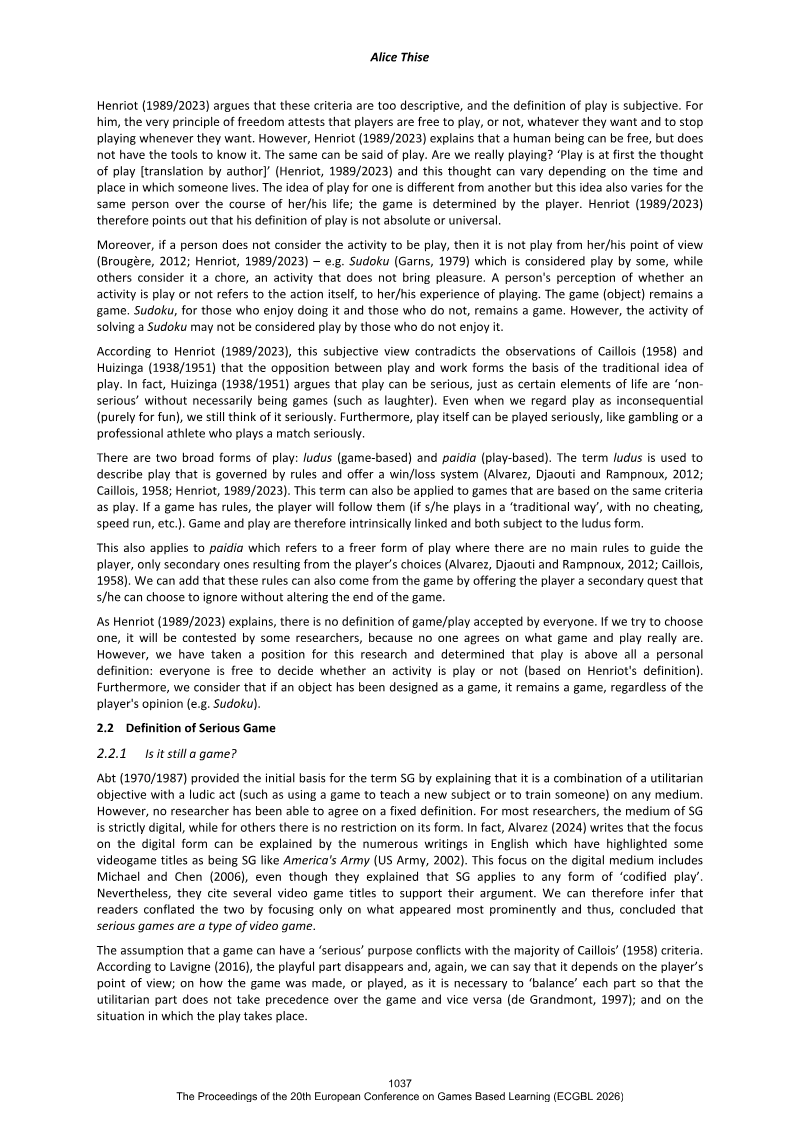
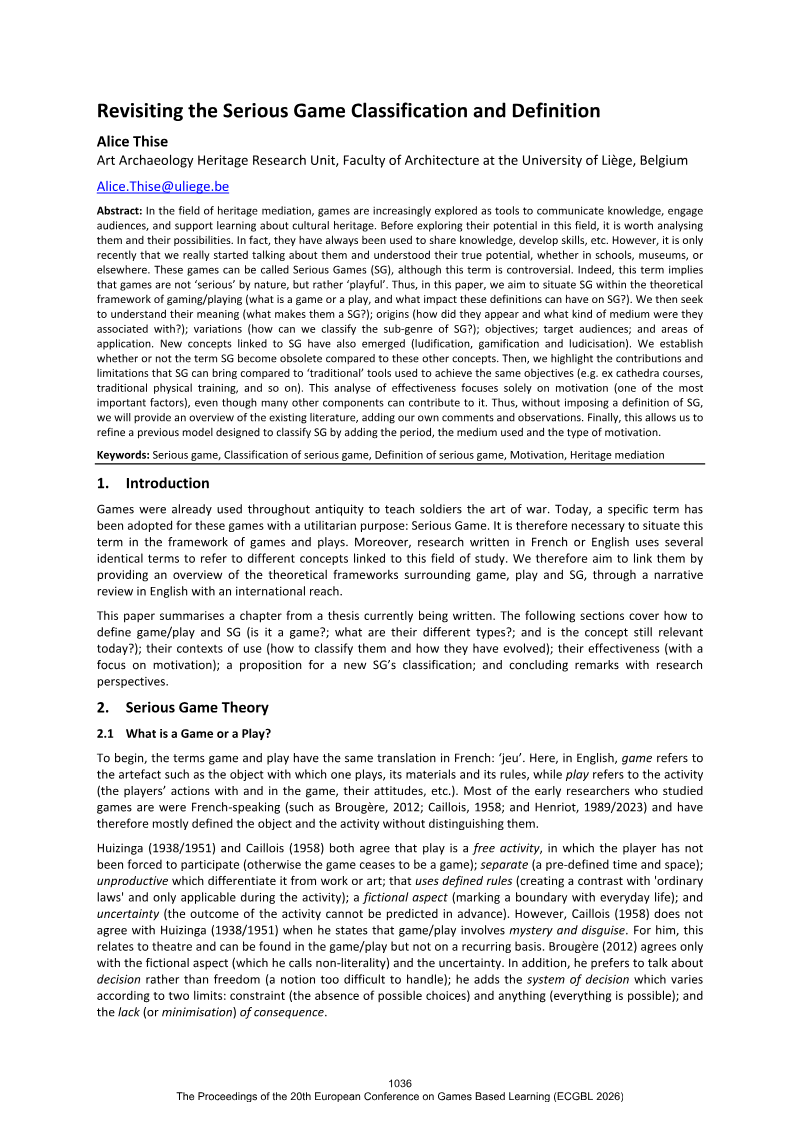
This paper, by Alice Thise of the University of Liège, revisits the theoretical foundations of "serious games" (SG), a term the author acknowledges is contested because it implies games are not serious by nature.
- The paper, a narrative review by Alice Thise (University of Liège) and a summary of a doctoral thesis chapter, adopts a subjectivist definition of play: play is defined by the player's perception, while objects designed as games remain games regardless of reception.
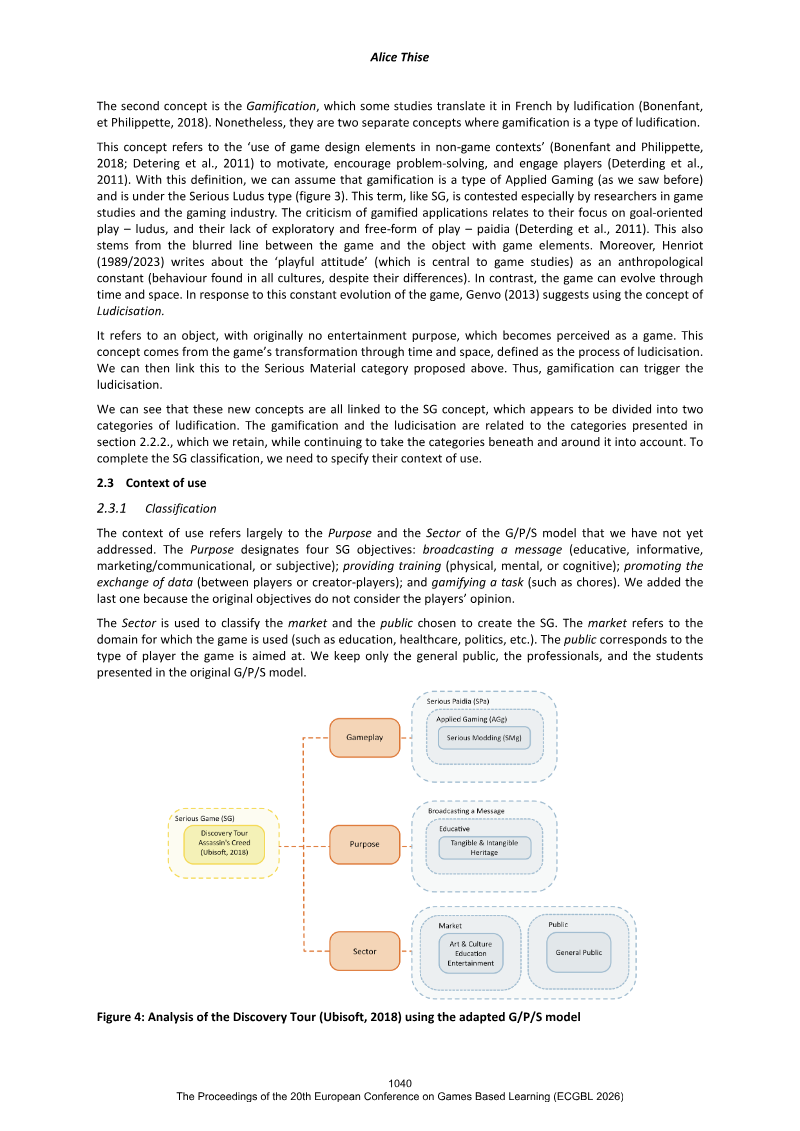
- The author proposes extending the Gameplay/Purpose/Sector model of Alvarez, Djaouti and Rampnoux (2012) with categories such as Serious Material and Serious Paidia, and introduces historical periods: Ancient, Retro, and the post-2002 Serious Games period.
- The paper revises the start of the Retro Serious Games period from 1972 to 1951, the date of an early research chess program, and argues that physical and phygital precedents such as Sun Tzu's Wei Hai and Sutherland's 1968 head-mounted display predate the digital emphasis common in the literature.
From Gambling to Gam(bl)ing: Population-Level Evidence of Changing Play Cultures in Finland
Kinnunen argues that the convergence of gambling and digital gaming should be understood not only as a matter of gambling-like mechanics entering games, but as a broader reorganization of monetized play at the population level.
- Around 2015, participation in gambling (75.9% of Finns aged 10–75) and digital gaming (75.0%) reached near parity in the Finnish Player Barometer surveys (2009–2024).
- Digital gaming has since overtaken gambling, reaching 81.1% of the population by 2024 compared with 64.0% for gambling.
- Gambling-like digital play has become mainstream: in 2024, 8.0% of respondents reported spending money on loot boxes, exceeding horse race betting participation (6.3%).
Now You're Playing with Graphics Processing Power: Nvidia and the Discursive Pleasure of Artificial Intelligence
This paper examines Nvidia's corporate trajectory from a graphics hardware company serving PC gamers to a central supplier of Artificial Intelligence data center infrastructure, using Jensen Huang's "flywheel" metaphor as its analytical entry point.
- Nvidia's 'flywheel' metaphor, central to the paper, casts video games as the original high-volume, computationally demanding market that financed the research behind GPUs, and the paper uses it as an entry point for analyzing the company's shift from PC gaming to AI data center infrastructure.
- The paper traces a branding shift beginning around 2015, in which gaming gradually gave way to AI infrastructure as Nvidia's central focus, alongside a growing emphasis on CEO Jensen Huang's personal brand.
- Nvidia coined the term 'graphics processing unit' in 1999, initially aimed at hardware reviewers and later introducing the GPU concept to a broader public.
Gacha Beyond the Game: The Precarious Playbour Sustaining Ensemble Stars!!
This paper examines the transnational fandom surrounding Ensemble Stars!!
- English-speaking fans of Ensemble Stars!! sustained the game's international presence through unofficial, fan-organized infrastructure such as the Ensemble Stars!! English Wiki, since no English version existed until the June 2022 release of Ensemble Stars!! Music.
- Despite reaching over 19 million downloads by October 2024, the franchise received no official English localization for years after its 2015 launch, which reached 1.5 million downloads in its first year.
- In August 2021, parent company Happy Elements K.K. issued a copyright notice requiring removal of story translations from the fan Wiki ahead of the Music localization, leaving a narrative gap for long-term fans, especially for unlocalized pre-rebrand content.
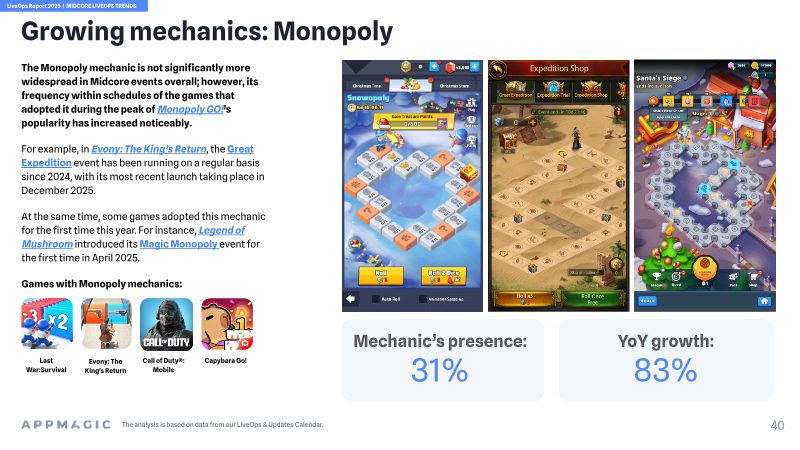

LiveOps Report 2025
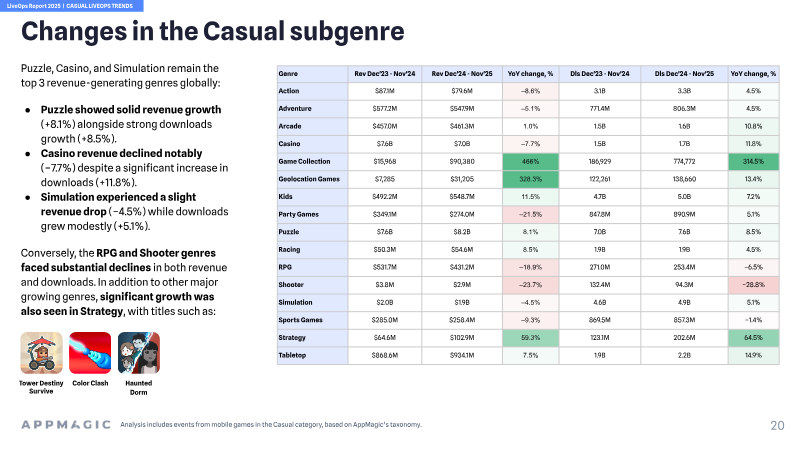
The mobile gaming industry is currently navigating a period of significant maturation, characterized by a marked deceleration in overall revenue and download growth.
- Mobile gaming is shifting toward high-frequency engagement, with developers now averaging 89 events per month to combat stagnant revenue and download growth.
- The Hybridcasual segment is experiencing explosive revenue growth by integrating complex, midcore-inspired mechanics and ad-driven monetization models.
- Strategy has overtaken RPGs as the top-earning subgenre within the Midcore segment, which continues to be dominated by legacy titles launched between 2015 and 2020.



State of African Games 2026
The State of African Games 2026 report from Video Game Insights (Sensor Tower) offers a data-driven snapshot of how African-developed games perform on Steam, PlayStation and Xbox.
- South Africa dominates the African game development sector, accounting for all top-ten selling titles and contributing to a 2% share of global Steam unit sales.
- The industry is shifting from volume-driven growth to longer development cycles, evidenced by a decline in annual Steam releases from a peak of 23 in 2023 to 11 in 2025.
- There is a significant genre mismatch in the market, as action titles dominate release volume while simulation games achieve the highest median sales at approximately 372,000 units.
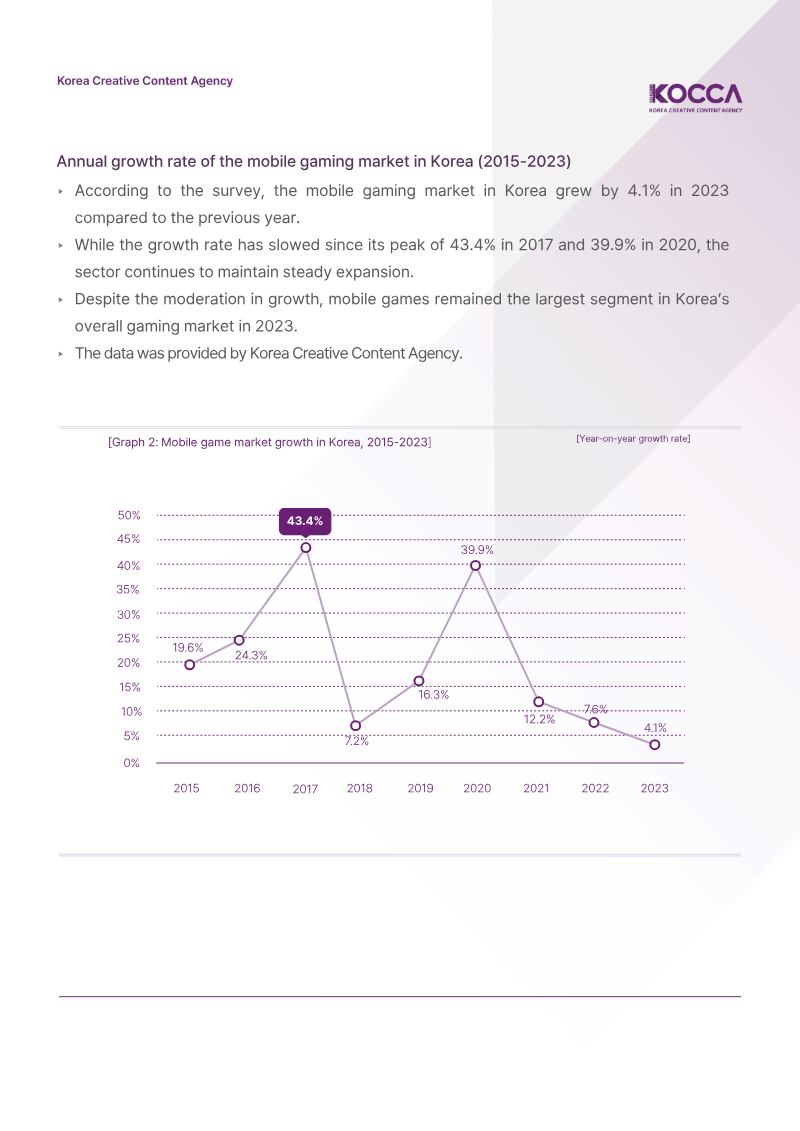
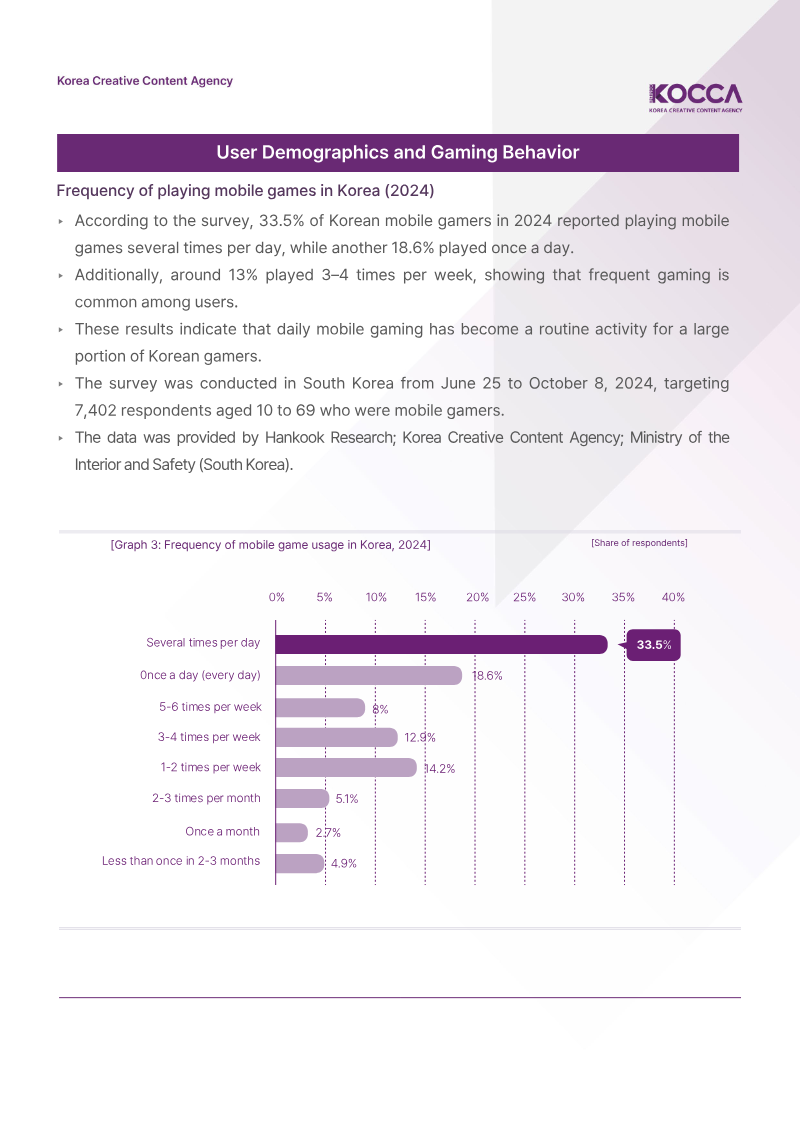
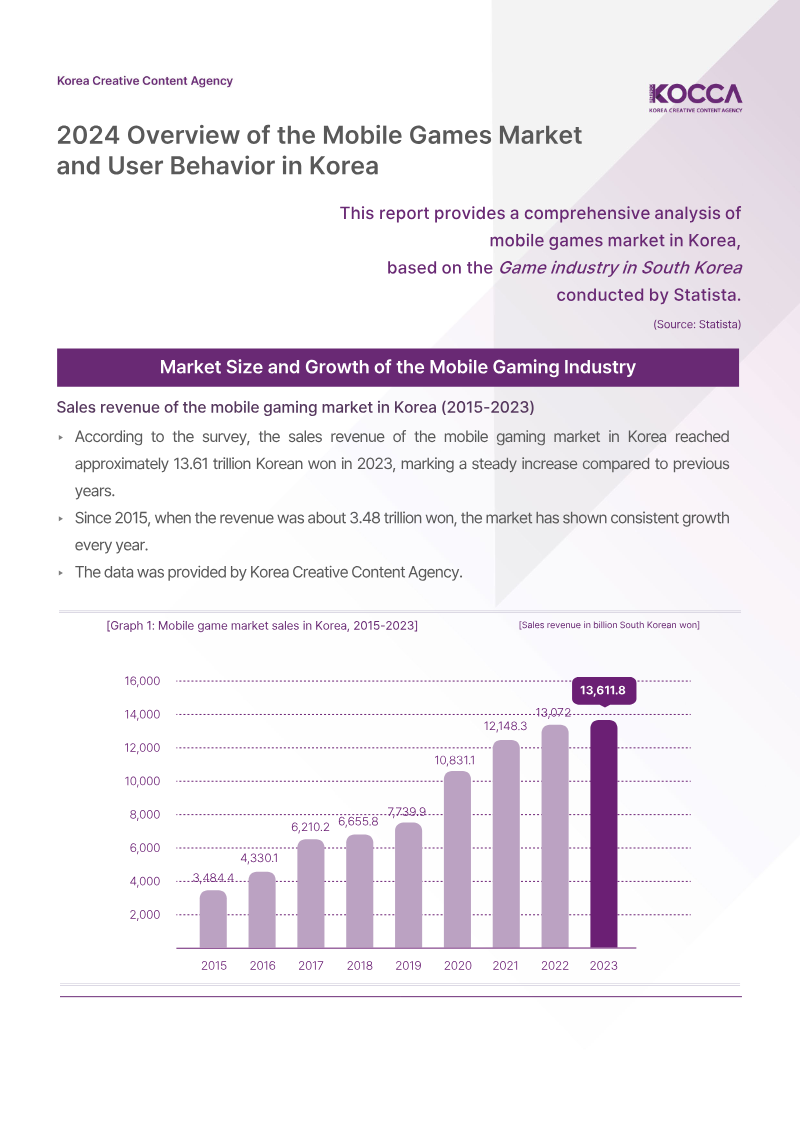
2024 Overview of the Mobile Games Market and User Behavior in Korea
The mobile gaming market in South Korea has transitioned into a mature, stable phase, maintaining its position as the dominant segment of the domestic gaming industry.
- The Korean mobile gaming market reached 13.61 trillion KRW in 2023, maintaining its position as the largest segment of the domestic gaming industry.
- Market growth has stabilized into a mature phase, with a 4.1% year-on-year increase in 2023 compared to peak growth rates of 43.4% in 2017.
- Mobile gaming is a daily habit for over half of the population, with 33.5% of users playing multiple times per day and 18.6% playing once daily.

Evaluating Multiplayer Game-Based Training for Earthquake Evacuation: A Systematic Review
This systematic review examines whether multiplayer game-based training can improve earthquake evacuation preparedness, with a particular focus on the group dynamics that shape evacuations in crowded settings such as schools and hospitals.
- The systematic review screened 71 records from Scopus and Web of Science (2015–2025) under PRISMA guidelines and retained 14 studies on earthquake-related serious games with educational or behavioral aims.
- The central finding is a gap rather than a conclusion: none of the 14 reviewed games were designed for multiplayer play, leaving multiplayer earthquake training largely unevaluated.
- Most reviewed games gave limited attention to social influence, leadership, role allocation, and collective decision-making, which are central to crowded evacuations in schools and hospitals.

2025 Global Games Market Report
Newzoo's 2025 Global Games Market Report describes a maturing industry with moderate growth, and pairs its market forecasts with tactical analysis of launch strategy.
- The global games market is projected to reach $188.8 billion in 2025, a 3.4% year-over-year increase, driven by a player base that has expanded to 3.6 billion people.
- Mobile gaming remains the industry leader with $103.0 billion in revenue (55% of the total), while console gaming is expected to see the highest growth rate at 5.5%, reaching $45.9 billion.
- Average spend per player is declining, forcing a strategic shift toward long-tail engagement and retention rather than aggressive monetization in saturated markets.
(Dis)Embodiment: Trans Hauntings in Kitty Horrorshow's Corpus
Dr Merlyn Seller's paper examines trans embodiment and haunting in the small-scale horror games of developer Kitty Horrorshow, focusing on works such as Rain, House, Eternity (2015), Anatomy (2016), and Hornets (2015).
- Dr Merlyn Seller's paper analyses trans embodiment and haunting in the small-scale horror games of developer Kitty Horrorshow, including Rain, House, Eternity (2015), Anatomy (2016), and Hornets (2015), using audio-visual-haptic and textual analysis plus autoethnographic reflection as a trans player.
- The paper's central concept is "diapolar haunting," in which the trans player is simultaneously haunting and haunted, existing in an ambivalent state of present-absence and absent-presence both inside and outside the game.
- Horrorshow's minimalist 32-bit environments, uncanny architectures, forced reboots, and disembodied first-person avatars are framed as a means of exploring the affective darkness of transition.