Mobile reports and market data
Documents
The Games Business During and After the COVID-19 Crisis PG Connects Digital #2
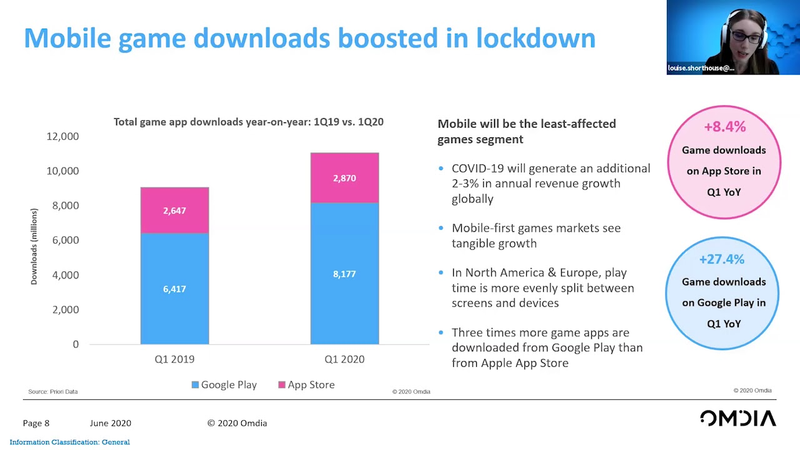
The games industry demonstrates significant resilience during socio-economic crises, largely due to the accessibility, cost-effectiveness, and social utility of gaming.
- The games industry is historically more influenced by internal market forces, such as hardware cycles and business model shifts, than by broader macroeconomic recessions.
- The COVID-19 pandemic is projected to drive an additional two to three percent in annual revenue growth for the mobile gaming sector.
- Monetization of the pandemic-driven influx of new users remains a challenge, as these players prioritize free content and are often unfamiliar with in-app purchase models, causing download spikes to outpace revenue growth.
Gameloft: 20 Years of Mobile Gaming PG Connects Digital #2
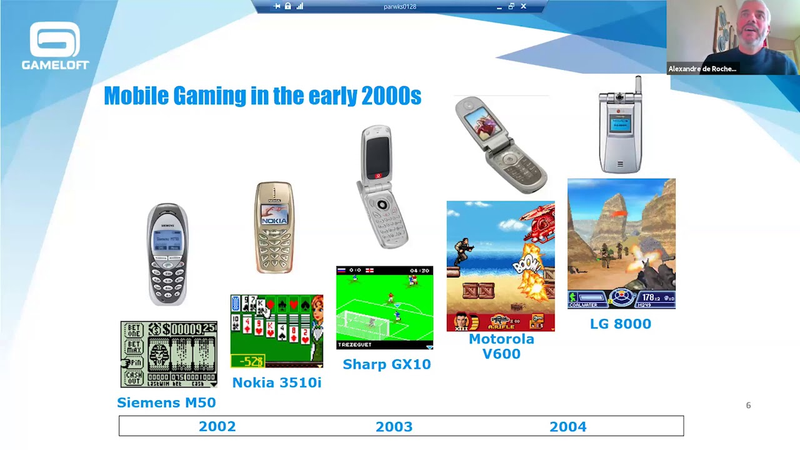
Founded in 2000, Gameloft emerged with the conviction that mobile devices possessed the potential to surpass the reach of traditional console gaming.
- The mobile gaming industry has shifted from a fragmented, telecom-led distribution model in the early 2000s to a centralized ecosystem dominated by Apple and Google.
- The transition to free-to-play models has enabled global scale but significantly increased barriers to entry due to the high costs of user acquisition, platform fees, and IP royalties.
- Technological advancements have evolved mobile gaming from limited browser-based experiences to sophisticated 3D titles that now exceed 1GB in file size.

Opportunities in Games as Marketing Channels PG Connects Digital #2
The integration of advertising into indie games serves as a critical revenue stream for developers, provided the implementation balances commercial viability with user experience.
- Games are the most viewed media globally, providing a significant opportunity for brands to reach audiences through non-intrusive, integrated marketing channels.
- Developers should prioritize creative partnerships like branded reskins, product placement, and gamified loyalty programs over disruptive ad networks to maintain user experience.
- Strategic brand matching is essential for revenue, as high-paying ads—such as insurance—often fail to align with the demographics of younger gaming audiences.
From Head Ball 1 to Head Ball 2: How it Became a Multi-million Dollar Game PG Connects Digital #2
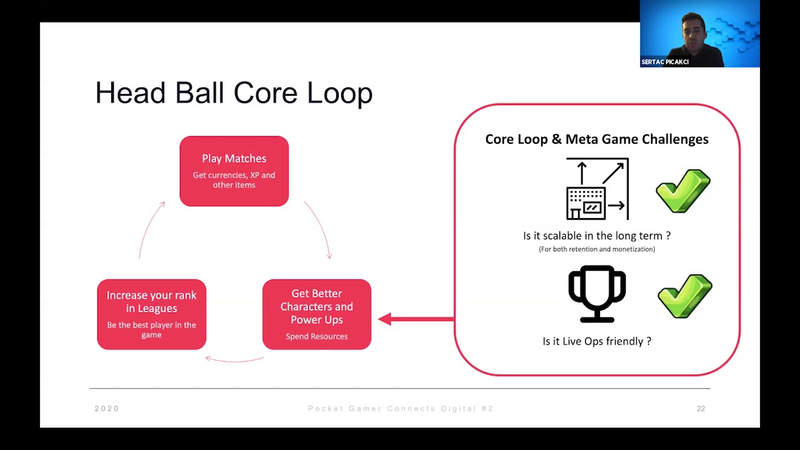
The transition from Head Ball 1 to Head Ball 2 represents a strategic evolution in mobile game design, shifting from a simple direct-purchase model to a sophisticated Gacha-based system.
- The transition from a direct-purchase model to a Gacha-based system in Head Ball 2 drove a fivefold increase in lifetime value (LTV) and a 45% improvement in the DAU/MAU ratio.
- Implementing an in-house LiveOps infrastructure allows for real-time adjustments to matchmaking, progression, and pricing without requiring client-side updates.
- The shift to a more complex core loop and character upgrade depth was specifically designed to overcome stagnant LTV and facilitate growth in competitive tier-one markets.
How LBC Studios Used Social Media & Innovative Marketing Strategies to Grow Their Hempire PGCD #2
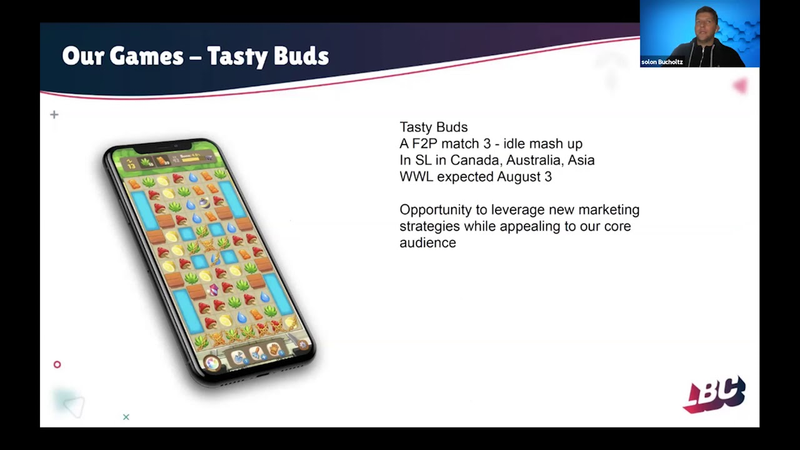
LBC Studios, a Vancouver-based mobile game developer and publisher, utilizes community-focused social media strategies and data-driven marketing to overcome significant advertising barriers in the cannabis-themed gaming sector.
- LBC Studios has generated over $30 million in gross revenue and achieved 12 million installs for its flagship title, Hempire, since its 2017 launch.
- The studio maintains a strict business model that prioritizes a 30-day payback window for all user acquisition (UA) costs.
- To overcome advertising restrictions on cannabis-themed content, the studio iterates on 12 to 15 active creative assets weekly, ranking them by IPM and ROI to optimize spend.
Promoting Growth Even During Lockdown PG Connects Digital #2
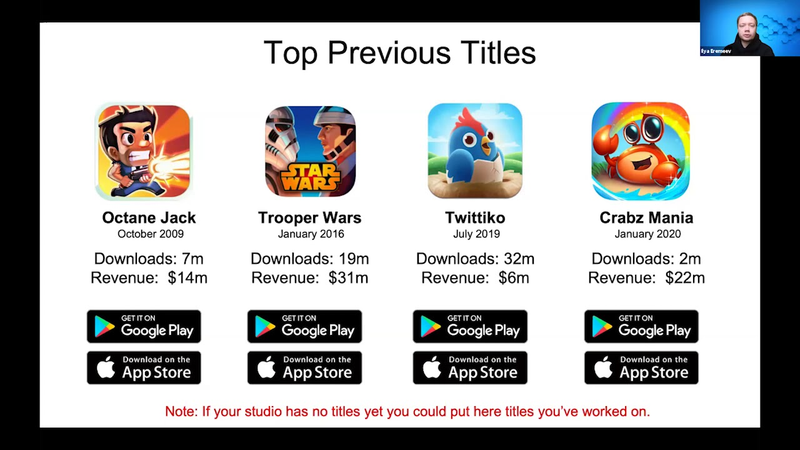
Securing investment in the gaming industry requires a disciplined, ten-slide framework that prioritizes founder credibility and operational transparency.
- Investors prioritize founder credibility and team track records as the primary indicators of a studio's future execution capability.
- A successful investment pitch requires a disciplined ten-slide framework that balances core game mechanics with realistic key performance indicators.
- Founders must demonstrate business acumen by providing transparent financial forecasts, including specific burn rates and projected break-even timelines.
Fueling Growth Through User-centric UA Creative Design PG Connects Digital #2
Modern user acquisition strategies in the mobile gaming industry have shifted away from simple trial-and-error testing toward a framework rooted in neuroscience and behavioral psychology.
- Creative assets are the primary drivers of return on ad spend (ROAS), superseding automated media buying tools in importance for modern user acquisition.
- Effective UA strategies must shift from surface-level demographic analytics to a framework based on neuroscience and behavioral psychology to trigger intuitive System 1 processing.
- Developers should categorize players into psychological archetypes—such as achievers, strategists, and escapists—to align ad narratives with core user motivations.
Superstar Session: A Tale of the $6bn Neglected MENA Gaming Market PG Connects Digital #2
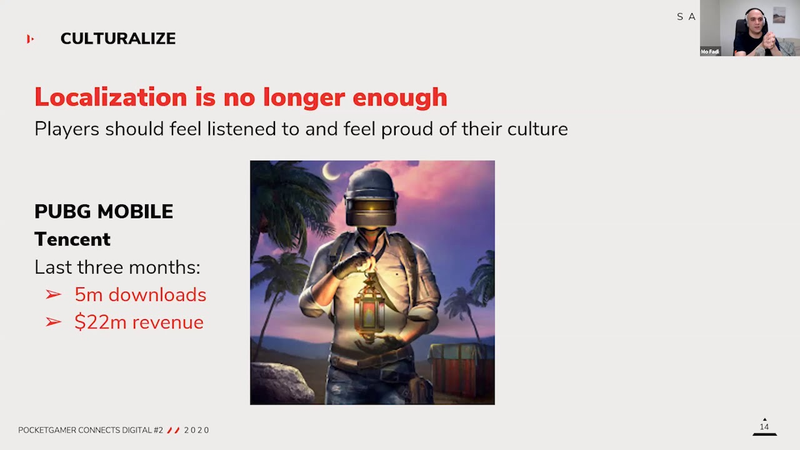
The Middle East and North Africa (MENA) gaming market represents a significant, high-growth frontier currently generating over $6 billion in annual revenue.
- The MENA gaming market is a high-growth frontier generating over $6 billion in annual revenue with a 25% year-over-year growth rate.
- Developers must prioritize deep culturalization over simple translation, as failing to align content with local values can lead to drop-off rates exceeding 80%.
- The region is a mobile-first demographic that is transitioning from an emerging territory into a primary target for global publishers due to increased venture capital and infrastructure investment.

Making a Hit Mobile Match-3 Game | GenJoy's David vs. Goliath Story
The mobile match-3 market remains intensely saturated, requiring smaller studios to adopt highly disciplined, data-centric strategies to compete against industry giants.
- Success in the saturated match-3 market requires validating D1, D7, and D30 retention metrics via minimum viable products and fake store profiles before committing to full-scale production.
- Marketing expenditures for mobile match-3 titles typically dwarf initial development costs, necessitating a shift in resource allocation toward aggressive user acquisition.
- Smaller studios can compete with industry giants by utilizing lean, flat organizational structures that enable rapid decision-making and agile pivots based on real-time user data.
Implementing Pixar's Brain Trust Model at King and How It All Went Wrong
King, the developer behind the Candy Crush franchise, attempted to implement a centralized advisory model modeled after Pixar’s Brain Trust to improve game quality across its global studios.
- King failed to implement a centralized 'Brain Trust' model because teams perceived the static group of senior experts as intimidating gatekeepers, leading to the group being labeled the 'Angels of Death.'
- The initial centralized model collapsed due to a lack of clear goals, conflicting management feedback, and cultural misunderstandings regarding the role of 'champions' in the development process.
- King successfully pivoted to a decentralized governance model that separates project support from formal evaluation, utilizing a flexible network of senior creative talent instead of a fixed panel.

Sports for the Win! Why Licensed Sports Games are Positioned to Win Big in Mobile - PGC Digital #2
The mobile gaming industry is experiencing a significant shift in the sports genre, moving away from traditional console-style simulations toward short-session, mobile-first experiences.
- The mobile sports genre is shifting from complex console-style simulations to mobile-first, short-session experiences lasting 4 to 5 minutes.
- Licensed sports IP, such as NFL and NBA, acts as a primary user acquisition tool that reduces reliance on organic growth and optimizes customer acquisition costs.
- Developers are moving away from treating mobile as an ancillary distribution channel, instead building games specifically designed for the mobile user's lifestyle.

The Death of the IDFA | PocketGamer.biz RoundTables
The deprecation of the Identifier for Advertisers (IDFA) on iOS marks a fundamental transition in the mobile gaming industry, moving away from deterministic, granular user tracking toward a privacy-centric, probabilistic measurement landscape.
- The deprecation of IDFA has forced a permanent shift from deterministic, granular user tracking to a probabilistic measurement landscape, significantly reducing the precision of campaign attribution.
- Publishers must now rely on machine learning and predictive analytics to identify high-value users within the first 48 hours of gameplay to compensate for the loss of individual-level tracking data.
- The industry is pivoting toward the development of robust first-party data sets, such as email addresses and phone numbers, to maintain control over audience targeting without relying on third-party identifiers.
Writers
Games and companies
Games