1 free read left. Create a free account for unlimited reading + AI research.
Create free account
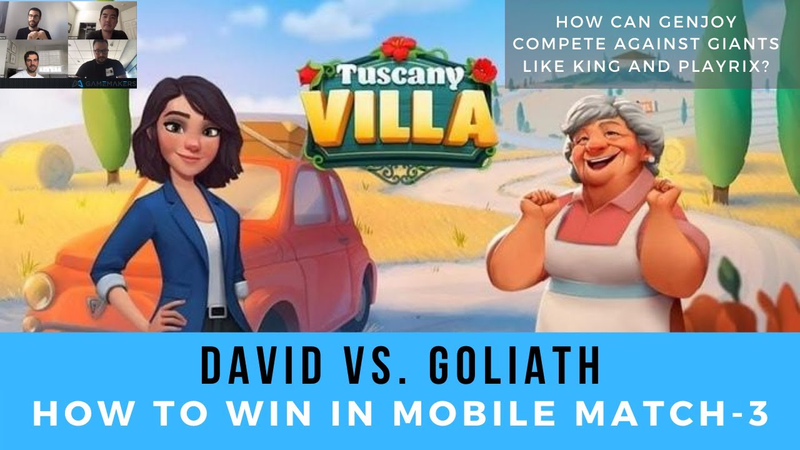
Making a Hit Mobile Match-3 Game | GenJoy's David vs. Goliath Story
Key insights
6 takeaways- 01Success in the saturated match-3 market requires validating D1, D7, and D30 retention metrics via minimum viable products and fake store profiles before committing to full-scale production.
- 02Long-term player engagement is driven by integrating narrative-driven meta-layers, such as the villa-building mechanics utilized in Tuscany Villa.
- 03Marketing expenditures for mobile match-3 titles typically dwarf initial development costs, necessitating a shift in resource allocation toward aggressive user acquisition.
- 04A hybrid technological approach, combining in-house expertise with external services, allows smaller teams to maintain high-quality, handcrafted experiences while managing costs.
- 05Machine learning should be leveraged for player segmentation and dynamic game balancing rather than relying on automated content generation.
- 06Smaller studios can compete with industry giants by utilizing lean, flat organizational structures that enable rapid decision-making and agile pivots based on real-time user data.
Ask AI about this video
Transcript
welcome everybody today we are going to be talking to the studio leads for a relatively small but ambitious and experienced casual puzzle game studio called jen joy based out of seville spain and just to give you listeners a little background on the studio before we begin gen joy belongs to the leading spanish mobile gaming group genera games which was founded in 2002 the founding couple jose miguel and maria jesus have succeeded and scanning the company without ever having received any outside investment while janeira started out as a developer of mobile content it pivoted toward mobile gaming when in 2013 disney hired the company to make a match 3 game based on then unknown new nordic snow princess ip which of course is disney's super successful game frozen free fall now published by jam city but still developed and operated by genera games
the frozen free fall project was the initial seed in the creation of the studio our guest today lead called genjoy so today we'll be talking more specifically about one strategy and product what kind of strategy and what kind of product differentiation does jen joy employ to compete against the big guys two marketing we've heard stories about how the big guys have a huge marketing advantage or do they let's dive deeper and find out how gen joy competes on a marketing basis in three technology infrastructure there are lots of rumors and stories of a massive infrastructure technology investment by companies like king especially around machine learning and ai applied to level creation design balancing things that like that what are the technology investments genjoy will be making to compete and again to walk us through all this and more are the three key leads from jen joy we've got alejandra moreno pablo benetes and jesus spartus
guys i thought we could start just by having you guys give a brief introduction of who you are and what you do at joy okay so yeah i'm ale moreno i'm leading the studio with my friends jesus san pablo er yeah i'm in charge of the analytics qa um some side of the of the studio and yeah well i was working with uh for canada for seven years or something uh or so and then i moved to kentucky barcelona i was i was part of the producion team production team of uh bubble with saga 3 and so on and then i move back to general generation joy to work with these guys to launch to scandinavia yeah and i'm paulo anites i've been with geneta since i believe it's now 13 years and i started as a junior programmer and i agree with the with the industry and with the company
a lot of challenges in the past uh and now like three years and a half or so i joined jesus and alejandro to start this new venture of jen joy with my friends here that we we have been working for solo land together and we wanted to do something and it's really special so that's where we are right now and and i'm in charge of the business side of the of the studio more focused on the the financial watching where we put our money to make it you know wisely our investments and also i work hand by hand with our cmo and to run the operations in the marketing side really important for us and also in chair of our second game now we'll probably you will be able to see them in in 2021 hopefully okay and i'm jesus vartus the third musketeer of the enjoy i i joined the company general
also six months later than pablo so i made the 15 years also during that time i started as a as a developer too and we jump from apps to to get books and then making games that we were doing like for last seven years or something i working on a lot of disney products on that time frozen free fall maleficent freefall and other titles and last three years as pablo and alexa we started the jj idea of creating our own products and our first one it was was tuscany villa that is the one that we are launching right now and i'm more on the product side and i'm working a lot of the road map things and next things to do in the project okay great so maybe just kind of diving right into a lot of the questions because i've got a lot of questions that i'm definitely very interested to hear your responses about but first i thought we could start with strategy so match three as we all know is in you know incredibly huge and big market but also super competitive so
maybe we could start with that how do you guys view the competitive landscape especially with respect to some of these bigger players like playrix and king what kind of strategy are you guys employing to compete against them okay um right now as you said a mastery and puzzle and category is like a huge category with a lot of big players there and and we are seeing also like a lot of companies are moving there too like other players that are not in casual are moving to castle and things like that so it's going bigger and bigger but it's true that is one of the most important categories on the store and it's a category that is always kind of growing with the time so we believe that it's a pretty interesting market but as you said it has a pretty high competitive range of things that if you go there you need to be prepared basically for that so for us uh for competing there we have a lot of experience previews on our company doing mastery titles and
everything but we know that if we are going to start with a new idea here or something we need to do quality work as much as we can and we need to do quality in every area of the product not not having things like having a brand or something with you can help but it's not the solution you need to do quality on the design quality on on the live off so everything that you prepare for the title so we have pretty clear that if we are going to go here we need to create a product that people want to play basically and we need to create a product that stands for itself uh so we try to do our best in every area going from design take analytics and everything and use our own knowledge to create do something that can really compete so also one of the things that we have in our strategy since the beginning was if we go in this path we also even if we believe that we are doing quality work we need to test things as soon as we can
so we are sure that we are going in the right path because right now you can believe on numbers but you need to test with real users to see that everything is going in the in the way so we wanted to be fast on that and not doing like high production times without knowing what the users are going to see about our product and as soon as we get real data of people playing and things like that improve iterate and do it again until we reach the numbers we want so for us in our strategy one of our key points was retention and we always were thinking about retention we need something that people need to play and want to play and and what's our key metric to accomplish and we were pretty accident with that numbers since the beginning and focus on every retention seven the retentions and things like that so we can have something that can really compete there due to the market right now how everything is going right so it sounds like what you're saying is that given match 3 is a you know pretty competitive space it's a
mature market but fortunately you guys have a lot of experience both in the space and having worked at some of the top companies like king but really it's about quality in in terms of the execution that's that's how you guys are going to compete yeah yeah okay i think quality quality is a must if you want to enter here because uh all the companies are doing great things there so you if you want to compete you need to be one of them in that quality so if we were to think about some of the sub genres i think that given how mature max 3 is we're seeing a lot of different kind of sub genres that have evolved from like the original candy crush kind of linear progression based match 3 model to things like light rpgs like seriously to gotcha rpgs like puzzle and dragons to builders like the playwrights games so for you guys how did you view the different kinds of sub-genres in matches fury and then how did you kind of pick where you wanted to play within match three
okay that seems a great discussion because we saw how the market evolved in front of us because when we started on march 3 we started when the saga games were working so frozen free fall that was one of the titles that we worked it was a saga game at the beginning uh it's two that is pretty pretty interesting what is happening in the match 3 space we believe that match 3 is something that fit great for mobile so it's a core mechanic that is pretty good for mobile and that's the reason why so many iterations of it working uh also match three only talking about the match three puzzles and everything uh are deep and have a lot of space for innovation so that's why another reason a lot of titles are coming because they improve the rules they improve the puzzles and things to do and also in the monetization side and balancing as far as we know match 3 can find a good balance between putting
some difficulty to the player but feels fair to them so it's kind of if you know the tricks and the things to do it's kind of good for for getting a monetization point from it so that's why we think it's a genre that is there and is going to be there for more time because in the puzzle the core of the game works pretty well for doing new things or ideas the other interesting thing and it's the most interesting thing is the meta evolution what you say that we take that's that core gameplay that works and put another thing over it and that started with the casual things like only social things or going to the hardcore ones or or even resource management or city builders or things like that and it's true that we even did that on frozen free fall at some point we added a layer of building over the game that worked pretty well and for us was like a eye-opening of okay you can't do that on a game with so many gears what happened if you do in a new game or something like that so for us we believe that right now even
how the market it is there are options to find new combinations of mastery plus something that can be interesting for players because mach3 as i said work pretty well for mobile sessions and everything and people like to play a lot of a big fan base of that so for us we decided to go in the narrative building side because uh our team was a accommodate to do a lot of content during these years and content is a main thing that you should do well if you go to the building side or something so for us was one of our strengths to to do that um and also the branded product we did help us a lot for for doing that and for selecting or a specific approach to to go with that we created a team of people that know how to work on that kind of project first small team with talented and and go to they can go do fast prototypes of the idea because we wanted to test it as soon as we can
and also as i said before we wanted to reach users as soon as possible to be sure that the idea is working and we create a concept that we call it a minimum or some products where bills that the player feels as complete but for us it's only a shell showing what we want until the level we want so they can play levels uh maybe they think that they have 100 levels but we only have 30 or something but the game itself shows us complete so that give us opportunity of a measure retention data and things like that without entering or dipping on the store or other things like that and iterate iterate a lot and then our second problem was the theme what is the theme that we want to do this building or narrative game yeah so we made a lot of market research we put ideas we selected we did brainstorm sessions we let people time to decide or what to do we thought a lot of
about if we are going up deco game or something should be something that is rich on areas to decorate and wasn't one of our or for maximum goals to achieve so at the end we ended with two big candidates we were thinking about going in the food things with restaurants or something or going through the oil space and we select auto because even we did some split matrix tests with vector files to measure the differences and things like that for us the url setting was the best for creating stories around it so if we we're going to do a narrative game we need a place for doing stories and order is great because we have guests that can visit the the player and we also have a lot of ideas of places to fix and offers variety and for us was like a clear winner of creating content in in long term in years or something like that so that's why we how we selected that specific thing for this game got it so sounds like the way that you arrived on this and we're basically talking about tuscany village
right is that yeah you guys you based upon your experience based upon what you guys were strong at then you you decided okay this is the kind of game that you wanted to make then you tested a bunch of different concepts and then based upon you know which concept can allow you guys to fulfill the narrative stuff as well as what tested the best that's how you guys kind of zeroed in on the specific game concept and then like how did you guys think about you know one big question that a lot of game studios have is like the amount of differentiation that they put into the game yep what how would you guys think about do we just make a really solid quality product that fits an existing model do you go for that a little bit of additional plus one or do you try and add a lot of additional changes and new things to make the game more unique how did you guys think about that aspect of the game design yeah yeah that's another important point because yeah you are going to do a new game for the store where are the difference that new game puts over the other ones and everything uh
it's true that i'm being honest uh we tried different things before two scanning and we tried different prototypes and we tried different ideas outside of doing and that much three negative game and we went wild on that conference and we failed it's true that it's not bad when needed we failed and we learned and what we learned is at some point if if you are doing something that is uh 90 new or or 70 new uh the first problem you have is you need to make something that is fun that is not easy it's not easy it's pretty pretty difficult but okay you made something that is fine you have something that people like to play so we have even some concepts that we felt that are fun and things like that so pass it at the stage you find another two big problems that for us that are okay you need to find a way of monetizing it that can take a long time until you put it live and you see data or see whatever and also you need to find a way of
maintaining it in the long term so maybe you create a good set of new rules of something but doesn't escape with the time or have problems in the long term or something like that so for us after that efforts we did we went on a step back and said okay let's do the other way let's do something that we know how to do we take the advantages of the strengths of the team we have and check what we are good for uh and in that case for us the going again we have a people that know how to make puzzle games we know how to balance them we know how to level design and things like that and we have for the other side an ability of content creation and we know how to do characters and things like that so and we know how to do live ops over that kind of games so mixing everything we have like okay we have narrative and we have a building as two options that we can select because both feeds for that we
went for narrative because also we believe that narrative has a very strong potential of attachment with the player and if we do it well we can have something that is even more interesting that all the building we like building a lot and resource management and things like that but we believe that narrative could be fulfilled better for for this time so once we have decided all of this uh we started to look on the store thinking oh okay how many narrative games with deco we have in the range of to top 50 to 150 crossing because we wanted to point on that direction because pointing higher we know that is the high ua expensive markets and things like that so we pointed it in a more real scenario for us that would be totally profitable at some point and we are even competing with big ones at that range and we found that we have a really possibility there of doing something so for us was okay everything is
kind of fit uh so going again one of our if our strengths are we can do the content the mastery and everything one of our weaknesses was that we never made a narrative game so uh what we did was okay let's take the setup that helps more for creating narrative that was the the the other thing at that point and also we put a lot of concern on that and we focus a lot a lot on that so knowing that it's something that we never did we put a lot of effort on do it as as well as as much well as we can so uh i think that kind of work it also because we put so many concerns of that that the game has a better narrative because of that because people were concerned about failing on that so we put a lot of effort and once everything was decided we started with the team separating one for the match three i'm working on the mechanics core mechanics where we're going to change what is different because we even believe that we are doing a match free game we need to change rules and do things different so the
game feels uh with some novelty and in the other side with the story what things are different and things like that and then we started with what our green light processes and as i said before we enter on releasing as soon as we come measuring early retention data moving from day one to day seven until we didn't accomplish one step we then go to the next one and then focusing on the latest steps on ltv the e3 retention and things like that so at the end a lot of iteration a lot of hard work and try to find differences from other products taking rf trains as they as the main thing too right and you had mentioned your your green light process and just for the audience could you actually describe what that actually looks like in terms of milestones and checkpoints so freaky yeah yeah yeah right now or or green light process if we go to the first first stage of our green light process it starts with an idea that we
we can put several ideas in in different parts of whatever we think is better and then we try that ideas with fake profiles on the store and we split metrics and test the full profile with the with the screenshots fake in the game that give us a clue of how percentage of conversion we have is we are far enough of what we think is a good concept or not but it's only for measuring that we are not doing something that people don't like directly so when we found a concept that works and we think that works we started what i call before maps that are these small versions of the game that looks like finish it for the user but for us it's only a shell of what we want to we want to show so for example if we are our first one measures day one retention and have enough content to play one or two days and for us the important thing is okay we need to retain almost certain number of people from day zero to day one if we don't have that at least
people has no interest on this game then we expanded it to day seven and until they said we are not talking about anything related to money we are talking only about retention because we think it's the thing that you're you're gay need to stand out in that time and then our next step is to work on day 30 long term ltvs and things like that that is the longer part of the game during during to do the process sorry so in that part that we are talking about ltv and things that is when we rework on all parts of the game and starting to do the pre-production of the game because everything is starting to know that something to work but if one step fails we we give the project an opportunity to three opportunities to iterate and if we iterate and improve numbers we continue but if we iterate and doesn't get anything better we should con we should think about cancelling the project or move to another thing and things like that and also one
important thing is we focus on doing it during all that stages big changes we are not focusing on small changes if something doesn't work we need to do a big change to make it work or if we introduce something to be something big enough to deserve in that moment to be introduced so we focus a lot on things that drive numbers during that process and you know across the industry we hear different sort of cancellation rates through green light so at supercell it might be really high it might be you know 10 failures to one success at blizzard they say it's very low it's something like more like 50 so one to one so for you guys like how many projects or how many concepts failed before getting through the green light because i was responsible of many of them i'm proud to be the the most the one that failed the most and probably 15 15 or different conflicts we tried
before you know they were very small as as jesus said and those were prototypes you know those the ones that passed the the great light to prototypes ideas and concepts were way way higher or 50 or or more you know we're very creative creating new ideas in that stage and then the iterations were small at the beginning the ideas and concepts were very very quickly and then the prototypes maybe three four weeks to prototype then our map and our minimum also product could take us two months or so to to vision to do to the players okay okay so i thought we could like switch to marketing and maybe the big elephant in the room like we hear we're hearing about some of these big game companies with these massive budgets and in fact there was a point last year where glue mobile even on one of their investor calls talked about how they had to scale back marketing because two companies basically playwrx and you
know the matching mansion guys had like gone into an armbar over ua so i guess first question given how competitive the genre you're going in from a marketing perspective how well can small companies compete on a marketing basis against the big guys what do you guys think well i think that at least we can find our space you know people play several games every day and the switching cost is very low or very low so they have several games that they like you know maybe they have the first option the second one the third one so you can be always one of one of those you know if you create something good and new why not no and and once you're there you know maybe right now we are not a big competitor for for the big ones you know like a player x and king but once you're there if you do the things right and you keep improving as jesus was mentioning
you know with the live ops getting better in analytics in ua and everything you you can start to steal some market share i i believe you know getting better increasing your profitability you are able to scale and slowly but steady you can become a a competitor for for the week for the big ones you know and be profitable there for example you saw you know four years ago when played it came in you know and now is the leader who would have thought about that you know having king that that position and and even the candy crush franchise is going really uh good still you know they are solid performance still and other games like lily's garden are new incumbents and are performing really well you know and stealing some market share more market share in there so i think that we can do it so from uh maybe from the perspective of budget what kind of a budget is required to compete against some of
these bigger guys or what is your specific marketing approach so that you can minimize the amount of budget that you would need to compete against those guys you know it's tough you know especially in the narrative plus builder games you need a lot of production in there so there's a lot of early investment in in that game you need to put a lot of effort in creating the quality that jesus was mentioning and also when you go live ops you you don't reduce the the team you you know we are doing game as a service so we need to give players more content more quality and if you want to scale you need to to be better at what you're doing so the more you invest in in the game at the beginning you know the more you need to invest on on marketing you know so we ended up with right now i believe that we are investing four times more in marketing especially in the usa side than in the production of the game you know wow okay so yeah pretty significant version
got it and he talked about a lot of testing on the product side during soft launch and concept testing and things like that but on the marketing side how did you guys think about testing in terms of you know how you approach marketing or scaling spend what kinds of testing did you do for marketing at the beginning we helped the product as jesus said you know with some customer research with the fake profiles but but also you know trying to to get insights from from the customers of what what they liked and we also took the chance since we are doing all all the tests that we did with the map we we tried to do with real players so we started to test some creativities try different things you know video ads statics with different concepts to see which ones were compelling better and and in the soft launch is where we did the the biggest effort in that site you know we try to outsource a lot of creativity to
widen our options of creatives and learn what are the the trends or the contests that were you know working better always looking to to improve the conversion of the creatives but also taking care of their retention you know if you show something that is not close to what the people see in the game maybe it doesn't perform as good as as it could you know so you you need to find that perfect balance at the end it's a matter of of rawas so at the beginning we try we tested only the the conversion because we we were focusing on retention but once we put monetization inside it was a balance of you know having great ltvs uh getting high quality users inside the game you know uh and testing that different different concepts to bring people what about the marketing team itself how did you view scaling up the marketing team and what kinds of people do you have on the
marketing team to to you know market against your game well regarding the team um we we had a small team a multi multi disciplinar inside that were able to cover the soft launch at the beginning but we needed a leader for that we wanted to keep it flexible you know uh that's when luis de la camera joins us our cmo that has a strong background in that and with that core very flexible because they know everything about ua crm customer support all things that involve marketing and when we approached the launch and we wanted to scale we decided to to outsource uh other you know the activities that we lack the the experience you know for example in the ui bagging and in the creative side we we partner with a consumer acquisition and uptick adore the two agencies that are working closely with us you
know they are third parties but they are like an extension of our team we have really great communications with them because if if everything is going well for us it's going to be well for them you know so it's and we focus on what we do best which is creating a high quality product yeah right yeah it probably helps that i think consumer acquisition also worked on the firecraft stuff is awesome yeah it helps with some well it's insights you know that you can see everywhere you know right okay great and so maybe switching now to technology infrastructure and you know one of the i guess one of the big rumors in the industry is about just how much technology infrastructure big companies like king are bringing to to bear to give you competitive advantage so you know how are you guys viewing the technology infrastructure to give your studio competitive advantage in match three okay what kind of technology should we be thinking about i guess more
specifically okay okay i'll jump to that okay so as uh paulo said and jesus said the the current market it's a bit saturated i will say so first of all you have to define uh what is your objective and where you want to compete no as i said if you want to compete on the first 50 of the crossing or the next league you have to define where you want to to be as you have defined that i think you have to kind of okay so let's try to have a strategy between external services and in-house development and for us as we learn as we have been as we said at the beginning we have been working with the big publishers like disney and so on as a developer so uh from fortune billion we choose the the option of okay so let's use a mix between the in-house tool tooling and in the external services so um we kind of
like okay so we take what it's built outside of uh our our company we take it we buy for example we use firebase we use delta dna as a data warehouse we use a different type of tooling and we say we let's take them let's use them use them let's try to learn from them and at some point maybe in the closed future we can start building it in-house but it's it depends a lot on the on where you want to be and the risk that you want to take but it's true that for companies like king or previous one they want to have everything in-house but for us for as it's a learning process and it's a iterative process and a long process to to scale on the top crossing we believe that to have a mix strategy is the best option so we choose that yeah and just in thinking about where to deploy investment for our technology infrastructure in terms of whether it's in the development process in terms of live ops
tools in terms of marketing how are you trying to determine how much to invest in you know specific types of tools for those three different areas yeah good question yeah in terms of death poor death we will say on liveops if we we try to try to balance that fight we believe that it depends a lot on the maturation phase of the game for example to scannable it's launching we launch it on the 14th of april so it's it's kind of launching tonight it's the moment has until now has been the moment to build features to test everything to to be ready for for for the launch date and everything so now i think it's a moment to shift a bit to the to live up so we have some uh some tools like the level balancing dashboard to balance the levels and and now it's the moment to start okay so let's build a crm tool let's build a a way to deliver content
to the player so now it's the moment to shift a bit so now i will say that we are like kind of in terms of effort we are 90 against 10 percent in favor of death tools and in terms of death but our ideas at the end of the year we will be like 70 30 or something like that so that is the idea and in terms of product and marketing it's a bit different because pablo jesus and myself and the whole studio and luis in in that side we believe that the product market marketing as paulo said it's kind of the we need to like collaborate a lot we love to collaborate we have a lot of initiatives to to have feedback in marketing the campaigns to all the quality of the user feedback on the roadmap from from the the game team so we have a lot of collaboration between both sides so um i will say that the if we talk about the number of people it's there out of people working on on investing on the on the game but if we talk about money
as pablo said we are investing a lot on the market inside so in terms of tools i would say that the um in product we have a lot of effort but in marketing we are shifting as well so it's kind of the same in terms of depth and lifetime life to die tools with marketing and the product so we are shifting to more support in analytics for sure to the marketing team yeah okay so okay and maybe taking a more specific example because i think the big rumor in the industry is that king has made this massive again rumor that they've made a massive investment in terms of machine learning and ai for like content creation optimization you know like uh live like balancing and tuning things like that you know and then and then you know there's mixed messages about how much of that is real how much of it delivers competitive advantage so like in terms of specific technology investments you guys are making can you speak to whether that is an area for you guys or
whether there's another specific area that you guys are investing in yeah uh it's we are we're investing a lot of the product and we are investing a lot of them for example on the matrix the logic engine we have investing a lot on that we are in in some functions like for example the dynamic difficulty we have the segmentation by the player this dynamic store that we have on the offer so we have been working a lot of on the how to deliver the content to the players so uh and the machine learning is the next area that we want to to be focused on on the next and the close future yeah yeah but for the for the optimization like dynamic bouncing and then on payment optimization like offers and stuff like that yeah yeah in terms of the matching learning and ai to me optimization i know that as you said they riggs and a lot of big companies big players are doing a great effort on the on the machine learning site how to create content uh by by some some algorithm
but we believe that and the next thing that we want to move as i said the machine learning for the optimization of the levels and taking like say let's forget about the average user and let's try to have a different cluster of type of user and let's try to create different experience based on on the different type of players of one average player only yeah so yeah what we don't believe is that a machine needs to create experience for the player you know what i mean so the levels are created i are handcrafted you know the strategy the mechanics all it's from our level designers uh but it's true that machine learning is helping already to dynamically balance our levels to the exact point and it will help with that kind of optimizations but the core of the game needs to be done by we believe that needs to be done by people you know so far we see we'll see maybe in one month or two more with a huge
change on the industry but i don't know i think optimization is the key right now yeah okay guys so we've talked product strategy we've talked marketing we've talked technology is there any other area i'm missing so when we're talking about you guys as a smaller studio competing against these like billion dollar giants what are the other things that we should be thinking about in terms of for you guys it's kind of david versus goliath to compete against those guys yeah for me for me one thing and for us for for pablo and uh jesus and myself uh one thing that is key and it's really important is the the team and the culture and the talent of the people and and to have passion in the studio and and it's true that our way of managing the studio or leading the studio we can say is to share responsibility we have a kind of flat instructor so we love to to be hands-on all of us we love to be hands-on i've been running some queries before the scene
so we can we can do it so we love to work with the with everyone and work on any anything that we can we can have so i will say that that it's really important to have the culture to have the proper team and to have like a good philosophy our philosophy is to enjoy working it's a part of our claim so we love to enjoy working and one thing that we really love is our location sevilla and lucia it's really nice and we love that city and we love that our area we were born there so we love the the culture of this and the way of living of the of the city yeah so people maybe we could actually if you don't mind uh i like to dig into that a little bit more in terms of team and culture right so like what what do you think specifically and you know i actually i think so i agree with you but i'm saying like when we think about like the team that's working on candy crush which might be like a probably a huge team maybe like 150 people or or more
but that doesn't necessarily mean they have a huge advantage right and we're talking about the rumor is that of those 150 there are a lot of leads you know you know what i'm saying so like um so can you guys speak to to how when you think about your team when you think about your culture against that kind of a competition what what do you guys think about how can you guys structure a team or structure process or build your culture so that you can actually have an advantage against a more well-resourced company like that yeah for me as i say there is the passion for me is the response responsibility sharing we believe that everyone has a responsibility and we we kind of we don't believe on the leads hat so are the lead so you have to take the the decision we believe in the decision of the ideas of everyone and um and the the culture yeah so i believe our advantage is that is the
is the people and this the people that we have in the studio and the communication you know we have great communication between each other and we try to be lean you know being so big it's really difficult to manage everything there's a lot of overhead of managing that and in our teams everyone is responsible for for the success of of the of the game so and that helps a lot with it with the passion that alejandro was was mentioning you know it's part of our values you know to be uh to have fun with what we do to create fun games and to do that we need to be small you know like uh like a family we've been friends for i don't know we were talking about 13 years but but i studied with jesus you know i know him from 20 years because so yeah that i think that is a uh small competitive punches advantage that that we have in there yeah yeah call it for for adding more on top of that uh it's true that having a medium size because we are not small because we are four guys doing something we are like 20
or something for a thing or more but it's true that has these advantages because of that because you don't have medium layers so you can move fast on decisions you can do things faster and we try to take advantage of that really because it's true that having that we can make a quick meet to decide something or or go fast with a decision and it's true that our management also gives us a lot of opportunity there for us because we have plenty of decisions that we can take from ourselves and do for making the product better and everything is totally on your hands and and the team take it as a responsibility for them and my other thing that i want to point also that working for us is thinking on the team you have and the things that you can do with that team is a good point if take the strength of your team and think about what they are good for and and let them to do what they know what to do so if you don't take that advantage in your product and you are making big steps of faster for for getting results and great
quality things and things like that all right guys well that's all the questions that i have do you have a final message for our audience or maybe you could speak to any kind of if you're looking to hire if anyone wants to reach out to you how would they get in touch with you guys to to join you guys uh yeah you can contact us in general.com or linkedin and um our message uh yeah uh we are looking for for full start develop developers 3d artists so we have we are growing and we need to kind of um keep being competitive competitive so yeah so my message if you want to join the winning team come to us so yeah yeah we are we are in a in a growing stage and we want to to hire more people to continue with this title and or next ideas and projects so yeah follow us on enjoy or or link it into contact us
yeah all right well thank you very much guys um there you have it the three leads from jen joy working on their game tuscany village so check that out as well uh thanks a lot for your time guys it's great to talk to you today thank you thank you very much [Music] [Music] me
Summary
The mobile match-3 market remains intensely saturated, requiring smaller studios to adopt highly disciplined, data-centric strategies to compete against industry giants. Success in this sector relies on a rigorous development framework that prioritizes early-stage testing through minimum viable products. By utilizing fake store profiles and iterative prototypes, developers can evaluate critical retention metrics—specifically D1, D7, and D30—before committing significant capital to full-scale production. This approach ensures that gameplay mechanics and narrative-driven meta-layers, such as the villa-building elements seen in Tuscany Villa, are refined to maximize long-term player engagement.
Strategic scaling in this environment necessitates a shift in resource allocation, where marketing expenditures often dwarf initial development costs. To remain viable, studios must balance creative testing with aggressive user acquisition strategies. While the financial barrier to entry is high, smaller teams maintain a competitive advantage by operating with lean, flat organizational structures. This agility facilitates rapid decision-making and allows for a hybrid technological approach that blends in-house expertise with external services. Rather than relying on automated content generation, these teams leverage machine learning to optimize player segmentation and dynamic game balancing.
Ultimately, the ability to deliver handcrafted, high-quality experiences while remaining flexible enough to pivot in response to real-time user data defines the modern path to a hit title. By focusing on narrative depth and continuous live-ops, smaller developers can effectively carve out a niche within the global mobile gaming landscape. This methodology underscores that sustained success is not merely a product of scale, but a result of combining passion-driven design with a disciplined, iterative development cycle that prioritizes player retention above all else.