1 free read left. Create a free account for unlimited reading + AI research.
Create free account
How LBC Studios Used Social Media & Innovative Marketing Strategies to Grow Their Hempire PGCD #2
Key insights
6 takeaways- 01LBC Studios utilizes a hybrid community management model consisting of two internal staff members supported by 20 unpaid player-moderators to maintain engagement and brand safety.
- 02LBC Studios has generated over $30 million in gross revenue and achieved 12 million installs for its flagship title, Hempire, since its 2017 launch.
- 03To overcome advertising restrictions on cannabis-themed content, the studio iterates on 12 to 15 active creative assets weekly, ranking them by IPM and ROI to optimize spend.
- 04The studio maintains a strict business model that prioritizes a 30-day payback window for all user acquisition (UA) costs.
- 05LBC Studios uses direct player surveys to move beyond basic demographics, allowing them to cross-promote new titles like Tasty Buds to their existing user base without cannibalizing performance.
- 06The studio leverages influencer partnerships to bypass platform-specific content blockers, repurposing influencer-created content for their own marketing channels.
Ask AI about this video
Transcript
looking forward to you talk thank you so much and to all those that are watching from all over and wherever you are thank you for joining me this afternoon I appreciate the opportunity to speak with you the topic for today is a very broad one and I expect it will be quite a bit of questions at the end so I'm gonna try to ensure that I keep enough time for everyone to ask the questions they want and I will share a deck and some slides and you know I operate my company from a policy a very much open book so all the data you see in here or any slide I'm showing is our actual data and I'm happy to speak to to anything at the end of the slide so welcome I'm going to start by sharing my screen I'm just give me a second I hope everybody has my my lbc
deck visible to them and so lbc were publishing and developed or based out of Vancouver BC and our topic for today is how LBC Studios used our social media and some innovative marketing strategies to grow our main game Empire so a little bit about myself I am the co-founder of LBC studios I'm also the Acting CEO I am a serial entrepreneur I entered the tech and mobile gaming industry to start lbc and actually have zero background in the industry prior to that I am a serial entrepreneur I have started a couple companies in a couple different industries but I have definitely found my passion in mobile gaming which was the main purpose for joining this industry and I now do act as a tech startup advisor through early stage for several small startups especially in the app ecosystem in life the reason I started lbc was really to facilitate a
balance of quality of life and a lot of people in the gaming industry have told me is you know I've spent some years in it now how often that balance doesn't really exist so something that's something we really foster Dell BC and try to support both my own personal passions but also our team's passions and values and how we work so I'm happily married I've got a couple kids I love competition and sports I travel a lot that's why we got into tech and again really value quality of life so who is LBC I think it's probably important I briefly touch on this just so you know when we talk about growing games sort of the scale of what LBC has become hey so we were founded in 2015 by myself and my business partner Dennis and as I mentioned neither one of us comes from the gaming background or the tech background for that matter the story we often say is we were just basically two fools with the dream and we had the dream of building the world's
most popular cannabis game and we started from that and I won't go too much into the history of it but today we are now a full development and publishing studio with 35 full-time people we are all based in Vancouver we do everything in house except for localization our vision had lbc is to cultivate the freshest interactive experiences in the mobile world from concept publishing our free-to-play games are 100% homegrown an expression of our passion commitment quality and driven by purpose that will be remembered forever and we really operate from our values and how we approach everything even even marketing so our core values at our studio are to think big really be accountable push growth be honest and chase passion so our games so this is the one we're gonna be talking about a little bit today this empire and
hemp ire was our passion it was as mentioned our goal to make the world's most popular cannabis league game and we when we entered the market there was other cannabis teams games out there that had paved the way but we felt none of them had really approached the content or the topic in an authentic way that really promoted cannabis and a positive message as we were on the cusp of legalization so we launched April 20th 2017 we have just celebrated our third birthday recently as we transitioned into a proper LiveOps model we have had over 12 million installs to date generated over 30 million in top-line gross revenue to the studio we do operate on a they pay back window which is extremely short in mobile gaming we have a monetization model of in-app purchases which represents about 75% of our top-line revenue and the rest is through reward video as well as interstitials and we have a unique marketing model
built into our game as well which I'll touch on briefly some of our big success points and how we use them leverage social media is a real big focus on community and our players first we have a full in-house community and CSR team which we actually distinguished completely CSR being very reactive to issues community being very proactive and engaging our players across all of our platforms as well as in game to really empower our players to be the voice of the game and as a noted a very very vocal player so to give you a little snapshot into what Empire is I'll play you just a little brief video and I hope the audio plays through and this doesn't glitch out too much for
you you it's been a while since I've even look at that video I hope you enjoyed so as you move through as a noted Empire was our first game it was our passion
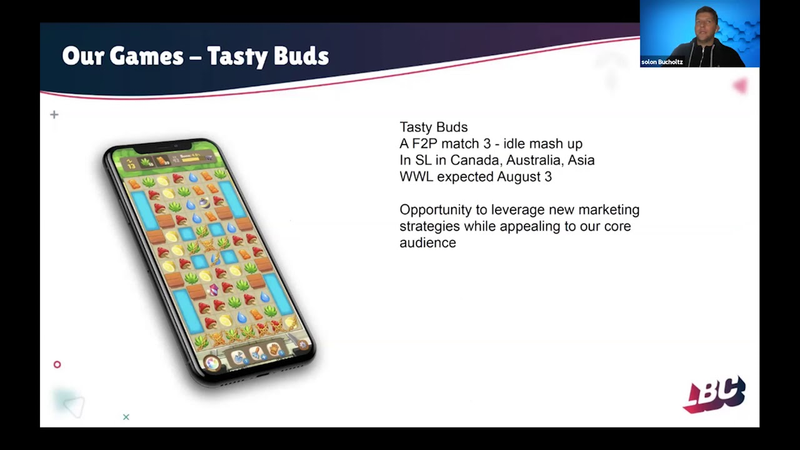
product and as we moved to a world-class studio we've now had to adapt and obviously invest in ourselves and start releasing new products now that we have a deep understanding of our audience and who our player base is so our second title tasty buds is in soft launch rate now started in the Asian countries through the first phase of soft launch we're in the second phase right now as we just opened up Canada and Australia recently and we expect worldwide launch on August third one great thing as we move to a second and third title studio with a deep understanding of who our audience is it gives us a tremendous opportunity to actually leverage some of the marketing strategies we're going to be talking about well appealing to our core audience without cannibalizing or existing user base on Empire so the challenge and I'm sure if you noticed in that first video our initial concern when we made Empire wasn't whether people would want to play but rather would they be able to download on
the App Store and our ultimate success was ensuring strong platform partnerships you know working with the policy teams a lot us to be published but we did face a tremendous amount of challenges along the way adjusting keywords languages and marketing content has ensured that we often break barriers with advertisers by being the first in the space we are the first and I believe we still are the only cannabis themed game that is markable on Google we unfortunately as noted may face challenges with marketing as not all businesses have come around to the content or are opposed based on their geographical location and we're still unable to release in several countries so the major challenges we faced as we started from a concept to where we're at today our first challenge was cannabis games and marketing content is often blocked and with our video there I'm sure you can expect much of that didn't make it on for you a the second challenge we often face especially as our game has aged as traditional UA is extremely expensive
your audience is very valuable and some of the things we try to understand is how can we leverage all of our social networks and all of those mailing lists and everything that you build up is your assets to continue to engage and grow while continuing to keep costs down and this especially applies as you move from a one title to a multi title studio and lastly this is what we've invested in in the last year is really developing data-driven strategies in all channels that are extremely tough to validate to ensure profitability the tendency is to fall in the comfortable places using like an aggregate partner to understand your Facebook's band and your robust on that paid you a but there are many creative ways to leverage your social media and there are many creative ways like influencers out there today that can be effective but validating them is extremely tough so get creative and this
seems to be the trend that we're moving towards and I think this is a really important piece to touch on today when it comes to UA but when it also comes to leveraging your social media we have plenty of tools out there on the market as noted there's the traditional UA on social your ad partners your influencers all of the social media pages you build for all of your games community an extremely important one leveraging player generated content creative team validation surveying spending players and really knowing your audience all of these are tools that we use at OBC and we actually create essentially a full ecosystem and a full circle of engagement leveraging all of them across our platforms and we use each platform for a different goal for our user base but having all of that content out there and having all of these tools at your disposal is only effective if you actually have a way to validate that success so this is again something that we spent a lot of time on this year
there is no limits with creative other than B blocked by the networks for us with cannabis content this results in a huge level of creativity convert ads to players we regularly report on these creatives and we use their overall performance to ensure we are iterating success but also how we're engaging our audience on our social networks we use Facebook specifically as a social network as our data base line for creative performance it has some of the best background tools for us to basically experiment with new creatives on a weekly cadence see what the algorithm picks up see what kind of spend is picking up and see what the ROI acent IPM scores on those creatives are this really helps us flush out our best creative which we can then leverage on how we want to engage across all of our social networks as well as our ad partners so an example here at the bottom of the screen is our weekly reporting system you'll see at any given time we have upwards of a dozen to 15 creatives in circulation the algorithms
picked up obviously the top performers we do rank those week over week to see if the winner remains versus its lifetime as well as its IPM score typically we're always looking for a high baseline IPM score but sometimes a lower IPM can actually convert it into a higher row ASON spend you a and I don't think this should be overlooked what I will say about you a though is the main goal of today's topic is coking focusing on social media but I think it's extremely important you know for myself coming from no experience in this five years to where we're at today I attended a lot of these PG connects I attended GDC I would often go look at listen to these talks and get bits and pieces of information but not always the real guts of what I wanted to learn or really what I needed to visualize to validate my success so I thought I would actually share how we do it on a weekly cadence so it's really important you know who and what you are buying and it's performance that's attached to it and
this is really supported by the previous slide with a strong creative process because of issues with content blocks we have to really ensure we're monitoring are you a performance as well as our delivery and optimizing well regularly peeling content blocks social media is still crew in finding valuable audiences and again in facebook through UA campaigns that can then be exported to other UA networks but also gives us some audience insights and understanding who our players are and especially which ones pay this helps us in targeting the right audience and so this slide you see here is an example of how our weekly reporting on UA spend on our talk networks this is specifically looking at Android on a weekly cadence so for us it's not about just saying we need X amount of installs that we're trying to fill the bucket we're really driving a lot of our marketing from robot specific performance and we have a buying model that attaches in organic uplift and also again we're looking at a snapshot of our networks our network spend does
fluctuate based on performance and based on our budget and business goals as I noted if you look over the the corner there are deep dirty role us or by model as we are looking to break-even at a minimum at a 30-day payback window so know your audience I heard this in the previous talk a little bit about the audience piece and I think this is a really important one there are many ways to understand your audience and it is often possible that you can go down the rabbit hole that as you develop audience profiles and you market to that audience you'll notice that you just seem to continue to have that audience and validate that hypothesis so sometimes you do need to cast the net wide when you're building marketing strategies to ensure that your audience is not objectively being construed by some of the information that you keep filling it with so for example with Empire if it says people that play your game like Cheech and Chong well if you start
marketing to fans of Cheech and Chong or if you start marketing to people that would likely like that type of product you may miss out to the fact that people that like your game are also fans of particular music artists so we do something different and I think this is a really important piece about learning your audience is having multiple data points but also reassessing and as you grow in size not just learning about your audience through traditional eua and like audience insights your game analytics aggregated data but as you grow your player cohort I think this is a real cool thing we've done at LBC is actually start surveying your own playerbase and surveying your own audience to really understand who you are targeting and and not just paying players you can look at why people play your game what their interests are so this is a very surface level slide from one of our player surveys we did we surveyed a hundred spending players to really understand why they play our game why they spend in our game and who they are not to be able to necessarily go market
to in another you a but to have a better understand our games and how we engage with their content and build our community because as I mentioned at the beginning our game is really a platform and a voice for our players and there's a huge built-in community in it so at a high level I just wanted to share with you that you know we have a very even split between male and female a very wide age gap which actually is quite surprising eighteen to sixty five-plus yes the majority of it is in the twenty five to fifty four range but as we get into some slides about our most local players you're gonna be surprised as where they come from so here's a brief player profile on one of our players they provided this information to us and it just gives you a sense of who's playing your game so we have all of our players driven down by the typical like whales minnows and Krakens this particular player is one of our more active players 5500 USD and spend been
playing essentially from a few months after launch he is a competitive player one of our top players and for him you know although we don't have it in here you'll note that his income is quite low this for him is a sense of community this is his way of engaging and connecting with like-minded people because our game is more than just that one player perspective and you have the ability with the in-game community that we have in our forums it's really a way for him to connect with other like-minded people and it really shows you that when you think about building a game and when you think about leveraging your social networks that isn't just about advertising what you've made it's about connecting people together so now getting the guts make sure that I stay on my time influencers a great way to leverage your social media it's a great way for us to build it often there are multiple avenues of ways to connect with your players we sometimes do things like paid sponsorship content in this
case we actually paid Tommy Chong on an LA Weekly thing to do review we thought okay that's great content how can we leverage that to not only build our social network but drive UA when we're dealing with all these content blockers so in this case we chopped it up we use some of her other content that was approved that wasn't getting chopped down put in Tommy Chong so that we can create new content that we know is going to get passed there and so again I'll give you a quick this is only a 10-second snippet on how you can create some really cool UA and some social social engagements so that's just a little snippet so that actually came from like a two minute review that he had done as I mentioned we chopped it up we found pieces that were engaging we leveraged that for you
a but we also post this to our social channels on social media we had the ability to retag his social profiles as part of our paid package so we could actually leverage our social media accounts create a much wider audience by leveraging the the influencers that we had paid to market our content and we've been able to continue to use that and create new content to build our social influence as well as drive installs to our game outside of our traditional you a paid content will they will say about influencers are some serious key takeaways they're measuring success is extremely difficult we did usually use bit ly links to track there are lots of third-party companies out there that are trying to solve those data validation issues we have in the past directly dealt with people but when you're dealing with three to four hundred influencers that are charging just a few hundred bucks each time it is extremely painful but there is a ton of opportunity there community so this is one I recognize my time is getting tight this is what I'm really proud of so this is Laura Hanson on the side there she's
one of our most vocal players as I mentioned our demographic is huge I didn't know much about her other than I knew she was a big player and a news article came out about her game and she explained why she plays hampire that really you know she was dealing with suicide and depression and this really again gave her a sense of community so all I would say on this slide is make your players your voice on social networks don't just be the one driving your message to them allow them to be your voice in a brief example that I want to touch on as our time gets tight is how we connect all the dots most people try to drive installs through typical you a showing off game content sometimes it's good just to engage your community and allow them like I said to be the voice so in this case we did a contest in the Kovan period where we just wanted to give some money away that had nothing to do with their game we gave away 400 dollar gift certificate we shared it across our socials we just really want to see how that would impact our social engagement and if we tracked it if we could recoup that money just from direct installs as well we only spend $700 we
shared across all our social followings the results were yes we did get some new downloads that paid for half the cost anyways but on a really positive side is this the social media gain we're actually building an extremely large following outside of your traditional UA that you can then leverage for future games as well as re-engage your players so in this case we gained an additional about 10,000 followers across our social just from that one contest that ran for one beak and as you can see you know for a mobile game we built quite the audience with over a hundred thousand followers on Facebook and 30,000 on Instagram this is just a great way to keep your community active and a lot of the content that we do post as you'll notice on the bottom left has nothing to do with our game it's just creative engaging memes and information that allows people to really connect and want to share what you put out there and gets around the blockers of traditional UA so last slide I just wanted to say is the mobile games industry is obviously constantly evolving as I mentioned I've
been coming to these conferences for four years and always get a little snippet of information that I try to bring back to the studio and embed and I hope that I've given you something today that you can embed in your models but I do want to stress that will worked you know yesterday may not work today what works for you may or what works for us may not work for you but don't be afraid to try you know and push those boundaries and try new things there is no perfect playbook for a game and you know for those that are just about to launch or are starting to see a lot of success the other thing I can encourage is you know with the Koga 19 pandemic we've been going through we have seen a tremendous uptick in traffic and revenue it's not likely the new normal so adjusting to and monitoring this noise is extremely important as you're building out your buying models and understanding that this may not be the normal so that you don't overshoot what success looks like I wish you all success in your games and creative marketing strategies and I hope we got a few minutes left for some Q&A so I'm
just gonna stop sharing this and we're back so yeah thank you very much if we do have a little bit of time for some questions the first thing I wanted to say there is um I think it was the same on other people's end but unfortunately we couldn't hear the audio for the videos so you say maybe if you're in the discord channel if you throw the links in in the track channel in the discord that would probably help because then everyone can jump in and check them out brilliant but we do have a couple of questions coming in from the audience so the first one is from Jackie who says thank you for a great presentation you have a great story and she wants to know how do you manage your community is it through dedicated managers so yeah we actually have two internal community team members that have really built up the community one manager / title essentially but where our strength in the community actually is is through moderators we have dedicated players that are in our game that we've set up our own slack channels
with we reward them we send them gifts they are basically the voice of our game and we have 20 full-time at any given time and they are not paid they are just passionate players okay that's really interesting Anna another question we pod is have you ever had any difficulty dealing with influences lots the short answer is lots I was actually gonna add that to my slide and just show you as an excel sheet of who we dealt with because a lot of influencers when you're looking at the smaller like Instagram channels that may have you know 10 - a couple 10,000 - a couple million followers you know you need to use a lot of them to understand which ones do and don't succeed and you have to pay them all and they all operate on different systems of communication so more often than not I found that a it takes a tremendous amount of time to communicate with all them and actually get them to post you do need to review to actually prove that
they post because they often don't and then actually getting them to put what you want to post and properly with the proper links doesn't happen very often so we are finding now that we're dealing more with intermediaries managing influencers they do cost a bit more but the quality of work is there and honestly the time save is often worth it like obviously social media is a place where there can be likes really passionate fans but there can also sometimes be the opposite and a bit of negativity do you ever find that you have to deal with like toxicity and negativity within it and and if so like is it easy for you and your moderators and stuff to manage and deal with yeah I mean when we first started and we first opened the community and no different than starting a business you have this tremendous ability to define what your values are and sort of what your policies are and you do need to set
those up early because if you let people run wild and there is no boundaries it's very hard to manage when like where the line is so we were very adamant at the beginning that like we wanted to create a safe place we we present you know great form rules we make the moderators sign to that they're going to uphold those values does it mean that we don't have problems we do have a cannabis game and some people don't like cannabis and the reality is that online when you have forums there is a lot of negative and poor behavior as a business we made the commitment that our values and our policies come first over it doesn't matter you know whether you're paying player or not if you breach those values we do boo you out of the game and I think that you have to do that you have to make that as a business case and even with the challenges in the world we're going through today as a business you know you don't have to be political but you do need to define your boundaries and you do need to stand for something and make sure that you continued up yeah I think that was part of what I wanted
to ask so just like like you say I think the important thing is obviously yeah the value side of it and it sort of seem like these aspects are unacceptable and having everyone agree to that so that everyone's welcome and everyone can enjoy everything oh that's fantastic great thank you so much for such a brilliant talk and for joining us here and you know like I say I mean if you're in the discord group then there might be some people who are a little shy to ask questions during the live talk that might answer jump in and ask you something through the discord alright or just carry on the chat so yeah there might be people there but thank you so much you're really really fascinating talk you
Summary
LBC Studios, a Vancouver-based mobile game developer and publisher, utilizes community-focused social media strategies and data-driven marketing to overcome significant advertising barriers in the cannabis-themed gaming sector. Founded in 2015, the studio’s primary title, Hempire, has achieved over 12 million installs and generated more than $30 million in gross revenue since its 2017 launch. The studio operates with a 35-person in-house team, emphasizing a business model that prioritizes a 30-day payback window for user acquisition (UA) costs, with revenue split between in-app purchases and rewarded video advertisements.
The studio faces unique challenges due to the nature of its content, as many advertising networks and geographic regions restrict cannabis-related marketing. To navigate these hurdles, LBC Studios employs a diversified marketing ecosystem that balances traditional paid UA with organic community engagement. By using Facebook as a baseline for creative performance, the team iterates on a dozen to 15 active creatives weekly, ranking them by IPM (installs per mille) and ROI to optimize spend. Furthermore, the studio leverages influencer partnerships—often repurposing content from influencers to bypass platform-specific content blockers—and maintains a robust community management structure. This includes two dedicated internal staff members supported by a network of 20 unpaid, passionate player-moderators who help maintain a safe, positive environment.
Data-driven decision-making remains central to the studio’s growth. LBC Studios conducts regular player surveys to refine audience profiles, moving beyond standard demographic data to understand player motivations and interests. This approach extends to cross-promoting upcoming titles, such as their second game, Tasty Buds, to an existing, highly engaged user base without cannibalizing current performance. The studio concludes that while UA costs are rising, fostering a community where players serve as the brand's voice—through contests, social media engagement, and direct feedback loops—provides a sustainable, cost-effective alternative to relying solely on traditional paid advertising channels.















Comments