Mobile reports and market data
Documents

Panel: Live Ops Best Practices: How to Make them more Engaging & Profitable
Successful live operations demand a fundamental shift in development philosophy, prioritizing the post-launch lifecycle as the most critical phase for long-term viability.
- Prioritize early retention by optimizing technical performance, specifically by reducing loading times and fixing crashes, before focusing on long-term content expansion.
- Implement a rigorous testing pipeline by deploying updates to a small subset of players (5-10%) before a full rollout to ensure stability and gather data.
- Adopt a 'restaurant' mindset for live operations, where teams must be prepped for a high-frequency, agile development cycle that often requires weekly content releases.

Panel: Stop Shooting Your Game in the Foot - The Damages of not Starting Live Ops Early
Integrating live operations into the earliest stages of game development is essential for avoiding technical debt and ensuring long-term product viability.
- Live operations must be integrated into the earliest stages of game development to prevent technical debt and avoid the rigid, shoehorned systems that result from treating services as an afterthought.
- Technical architecture should be designed to support frequent updates, A/B testing, and player segmentation without requiring constant code redeploys.
- Operational tools, including analytics, crash reporting, and content management systems, must be accessible to non-technical staff like product managers to enable rapid, data-driven adjustments.
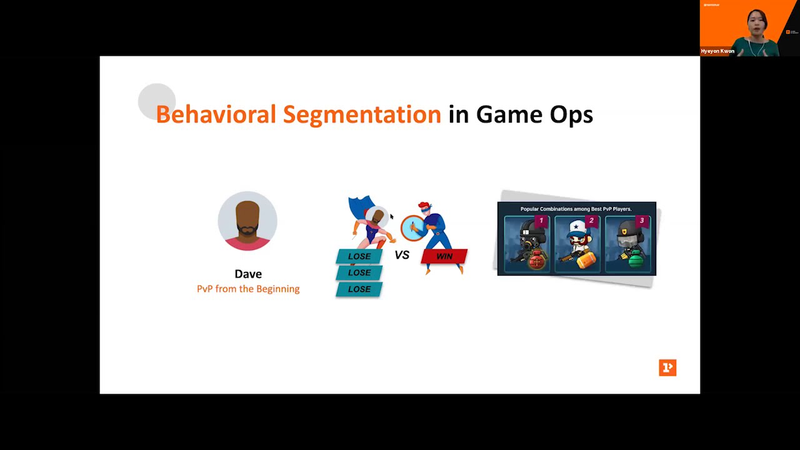
Does Personalisation Exist in the Industry? The Need for a New Segmentation Approach
Traditional player segmentation methods, which rely heavily on demographic data and monetization history, are increasingly inadequate for the demands of modern live-service games.
- Traditional demographic segmentation (age, gender, geography) is ineffective for in-game operations because it fails to capture the primary drivers of player behavior and engagement.
- Monetization-based segmentation, which focuses exclusively on high-spending 'whales,' risks game instability and shortened lifecycles by neglecting the remaining 97% of the player base.
- Successful games achieve high conversion rates through broad engagement, such as Candy Crush Saga at 30% and Fortnite at 70%.

Panel: What do Publishers do for Their Money?
Publishers serve as essential partners for game developers by providing critical infrastructure, risk mitigation, and specialized expertise in an increasingly saturated mobile market.
- Publishers provide critical value by managing user acquisition (UA) in an increasingly competitive mobile landscape where costs are high, and by leveraging established IP and large, captive audiences to drive game discovery.
- App Store Optimization (ASO) requires a holistic approach where icons, videos, descriptions, and screenshots are tested and optimized as a single unit, alongside keyword optimization to improve organic rankings.
- Developers should prioritize transparency in publishing agreements, specifically regarding how marketing budgets are spent, and be prepared to walk away from one-sided deals that lack clear communication or fair terms.
Why Working With a Publisher from Day One is Becoming the New Normal for Hypercasual Developers
The hypercasual mobile gaming industry is shifting toward a collaborative model where developers and publishers form long-term partnerships from the earliest stages of development.
- Hypercasual developers are shifting toward an accelerator model that provides ongoing funding and market data from the earliest stages of development in exchange for a 30% to 40% profit share.
- Unlike traditional work-for-hire models, this collaborative framework allows developers to retain intellectual property rights for prototypes that do not reach full publication.
- Publishers now utilize early-stage click-through rate (CTR) testing as a primary gatekeeper, requiring a minimum 4% CTR before committing significant resources to a project.
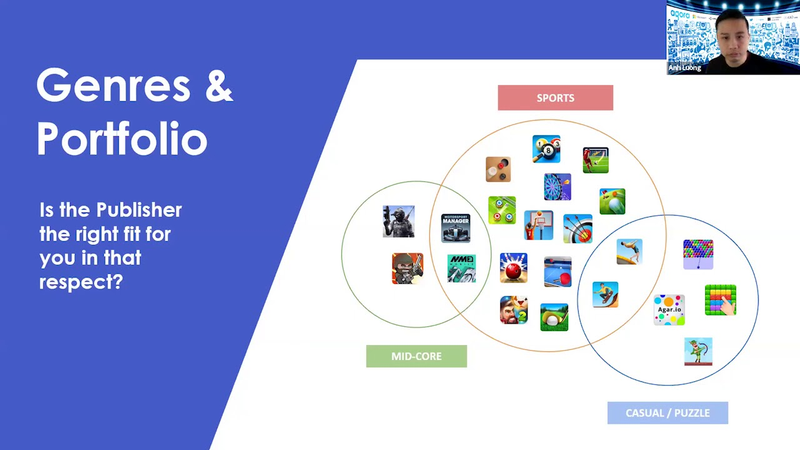
What to Look for in a Publishing Partnership
Effective game publishing partnerships are built on a strategic alignment of culture, scale, product fit, capability, and long-term relationship goals.
- A successful publishing partnership requires a clear division of labor where the publisher handles business-heavy tasks like user acquisition, live operations, and data analytics, while the developer retains creative control.
- Developers should prioritize cultural compatibility and shared values over immediate financial incentives, as these factors are the primary determinants of long-term collaboration health.
- Due diligence is essential; developers must verify a publisher's track record and business transparency by speaking directly with other studios previously published by that partner.

5 Things: About Autonomous Teams
Hutch has achieved significant commercial success, reaching an $80 million annual run rate and 300 million lifetime players, by fundamentally restructuring its operations around autonomous, cross-functional teams.
- Hutch achieved an $80 million annual run rate and 300 million lifetime players by restructuring operations into autonomous, cross-functional teams that hold full accountability for both creative and financial outcomes.
- Decentralizing decision-making power from management to developers serves as the primary engine for scaling the studio while maintaining consistent profitability.
- Effective Agile implementation at Hutch prioritizes psychological safety and developer empowerment over rigid processes, with leadership acting as servants to self-organizing teams.

From Casual to Hypercasual - How to Turn Your Casual Production Team to a Hypercasual Commando Unit
Hypercasual gaming has emerged as a dominant force in the mobile market, experiencing a 40 percent surge in downloads during the pandemic as the genre successfully captures a vast audience of non-traditional players.
- Transitioning to a hypercasual model requires small, agile teams of two to three people to minimize financial risk and maximize production velocity.
- Studios should aim to reach revenue milestones within a seven to twelve-week window, accepting that early prototype failure is a standard part of the process.
- Market viability must be validated before full-scale production using ad-based click-through rate tests to ensure only high-potential mechanics are developed.
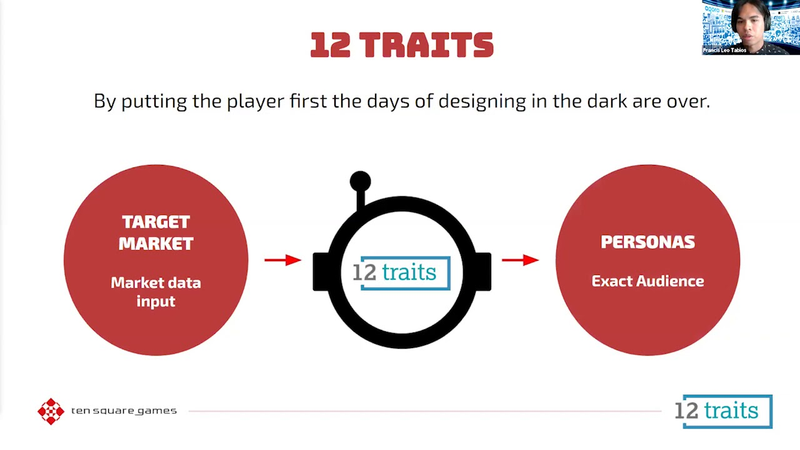
Reinventing the Discovery Process
The modern game development landscape requires a shift toward a player-centered discovery process that prioritizes rigorous validation before full-scale production begins.
- Studios must shift to a player-centered discovery process that mandates rigorous validation of game concepts, mechanics, and art styles before full-scale production begins.
- Development teams should utilize detailed, data-backed player personas—developed alongside behavioral research firms—to map psychological traits and motivations directly to monetization and design strategies.
- Integrating big data analytics into the discovery phase allows studios to replace generalized assumptions with targeted experiences that align with specific, sustainable market opportunities.

Panel: Putting the Hype into Social Games - Deconstructing Hypercasual & Social Games
The gaming industry is currently navigating a strategic convergence between hypercasual and social gaming models, driven by a shared need for accessible, high-volume engagement.
- Developers are increasingly adopting 'hybrid-casual' models that combine hypercasual ad-based monetization with social gaming's in-app purchase mechanics to maximize profitability.
- The loss of IDFA tracking under iOS 14 has forced the industry to move away from granular user targeting toward privacy-compliant lifetime value calculation technologies.
- Hypercasual games, traditionally focused on short-term 30-day lifetime value, are now integrating social features like voice and video chat to boost long-term retention.
The Fundamentals of Hypercasual: Insider Publisher Knowledge
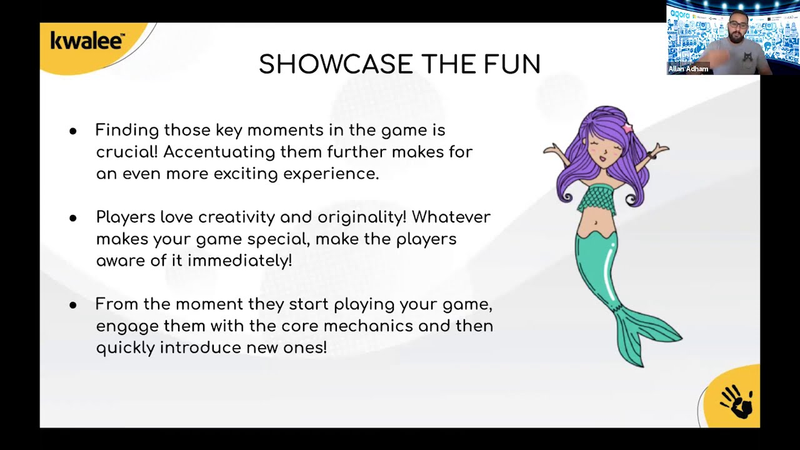
Hypercasual gaming centers on the rapid development of accessible, mass-market titles designed to generate immediate engagement through intuitive mechanics and vibrant, high-contrast aesthetics.
- Hypercasual success relies on a data-driven development cycle that prioritizes low cost-per-install (CPI) and high player retention through rapid, iterative testing.
- Marketing is as critical as game design, requiring the production of a high volume of diverse video advertisements to test hooks and identify effective messaging.
- Developers must implement simple, intuitive mechanics that provide instant gratification to capture a mass-market audience within seconds of interaction.
Superstar Session: How We're Preparing our Customers for iOS 14 Attribution Switch
This session, presented at the Pocket Gamer Connects Helsinki Digital 2020 conference, addresses the mobile gaming industry’s transition to Apple’s iOS 14 privacy framework, specifically focusing on the shift toward SKAdNetwork attribution.
- The transition to Apple’s iOS 14 privacy framework necessitates a shift from deterministic, user-level attribution to probabilistic modeling and SKAdNetwork-based strategies.
- Developers can reconstruct performance metrics and estimate Day 0 lifetime value (LTV) by mapping specific player actions to binary conversion values ranging from 0 to 63 within the SKAdNetwork framework.
- The loss of granular campaign-level and creative-level data significantly disrupts traditional user acquisition workflows, particularly for hypercasual games that rely on precise LTV metrics.
Writers
Games and companies
Games